
The butterfly has been a compelling tattoo subject for men as long as tattooing has existed. Sailors and soldiers carried butterfly tattoos decades before the subject became associated with any particular demographic. The symbolism, transformation, the radical change of form from one state to another, belongs to everyone who has experienced it.
These 20 ideas approach butterfly tattooing for men through styles and treatments that carry the subject’s full weight without softening it.
The Butterfly as a Symbol for Men
The metamorphosis is complete. The caterpillar does not become a slightly improved caterpillar. It dissolves itself entirely inside the chrysalis and reconstitutes as something new. For men who have been through periods of significant change, the butterfly is not a decorative choice but an accurate one. The challenge is finding the style and treatment that does justice to the subject’s symbolic weight rather than undermining it.
20 Butterfly Tattoo Ideas for Men
1. Blackwork Butterfly
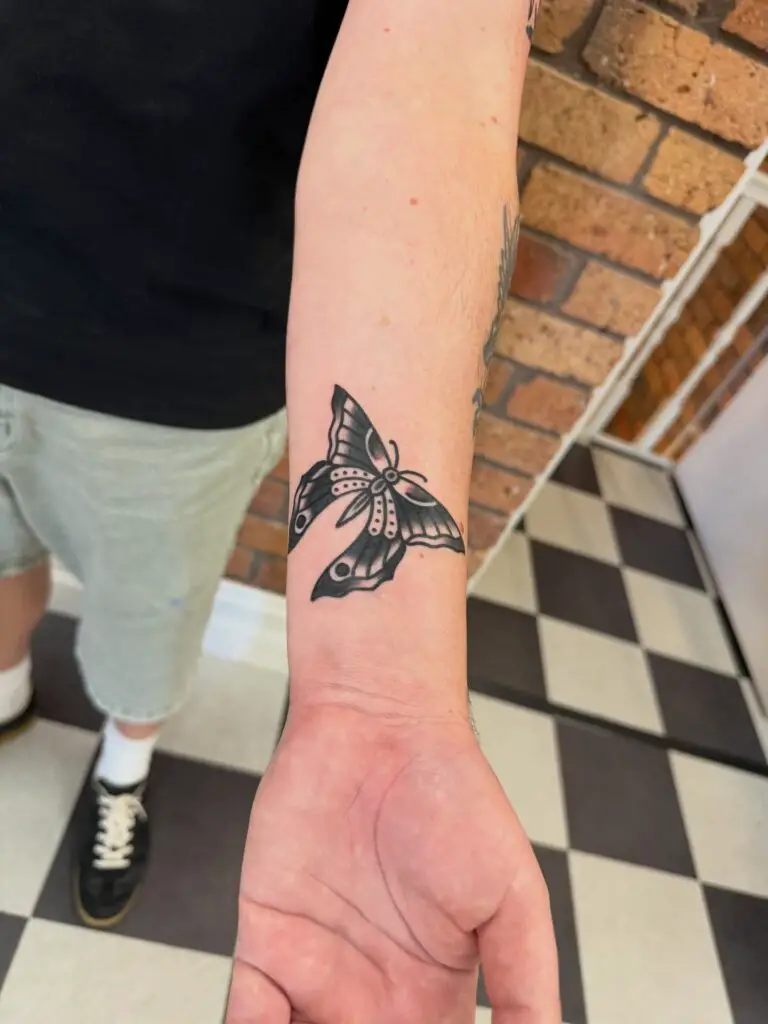
Photo: @henrydietzetattoo
A butterfly in pure blackwork, the wings filled with bold black and articulated through negative space. Blackwork removes the softness that some associate with butterfly tattooing and replaces it with graphic authority. The design reads as deliberate and bold from any distance.
2. Skull and Butterfly
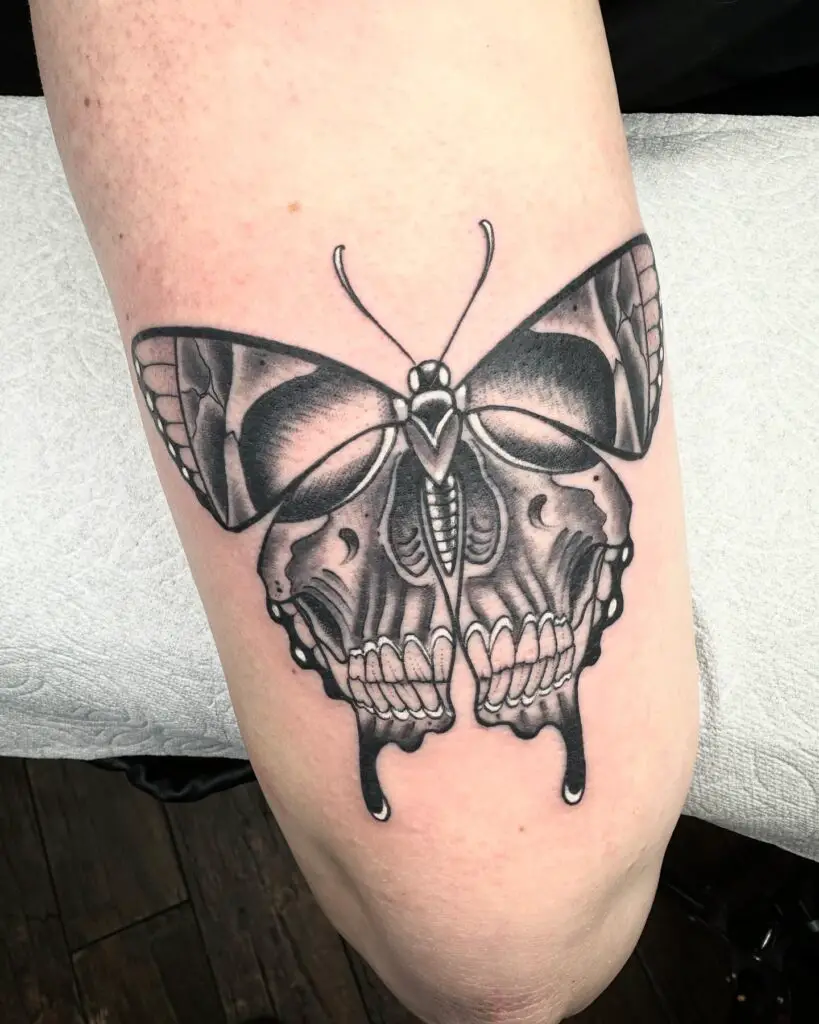
Photo: @tattoosbymikec

A skull with butterfly wings, or a butterfly with a skull incorporated into the wing pattern. The combination of death symbolism and transformation symbolism is not contradictory. The skull acknowledges what the butterfly requires: the death of the previous form. One of the most honest interpretations of the subject.
3. Geometric Butterfly
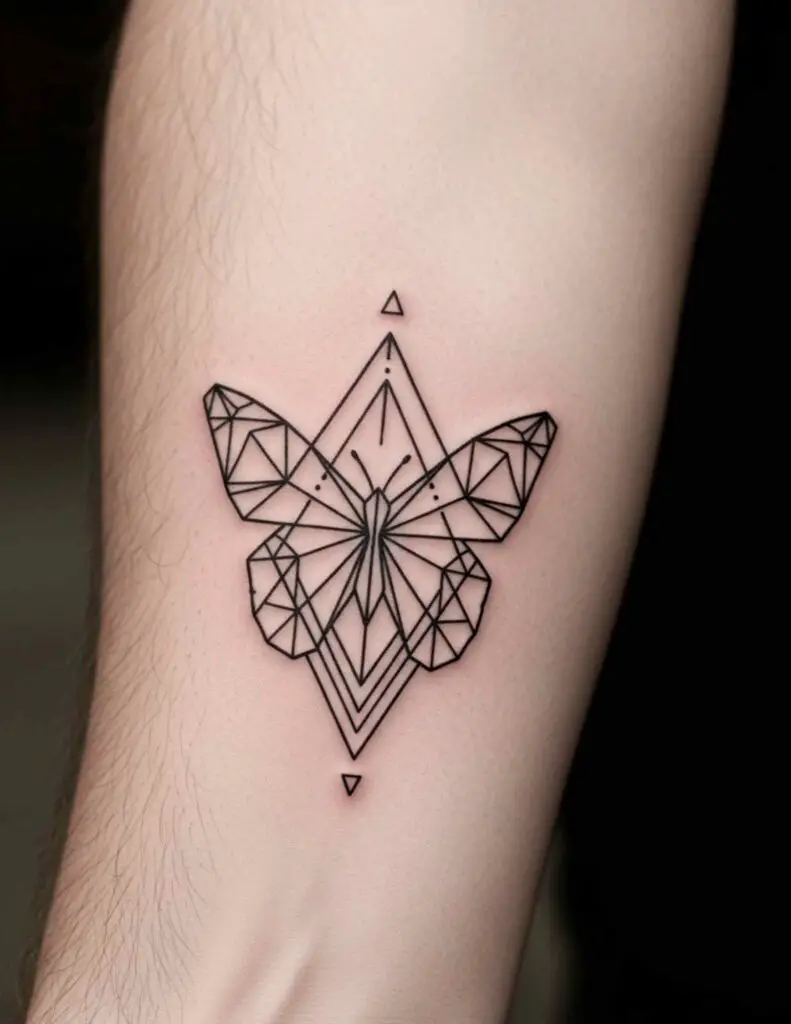
A butterfly constructed from geometric planes and angular facets. The geometric treatment creates a butterfly that reads as precise and structural rather than organic and soft. The wing patterns become tessellated geometric surfaces. Bold and distinct from traditional butterfly tattooing.
4. Traditional American Butterfly
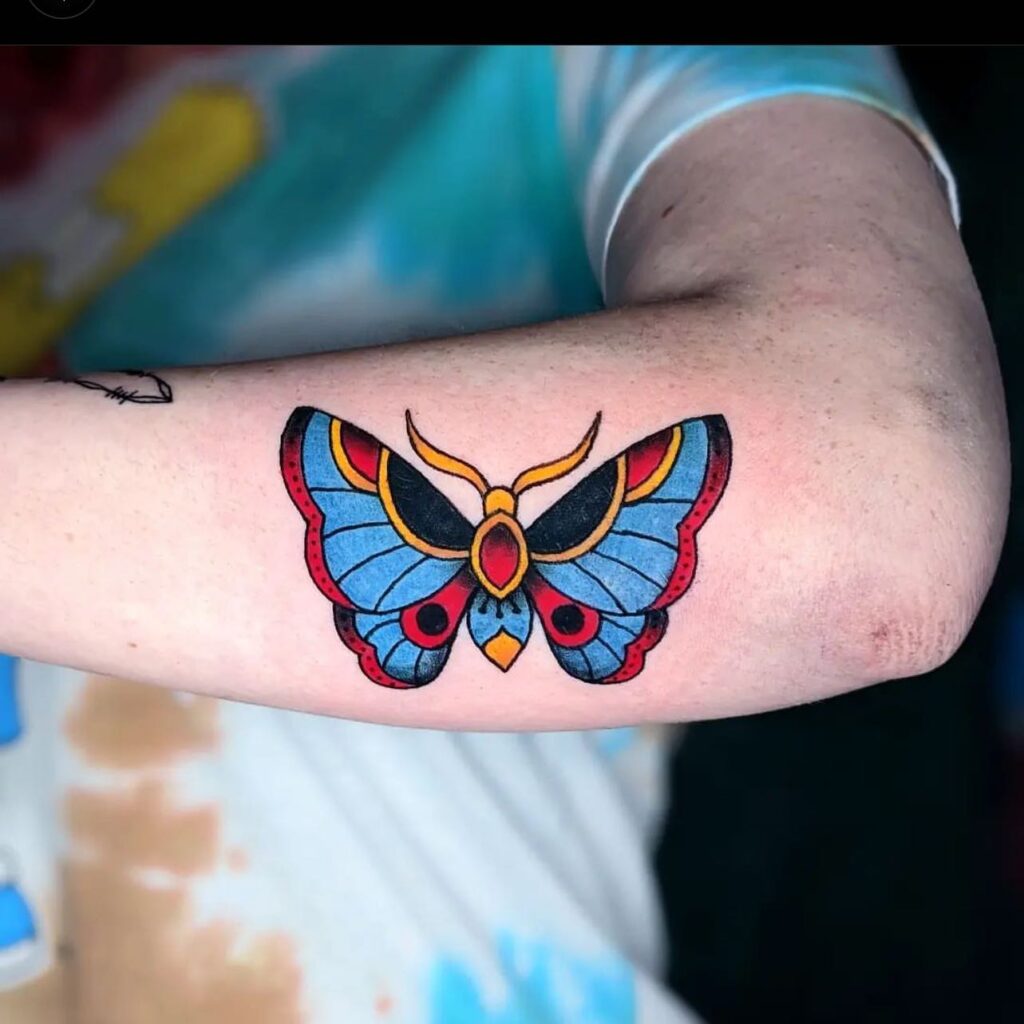
Photo: @manifesttattoosociety

A butterfly in American traditional style: bold black outlines, limited saturated colour palette, the wings in a spread open position. The traditional treatment gives the butterfly the same visual authority as any other traditional subject. The butterfly has been in the American traditional canon for over a century.
5. Monarch Butterfly Realism
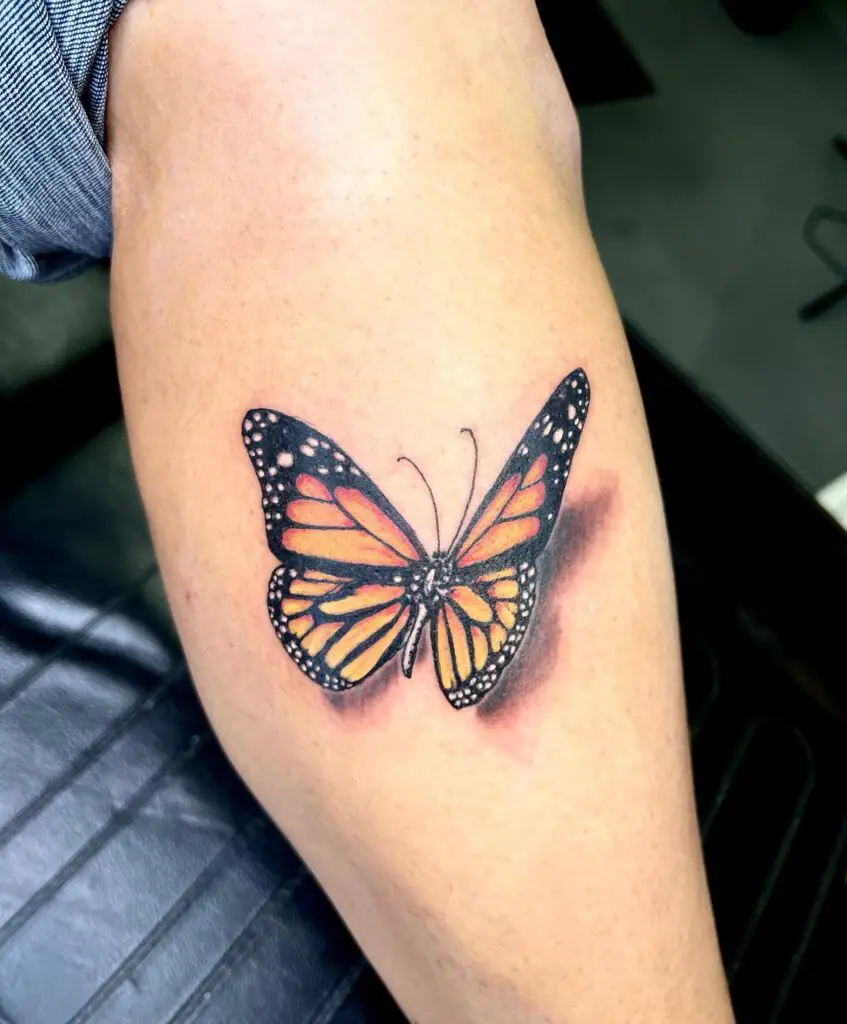
Photo: @rikharleytattoos
A monarch butterfly in photorealistic black and grey or colour, the wing pattern rendered with scientific accuracy. The monarch’s orange and black pattern is iconic, and in colour realism the wing venation and cell structure create a piece with extraordinary detail. In black and grey, the contrast of the wing pattern becomes graphic and bold.
6. Japanese-Style Butterfly
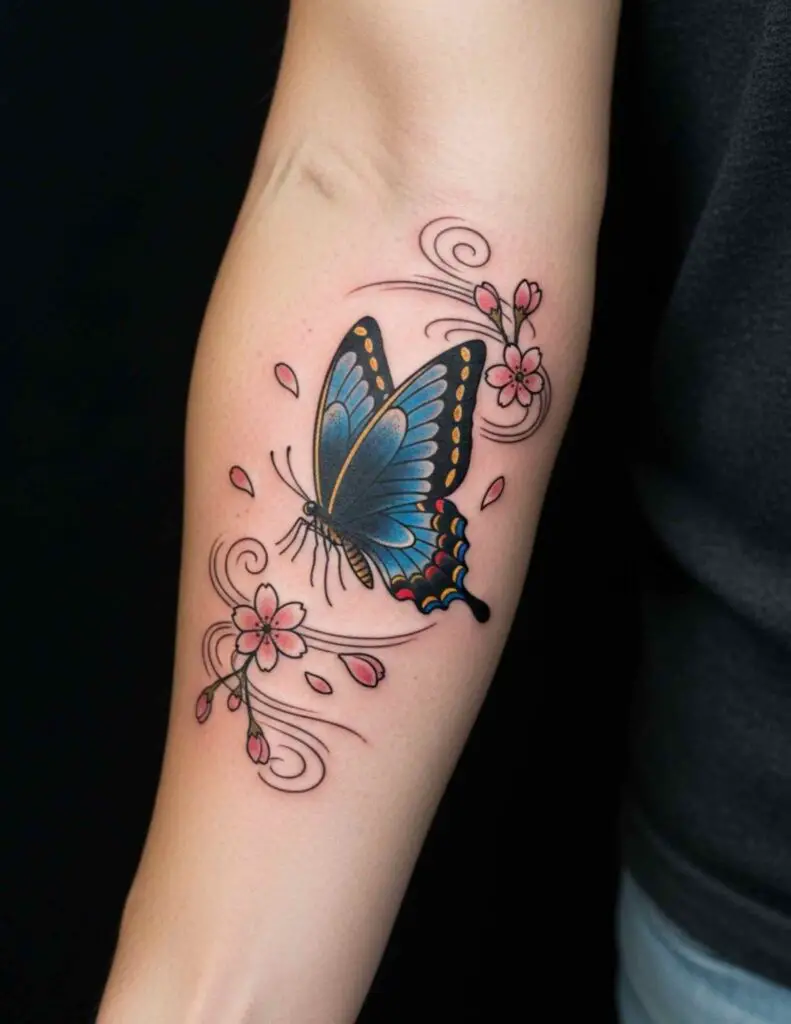
A butterfly in the irezumi tradition: bold outlines, the wing patterns rendered in the formal Japanese decorative vocabulary. The butterfly in Japanese mythology is associated with the souls of the departed and with transformation at a spiritual level. The Japanese treatment carries this weight without diminishing it.
7. Butterfly in Flames
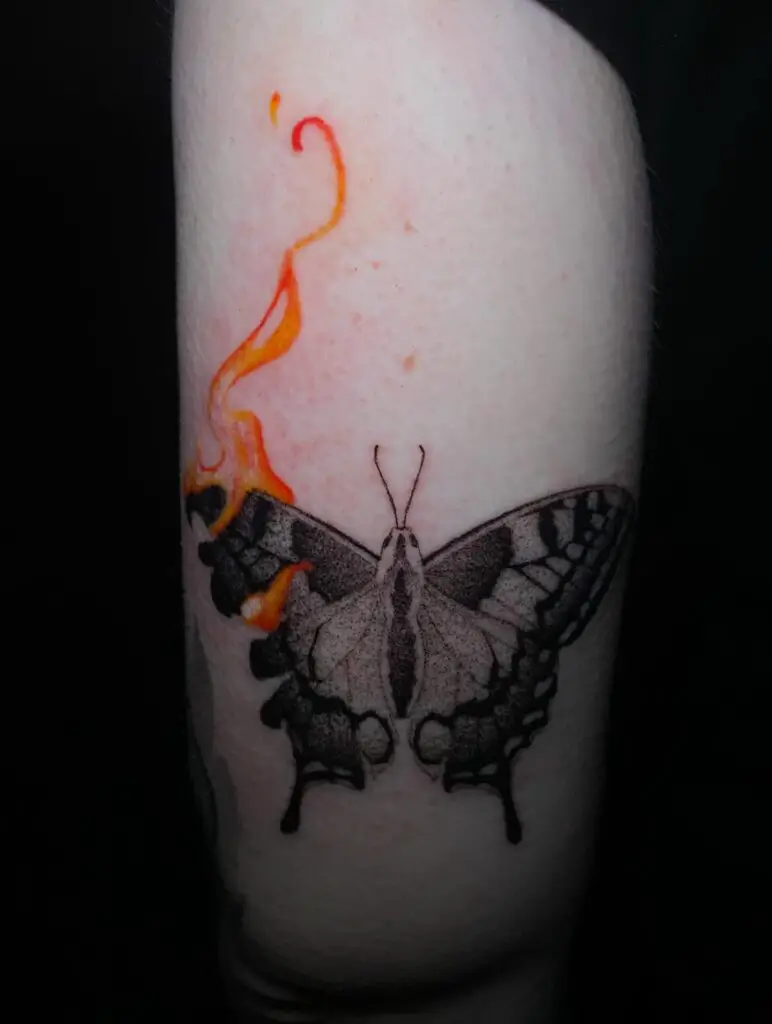
Photo: @squiddtattoos
A butterfly emerging from or surrounded by fire, the transformation symbolism made explicit. The butterfly in flames captures the moment of chrysalis as combustion: the previous form burning away to allow the new one to emerge. Powerful in blackwork or in colour realism.
8. Butterfly with Dagger
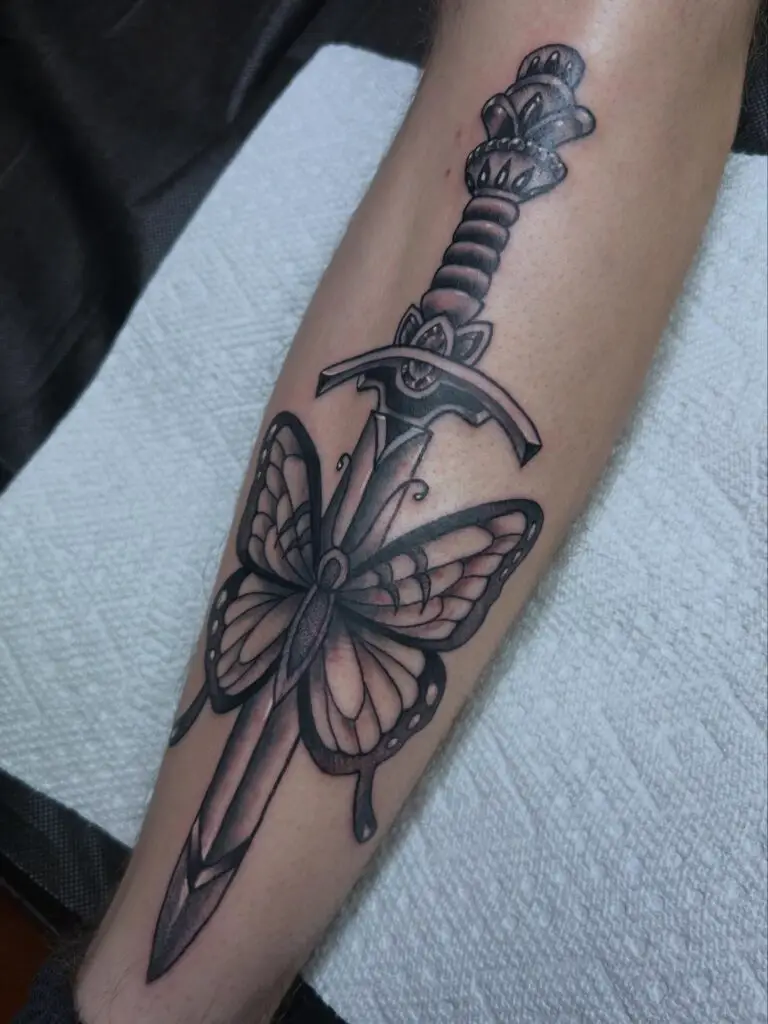
Photo: @tattootrixiereptile
A butterfly pierced by a dagger, the classic tattoo combination of softness and edge. The dagger through a butterfly is not nihilism. It is the acknowledgement that transformation requires something to cut through the old form. The contrast between the subjects creates visual and symbolic tension.
9. Blue Morpho Realism
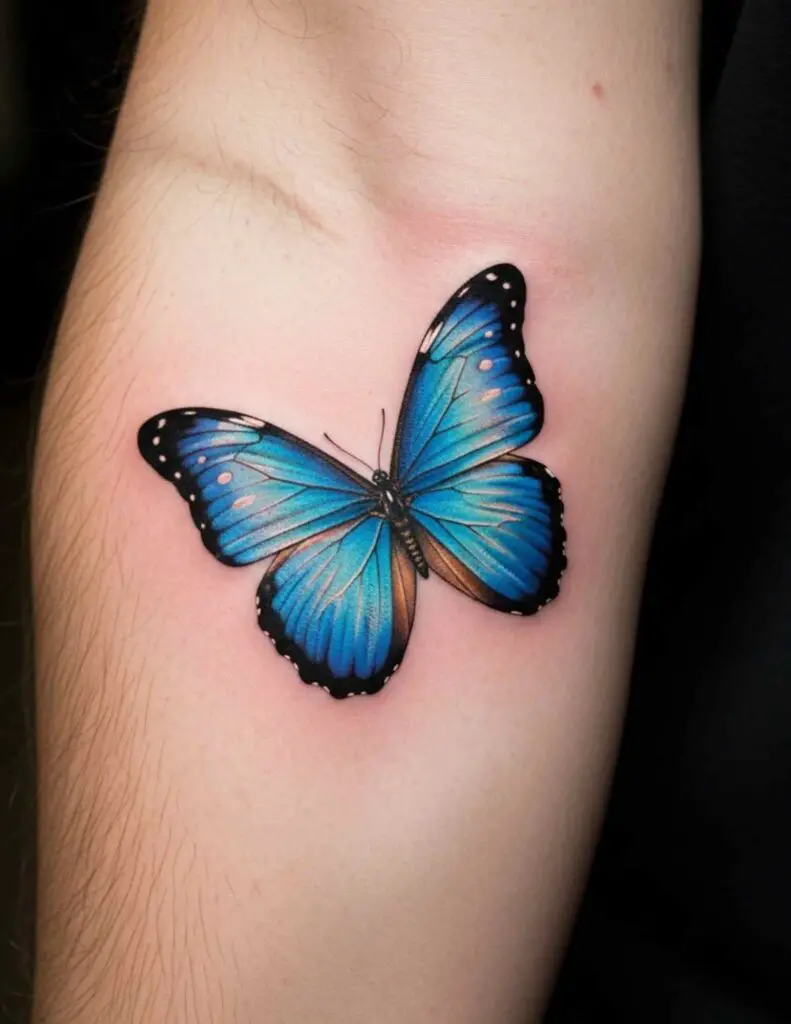
A blue morpho butterfly in colour realism, the iridescent blue of the wings rendered with careful colour technique. The blue morpho’s wings are among the most visually distinctive in the natural world. In colour realism on skin, the electric blue creates a piece that is striking from any distance.
10. Butterfly Chest Piece
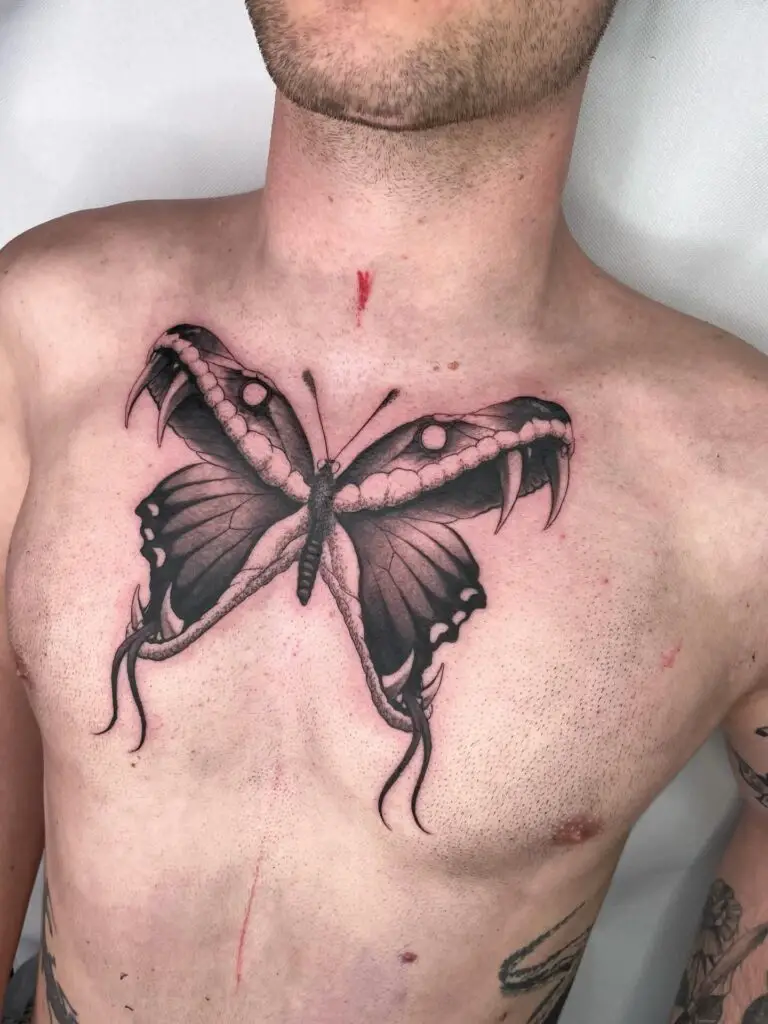
Photo: @toxsick.tattoo
A butterfly centred on the chest, wings extending across the pectorals. The chest placement gives the butterfly a confrontational, armorial quality. The wings spread across the chest in the same way the phoenix or eagle does. The subject is different but the placement’s authority is the same.
11. Dotwork Butterfly
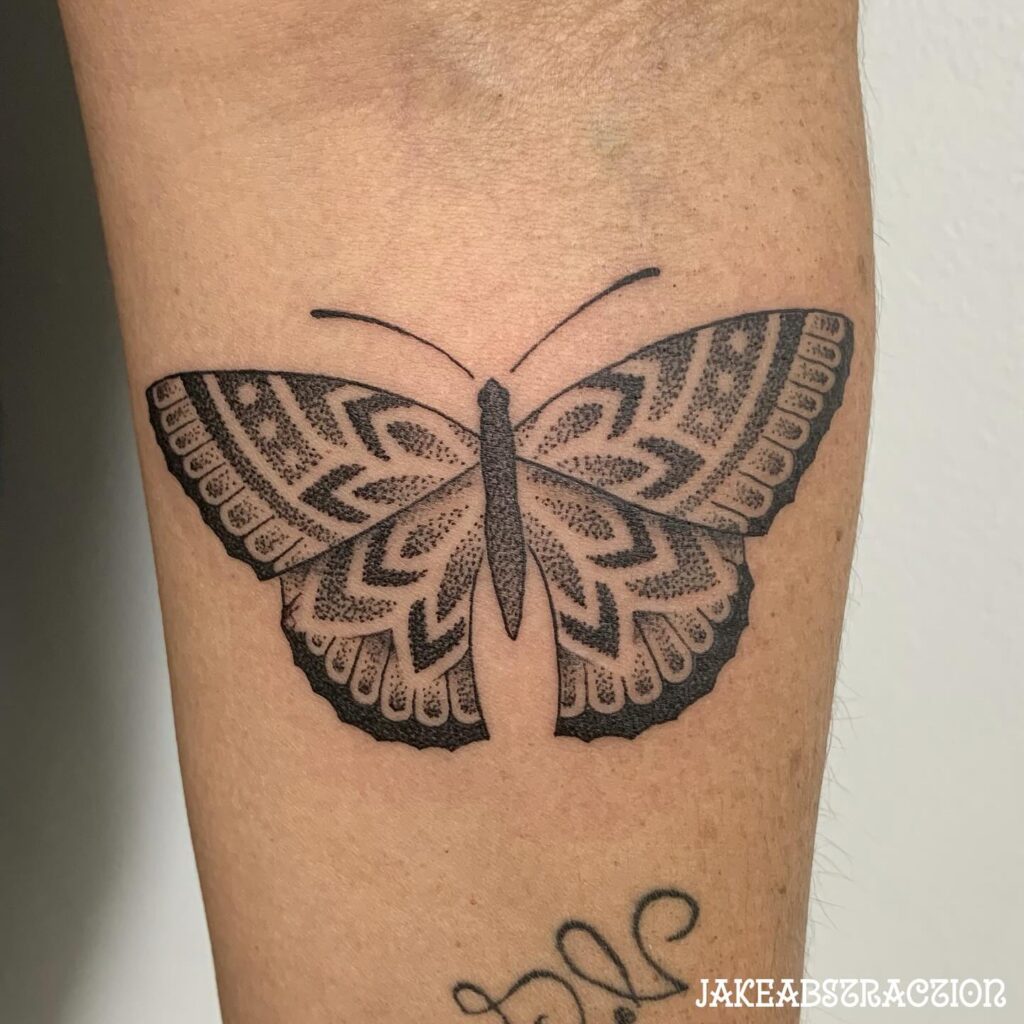
Photo: @jakeabstraction
A butterfly built from dense stippled dots rather than solid lines or fills. Dotwork creates a textured surface quality that suits the natural patterns of butterfly wings. On a man, dotwork butterfly tattooing reads as technically sophisticated and deliberate.
12. Abstract Butterfly
The qualities of a butterfly, transformation, wing form, the bilateral symmetry, expressed abstractly. Not a recognisable butterfly but a composition that carries the butterfly’s energy without literal representation. Abstract enough to require interpretation but specific enough to be understood.
13. Butterfly and Clock
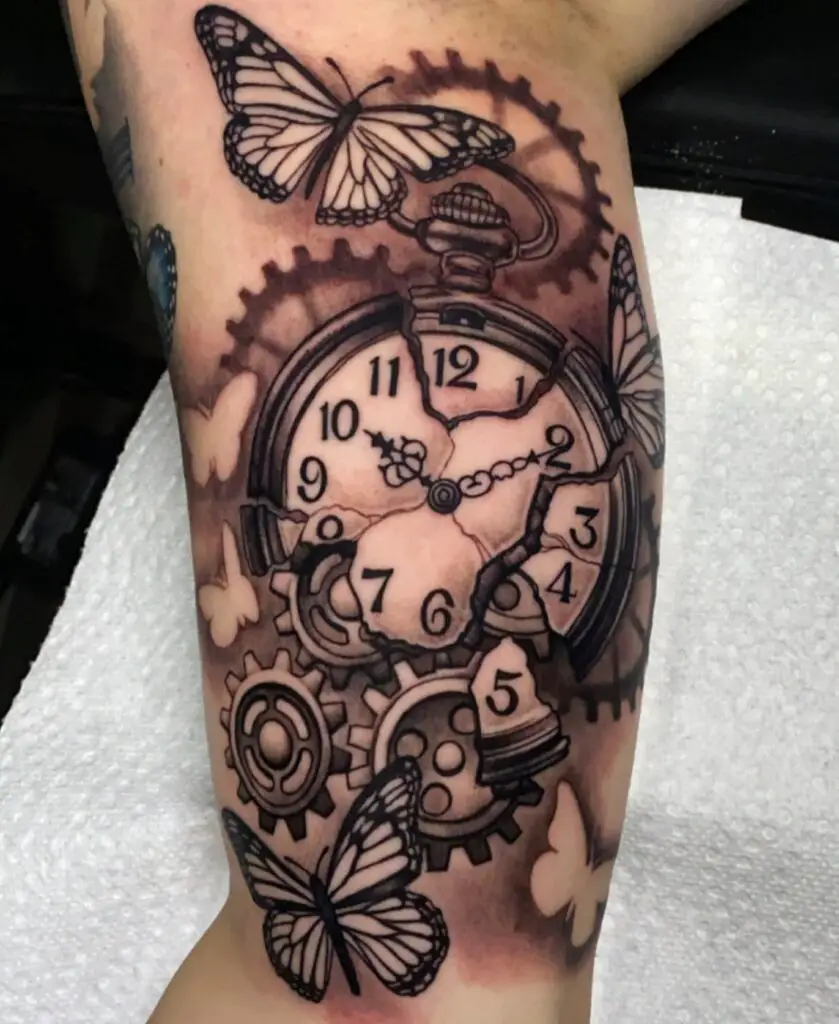
Photo: @markullmantattoos
A butterfly resting on or emerging from a clock, the time frozen at a significant moment. The combination of the butterfly’s transformation symbolism with the clock’s time symbolism creates a design about change and the specific moment it happened. One of the more philosophically layered butterfly concepts.
14. Butterfly Half Sleeve
A butterfly as the centrepiece of a half sleeve, with botanical or geometric elements extending the composition. The sleeve format allows the butterfly’s wings to be rendered with full detail at a scale that does justice to the subject. The composition can frame the butterfly with elements that contextualise its meaning.
15. Atlas Moth
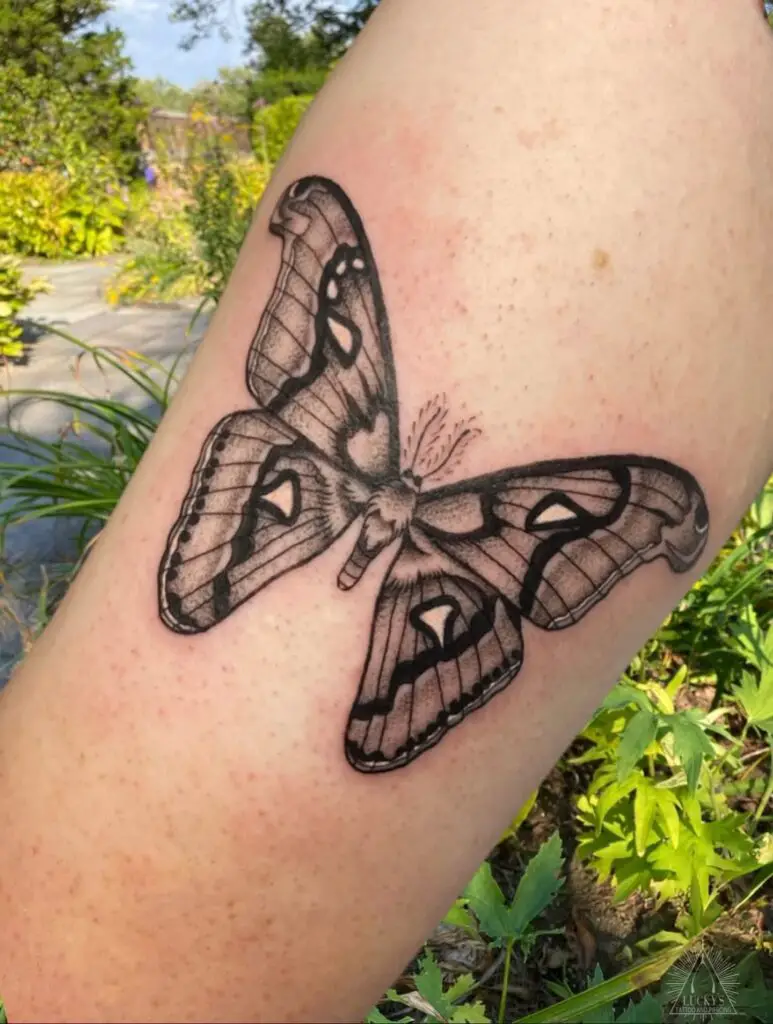
Photo: @luckysnoho
The Atlas moth, the largest moth in the world, in fine line or realism. The moth is associated with the moon and with intuition rather than the sun and conscious transformation. The Atlas moth’s extraordinary scale and wing patterns make it one of the most visually compelling subjects in lepidopteran tattooing.
16. Butterfly and Banner
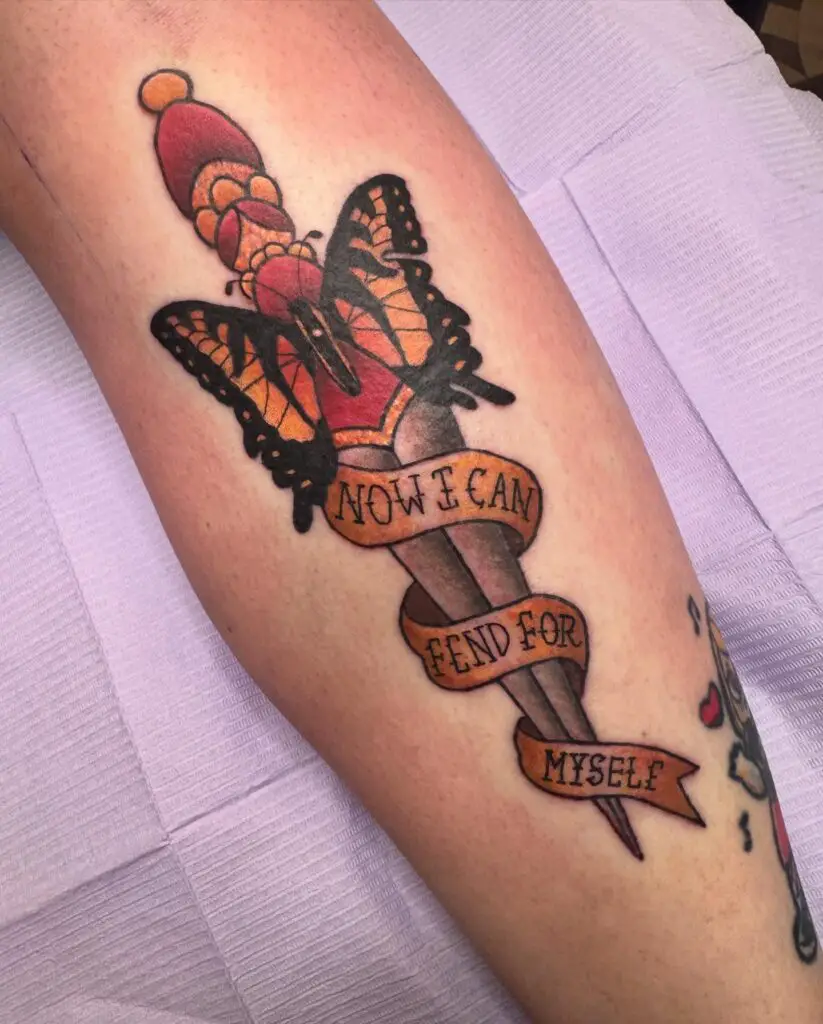
Photo: @samanthadeirtattoo
A butterfly with a traditional American banner incorporating a name or word. The banner treatment roots the butterfly in the American traditional canon and allows personalisation through the text element. A name, a date, or a word that captures what the butterfly represents in the wearer’s life.
17. Deconstructed Butterfly
A butterfly with parts of its wings abstracted, dissolved, or in the process of forming. The deconstructed approach captures the butterfly at the moment of transition rather than in its completed form. An image about process rather than outcome. Particularly suited to dark ink or blackwork treatment.
18. Butterfly Over Scar
A butterfly placed deliberately over a scar. The subject, transformation, is made literal by the placement. The scar is the previous form, the butterfly is what it became. One of the most direct applications of the symbol in all of tattooing.
19. Butterfly and Sword
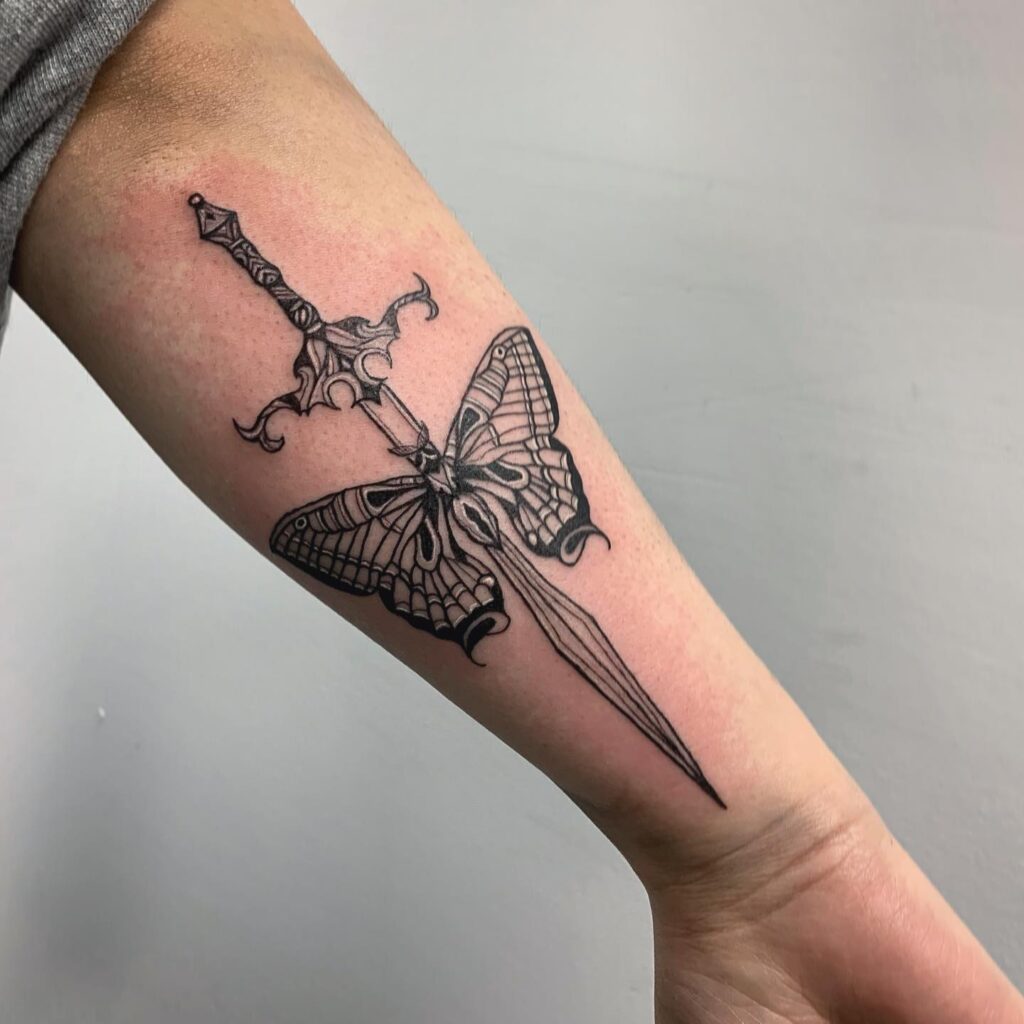
Photo: @latebloomertattooer
A butterfly perched on a sword, the contrast between the fragile winged insect and the hard instrument of force. The butterfly perched on a sword does not make either element smaller. The combination creates a design about things that appear to be opposites coexisting without contradiction.
20. Black Swallowtail
A black swallowtail butterfly in realism, the dark wings with their electric blue spots rendered with precision. The black swallowtail suits a man’s aesthetic instinct toward darker, bolder colouration while being a real and specific creature rather than a generic butterfly. The species specificity gives the design additional purpose.
Artist Selection
Find an artist whose portfolio shows butterfly work in the style you want and look specifically at healed pieces. The wing patterns of butterflies, whether in blackwork negative space, in colour realism, or in geometric facets, require a specific understanding of how the pattern will read on skin after healing. Fresh portfolio shots can be misleading. The healed work shows the truth of the artist’s technique.