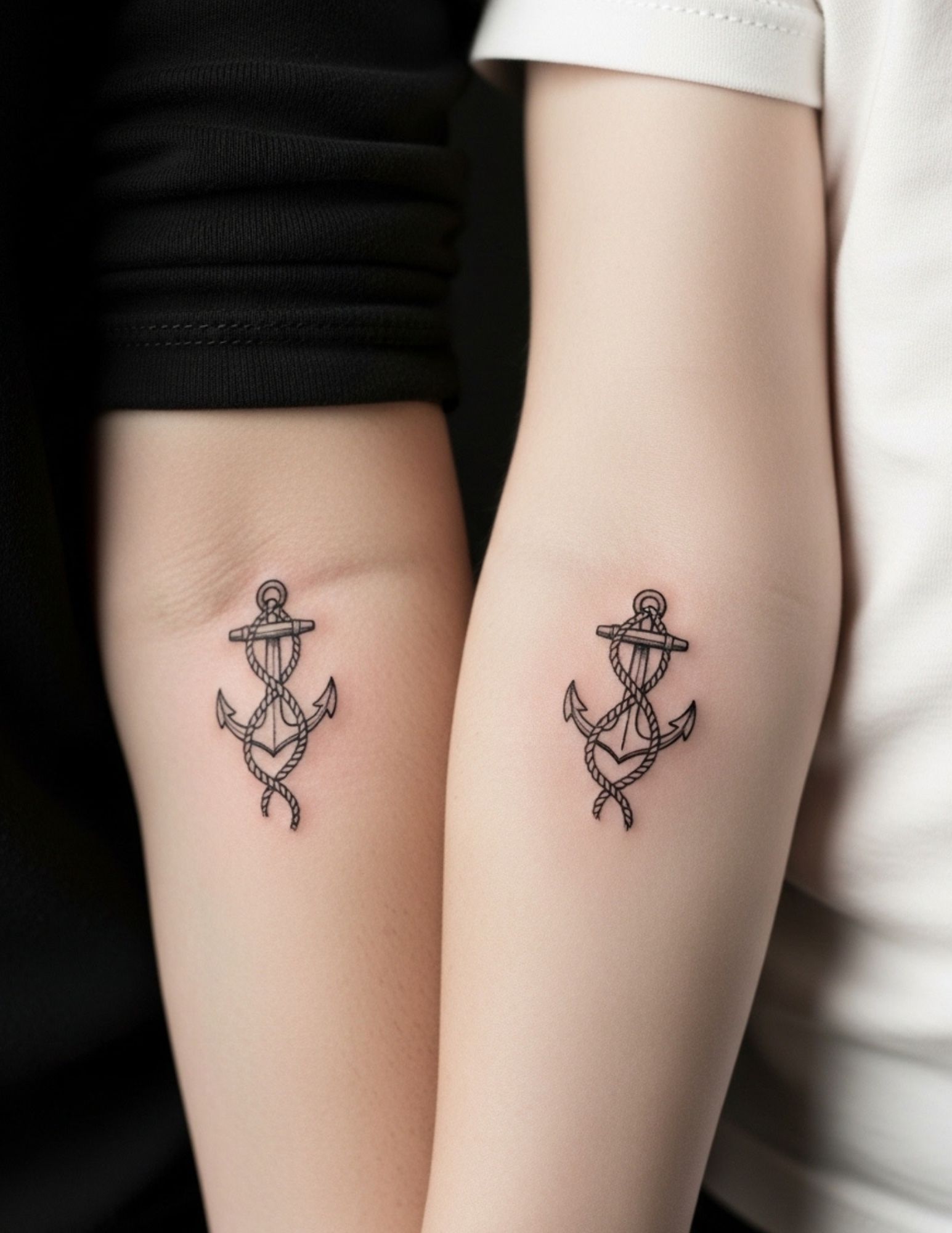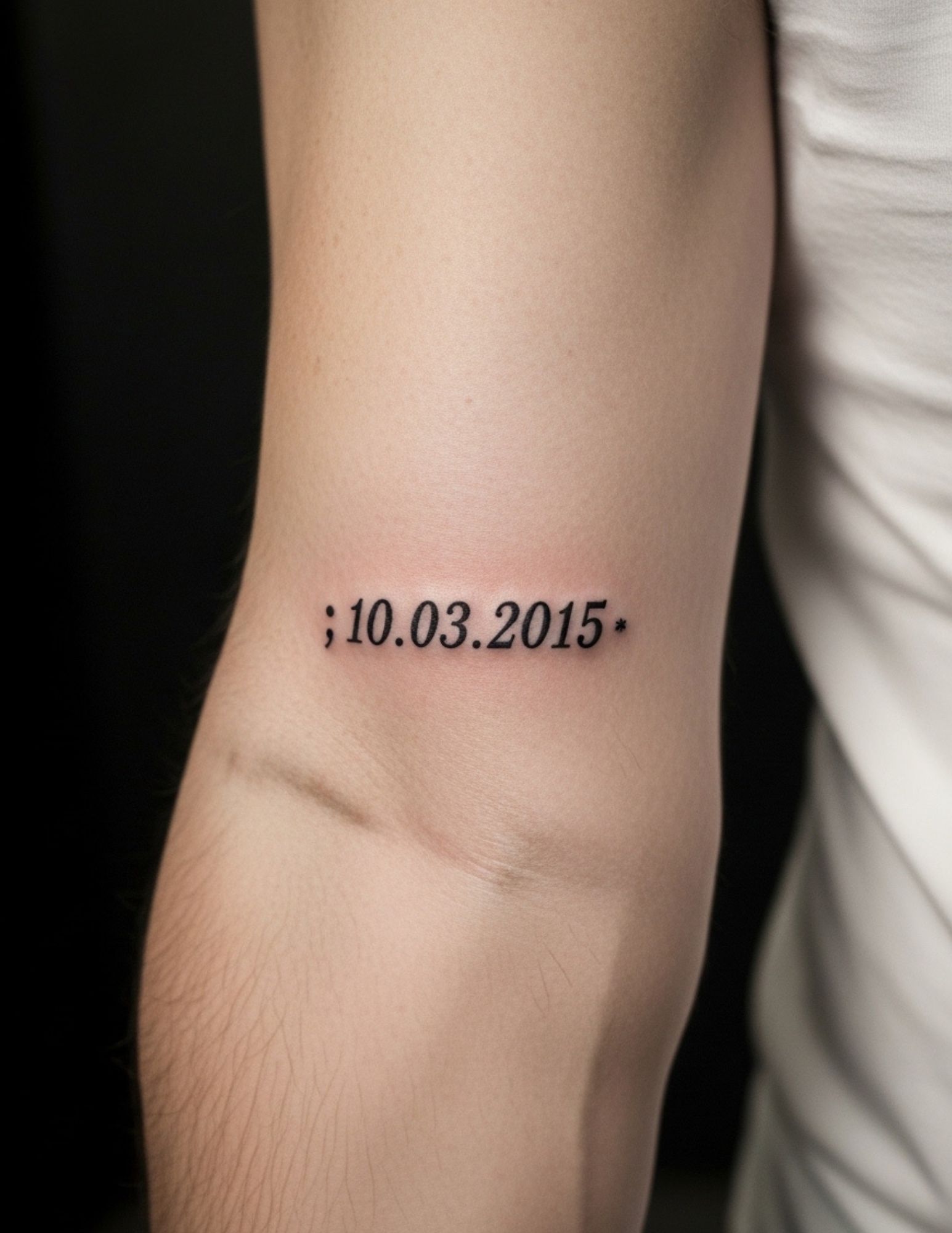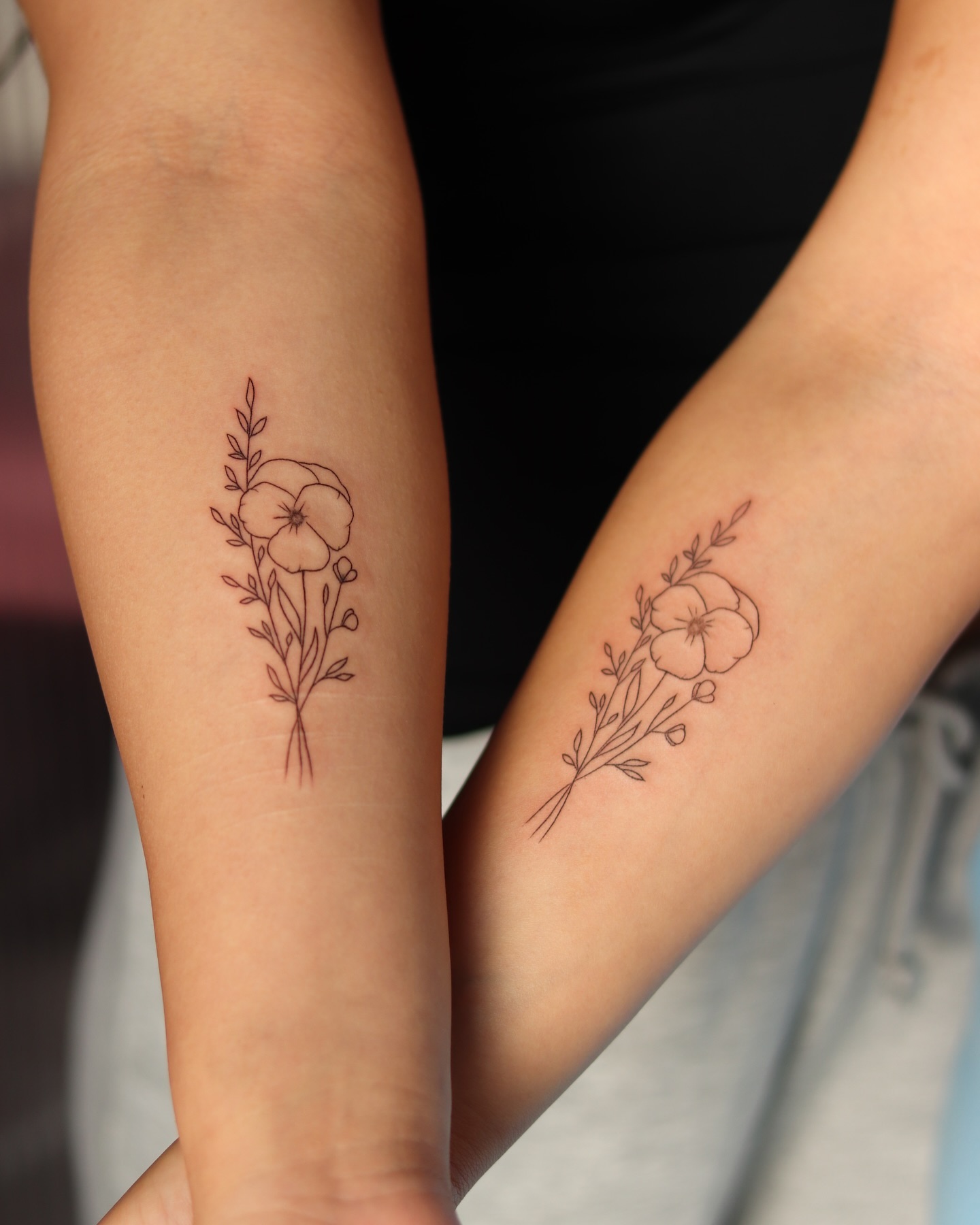
My brother and I spent almost two years arguing about a tattoo before either of us sat in a chair. The designs that actually last are the ones that mean something to both of you without needing an explanation to anyone else.
We ended up with something small and boring-looking to strangers, and neither of us has regretted it once.
The ideas below are the ones I keep coming back to after years of looking at matching work, asking artists what holds up, and watching a few friends get pieces they now want covered.
If you want a wider view of matched designs first, I would start with these paired tattoo ideas and then come back to the brother-specific ones here.
Which Brother Tattoo Approach Is Right for You?
There are really only four ways to do this, and picking the approach before picking the design saves an enormous amount of back and forth.
| Approach | Best For | Risk If It Goes Wrong | Typical Session |
|---|---|---|---|
| Identical matching | Brothers with the same taste who want the link obvious | One of you outgrows the design and it is on both of you | 45 min to 2 hours each |
| Complementary pair | Different personalities, one shared idea | Reads as unrelated if the style is not locked in first | 1 to 3 hours each |
| Same theme, own design | One brother wants big, the other wants small | The connection is invisible to anyone but you | Varies widely |
| Shared detail inside separate pieces | Brothers already collecting unrelated work | Easy to lose the detail in a busy sleeve | Added to existing sessions |
What Makes a Brother Tattoo Work
The best brother tattoos I have seen are specific to one family and vague to everyone else.
A date, a set of coordinates, a species of animal from one particular summer — those carry weight because they are not interchangeable with anyone else’s story.
The ones that age badly are usually the ones designed to be read by an audience. If the tattoo needs a caption, it is probably doing too much work.
Style consistency matters more than people expect. When I asked artists about this, the answer was always the same: two pieces done in different styles by different artists rarely look like a set, even when the subject matches.
Agree on line weight, on whether there is shading, and on roughly how big each piece will be. Usually that conversation solves more design problems than picking the subject does.
20 Brother Tattoo Ideas That Hold Up Over Time
These are ordered roughly from most personal to most decorative. There is no wrong end of that scale.
1. Birth Order in Roman Numerals
Roman numerals are the quietest way to put a date on your arm, and brothers use them two ways: birth dates, or simple birth order.
Both of you carry both numerals, which is the detail that makes it a brother tattoo rather than just a date. The older brother’s number is not more important, and the layout should not suggest it is.
In my experience the mistake here is scale. Numerals inked too small will thicken and close up as they settle, and dates are the worst thing to have go illegible.
Ask for a serif face rather than a thin modern one, and keep the whole line at least as long as your thumb. Inner forearm is the usual placement, and it is comfortable to sit for.
2. The Same Animal, Twice
Identical animal tattoos only work when the animal is genuinely yours — a species from a place you both know, or one your family has joked about for years.
Otters, wolves and bears are the ones I see most on brothers. Otters in particular have stuck around because of how they hold hands, which is a softer idea than most matching designs allow.
Keep the animal in one illustrative style with clear black linework. Heavy detail in a small animal is what turns it into a smudge after a few years.
3. Two Different Animals, One Style
This is the version I would recommend to most brothers who do not have identical taste.
Each of you picks the animal you actually connect with, and the artist ties them together with matching line weight, matching framing and the same amount of shading.
Style is the glue here, not subject matter. A fox and a moose look like a pair when the drawing hand is the same, and look like two random tattoos when it is not.
Book both of you with the same artist, ideally on the same day, and ask them to draw the two pieces side by side before either one gets stencilled.
4. A Line From Something You Both Lived Through
Text is risky and it is still one of the most common brother tattoos, because a sentence can carry a story a symbol cannot.
Pick something one of you actually said, or something a parent or grandparent said. Song lyrics date faster than family lines do, in my experience.
Keep it to a few words. Long quotes need to go small to fit, and small script is the single most common thing I hear artists warn against for longevity.
5. Mountains and Peaks
A skyline is the easiest shared design to get right: simple shapes, no fine detail, and it works at almost any size.
If there is a range you both climbed or grew up looking at, ask the artist to work from a photo of the real ridgeline rather than a generic triangle stack.
Small birds, a treeline or a single star above the peaks are the usual additions. I would keep it to one of those, not all three. If you like the landscape direction, this mountain and tree design guide covers the composition side in more depth.
6. Sword and Shield
One brother takes the sword, the other takes the shield, and neither piece is complete on its own.
Brothers usually split these by temperament — the one who starts things takes the blade. It is a slightly corny division and it is also usually accurate.
Shields hold initials and crests well, which gives you somewhere to put a family name without tattooing the word itself. The symbolism behind the pairing is covered properly in this sword and shield tattoo meaning guide.
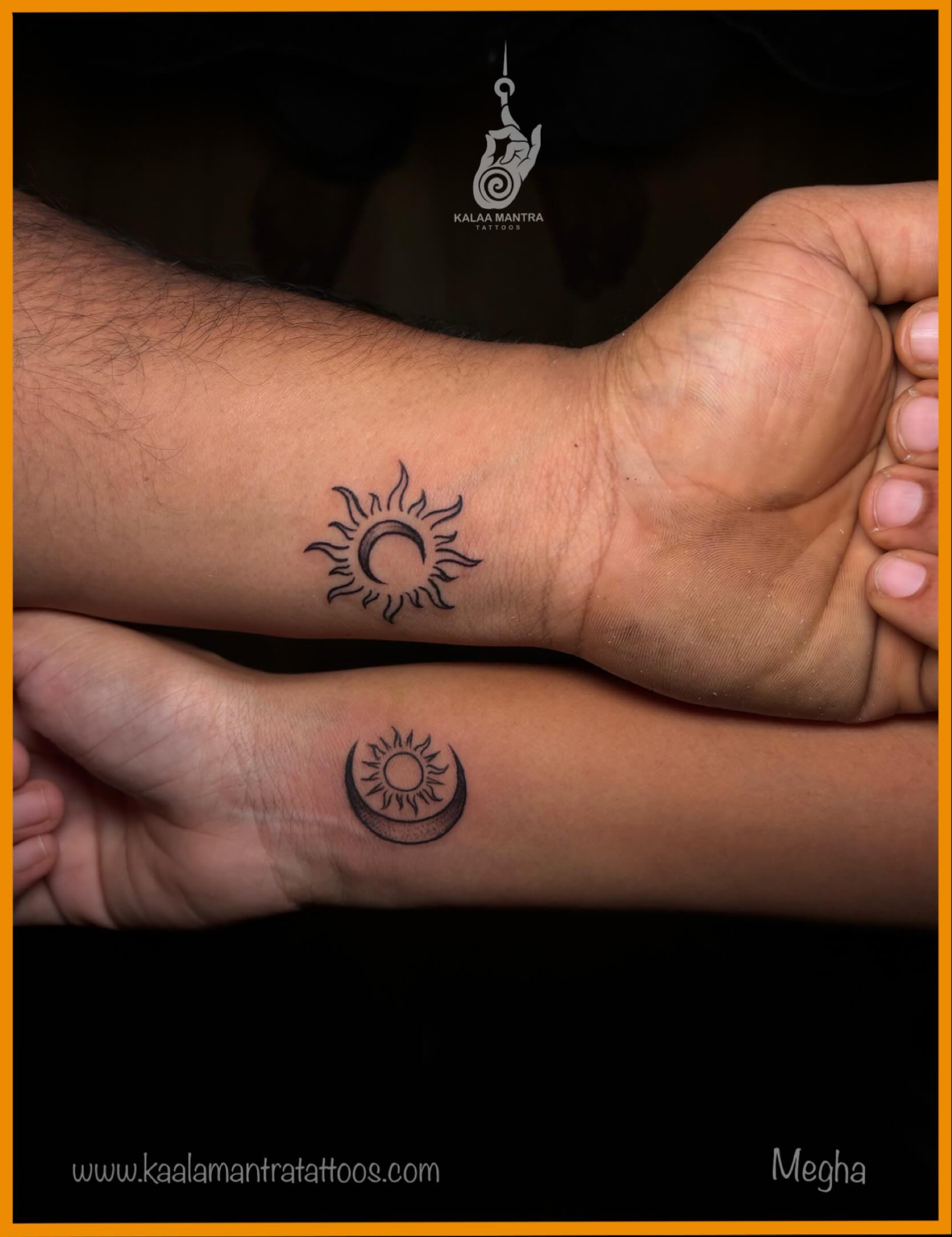
7. Sun and Moon
Sun and moon is the most-used complementary pair there is, which is exactly why it works — everyone reads it instantly.
At micro size on the wrist it becomes something almost nobody notices, which suits brothers who want the tattoo for themselves rather than for conversation.
Mirror the placement so the two designs line up when you stand next to each other. It sounds fussy and it is the detail people comment on most.
8. Coordinates of the House You Grew Up In
Coordinates are a date’s more private cousin. Nobody reads a string of numbers and decimals in passing.
Pull the numbers yourself from a mapping app, check them twice, and then check them against each other’s stencils before the needle starts.
I have heard of one pair where the two sets differed by a digit, and only one brother noticed a year later. Same font, same number of decimal places, both stencils photographed side by side.
9. Playing Cards
Card designs give you a natural pair without needing the two tattoos to match line for line — different cards, same deck.
Traditional American style suits this better than fine line does. The bold outlines and limited colour palette were built to stay readable for decades.
If one of you wants red in the design and the other does not, split by suit rather than forcing both. Black spades and red hearts still read as one set.
10. Matching Geometric Designs
Geometry is the safest choice for brothers who cannot agree on subject matter but want the pieces to obviously belong together.
Repeating shapes, clean angles, a little dotwork — the design carries no narrative, so there is nothing to grow out of.
Ask for slightly heavier lines than the drawing looks like it needs. Fine geometric linework is beautiful for two years and soft after ten, and touch-ups on dotwork are fiddly.
11. Arrows
Arrows suit brothers because they are directional — you can point them the same way, or toward each other, and the meaning changes completely.
The version I like best adds small numerals or notches on the shaft, so birth order is folded into the design rather than tattooed separately.
A single spot of red on an otherwise black design is a low-risk way to add colour. Red does tend to need a touch-up sooner than black, so expect that rather than being surprised by it.
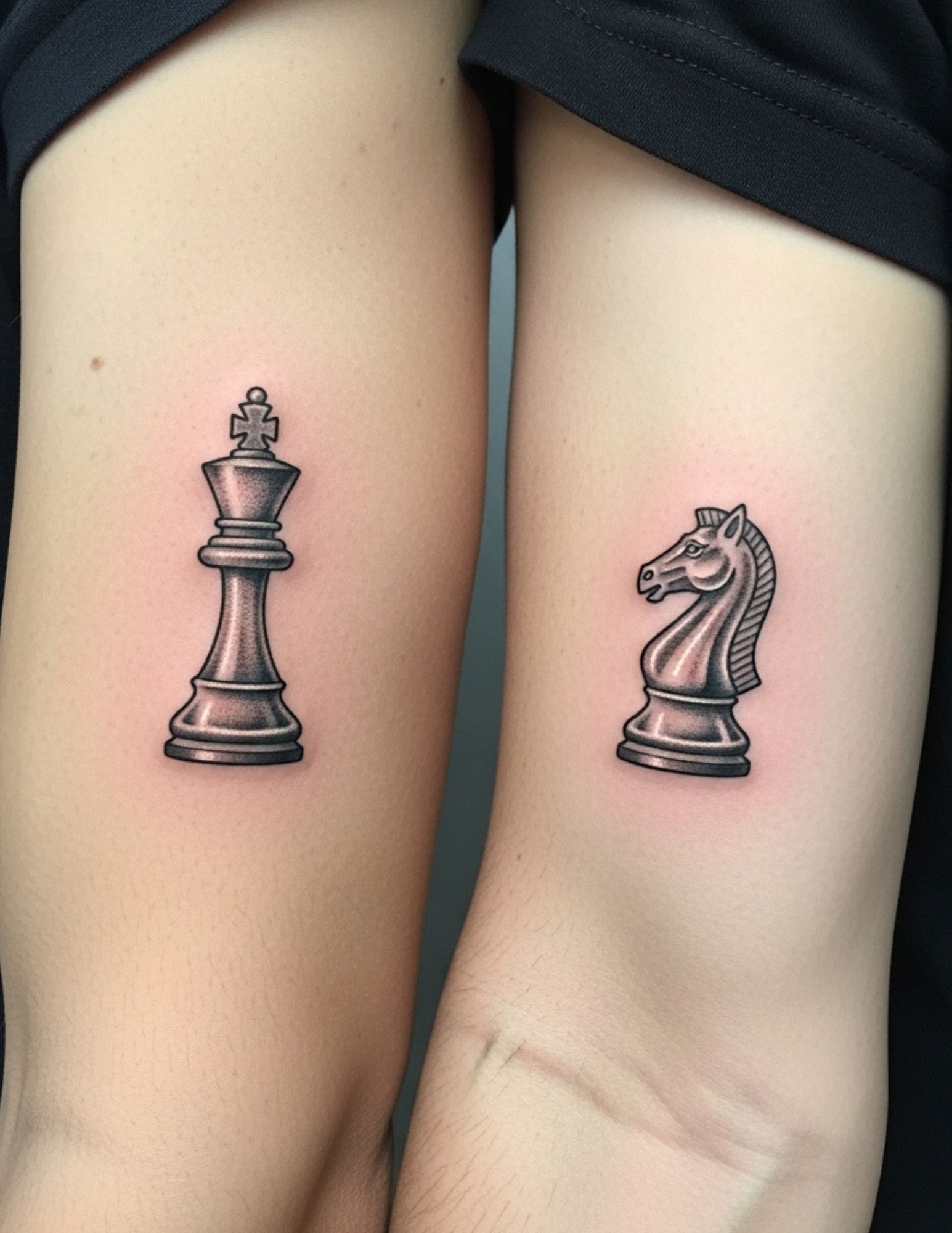
12. King and Knight
Chess pieces are one of the few “matching but not identical” ideas that need no explanation at all.
King and knight is the usual split for brothers, though I have seen two knights work better for twins, and rook and knight for brothers who both dislike hierarchy.
These pieces live or die on the shading. A carved chess piece needs black and grey depth to read as three-dimensional, so budget a full session rather than treating it as a quick flash piece. If crowns appeal more than chess, the minimal crown tattoo guide covers a simpler route to the same idea.
13. The Same Constellation
A constellation is a set of dots and thin lines, which makes it one of the cheapest and fastest matching tattoos you can get.
Most brothers use one of their star signs, or the constellation visible from home on a specific night. Either works; the second is harder for anyone else to copy.
Ask for slightly larger dots than feel right on paper. Tiny dots spread as they heal, and a constellation with blurred stars loses its shape faster than almost any other design.
14. Complementary Halves
One design, cut in two, one half each. Done well it is the most striking option on this list.
Done badly, each brother is walking around with half a shape that means nothing on its own, which is a real cost if you ever stop seeing each other often.
The fix is to choose an image where each half still stands up alone — a compass split down the needle, a tree split at the trunk, not a face cut vertically.
15. A Matching Band
Bands around the wrist, bicep or ankle are the most wearable matching option for brothers who want something visible without a picture on their arm.
If you are drawn to Polynesian or other tribal patterns, take the cultural side seriously — many of those designs carry specific meaning and belong to specific peoples.
An artist who works in that tradition can tell you what is appropriate to wear and what is not. This tribal tattoo guide is a reasonable starting point before that conversation.
16. Matching Crowns
Crowns are simple, symmetrical and easy to keep small, which makes them one of the most requested matching designs I see on brothers.
Two identical crowns read as equals. Two slightly different crowns — one taller, one rounder — read as brothers, which I think is the better version.
Upper arm is the usual spot. Keep the points chunky rather than needle-thin, because thin spikes are the first thing to soften as the ink settles.
17. Compass
A compass is the standard “find your way back” design, and between brothers it carries that without being sentimental about it.
Two options work well: the same compass mirrored on both inner forearms, or the same compass at two very different scales so each piece still feels like your own.
Rose compasses hold detail better at larger sizes. Under about two inches, drop the inner ring and the degree markings or they will close up. There is more on the symbolism in this compass tattoo meaning guide.
18. A Family Crest Element
If your family has an actual crest, this is the most direct brother tattoo there is. If it does not, an artist can build one from things that are genuinely yours.
Pull in a trade a grandparent worked, a plant from the country your name comes from, a tool, an animal. Two or three elements, not six.
Crests need size. Shields with internal quartering and a banner do not survive at three inches, so plan for the upper arm or the outer bicep rather than a wrist.
19. One Small Shared Symbol
This is the option I would suggest to brothers who are not sure they want a tattoo at all.
One small figure, an inch or two, somewhere easy to cover. It costs the least, heals the fastest, and is the easiest thing on this list to build on later.
The symbol matters less than the fact that only the two of you know why it is that one. A badger, a specific bird, a piece of camping gear — the more mundane, the better it usually ages.
20. “Brother” in a Language That Means Something
Writing the word in a family language is common and it is the idea I would push back on hardest, for one reason: script is the hardest thing to verify.
Get the spelling from a fluent speaker in your family, not a translation app, and have a second speaker check the stencil before it goes on.
Non-Latin scripts need an artist who has worked in them before. Character proportion and stroke order are not things you can eyeball from a reference image, and a badly drawn character is obvious to every reader of that language.
If Matching Is Not Your Thing
Plenty of brothers want the connection without the commitment of a shared design. There are three decent ways around it.
Same Artist, Different Tattoos
Booking the same artist means two completely unrelated tattoos still share a hand, a line quality and a sensibility.
It is the loosest possible version of a matching tattoo and it is the one I have seen hold up best among brothers whose tastes went in different directions.
The Same Day Instead of the Same Design
Getting tattooed together on a date that matters gives you the shared event without tying the artwork together at all.
A small matching date somewhere hidden, added to two otherwise unrelated pieces, is a nice compromise if you want a thread between them.
A Hidden Detail Inside Separate Pieces
A repeated element buried inside two different tattoos — the same tiny star, the same three dots, the same leaf shape — is the most private option on this page.
Tell the artist about it at the design stage so the detail sits somewhere it will not get swallowed if either of you adds more work around it later.
Planning, Cost and Aftercare
Book both appointments in one block if you can. Artists usually price a second identical piece more sensibly when it is stencilled the same day, and the two stencils can be compared directly before anything is permanent. If you are working out a budget, this breakdown of what a small tattoo costs is a reasonable baseline.
Healing is where matching designs most often stop matching. If one of you follows the aftercare instructions and the other does not, you end up with two pieces that settle differently, and touch-ups are how that gets fixed.
Follow whatever aftercare your artist gives you, not what you read online, including here. Broadly that means keeping it clean, keeping it out of the sun, not picking at it, and not soaking it in a bath or a pool while it is healing. Our tattoo aftercare guide covers the routine in more detail.
Some redness and swelling in the first days is normal. Spreading redness, heat, pus, a fever, or a rash that develops weeks or months later are not, and those are reasons to see a doctor rather than to ask the internet. The Mayo Clinic’s overview of tattoo risks and the American Academy of Dermatology’s tattoo care advice are both worth reading before your appointment, and the FDA’s consumer guidance on tattoo inks covers the reaction side. Nothing in this article is medical advice.
Still Not Sure? Mistakes Brothers Make
The most common one is deciding on a design in a single evening because you are both in the same city for once.
Sit with the drawing for a few weeks. Every artist I have asked would rather reschedule you than tattoo something you settled on in an hour.
The second is one brother quietly agreeing to a design he does not like, usually the younger one. That resentment shows up years later, and it is the reason a lot of matching work gets covered.
The third is skipping the artist search. If neither of you has been tattooed before, start with these first tattoo ideas and look closely at healed work in each artist’s portfolio, not just fresh photos.
And if you are really doing this for the group rather than the two of you, matching designs across a wider circle follow slightly different rules — these small matching tattoo ideas handle that better.
Frequently Asked Questions
Do brother tattoos have to be identical?
No, and in my experience they usually work better when they are not. Complementary designs — a sword and a shield, a king and a knight, two different animals in one style — keep the connection obvious while letting each of you have something that fits your own taste. What actually ties two tattoos together is the style: matching line weight, matching shading and matching scale. Identical subject matter without matching style rarely reads as a set.
Where is the best placement for a matching brother tattoo?
Inner forearm and upper arm are the two placements I would suggest first. Both are easy for the artist to work on, relatively comfortable to sit through, and simple to cover at work. Mirrored placement is worth thinking about if the two designs are meant to line up when you stand together. Hands, fingers and feet look great in photos but fade and blur faster than almost anywhere else, so they need touch-ups more often.
How much does a matching brother tattoo cost?
It depends entirely on size, detail and where you live, so anyone quoting you a single number is guessing. Most small matching pieces sit at or near a shop’s minimum charge each, and detailed work like a shaded chess piece or a full family crest runs into hourly rates instead. Getting both tattoos on the same day sometimes brings the second piece down, since the design work is already done. Always ask for a quote on the actual drawing rather than a description.
What if my brother and I cannot agree on a design?
Agree on the constraint instead of the picture. Pick the style, the size range, the placement and the artist first, then let each of you bring a subject that fits inside those limits. That usually dissolves the argument, because most disagreements are actually about how big or how visible the tattoo will be rather than what it shows. If you still cannot agree, going to the same artist for two unrelated pieces is a perfectly good outcome.
Is it a bad idea to get a brother tattoo if we are not close right now?
Only you can answer that, but I would be honest about what the tattoo is for. A design meant to fix a relationship carries a lot of weight and can end up as a daily reminder of something unresolved. A design that records a shared history is different, because the history stays true regardless of how often you speak. If you are unsure, choosing something small and coverable is a sensible hedge, and removal or cover-up work is always more expensive and more painful than the original tattoo.
Quick Summary
- Pick the approach before the picture: identical, complementary, same theme, or a shared hidden detail.
- Specific beats symbolic — a real date, a real ridgeline or a real set of coordinates outlasts a generic symbol.
- Matching style matters more than matching subject. Same artist, same line weight, same scale.
- Keep small designs simple. Thin script, tiny dots and needle-fine spikes are the first details to blur.
- Check text, dates and coordinates twice on the stencil, with both of you looking at both stencils.
- Book together if you can, and agree that you will both follow the same aftercare instructions.
- Do not let either brother agree to a design he does not actually want — that is the regret I hear about most.
- See a doctor, not a forum, if a healing tattoo becomes hot, spreading, painful or feverish.