The ankle is the most underrated placement on a man’s body, and the reason is simple: it hides under a sock all week and shows up the moment you put on shorts.
I have watched a lot of guys agonise over forearm placement when the thing they actually wanted was something private. The ankle solves that problem without asking you to compromise on the design.
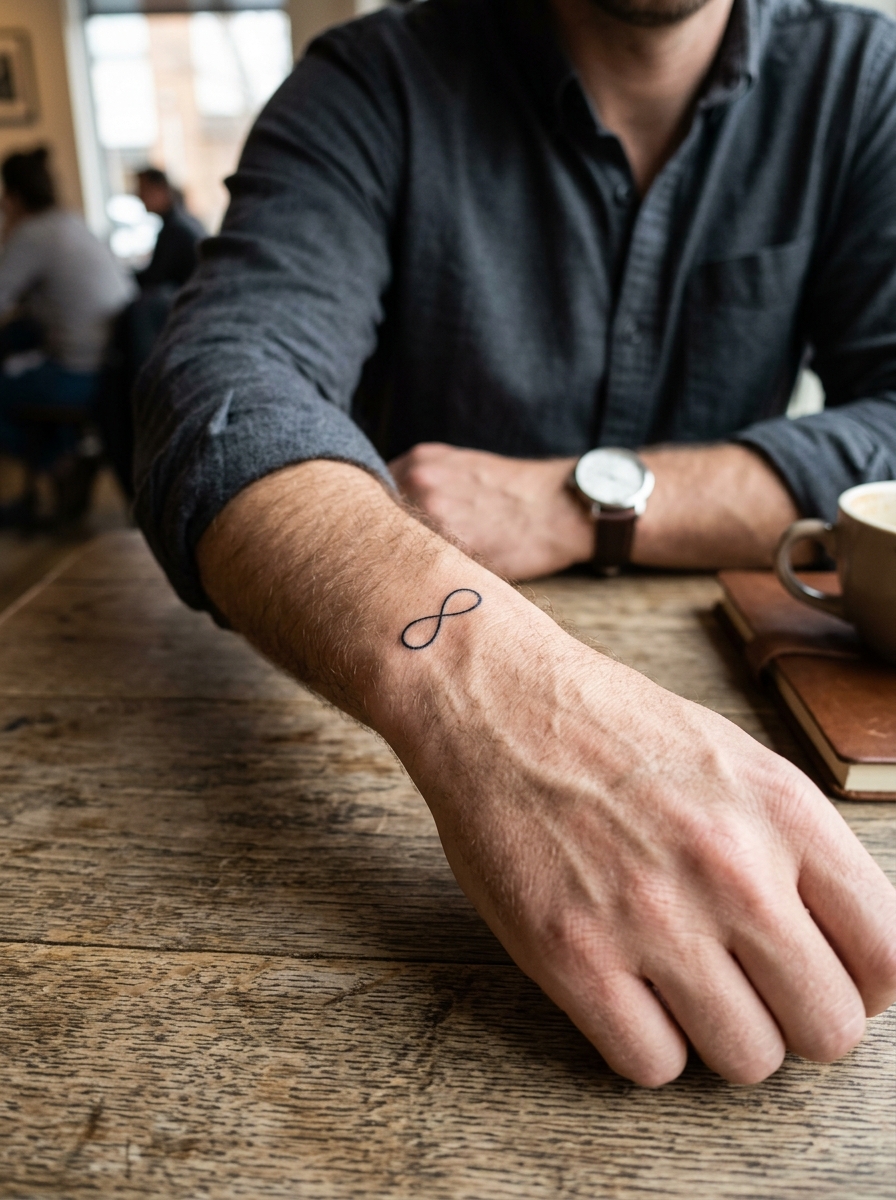
What it does ask for is discipline about scale. In my experience the single biggest mistake here is bringing in a design drawn for a calf and asking the artist to shrink it. It never survives the reduction. If you like the idea of small, deliberate work, the same logic applies to wrist tattoo ideas for men, where surface area is the whole conversation.
Below are 20 ankle designs I keep seeing hold up well, plus what I have learned about pain, healing and the specific ways ankle tattoos go wrong.
Inner Ankle, Outer Ankle, or Wrap-Around?
These three placements behave differently enough that picking one before you pick a design will save you a redraw.
| Placement | Visibility | Pain level | Best suited to | Watch out for |
|---|---|---|---|---|
| Outer ankle | Highest — seen with shorts, low socks, sandals | Sharp over the bone, brief | Single motifs: compass, anchor, skull, scorpion | Shoe collars rubbing during healing |
| Inner ankle | Low — often hidden even in shorts | Similar, thinner skin, more nerve-y | Dates, initials, small script, personal symbols | Rubbing against the opposite ankle when you walk |
| Wrap-around band | High from every angle | Hardest — longest session, crosses bone twice | Tribal, Japanese wave, chain, snake | Alignment: the band must close cleanly at the back |
| Just above the bone | Moderate — a sock covers it | Easiest of the four | Slightly larger pieces, small portraits | Sitting too high and reading as a shin tattoo |
What Ankle Placement Actually Costs You
Pain first, because everyone asks. The ankle sits near the top of most artists’ pain rankings for the same reason the ribs and elbow do: thin skin stretched directly over bone with very little fat underneath.
The honest version is that it hurts more than a forearm and less than a full session would suggest, because most ankle pieces are small enough to be over in under an hour. Short and sharp beats long and dull for most people. If you want the wider picture, the rundown of the most painful tattoo spots puts it in context.
The second cost is healing conditions. Your ankle spends the day inside a sock, inside a shoe, moving through its full range of motion every step, and it is the lowest point on your body, which means swelling collects there.
The third is longevity. Every artist I have asked says the same thing about feet and ankles: they fade faster than almost anywhere else, and touch-ups are more likely. Friction is the main culprit.
None of that is a reason to skip the placement. It is a reason to choose a design built on strong outlines rather than delicate grey wash, and to plan around two to three weeks of awkward footwear.
20 Ankle Tattoo Ideas for Men
Each of these has been chosen because it works at ankle scale, not because it looks good on a thigh.
1. Fine Line Geometric
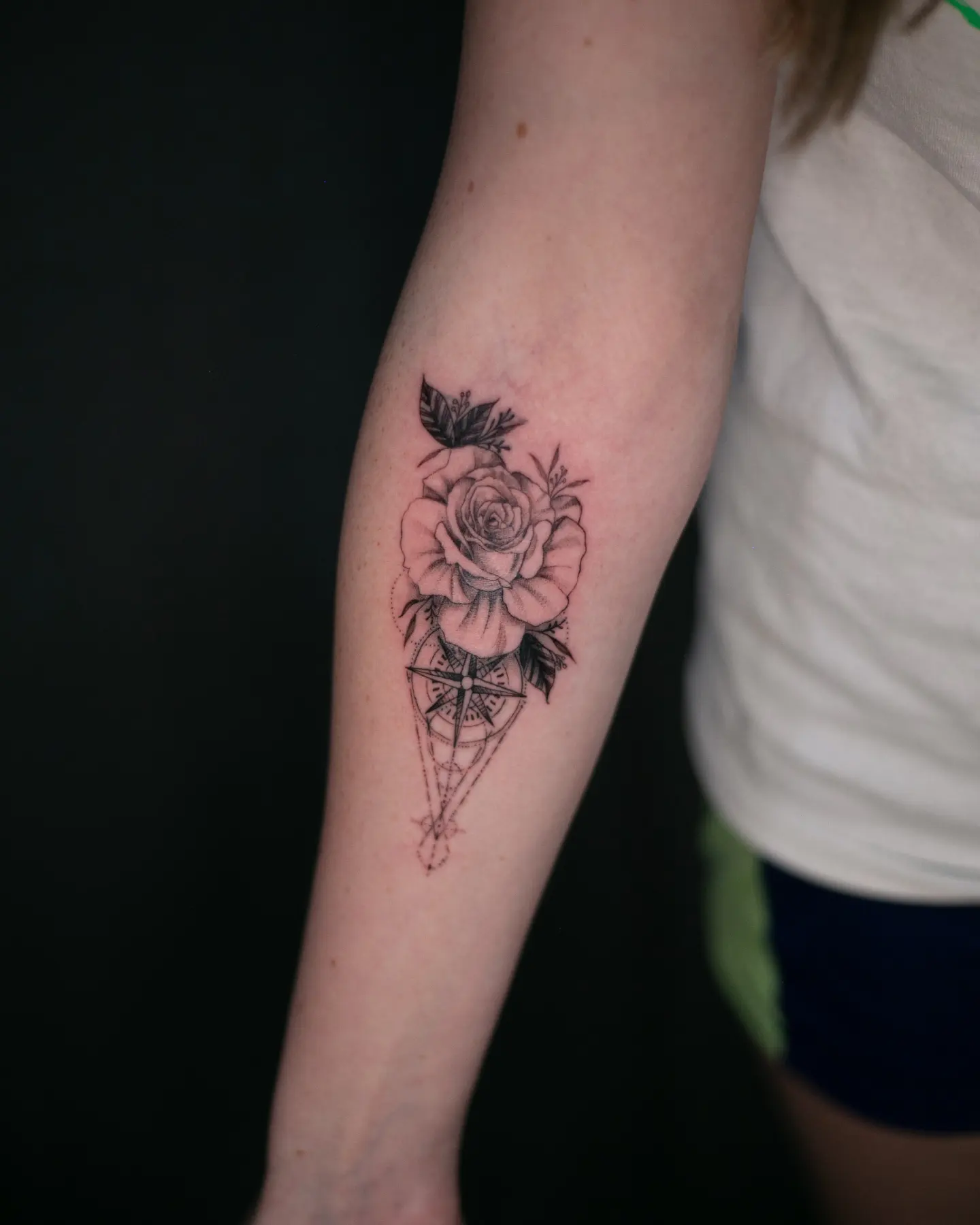
A triangle, a diamond, a piece of sacred geometry, or a purely abstract form in clean single-weight line. The image at the top of this article is a good example of the scale that works.
Geometric work is the safest bet at ankle size because it has no fine detail to lose. Straight lines and simple arcs read clearly from three feet away and stay readable as the tattoo ages. My one caution: fine line on the ankle is exactly where fading shows up first, so ask your artist to go slightly heavier than they would on a forearm. A hairline that looks perfect on day one can go patchy over the bone within a couple of years.
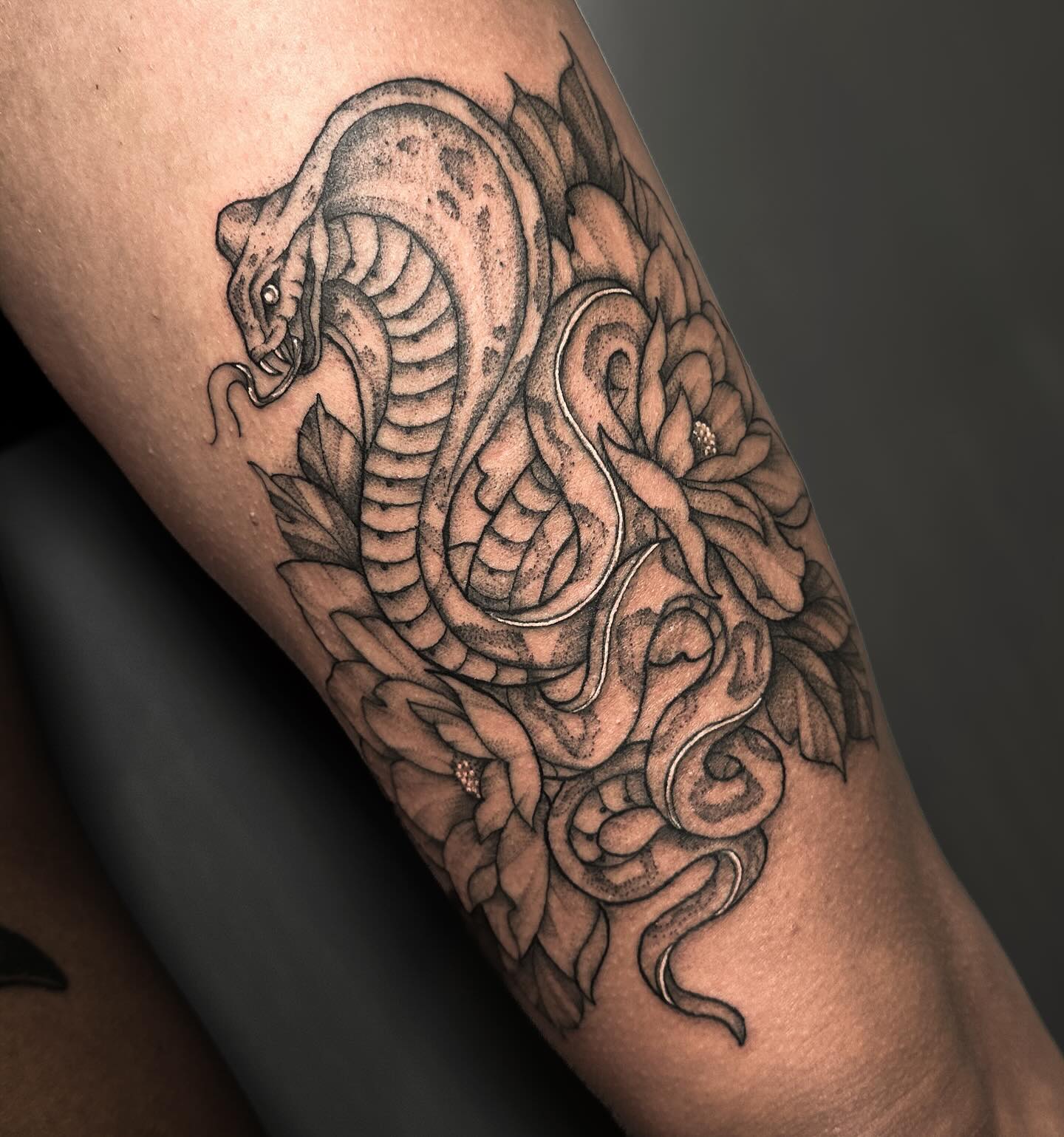
2. Snake Wrapped Around the Ankle
A snake whose body circles the ankle with the head landing on the outer bone or the top of the foot.
This is the design the placement was made for. A snake is naturally long and tapered, so it takes a wrap without any awkward stretching, and the head gives you a focal point exactly where people look. Bold traditional gives you the most graphic impact and the best long-term hold; fine line lets you push more scale detail but will need more upkeep. Worth reading what the snake tattoo meaning actually carries before you commit, because it reads very differently across cultures.
3. Traditional Eagle
A classic American traditional eagle head in profile, heavy outlines, flat colour fills, no gradient.
Traditional is built for this. The style was developed for tattoos that had to survive decades of sun and wear on sailors, and the ankle is exactly the kind of high-friction spot those rules were written for. At this size you want the head alone rather than the full spread-wing eagle, which needs more width than the ankle gives you. Keep the colour palette tight: red, black, and a single yellow or green.
4. Compass
A compass rose or nautical compass on the outer ankle, in fine line geometric or bold traditional.
The compass earns its popularity. It has enough internal structure to look considered, clear symbolism most people understand, and a naturally circular footprint that suits the round shape of the ankle bone. I would size it to sit just behind the bone rather than directly on it, which keeps the needle lines from distorting as the skin curves. The compass tattoo meaning is broad enough that it works whether you want it literal or personal.
5. Japanese Wave Band
Japanese wave forms drawn as a band circling the ankle, with the crests and spray sized specifically for the placement.
Done properly this is one of the best-looking ankle tattoos there is, and done badly it is a mess. The difference is whether the artist redraws the waves at ankle scale or shrinks a leg-sleeve design. Ask to see healed photos of their small-scale Japanese work specifically. The style has its own internal rules about flow and negative space, which the guide to Japanese tattoo designs covers in more depth.
6. Small Skull
A single skull in black and grey, front-facing or three-quarter, roughly the size of a large coin.
The skull is the most common small subject men ask for and it survives the ankle well if you keep the shading simple. What fails here is heavy grey wash and delicate tonal work, which softens as it settles. What holds is a strong outline with a few confident dark areas for the sockets and nasal cavity. In my experience a slightly cartoonish, graphic skull ages better on the ankle than an attempt at realism.
7. Roman Numeral Date
A date rendered in roman numerals, usually running vertically down the inner ankle or horizontally just above the bone.
This one is about typography, not imagery. The mistake I see most often is spacing that is too tight, which closes up as the ink spreads slightly over the years and turns a clean date into a black smear. Ask for wider letter spacing than looks right on the stencil. Also check the numerals twice yourself before the needle goes in, because artists are not proofreaders and an incorrect date is a permanent, very specific kind of regret.
8. Geometric Mountain
A mountain range reduced to angular geometry, sometimes with a sun, moon, or horizon line behind it.
Mountains are one of the few landscape subjects that genuinely work small, because a mountain is already a triangle. Keep it to two or three peaks; four or more and the silhouette stops reading. A thin horizontal line behind the range adds a lot for very little ink. This design also sits well on the outer ankle where the natural curve of the bone gives the range a slight tilt that looks intentional.
9. Anchor
A traditional anchor with the shank running along the length of the ankle and the flukes at the base.
The anchor is the classic ankle and foot tattoo for a reason: its shape is tall and narrow, which is the shape of the space you have. It also happens to be one of the oldest tattoo subjects still in regular use, and the anchor tattoo symbolism around stability and homecoming still means something to a lot of people. Traditional styling with a rope or banner is the standard treatment; a stripped-back linework anchor is the modern one.
10. Wave and Horizon
A single stylised wave with a horizon line, in minimal fine line or single needle work.
This is about as minimal as the list gets and it suits guys who want something present rather than something loud. Two or three lines total. The risk is the same as all single needle work on the ankle: it can soften noticeably within a few years. I would go into this one accepting that a touch-up at some point is likely rather than being disappointed by it.
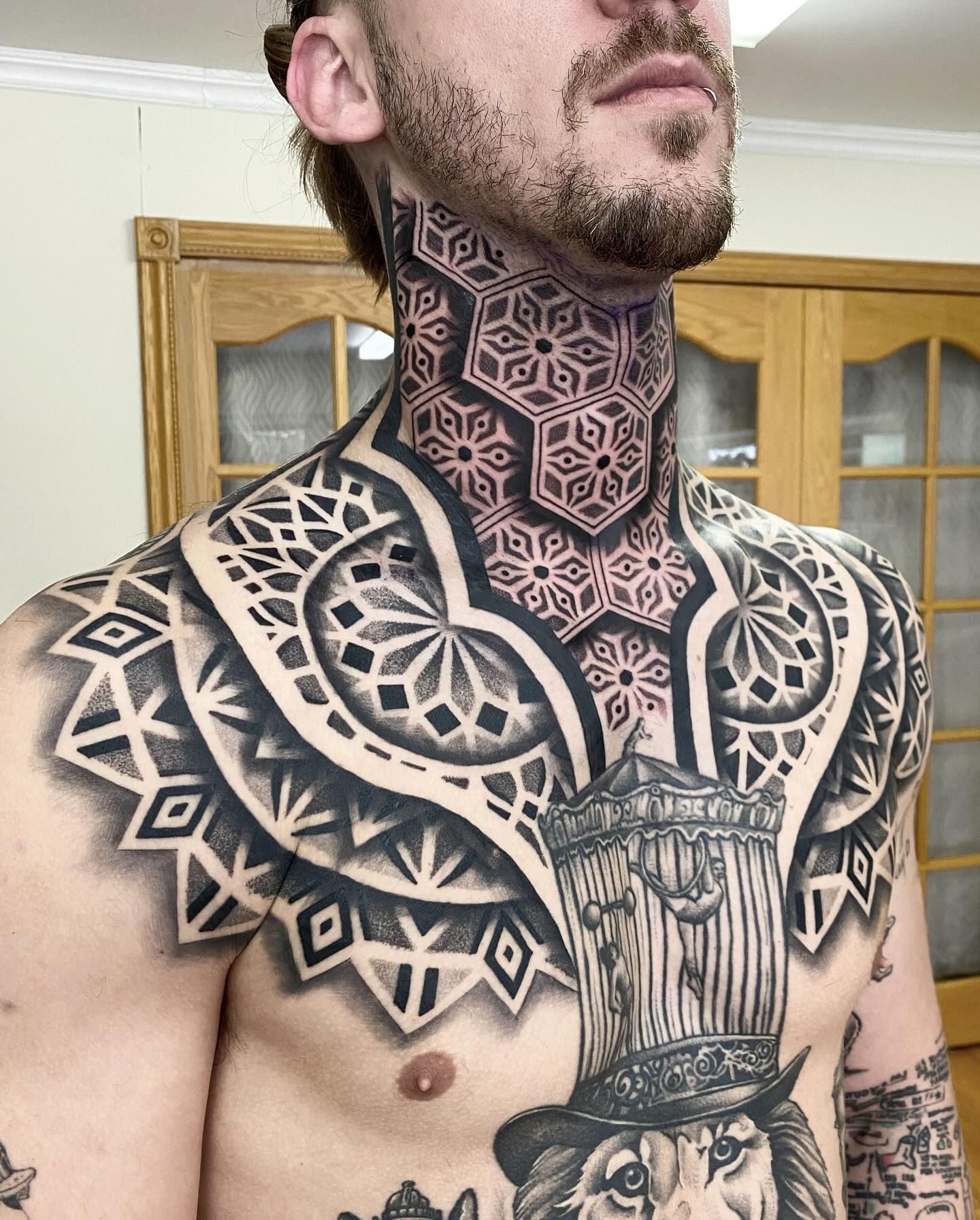
11. Tribal Ankle Band
A band of solid black tribal shapes circling the ankle, built on negative space rather than detail.
Tribal has come back around, and the ankle band is one of its better applications because solid black is the single most durable thing you can put on a high-friction area. The key is that the design has to close properly at the back of the ankle, which means the artist stencils it on you standing up, not sitting. If you want the design to carry actual cultural weight rather than generic shapes, look into Polynesian and Marquesan traditions and find an artist who works in them specifically.
12. Animal Silhouette
A wolf, bear, stag, or bird reduced to a filled black silhouette with no internal detail.
Silhouettes are underrated. Stripping an animal down to its outline forces the design to work on shape alone, and shape is what survives at small scale and over time. This is also the cheapest reliable way to get an animal onto your ankle without paying for detailed work that will blur anyway. Pick an animal with a distinctive profile: a stag’s antlers or a bird in flight read instantly, whereas a big cat and a dog can end up looking the same.
13. Playing Card
An ace, a single suit symbol, or a small card in American traditional styling.
Card imagery sits comfortably in traditional tattooing and scales down better than most objects because the card itself is a simple rectangle. An ace of spades is the common pick; a single suit symbol on its own is the more restrained option. Colour holds reasonably well on the ankle if the artist packs it properly, but expect red to be the first thing to soften. Black-only versions of this design will outlast the colour ones.
14. Arrow or Set of Arrows
A single arrow, or two or three parallel arrows, running vertically along the outer ankle.
An arrow is the most placement-friendly shape on this list because it is a straight line with a bit of detail at each end. It fills the vertical space the ankle offers without needing width. Multiple arrows work if you keep them parallel and evenly spaced; fanned arrangements need more room than you have. Simple, and slightly generic, which is either a drawback or exactly the point depending on what you want from it.
15. Family Initial
One or more initials in small script or a clean serif, usually on the inner ankle.
Of everything on this list, initials are what I hear the fewest regrets about. They are small, they mean something specific, and they do not lock you into a style. Script is the usual choice but a simple serif letter is often the better one, because script at this size relies on hairline strokes that thicken as they heal. Whatever the font, get it printed at actual size and look at it on your ankle for ten minutes before you agree to it.
16. Cross
A plain linework cross, a Celtic cross, or a small crucifix, sized so the arms clear the ankle bone.
A cross is straightforward to place and straightforward to execute, which is why it is one of the most common ankle tattoos on men. The main design decision is width: if the crossbar sits directly over the bone it will distort as you flex your foot, so most artists set it slightly above or behind. Celtic knotwork is possible here but only just, and only with an artist who works in it regularly.
17. Scorpion
A scorpion positioned over the outer ankle bone with the tail curving to follow the contour.
The scorpion is a good technical fit because its body is segmented and roughly triangular, which lets an artist wrap it over a curved surface without the anatomy looking wrong. The curling tail is the part that makes it work: it gives the design somewhere to go. Black and grey with defined segments is the usual approach. There is a wider set of scorpion tattoo ideas worth looking at if you want to see how the subject scales up and down.
18. Chain Link Band
A band of chain links circling the ankle, either solid and heavy or fine and jewellery-like.
The chain band has an obvious visual reference and people either like that or they do not. Executed well, with proper shading on each link so they read as three-dimensional, it is one of the more striking ankle bands available. Executed poorly it is a row of ovals. This is a design where the artist matters more than the concept: ask to see healed chain work specifically, because the highlights that make links look metallic are the first thing to fade.
19. Small Portrait
A miniature black and grey portrait or micro-realism piece, usually of a person or a pet.
I include this with a caveat: it is the hardest thing on this list to get right and the most likely to disappoint in five years. Micro-realism depends on very fine tonal gradients, and the ankle is the worst place on the body for preserving those. If you want one, budget for it, find a specialist rather than a generalist, and go in knowing that touch-ups are part of the deal. Otherwise pick a silhouette or a symbol that represents the same person.
20. Text in Custom Font
A word, a short phrase, or a name in a font chosen or drawn specifically for the placement.
Text is the most personal option and the one people most often rush. Two rules I would not break: keep it short enough that the letters can be large, and get the font drawn or adjusted for the ankle rather than pulled straight from a computer. A word in five letters at a decent size will still be legible in fifteen years. The same word in a long phrase, set small, will be a grey line. If you are choosing a language you do not read, verify the text with someone who does.
Variations Worth Considering Before You Book
Most guys arrive with a subject in mind and no view on the format. The format changes the result more than the subject does.
Single Motif vs Full Band
A single motif is one sitting, usually under an hour, and it can be added to later. A band is a commitment: it occupies the whole circumference, it costs more, and it constrains anything you put nearby.
If this is your first tattoo below the knee, start with a single motif. You can always build outward; you cannot easily un-band an ankle.
Matching or Paired Ankles
Two ankles gives you a symmetry option that most placements do not. Mirrored designs work well; identical designs on both sides tend to look like a uniform.
In practice I would space these out. Do one, live with it through a summer, then decide about the second.
Ankle to Foot Continuation
Extending a design over the ankle onto the top of the foot gives you far more room, and it is a common route for men who outgrow the original piece.
Be aware that the top of the foot hurts considerably more than the ankle and heals slower, because it is even thinner over bone and inside a shoe all day.
Cover-Ups and Additions
The ankle is a difficult cover-up area because there is not much room to work around an existing piece. Solid black tribal and heavy traditional are the two styles that reliably do it.
If the existing tattoo is small and faded, adding to it is usually a better plan than covering it.
Aftercare for an Ankle Tattoo
Ankle aftercare is normal tattoo aftercare with three extra problems: swelling, footwear, and movement.
Swelling is the one that surprises people. Because the ankle is the lowest point on your body, fluid pools there, and it is fairly common for the foot and ankle to puff up for the first couple of days. Elevating your leg when you are sitting genuinely helps. Swelling that increases after day three, spreads, or comes with heat, pus or fever is not normal healing and needs a doctor, not a forum thread.
Footwear is the practical problem. Plan for two to three weeks of loose, low shoes or sandals, and no boots or high-collared trainers that sit across the tattoo. Clean cotton socks over a healed-enough tattoo are fine; anything that rubs is not. Your artist’s specific instructions beat generic advice, and the general tattoo aftercare guide covers the washing and moisturising routine in full.
Movement is unavoidable, so accept a bit more scabbing than you would get on an arm. Do not pick it. Most surface healing is usually done in two to three weeks, with the deeper layers settling over a couple of months. The American Academy of Dermatology has sound general guidance on caring for tattooed skin, and the Mayo Clinic covers the infection and allergic reaction risks worth knowing before you book. This article is not medical advice.
Still Not Sure? The Mistakes I See Most Often
Shrinking a design that was drawn for a bigger area. This is the number one cause of ankle tattoos that look muddy at two years old.
Choosing delicate grey wash for a spot that lives inside a sock. Friction and fine gradients do not get along.
Booking a wrap-around band as a first tattoo. It is the longest, most painful and least forgiving version of this placement.
Not checking healed work. Fresh photos on an artist’s feed tell you almost nothing about how their small-scale work holds up. Ask for healed shots of ankle or foot pieces specifically.
If you are still deciding, it is worth browsing first tattoo ideas for men for subjects that suit small placements, and checking how much a small tattoo costs so the quote does not catch you off guard.
Frequently Asked Questions
How much do ankle tattoos hurt?
More than a forearm, less than the ribs, and generally near the higher end of most artists’ pain charts. The reason is thin skin directly over bone with almost no fat underneath. The upside is that most ankle designs are small enough to finish inside an hour, so the discomfort is short. Wrap-around bands are the exception and are a genuinely tough sit.
Do ankle tattoos fade faster than other placements?
Usually, yes. The ankle sits inside socks and shoes all day, and that constant friction wears at the ink more than most other areas. Sun exposure in summer adds to it. Designs built on strong outlines and solid black hold up far better here than fine line or delicate grey wash, and a touch-up at some point is a reasonable thing to plan for.
How long does an ankle tattoo take to heal?
Surface healing usually takes about two to three weeks, with the deeper layers settling over roughly two to three months. Ankles often swell for the first few days because they are the lowest point on the body, so elevating your leg helps. If swelling worsens after day three or comes with heat, pus or fever, see a doctor rather than waiting it out.
Can I wear shoes after getting an ankle tattoo?
Loose, low shoes or sandals are fine straight away. Boots, high-top trainers, and anything with a collar that sits across the tattoo should wait until the surface has healed, usually two to three weeks. Rubbing is the main thing that causes patchy healing on this placement, so plan your footwear before the appointment rather than after.
What is the best ankle tattoo for a first tattoo?
A single small motif on the outer ankle in bold black linework: a compass, an anchor, an animal silhouette, or an initial. It is one short session, it heals predictably, and it leaves you room to add more later. I would avoid starting with a wrap-around band or a micro-realism portrait, which are the two hardest versions of this placement.
Quick Summary
- The ankle is a concealable placement that still shows with shorts, which is why it suits men who want something personal rather than visible.
- Choose your placement first: outer ankle for single motifs, inner ankle for dates and initials, wrap-around for bands.
- Design for the scale. Shrinking a piece drawn for a calf is the most common way ankle tattoos go wrong.
- Bold outlines and solid black outlast fine line and grey wash on this placement, because of constant sock and shoe friction.
- Expect it to hurt more than a forearm, and expect it to be over quickly if the piece is small.
- Plan two to three weeks of loose, low footwear, and elevate your leg to manage the swelling that ankles are prone to.
- Ask any artist for healed photos of small ankle or foot work before booking, not fresh ones.
- Budget for a touch-up eventually. Ankles fade, and that is normal rather than a sign of bad work.