
The chrysanthemum is one of the most formally significant flowers in East Asian art and one of the most technically satisfying subjects in tattooing. Its hundreds of layered petals create a natural geometry that rewards precision in rendering and provides the kind of visual complexity that other flowers cannot match at the same scale.
In Japanese tattooing, the chrysanthemum holds a position of the highest cultural honour. In Western tattooing, it offers botanical beauty and visual richness that has been recognised independent of its Eastern associations. These 20 ideas cover both traditions and the space between them.
The Chrysanthemum in Japanese Culture
In Japan, the chrysanthemum is the imperial flower: the Chrysanthemum Throne is the formal name of the imperial institution. It represents longevity, rejuvenation, and the perfection of perseverance in the face of adversity since the flower blooms in autumn when other plants are withdrawing. In Japanese tattooing, the chrysanthemum is associated with these qualities of endurance and is often worn by people who have been through significant difficulty and come through it.
20 Chrysanthemum Tattoo Ideas
1. Japanese Irezumi Chrysanthemum
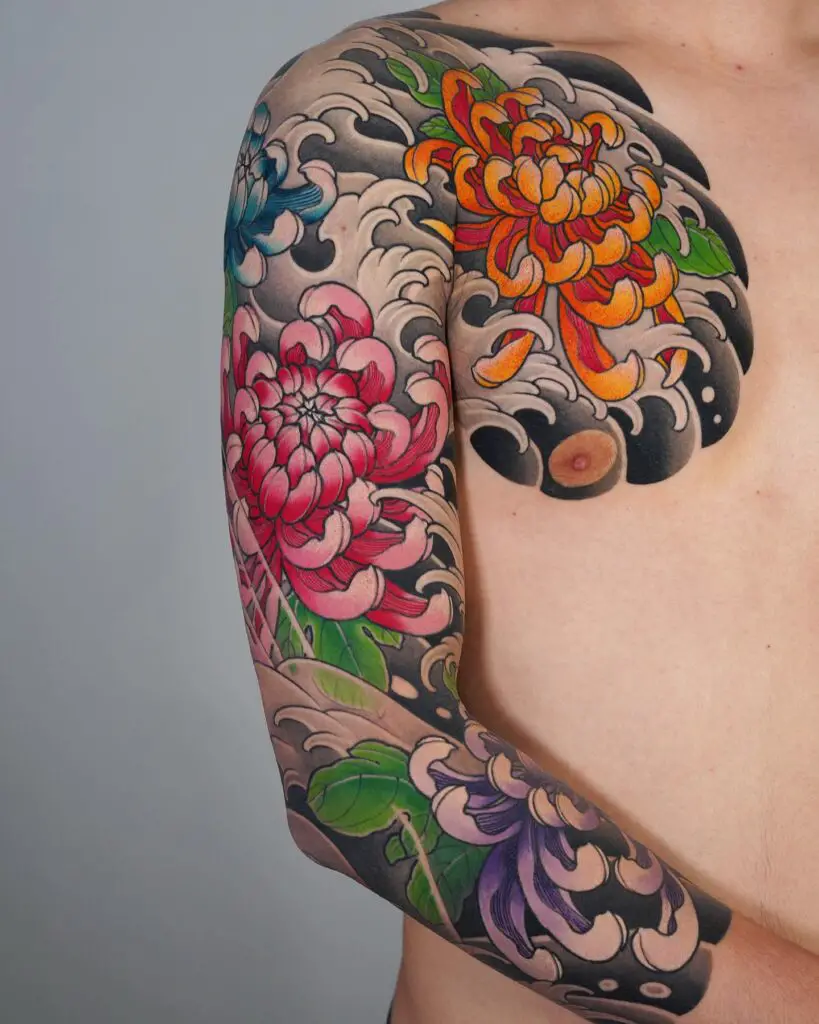
Photo: @horiyotatt
A chrysanthemum in the full formal vocabulary of Japanese tattooing: bold black outlines, the layered petals rendered with the disciplined brushwork quality of irezumi, rich colour fills. The Japanese chrysanthemum requires an artist with genuine fluency in the tradition. Done correctly, it is one of the most beautiful tattoo subjects in any style.
2. Large Chrysanthemum Back Piece
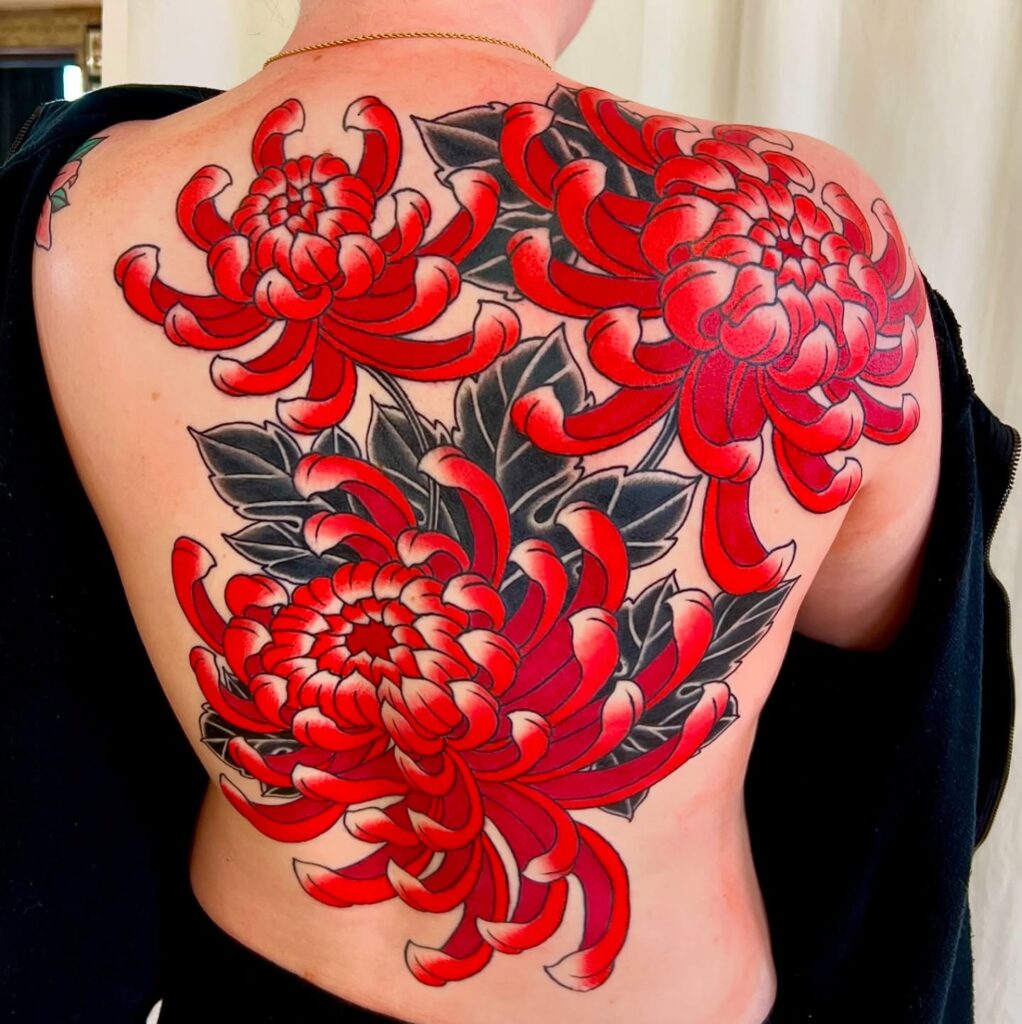
Photo: @nate_mcgaughy

A single large chrysanthemum filling the centre of the back, the layered petals extending outward in concentric circles. At back scale, the chrysanthemum’s many petals can be rendered individually with real detail. One of the most powerful single-flower tattoo concepts available.
3. Chrysanthemum and Koi
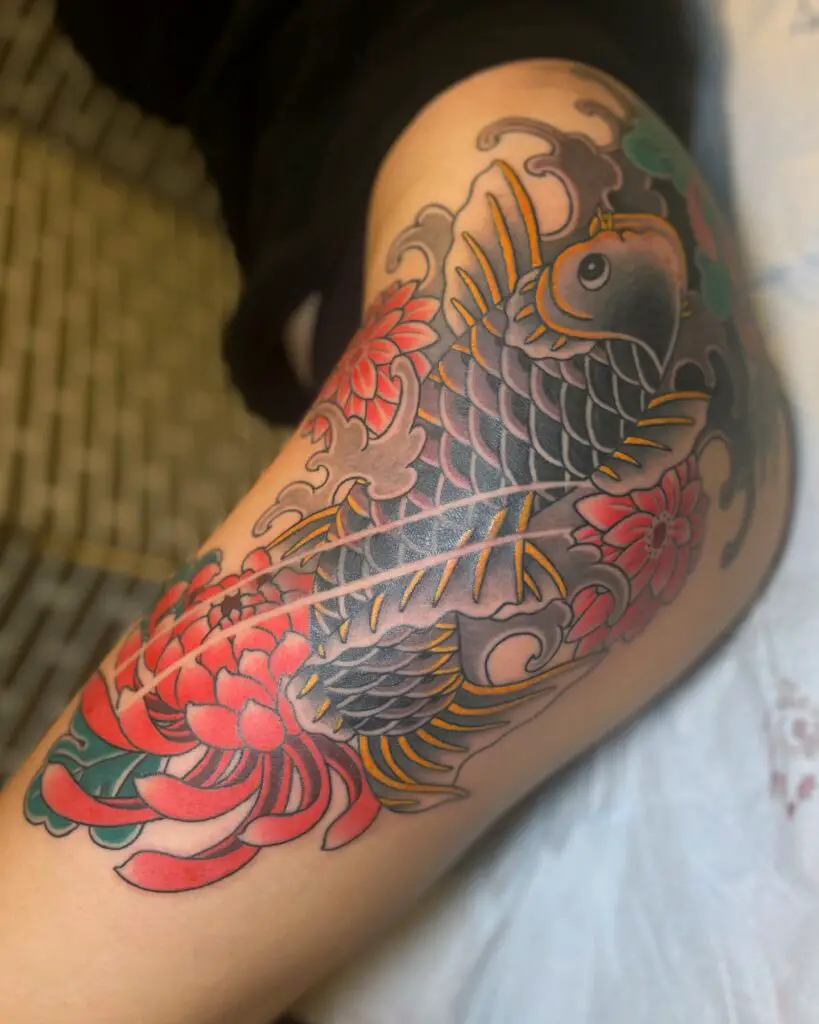
Photo: @shiyu_tattoo
A chrysanthemum with a koi fish, two of the central subjects of Japanese tattooing, in a composition that references the full irezumi tradition. The koi and chrysanthemum share associations with perseverance: the koi that swims upstream, the flower that blooms in autumn.
4. Fine Line Botanical Chrysanthemum
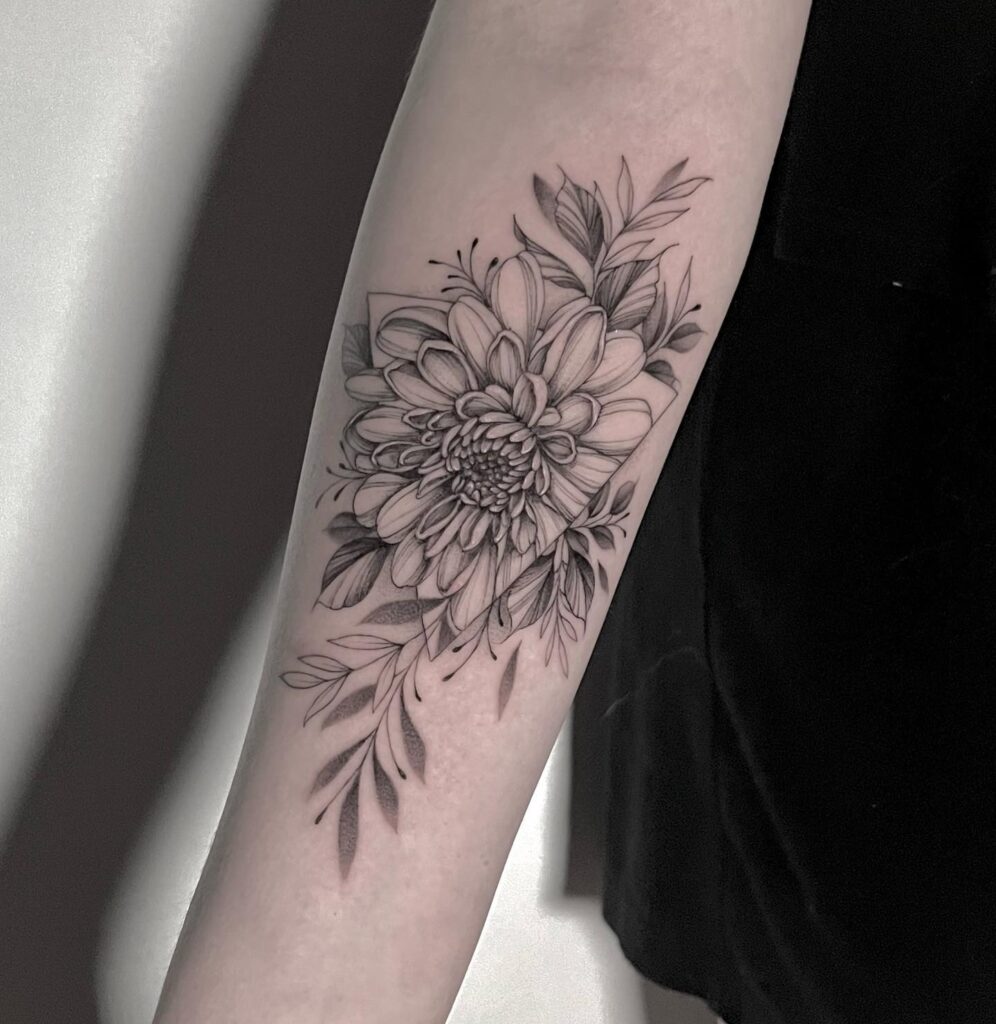
Photo: @chelseaspeirs_tattoo
A chrysanthemum in fine line botanical illustration style, the petals rendered in thin precise lines. The chrysanthemum’s radial structure suits botanical illustration: the petals emerge from a central point and the illustration can capture their layered arrangement with scientific accuracy.
5. Blackwork Chrysanthemum
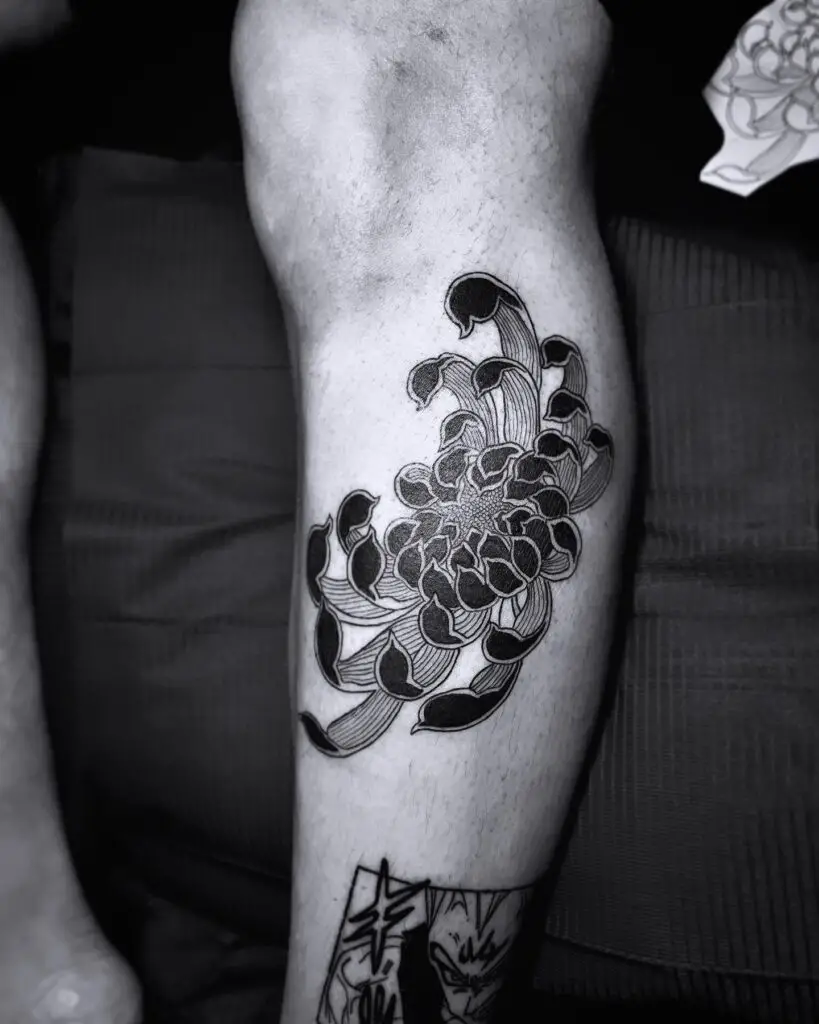
Photo: @bogusdank
A chrysanthemum in pure blackwork, the petals in bold black and the spaces between them in negative. The blackwork treatment gives the chrysanthemum a graphic presence that colour versions approach differently. The dense petals in black create an extraordinary visual texture.
6. Chrysanthemum Sleeve
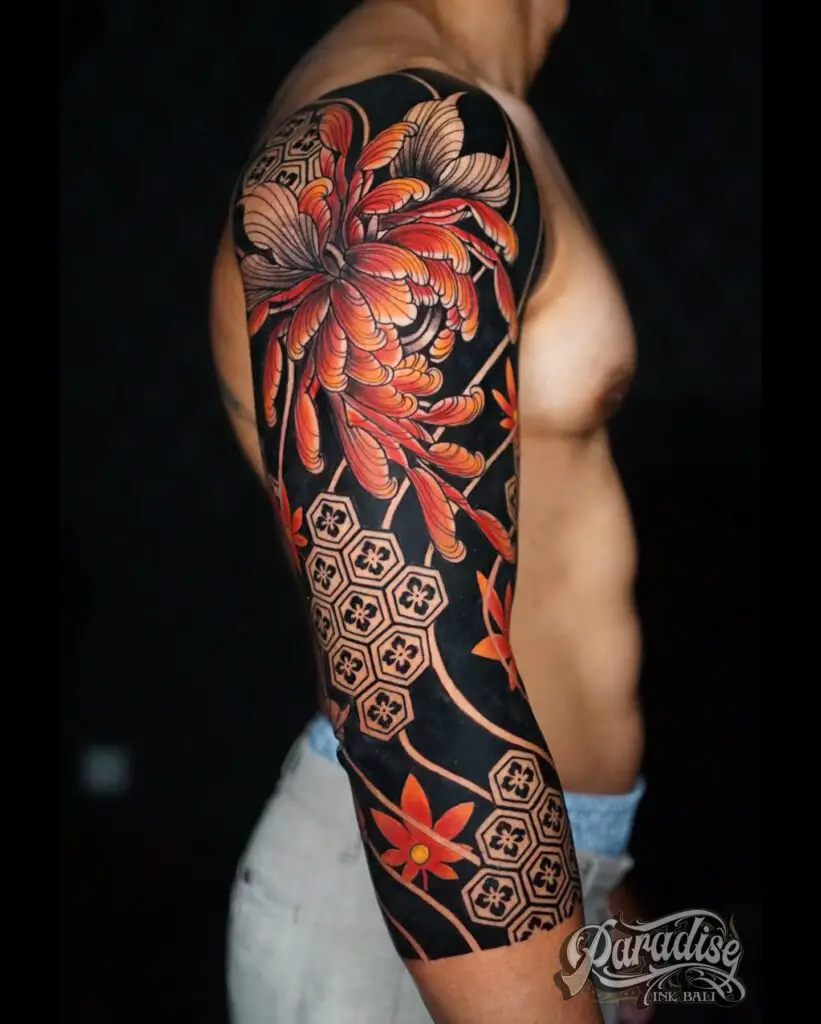
Photo: @paradiseinkbali
Chrysanthemums as the botanical element of a Japanese-style sleeve, the flowers at multiple scales with water, clouds, or other traditional elements. The sleeve format allows chrysanthemum work to develop the full complexity of the irezumi tradition across the arm’s full surface.
7. Neo-Traditional Chrysanthemum
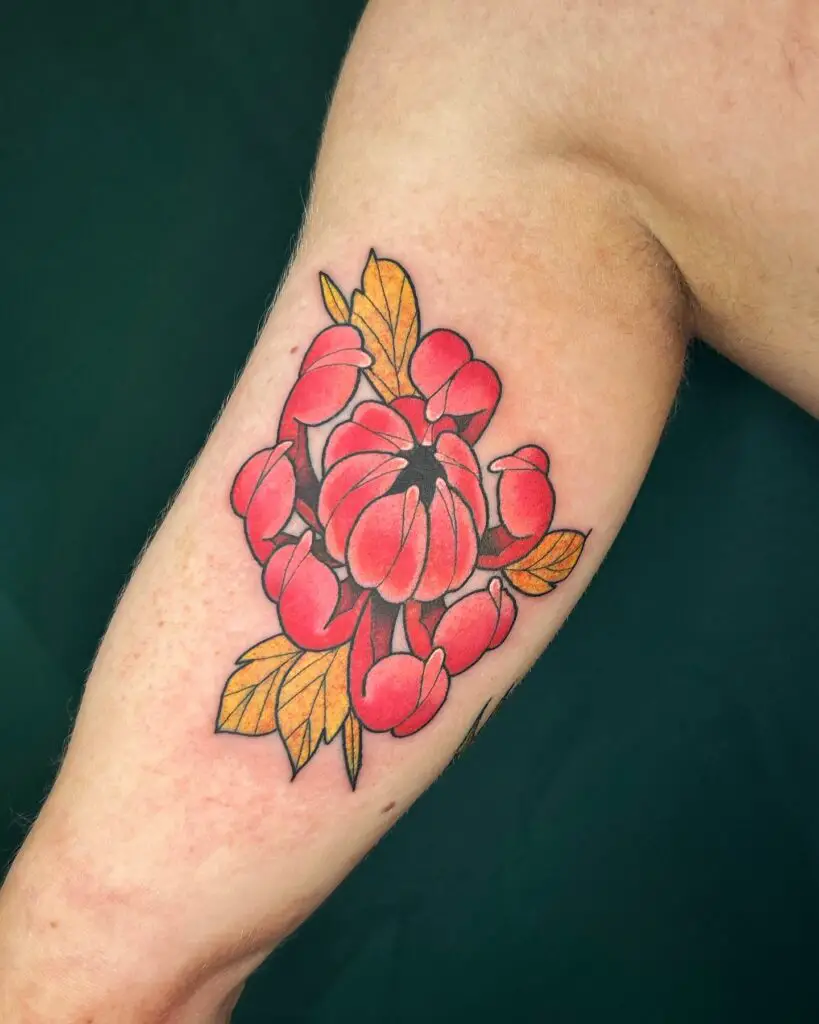
Photo: @seshi.ink
A chrysanthemum in neo-traditional style: bold linework, dimensional shading, jewel-toned colour. The neo-traditional approach brings contemporary visual authority to the chrysanthemum while maintaining the craft standards that suit the subject.
8. Chrysanthemum and Phoenix
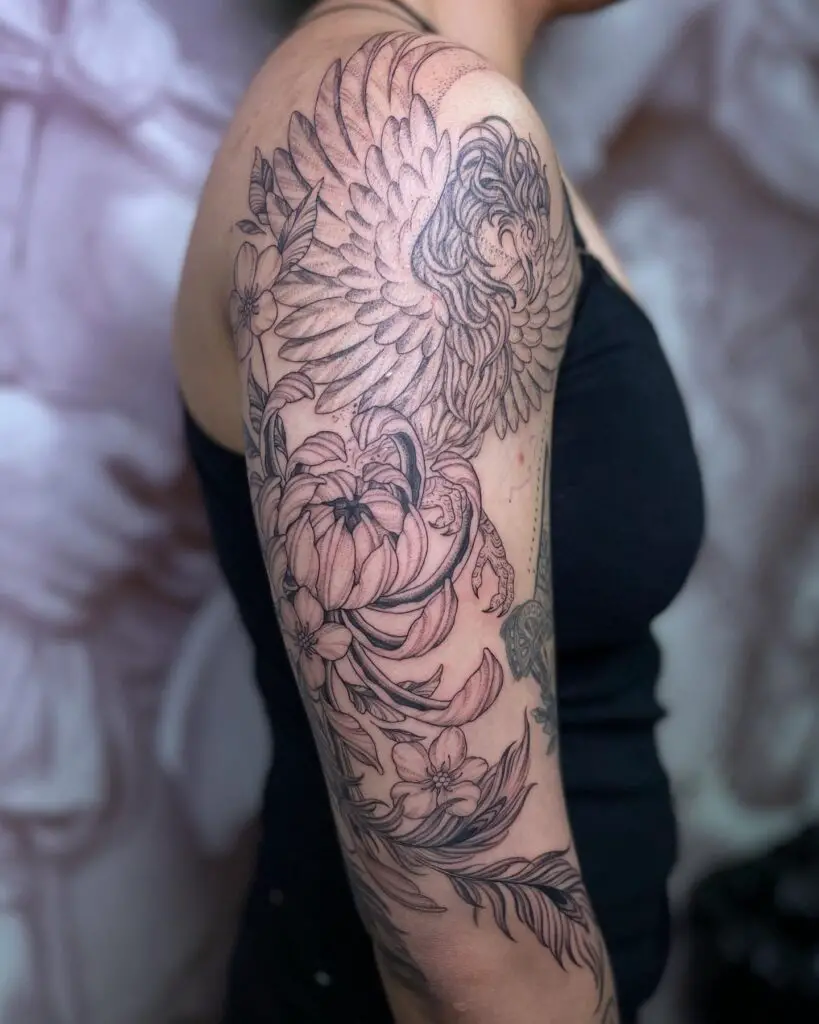
Photo: @jettaturas
A chrysanthemum with a phoenix, both subjects associated with renewal and the cycle of death and rebirth. The flower that blooms as summer ends alongside the bird that rises from its own ashes. Two of the most powerful symbols in East Asian art in a single composition.
9. Chrysanthemum Chest Piece
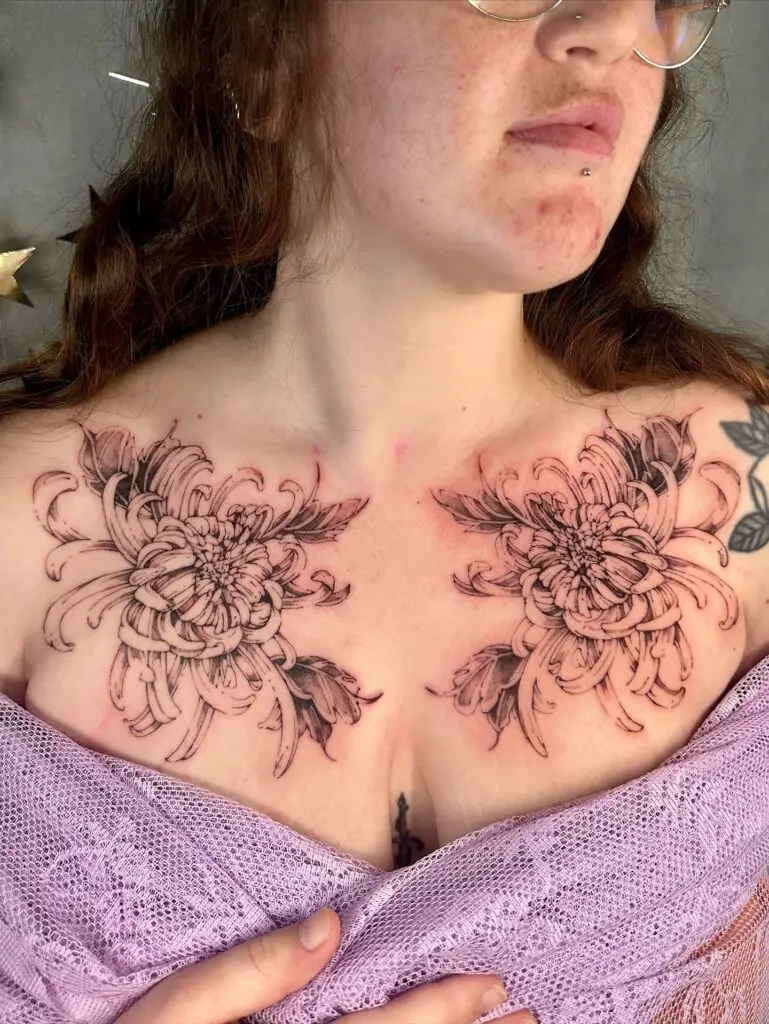
Photo: @inchiostrocuore
A chrysanthemum covering one side of the chest, petals extending toward the shoulder and collarbone. The chest placement gives the chrysanthemum its most visible and personal location. In Japanese style, the chrysanthemum on the chest is associated with wearing the imperial symbol close to the heart.
10. Watercolour Chrysanthemum
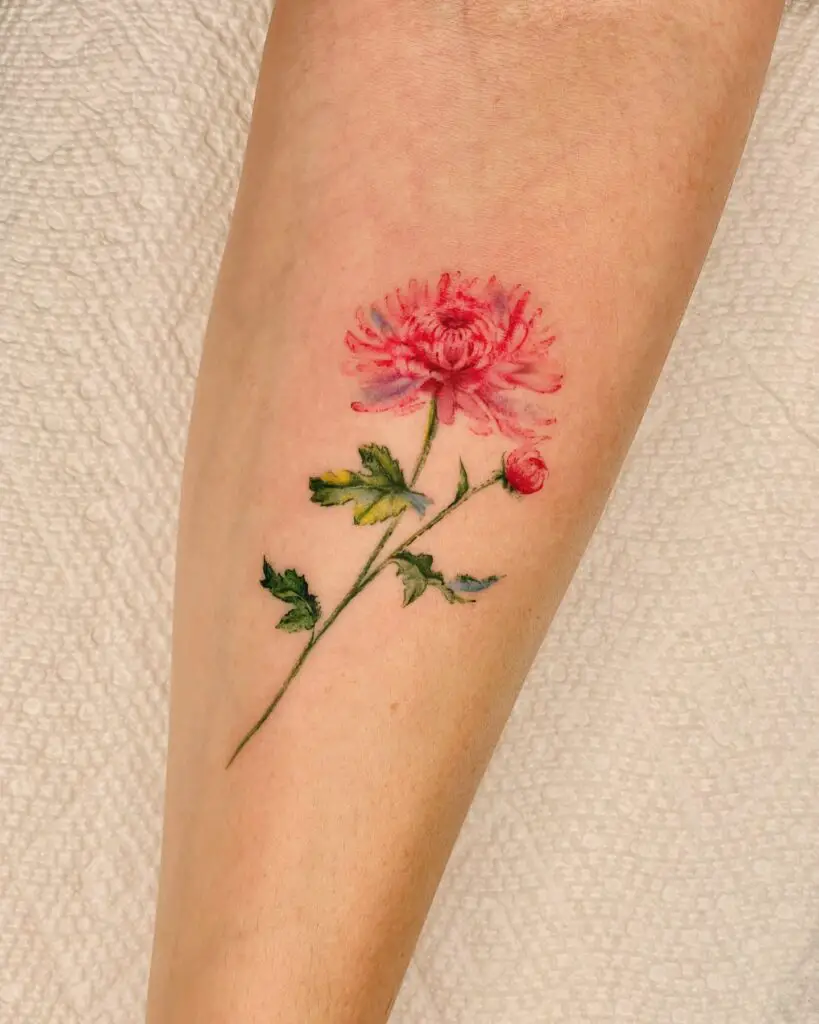
Photo: @hurshy_tattoo
A chrysanthemum in watercolour technique, the petals expressed in soft washes of yellow, orange, and white. The watercolour approach creates a chrysanthemum that looks painted rather than outlined. The bleeding washes suit the flower’s associations with autumn and the fading of summer light.
11. Chrysanthemum and Samurai
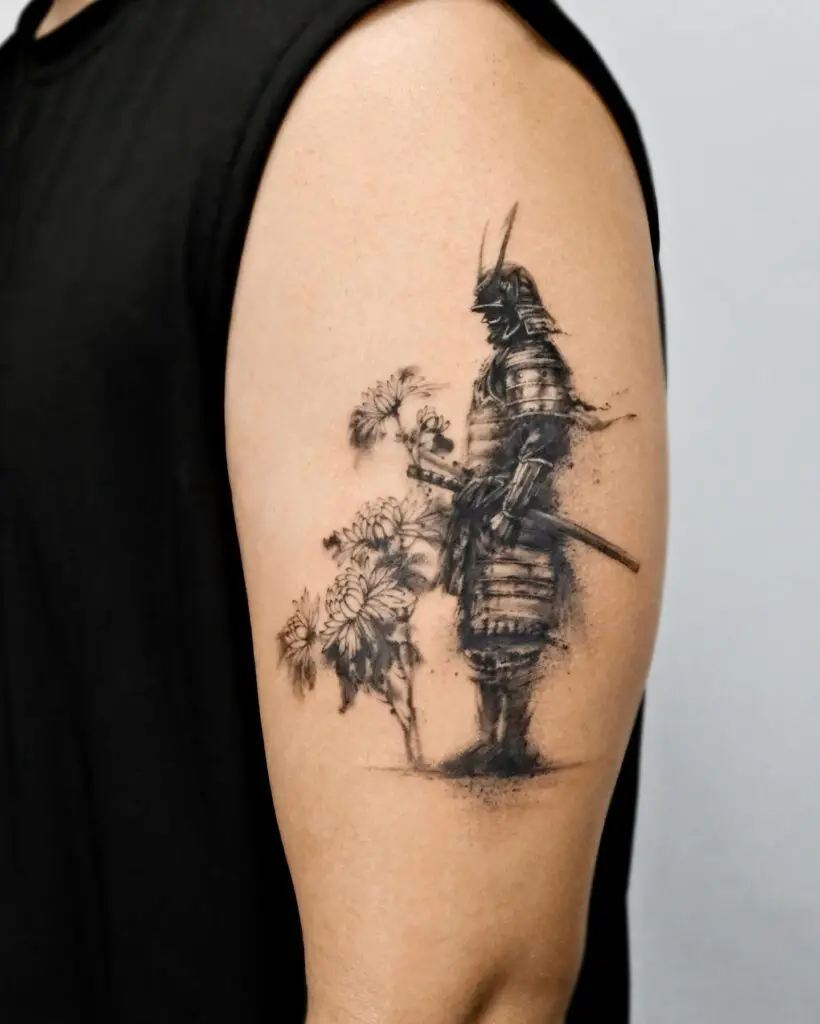
Photo: @sansa.jr.tattoo
A chrysanthemum with samurai imagery: a helmet, armour, or a sword. The chrysanthemum’s association with the warrior class in Japanese history makes this pairing precise rather than arbitrary. The flower of endurance alongside the practitioner of endurance.
12. Single Stem Forearm
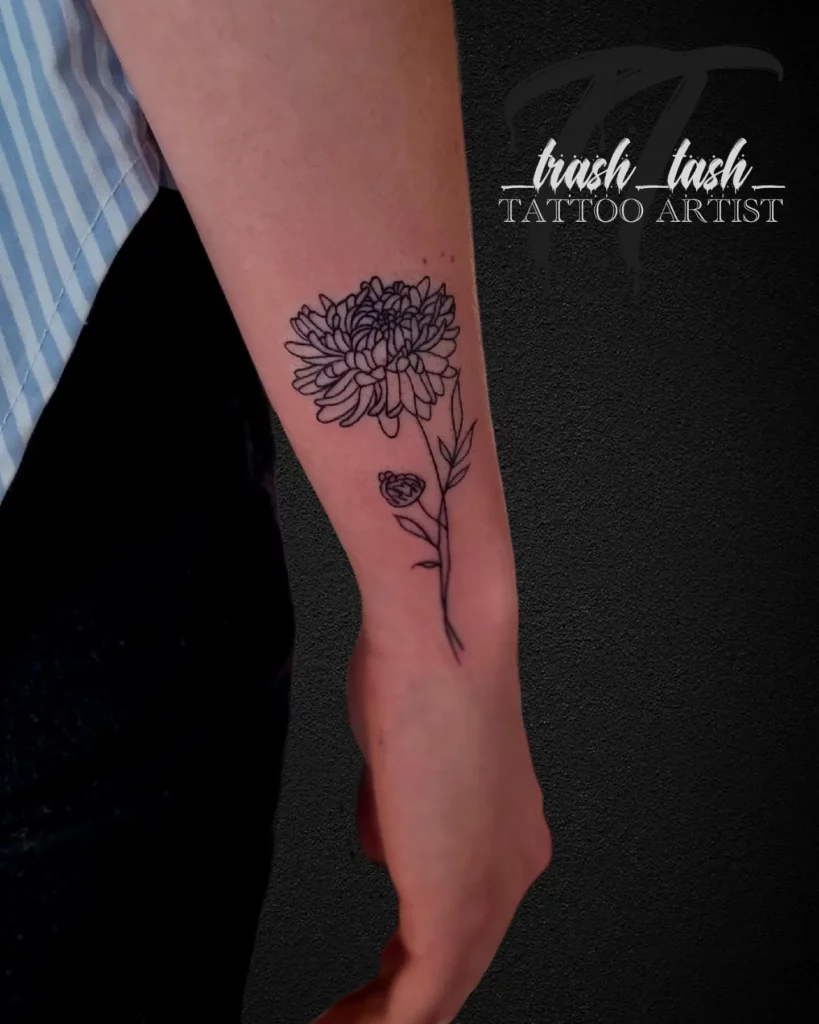
Photo: @_trash_tash_
A single chrysanthemum stem on the forearm, one bloom at the top with leaves along the stem descending toward the wrist. The vertical stem format suits the forearm’s length. In fine line or neo-traditional style depending on the aesthetic.
13. Chrysanthemum Mandala
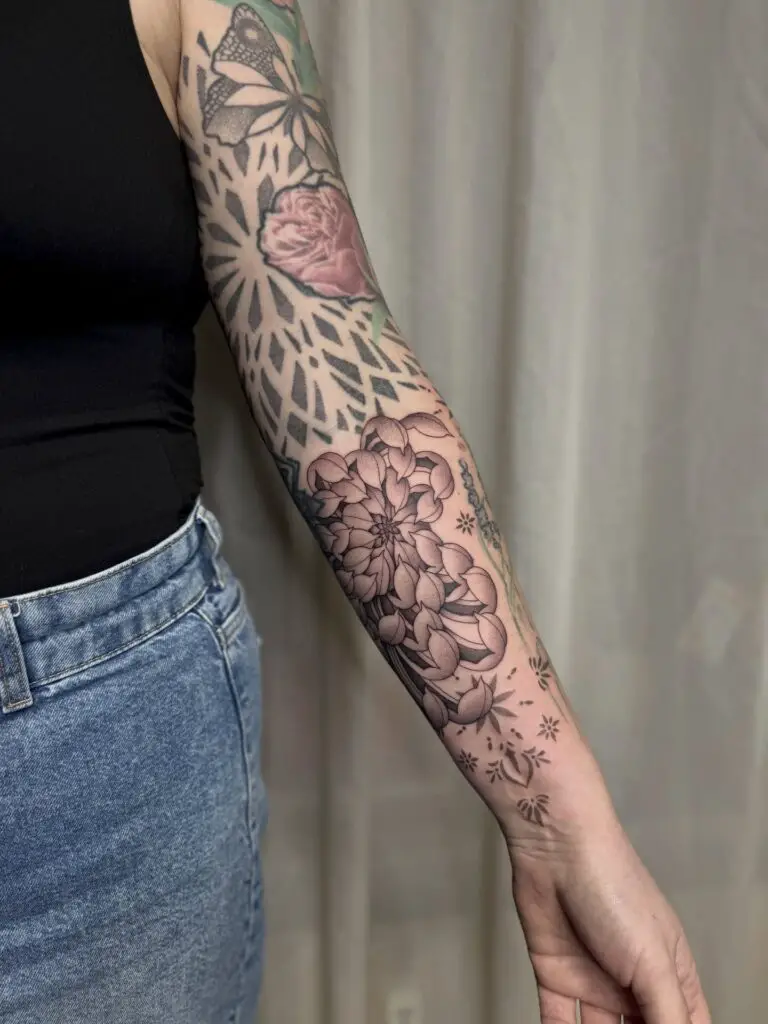
Photo: @herzdame
A chrysanthemum treated as a mandala, the flower’s radial symmetry extended into a full circular composition with geometric precision. The chrysanthemum mandala treats the flower as sacred geometry. Its natural structure is already almost perfectly radial.
14. Chrysanthemum and Tiger
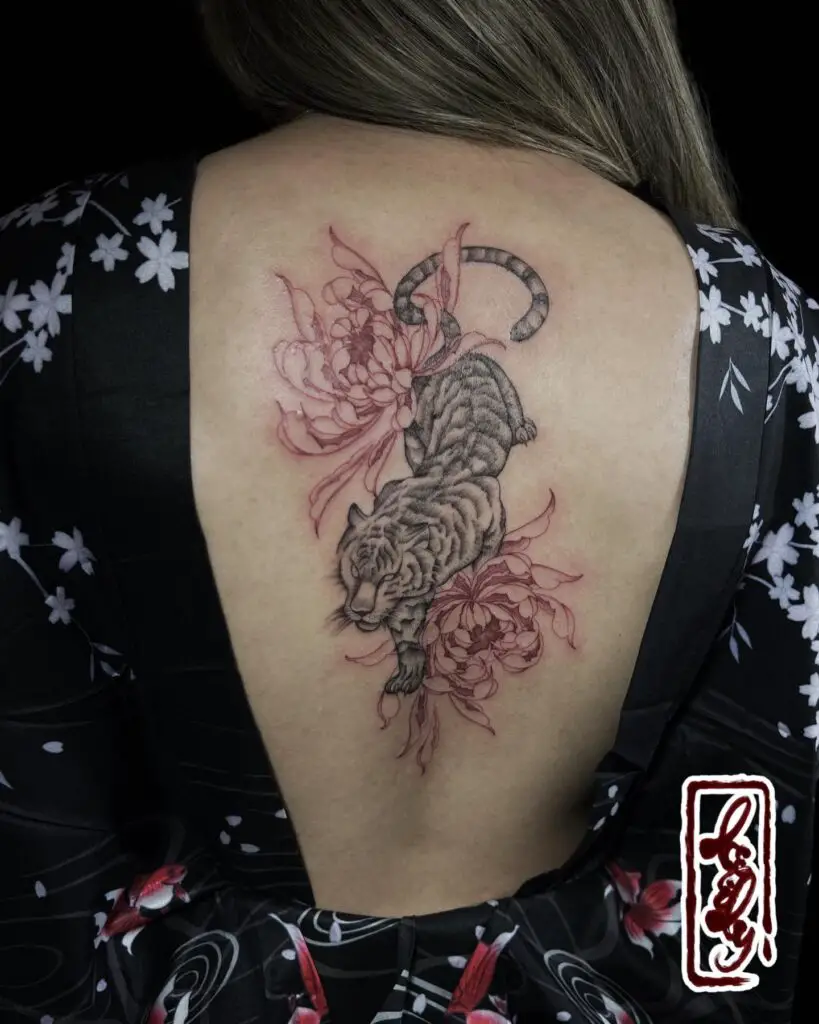
Photo: @heily_9dragons
A tiger with chrysanthemum flowers, one of the most established pairings in Japanese tattooing. The tiger in autumn chrysanthemum is a classical East Asian composition: the powerful predator among the autumn blooms. The contrast between the tiger’s strength and the flower’s delicacy creates visual and symbolic depth.
15. Geometric Chrysanthemum
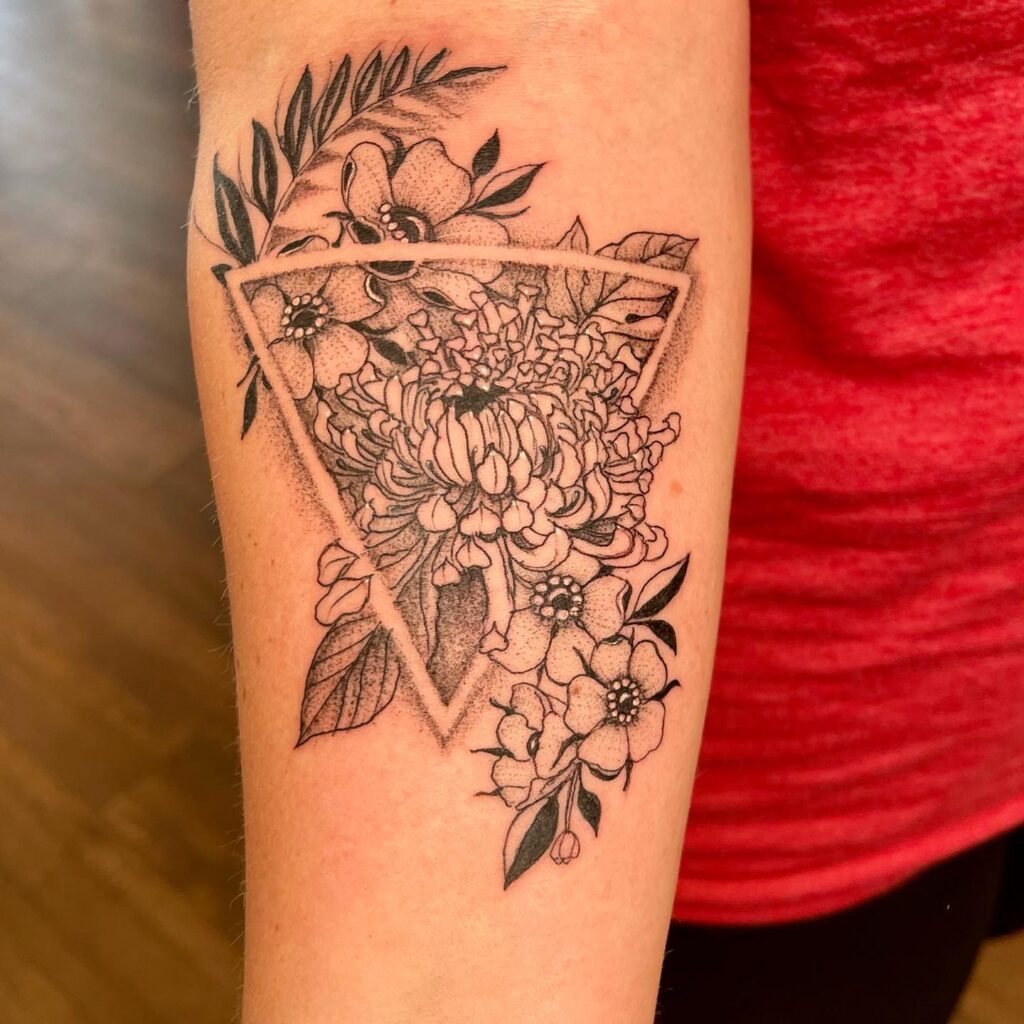
Photo: @gmunoz.ink
A chrysanthemum with geometric planes overlaid on the petals or with the flower’s structure abstracted into geometric form. The chrysanthemum’s natural radial geometry suits geometric treatment: the petals become faceted planes, the design sitting between botanical representation and pure geometry.
16. Chrysanthemum and Maple
A chrysanthemum with Japanese maple leaves, two of autumn’s most beautiful natural forms in the same composition. The red maple and the yellow-white chrysanthemum are an autumnal pairing in Japanese art. Together they create a composition about the season of decline that is paradoxically one of the most beautiful.
17. Chrysanthemum Thigh
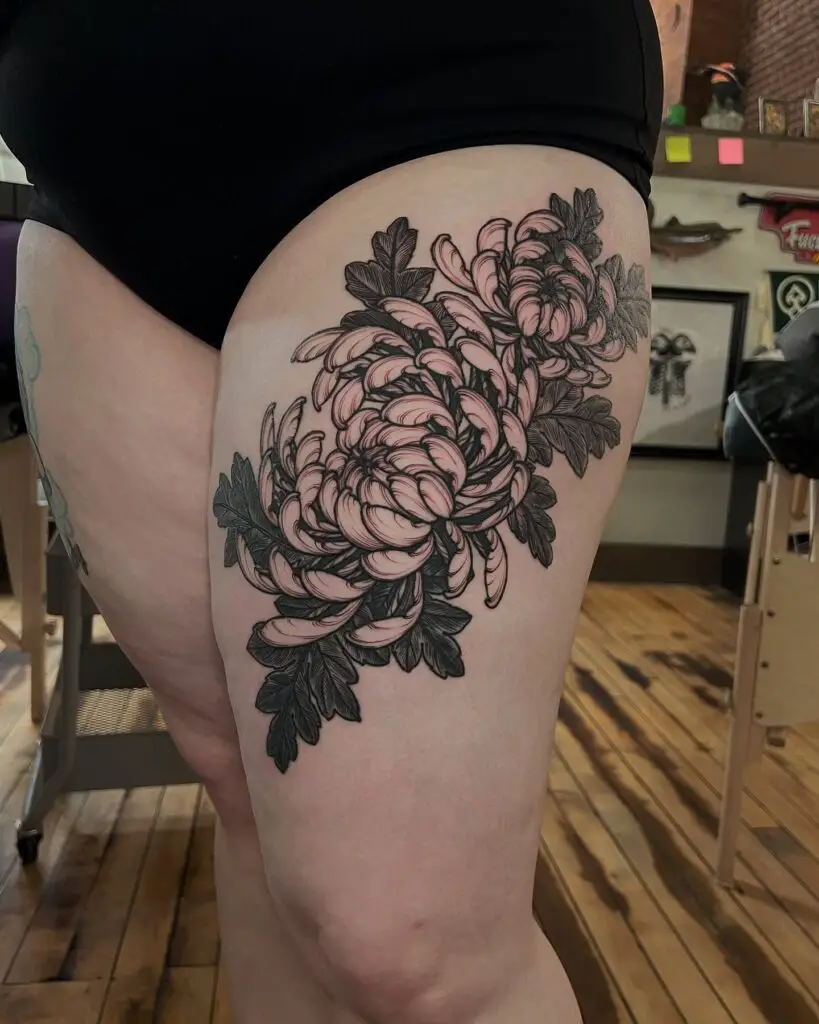
Photo: @amyjiaotattoo
A chrysanthemum on the thigh at a scale that allows full petal detail. The thigh is one of the most comfortable large placement options and allows complex botanical subjects to be rendered with the detail they require. A single chrysanthemum at thigh scale in Japanese style is a complete and powerful piece.
18. Chrysanthemum and Dragon
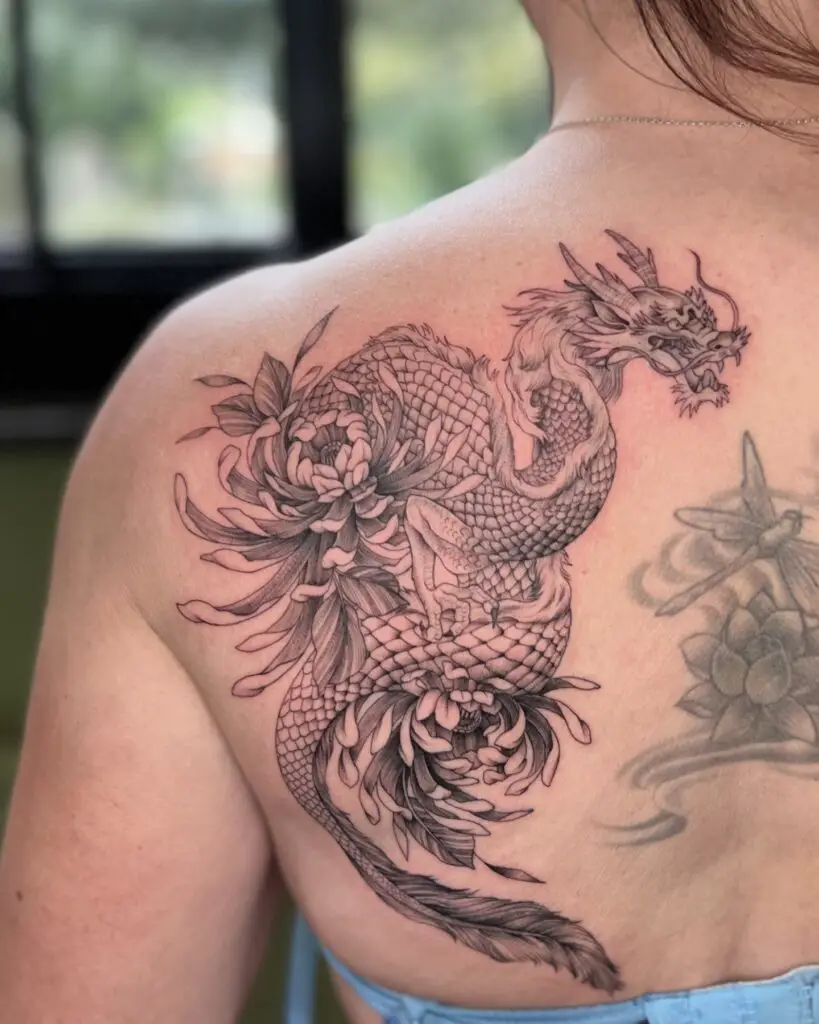
Photo: @stephanie_melbourne
A dragon among chrysanthemum flowers. The dragon is the most powerful subject in Japanese tattooing, and the chrysanthemum is among the most honoured botanical subjects. Together they create a composition with both the scale of the dragon and the detail of the flower.
19. White Chrysanthemum
A white chrysanthemum in fine line or black and grey, the petals in the palest grey tones. In Japanese culture, white chrysanthemums are associated with grief and memorial. A white chrysanthemum tattoo in this context is a specifically intended memorial piece, carrying a meaning that differs from the golden or red versions.
20. Chrysanthemum Shoulder to Back
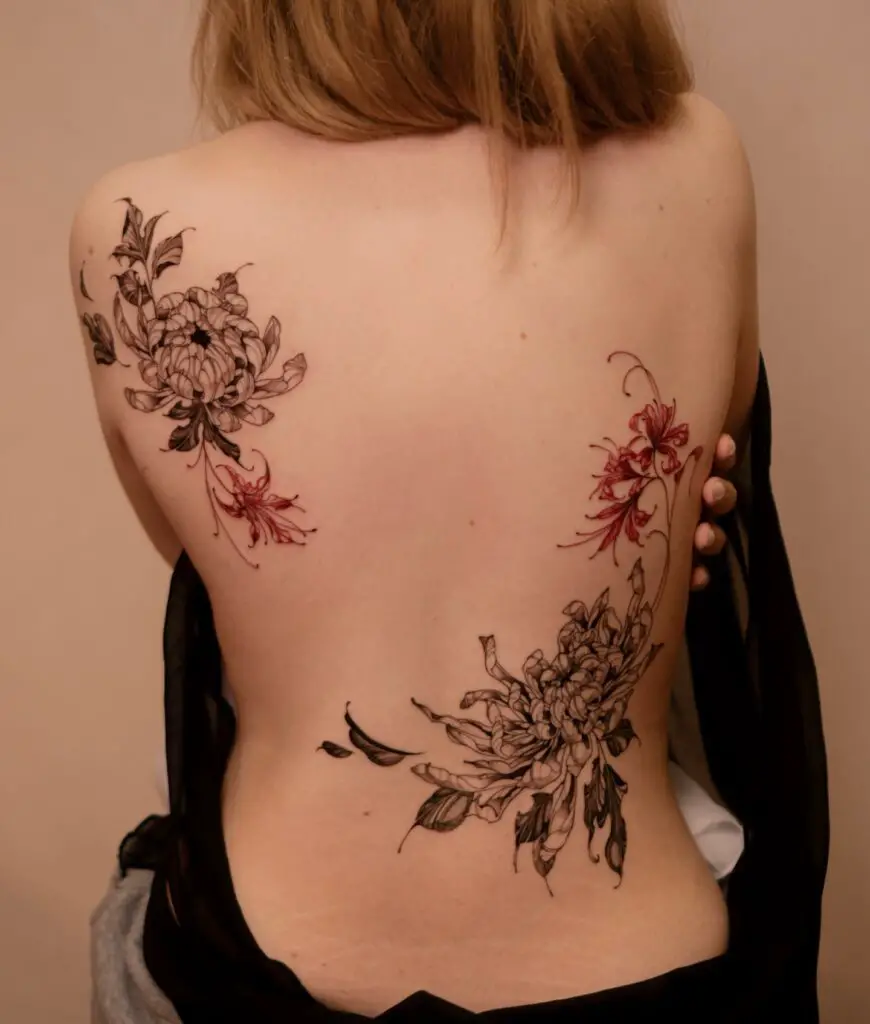
Photo: @bona_ttoo
A chrysanthemum composition beginning at the shoulder and extending onto the upper back, the design flowing from one placement zone to another. The connected placement creates a piece that reveals itself gradually depending on what the wearer is wearing. The chrysanthemum visible at the shoulder hints at the larger composition beneath.
Japanese Authenticity
For chrysanthemum work in the irezumi tradition, research your artist carefully. The Japanese chrysanthemum requires specific technical knowledge about how the petals are rendered in the Japanese style, how the colours are applied, and how the design sits within the visual vocabulary of the tradition. Find an artist whose portfolio shows specifically Japanese floral work, not just any floral tattooing, and ideally one with training or strong influence from Japanese masters of the form.