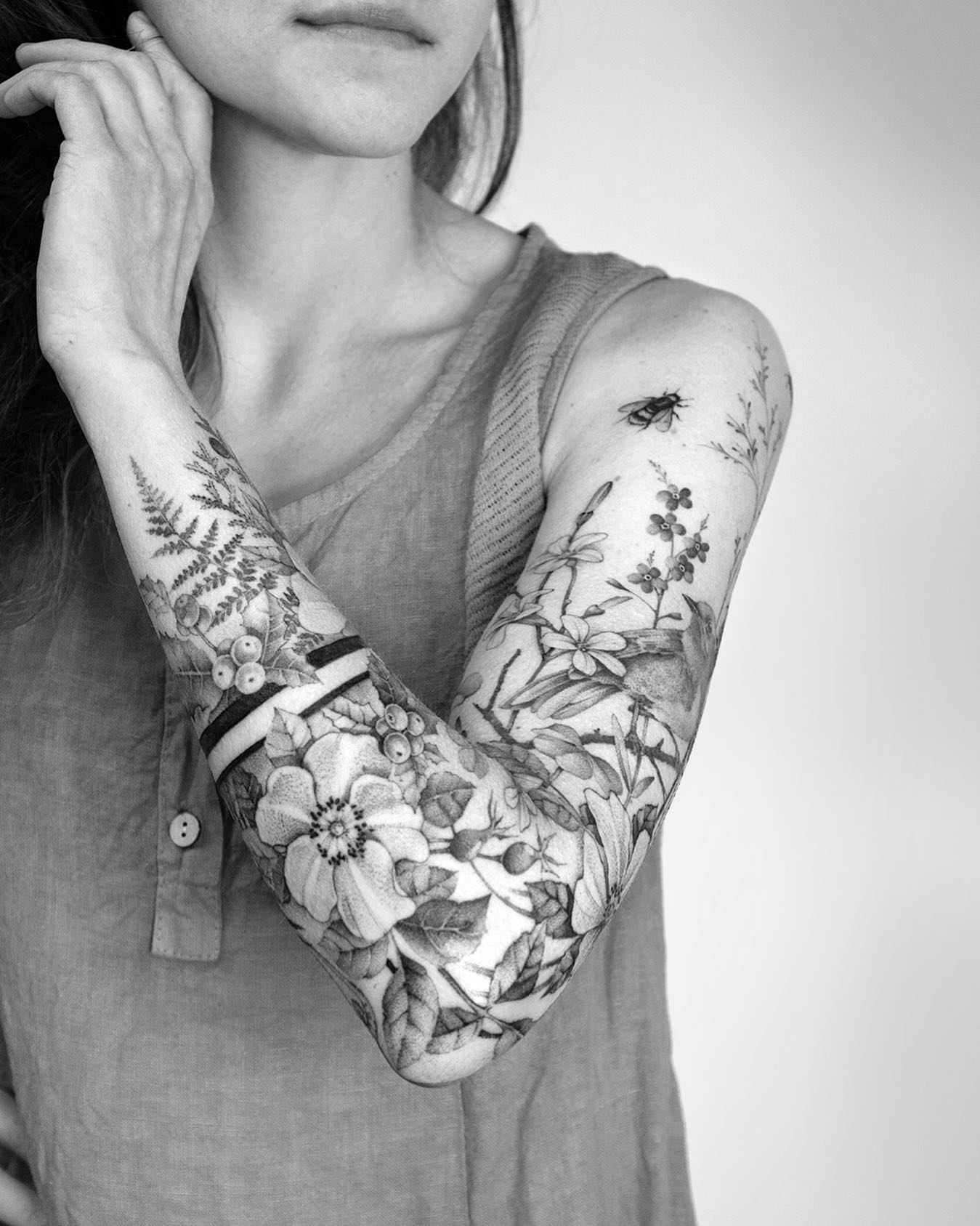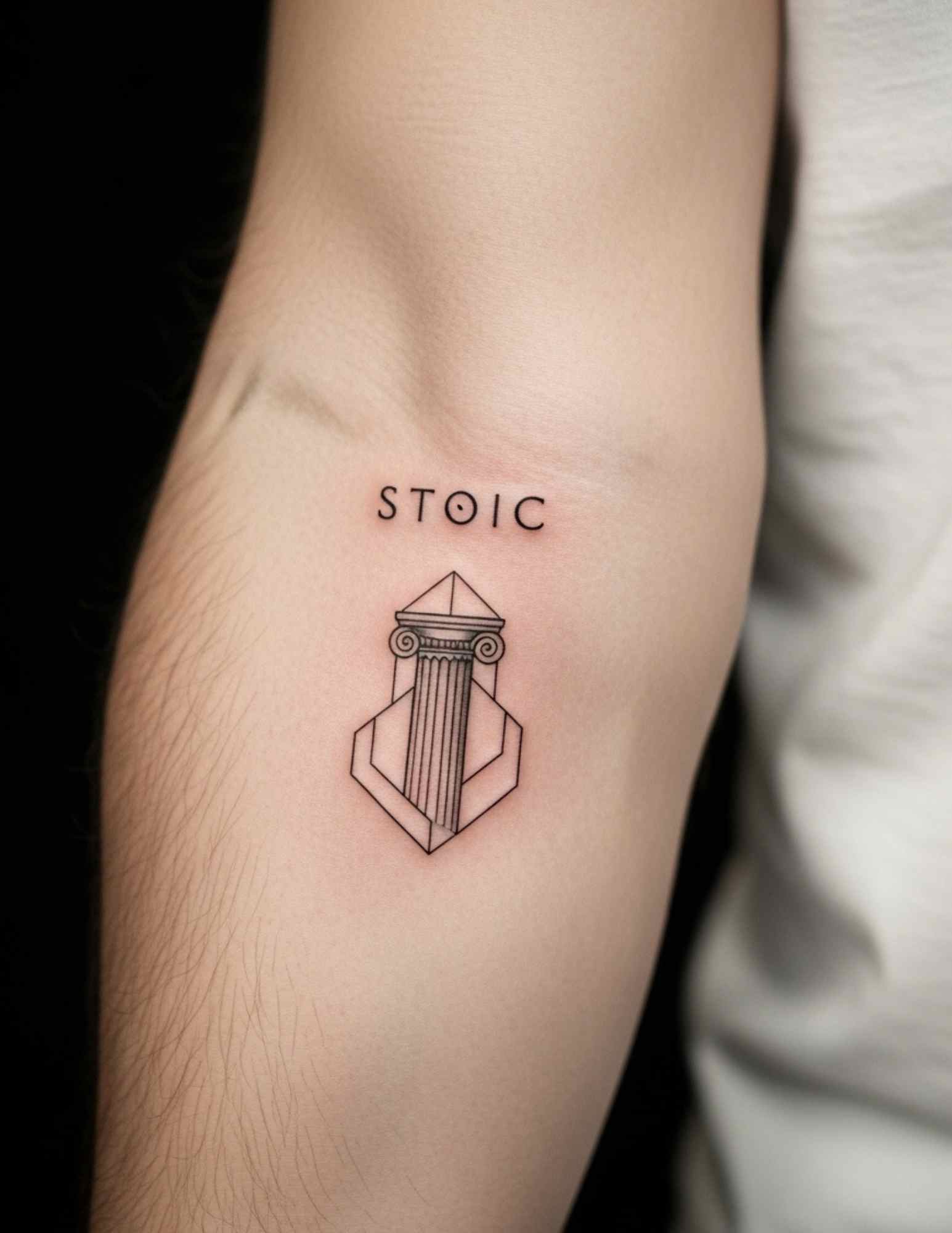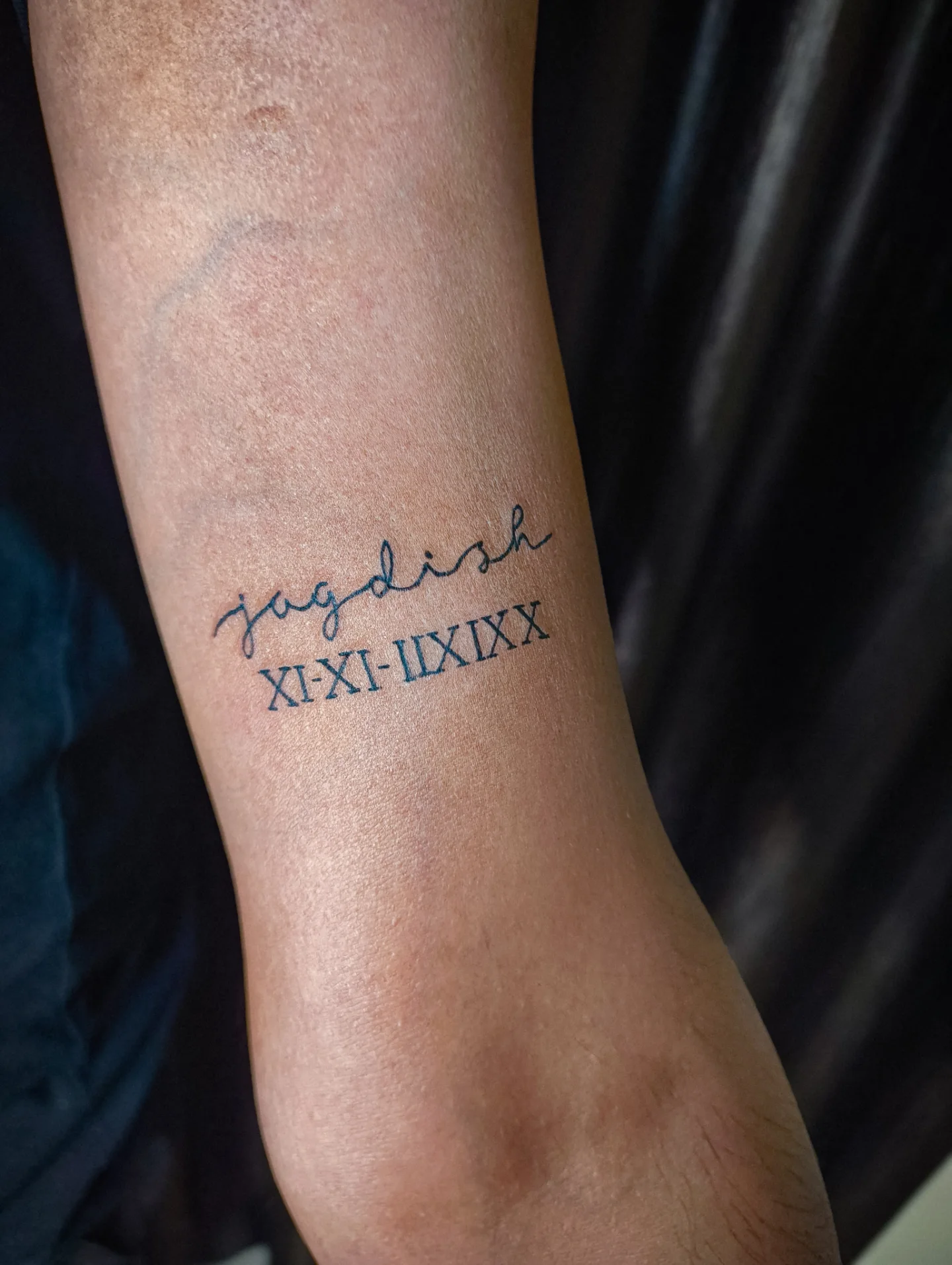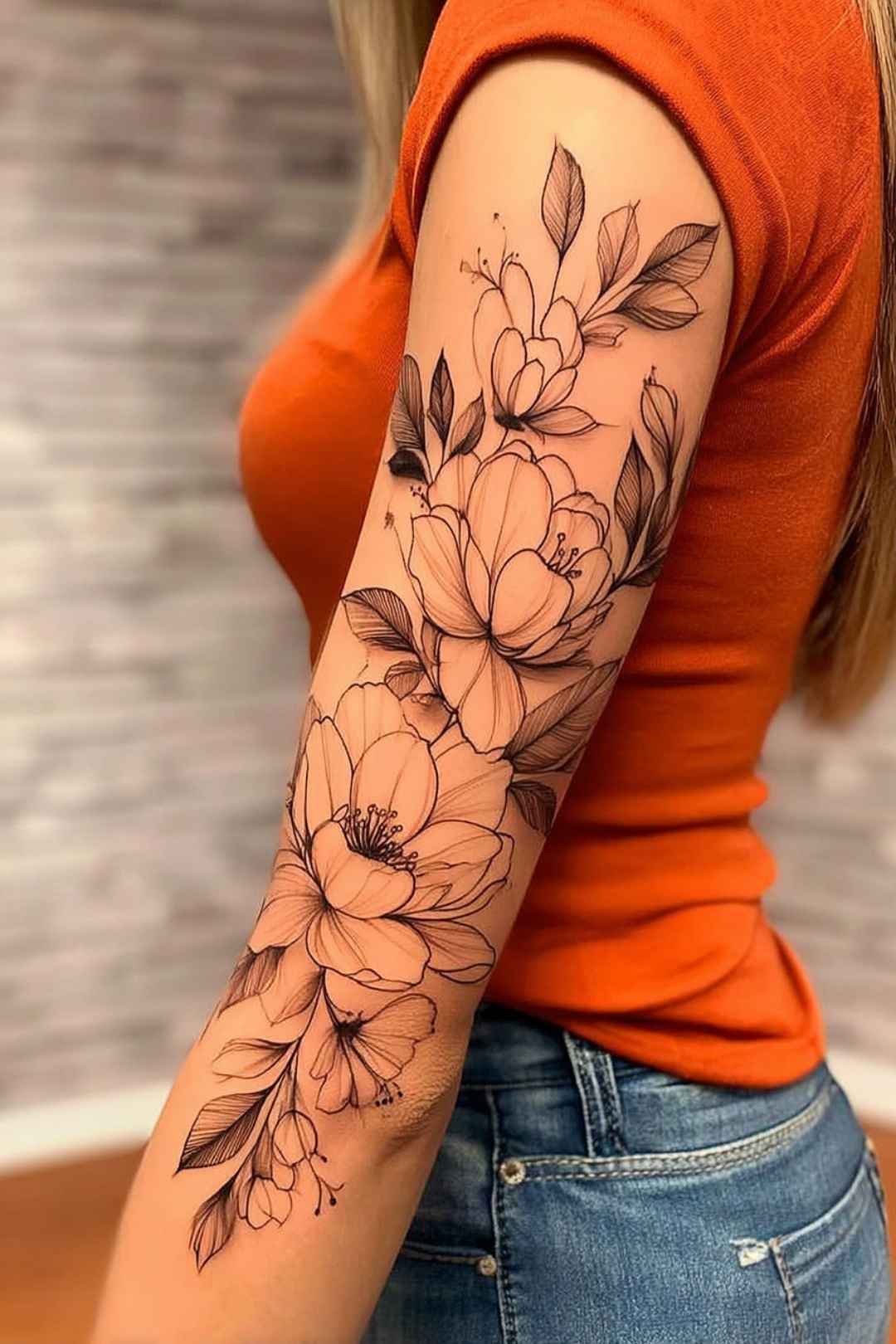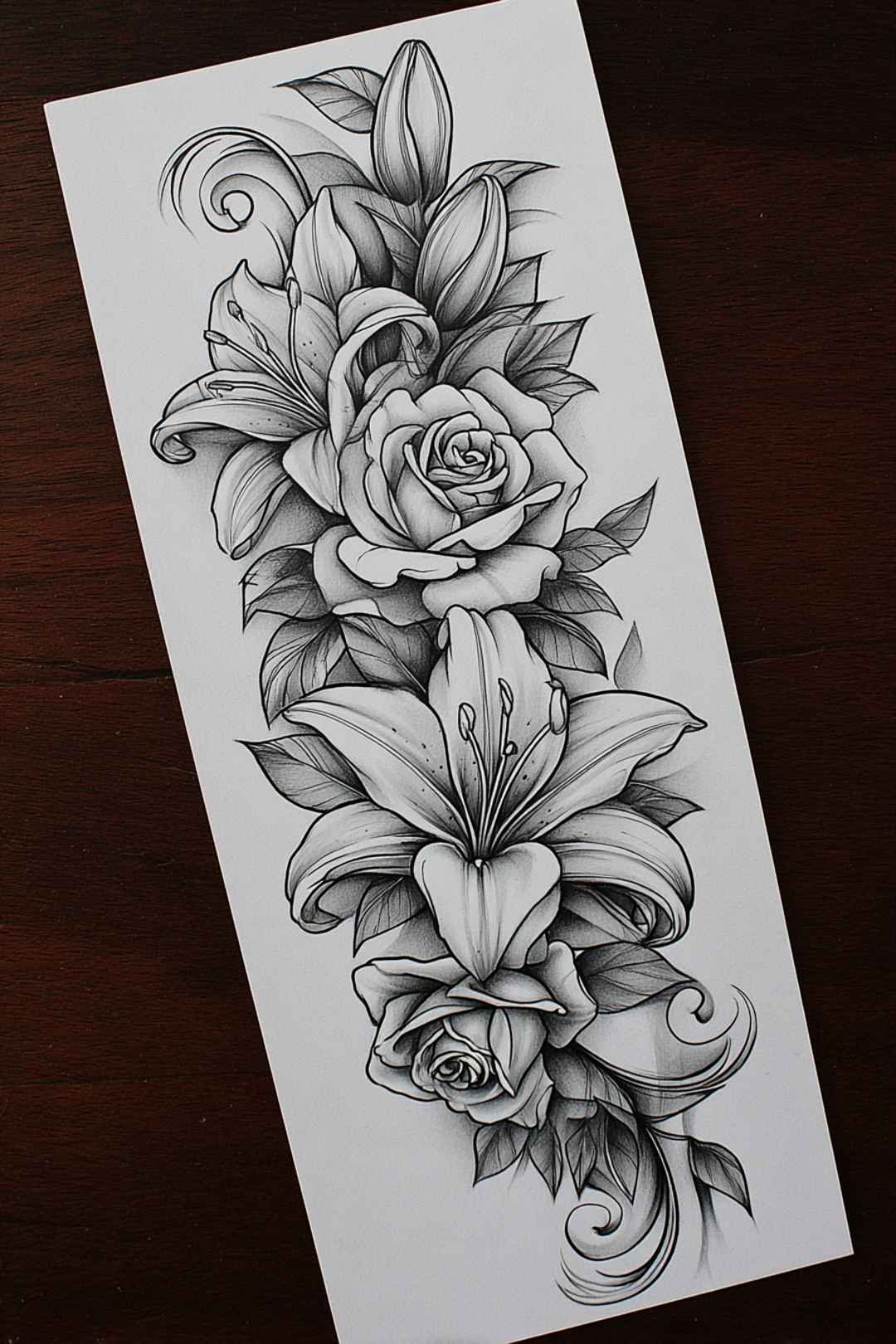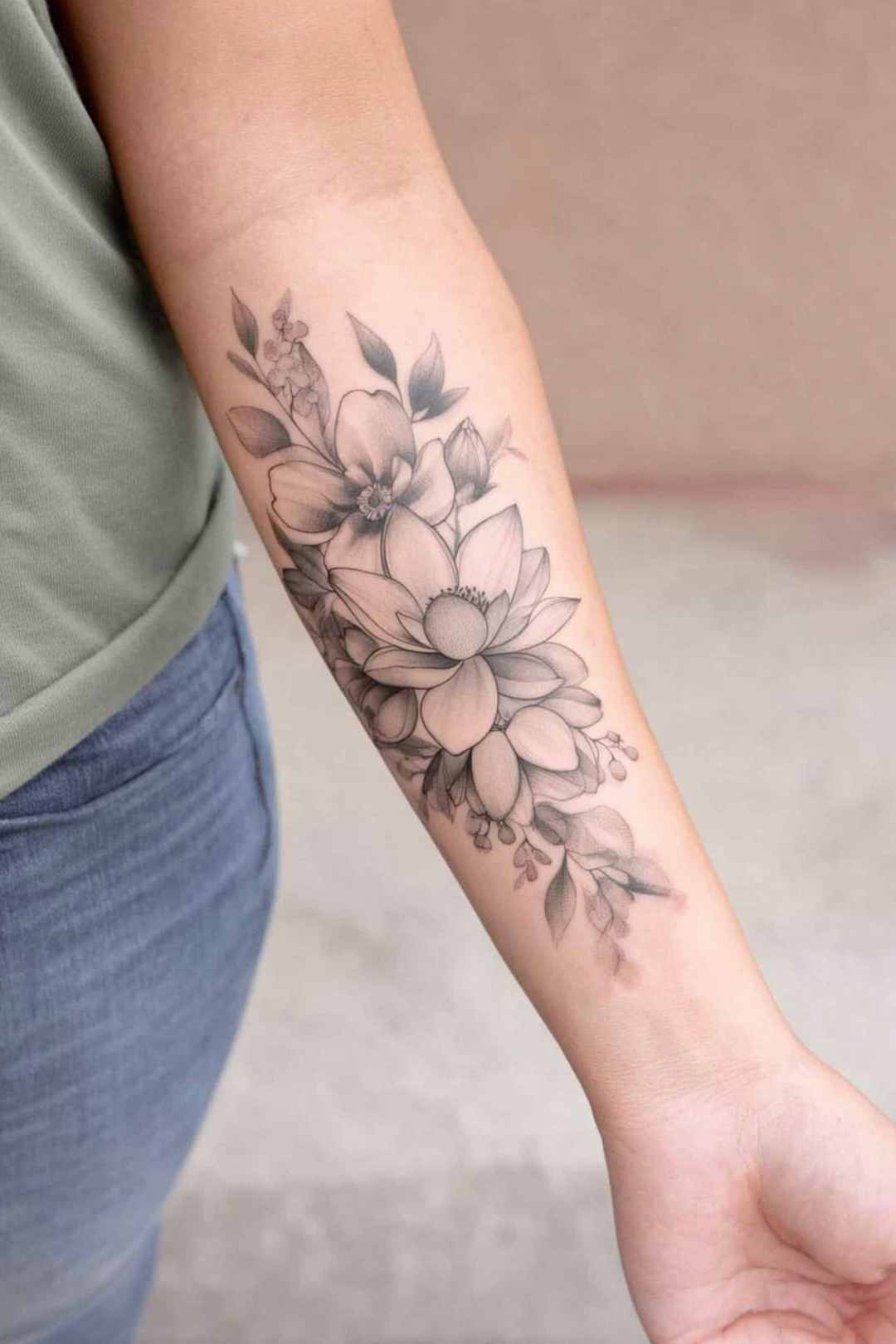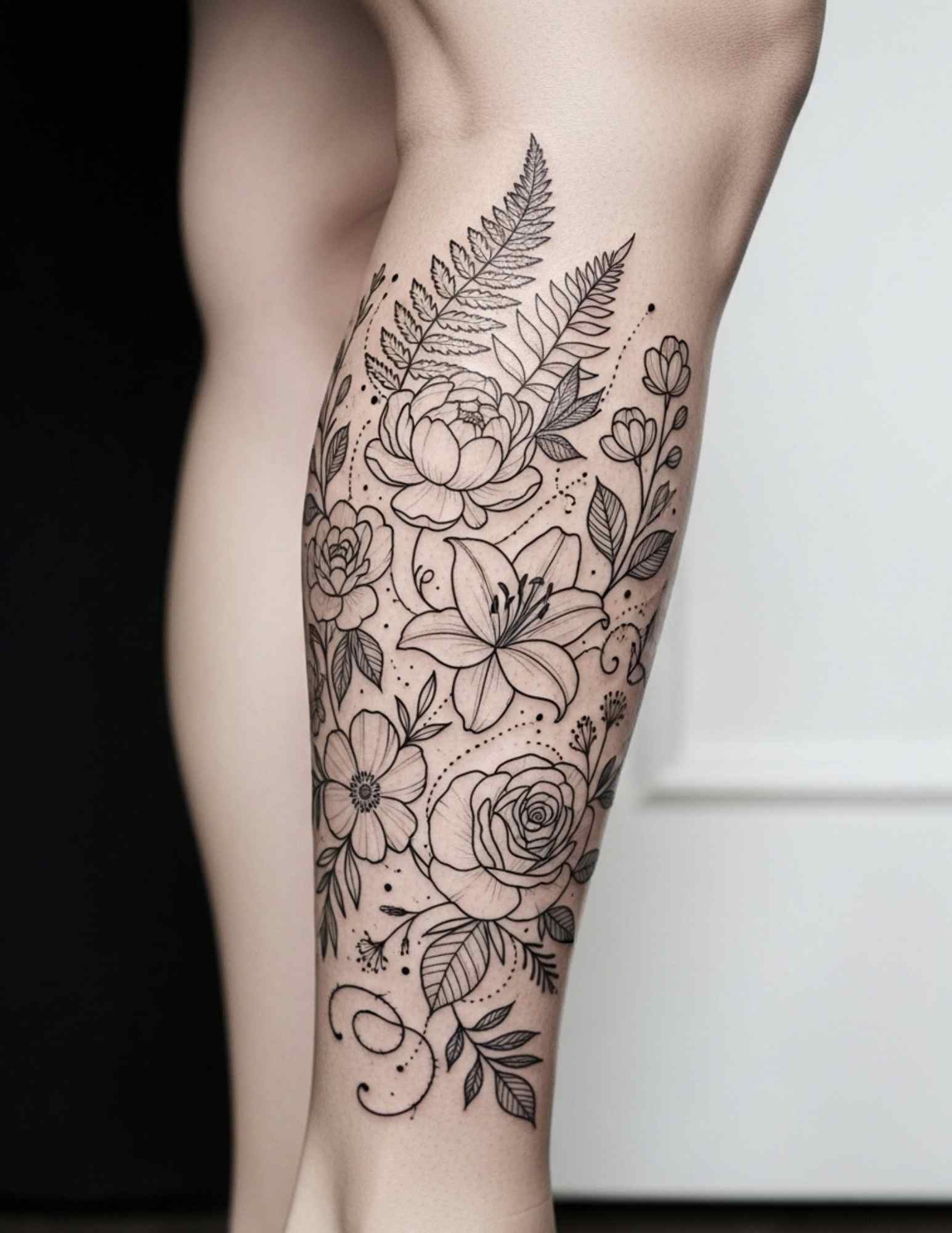
A half leg sleeve is the piece I most often watch someone talk themselves into slowly, then wish they had booked a year earlier. It gives you the visual weight of a full sleeve without committing the whole leg, and it is the single easiest large tattoo to keep private when you want to.
I have sat in on consultations for both thigh pieces and lower leg pieces, and the conversation almost always splits the same way: how much skin, how much colour, and how much of it will show in a work environment.
The nineteen ideas below are grouped by style family rather than thrown at you as a list, because that is how artists actually plan these. If you are still deciding between leg and arm placement, our guide to half sleeve tattoos for women covers that trade-off in more depth.
Everything here reflects what I have seen hold up over years of healing, not just what photographs well in the first week.
Upper vs Lower Half Leg Sleeve: Which Is Right for You?
The first real decision is not the design. It is whether the sleeve sits on the thigh or on the lower leg, because that choice changes cost, pain, healing and how often anyone sees it.
| Factor | Upper Half Sleeve (Thigh) | Lower Half Sleeve (Knee to Ankle) |
|---|---|---|
| Typical discomfort | Generally the easier of the two; outer thigh is usually mild | Sharper over the shin bone, ankle and back of the knee |
| Visibility | Hidden by most shorts, skirts and all trousers | Visible in shorts, skirts, dresses and many summer shoes |
| Detail it can hold | Excellent — the largest flat canvas on the body | Good, but curves and bone limit very fine detail |
| Healing difficulty | Straightforward; friction from clothing is the main issue | Harder — swelling is common because it sits below the heart |
| Sessions commonly needed | Often three to five, depending on colour and density | Often three to six, since wrapping takes longer |
| Best suited to | Realism, large florals, Japanese, portrait-scale work | Botanical wraps, geometry, snakes, flowing water |
If you lean lower leg, our round-up of calf tattoos for women shows how that shape behaves once it heals.
What Actually Affects How a Half Leg Sleeve Ages
A half leg sleeve is a long-term object. The version you see on day one is not the version you will live with in five years, and planning for that gap is the difference between a piece you love and one you tolerate.
Line weight is the biggest single factor. Very thin lines placed close together tend to soften and merge over time, particularly on the lower leg where skin moves constantly.
Sun exposure comes next, and legs get far more of it than most people expect. The American Academy of Dermatology recommends protecting tattooed skin with sunscreen once it has fully healed, which matters more for colour than for black and grey.
Placement over bone also plays a role. Ink over the shin and ankle usually sits slightly differently from ink over soft muscle, and experienced artists compensate by simplifying detail in those zones.
Finally, there is the design itself. Compositions built on strong shapes hold up. Compositions built on tiny internal detail rarely do, however skilled the artist.
19 Half Leg Sleeve Tattoo Ideas for Women
These are grouped into eight style families. Within each, I have named the specific variations worth asking your artist about.
1–3. Japanese Traditional: Peonies, Dragons and Wind Bars
Japanese work was built for large limb placements, which is why it translates so cleanly onto a leg. The style has an internal logic: a main subject, supporting flowers, and background elements that carry the eye around the limb.
The three variations I see most are a peony thigh sleeve, a coiled dragon running hip to knee, and a koi-and-wave lower leg. Each uses wind bars or water as connective tissue between the focal points.
What makes this style forgiving is that background. When a gap appears mid-project, the artist has an established visual language to fill it with, rather than inventing something that looks bolted on.
In my experience the dragon versions need the most planning, because a dragon that runs straight down the leg looks stiff. It has to coil. Our women’s dragon tattoo ideas guide shows how that curve is usually mapped, and the broader Japanese tattoo designs overview explains the traditional motif pairings.
4–6. Botanical and Wildflower Wraps
Botanical sleeves are the most requested leg piece I have watched artists book, and for good reason: stems naturally follow the shape of a calf or thigh.
The three worth knowing are a dense botanical wrap that circles the lower leg, a loose wildflower meadow with deliberate bare skin between stems, and a tropical arrangement built on monstera and hibiscus.
The meadow version is the one people underestimate. Leaving gaps feels wrong when you are paying by the hour, but those gaps are what stop the sleeve from reading as a solid dark mass at arm’s length.
Tropical foliage covers ground quickly, which can shorten the total session count. Larger leaf shapes also tend to age more predictably than clusters of small blossoms.
If flowers are your direction, our guide to floral leg tattoo designs walks through arrangement in more detail.
7–9. Blackwork, Geometry and Negative Space
Blackwork is the highest-contrast option on this list, and on a leg it is genuinely striking. It is also the least reversible in practical terms, because solid black is difficult to cover or lighten later.
The variations here are geometric blackwork built on mandala and repeated pattern, silhouetted botanical blackwork where leaves are cut from solid black, and mixed geometric-floral work where geometry frames softer subjects.
Symmetry is unforgiving on a curved surface. Every artist I have asked about this maps the stencil in standing position rather than lying down, because a mandala aligned on a reclined thigh can read crooked once you stand up.
Negative space is the real skill in this family. The bare skin is doing as much work as the ink, so resist the urge to fill it during a later session.
10–11. Fine Line and Delicate Linework
Fine line leg sleeves photograph beautifully and are the style I give the most honest warning about. Single-needle work on the lower leg softens faster than the same work on a forearm.
The two directions are a fine line floral lower leg and delicate linework combined with light stippling for shading.
That said, plenty of people go in knowing this and are still happy years later, because the design was built with breathing room between elements. Spacing is what saves fine line work, not needle size.
If you want this look on the shin specifically, our collection of women’s shin tattoos shows how the flat bone surface affects the result.
12–13. Watercolour and Soft Colour
Watercolour is often sold as a style without outlines. In practice, the pieces that survive well nearly always have a line drawing underneath, with colour washing behind it.
The two variations are a watercolour floral thigh with visible colour bleeds, and a softer painterly wash used only as background behind traditional linework.
I have seen unoutlined watercolour go soft within a few years. When there is structure underneath, the piece reads as intentional even after the lightest tones have faded.
Colour on legs also demands more sun discipline than black and grey. That is worth factoring in if you spend summers outdoors.
14–15. Neo-Traditional and Art Nouveau
These two share a philosophy: bold defined edges, controlled colour, and an ornamental sensibility that suits a limb.
The variations are a neo-traditional nature scene with heavy outlines and muted palette, and an art nouveau sleeve built from framed floral panels with decorative borders.
Art nouveau borders solve a problem people rarely anticipate: where does the sleeve end? A deliberate ornamental edge looks far more finished than a gradient that trails off mid-thigh.
Neo-traditional is also among the most durable options here, because the outlines that define it are thick enough to survive decades of softening.
16–17. Nature Scenes, Wildlife and Realism
Landscape and animal realism need scale, and the thigh provides more of it than almost anywhere else on the body.
The variations are a forest and wildlife lower leg with pines, mountains and an animal focal point, and full grey-wash animal realism on the thigh.
Realism is the style where artist selection matters more than design selection. I would rather wait eight months for the right portfolio than book next week with someone whose realism looks flat in healed photographs.
Always ask to see healed work, not fresh work. Healed realism is the only honest test of whether the artist’s shading holds its contrast.
18–19. Celestial, Serpents and Abstract Forms
The last group covers the designs that do not fit neatly elsewhere but come up constantly in consultations.
A celestial thigh sleeve built on moon phases and dotwork suits the flat plane of the upper leg, where circular shapes will not distort. A snake winding through flowers suits the lower leg, because the serpent gives the artist a built-in path around the limb.
Abstract flowing forms are the wildcard. They work when the artist designs to your specific leg rather than adapting a flash piece, and they fail when they do the opposite.
Snakes in particular are one of the most practical wrap subjects I know. The body of the snake is both subject and composition line at once.
Alternatives and Variations Worth Considering
Not everyone wants a full half sleeve on the first booking, and there are sensible halfway points.
The Knee-Gap Sleeve
Some artists deliberately leave the kneecap bare and treat the thigh and calf as two connected panels. It reduces the hardest session considerably and still reads as continuous from a distance.
The Quarter Sleeve First
Starting with a thigh panel or a calf-only piece lets you test how you feel about visible ink before committing to the full wrap. Almost every half sleeve can be extended later if the composition was planned with that in mind.
Front-Only or Back-Only Coverage
A sleeve does not have to wrap. Covering only the outer thigh or only the back of the calf gives you a large piece with fewer sessions and a much easier healing period.
Building From Existing Tattoos
If you already have scattered leg pieces, an artist can connect them with background work rather than covering them. Our guide to tattoo sleeve filler ideas covers what fills gaps convincingly.
The one thing I would not do is start a half sleeve without a plan for the whole shape, even if you only book the first third.
Practical Tips for Sessions, Pain and Healing
Lower leg work swells. That is normal and largely down to gravity, and elevating the leg in the evenings after a session makes a noticeable difference in my experience.
Eat properly beforehand and plan for long sittings. Leg sessions tend to run longer than arm sessions simply because there is more ground to cover, and our tattoo pain management tips are worth reading before a first appointment.
Follow your artist’s aftercare instructions rather than internet advice, and keep the healing tattoo out of pools, lakes and baths until it has closed. The AAD’s guidance on tattoo skin reactions is a good reference for what is normal and what is not.
If you develop spreading redness, heat, pus or a fever, that is a medical issue rather than a tattoo issue — contact a doctor rather than waiting it out. Mayo Clinic outlines the risks worth knowing before you book. Nothing in this article is medical advice, and never attempt to tattoo or remove a tattoo at home.
Common Mistakes and Still Not Sure?
The mistake I see most often is booking the design before booking the artist. Style-specific artists produce dramatically better results than generalists asked to work outside their lane.
The second is underestimating total cost. A half leg sleeve is usually a multi-session commitment spread over months, and stopping halfway leaves you with an unfinished shape rather than a smaller tattoo.
The third is over-filling. Skin left bare is a design element, and adding to a finished sleeve later without the original artist rarely improves it.
If you are still weighing placement, compare floral thigh tattoos against calf placements and see which set of images you keep returning to. That instinct is usually more reliable than a pros-and-cons list.
Frequently Asked Questions
How long does a half leg sleeve tattoo take?
Most half leg sleeves are completed across three to six sessions, though this varies widely with size, colour density and the artist’s pace. Sessions are commonly three to five hours each, with several weeks of healing between them. Colour work and heavy blackwork generally take longer than black and grey linework. Your artist can give a realistic estimate once the design is finalised.
Does a half leg sleeve hurt more than an arm sleeve?
It depends heavily on the section. The outer thigh is usually one of the more comfortable places to be tattooed, while the shin bone, ankle and back of the knee are noticeably sharper for most people. Pain is genuinely individual, so treat other people’s rankings as a rough guide rather than a prediction. Long sessions tend to be more about endurance than intensity.
Which is better for a first large tattoo, thigh or lower leg?
The thigh is usually the gentler introduction. It is easier to sit through, easier to heal, easier to keep covered at work, and it offers the largest uninterrupted canvas on the body. The lower leg is more visible and more sensitive, which suits people who want the tattoo seen. Neither is objectively better — it depends on what you want from the piece.
Can I add to a half leg sleeve later to make it a full sleeve?
Often yes, and it is far easier when the original composition was designed with extension in mind. Tell your artist at the first consultation if a full leg is a possibility, so they can plan where the piece can grow. Extending work by a different artist is possible but harder to blend. Styles with established background elements, like Japanese, extend most naturally.
How do I stop my leg tattoo from fading?
Sun protection is the single most effective thing you can do once the tattoo has fully healed, and legs get more sun than most people realise. Keeping skin moisturised helps it look better, though it does not prevent ink breakdown. Choosing a design with strong shapes rather than tiny internal detail matters more than any aftercare product. Touch-ups every few years are normal for colour work.
Quick Summary
- Decide thigh or lower leg first — it drives cost, pain, visibility and healing more than the design does.
- Thigh placement is generally easier to sit through, easier to hide and holds the most detail.
- Lower leg placement is more visible, swells more during healing and suits wrapping subjects like snakes and water.
- Japanese, botanical and neo-traditional styles are the most reliable long-term performers on a leg.
- Fine line and unoutlined watercolour look stunning fresh but soften faster, so build in spacing.
- Negative space is part of the design — resist filling every gap in later sessions.
- Choose the artist by healed portfolio work in your chosen style, not by fresh photographs.
- Plan the full shape before the first session, even if you only book a third of it.