
Japanese word tattoos are among the most requested non-English language tattoos in Western countries, and among the most frequently mistranslated. The combination of an elegant writing system, a philosophical tradition that has produced genuinely beautiful concepts, and the visual density of kanji creates obvious appeal. The risk is equally obvious: a mistranslated or incorrectly written kanji tattoo is permanent and immediately recognisable to any Japanese speaker.
These 19 ideas include accurate meanings and notes on what to verify before committing to the design.
Getting It Right
Before tattooing any Japanese text, have the specific characters verified by a native Japanese speaker or a trained linguist, not a translation app. Kanji can have multiple readings and meanings depending on context. The way characters are combined, and which specific kanji are used, changes the meaning. Your artist may be skilled in the visual execution but may not read Japanese. The verification step is your responsibility, and it is worth the effort.
19 Japanese Word Tattoo Ideas
1. 強さ (Tsuyosa) — Strength
The Japanese word for strength or toughness. Written in hiragana for a softer, more fluid appearance, or in the kanji form 強 for a more compact, powerful visual. One of the foundational Japanese word tattoo choices.
2. 愛 (Ai) — Love
The single kanji for love. One of the most recognised Japanese characters in Western tattooing. Simple, visually strong, and immediately understood by Japanese speakers as the concept intended. The simplicity of one character is its advantage.
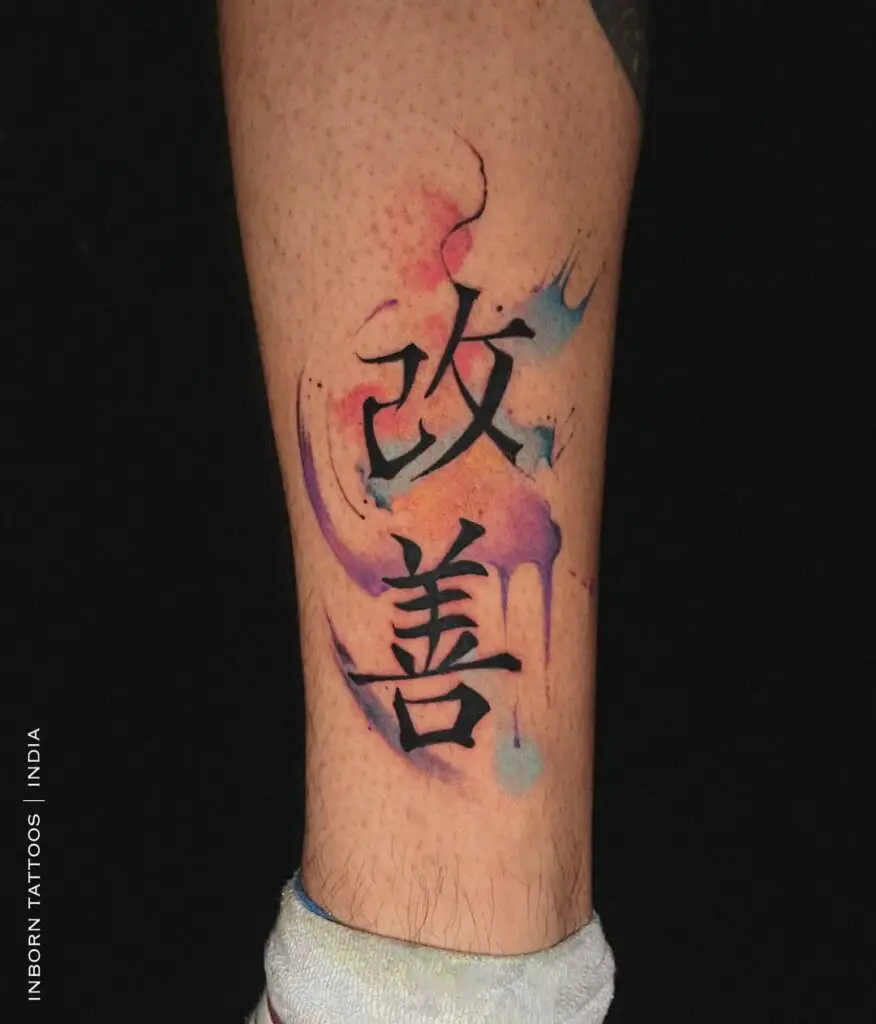
Photo: @inborntattoos

3. 忍耐 (Nintai) — Patience / Perseverance
The combination meaning patience, endurance, and the capacity to persist through difficulty. Two kanji together. The concept covers both the passive waiting of patience and the active endurance of perseverance. One of the most valued qualities in Japanese philosophy.
4. 武士道 (Bushido) — Way of the Warrior
The code of the samurai: honour, courage, loyalty, and the discipline to live and die correctly. Three kanji: warrior, gentleman, and road or way. The full concept covers an entire ethical system. For those with genuine connection to Japanese martial culture or philosophy.
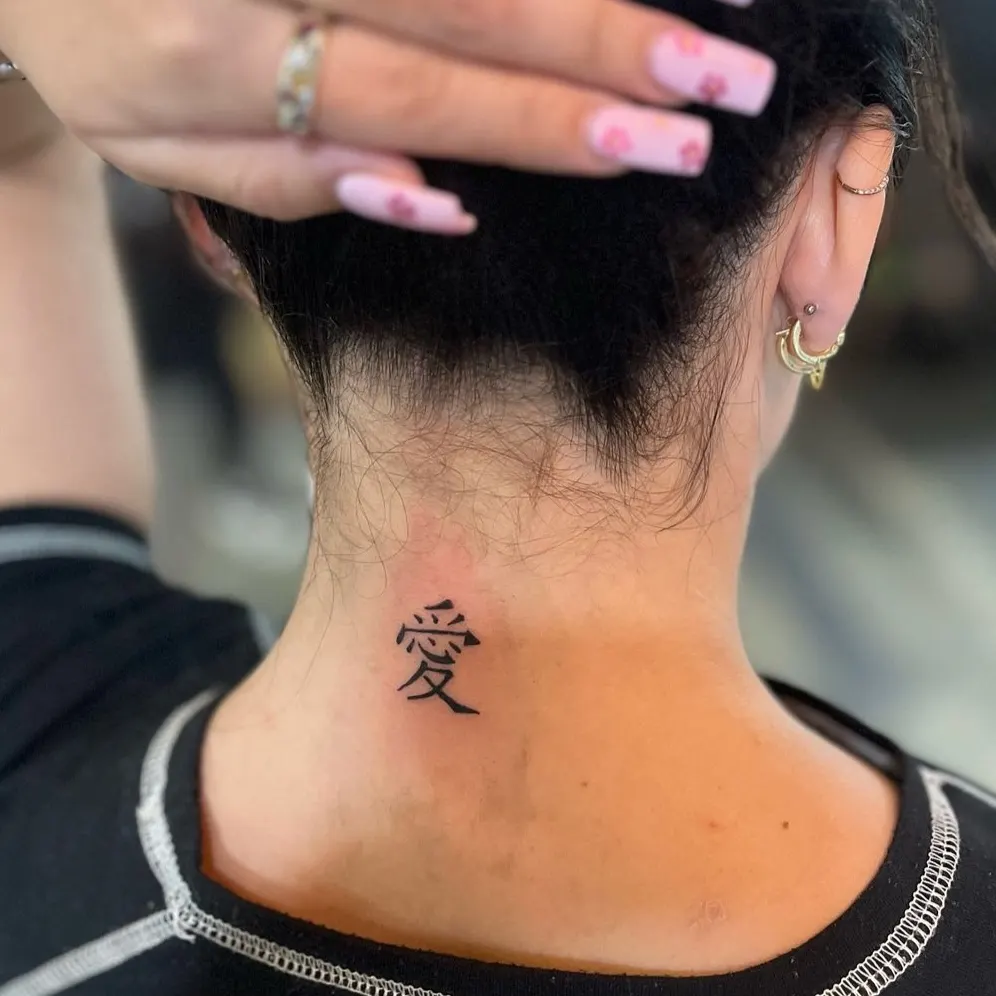
Photo: @burnedheartstattoos

5. 自由 (Jiyu) — Freedom
Two kanji meaning freedom or liberty. Self (自) and reason or cause (由) combined. The Japanese concept of freedom has philosophical depth that the English word sometimes lacks. A common Japanese word tattoo for those with freedom as a core value.
6. 平和 (Heiwa) — Peace
Two kanji meaning peace and harmony. The flat or even (平) combined with harmony (和). The concept covers both the absence of conflict and the presence of harmony. Works in kanji or in the hiragana phonetic script.
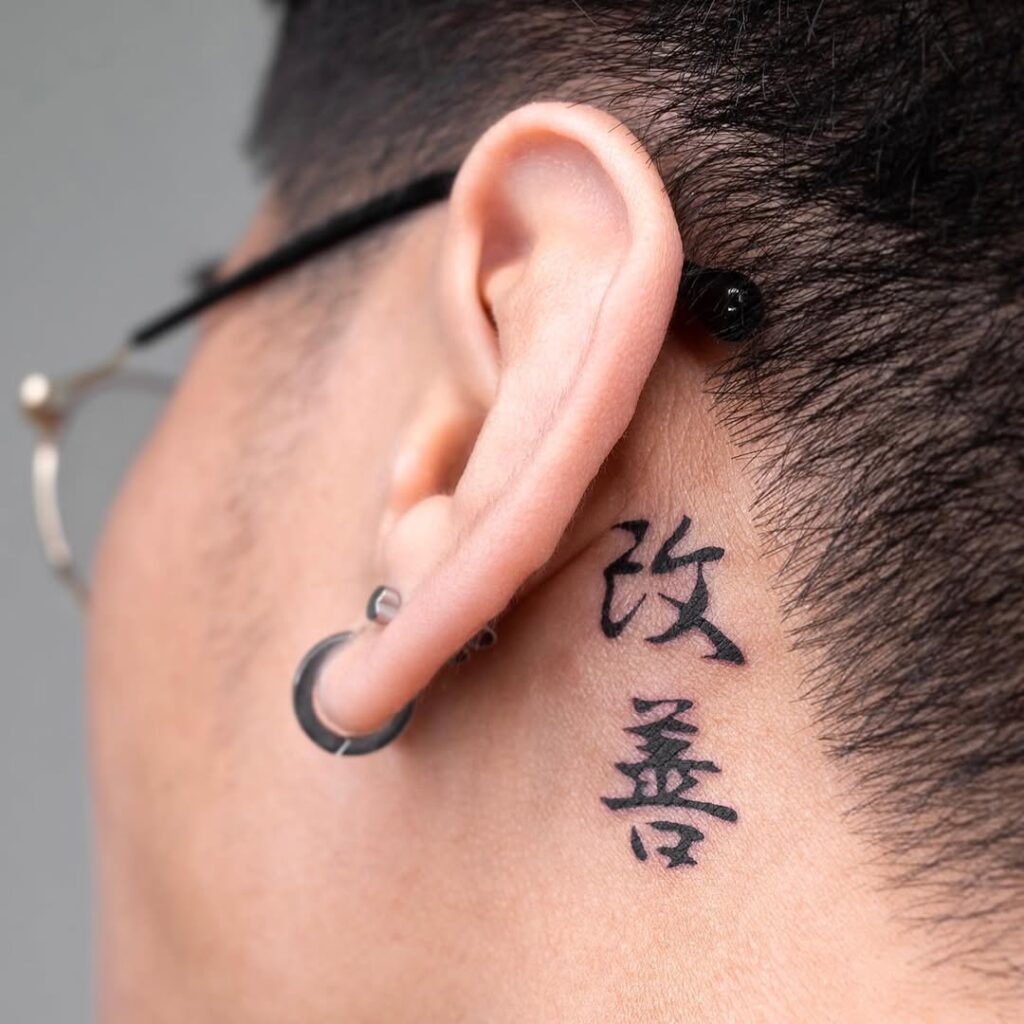
Photo: @branzuso
7. 運命 (Unmei) — Fate / Destiny
The Japanese word for fate or destiny. Two kanji: luck/fortune and life/command. The concept carries the sense of a destiny that is both given and lived: fate not as something merely imposed but as the path one is called to walk.
8. 勇気 (Yuuki) — Courage / Bravery
Two kanji meaning courage or bravery. Bravery (勇) and spirit or energy (気). The combination creates the concept of brave spirit. One of the more common Japanese word tattoos for its directness and positive associations.
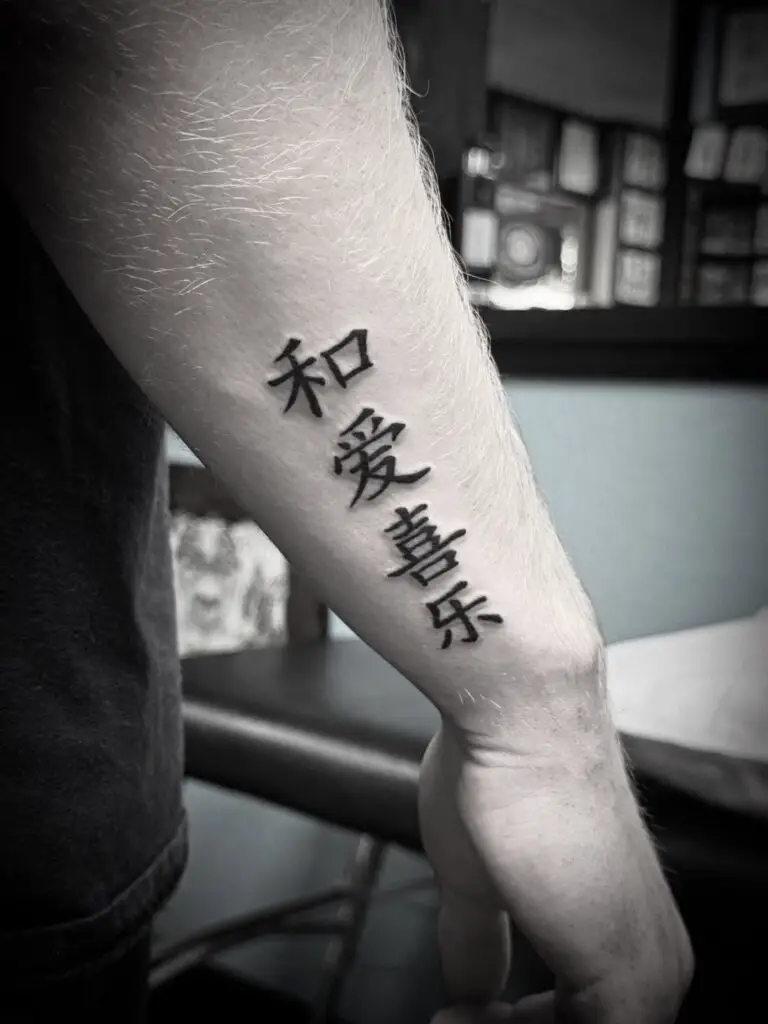
Photo: @adamdouglas4130
9. 家族 (Kazoku) — Family
The Japanese word for family. Two kanji: house/home and group/clan. The family concept in Japanese carries strong connotations of loyalty and obligation alongside love. For those for whom family is the primary value.
10. 夢 (Yume) — Dream
The single kanji for dream. Both the sleeping dream and the waking aspiration. One of the most visually interesting single kanji: a complex character with several distinct components. Works at a range of scales.
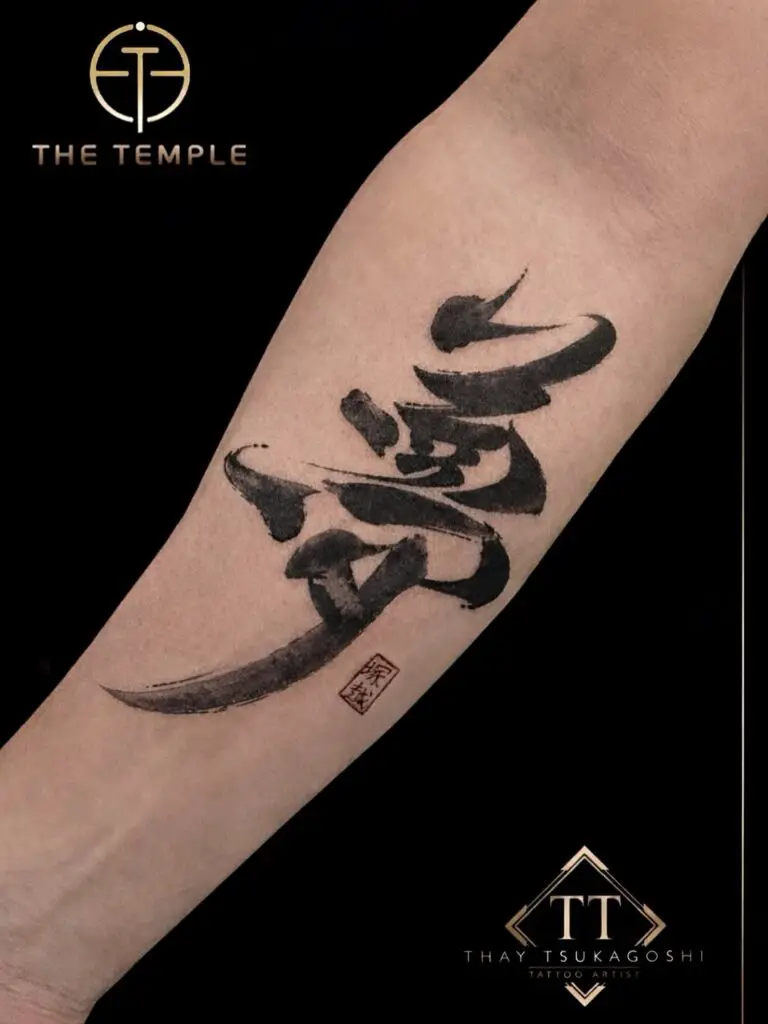
Photo: @thaytsukagoshi
11. 諸行無常 (Shogyo Mujo) — Impermanence of All Things
A Buddhist concept: everything that exists is impermanent and in constant change. Four kanji expressing one of the foundational insights of Buddhist philosophy. The awareness of impermanence as the path to equanimity rather than despair. For those with a serious connection to Buddhist thought.
12. 信念 (Shinnen) — Belief / Conviction
Two kanji meaning belief, conviction, or faith. Trust (信) and thought/thinking (念). The concept covers both religious faith and personal conviction. For those whose beliefs are a defining characteristic.
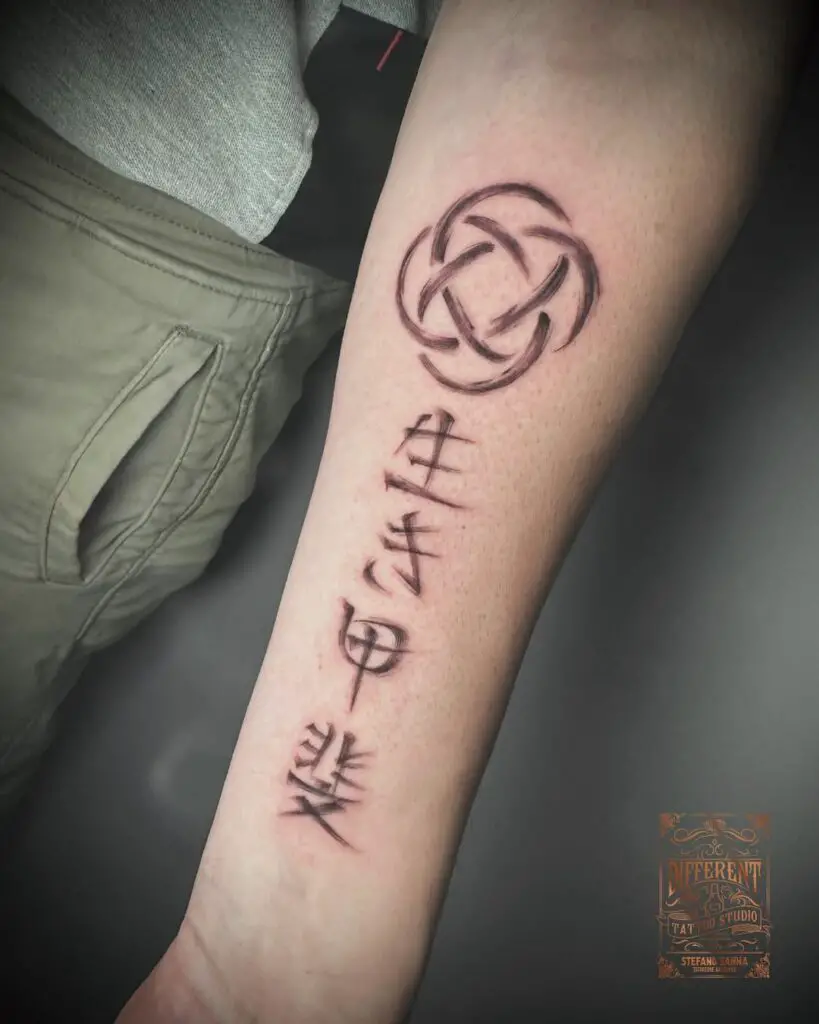
Photo: @different_tattoo_studio
13. 克服 (Kokufuku) — Overcome
Two kanji meaning to overcome, conquer, or surmount. The concept is used for overcoming difficulty, illness, loss, or personal limitation. A resilience tattoo with specific Japanese philosophical roots.
14. 孤独 (Kodoku) — Solitude
Two kanji meaning solitude or loneliness. The distinction between chosen solitude and imposed loneliness is important: kodoku can carry either meaning. A less common Japanese tattoo choice, but one with genuine depth for those who value or are defined by aloneness.
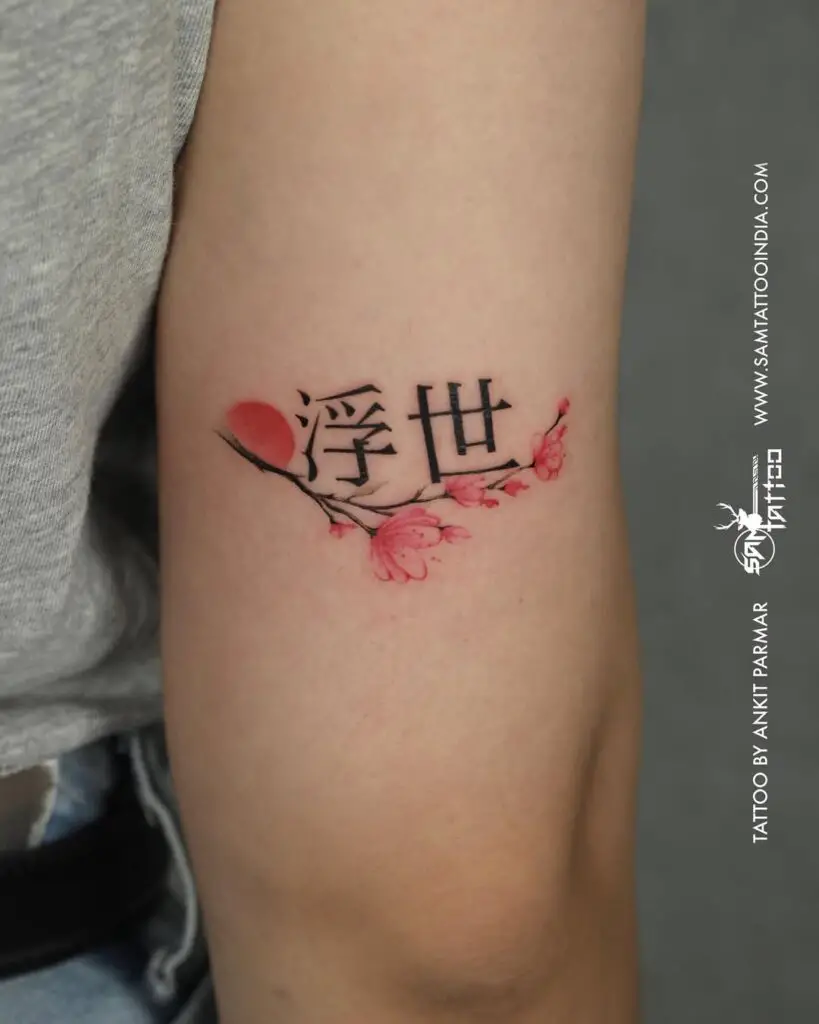
Photo: @inkcredible_samtattooindia
15. 一期一会 (Ichi-go Ichi-e) — Once in a Lifetime
Four kanji for the concept of “one time, one meeting” — each encounter is unique and will never happen again exactly this way. A concept from the Japanese tea ceremony tradition. The philosophical weight is in the instruction to be fully present because this particular moment will not return.
16. 火 (Hi) — Fire
The single kanji for fire. Visually dynamic and immediate. One of the simplest and most recognisable kanji. Works alone or as part of a larger composition with fire or phoenix imagery.
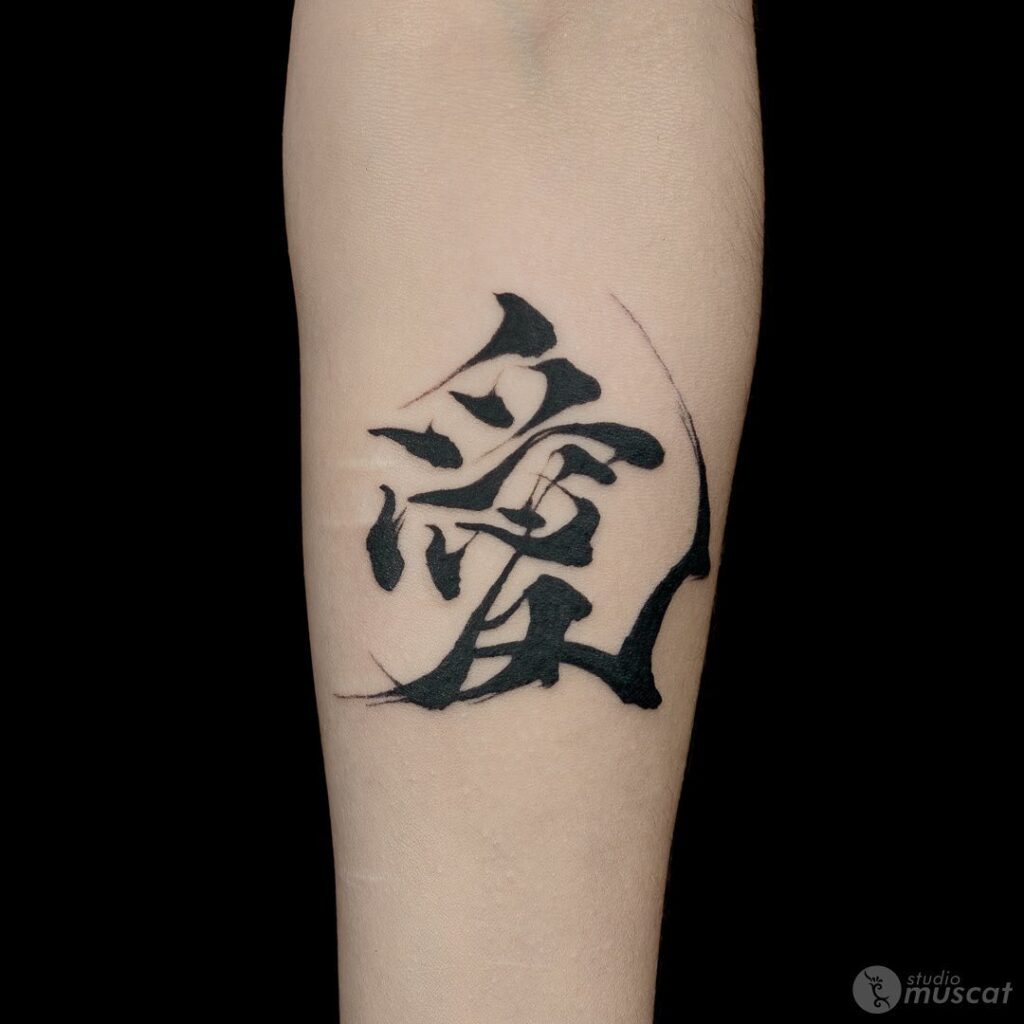
Photo: @studiomuscat
17. 水 (Mizu) — Water
The single kanji for water. One of the fundamental elements in Japanese art and philosophy. Water as adaptability, persistence, and the shaping force that carves canyons through sustained presence rather than force. The kanji is visually clean and distinctive.
18. 桜 (Sakura) — Cherry Blossom
The single kanji for cherry blossom. Sakura is not just a flower in Japanese culture but a symbol of the transient beauty of life: the most beautiful thing is also the most temporary. The kanji tattoo captures the cultural weight of the symbol in a single character rather than requiring an illustrative design.
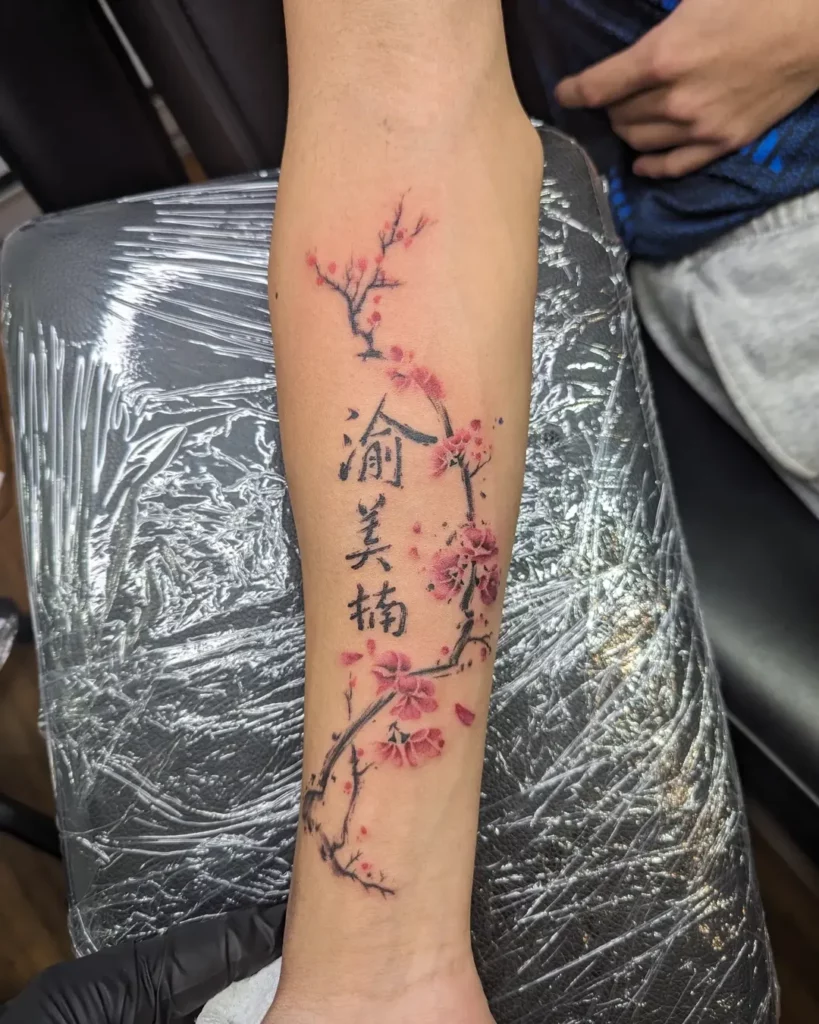
Photo: @vg_tatto.o
19. 侍 (Samurai) — Samurai
The single kanji for samurai. In its literal meaning, the character means “one who serves.” The concept encompasses the entire tradition of the warrior who serves with discipline, honour, and mastery. For those with genuine connection to Japanese martial history or the values the tradition represents.
Script Choices
Japanese has three writing systems: kanji (Chinese-derived characters with Japanese readings), hiragana (phonetic syllabary with rounded forms), and katakana (phonetic syllabary with angular forms). Most concept tattoos use kanji for their visual density and philosophical associations. Hiragana reads as softer and more poetic. Katakana is often used for foreign words written in Japanese. Your choice of script affects both the visual and the cultural reading of the tattoo.