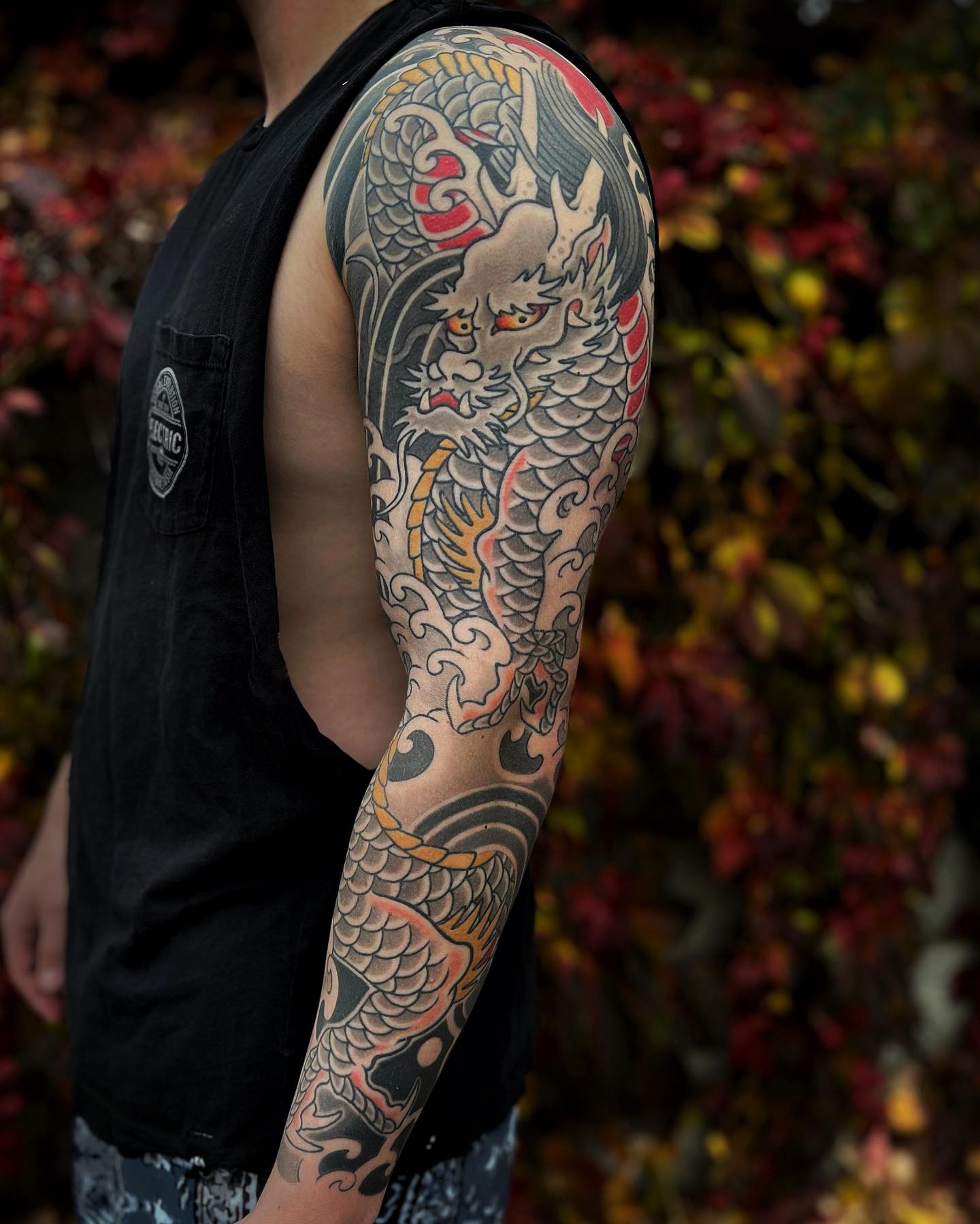
The lower back spent about fifteen years as the punchline of tattoo culture, and then it quietly came back. It is one of the few placements on the body that is naturally symmetrical, low friction, low sun exposure and completely under your control in terms of who sees it.
I have watched this shift happen in real time. Five years ago clients would ask for lower back work almost apologetically. Now they ask for it the way they ask for a forearm piece, and artists I know are booking full lower back sessions months out.
What changed is the design language, not the placement. The modern lower back tattoo is usually fine line botanical, ornamental or geometric work that reads as part of a wider back composition, often flowing up from a spine tattoo rather than sitting on its own as an isolated band.
Below are 20 designs that treat this canvas seriously, plus what I have learned about how these pieces age, what they cost in pain, and the one medical question that comes up every single time.
Which Lower Back Style Is Right for You?
Every style trades something. Here is how the four most requested approaches actually compare, based on what I have seen hold up and what artists quote.
| Style | Typical session time | How it tends to age here | Best for |
|---|---|---|---|
| Fine line botanical | 3–5 hours | Softens noticeably; thin lines can spread faster on mobile skin | Delicate, subtle pieces you accept will need a touch-up |
| Ornamental / mandala | 4–8 hours, often two sittings | Holds well when line weights are varied rather than uniformly thin | Symmetrical designs that fill the whole area |
| Blackwork / bold traditional | 3–6 hours | The most reliable over decades; solid fills stay readable | Anyone who wants one tattoo and no maintenance |
| Illustrative colour | 5–10 hours across sessions | Good, since the area sees very little sun | Bright pieces you want to stay saturated |
Why the Lower Back Works as a Canvas
The lower back is close to flat through the centre and curves away toward the hips. That geometry invites two things specifically: centred symmetrical designs, and long horizontal formats that would look cramped almost anywhere else.
Skin quality here is usually excellent. The area gets very little UV exposure for most people, and it does not take the constant rubbing that wrists, ankles and inner forearms do.
It is also visible entirely on your terms. Present at the beach, invisible at work, invisible at a wedding. In my experience that selectivity is the single most underrated quality in placement, and it is why clients who are nervous about a first large piece often land here.
The trade-off is movement. You bend and twist through this area constantly, and skin that moves a lot tends to be slightly less forgiving of ultra-thin linework over ten or twenty years.
If you are thinking bigger than a single motif, it is worth looking at full back piece layouts first, because a lower back design is far easier to extend upward later if it was planned with that in mind.
20 Lower Back Tattoo Ideas
These are grouped loosely from symmetrical and ornamental through to abstract. Every one of them has been chosen because it uses the shape of the placement rather than ignoring it.
1. Symmetrical Botanical Spread
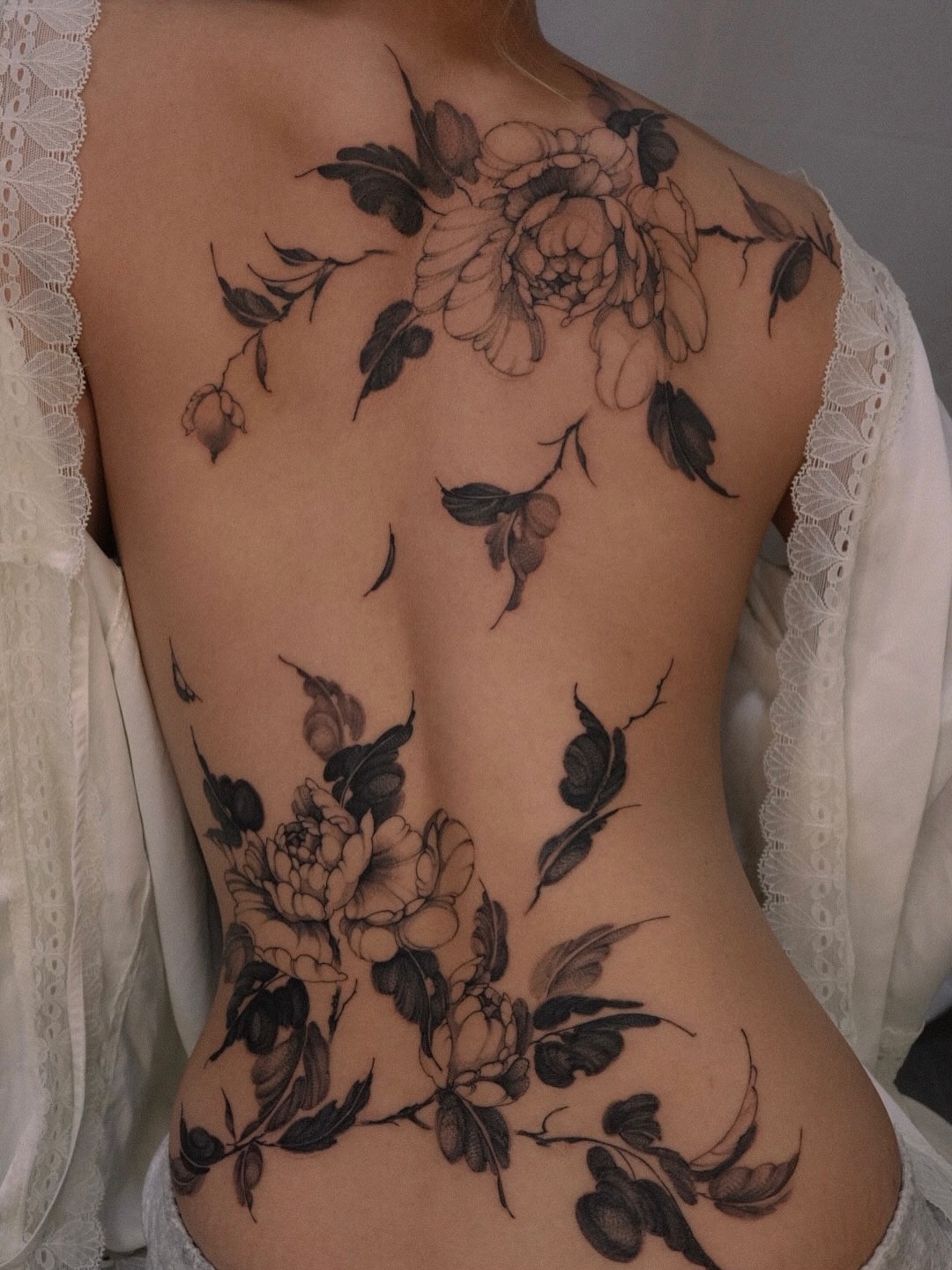
Paired botanical elements spreading outward from the spine: twin fern fronds, mirrored trailing wildflowers, or two orchid stems leaning away from each other.
The reason this works is that plants are already close to symmetrical, so the design does not have to fight the body to look balanced. The photo at the top of this article is a good example of the format.
Ask your artist to vary the line weight between the stems and the smaller leaves. Uniformly thin botanical work is the single most common thing I see needing a touch-up at the five-year mark in this placement.
2. Mandala
A circular mandala centred on the spine, sized to fill the lower back from hip to hip.
Radial symmetry and a symmetrical canvas are an obvious match, and the centre of the mandala gives the artist a fixed point to build outward from, which matters more than it sounds when the client is lying down and the skin shifts.
Fine line ornamental versions read as jewellery. Heavier blackwork versions read as architecture. Both are valid, but the heavier version will still be crisp in twenty years without intervention.
If you want the mandala to mean something beyond the pattern, lotus mandala designs combine the geometry with a recognisable flower at the core.
3. Butterfly with Extended Wings
A butterfly rendered with the wings open and stretched wide rather than the folded, small-scale version you see on wrists and ankles.
At lower back scale a butterfly stops being a small symbolic tattoo and becomes an ornamental one. The wing patterning gives an artist room for detail work that simply does not fit at two inches across.
The body of the butterfly sits on the spine, which handles the symmetry for you. Moths work just as well and, in my experience, date less obviously.
4. Phoenix Rising from the Centre
A phoenix with the body low on the spine and the wings and tail feathers sweeping upward and outward.
This is the design most likely to expand later. Plenty of the phoenix pieces I have seen started as a lower back tattoo and turned into a full back piece three years on, because the shape naturally wants to keep going.
Discuss that possibility at the consultation even if you have no intention of extending it. Placement of the head and the tail changes completely depending on whether the artist is planning for a bigger composition. There is a wider range of formats in these phoenix tattoo ideas.
5. Celtic Knotwork Band
A horizontal band of interlaced knotwork running across the lower back, either as a continuous strip or as a centred panel with tapering ends.
Knotwork is one of the few traditional styles designed to be read horizontally, which suits this canvas better than almost anything else.
It also ages exceptionally well because the lines are deliberately thick and the negative space is generous. If longevity is your main criterion, this is one of the strongest choices on the list. There is more on the symbolism and construction in this guide to Celtic knot tattoos.
6. Sun and Moon Duality
A sun on one side of the spine and a moon on the other, either as two separate motifs or joined into a single interlocking shape.
Duality themes need a symmetrical canvas to land properly, and there are not many of those on the body. The lower back is the best of them.
Fine line celestial versions with small stars scattered outward are the most requested version I see. Solid black and heavy stipple versions hold their contrast longer.
7. Spine-Aligned Script
A short phrase, name or date running vertically down the spine and finishing in the lower back.
Script here is high risk and high reward. Vertical text on the spine is genuinely striking, but it is also the placement where poor letter spacing shows most, because there is nothing else in the composition to distract the eye.
Keep it short. In my experience anything past four or five words starts to look cramped or requires a font size that undermines the delicacy people want from script in the first place. Ask to see the stencil on your body before any needle touches skin.
8. Geometric Diamond
A diamond or elongated hexagon centred on the spine, often with linework radiating outward or a dotwork gradient inside.
The pointed vertical axis of a diamond mirrors the spine, and the wide horizontal axis mirrors the hips. It is a shape that seems almost designed for this placement.
This is also one of the cheaper large designs to execute, because the geometry is precise but the coverage is modest. Expect a single session for most versions.
9. Trailing Vine with Flowers
A vine that begins at one hip, crosses the lower back and trails upward, with flowers appearing at irregular intervals along the length.
Asymmetry is the point here. It is the counterargument to everything else on this list, and it works because a vine has a direction of travel that gives the eye somewhere to go.
Ask for the flowers to be clustered rather than evenly spaced. Evenly spaced blooms look like a border pattern; clustered ones look like a plant.
10. Wings
A pair of wings anchored at the spine and sweeping outward toward the hips.
Wings are the most literal use of the symmetry available here, and the format has been done a lot, which cuts both ways. It is instantly readable, and it is also instantly familiar.
The versions that still feel fresh are the ones that abstract the feathers into linework or make the wings anatomically specific — a barn owl, a moth, a particular species rather than a generic feathered shape.
11. Scorpio Constellation
The stars of a constellation mapped across the lower back with fine connecting lines, sized so the shape spans the full width.
Constellation work is one of the few designs that genuinely benefits from being large. At small scale the dots collapse into a cluster; at lower back scale the actual shape of the constellation becomes legible.
Scorpio and Orion suit the horizontal format best. Ask your artist to use varied dot sizes for the brighter stars rather than a uniform grid of identical dots, which is what makes the difference between a star map and a scatter of freckles.
12. Tiger or Panther, Horizontal
A big cat stretched horizontally across the lower back, either prowling in profile or curled around the centre line.
Traditional big cat tattoos are usually vertical on a thigh or bicep. Rotating one into a horizontal format is unusual enough to feel considered and it fits the canvas exactly.
This is a design that needs solid black and real contrast to work. It is not a fine line subject, and every artist I have asked about it says the same thing: bold or don’t bother.
13. Sacred Geometry Pattern
Interlocking geometric construction — flower of life, metatron’s cube, nested platonic solids — centred on the spine.
The appeal is precision. These designs live or die on whether the lines are truly straight and the circles truly round, on a surface that curves in two directions.
Choose an artist whose portfolio shows this specific work. Geometric linework is the least forgiving style for a generalist, and the lower back’s curvature makes it harder still. These sacred geometry designs show what strong execution looks like.
14. Koi Fish Pair
Two koi circling each other, one heading up and one heading down, mirrored around the spine.
The yin-yang arrangement of paired koi is already circular and already symmetrical, which is exactly what this canvas asks for.
Colour holds well here because of the low sun exposure, so this is one of the better placements on the body for a full colour Japanese-influenced piece. Budget for at least two sessions if you want proper saturation.
15. Floral Wreath or Half Wreath
A circle or half circle of flowers, either enclosing empty skin at the centre or opening upward toward the spine.
The half wreath is the version I would push most people toward. A full closed circle can look static; an open one has movement, and it stays readable when you bend forward.
Peonies, roses and poppies all scale well to this size. Smaller flowers such as forget-me-nots need to be clustered rather than used alone, or they disappear. There are more compositions in these floral back tattoo ideas.
16. Ocean Wave
A stylised wave crossing the lower back horizontally, in the Japanese tradition or in a looser modern linework style.
Waves are inherently horizontal and inherently asymmetrical, which makes them one of the more interesting fits here. The curl of the wave gives the composition a focal point without needing to sit dead centre.
The traditional Japanese version wants solid black and defined negative space. The minimal linework version is quicker and cheaper but expects more from the artist’s sense of line quality.
17. Geometric Spine Extension
Stacked geometric shapes running down the spine from mid back and finishing in the lower back — diminishing diamonds, chevrons, or linear segments.
This is the design that most obviously reads as part of a larger back composition rather than a standalone tattoo, which is precisely why it has become so popular.
It is also the easiest to extend. Most of these can be continued upward in a later session without redrawing anything, which is rare.
18. Lotus with Roots
A lotus centred on the spine with roots trailing downward and petals opening upward.
The vertical axis of the flower uses the spine as its centre line, so the symmetry is built in. The roots ground the design at the base; the petals give it lift.
Symbolically this is one of the more coherent choices on the list rather than a decorative one, and clients tend to be very specific about the number of petals. Say so at the consultation if that matters to you.
19. Dragonfly
A dragonfly with the body along the spine and the wings spread across the lower back.
The proportions are almost uncanny. A dragonfly’s natural wingspan-to-body ratio lines up closely with the width-to-height ratio of the average lower back, so the design fits without distortion.
It also carries genuine symbolic weight — change, adaptability, seeing past the surface — without being as heavily used as a butterfly.
20. Abstract Fluid Lines
Not a representational image at all, but flowing abstract linework that traces the contours of the lower back.
The design curves with the body rather than sitting on top of it. Done well it is the most sophisticated thing on this list, because it is the only one that could not exist anywhere else on the body.
Done badly it looks unfinished. This one depends entirely on the artist, so only commission it from someone whose portfolio already contains abstract work you like.
Variations and Nearby Placements
Extending Upward into a Full Back Piece
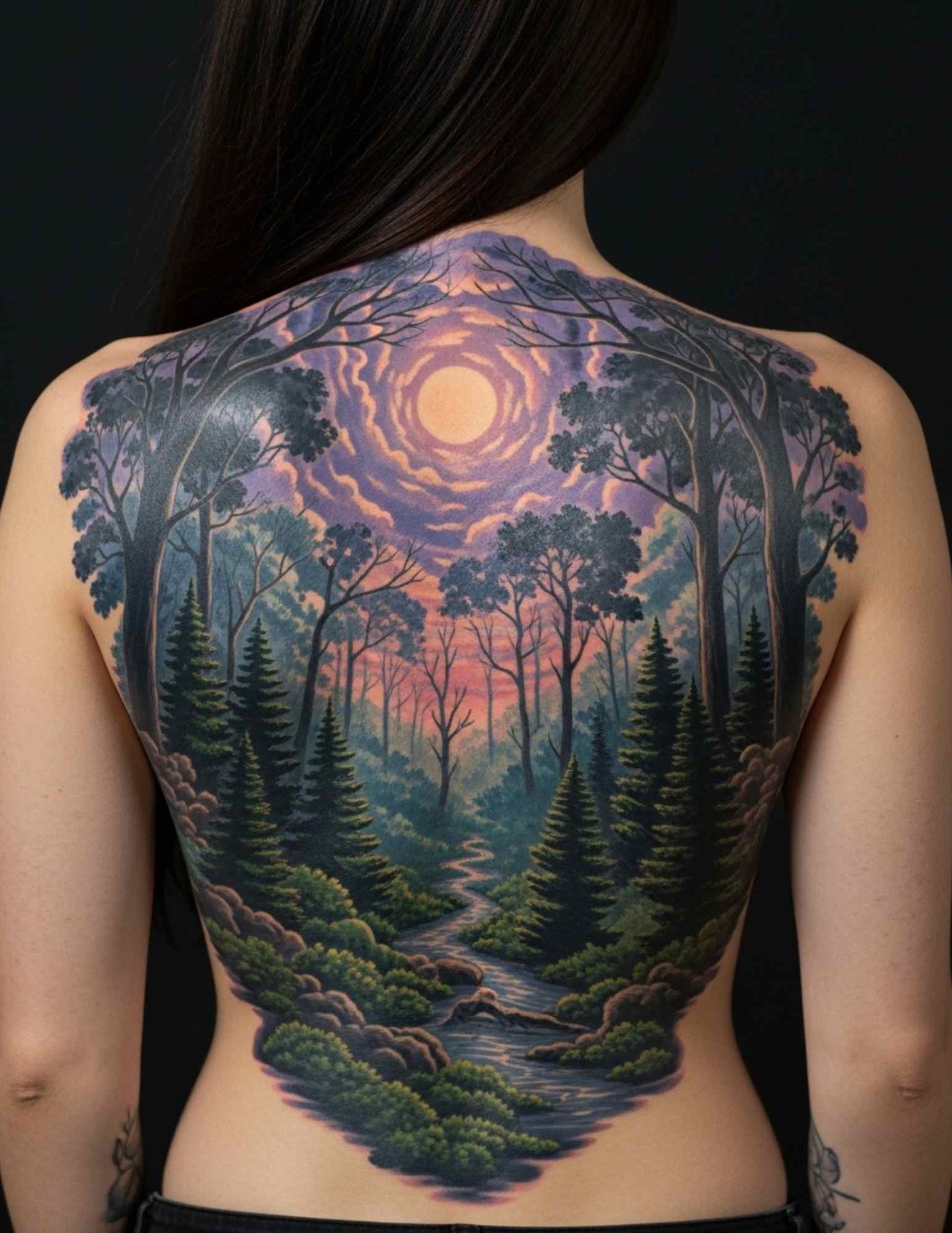
Almost every design here can be grown upward, but only if the original was drawn with that in mind. Tell your artist at the first consultation, even if you are only 20 percent sure.
The cost of saying so is nothing. The cost of not saying so is a composition that has to be worked around later.
Hip and Waist Wraparounds
Extending the design around the hips changes the pain profile considerably — the hip bone is a much harder sit than the soft tissue of the lower back.
It also changes what the tattoo does. A wraparound is visible from the side and in low-rise clothing, which is a different level of visibility than a centred lower back piece.
Sitting Above the Waistline Instead
Moving the design up two or three inches puts it on more stable, less mobile skin, which is measurably kinder to fine linework over time.
You lose some of the discretion, because it will show under a cropped top. Whether that trade is worth it depends entirely on why you wanted the placement.
Micro Versions
A single small motif centred on the sacrum, rather than anything spanning the width. Quick, cheap, and easy to build around later.
In my experience this is the sensible entry point for anyone who is still deciding whether they like having a tattoo they cannot see in the mirror.
Pain, Healing and Getting It Right
Pain here is moderate for most people. The centre of the lower back over soft tissue is manageable; the spine itself and the bony points near the hips are noticeably sharper. Every client I have asked describes the same jump when the needle crosses the spine.
Sessions run long because of the surface area, so eat properly beforehand and expect the last hour to be worse than the first. There are specific strategies in this guide to managing tattoo pain that are worth reading before a four-hour sit.
Healing is straightforward but the position is awkward. You cannot see it, you will sleep on it, and waistbands sit directly across it. Sleep on your front for the first few nights, wear loose high-waisted clothing or nothing over the area, and have someone help you apply aftercare rather than contorting to reach it.
Follow your artist’s aftercare instructions over anything you read online, including this. General guidance from the American Academy of Dermatology is a reasonable baseline, and if you see spreading redness, heat, pus or a fever, that is a doctor’s call, not an internet one. The Mayo Clinic’s overview of tattoo risks covers what to watch for.
Common Mistakes and the Epidural Question
The mistake I see most often is choosing a line weight that suits the design on paper rather than the skin it is going on. Ultra-fine linework on an area that bends and twists all day is the most common cause of a five-year touch-up here.
The second is going too small. A motif sized for a forearm looks lost across the width of a lower back, and the empty skin around it draws more attention than the tattoo does.
The third is not checking the stencil while standing up. Lie down and the skin sits differently than it will for the rest of your life. Ask to see it standing, and ask again after any adjustment.
On epidurals: the belief that a lower back tattoo rules one out is largely a myth. A 2020 review in Anaesthesia Critical Care & Pain Medicine traced the concern back to a theoretical worry about pigment being carried into the epidural space and found no documented cases of harm resulting from it. In practice anaesthetists commonly place the needle through unpigmented skin between design elements where that is possible. If you are planning a pregnancy, raise it with your anaesthetist rather than with your tattoo artist — and if it worries you, leaving a small gap of clear skin over the middle of the lumbar spine costs the design very little.
Still not sure about the placement? Compare it against a fine line spine tattoo, which sits higher, hurts more, and is far more visible day to day.
Frequently Asked Questions
Do lower back tattoos still have a stigma?
Far less than they did a decade ago. The designs being done now — ornamental, botanical, geometric, often connected to spine or full back work — look nothing like the small centred motifs the stereotype was built on. In my experience the reaction people actually get is closer to curiosity than judgement, though that varies a lot by where you live and who you spend time with.
How much does a lower back tattoo cost?
It depends on size, style and your artist’s rate, so any specific figure would be misleading. What is predictable is the shape of the quote: most full-width lower back designs are priced as a half-day or full-day session rather than by the piece, and colour or heavy ornamental work usually runs to two sessions. Ask for a written estimate at the consultation and ask whether touch-ups are included.
Does a lower back tattoo hurt more than other placements?
It sits in the middle of the range for most people. The fleshy areas either side of the spine are comparatively easy; directly over the spine and near the hip bones is sharper. The bigger factor is duration — a four-hour session anywhere becomes uncomfortable in the last hour regardless of placement.
Can I get an epidural if I have a lower back tattoo?
In almost all cases yes. The concern is theoretical and no documented cases of harm have been attributed to it in the published literature. Anaesthetists will generally work around pigment where they can. Raise it with your anaesthetist during pregnancy rather than assuming either way — they make that call, not your tattoo artist.
How long does a lower back tattoo take to heal?
The surface usually looks settled in two to three weeks, with the deeper healing continuing for a couple of months. The complication in this location is friction from waistbands and sleeping position rather than anything about the skin itself. Keep it out of clothing pressure where you can, and contact your artist or a doctor if anything looks infected rather than waiting it out.
Quick Summary
- The lower back is naturally symmetrical, low friction and low sun exposure — genuinely one of the better canvases on the body.
- Symmetrical designs (mandalas, wings, koi pairs, botanical spreads) fit the shape best; horizontal formats come second.
- Bold lines and solid fills outlast ultra-fine linework here, because the skin moves constantly.
- Plan for possible upward extension into a back piece even if you are unsure, since it costs nothing to plan and a lot to retrofit.
- Pain is moderate over soft tissue and sharper over the spine and hip bones; session length matters more than placement.
- Healing is complicated by waistbands and sleeping position rather than by the skin itself.
- The epidural concern is a myth with no documented cases of harm behind it — but raise it with your anaesthetist, not your artist.
- Check the stencil standing up, not just lying down.