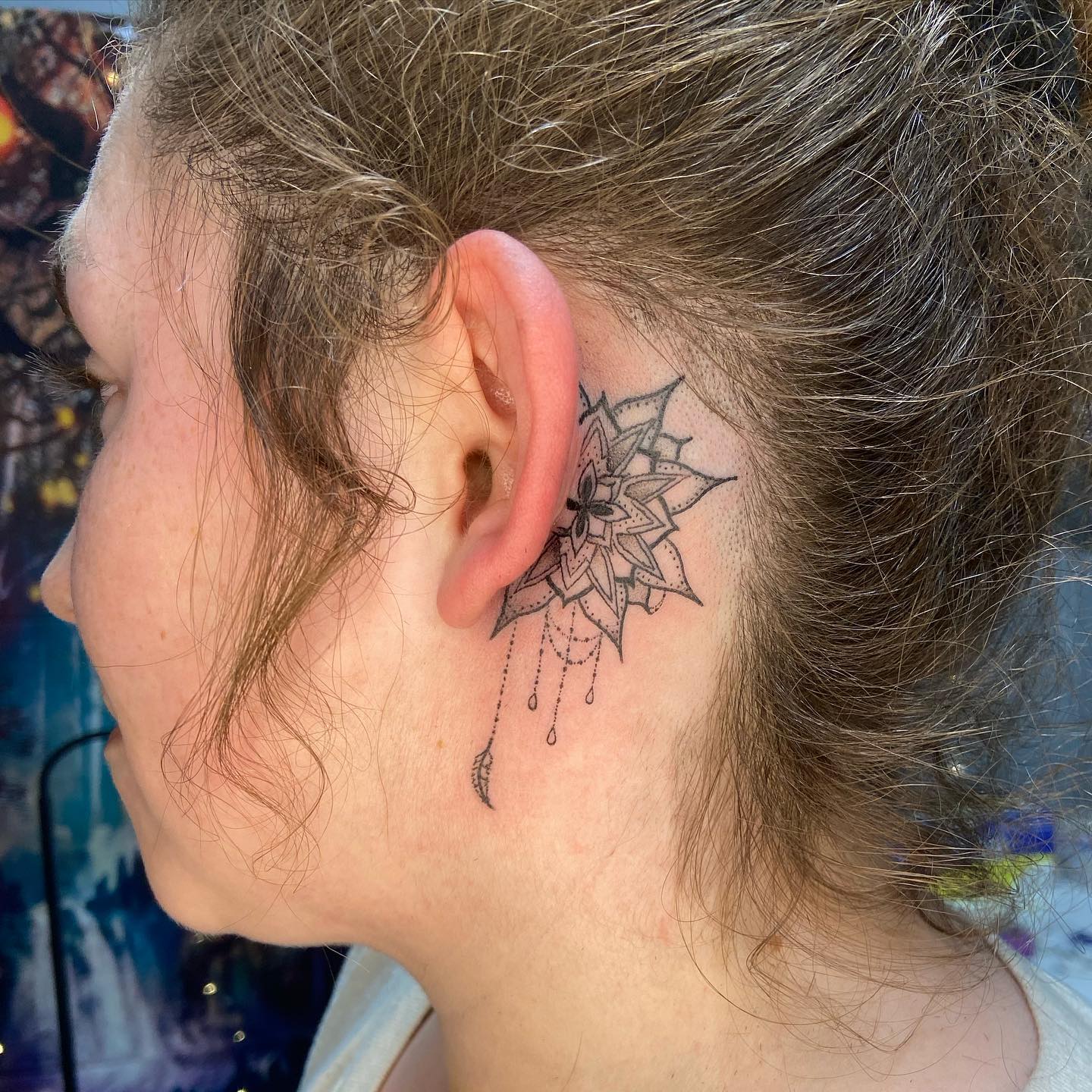
Mandala tattoos have been quietly filed under “feminine” for about a decade now, and it is one of the least accurate assumptions in modern tattooing. The mandala is a meditative diagram from Hindu and Buddhist practice, and nothing in its origin has anything to do with gender.
What changed is the execution. The fine line, grey wash, hyper-delicate mandala took over social media, and a lot of men decided the subject was closed to them.
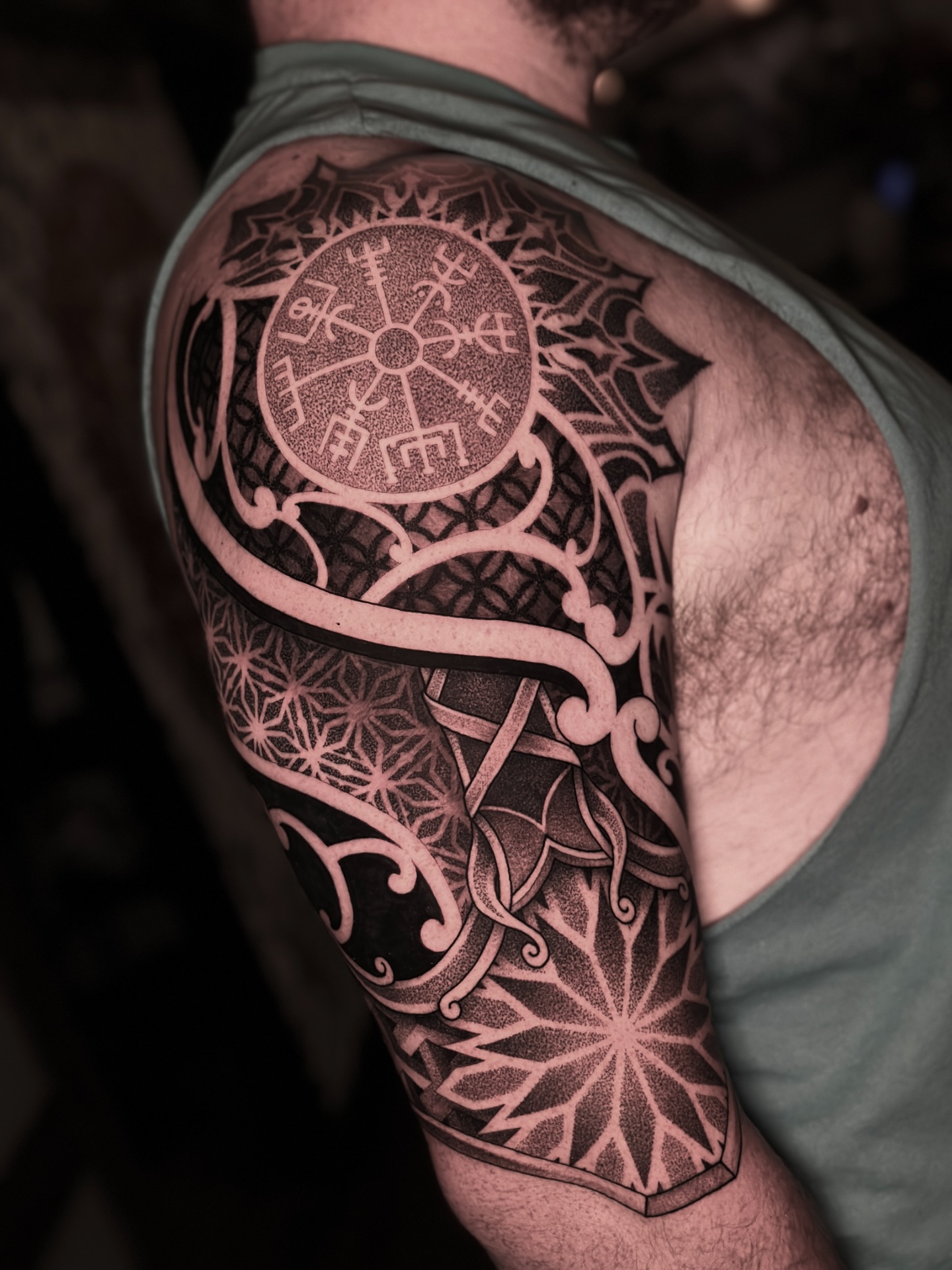
In my experience the opposite is true: mandalas are one of the few designs that get stronger the heavier you go. Bold blackwork, solid fills, deep contrast, large placements — the geometry holds up under all of it, and most of the best examples I have seen on men lean hard into that weight. If you like the structure but want more angular shapes, geometric tattoo ideas for men covers the adjacent territory.
What follows is 20 ideas organised by placement and approach, plus the practical stuff — what a mandala costs in chair time, which artists can actually do them, and the mistakes I see most often.
Which Mandala Style Is Right for You?
Four broad approaches dominate, and they age very differently. This is roughly how I would explain the trade-offs to someone booking their first mandala.
| Style | Best For | Minimum Size | How It Ages |
|---|---|---|---|
| Heavy blackwork | Chest, back, thigh, shoulder cap | 4 in / 10 cm | Excellent — built for spread |
| Dotwork / stippled | Upper arm, forearm, calf | 4 in / 10 cm | Very good, softens gently |
| Fine line | Forearm, wrist, small placements | 3 in / 8 cm | Needs touch-ups over time |
| Geometric / sacred geometry | Forearm, sleeve panels, back | 4 in / 10 cm | Good, but symmetry drift shows |
If you are undecided, the honest answer is that heavy blackwork is the safest long-term bet for a large piece, and fine line is the better choice only if you are committed to touch-ups.
Why Mandala Tattoos Work So Well on Men
The mandala’s defining feature is radial symmetry — everything repeats outward from a single centre point. That structure needs a flat, broad surface to stay readable.
Male anatomy tends to offer more of exactly that: a wider chest plate, a flatter upper back, a broader deltoid cap. A mandala placed on a genuinely flat plane keeps its circle; one placed across a curve becomes an oval.
Scale is the second factor. A mandala’s appeal is in its detail density, and detail density needs surface area. Every artist I have asked puts the practical floor for a detailed mandala somewhere around four inches — below that, the inner rings start collapsing into a dark blob within a few years.
Then there is the ink weight. Fine line mandalas rely on hairline strokes that soften as they settle; heavier blackwork and dotwork hold their shape far longer because the design was built with spread already accounted for.
None of this is a rule about gender. It is a rule about surface, scale and line weight, and it happens to line up with placements men choose more often.
Mandala Tattoo Ideas for Men by Placement
Placement decides more about a mandala than style does. These are the spots that consistently work, and what to expect from each.
Chest and Sternum Mandalas
The chest is the classic mandala placement for men and, in my experience, the one that most consistently justifies the money. A large piece centred between the pecs and reaching toward the collarbones has the flat surface the geometry needs, plus a natural centre line to build symmetry around.
Heavy blackwork suits it best. Solid fills read as powerful rather than decorative, and the contrast against untouched skin does most of the visual work.
The sternum variation is narrower and more vertical — a half or elongated mandala running down the breastbone, often paired with linework extensions across the ribs. It is a considerably more painful sit, since the needle is working directly over bone with almost no padding.
Expect multiple sessions for anything full-chest. Most artists I have spoken to budget two to four sittings for a detailed chest mandala, and they will usually outline the whole thing first so the symmetry is locked before any fill goes down. If you are weighing a chest piece more broadly, chest piece tattoo ideas for men is worth a look.
Shoulder Cap and Upper Arm Mandalas
The deltoid is the single most forgiving mandala placement I know of. It is naturally round, so the design’s circular structure matches the muscle it sits on instead of fighting it.
A shoulder cap mandala reads cleanly from the front, the side and behind — which is unusual, since most tattoos have one good viewing angle and several bad ones.
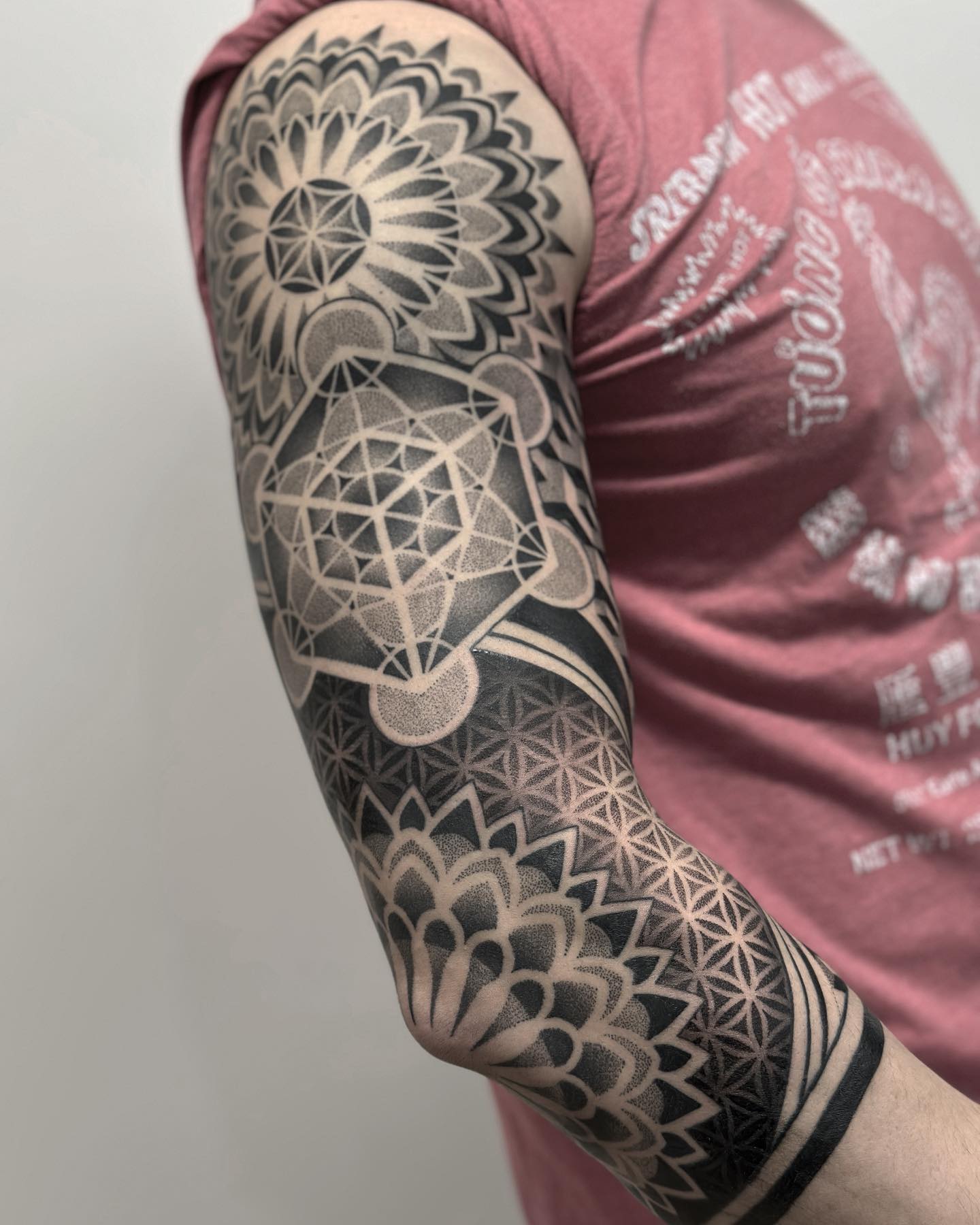
It also works as a self-contained piece or as the anchor point for a future sleeve. When I have seen sleeves built outward from a shoulder mandala, the composition almost always holds together better than sleeves assembled from unrelated pieces.
If you think you might extend it later, tell the artist before they start. A mandala designed as a standalone cap and a mandala designed as a sleeve anchor are drawn differently — the second leaves deliberate open space at the lower edge for flow.
Dotwork on the upper arm is another strong option. Softer than solid blackwork, with tonal gradients built from stippling rather than shading, it gives depth without the density of full fill.
Full Back Mandalas
The back is the largest uninterrupted canvas on the body, and a mandala scaled to fill it is one of the most striking pieces in tattooing. It is also a serious commitment.
Realistically you are looking at a multi-session project measured in tens of hours, spread over months, with healing time between sittings. Nobody does a full back mandala in a day.
The upside is that at that scale, detail survives. Inner rings that would blur on a four-inch design stay legible for decades when the whole piece is eighteen inches across.
One practical note: pick your artist for this piece before you pick the design. A back mandala’s symmetry is unforgiving, and small drift in the outline becomes glaringly obvious at scale.
Forearm and Lower Arm Mandalas
The forearm is the most visible mandala placement and the most commonly requested one I come across. It is also the trickiest geometrically, because the forearm is a tapering cylinder, not a plane.
Two approaches work. The first is a geometric mandala designed to wrap — the artist deliberately distorts the outer rings so the design appears circular when viewed from the front. The second is a half mandala that sits flat on the inner or outer forearm and simply does not attempt to wrap.
In my experience the second option ages better and is easier to get right, but the first looks more impressive when a skilled artist pulls it off.
Combining a mandala with straight linework extensions running up the arm is a common move, and a good one — it breaks the piece out of a rigid circle and gives it direction. Blackwork tattoo ideas for men shows how those heavier fills sit alongside open linework.
Mandala Sleeves and Sleeve Elements
A mandala rarely works as an entire sleeve on its own — radial symmetry repeated down a whole arm gets monotonous. What works is using mandalas as anchor points inside a larger composition.
The usual structure is a large mandala on the shoulder or outer forearm, with geometric linework, patterns or negative space filling between them. It gives the sleeve a rhythm: dense focal points, breathing room, dense focal points again.
This is where planning matters most. A sleeve assembled from mandalas booked one at a time almost never flows; a sleeve designed as one composition from the start usually does.
If you are going down this road, mandala sleeve tattoo ideas and geometric sleeve tattoo ideas for men both cover the composition side in more depth. For budgeting, how much a sleeve tattoo costs is the realistic starting point.
Leg, Knee and Thigh Mandalas
The outer thigh is an underrated mandala placement — large, relatively flat, easy to sit through, and easy to cover when you want to. If you want scale without the visibility of a chest or forearm piece, it is the obvious choice.
The knee cap is the opposite: small, brutally painful, and constantly in motion. A mandala on the kneecap is a genuinely good fit structurally, since the cap is round and the design is round, but the healing is slower than most placements because the skin flexes with every step.
Artists I have talked to are candid that knee tattoos often need a touch-up. Movement during healing can pull at fresh linework in a way that flat placements do not.
Calf mandalas sit somewhere in between — decent surface, moderate pain, and they read well from behind, which is where most people will see them.
Neck, Hand and Small-Scale Mandalas
These are the high-commitment placements, and I would not recommend either as a first tattoo. A neck or hand mandala is visible in every professional setting you will ever walk into, and no amount of “attitudes have changed” makes that universally true.
For that placement specifically, see the ornamental and mandala hand tattoo examples in our hand design gallery.
Beyond visibility, hands and necks fade faster than almost anywhere else. Hands take constant sun, constant washing and constant friction, and hand tattoos typically need touching up on a cycle that flat, covered placements never require.
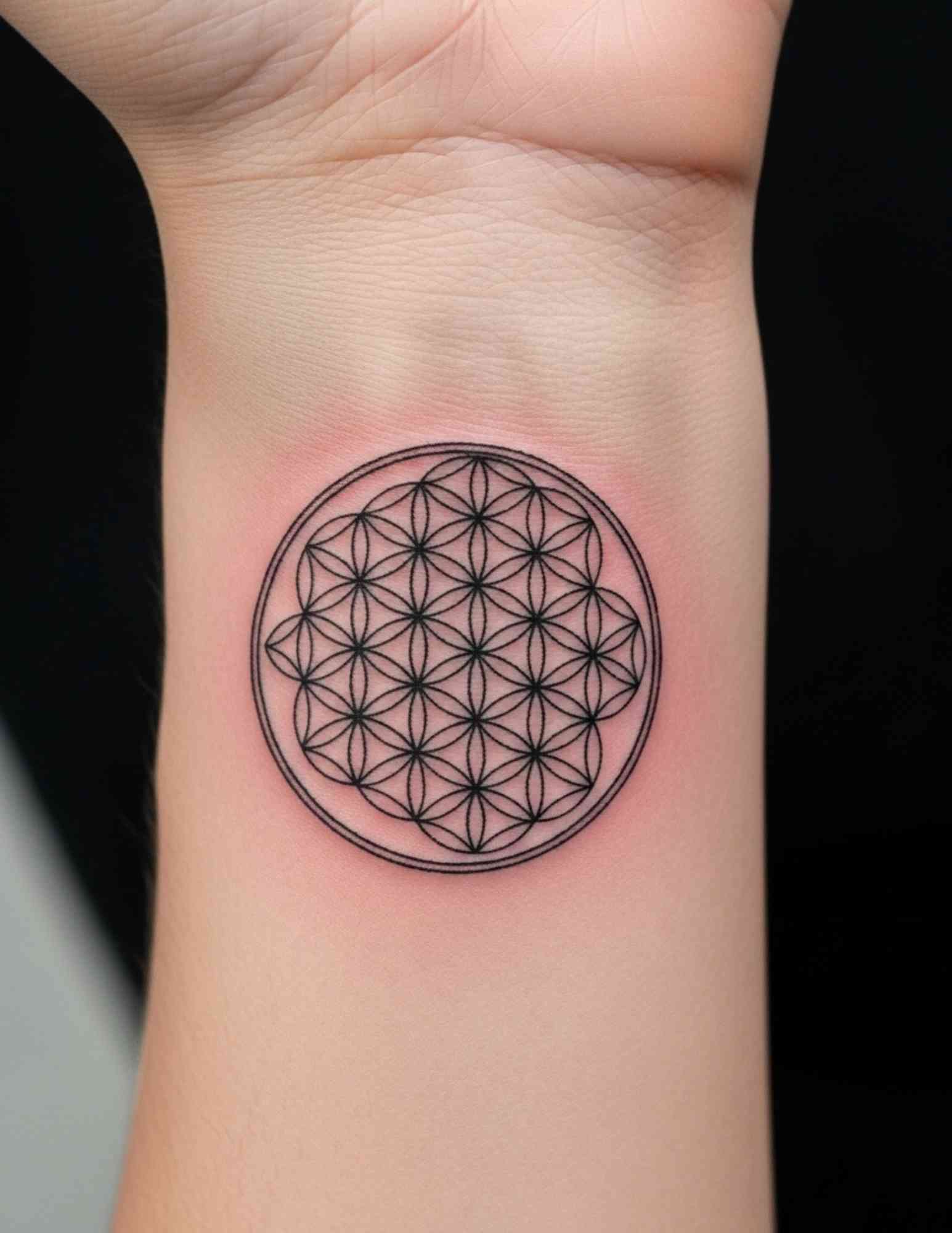
Small wrist mandalas are the more moderate version of the same idea. Under two inches, keep the design simple — a few clean rings, minimal inner detail. Cramming a full mandala’s complexity into a small circle produces something that looks sharp for two years and muddy after ten.
Scale down the complexity, not just the size. That single piece of advice prevents most of the disappointment I see with small geometric work.
Mandala Variations Worth Considering
The classic radial mandala is only the starting point. These variations show up constantly in men’s work and each solves a different problem.
Sacred Geometry Mandalas
Instead of the traditional floral or petal-based rings, the design is built from the Flower of Life, Metatron’s Cube, interlocking triangles or similar constructions. It reads as more architectural and less ornamental, which is often exactly what someone is after. Sacred geometry tattoo ideas goes deeper on the individual forms.
Mandala and Animal Fusion
A lion, wolf, elephant or bear head set inside or emerging from a mandala frame. This is one of the most requested combinations I see, and it works because the mandala supplies structure while the animal supplies a focal point. It only fails when the artist gives both elements equal weight and neither wins.
Cultural and Symbolic Fusions
Norse runes, Celtic knotwork, Polynesian patterning and clock or compass motifs all combine with mandalas reasonably well, because each already relies on repeated geometry. A word of caution: some of these traditions have real cultural weight, and it is worth understanding what a symbol means before wearing it permanently.
Lotus Mandalas
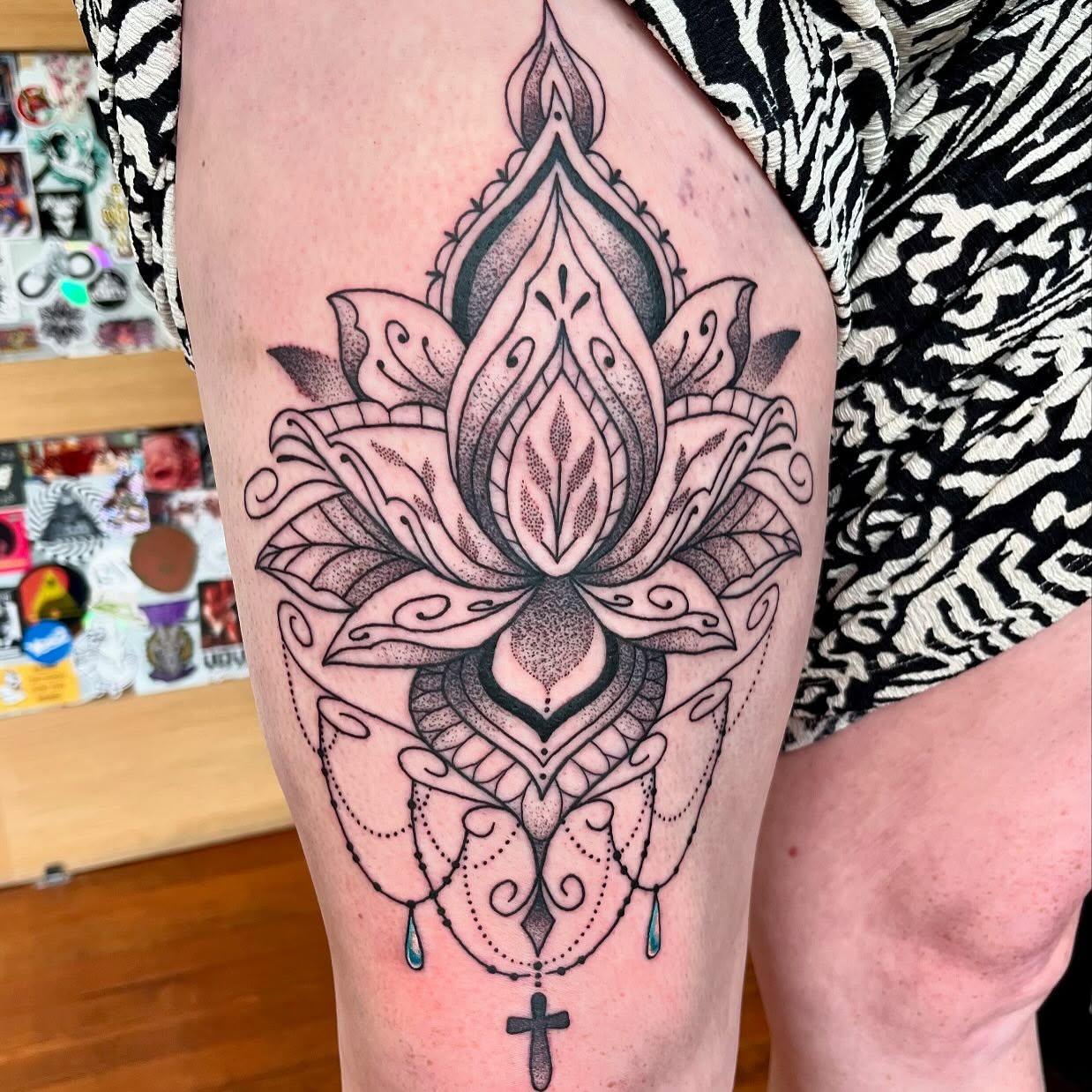
The lotus-centred mandala is the version closest to the design’s Buddhist roots, where the lotus represents growth through difficulty. Rendered in heavy blackwork rather than fine line, it loses none of the meaning and gains a lot of presence — see lotus mandala tattoo ideas for the range.
Negative Space Mandalas
Rather than drawing the mandala in black on bare skin, the artist blacks out a large field and leaves the mandala as untouched skin inside it. Striking, modern, and very demanding — the black field has to be flawlessly saturated or the piece looks patchy.
Choosing the Artist and Getting It Right
Mandala work is one of the few tattoo styles where the artist matters more than the design. Symmetry is unforgiving in a way that most subjects are not.
What to look for: healed photos, not fresh ones. Fresh geometric work always looks perfect — the question is whether the lines are still crisp and evenly spaced a year later. Any artist who specialises in this will have healed shots.
Look for consistent line weight throughout a piece, evenly spaced repeating elements, and clean centre points where lines converge. Wobble at the centre is the giveaway that someone is out of their depth.
Ask directly whether they draw mandalas freehand on the body or work from a stencil. Both are legitimate, but freehand on curved placements usually produces better results because the artist can adapt to your anatomy in real time.
Expect to pay for this. Geometric specialists often charge above a shop’s standard rate and frequently have long waiting lists, and in my experience both of those are good signs rather than red flags.
Aftercare and Healing Realities
Standard aftercare applies, but a couple of things are specific to heavy geometric work.
Large blackwork areas take longer to settle than linework, and solid fills can look patchy for the first few weeks as they heal. That is normal and usually resolves — but if patchiness is still obvious after a couple of months, that is a touch-up conversation, not a permanent flaw.
Sun is the main long-term enemy. Blackwork holds up better than colour, but UV still breaks pigment down, and a forearm or hand mandala that lives in the sun will soften faster than one under a shirt. Sunscreen on healed tattoos is the cheapest maintenance there is — the American Academy of Dermatology has straightforward guidance on caring for tattooed skin.
On safety: infection and allergic reaction are real, if uncommon, risks with any tattoo. Redness, swelling and tenderness in the first few days are expected; spreading redness, heat, pus, or fever are not, and those warrant a doctor rather than an internet forum. The FDA’s tattoo and permanent makeup fact sheet covers what regulators do and do not oversee. Nothing here is medical advice — your artist and your doctor are the people to ask.
Common Mistakes to Avoid
The first is going too small. More mandala disappointment comes from undersized designs than from anything else — the detail that makes the piece interesting is the first thing to disappear.
The second is picking a general artist for geometric work. A brilliant realism artist may produce a mediocre mandala, and that is not a criticism of them; it is a different skill entirely.
The third is placing it on a curve without planning for the curve. Wrapping distorts circles, and it has to be designed for, not discovered halfway through the session.
The fourth is treating the sleeve as a collection rather than a composition — booking pieces one at a time and hoping they connect later.
If you are still weighing options, linework tattoo ideas is a useful comparison point for how much detail actually survives at different scales.
Frequently Asked Questions
Are mandala tattoos feminine?
No. The mandala originates in Hindu and Buddhist spiritual practice, where it functions as a meditative diagram and carries no gender association at all. What created the perception is a style trend — the fine line, delicate rendering that dominated social media for several years. Executed in heavy blackwork or dotwork at scale, the same subject reads very differently. The design is neutral; the execution sets the tone.
How much does a mandala tattoo cost?
It depends almost entirely on size, artist and region, so any specific figure would be misleading. What I can say is that geometric specialists typically charge above a shop’s standard hourly rate, and that mandalas are time-intensive because symmetry cannot be rushed. A small wrist piece may be a single short session; a full back mandala is a multi-session project measured in tens of hours. Get a quote from the specific artist before committing.
Where do mandala tattoos hurt the most?
Sternum, ribs, neck, hands and knees are consistently reported as the worst, because the needle is working over bone with little padding between. The outer thigh, upper arm and outer forearm are considerably more manageable. Pain tolerance varies enormously between individuals, so treat any pain chart as a rough guide rather than a prediction. If pain is a serious concern, tell your artist — they can often break a large piece into shorter sessions.
Do mandala tattoos age well?
Heavier ones do. Bold blackwork and dotwork are designed with ink spread already accounted for, so they hold their shape for decades. Fine line mandalas with dense inner detail are the ones that tend to soften, especially at small sizes where adjacent lines blur into each other. The two biggest factors in how well any mandala ages are the scale you chose and how much sun the placement gets.
Can a mandala tattoo be covered up or removed later?
Heavy blackwork mandalas are among the harder tattoos to cover, because a cover-up generally needs to be darker and denser than what is underneath, and solid black leaves little room above it. Laser removal is possible but typically takes multiple sessions over many months, and results vary with ink, skin and placement. Consult a licensed practitioner rather than attempting any home removal method — DIY removal carries real risk of scarring and infection.
Quick Summary
- Mandalas are not gendered — the design comes from Hindu and Buddhist practice, and only the rendering style reads as masculine or feminine.
- Heavier execution suits most men better: bold blackwork, solid fills and dotwork over delicate fine line.
- Flat surfaces keep circles circular — chest, upper back, outer thigh and the deltoid cap are the most forgiving placements.
- Around four inches is the practical floor for a detailed mandala; below that, scale down the complexity too.
- Forearms taper, so a wrapping mandala must be designed to distort or built as a half mandala that sits flat.
- Use mandalas as anchor points in a sleeve rather than repeating them down the whole arm.
- Choose a geometric specialist and judge them on healed photos, not fresh ones.
- Neck and hand placements fade fastest and are visible everywhere — think hard before committing.