Norse mythology is not decorative. It is a cosmology built around conflict, honour, sacrifice, and the inevitability of Ragnarok. The gods in this tradition are not omnipotent and infallible. They are powerful, flawed, and mortal in the long run. That tension gives Norse mythology a rawness that other traditions sometimes lack. And it makes the symbology extraordinarily rich for tattooing.
These 20 ideas draw from the deep well of Viking and Norse tradition. Whether you have spent time with the Eddas or are drawn to the aesthetic, there is something here with genuine weight behind it.
Key Symbols and What They Mean
Before choosing a design, it is worth understanding the source material. Mjölnir is Thor’s hammer and one of the most potent protective symbols in Norse tradition. The Valknut is three interlocked triangles associated with Odin and fallen warriors. The Vegvísir is a Viking compass, meant to guide the bearer through storms and rough seas. Yggdrasil is the world tree connecting the nine realms. The Helm of Awe (Ægishjálmur) was inscribed on the foreheads of warriors for protection and power.
Runes are not just letters. Each elder futhark rune carries a name, a meaning, and a historical association. Using them as tattoos is choosing to carry something specific, not just something that looks Norse.
20 Norse Mythology Tattoo Ideas
1. Yggdrasil Full Back Piece
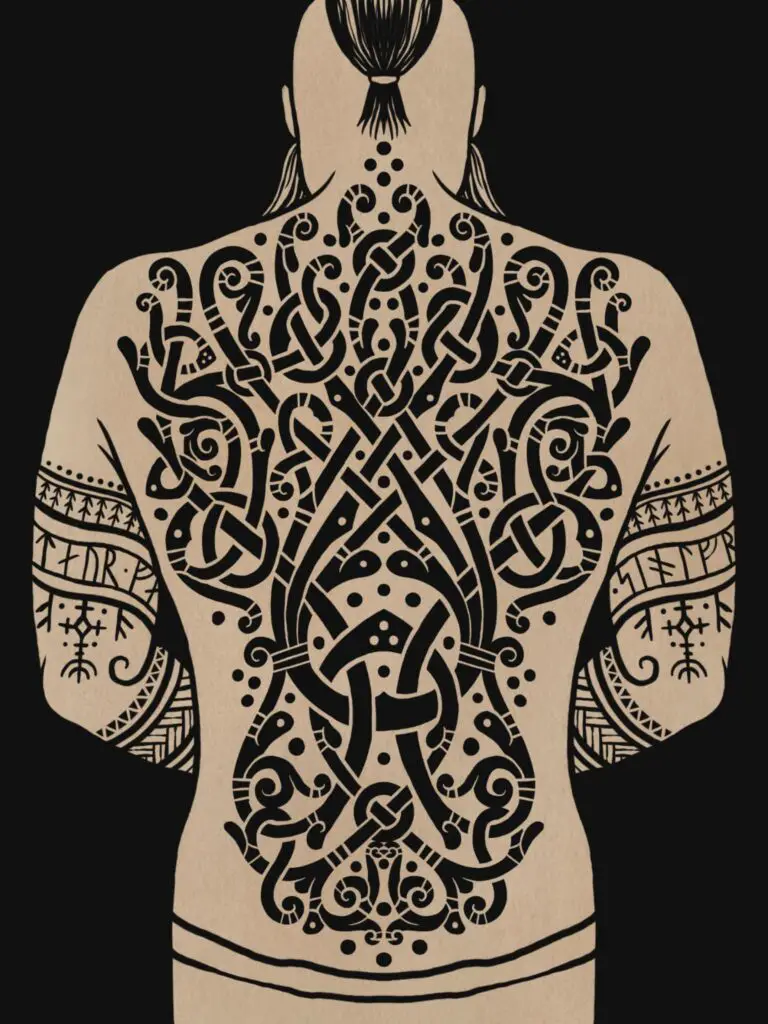
Photo: @theravenfromthenorth
The world tree spanning from the roots of Hel’s realm to the branches holding Asgard. A full back piece allows Yggdrasil to exist at the scale it deserves. The roots intertwining with serpents below, the eagle at the crown, Ratatoskr the squirrel running up the trunk. There is enough detail in the mythology to fill a back and more.

2. Odin with Ravens Hugin and Munin
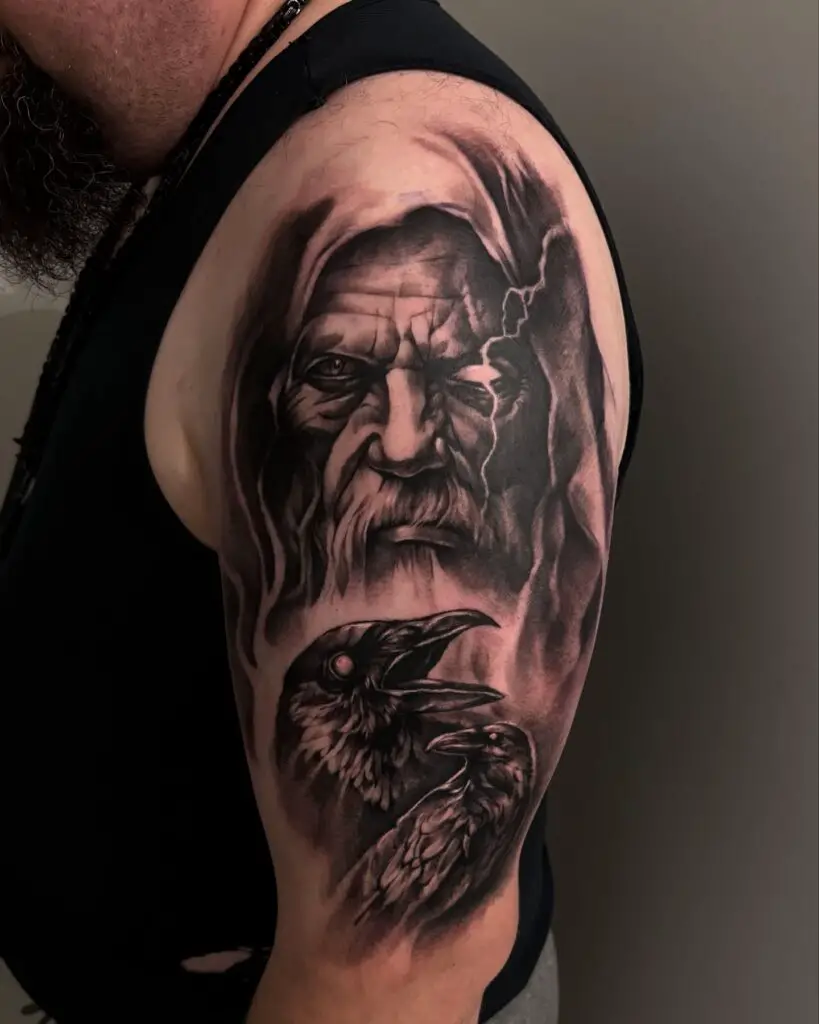
Photo: @nethru_ink
The Allfather flanked by Thought and Memory. Odin is usually depicted as a cloaked, one-eyed figure with a spear and his two ravens. The ravens represent his knowledge of all things, gathered from their flights across the nine realms. A profound image about the cost of seeking wisdom.
3. Mjölnir with Nordic Knotwork
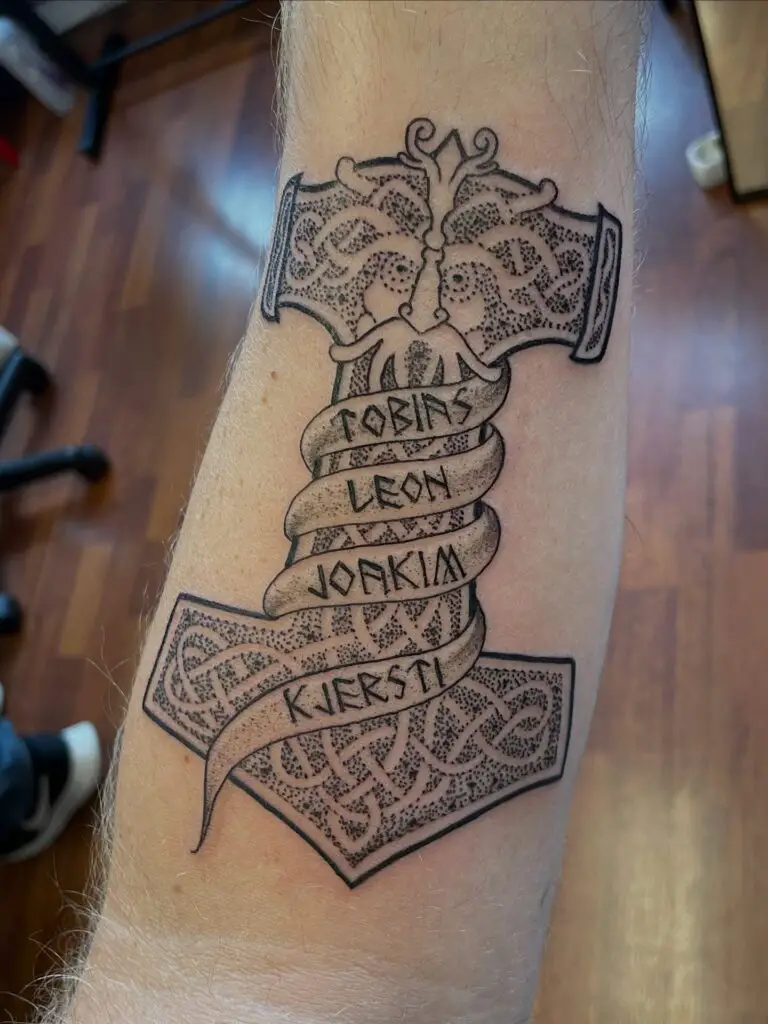
Photo: @_leink_
Thor’s hammer rendered in detailed knotwork interlacing. The historical Mjölnir pendants found across Scandinavia are often surprisingly small and geometric. A tattoo version can honour that historical accuracy or expand it into something more dramatic. Either works.
4. The Valknut
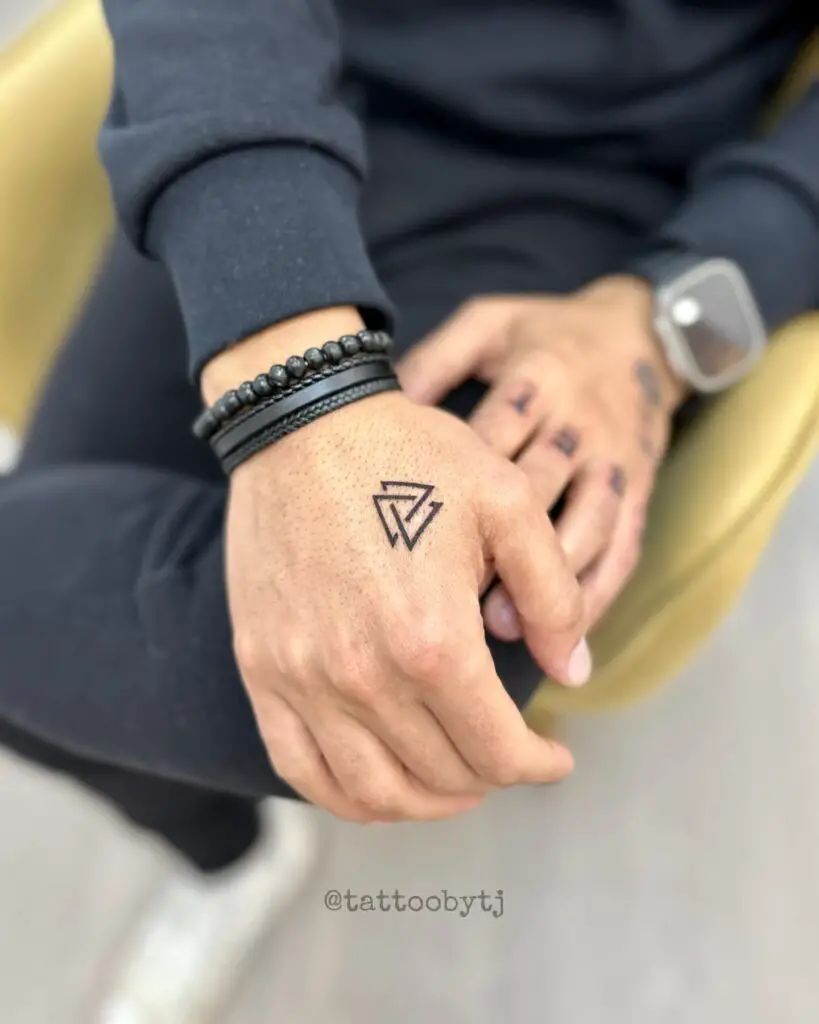
Photo: @tattoobytj
Three interlocked triangles in clean, precise linework. Simple, historically attested, and deeply connected to Odin and the honoured dead. Often accompanied by runic inscriptions or placed within a larger scene. As a standalone symbol, it is as powerful as any in Norse tradition.
5. Fenrir Breaking His Chains
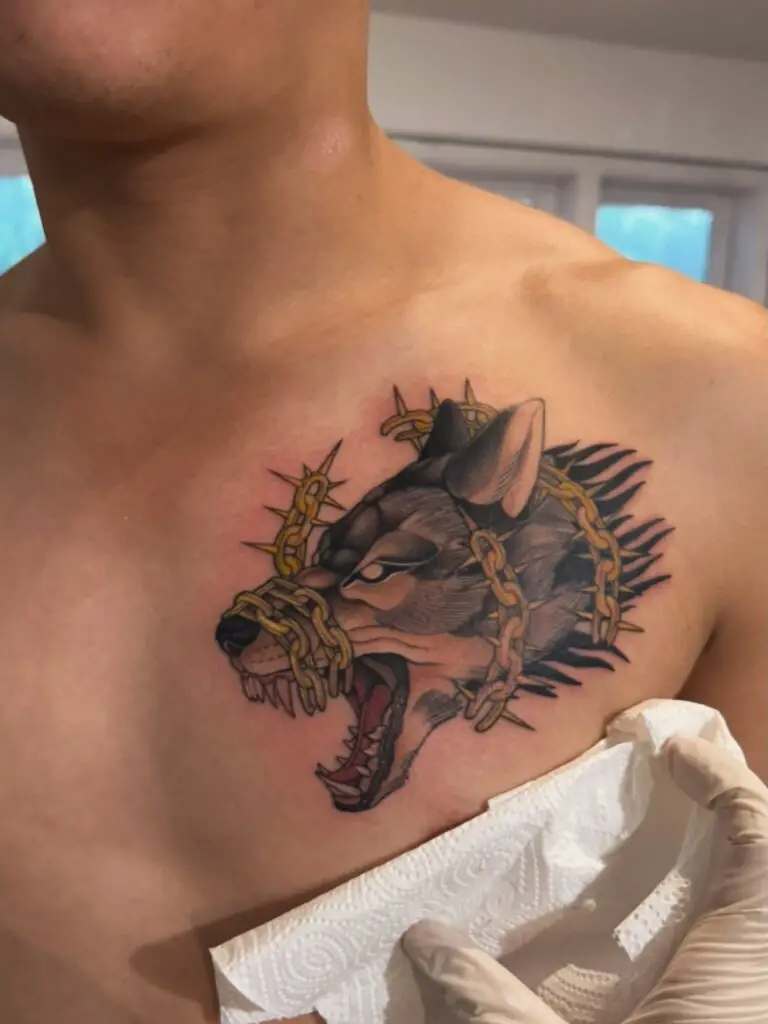
The great wolf Fenrir, bound by Gleipnir, the impossibly thin chain that holds what iron could not, straining against his bonds. Fenrir is the embodiment of inevitable catastrophe. His breaking free signals Ragnarok. As a tattoo, the wolf straining against restraint carries obvious symbolism around power, defiance, and the things that cannot be contained forever.
6. Valkyrie in Flight
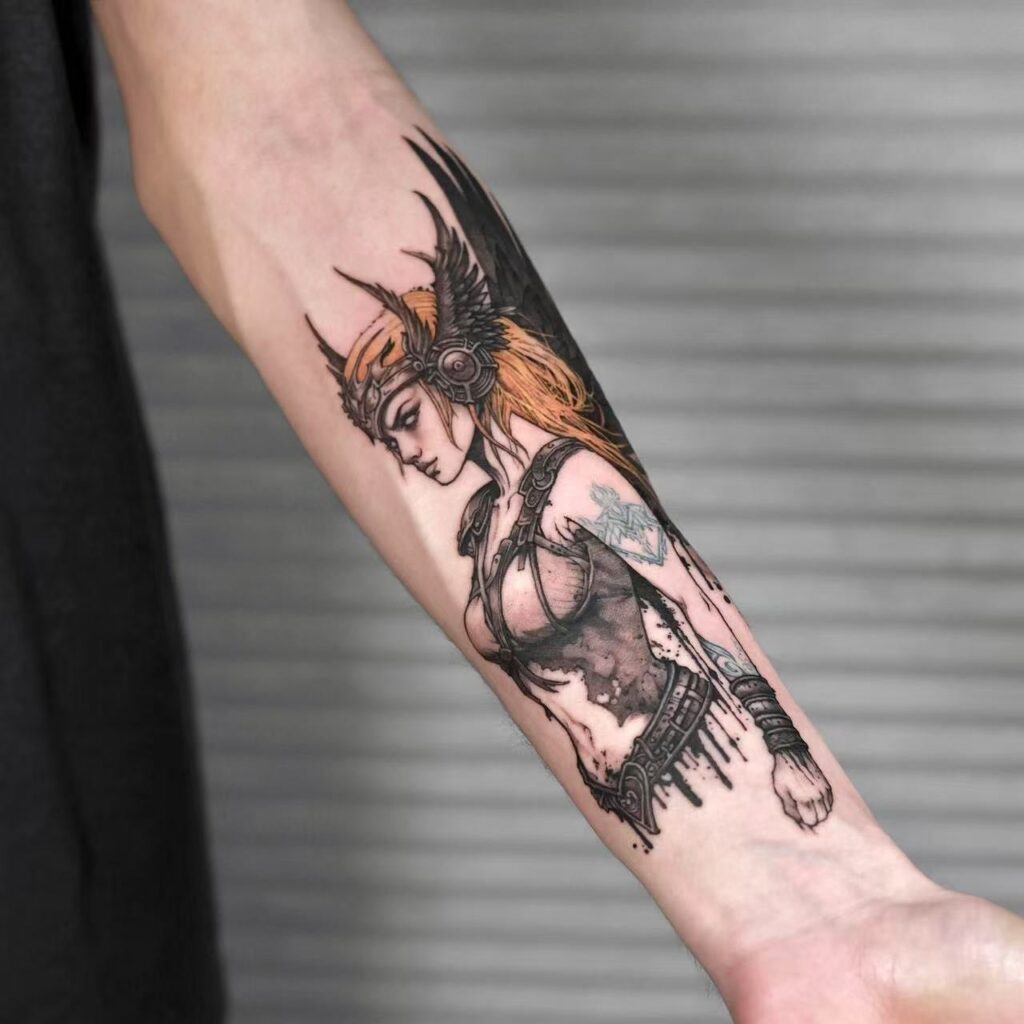
Photo: @inkparktattookop
A Valkyrie, armoured and winged, moving across a battlefield. The Valkyries chose who lived and who died in battle and escorted the worthy to Valhalla. They are not gentle figures. They are decisive and fearless. A Valkyrie tattoo is an unusual choice for a warrior archetype: feminine, lethal, and serving the highest purpose.
7. Elder Futhark Rune Sleeve
All 24 elder futhark runes arranged in a band or worked into a larger sleeve design. Each rune named in the poem Havamal. Each with centuries of interpretive history. A rune sleeve is a commitment to the material rather than just the aesthetic.
8. Jörmungandr (The World Serpent)
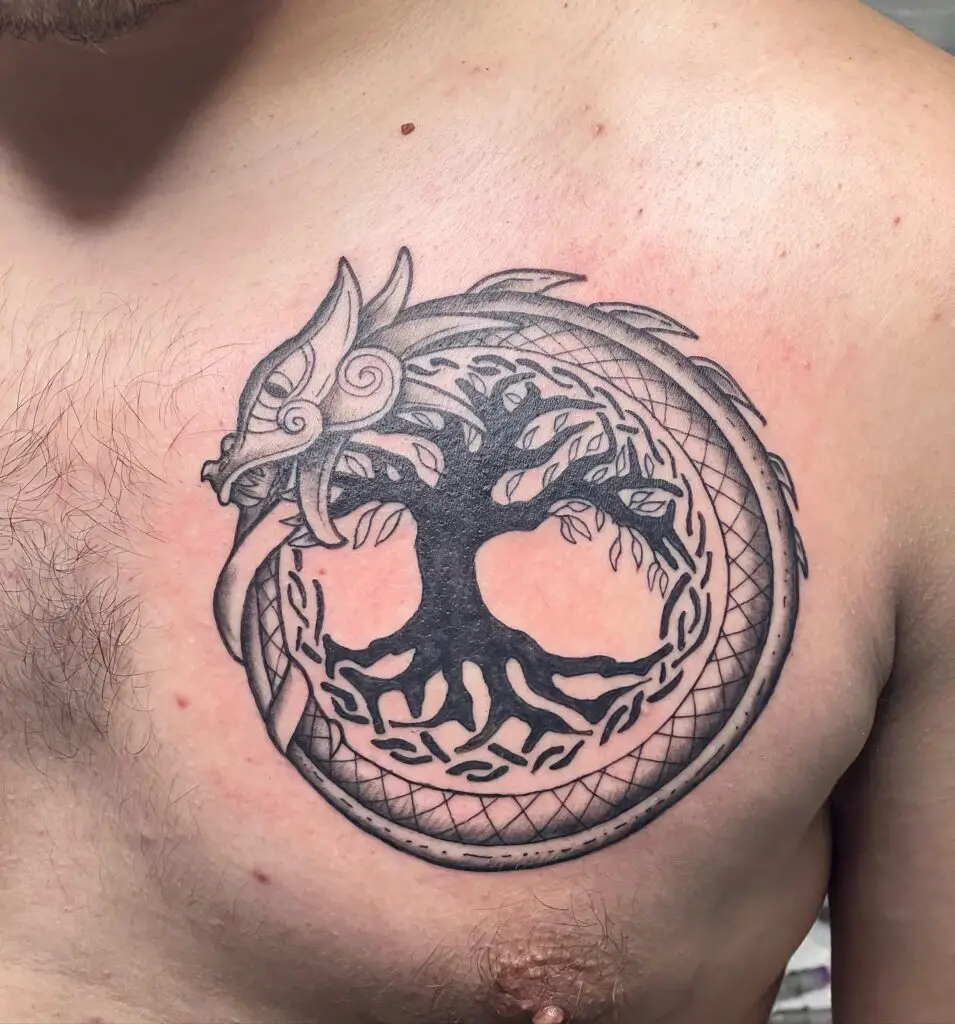
Photo: @farriercreative
The Midgard Serpent, Loki’s child, coiled around the world. Often depicted as an ouroboros: a serpent biting its own tail. This is also one of the most versatile placements in Norse tattooing. Jörmungandr wrapping around an arm, a leg, or the torso follows the mythology and the form of the body simultaneously.
9. Thor and Jörmungandr Battle Scene
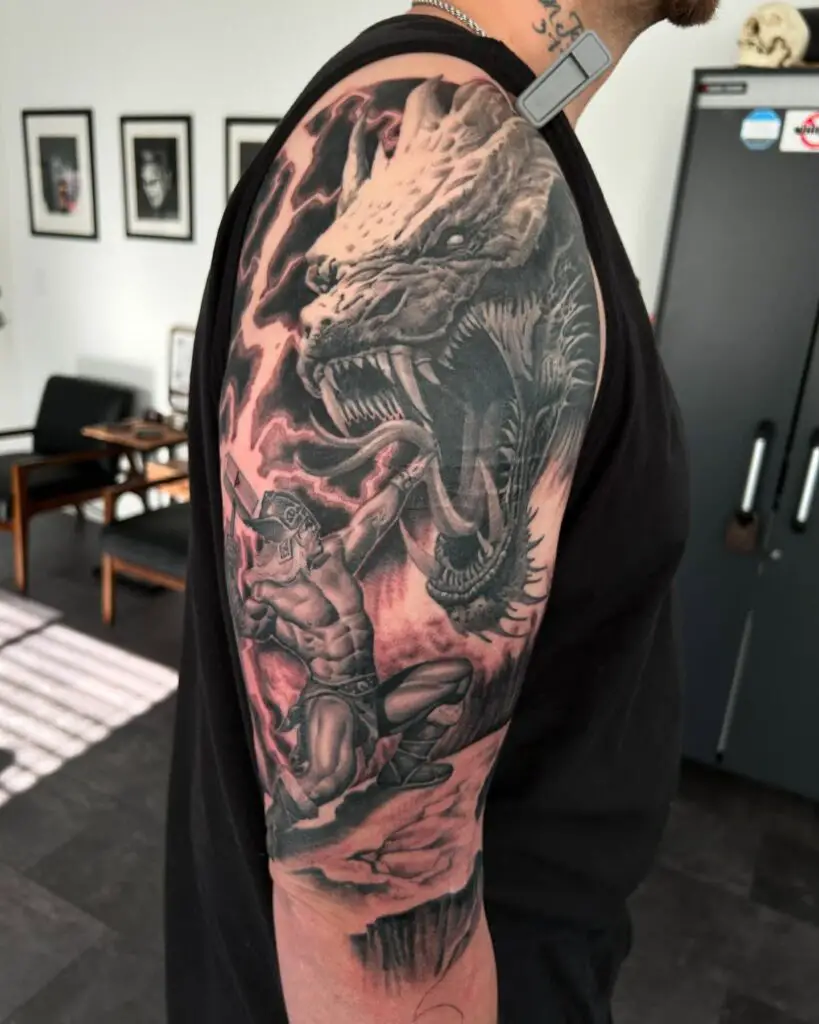
Photo: @tonyraztattoo
The defining conflict of Ragnarok: Thor delivering the killing blow to the World Serpent and then walking nine steps before dying from its venom. A scene of mutual destruction that encapsulates the Norse concept of heroic, unavoidable fate. Strong material for a chest piece or upper back.
10. Helm of Awe (Ægishjálmur)
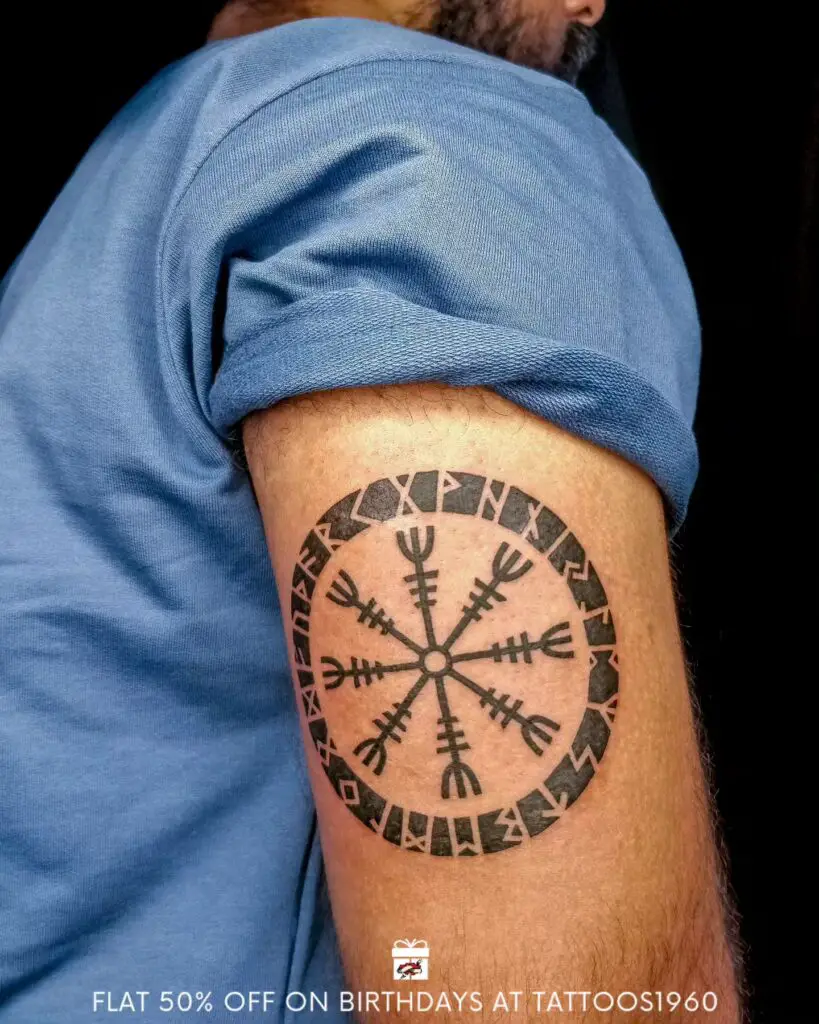
Photo: @tattoos1960
Eight tridents radiating from a central point. Warriors inscribed this on their foreheads before battle. As a tattoo, it carries that same protective and intimidating intention. Clean, angular, and immediately recognisable to anyone with knowledge of Norse symbolism.
11. Vegvísir (Viking Compass)
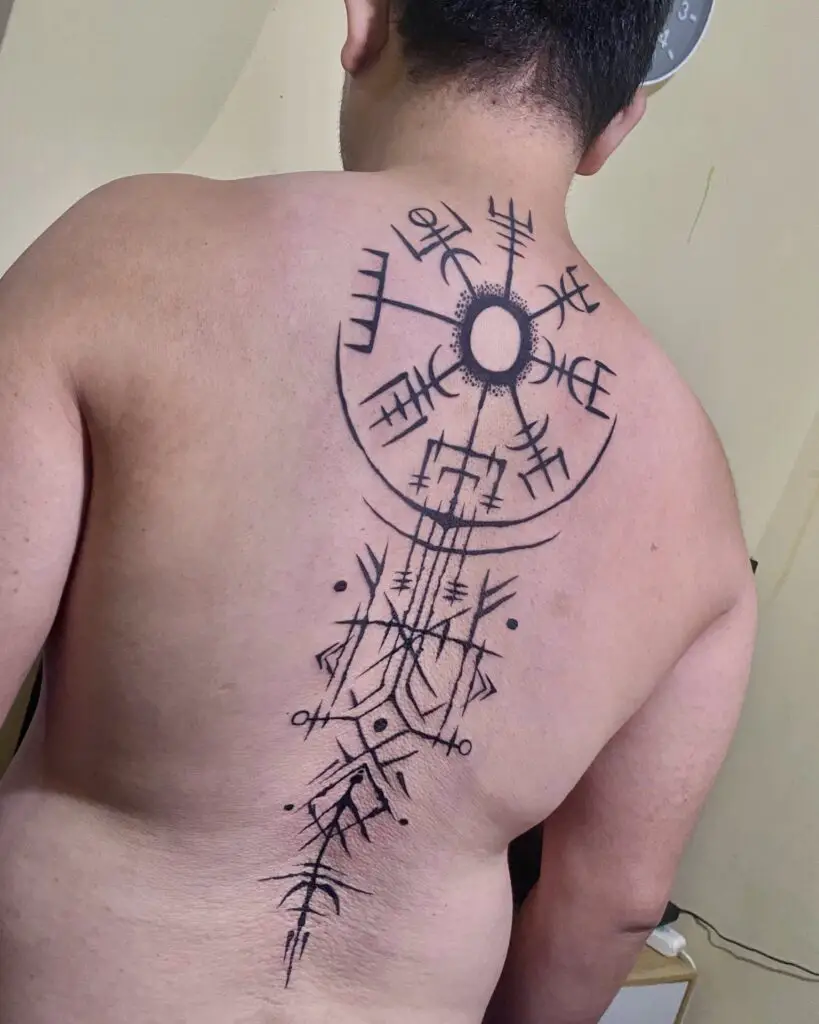
Photo: @e_mananquil
Eight runic staves extending from a centre point. The Vegvísir appears in the 17th-century Icelandic magical manuscript Galdrabók. It was meant to guide its bearer through rough conditions, literal or metaphorical. As a tattoo it is both visually distinctive and symbolically purposeful.
12. Loki in Trickster Form
Loki is the most complex figure in the Norse pantheon. Neither villain nor hero for most of the mythology, he is the agent of change who eventually becomes the catalyst for destruction. A Loki tattoo is an uncommon choice and a considered one. His shapeshifting nature and association with fire make for fascinating visual territory.
13. Sleipnir (Odin’s Eight-Legged Horse)
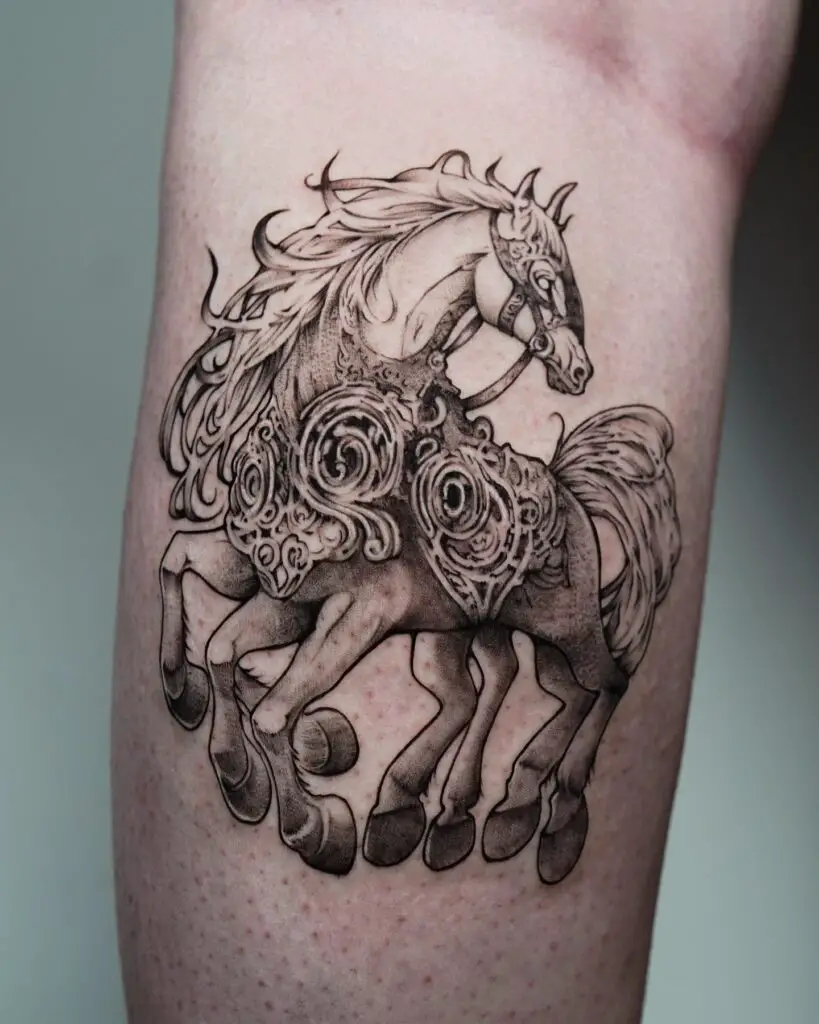
Photo: @glemery_
The fastest horse in the nine realms, son of Loki and Svaðilfari, with eight legs and the ability to travel between worlds. Sleipnir is rarely depicted in tattoo art despite being one of the most visually remarkable creatures in Norse mythology. An unusual and memorable choice.
14. The Nine Realms Map
Yggdrasil at the centre with all nine realms placed in their cosmological positions around it. Asgard above, Midgard at the middle, Hel below. The map structure makes this a fascinating design challenge. Done well, it is as much cartography as mythology.
15. Odin’s Ravens as Dual Shoulder Pieces
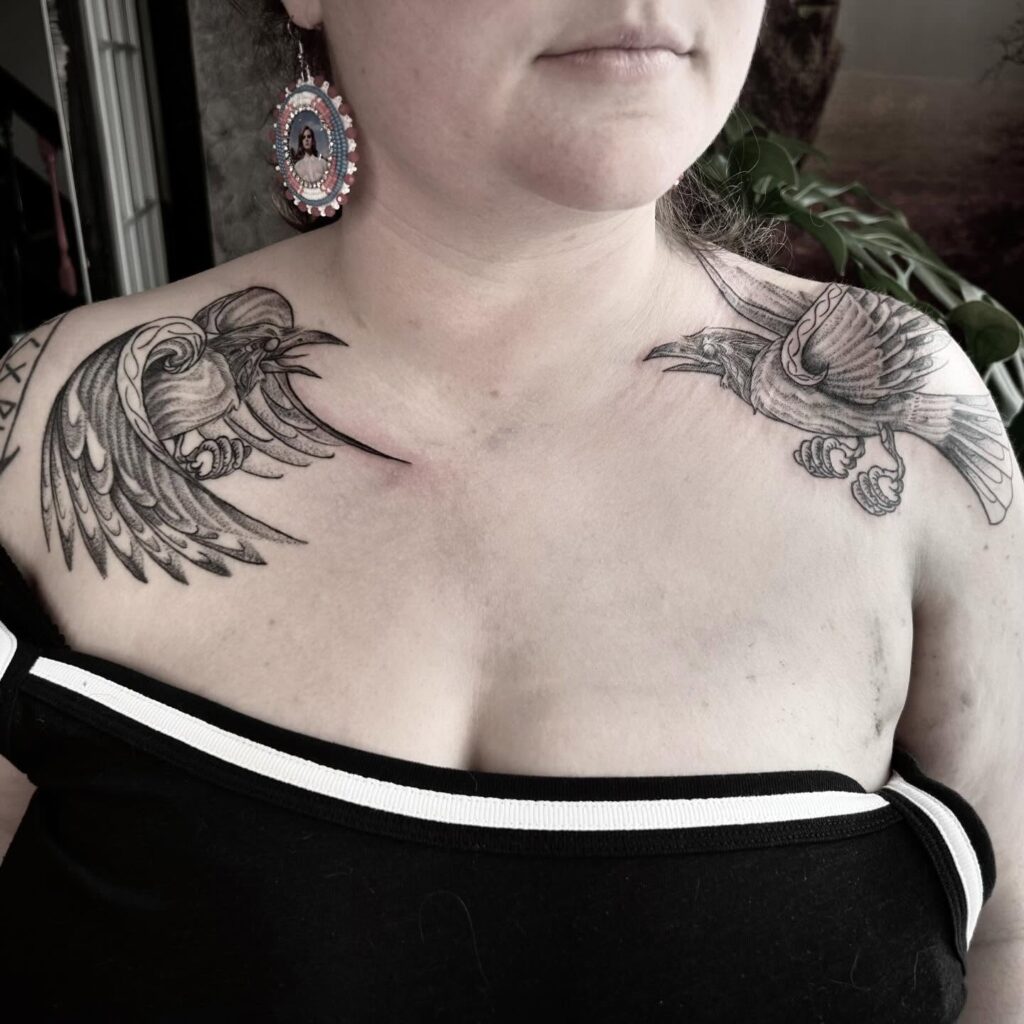
Photo: @dougie.tattoo
Hugin on one shoulder, Munin on the other. Thought on the left, Memory on the right. The symmetrical placement across the shoulders mirrors their function as extensions of Odin’s own perception. Powerful placement, powerful concept.
16. Runic Inscription from the Havamal
A line from the Sayings of the High One, the section of the Poetic Edda attributed to Odin’s wisdom. Written in elder futhark. The Havamal contains some of the most direct and uncompromising philosophy in the Norse canon. Choosing a specific verse makes this deeply personal.
17. Freya with Cats and Brisingamen
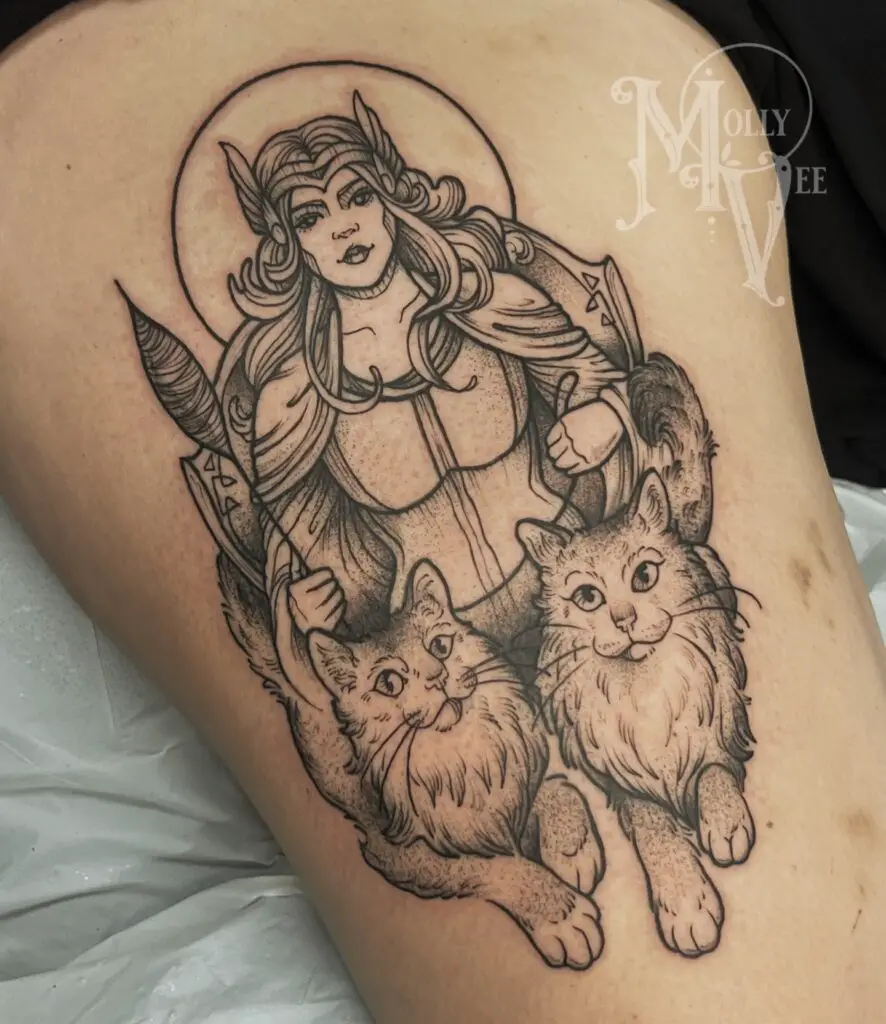
Photo: @ladywolly
Freya, goddess of love, war, and magic, rides in a chariot pulled by two cats and wears the necklace Brisingamen. She is often overlooked in favour of male deities but she is among the most powerful figures in the pantheon. A Freya tattoo is an unusual and genuinely interesting choice.
18. The Norns at the Well of Urðr
Three figures weaving the threads of fate: Urðr (what has been), Verðandi (what is becoming), and Skuld (what shall be). The Norns water the roots of Yggdrasil and shape the destiny of gods and mortals alike. A scene of extraordinary gravity for anyone drawn to themes of fate and time.
19. Viking Longship
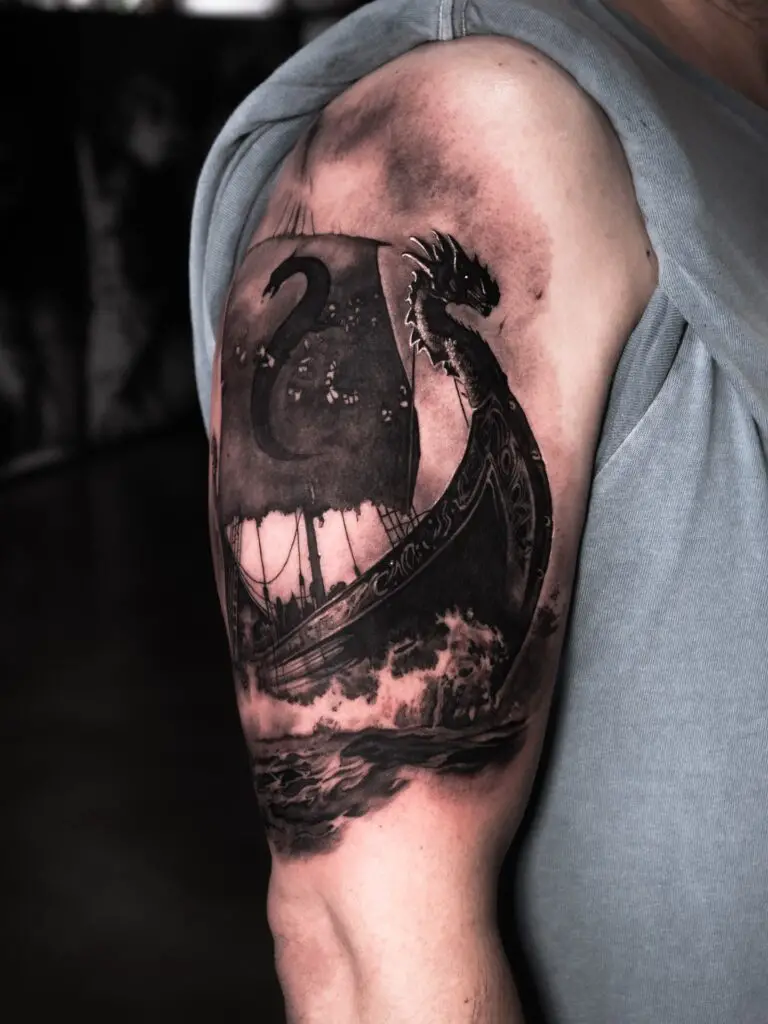
Photo: @a_ritova
Not a specific deity or symbol but a vessel of cultural weight. The Viking longship carried warriors across seas that most cultures would not have dared cross. As a tattoo image, it carries themes of ambition, navigation, and the willingness to move toward the unknown.
20. Ragnarok Scene
The end of the world as the Norse imagined it. Gods and monsters in final conflict. The world submerged, then re-emerging new. Ragnarok is not purely a tragedy in Norse tradition: it is followed by renewal. A Ragnarok tattoo is a statement about cycles, endings, and what comes after. One of the most ambitious concepts in the mythology and one of the most rewarding to design well.
Working with Norse Imagery Respectfully
Norse and Viking imagery has been appropriated by certain ideological movements in recent decades. That history exists and is worth being aware of. The symbols themselves predate those appropriations by more than a thousand years and belong to a living cultural tradition. Choosing Norse imagery thoughtfully, understanding its actual historical and mythological meaning, is a meaningful distinction.
Work with an artist who knows the material or is willing to research it properly. The difference between a generic tribal-looking design and one grounded in actual Norse iconography is significant. The mythology rewards that investment.