
The rose is the most tattooed flower on earth. That fact creates an immediate challenge: how do you wear something so universal without it feeling borrowed rather than chosen? The answer is in the execution. Rose tattoo ideas for women are only as interesting as the artist and the context that surround them.
These 22 ideas go beyond the stock version. Some are stylistic departures. Some are compositional. All of them treat the rose as a subject worth taking seriously.
Why the Rose Still Works
The rose has been a symbol of love, beauty, and impermanence in every major culture that encountered it. It’s overused because it’s genuinely useful: a subject with immediate recognition, a layered structure that rewards skilled rendering, and a visual language flexible enough to absorb almost any stylistic approach. The problem is never the rose. It’s the lack of intention around it.
22 Rose Tattoo Ideas for Women
1. American Traditional Rose
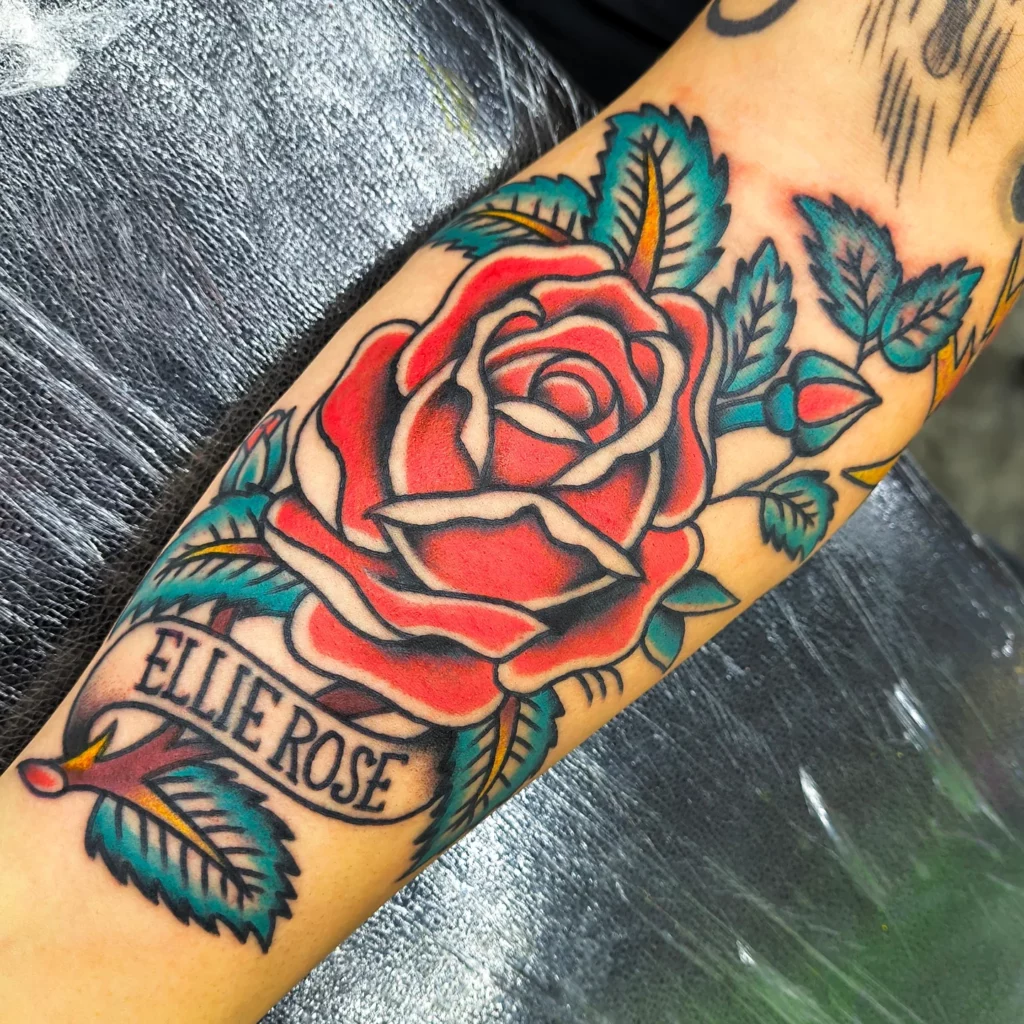
Photo: @pain_inks
Bold outlines, a limited colour palette, and the flat graphic quality of American traditional tattooing produce the definitive rose tattoo. This is the version that defined the symbol in Western tattooing and, executed well by a traditional specialist, it holds up better over decades than almost any other approach.
2. Single Fine Line Rose
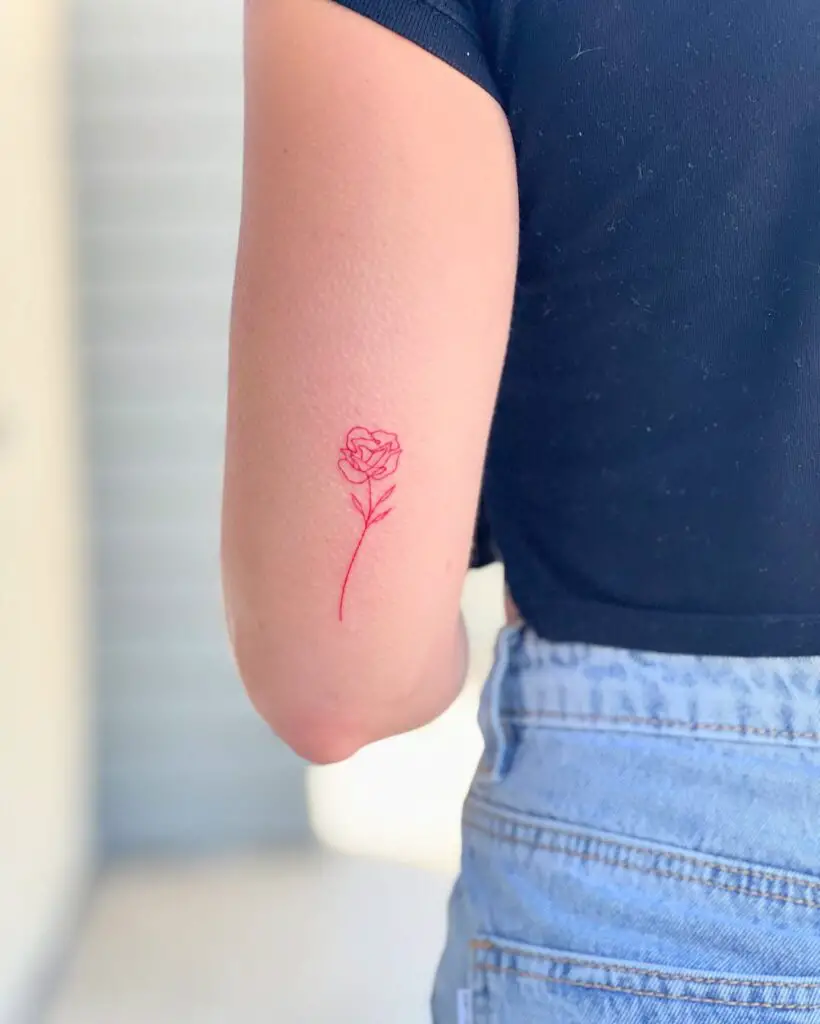
Photo: @_snoeflinga_

A rose drawn in hairline-weight linework, without fill or shading, reads as botanical illustration translated to skin. The delicacy is intentional and the simplicity is the aesthetic. Works at most placements but particularly well on the inner forearm, collarbone, and wrist.
3. Black Rose
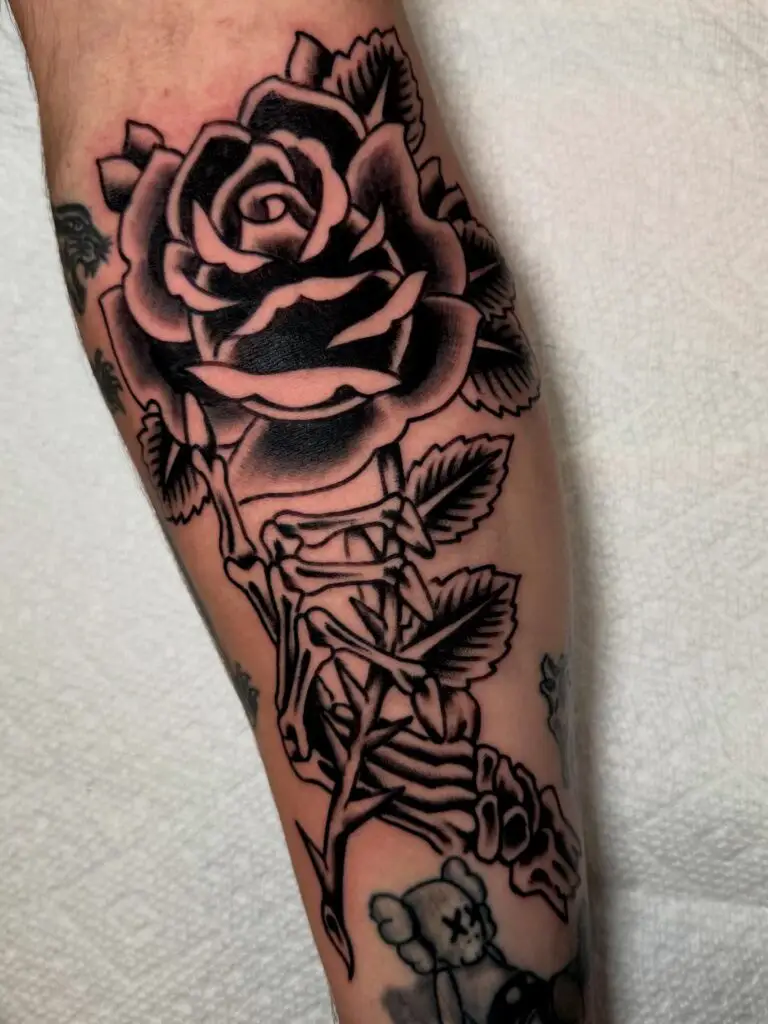
Photo: @shawntattooart
A rose rendered entirely in black ink, with no colour, carries a different emotional register than its red equivalent. In various traditions it symbolises anarchism, death, rebirth, and unyielding grief. The visual is dramatically different. So is the conversation it starts.
4. Dotwork Rose
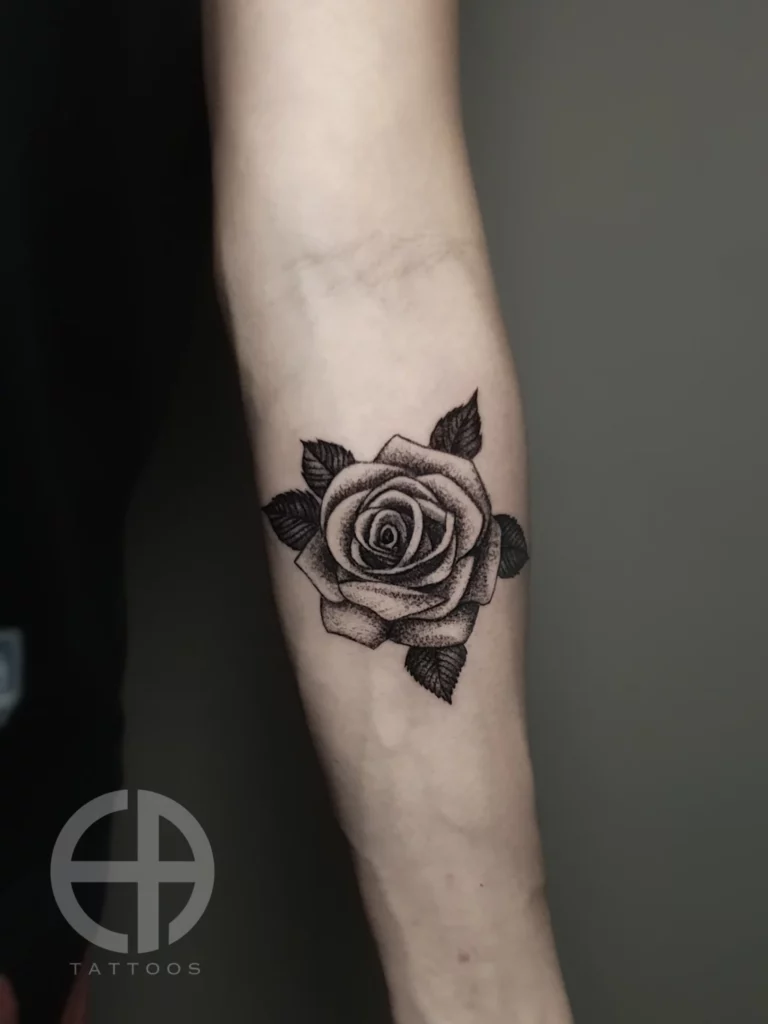
Photo: @eatattoosph
A rose built entirely from stippled dots, without a single continuous line, achieves a textural depth that conventional linework cannot replicate. The petals gain dimension through tonal variation alone. Time-intensive and technically demanding. The results earn both.
5. Geometric Rose
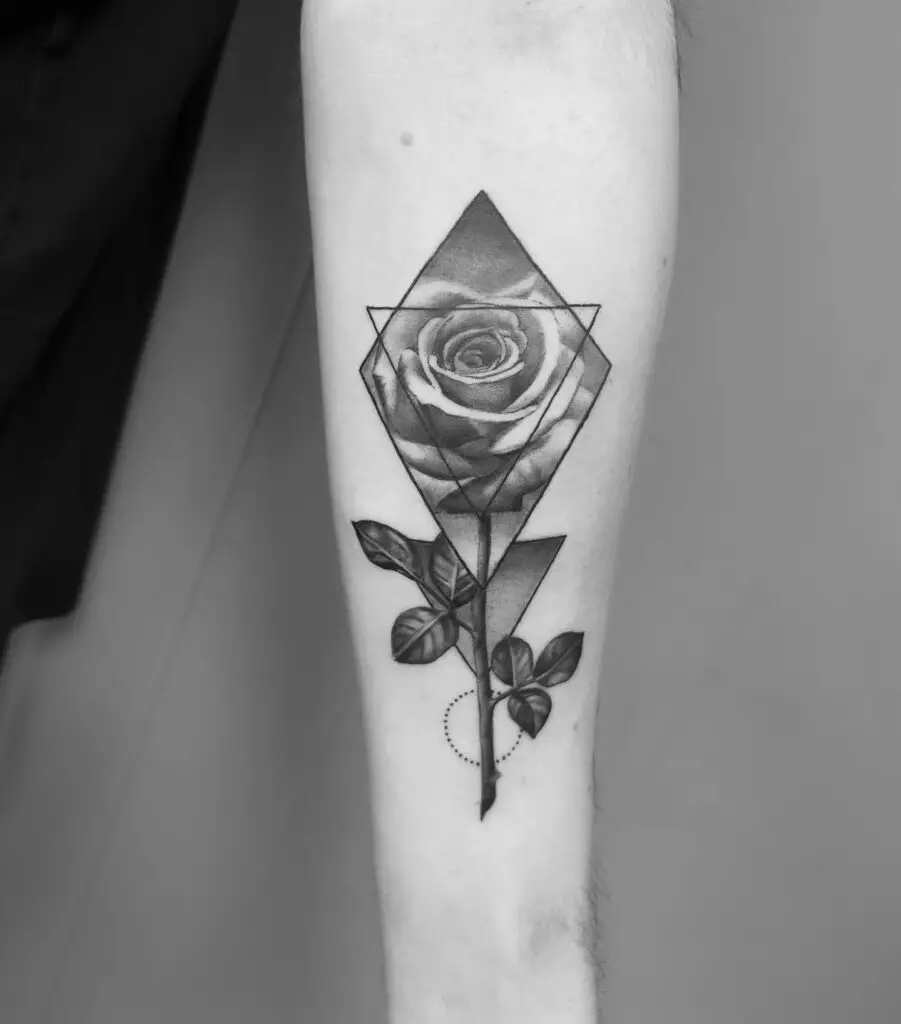
Photo: @valentine_tattoos
A rose where the organic petal forms are replaced with geometric facets, the bloom constructed from polygon shapes as if cut from crystal or stone. The contrast between the softness of the subject and the precision of the treatment is what makes this work.
6. Watercolour Rose
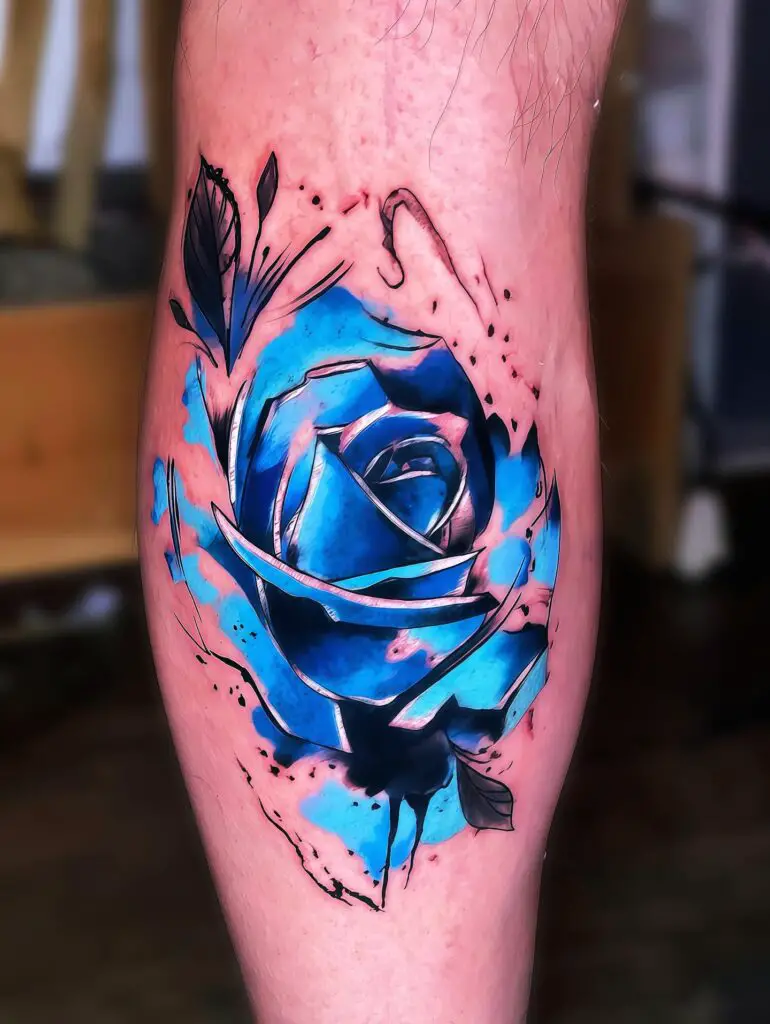
Photo: @house_of_ink_marmaris
Pinks and reds bleeding beyond the flower’s outline, the edges soft rather than defined, creates a rose tattoo with a painted quality that references watercolour illustration. The linework skeleton is essential. Without it, the colour blooms settle into an indistinct smudge within a few years.
7. Rose With Thorns Emphasised
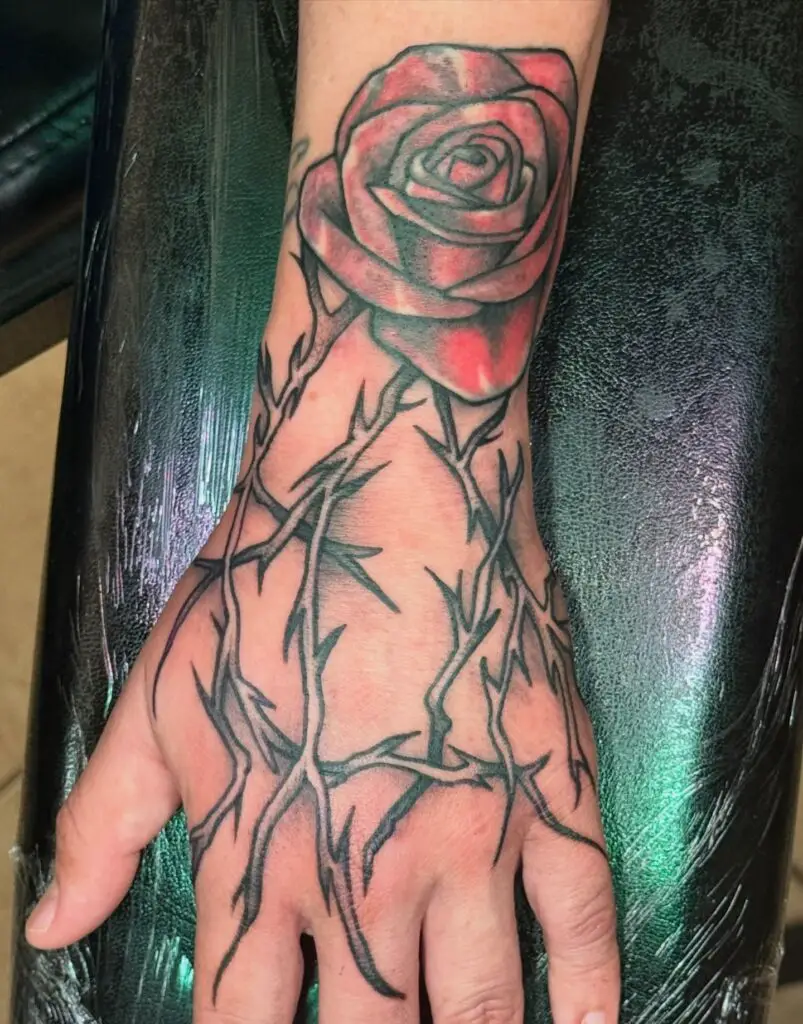
Photo: @tattoosbyjesse
Most rose tattoo ideas for women soften or omit the thorns. Emphasising them reverses the visual priority: the dangerous parts of the flower become as important as the beautiful parts. The symbolism is obvious but honest. Roses have always had thorns.
8. Neo-Traditional Rose
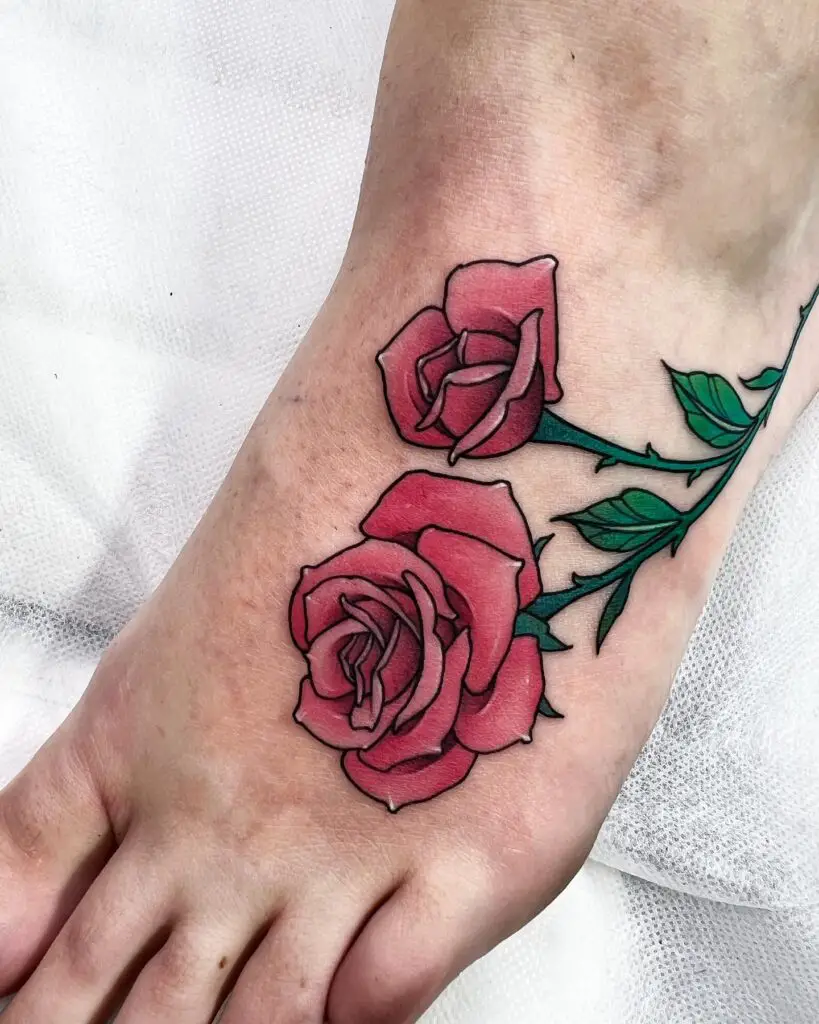
Photo: @jingstattoo
Neo-traditional updates the American traditional approach with more complex colour gradients, greater detail in the petal rendering, and illustrative flourishes that sit outside traditional style’s conventions. The result is richer, more ornate, and slightly more contemporary-feeling.
9. Dead Rose
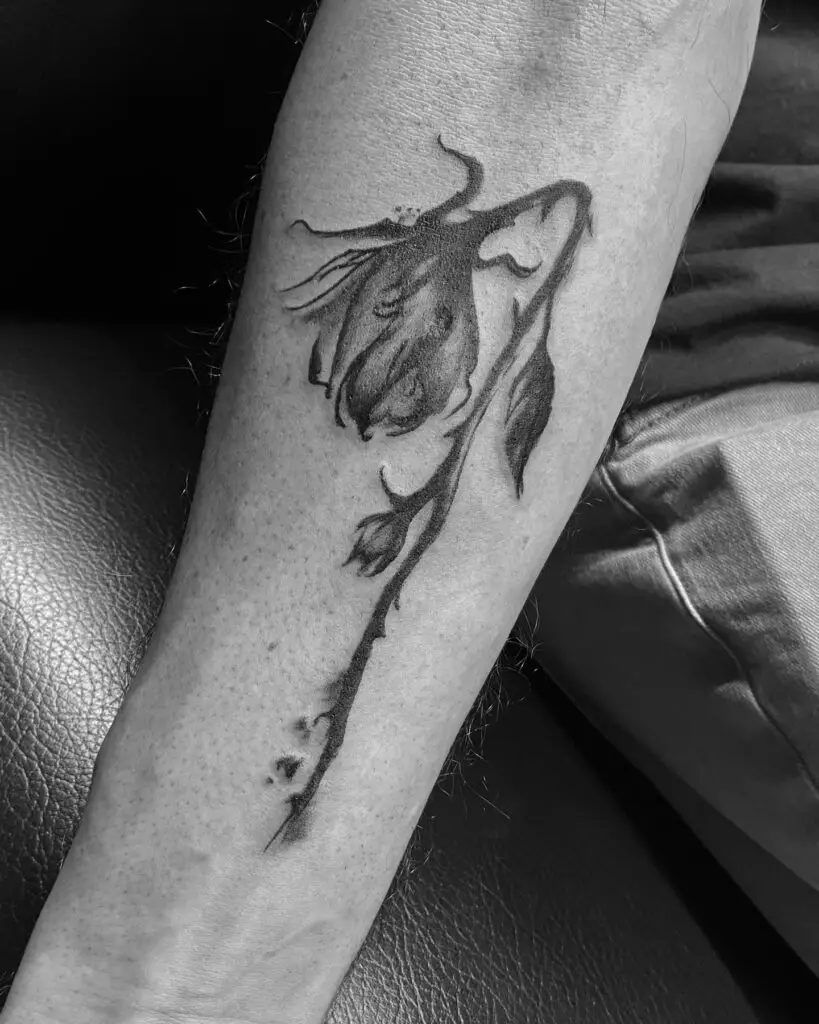
Photo: @lanabananderson
A wilted or dead rose, petals drooping, stem bent, rendered with the same care as a living one, subverts the standard reading. It represents endings rather than beginnings. Loss rather than romance. The beauty in the rendering against the subject of decay creates a visual tension that makes the tattoo genuinely interesting.
10. Rose and Butterfly
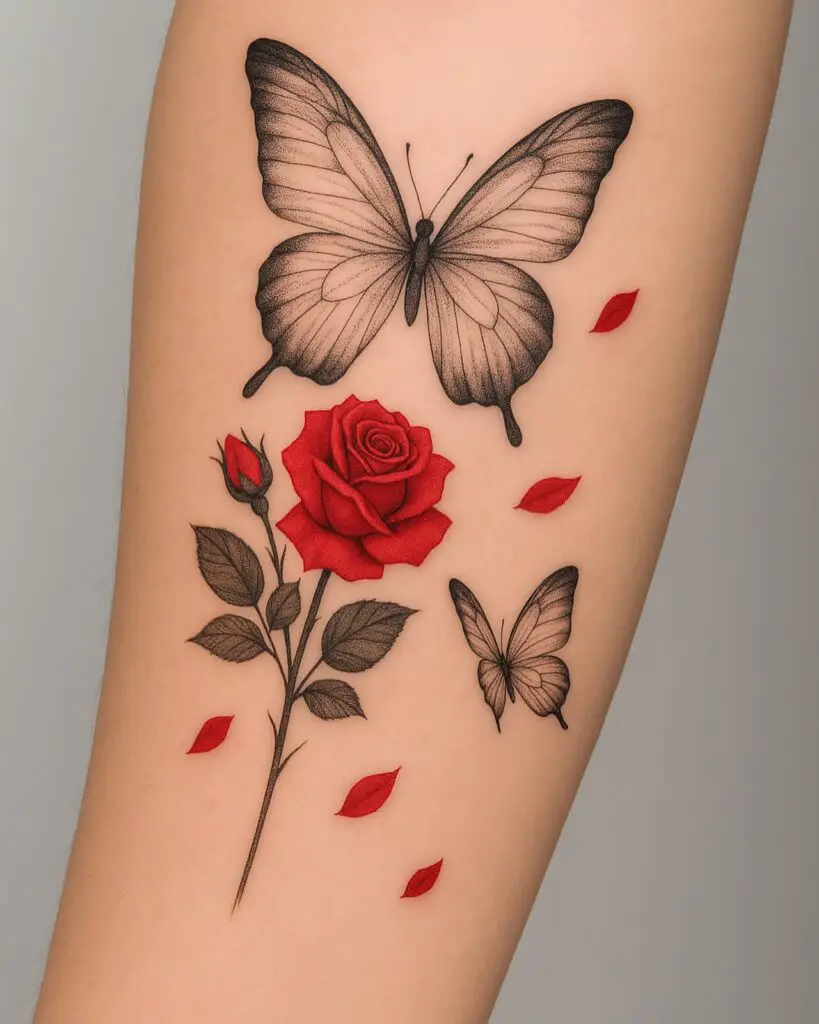
Photo: @tattooai.inspiracoes
The butterfly landing on or lifting from a rose is a composition with obvious symbolic pairing: transformation meeting beauty, transience meeting permanence. Fine line execution keeps it delicate. Neo-traditional brings out the drama.
11. Blackwork Peeled Rose
A rose appearing to peel away from the skin like sticker, showing something beneath (bare bone, geometric structure, or negative space). The optical illusion treatment is unusual and distinctly contemporary in approach.
12. Rose Sleeve Element
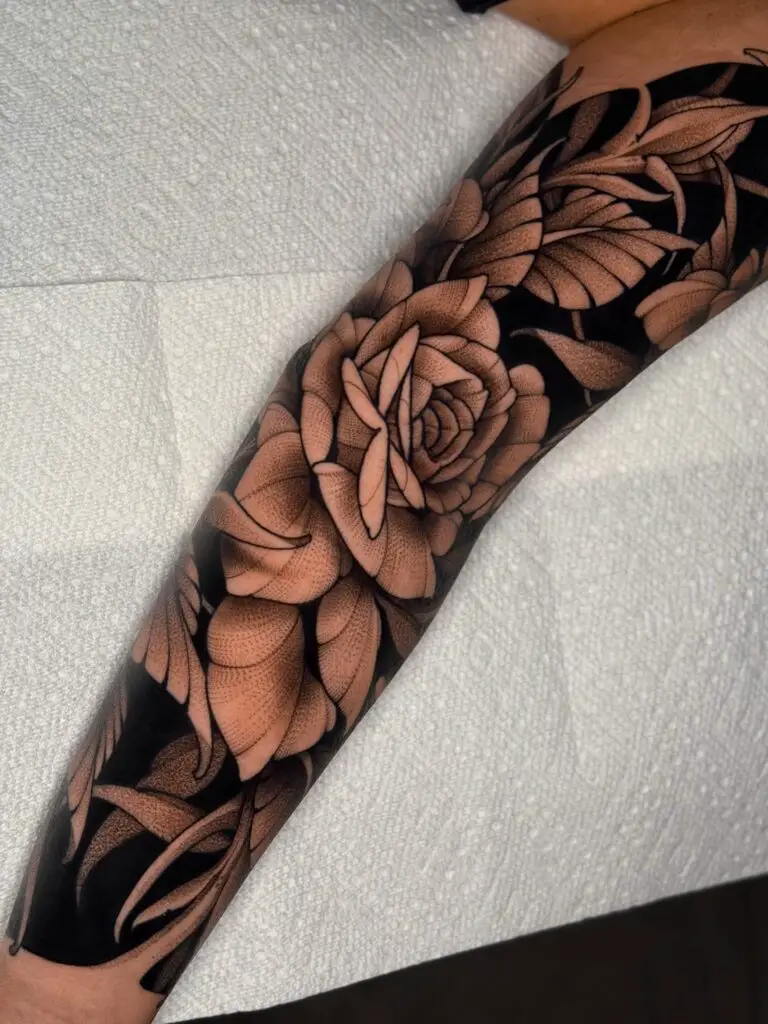
Photo: @devxruiz
Roses used as connecting tissue in a larger sleeve composition, winding between other subjects, filling negative space with organic movement. In this role the rose is architectural as much as symbolic. Its stem and leaves do the compositional work; the bloom provides the focal point.
13. Small Rose Behind the Ear
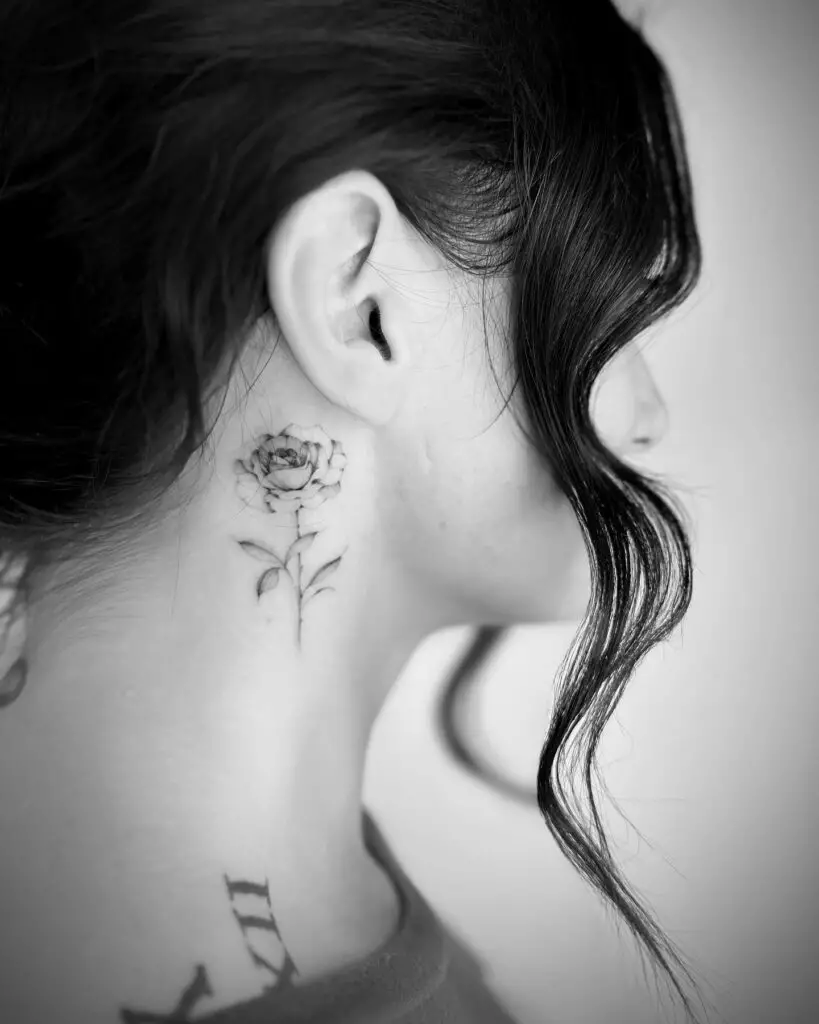
Photo: @shan.6tattoo
Minimal, precise, and personal. A small rose behind the ear works because the placement is intimate and the rose at small scale still carries its full identity. Simple outline only. Too much detail at this size blurs within years.
14. Rose and Skull
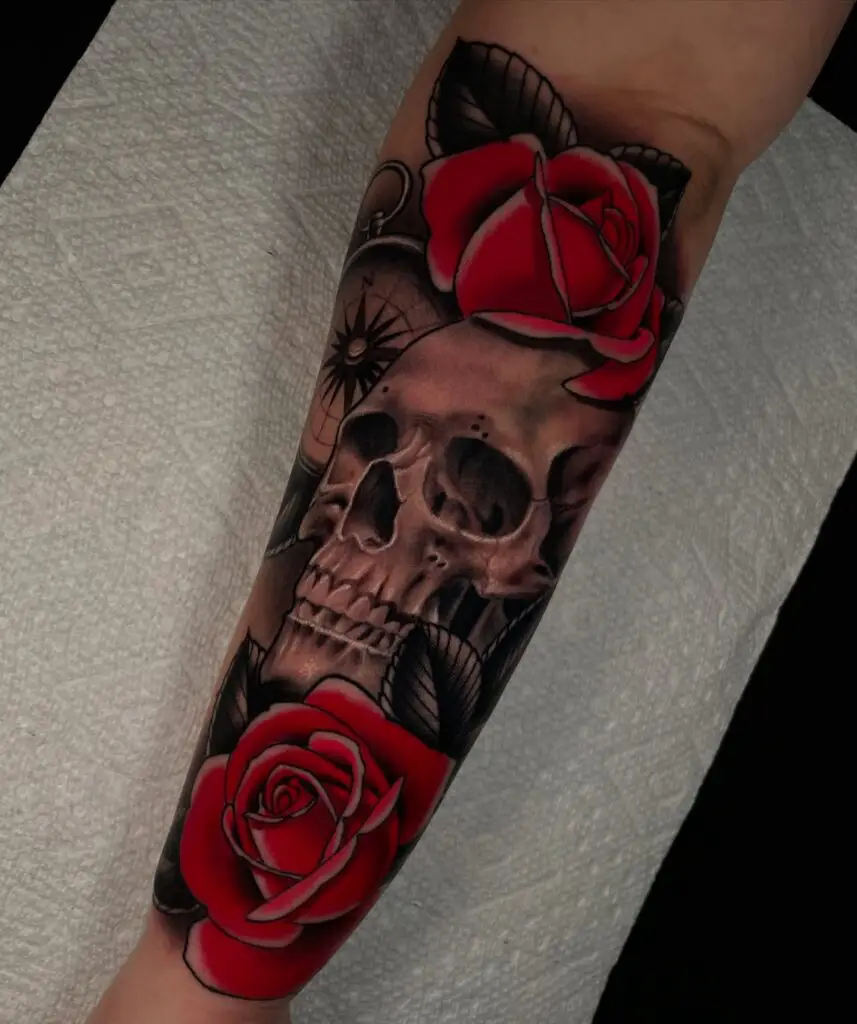
Photo: @jamesbtattoos
Beauty and mortality in the same composition is one of the foundational pairings in tattooing. A rose growing from a skull’s eye socket, or a skull emerging from a rose’s petals, has been executed thousands of times. Its persistence is evidence of the concept’s truth rather than its tiredness.
15. Continuous Line Rose
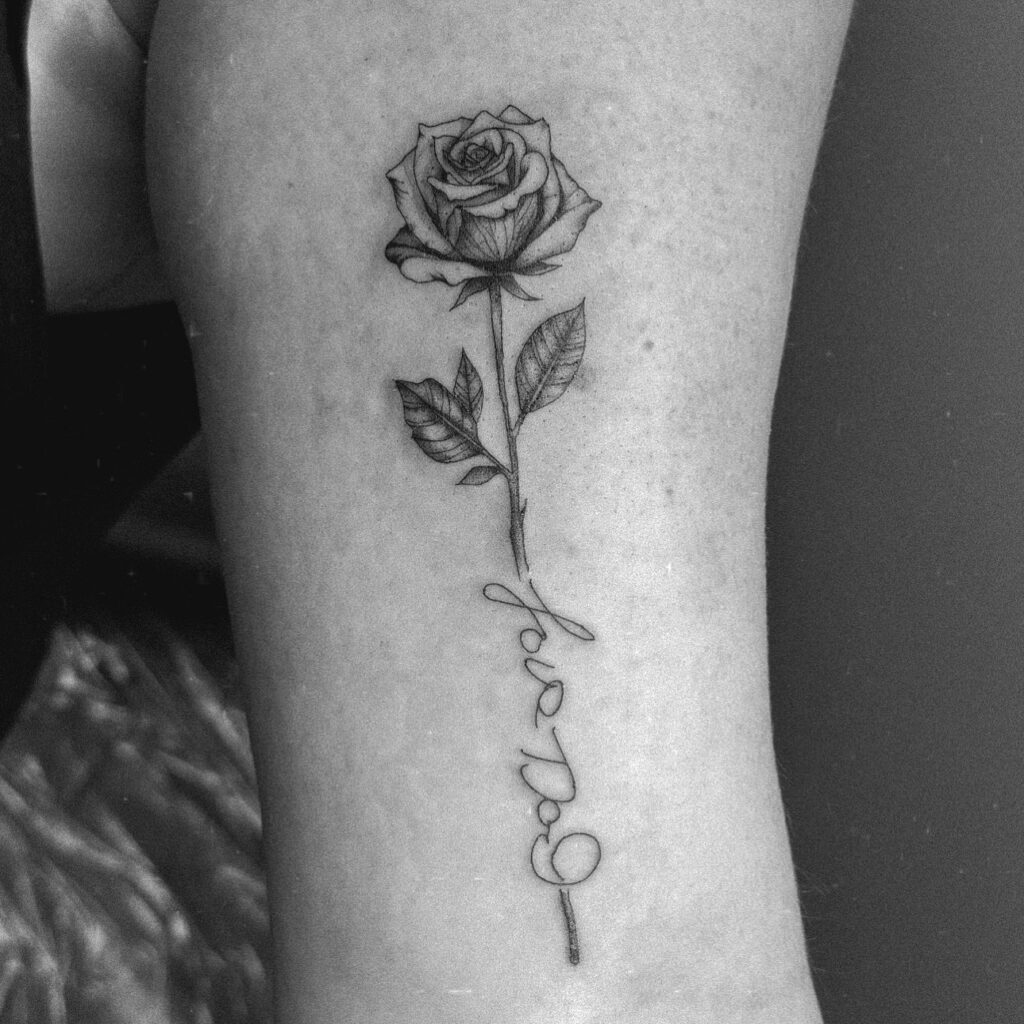
Photo: @bambi.brows
A rose drawn in a single unbroken line, without the pen leaving the surface, creates a design with the quality of a quick, confident sketch. The technique requires an artist comfortable with the approach. The result reads as immediate and alive.
16. Rose With Name or Date
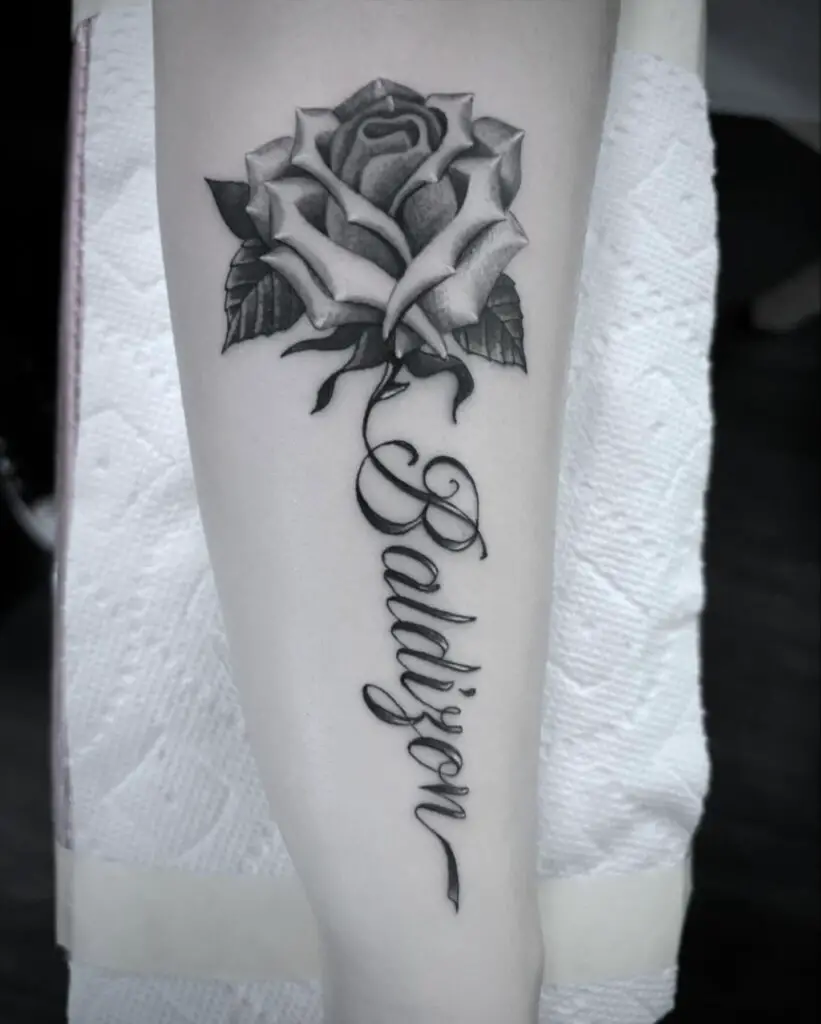
Photo: @tattoosbyaginger
A rose enclosing or connecting to a name or date creates a memorial or tribute tattoo that sits within an established visual tradition without being generic. The specificity of the name or date is what makes it personal. The rose is the container.
17. Japanese Rose
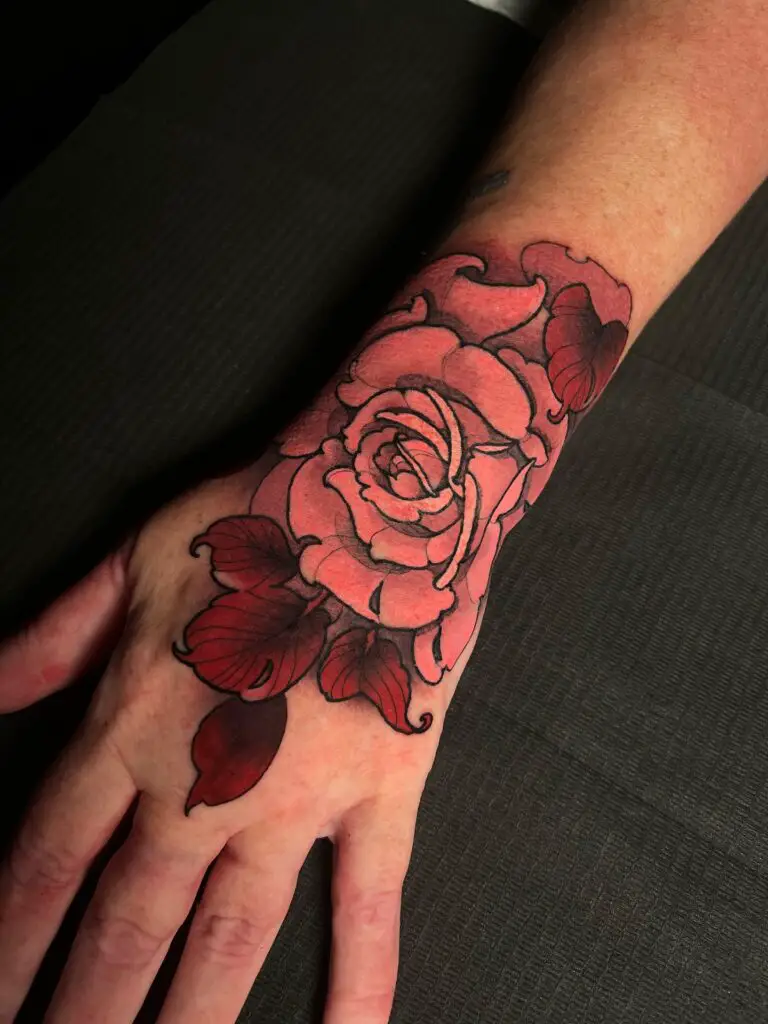
Photo: @levi.tattooist
A rose rendered in the specific graphic vocabulary of Japanese tattooing, with wind bars, clear outlines, and a composition designed for a specific body placement, produces something that reads as Japanese in aesthetic even though the rose itself is not a traditional Japanese subject. The style does the work of grounding the Western subject in a different visual grammar.
18. Rose Spine Piece
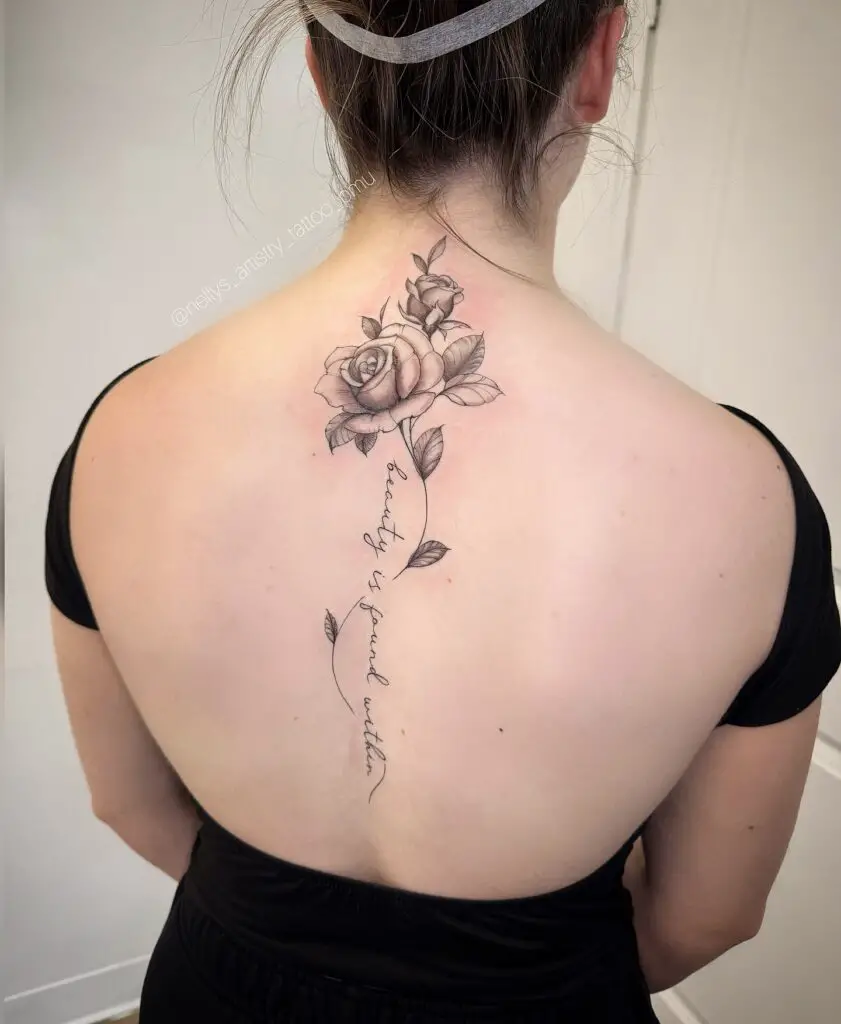
Photo: @nellys_artistry_tattoo_pmu
A vertical composition of roses along the spine, stems connecting each bloom, creates one of the most natural spine tattoo arrangements available. The visual moves with the body’s own vertical axis. The thorns along the stem add detail without disrupting the flow.
19. Negative Space Rose
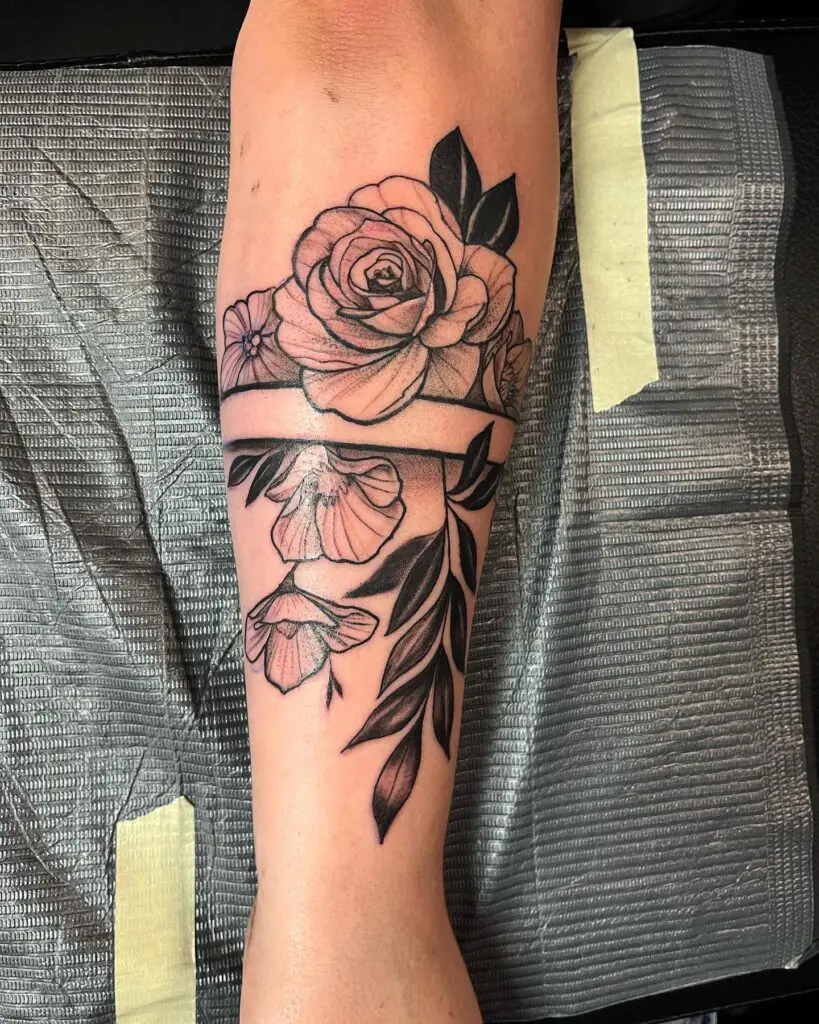
Photo: @tattoosbyspirit
The rose defined by ink surrounding it rather than ink forming it. The skin becomes the petals. The technique requires an artist with specific negative space experience and an understanding of how the design reads at the intended scale.
20. Realistic Black and Grey Rose
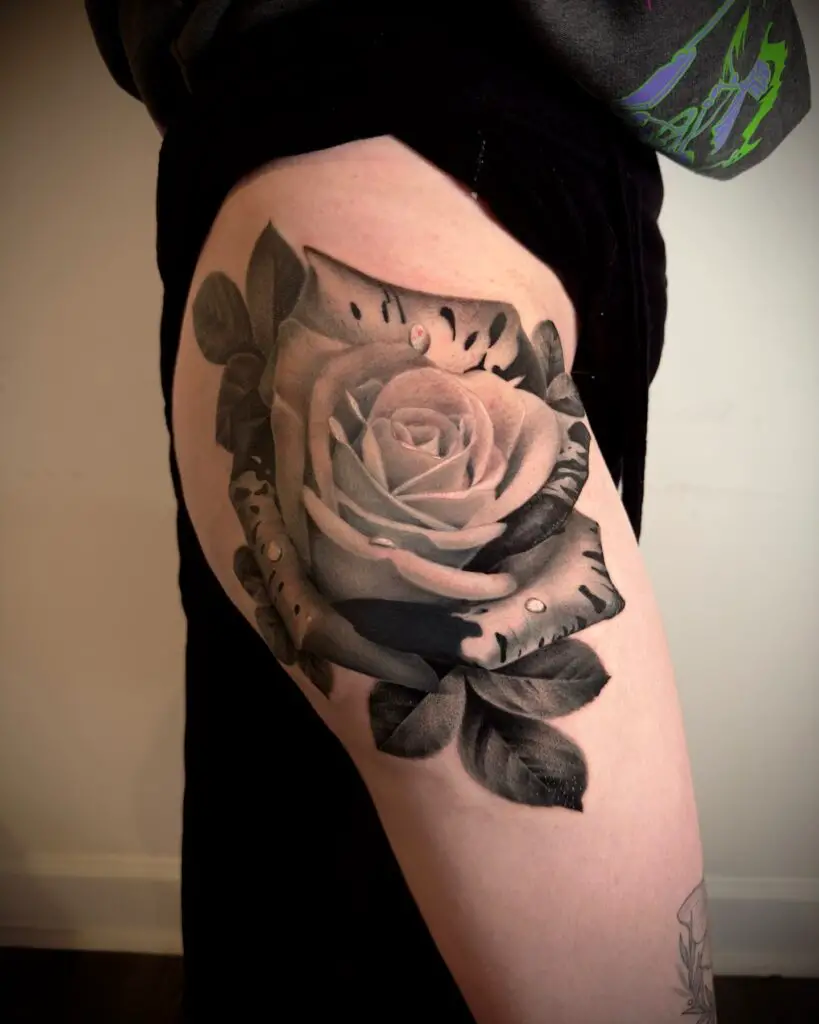
Photo: @subrosatattoostudio
A single rose rendered with the tonal precision of a botanical photograph, entirely in black and grey. No colour, no line weight variation, just gradient and form. The petals should have individual shadow and highlight. This is a showpiece for artists who can render soft organic forms with technical precision.
21. Rose Thigh Piece
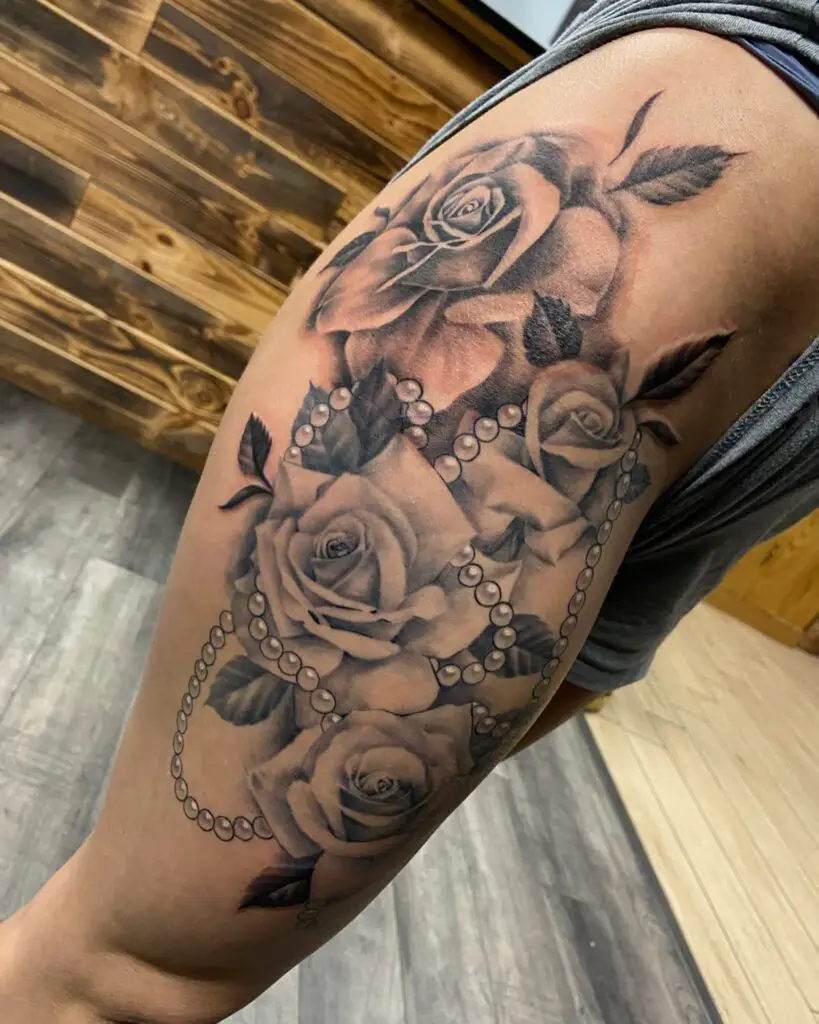
Photo: @tatts.by.zack
The thigh gives a rose composition the room to develop properly. Multiple roses at different stages of opening, with full foliage and curving stems, can spread across the thigh in a way that smaller placements can’t contain. One of the rose tattoo ideas for women that genuinely benefits from scale.
22. Abstract Rose
A rose where the petals are suggested rather than rendered, where the form is implied through a few gestural marks rather than constructed through careful linework. The opposite end of the spectrum from hyper-realism. Abstract rendering of a recognisable subject is its own kind of precision.
Choosing Your Approach
The rose you get should reflect your relationship to the symbol, not just a preference for how it looks. A traditional rose carries different weight from a dead one. A fine line carries different weight from a blackwork. The style is the meaning as much as the subject. Know what you’re choosing and why.