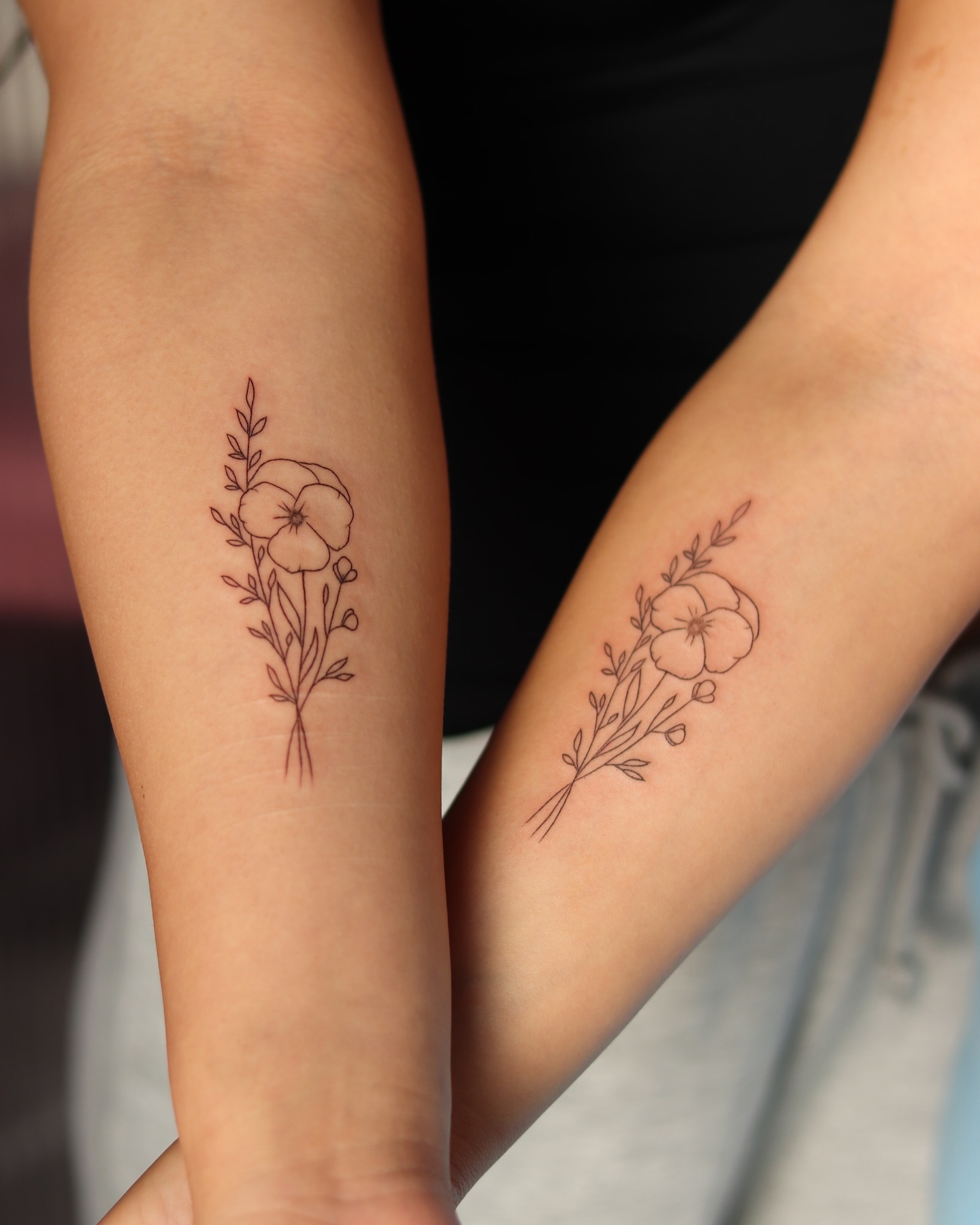
Dog tattoo ideas split into two emotional categories long before they split into styles. There are the ones for the dog asleep on your floor right now, and the ones for the dog who is not there any more.
Both deserve the same care. In my experience the second kind gets rushed more often, because grief makes people want the tattoo finished rather than right.
I have sat in on a lot of pet portrait consultations, and the pattern is consistent: the people who bring in five photos and one clear memory walk out with something they still love years later. The people who bring in a phone screenshot at 40% brightness usually come back for a rework.
Below are 20 dog tattoo ideas that cover both impulses, from hyper-realistic portraits to marks only you can decode. If you are still weighing the broader category, our guide to memorial tattoo ideas covers the overlap.
Which Dog Tattoo Style Is Right for You?
This is the comparison I sketch out for people who cannot decide between a portrait and something simpler.
| Style | Typical sitting | How it ages | Best for |
|---|---|---|---|
| Realistic portrait | 3–6 hours, often split over two visits | Softens; fine detail can blur over the years | One specific dog, with good reference photos |
| Silhouette | 45–90 minutes | Very well — solid black holds its shape | Breeds with a distinctive outline |
| Fine line | 1–3 hours | Lines widen slightly; may need a touch-up | Small, delicate placements |
| Watercolour | 2–4 hours | Colour fades faster without a black framework | People who want mood over accuracy |
| Traditional | 2–4 hours | Best of the group — heavy outlines stay readable | Longevity above likeness |
| Paw or nose print | 20–60 minutes | Excellent if the lines are not too thin | A small, private memorial |
Portrait or Symbol: What Actually Changes
A portrait says this dog. A symbol says my dog, or sometimes just dogs. Neither is more sincere, but they behave very differently on skin.
Portraits are unforgiving. If the eyes are 2mm off, everyone who knew the dog will feel it before they can say why, and a likeness that is nearly right is worse than one that is clearly stylised.
Symbols carry almost no likeness risk. A paw print, an ear shape, a running silhouette — these cannot miss, because there is nothing to miss.
The practical test I give people: could a stranger identify your dog from this tattoo, and do you want them to? Some people want the recognition. Others want something only they can read.
Size decides more than style does. In my experience anything under about 7cm struggles to hold a realistic muzzle and eyes at the same time, which is why so many small dog tattoos end up as silhouettes by necessity rather than choice.
The Literal Ideas: Your Actual Dog
1. Realistic Portrait of Your Dog
The default request, and the hardest to execute. A good realist works from several photographs rather than one, because a single image locks in whatever lighting happened that day.
Bring reference shot at eye level, in daylight, from the front and from a three-quarter angle. Artists I have asked all say the same thing: they need to see the eyes and the muzzle clearly, and a photo taken from above distorts both.
Expect to pay for time rather than size. A palm-sized realistic dog portrait often takes longer than a much larger silhouette, and that is normal.
2. Breed Silhouette
Solid black, outline only. It works best for breeds with a shape you could pick out of a lineup — a dachshund, a greyhound, a corgi, a German shepherd’s ear-and-snout profile.
This is the option I most often see people happy with a decade later. There is no fine detail to blur, and it reads at any size.
3. Paw Print
The most common dog tattoo there is, which is precisely the argument against it and the argument for it. It is universally understood, and it costs very little chair time.
If you want it to be your dog’s rather than a generic pad shape, ask a groomer or your vet to help take an ink print, and have your artist trace that. The pad proportions differ noticeably between dogs.
For the feline equivalent, cat paw tattoo ideas covers the same idea with a different foot.
4. Nose Print
A nose print is more distinctive than a paw print and far less common. The ridge pattern on a dog’s nose is individual, a bit like a fingerprint.
Take the print while the dog is calm, with a food-safe non-toxic ink and a light hand, or ask your vet whether they will do it. Never use anything solvent-based near an animal’s face.
5. Minimal Line Drawing
Six or seven lines, no shading, no fill. It suggests a dog rather than depicting one, and it suits wrists, ankles and the inside of a forearm.
Ask for the lines slightly thicker than the drawing looks on paper. Ink spreads a little under the skin over the years, and a design that is already hairline-thin has nowhere to go.
If this is your direction, our fine line tattoo guide goes deeper on what survives at this scale.
Style-Led Dog Tattoo Ideas
6. Watercolour Portrait
Loose colour that spills past the edges of the drawing, mimicking paint on wet paper. It is the most emotionally soft option on this list.
Be honest with yourself about maintenance. Watercolour work without a black or dark underlying structure generally fades sooner than outlined work, especially on sun-exposed skin.
There is more on how the style holds up in watercolour tattoo ideas.
7. Japanese-Influenced Shiba Inu
Bold outlines, flat colour, a slightly stylised face. Japanese-influenced work suits breeds that already carry that visual heritage — Shiba Inu, Akita, Hokkaido.
If you are drawing on Japanese tattoo conventions, work with an artist who actually knows them rather than one who copies the surface look. The composition rules are the point.
8. Dog Wearing a Crown
Affectionate rather than reverent. It says the obvious thing out loud: this animal runs the house.
It works because it is unserious, so resist the urge to make it grand. The best versions I have seen keep the crown small and slightly crooked.
9. Abstract Expressionist Dog
A few gestural strokes that read as a dog from across the room and as marks up close. This is a design that lives or dies on the artist’s confidence.
Look through a portfolio for existing abstract work before booking. This style cannot be faked from a reference photo on the day.
10. Dog and Owner Silhouettes
Two outlines, usually walking or sitting. It captures the relationship rather than the animal, which is a different and sometimes better thing to carry.
Keep the human silhouette generic enough that it stays true if your own shape changes. The dog is the recognisable half.
11. Geometric Dog
The animal rebuilt from angular facets and straight lines, like a low-polygon model. It reads as modern and it holds up structurally, because every line is deliberate.
Geometric work is unusually sensitive to placement. Straight lines across a joint or a curved muscle will visibly bend when you move.
12. Fine Line Dog With Florals
A delicate portrait wrapped in botanicals. The flowers do real work here: they give the composition somewhere to end, which small portraits otherwise lack.
Birth-month flowers are the usual choice, using the dog’s birth or adoption month. It is a quiet detail nobody else will notice.
Memorial and Symbolic Dog Tattoo Ideas
13. Dog as a Constellation
The dog’s outline mapped as stars and connecting lines. Canis Major and Canis Minor are the obvious real constellations to borrow from, and both are genuinely dog-named.
This is one of the gentlest memorial options because it does not look like a memorial. Related ideas live in our constellation tattoo guide.
14. Dotwork Portrait
Shading built entirely from stippled dots rather than smooth greywash. It gives a softer, slightly antique texture that suits older dogs and grey muzzles.
Dotwork takes longer than it looks. A portrait that a greywash artist would finish in three hours can run to five or six in stipple, so budget for the difference.
See dotwork tattoo ideas for what the technique does at other subjects.
15. Name and Dates
Lettering only. No image, just the name and the years, usually somewhere private.
Pick the typeface with the same care you would a portrait. Script that is too thin closes up over time; script that is too ornate becomes hard to read. Our name tattoo guide covers the legibility problem in detail.
16. Ear Shape
Just the ear. One flopped triangle, or the notch in an ear that got torn years ago and never sat right afterwards.
Every artist I have asked about these says the same thing: they are the requests that make owners cry in the chair. They are unreadable to strangers and instantly specific to you.
17. Running Silhouette
A dog mid-stride, all four feet off the ground. It is the only entry on this list that captures motion, which is most of what living with a dog actually feels like.
Ask for it slightly larger than feels necessary. Motion needs room, and a cramped running silhouette just looks like a standing dog with odd legs.
18. Dog With a Ball
Built around one habit rather than one likeness. The ball, the stick, the specific ruined toy that never got thrown away.
These age well emotionally. The likeness of a face gets fuzzy in memory; the object does not.
19. Traditional Portrait
American traditional treatment: heavy black outlines, a limited palette, bold simple shapes. It trades likeness for permanence, and it is the single most durable option here.
If you want a dog tattoo that still looks intentional at 70, this is the style with the longest track record behind it.
20. Continuous Line Portrait
A portrait drawn in one unbroken stroke. It looks like a fast confident sketch, and it is far harder than it appears — the artist has to plan the whole route before the first line goes down.
Ask to see the stencil drawn as a single path before you commit. If the artist has quietly broken it into three strokes, the effect is gone.
Variations Worth Considering
Multiple dogs in one piece
If you have had several dogs, resist stacking three portraits in a row. A shared element — one landscape, one collar line, one repeated motif per dog — holds together far better as a composition.
Leaving room for the next dog
People with a lifetime of dogs ahead of them often plan a placement that can be extended. A vertical strip along the forearm or calf takes additions gracefully; a tight circular piece does not.
Handwriting from a vet card or tag
The dog’s name in your own handwriting, or traced from an old tag, adds something a font cannot. Photograph the source flat and well lit so your artist can work from a clean line.
Colour accents on black and grey
A single colour on an otherwise monochrome portrait — one eye colour, one collar — usually reads better than full colour, and it ages more predictably.
Getting a Dog Tattoo Right: Practical Advice
Choose the artist by portfolio, not by proximity. Pet portraiture is a specialism, and a brilliant traditional artist is not automatically a brilliant realist — ask specifically to see healed dog work, not fresh photos.
Bring more photographs than you think you need, printed if possible. Screens flatten contrast, and an artist working from a printed reference can hold it next to the stencil.
On healing: keep it clean, keep it out of the sun, follow the aftercare your artist gives you, and do not let the dog lick it. The American Academy of Dermatology has a plain-language guide to tattoo aftercare and to the warning signs of an infection, and anything that looks infected is a question for a doctor rather than for a forum.
If you have a history of allergic reactions, mention it before you book. Red and yellow pigments are the ones most often associated with reactions, and the US Food and Drug Administration maintains current guidance on tattoo ink safety.
Placement affects pain more than size does. Ribs, sternum and the inside of the upper arm are consistently reported as harder sittings than the outer forearm or thigh — our guide to the most painful tattoo spots breaks the map down.
Common Mistakes, and What to Do Instead
Booking too soon after a loss. A grief tattoo made in the first fortnight is often a different tattoo from the one you would choose three months later. There is no deadline.
Working from a low-resolution phone photo. If the reference is blurry, the tattoo will be an interpretation of a blur, and no artist can invent detail that is not in the source.
Going too small for a realistic face. Detail needs surface area, and shrinking a portrait to fit a wrist is the single most common cause of a rework.
Asking for a likeness from an artist whose portfolio has none. If you cannot find a healed pet portrait in their work, they are the wrong booking — however much you like their other pieces.
Still undecided? It may help to look sideways: cat tattoo ideas covers the other half of the household, and minimalist tattoo ideas is worth reading if this will be your first piece.
Frequently Asked Questions
How much does a dog tattoo cost?
It depends far more on time than on subject. A small paw print or a simple silhouette is usually a shop-minimum job, while a detailed realistic portrait is priced by the hour and often runs across two sessions. Ask for an estimate in hours rather than a flat number, and expect the quote to rise if you add colour or increase the size. Prices vary widely by city and by artist demand, so get a quote from the specific studio rather than relying on an average.
Can I get a tattoo of my dog from just one photo?
You can, but the result is only as good as that photo. A single low-light or overhead shot flattens the muzzle and hides the eyes, which are the two features that carry the likeness. Bring several images taken at the dog’s eye level in daylight if you possibly can. If your dog has already passed and one blurry photo is all you have, tell the artist that upfront — many will suggest a stylised approach that works with the limitation rather than fighting it.
Where is the best placement for a dog tattoo?
The forearm, outer upper arm, calf and thigh all give a portrait enough flat surface to sit properly, and they are among the more comfortable areas to sit through. Small symbolic pieces — a paw print, an ear, a name — suit the wrist, ankle or ribs. Avoid placing a detailed portrait directly over a joint, where the skin creases constantly. Your artist will have a view on what your specific anatomy suits, and that view is usually worth taking.
How long does a dog tattoo take to heal?
The surface generally looks settled in about two to three weeks, while the deeper skin takes longer, often a couple of months, before the piece has fully stabilised. Follow the aftercare instructions your artist gives you, keep the area clean and out of direct sun, and do not pick at it. Colour and fine detail can look slightly cloudy during the middle of healing and usually clear as it settles. If you see spreading redness, swelling, heat or discharge, contact a doctor rather than waiting it out.
Should I wait until my dog has passed to get a memorial tattoo?
There is no rule, and plenty of people get a tattoo of a dog who is very much alive. Getting one while the dog is still here has one clear advantage: you can take fresh reference photos, and a nose or paw print from the living animal. If you are grieving, giving yourself some time before booking tends to lead to a design you are happier with long term. The tattoo will still be available in six months.
Quick Summary
- Decide first whether you want a likeness of one dog or a symbol of the relationship — that choice drives everything else.
- Realistic portraits need surface area; under roughly 7cm, expect to lose detail in the eyes and muzzle.
- Silhouettes, traditional work and solid linework age the most predictably of the styles here.
- Watercolour and very fine linework are beautiful but will likely need touching up sooner.
- Take nose and paw prints while the dog is calm, with non-toxic ink, or ask your vet.
- Book by healed portfolio work, not by the artist’s fresh photos or their reputation in another style.
- Bring several daylight reference photos taken at the dog’s eye level, printed if you can.
- Follow your artist’s aftercare, keep it out of the sun, and see a doctor if healing looks wrong.