The black cat sits at the intersection of two completely opposite superstitions, and that contradiction is exactly why it works as a tattoo. No other animal gives you a single silhouette that can read as bad luck, good fortune, protection or pure attitude depending entirely on how it is drawn.
I have been collecting and writing about feline tattoo work for years, and the black cat is the one subject where the technical problem and the symbolic payoff are tangled together.
All-black fur means no internal shading to work with. Artists have to solve the design with shape, negative space and light sources instead — which is why the good ones look so good.
Below are 21 directions worth considering, from a one-inch wrist silhouette to a full spine piece. If you want a broader survey first, our guide to cat tattoo ideas for women covers colour and breed options this article deliberately skips.
Which Black Cat Style Is Right for You?
Style choice matters more than subject here, because it determines how the tattoo behaves over the next decade. This is how the main options compare in practice.
| Style | Best For | Workable Size | How It Tends to Age |
|---|---|---|---|
| Solid silhouette | First tattoos, small placements | 1–3 inches | Very well; solid black holds shape |
| Fine line | Delicate, understated pieces | 2–4 inches | Lines soften; touch-ups common |
| American traditional | Bold, long-term statement pieces | 3–6 inches | Excellent; built for longevity |
| Neo-traditional | Decorative, colour-rich designs | 4–8 inches | Strong, thanks to heavy keylines |
| Black and grey realism | Portraits of a specific cat | 5 inches and up | Softens; needs a specialist |
| Geometric / dotwork | Graphic, designed-looking pieces | 3–7 inches | Good if dot density is right |
What the Black Cat Actually Symbolises
The meaning is not fixed, and anyone who tells you it is has picked one tradition and ignored the rest.
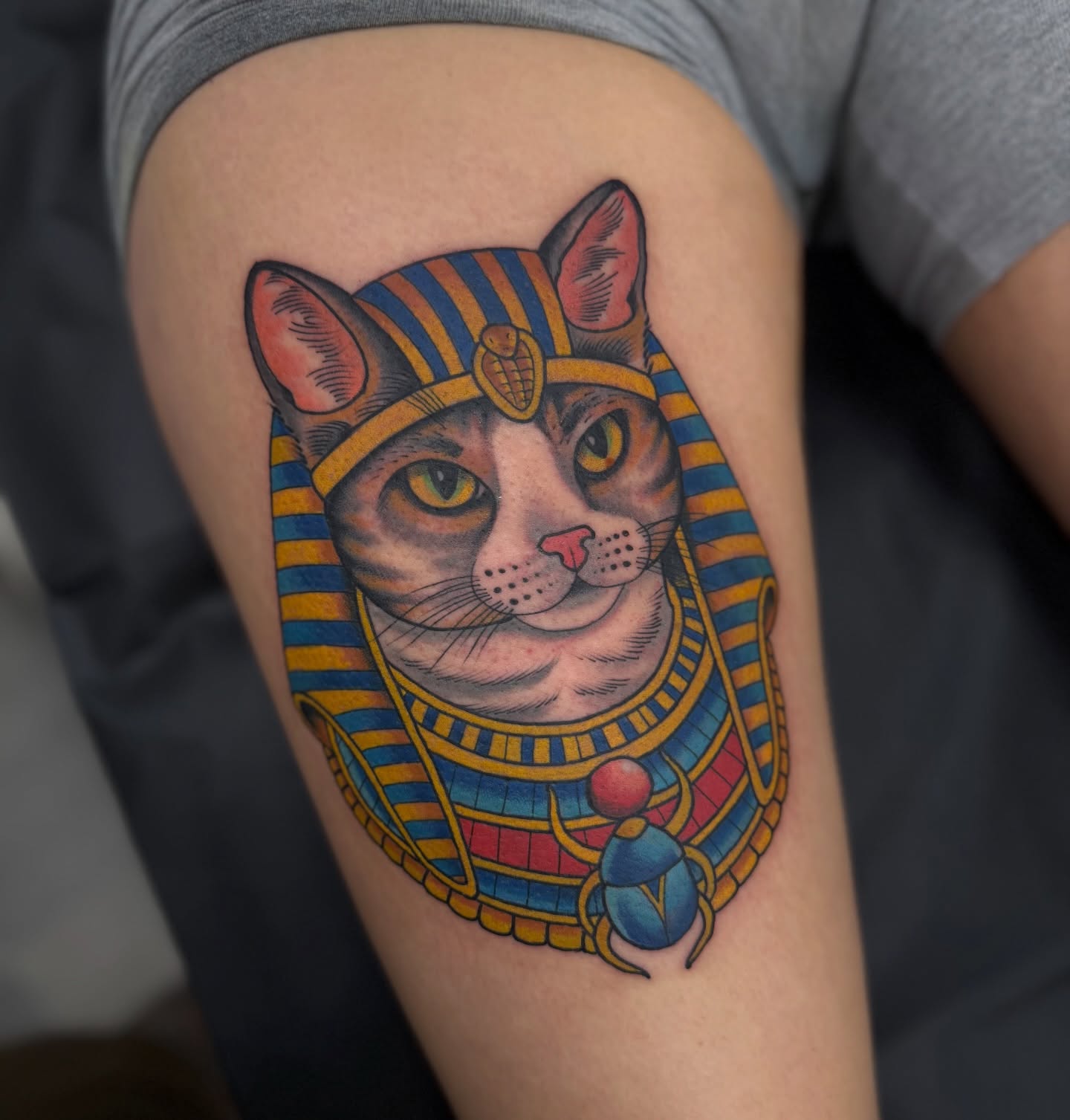
In ancient Egypt cats generally were sacred, associated with the goddess Bastet, a protective deity depicted with a cat’s head. Protection, not misfortune.
Medieval European superstition is where the bad-luck association comes from, tying black cats to witchcraft and ill omen. That association is regional and relatively recent in the long history of cats and people.
In Japan the black cat is broadly considered lucky, and in parts of Britain a black cat crossing your path is good fortune rather than bad. Scottish folklore treats a strange black cat arriving at your door as a sign of coming prosperity.
Which tradition you are drawing from changes the tattoo more than the style does. Decide that before you decide on placement.
21 Black Cat Tattoo Ideas
1. Classic Black Cat Silhouette
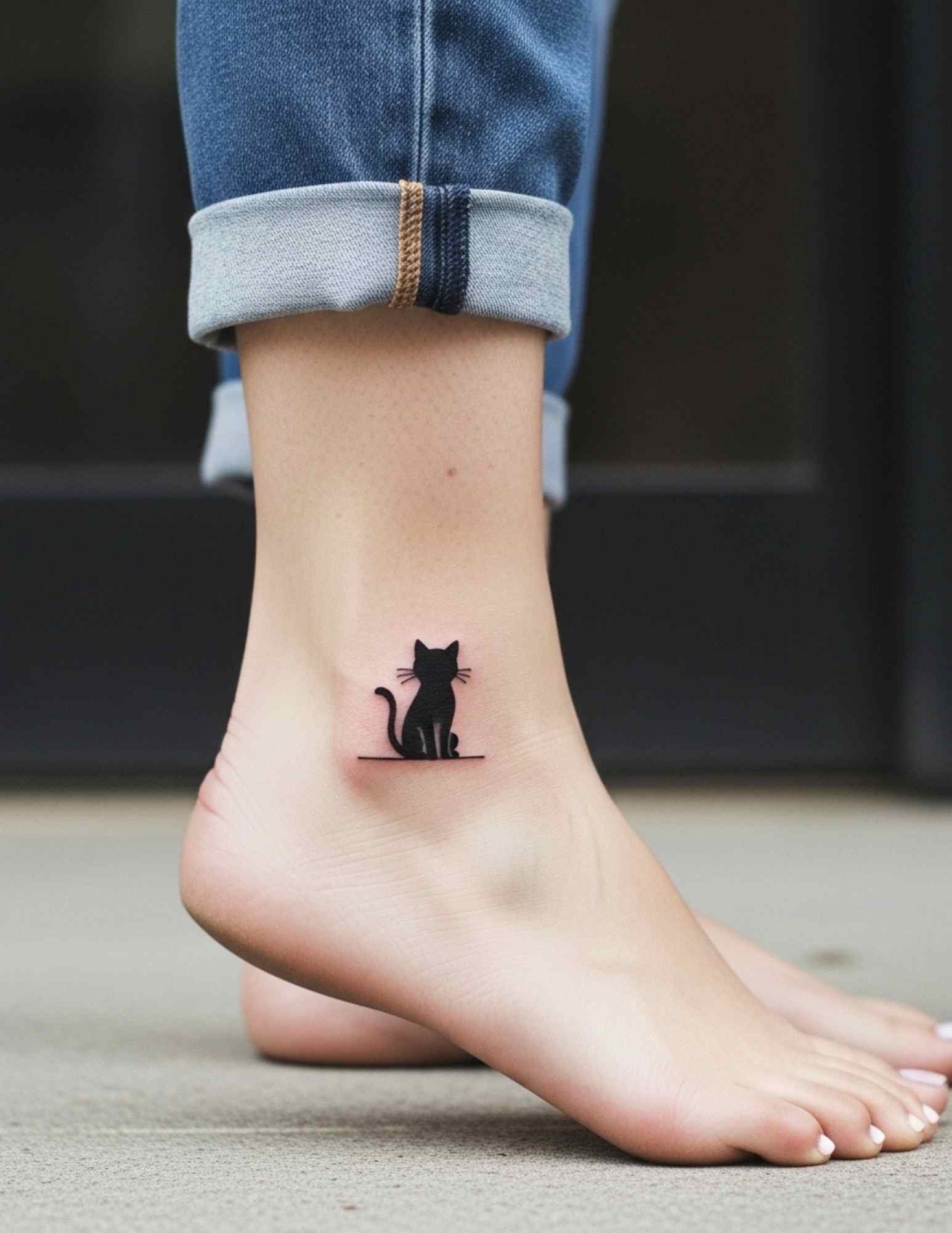
The silhouette is the design that made me stop worrying about black cat tattoos ageing badly. A solid, well-shaped outline of a cat carries no internal detail to blur, so it stays readable for decades.
Arched back, sitting profile, or the walking pose with the tail curled up — those three shapes are instantly legible at two inches.
In my experience this is the safest first tattoo on this list. Ask your artist to keep the ears sharp and the tail thick enough to hold ink.
2. Black Cat with Moon
Pairing the cat with a moon gives the eye something to read the black shape against, which solves the biggest problem with all-black subjects.
A thin crescent behind the cat, or a full moon rendered in soft grey wash, both work. The moon is the light source and the cat is the absence of light.
Every artist I have asked prefers this composition on the forearm or calf, where there is room for the circle to breathe.
3. Fine Line Black Cat
Fine line takes the opposite approach: instead of filling the cat solid, the artist describes it with a single delicate contour.
It is elegant, but it is also the design most likely to need a touch-up. Very thin lines spread slightly as they settle into the skin.
I would only take this to an artist whose healed fine line work you have actually seen, not just their fresh photos. The same rule applies to any fine line spine tattoo.
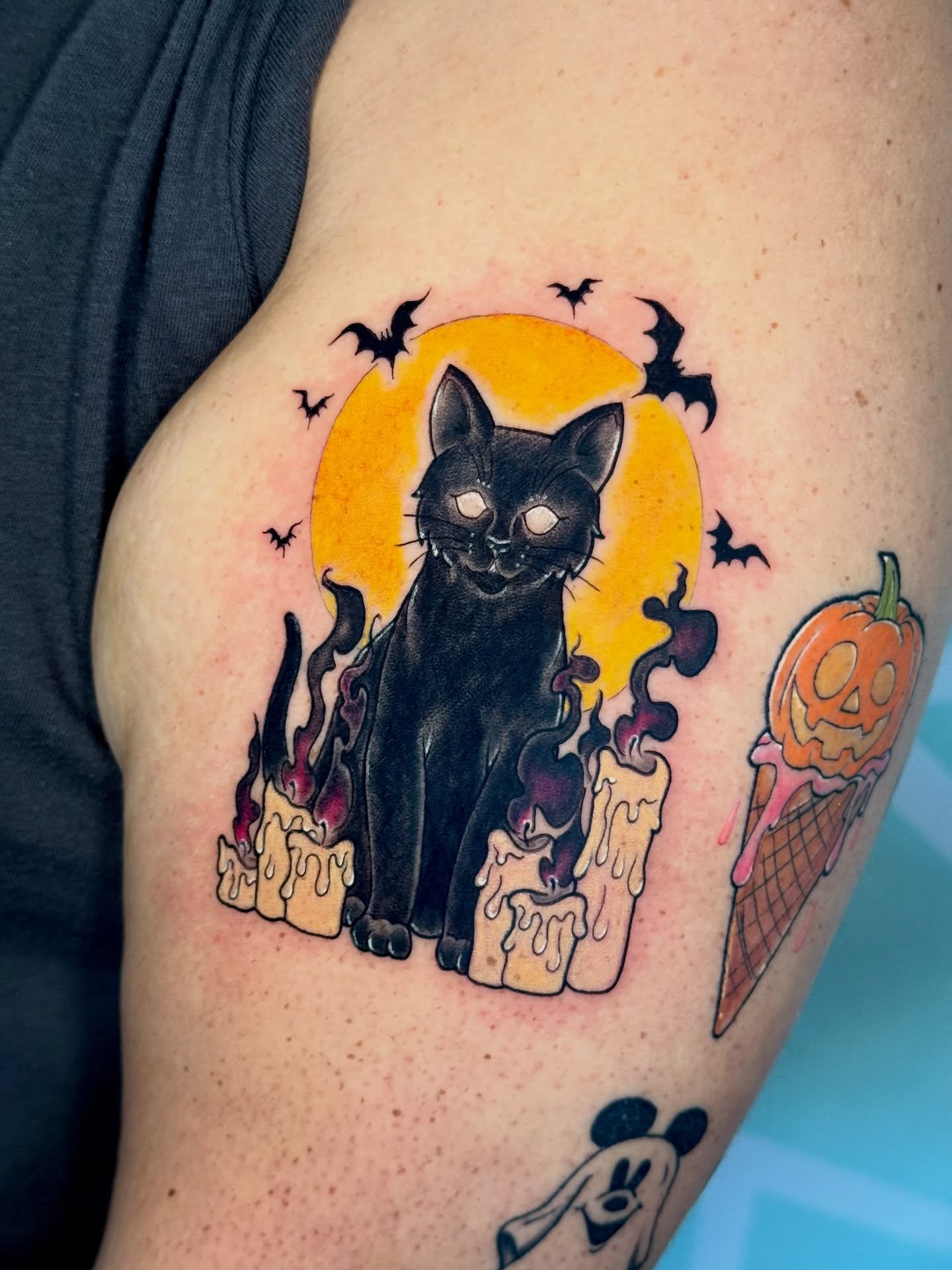
4. Halloween Black Cat
The arched-back, bottle-brush-tail Halloween cat is a specific piece of visual shorthand, and it is unapologetically fun.
It sits comfortably alongside pumpkins, bats and candy corn in an autumn-themed cluster or a spooky sleeve.
This one reads as playful rather than menacing, which is worth knowing if you want something that will not raise eyebrows at work.
5. Black Cat and Witch
The familiar is the oldest black cat story in Western folklore, and it makes for a rich two-figure composition.
You can go literal — cat beside a hooded figure — or suggestive, with a broom, a candle, or a witch’s hat resting on the cat’s head.
In most cases the smaller and more suggestive version ages better, because two detailed figures competing for space in a small tattoo tends to muddy.
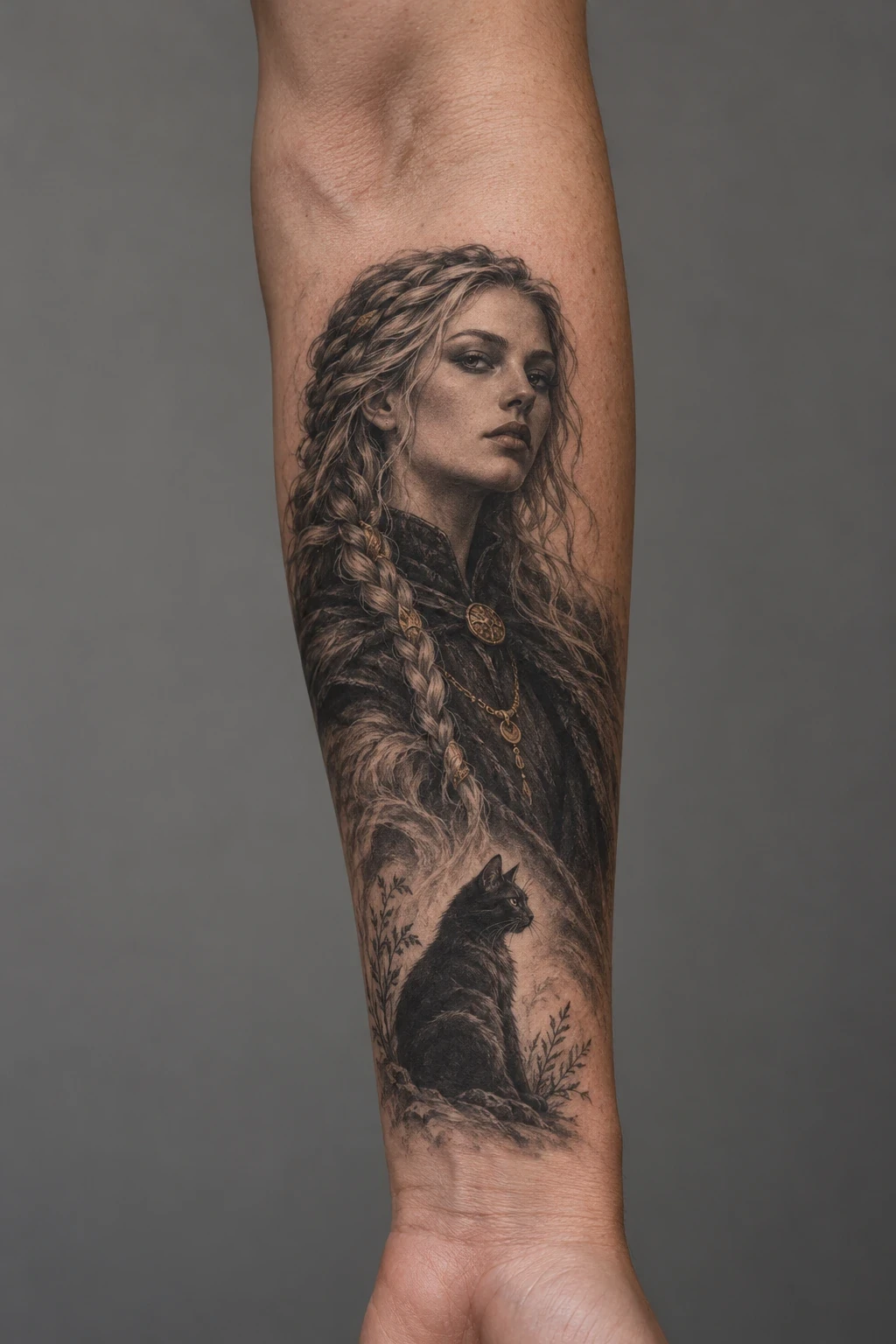
6. Realistic Black Cat Portrait
Portrait realism of a black cat is genuinely difficult, and I want to be honest about why.
Black fur has almost no tonal range, so the artist has to build the entire animal out of subtle highlights and reflected light rather than shadow.
It is the reverse of how portrait tattooing normally works. Look specifically for an artist with healed black-animal portraits in their book — not black-and-grey portraits generally.
7. Black Cat Eyes
Sometimes the whole cat is unnecessary. A pair of luminous eyes floating in solid black darkness does more work than a full figure.
This is one of the few places where a spot of colour earns its keep — amber or green irises against pure black are striking.
In my experience this design is best placed somewhere it can be revealed rather than displayed: inner bicep, ribs, the back of the shoulder.
8. Minimalist Sitting Cat
The sitting cat, viewed from behind or in profile, is about as small as a recognisable cat can get.
A tattoo of roughly an inch works here, which is why it is so common on the wrist, ankle and behind the ear.
Small does not mean cheap, though — most shops have a minimum charge regardless of size. It is worth reading up on how much a small tattoo costs before you book.
9. Black Cat and Stars
Scattering small stars around a black cat turns a single subject into a composition without adding another figure.
The stars also give the artist a way to control the visual weight — more stars on one side pulls the eye and balances an awkward body curve.
I like this on the shoulder blade and the outer forearm, where the scatter can follow the muscle.
10. Neo-Traditional Black Cat
Neo-traditional gives the black cat bold outlines, decorative framing and a limited but rich colour palette.
Think jewel tones, ornamental collars, art nouveau flourishes and a heavy black keyline holding it all together.
This is the style I recommend most often when someone wants a black cat that will still look sharp in twenty years. The heavy linework is what does it.
11. Black Cat and Flowers
Flowers soften the black cat considerably, which is either the point or the problem depending on what you want.
Roses and peonies suit a bolder treatment; wildflowers and daisies suit fine line. Match the flower’s weight to the cat’s.
A useful trick I have seen artists use: render the flowers in grey wash and keep the cat solid black, so the cat still dominates.
12. Lucky Black Cat (Maneki-Neko)
The maneki-neko — the beckoning cat — is usually shown white or calico, but the black version specifically wards off evil in Japanese tradition.
So a black maneki-neko is not a contradiction. It is the protective variant.
If you are drawing on this tradition, it is worth asking your artist to research the form properly rather than improvising a raised paw onto a Western cat.
13. Black Cat and Crescent Moon
A crescent is a cleaner partner than a full moon because it introduces a curve rather than a competing circle.
The cat can sit inside the crescent, sleep along its lower edge, or arch above it.
Celestial pairings work particularly well vertically, which is why the sun and moon spine tattoo layout translates so directly to this design.
14. Gothic Black Cat
Gothic treatment means heavier shadow, sharper angles, and usually some architectural or funereal element — an iron gate, a headstone, a cathedral window.
The cat becomes a sentinel rather than a pet.
This suits larger placements. Below about four inches the atmospheric detail collapses into a dark smudge.
15. Black Cat with Third Eye
Adding a third eye pushes the black cat from animal into symbol: intuition, hidden knowledge, the thing that sees what you do not.
It pairs naturally with moons, stars and occult geometry.
One honest caveat — a third eye placed badly reads as a mistake rather than a symbol. Ask for the design on paper before the stencil goes on.
16. Watercolour Black Cat
Watercolour behind a solid black cat gives you colour without diluting the silhouette, which is the best of both approaches.
Purples, teals and deep blues are the usual palette, splashed loosely behind or beneath the figure.
Be aware that watercolour without any black keyline is the least durable style on this list. Anchoring it to a solid black cat is exactly what saves it.
17. Black Cat Sleeve Element
Inside a larger sleeve, the black cat is unusually useful as a compositional anchor.
A solid black mass gives the eye somewhere to rest between busier passages, and it hides transitions between unrelated elements.
If you are building a sleeve over several sessions, mention early that you want a cat in it — the placement needs planning, not squeezing in later.
18. Traditional American Black Cat
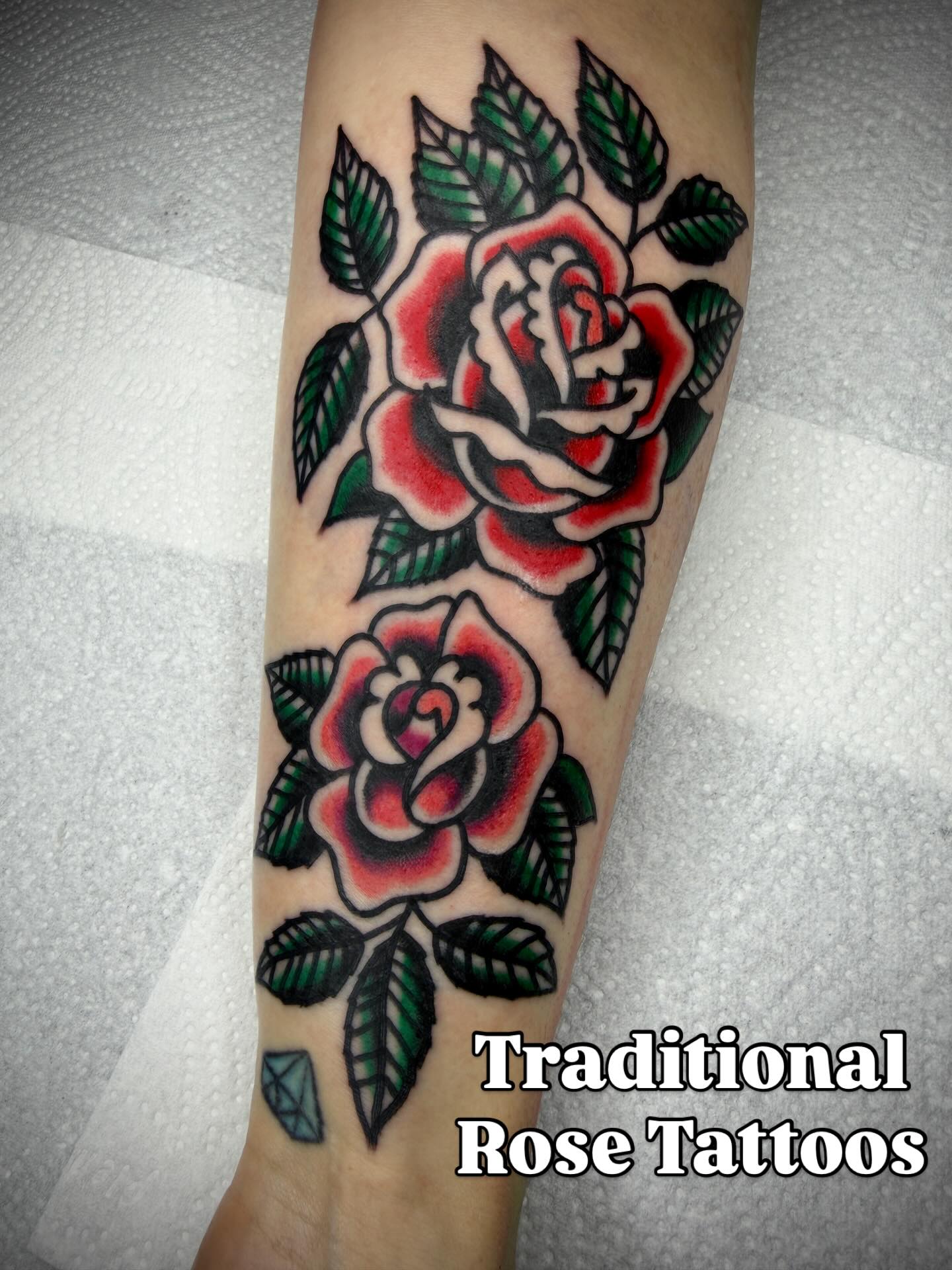
The American traditional black cat is bold outline, limited palette, heavy black fill and no fuss.
It is the version most likely to still look correct in thirty years, because the style was designed around that constraint.
If this is your direction, it is worth looking at American traditional animal tattoos generally to see how the style handles fur and eyes.
19. Black Cat and Candle
A candle beside the cat solves the lighting problem narratively as well as visually.
The flame justifies the highlights on the fur and gives the piece a small, warm point of colour.
It also carries its own quiet symbolism — vigil, memory, keeping watch through the night.
20. Geometric Black Cat
Geometric construction breaks the cat into facets, triangles or a dotwork mandala frame.
It is a good route if you want something that reads as designed rather than drawn.
Dotwork and heavy geometry sit squarely in blackwork tattoo designs territory, so look for an artist who specialises there rather than a generalist.
21. Black Cat Spine
A cat stretched or walking down the spine is one of the most striking placements available, and one of the more painful.
The vertical format suits an elongated, prowling pose far better than a sitting one.
In my experience spine work takes longer than clients expect and often needs a second session. Plan for it rather than being surprised.
Variations Worth Considering Instead
The Cat, Reduced to a Detail
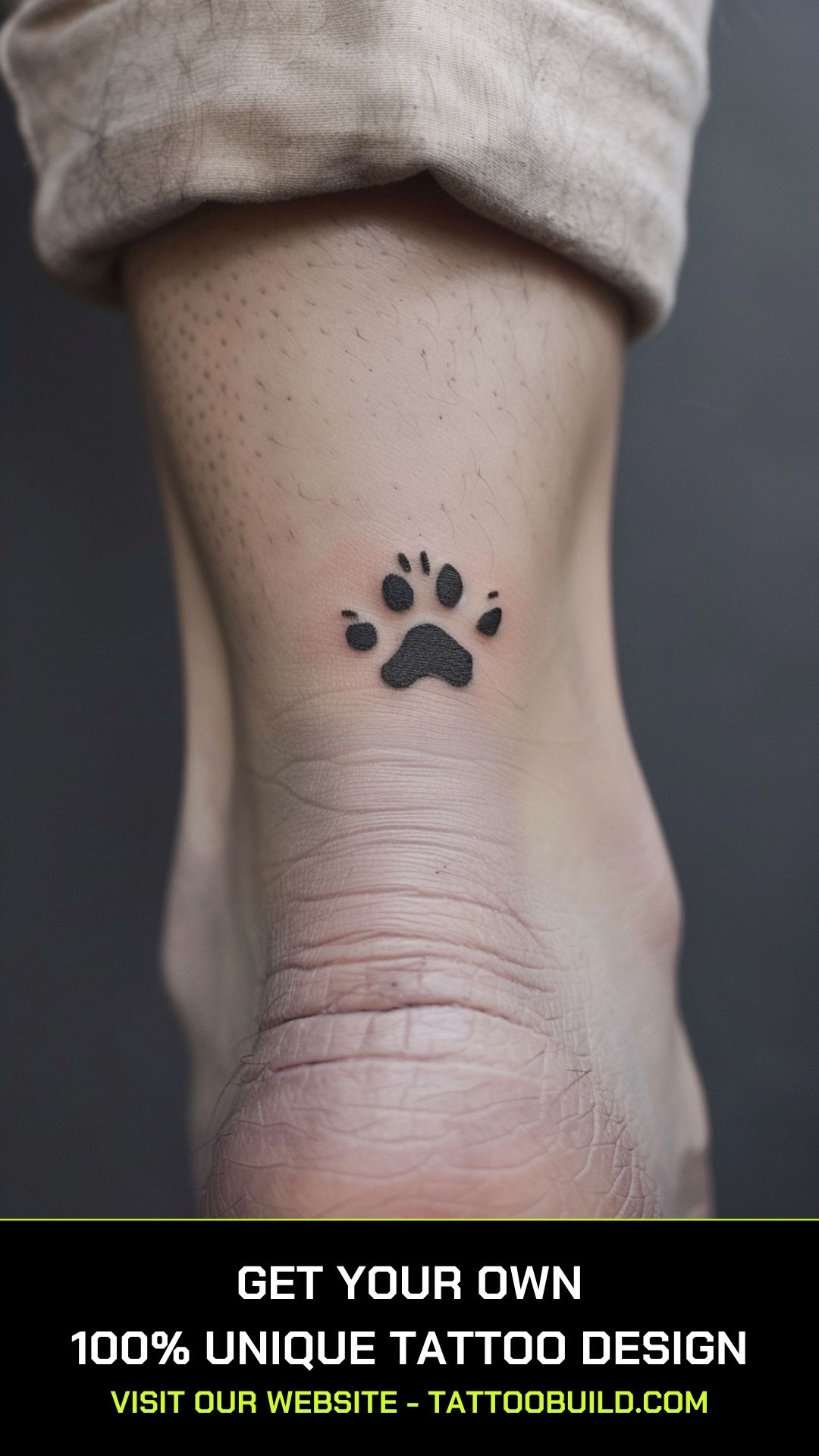
If a whole cat feels like too much, the parts carry the same meaning. A cat paw tattoo or a single set of whiskers is quieter and easier to place.
This is also the route people take when they want a memorial piece that does not announce itself.
A Different Black Animal
The technical appeal of black cats — solid shape, strong silhouette — applies equally to other dark subjects. Raven tattoo ideas solve the same design problem with a different symbolic weight.
Panthers, crows and bats all sit in the same visual family.
Two Cats Instead of One
A pair of black cats — mirrored, or one black and one white — opens up symmetry options that a single figure cannot.
It also works well for matching or paired tattoos without being obvious about it.
Getting a Black Cat Tattoo Right
Solid black requires more passes than most people expect, and heavily saturated black areas often feel more irritated during healing than line work does.
Expect a large solid-black piece to take longer per square inch than a shaded design of the same size. Budget the time and the money accordingly.
Aftercare matters more here too. Follow your artist’s instructions, keep the area clean, and read general dermatologist guidance on caring for tattooed skin — if you see spreading redness, heat, or discharge, see a doctor rather than waiting it out.
On placement: solid black shows sun fading clearly. Anywhere that gets constant direct sun will need sunscreen indefinitely if you want the edges to stay crisp.
Still Not Sure? Common Mistakes to Avoid
The most common one I see is choosing a detailed design at a size that cannot hold it. A gothic scene at two inches becomes a dark blob within five years.
The second is picking an artist by portfolio aesthetics rather than healed work. Ask specifically for healed photos of solid black areas.
The third is going too small on fine line. If you like the delicate look, consider black and grey tattoo ideas that use soft shading instead of hairline outlines — they hold up better at small sizes.
And a safety note worth stating plainly: never attempt a tattoo or a removal at home. The FDA fact sheet on tattoos and permanent makeup covers the ink and infection risks, and professional removal is a medical procedure.
Frequently Asked Questions
Do black cat tattoos mean bad luck?
Not inherently. The bad-luck association comes from medieval European folklore, but in Japan, Scotland and much of Britain a black cat is a sign of good fortune, and in ancient Egypt cats were sacred and protective. In my experience most people getting one are drawing on the protective or independent reading rather than the ominous one. The design itself is neutral — the meaning comes from what you pair it with and what you tell people.
How much does a small black cat tattoo cost?
It varies enormously by city, artist reputation and shop minimum. Most shops charge a minimum fee regardless of how small the piece is, so a one-inch silhouette often costs the same as a three-inch one. Ask for the shop minimum when you enquire rather than quoting a size. Tipping conventions also vary by country, so it is worth asking locally.
Does solid black ink hurt more than shading?
It is usually not sharper pain, but it lasts longer. Packing solid black means repeated passes over the same skin, so the area gets more irritated than an equivalent amount of line work. Most people describe it as a dull burn that builds rather than a sting. Bony areas like the spine and ribs are harder regardless of the fill.
Can you tattoo a black cat on dark skin?
Yes, though the approach changes. On deeper skin tones a pure black silhouette can lose definition against the surrounding skin, so artists often use negative space, a lighter background element like a moon, or a bold outline to create separation. Look for an artist who regularly tattoos skin tones like yours and can show healed examples — that experience matters far more than the style itself.
How long does a black cat tattoo take to heal?
Surface healing typically takes two to three weeks, with the deeper layers settling over a few months. Solid black areas often scab a little more heavily than line work, and picking at them is the fastest way to end up with patchy fill needing a touch-up. Keep it clean, moisturised and out of the sun. If you notice increasing pain, swelling or discharge after the first few days, see a doctor.
Quick Summary
- Black cat symbolism splits by culture — protective in Egypt and Japan, ominous in medieval Europe, lucky in Scotland.
- Solid silhouettes are the most durable option and work down to about one inch.
- Fine line looks delicate but is the most likely design here to need a touch-up.
- American traditional and neo-traditional age best because of their heavy keylines.
- Realistic black cat portraits are built from highlights, not shadows — use a specialist.
- Pairing the cat with a moon, candle or stars solves the all-black contrast problem.
- Solid black takes more passes, so budget extra time and expect a slightly rougher heal.
- Protect finished black work from sun exposure to keep the edges crisp.