The chest is the only placement where a butterfly tattoo gets to use your own anatomy as part of the design. The sternum sits at the body’s exact midline, and a butterfly is one of the few subjects that is perfectly symmetrical by nature.
I have watched more consultations go sideways over this placement than almost any other, and it is nearly always the same cause: the design was drawn flat on paper and never tested on a curved, moving chest.
Every artist I have asked about chest butterflies says the same thing in different words — the stencil has to be placed while you are standing, breathing normally, not lying on the table. A butterfly that is level on a reclined chest can sit noticeably crooked once you stand up.
What follows is 20 directions worth considering, plus the placement and sizing decisions that actually determine whether the piece ages well. If you are still deciding on the symbol itself, the meaning behind butterfly tattoos is worth reading first.
Which Chest Placement Is Right for You?
The word “chest” covers four quite different placements, and they are not interchangeable. This is roughly how they compare in my experience.
| Placement | Typical size | Discomfort level | Best suited to |
|---|---|---|---|
| Sternum / centre chest | 4–7 in wingspan | High — bone with little padding | Symmetrical fine line, geometric, ornamental |
| Collarbone | 2–4 in wingspan | High — thin skin over bone | Small, horizontal, single-butterfly designs |
| Side chest | 3–6 in | Moderate to high near the ribs | Asymmetric designs, single-wing concepts |
| Full chest spread | 8–12 in wingspan | High, and usually multi-session | Realism, neo-traditional, heavy blackwork |
Sizes here are the ranges I see most often, not rules — chest proportions vary enormously and your artist should measure rather than guess.
Why the Chest Changes a Butterfly Design
A butterfly on a forearm is viewed on a fairly flat, stable surface. The chest is neither.
The skin over the sternum stretches and compresses as you breathe, and the area between the sternum and the breast tissue curves in two directions at once.
That curvature is why so many chest butterflies look subtly warped in photos taken from the side. A design drawn as a flat symmetrical shape has to be redrawn to account for the curve, which is a freehand or heavily-modified-stencil job rather than a straight transfer.
The sternum is also one of the more demanding places to sit through. Bone close to the surface, minimal fat, and a breathing rhythm you cannot fully control all add up — the most painful tattoo spots ranks it near the top for a reason.
In most cases the discomfort is manageable in sessions of two to three hours. Beyond that, I have seen people tense up enough that the linework suffers, which is why larger chest pieces are usually split across appointments.
One more practical note: this is a placement you can cover completely for work, which is part of why it stays popular with people who want something meaningful without visible ink.
20 Butterfly Chest Tattoo Ideas
These are grouped loosely from most delicate to most dramatic. Almost all of them can be scaled up or down, but a few genuinely do not work small — I have flagged those.
1. Sternum Butterfly in Fine Line
A single butterfly centred on the sternum, drawn in thin, even linework with no shading to speak of.
This is the version most people picture when they say “delicate,” and it is the one I would steer a first-timer toward. It is a shorter sitting, it heals quickly, and it leaves room to build outward later.
The catch is longevity. Very thin lines on a high-movement area will soften, and a fine line sternum piece usually needs a touch-up somewhere in its first few years. Ask your artist what line weight they are comfortable committing to on this spot rather than pushing for the thinnest possible.
2. Full Chest Spread Butterfly
The butterfly scaled so its wingspan genuinely crosses the chest, body running down the sternum line.
This is the most architectural version. When it works, the tattoo reads as a piece of the body rather than a decal on it, and the wing tips can be shaped to follow the collarbones.
It is also the biggest commitment on this list — usually three or more sessions, and almost always an artist who works large-format regularly. Do not hand this to someone whose portfolio is all small pieces.
3. Monarch Butterfly Realism
Photorealistic monarch wings, either in black and grey or full orange-and-black colour.
Realism lives or dies on size. The monarch’s wing pattern has fine white spotting along the margins, and at small scale those dots blur into the black border within a few years.
When I have seen this done well it has been at six inches or more across, by an artist who works from a real reference photo rather than from memory.
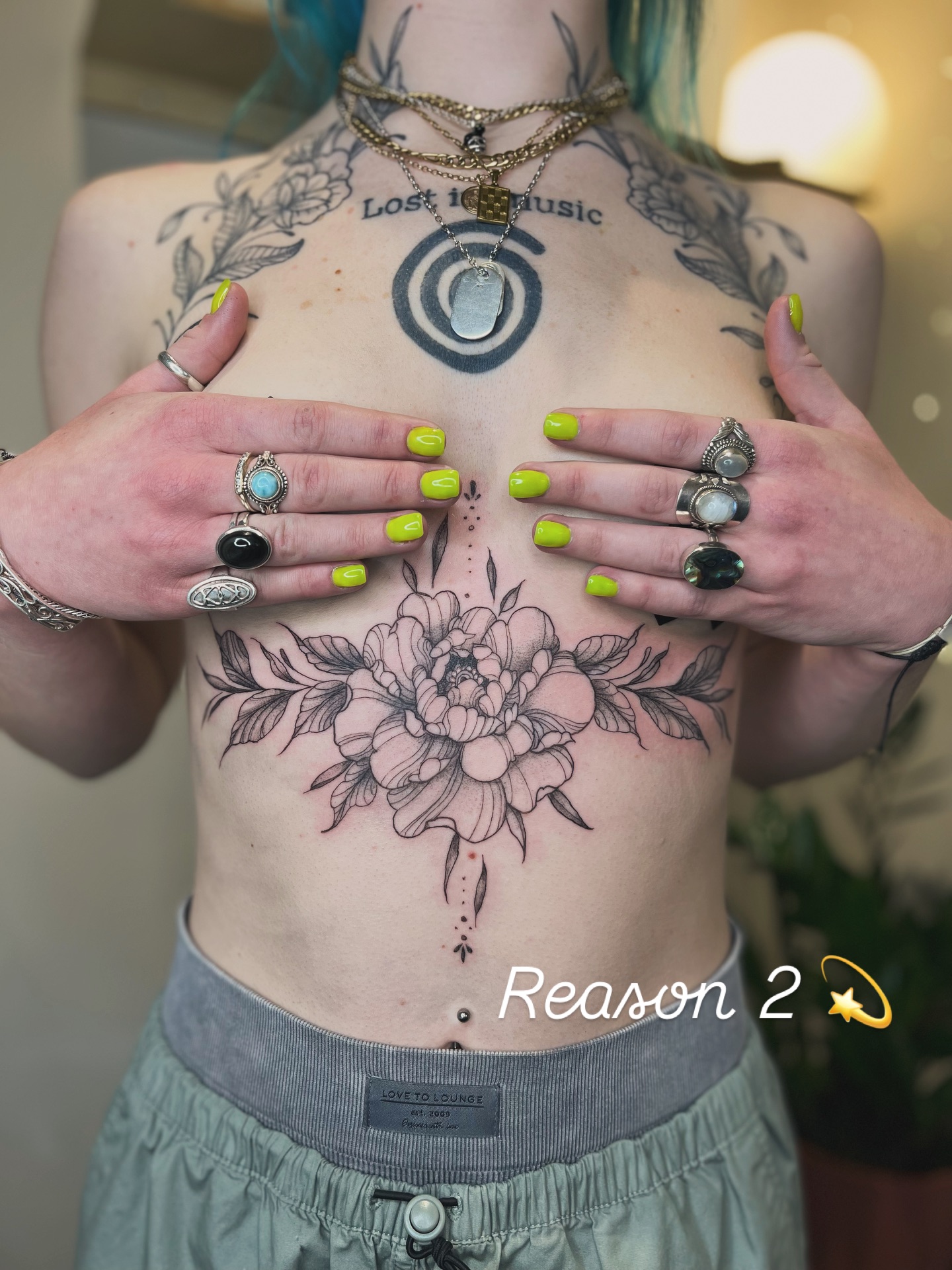
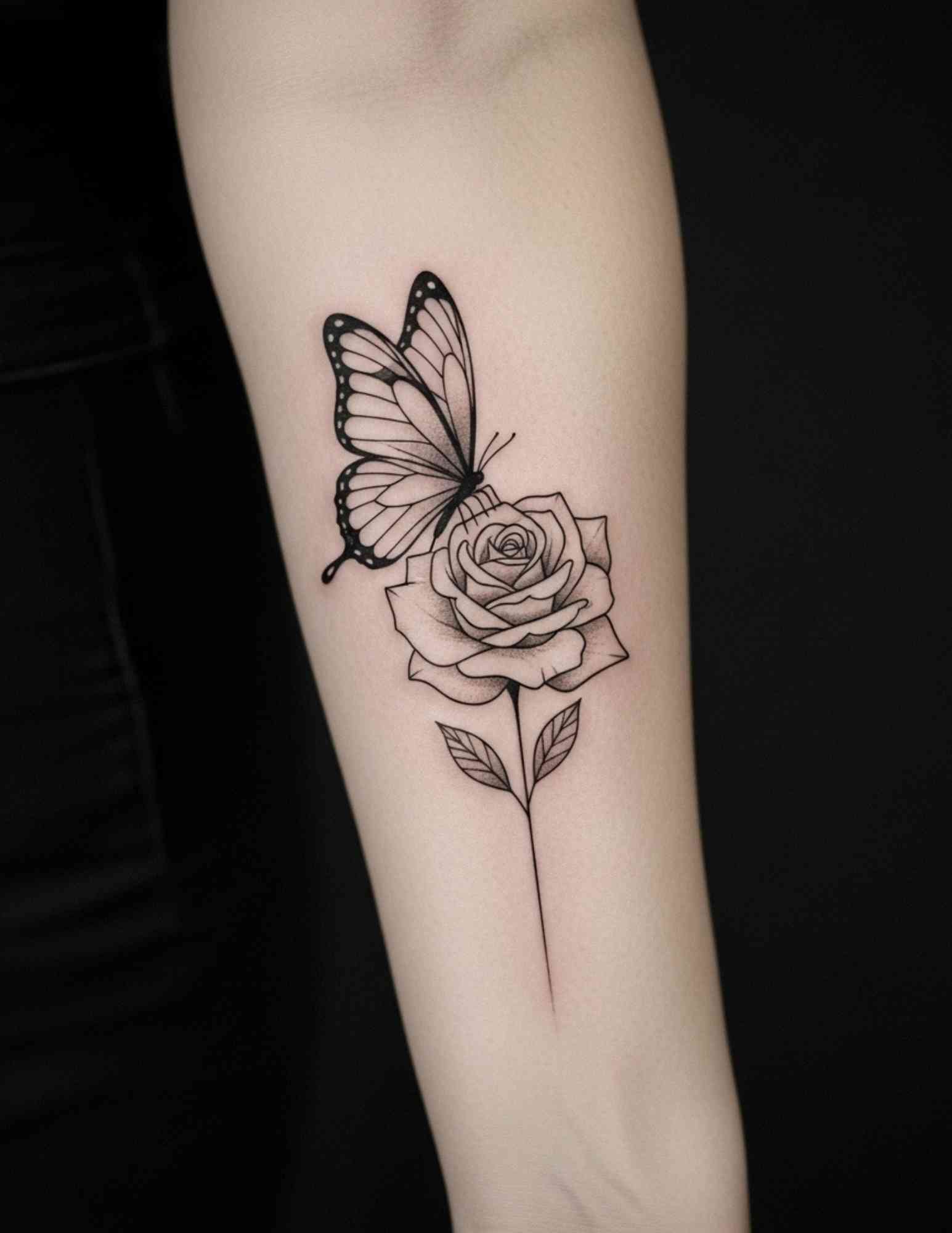
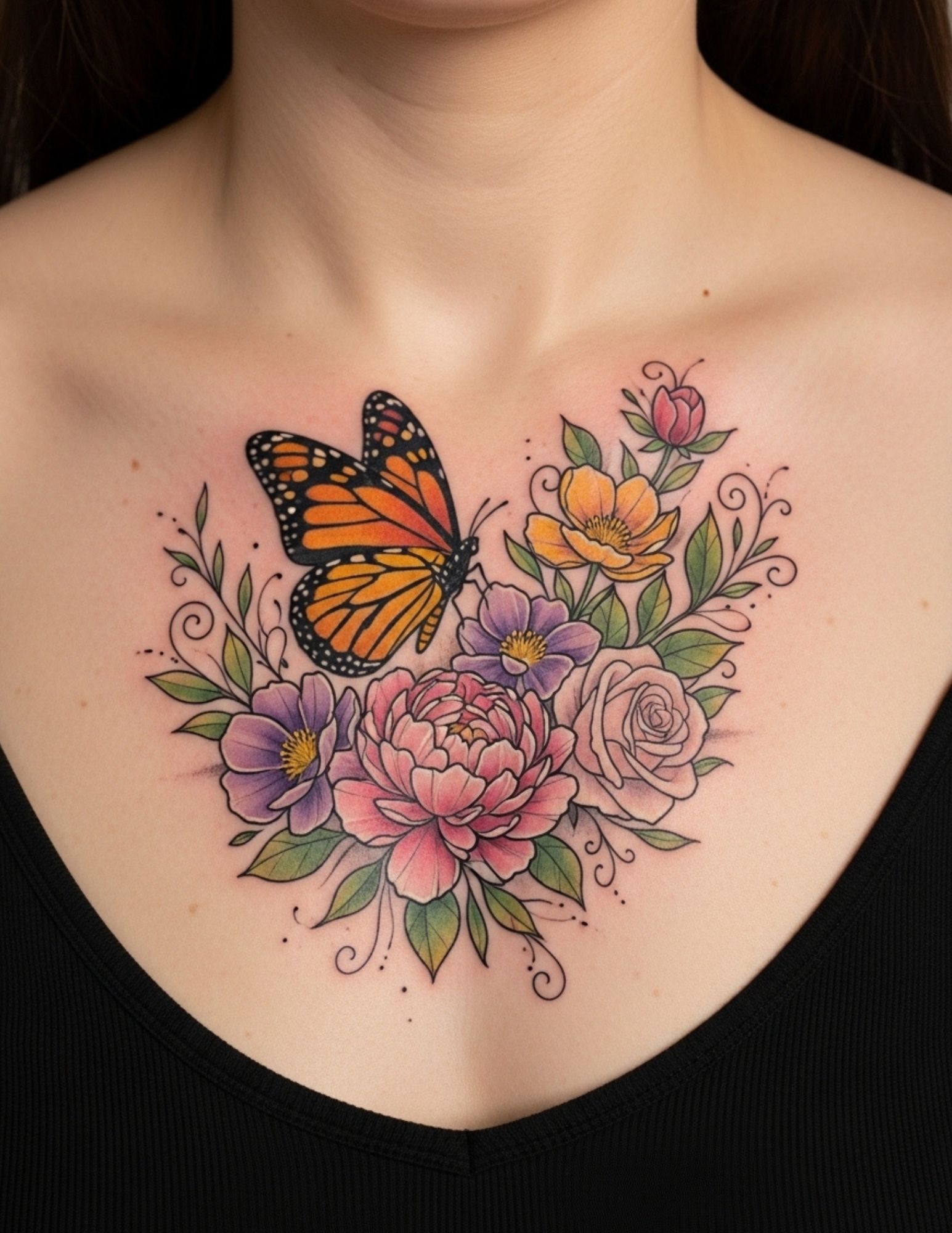
4. Butterfly and Floral Sternum
The butterfly paired with flowers running down the sternum or spreading under the wings.
Florals solve a real compositional problem: a butterfly alone can look like it is hovering in empty space. Giving it something to land on anchors it.
Peonies, roses and wildflowers are the usual pairings. If you like this direction, the wider floral chest tattoo designs are worth a look for structure ideas.
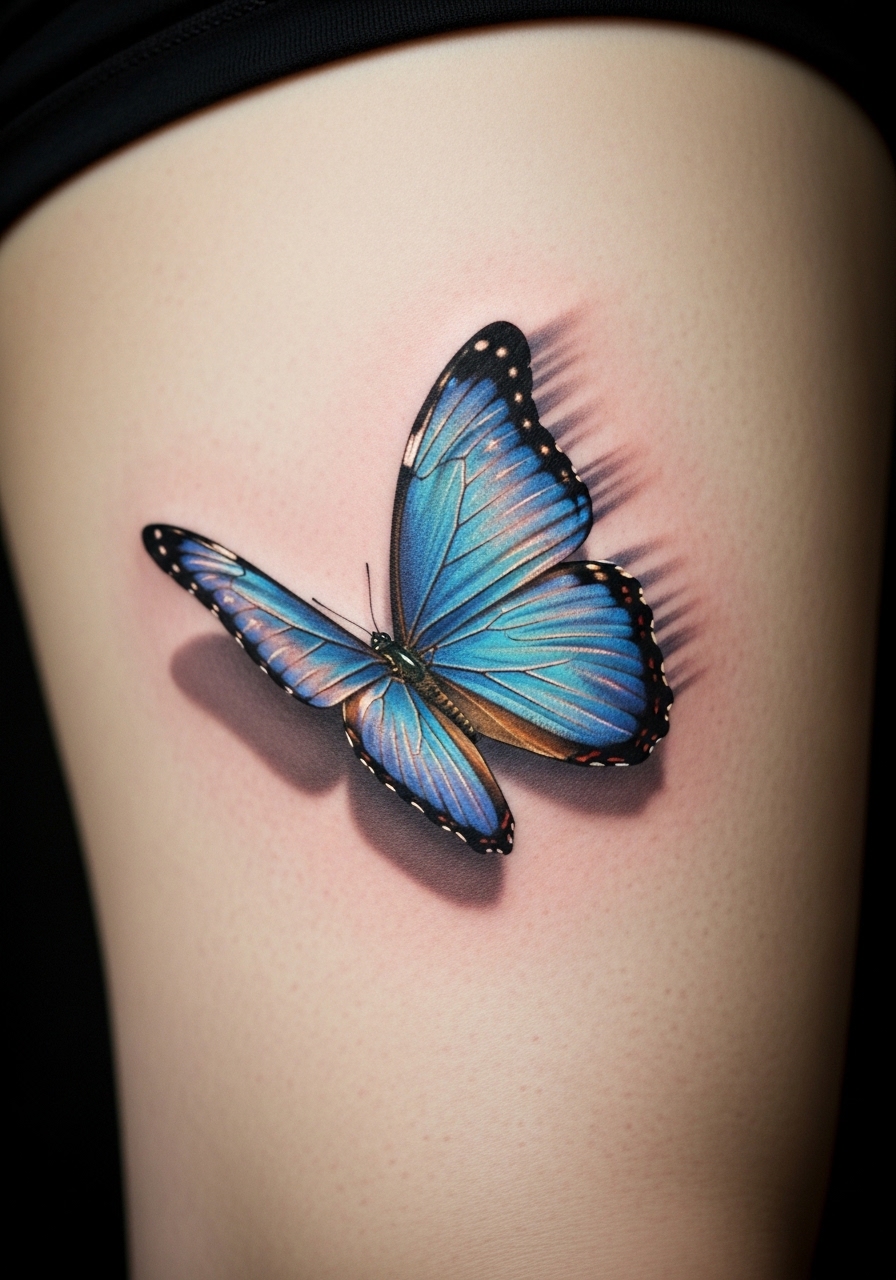
5. Blue Morpho Colourwork
The blue morpho’s iridescent wings, usually rendered in layered blues with white highlights.
This is one of the few butterflies where the colour is the subject. In black and grey it simply becomes a generic butterfly.
Blue holds reasonably well over time compared with lighter pastels, but it still needs an artist who packs colour properly. Patchy saturation on a chest piece shows up badly under a shirt collar.
6. Blackwork Butterfly Chest
Heavy solid black fill, silhouette-forward, often with negative-space detail cut into the wings.
Of everything on this list, this is the style that ages best. Solid black holds its edge far longer than fine line or soft colour.
It is also the least reversible in practical terms — covering or lightening dense blackwork later is genuinely difficult, so treat it as permanent in a way you might not treat a small fine line piece.
7. Butterfly with Moon Phases
A butterfly at the sternum with a moon phase arc running across the chest or beneath the wings.
The pairing shifts the meaning from transformation-as-a-moment to transformation-as-a-cycle, which resonates with a lot of people for good reason.
Keep the moons small and evenly spaced. When they compete with the butterfly for attention the whole thing reads as cluttered.
8. Watercolour Butterfly
Soft washes of colour bleeding past or replacing the linework entirely.
Watercolour is the style I get asked about most and recommend most cautiously. Without a structural line or shading layer underneath, the washes have nothing to hold their shape as they soften.
Ask to see healed watercolour work — not fresh photos — before booking. Any artist who does this style well will have those photos ready.
9. Fine Line Butterfly at the Collarbone
A smaller butterfly sitting along the collarbone rather than the sternum, wings extending horizontally.
The collarbone gives you a natural horizontal shelf, which suits a butterfly’s shape better than most people expect.
It is a shorter sitting than the sternum but not a painless one — the skin there is thin. Plenty more options in this zone over in collarbone tattoo ideas.
10. Geometric Butterfly Sternum
The butterfly built from geometric shapes, mirrored linework, or a wing pattern derived from sacred-geometry motifs.
Geometry and the sternum are a natural fit because the placement is already symmetrical — the design and the body agree with each other.
The demand here is precision. Any wobble in a straight line or any asymmetry between the two wings is immediately visible, so this is a style where the artist’s steadiness matters more than their creativity.
11. Black Swallowtail Chest
A swallowtail’s elongated lower wing tails trailing down from the main wing body.
Those tails are the reason to choose this species. They give the artist a way to extend the design downward toward the ribs without adding a second element.
It suits people who want the piece to feel like it flows rather than sits in a fixed box.
12. Butterfly and Script
A butterfly paired with a name, date, or short phrase in fine script.
The rule I would give here: the butterfly leads and the script supports. Oversized lettering under a small butterfly tends to read as a text tattoo with decoration.
Script also softens more than linework over time, so avoid anything smaller than your artist recommends. Short phrases survive far better than long ones.
13. Ornate Butterfly with Mandala Detail
Mandala or ornamental patterning worked into the wings themselves.
This fills the wing area without adding external elements, which keeps the overall silhouette clean while adding a lot of visual interest up close.
It needs scale to breathe — the detail packs tightly and small versions tend to grey out into a solid mass as they age.
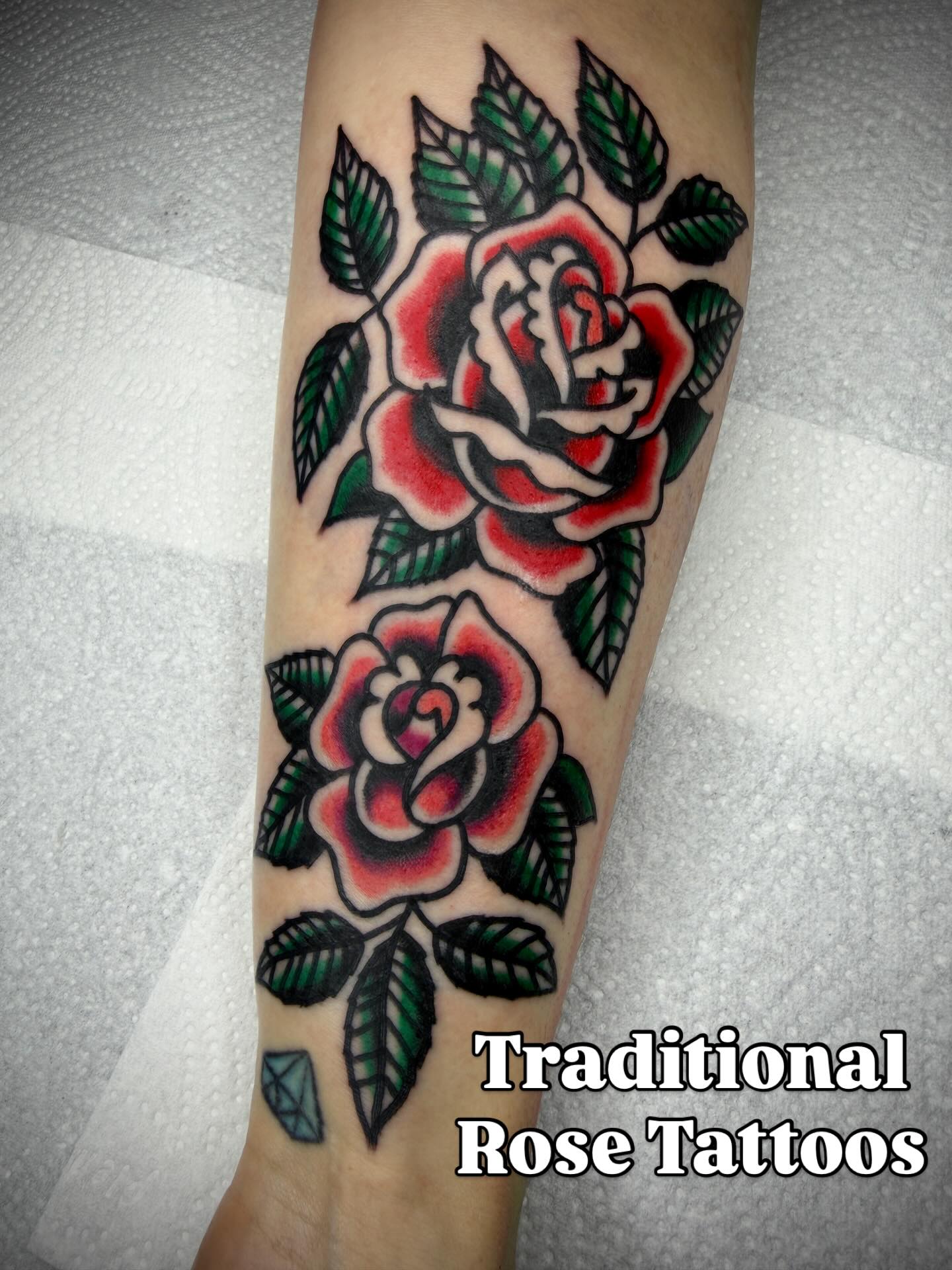
14. Neo-Traditional Butterfly Chest
Bold outlines, rich saturated colour, stylised rather than realistic wing patterning.
Neo-traditional is the pragmatic choice for anyone who wants colour that will still look intentional in fifteen years. The heavy outline is doing the long-term work.
It is a firmly stylised look, so it suits people who want a tattoo that reads as a tattoo rather than an illustration on skin.
15. Butterfly Emerging from Flowers
A composition where the butterfly appears to be lifting out of a floral base rather than resting on it.
This is the narrative version of the floral pairing — there is a before and an after built into the image.
It requires more planning than a static arrangement. The flowers need to be positioned so the butterfly has somewhere to be going, which usually means sketching the whole chest area rather than the butterfly alone.
16. Single-Line Butterfly
The entire butterfly drawn in one continuous unbroken line.
Minimal, fast to sit through, and genuinely elegant when the line is placed well.
The honest limitation is that it is a delicate tattoo on a demanding placement. Expect it to soften, and budget for a refresh rather than being surprised by one.
17. Butterfly with Ribcage Extension
The butterfly centred on the chest with wing detail, trailing elements or smaller butterflies continuing down onto the ribs.
This is how a chest piece stops looking like a standalone sticker and starts looking like part of a larger plan.
Worth knowing before you commit: the ribs are a significantly harder sit than the sternum for most people, and this half of the design is usually its own session. Rib tattoo placement covers what to expect down there.
18. Atlas Moth Chest
The atlas moth — one of the largest moths in the world — with its distinctive angular, snake-head wing tips.
Technically not a butterfly, and that is rather the point. It carries a heavier, more nocturnal tone than any butterfly does.
The wing shape also happens to suit a broad chest better than a rounded butterfly silhouette. If the symbolism interests you, moth tattoo meaning goes into it properly.
19. Deconstructed Butterfly
The butterfly breaking apart, dissolving into dots, birds, or fragments across the chest.
The effect depends entirely on restraint. Fragments that scatter too far read as unrelated marks rather than one dissolving shape.
I would ask the artist to map the fragment placement in stencil form and look at it in a mirror before any needle touches skin — this is the design most likely to look different on the body than on paper.
20. Twin Butterflies
Two butterflies meeting at the sternum, wings touching or overlapping at the centre line.
Usually chosen for duality — two people, two phases of a life, two sides of one person.
They can be matched exactly or differentiated slightly in size or style. The slight difference version tends to hold more meaning and looks less like a mirrored stencil.
Variations Worth Considering Before You Book
If none of the twenty lands exactly, these adjacent directions solve similar problems.
Move It to the Sternum Only
Stripping the design back to a narrow vertical sternum piece keeps the symmetry and the intimacy while cutting the sitting time substantially.
It also leaves the chest open for future work. The sternum tattoo ideas are a good place to see how narrow designs use that space.
Switch the Species
Swallowtails, morphos, atlas moths and luna moths all carry different tones while keeping the same basic symmetry.
I have found that people who feel a plain butterfly is “too common” usually just want a more specific species, not a different subject.
Go Single-Wing
One wing over the side chest, with the body implied along the sternum rather than tattooed.
It is an unconventional look and not for everyone, but it sidesteps the symmetry problem entirely and suits asymmetric chests well.
Start Somewhere Less Demanding
If the sternum is your first tattoo, there is no shame in testing the water elsewhere first — the broader butterfly tattoo ideas include far gentler placements.
Knowing how you personally respond to a needle is genuinely useful information before booking a multi-hour chest session.
Aftercare and Practical Advice for Chest Work
Chest tattoos heal on a surface that moves constantly — every breath, every time you reach overhead, every night you roll onto your front.
Sleeping position is the thing people underestimate. Front sleepers usually have a rough first week, and pressing fresh work into bedding overnight is a real cause of patchy healing.
Clothing matters too. Bra straps and seams sitting across a healing sternum or collarbone piece cause friction, so loose tops for the first week or two are worth planning for. Ask your artist specifically about this before the appointment if it applies to you.
Surface healing usually takes around two to three weeks, with the deeper layers settling over the following couple of months. Judge the final result at the three-month mark, not at three weeks.
Follow the aftercare your artist gives you rather than anything you read online, including this. General guidance from the American Academy of Dermatology is a reasonable sanity check, but your artist knows what they put in your skin.
If you see spreading redness, increasing pain after the first few days, heat around the area, pus or a fever, stop treating it as normal healing and see a doctor. Allergic reactions to specific inks — red pigments most commonly — are also possible, which the FDA’s guidance on tattoo inks discusses. None of this is a reason to be anxious, but it is a reason to know what a problem looks like.
For managing the session itself, eating properly beforehand and staying hydrated does more than most of the tricks people suggest. There are more practical pain management tips if you are nervous about the length of the sitting.
Common Mistakes and What to Do Instead
The most frequent one: sizing the butterfly to the design rather than to the body. A four-inch butterfly that looked right on the artist’s tablet can look stranded on a broad chest.
The second: approving a stencil while lying down. Stand up, look in a mirror, breathe normally, and check it from the side as well as head-on.
The third: choosing a style the artist does not specialise in because you like them personally. Fine line, realism and neo-traditional are genuinely different skill sets, and the best blackwork artist in your city may not be the right person for a watercolour morpho.
And the fourth: rushing the booking. Chest work is worth waiting several months for the right artist. I have never once heard someone regret waiting; I have heard plenty regret not doing so.
Frequently Asked Questions
How painful is a butterfly chest tattoo?
The sternum and collarbone are widely considered among the more uncomfortable placements because the bone sits close to the surface with very little padding. Most people describe it as a sharp, vibrating sensation rather than a dull ache. Pain tolerance varies enormously between individuals, so treat any general ranking as a rough guide only. In most cases a session of two to three hours is manageable, and larger pieces are split across appointments for exactly this reason.
How much does a butterfly chest tattoo usually cost?
Prices vary widely by region, artist experience and design complexity, so any specific figure would be misleading. Small fine line sternum pieces are typically a single short session, while a full chest spread in realism or colour is usually priced across multiple sittings. The most reliable approach is to send your reference images to two or three artists whose portfolios you like and compare their quotes. Be cautious of prices far below the local norm — on a placement this visible, execution matters more than saving money.
Will a fine line butterfly chest tattoo blur over time?
Fine line work does soften over the years, and the chest’s constant movement does not help. That does not mean it will look bad — it means the lines thicken slightly and the contrast drops. Many people schedule a touch-up somewhere in the first few years and are perfectly happy with the result. If you want something that holds crisp edges for decades with no maintenance, bolder linework or blackwork is the more realistic choice.
Can a butterfly chest tattoo be added to later?
Yes, and it is one of the better placements for building outward. A sternum butterfly can extend into florals, down onto the ribs, or outward toward the collarbones. The important thing is to tell your artist at the first appointment that you may expand later, so the composition is planned with room rather than boxed in. Retrofitting a larger design around an existing tattoo is possible but always more constrained.
What does a butterfly chest tattoo mean?
Butterflies are most commonly associated with transformation, rebirth and coming through a difficult period, drawing on the literal metamorphosis from caterpillar to adult. Placed over the chest, many people intend a more personal reading connected to the heart. Some choose it in memory of someone, some to mark a change in their own life. The meaning is ultimately whatever you assign it — there is no wrong interpretation.
Quick Summary
- The sternum, collarbone, side chest and full chest are four different placements — decide which one before choosing a design.
- Have the stencil placed while you are standing and breathing normally, then check it in a mirror from multiple angles.
- Size the butterfly to your chest proportions, not to the drawing — undersized chest pieces look stranded.
- Blackwork and neo-traditional age best; fine line and watercolour are beautiful but need realistic expectations and occasional touch-ups.
- Realism and heavy ornamental detail both need scale to survive — do not shrink them.
- Expect a demanding sit; larger pieces are normally split across two or more sessions.
- Plan for loose clothing and awkward sleeping for the first week or two of healing.
- Choose an artist whose healed portfolio shows your specific style, and be willing to wait for them.