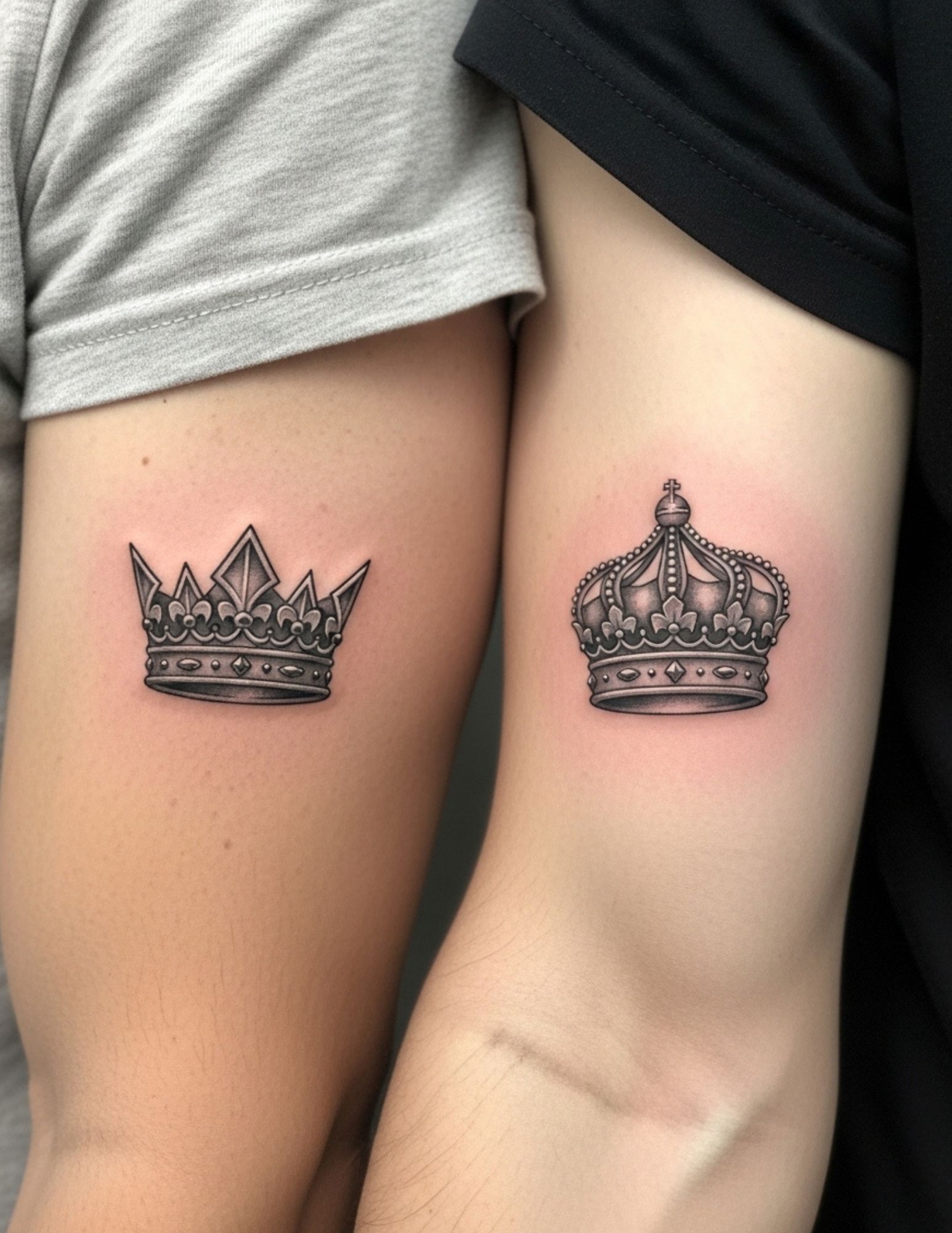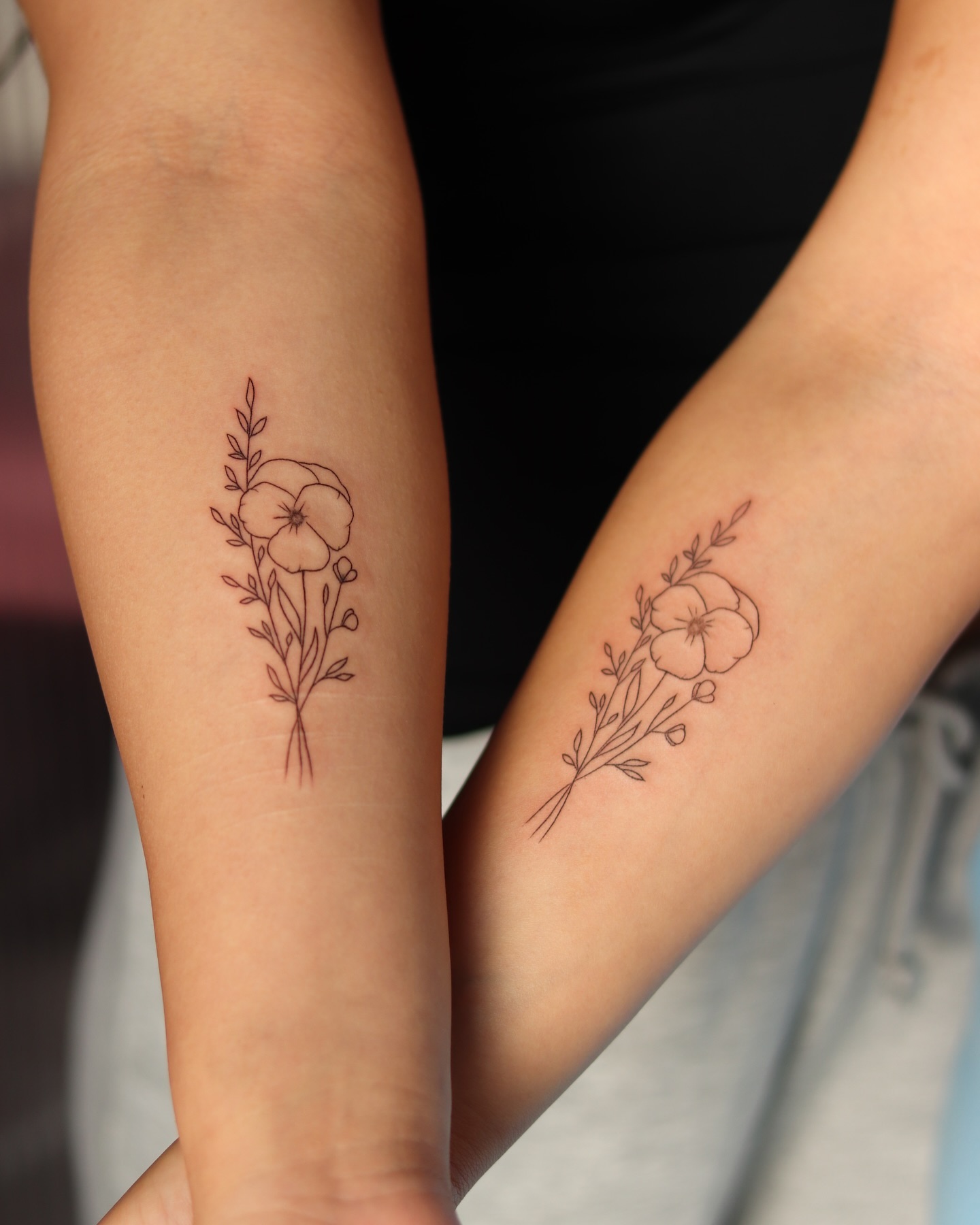
A sobriety tattoo is one of the few pieces of permanent ink that has to be earned before it can be worn. The date, the number, or the symbol is not a decoration — it is a receipt for work that nobody else watched you do.
I have sat in on a lot of these appointments, and they do not feel like other tattoo sessions. The room is quieter. People bring notes, meeting tokens, sometimes a folded piece of paper with a date written on it that they have carried for years.
What follows is 20 sobriety tattoo ideas drawn from designs I have seen booked, healed and lived with — grouped by what they actually say rather than by style. Some are direct. Some only make sense to the person wearing them, which is often the point. If your recovery sits alongside a wider mental health story, the mental health tattoo ideas guide covers ground this one does not.
One thing worth saying up front: a tattoo is a marker, not a treatment. It sits on top of the work. It does not replace it.
Which Sobriety Tattoo Approach Is Right for You?
Most sobriety tattoos fall into one of five approaches. In my experience the choice matters more than the style, because it decides who can read the tattoo and how often you will have to explain it.
| Approach | How Openly It Reads | Best If | Usual Size & Placement |
|---|---|---|---|
| Clean date or milestone number | Private unless explained | The specific day matters more than the symbolism | 1–3 inches, inner forearm or wrist |
| Program symbol or chip | Instantly readable inside recovery circles | A 12-step fellowship carried you | 1.5–3 inches, forearm, shoulder or calf |
| Recovery phrase in script | Readable to anyone standing close | You want a reminder you can actually re-read | 3–7 inches, forearm, ribs or collarbone |
| Nature symbolism (lotus, phoenix, tree) | Reads as art to strangers | You want the meaning to stay yours in public | 4–10 inches, upper arm, thigh or back |
| Personal object or scene | Unreadable to everyone but you | One specific moment turned things | Varies entirely with the image |
There is no ranking here. The people I have spoken to who regret a sobriety tattoo almost never regret the image — they regret picking a placement that forced a conversation they were not ready to have.
Why Timing Matters More Than the Design
There is no correct moment to get a sobriety tattoo, but there are moments that carry more risk than others.
Some people book one in the first week, precisely because a permanent commitment feels like a useful stake in the ground. Others wait for a year, five years, or for the point where the tattoo feels described rather than promised.
Every artist I have asked about this says roughly the same thing: they will tattoo whatever you ask for, but the ones done in the very early weeks come back for cover-ups slightly more often than the ones done later. That is not a rule, and plenty of day-one tattoos age beautifully.
The practical consideration nobody mentions is money. Early recovery often coincides with rebuilding finances, and a rushed cheap tattoo on skin you will look at every day is a false economy.
If you are unsure, my honest suggestion is to write the design down, put a date on the note, and look at it again in 60 days. If it still says the right thing, book it.
20 Sobriety Tattoo Ideas, Grouped by What They Say
Each group below covers several of the 20 ideas. Numbers are kept so you can find a specific one quickly.
1–3. Dates, Milestone Numbers, and the Chip
The clean date is the most specific sobriety tattoo that exists. The last drink, the last use, the first morning of the new arrangement — written in Arabic numerals, in Roman numerals, or in a plain typewriter face.
Idea 1 is the date itself. Roman numerals are the most common request I see, partly because they read as design rather than data to anyone glancing at your arm; the Roman numeral tattoo guide covers how to space them so they do not blur together.
Idea 2 is the milestone number on its own: a 1, a 5, a 10. It looks almost too simple until you remember that the number contains every single day inside it.
Idea 3 is the 12-step chip rendered in ink, usually circular, often with “To thine own self be true” around the rim. People lose chips. They fall out of pockets, they get left in old jackets. The tattoo version cannot be misplaced.
One caution from artists I trust: very fine numerals under about half an inch tall tend to thicken over ten to fifteen years. Size up slightly if the date has to stay readable.
4–9. Words You Can Re-Read on a Bad Day
Text tattoos do something symbols cannot — they give you an actual sentence to read when your head is loud.
Idea 4 is the Serenity Prayer, or the portion of it you use most. In recovery rooms this is a daily text, and running it down the forearm keeps it at reading distance.
Idea 5 is “one day at a time,” which is the whole architecture of sustained recovery compressed into four words. Idea 6 is “not today” — the same idea sharpened into a refusal, and the one I most often see placed on the inner forearm where a hand reaches for something.
Idea 7 is “still here.” Not a motto, not an aspiration, just a fact that survived everything. Idea 8, “brave enough to begin again,” names the part people underestimate: the beginning happens every morning, not once.
Idea 9 is “I am the storm,” the loudest of the group and usually set in heavy lettering across the forearm or chest.
Whatever the phrase, get it proofed twice before the needle. I have seen a misplaced apostrophe outlive the relationship that inspired it — the word tattoo guide has more on choosing lettering that stays legible.
10–11. Program Symbols and the Semicolon
Idea 10 is the circled triangle used by Alcoholics Anonymous and Narcotics Anonymous. Inside the rooms it is read instantly; outside them it mostly passes as geometry.
That double reading is the appeal. You are visible to the people who share the experience and unremarkable to everyone else.
Idea 11 is the semicolon — the sentence that could have ended and did not. It originated with Project Semicolon and has become shorthand for continuation through the darkest stretch, which for many people ran alongside addiction rather than separately from it.
It is a small tattoo carrying a very large amount of meaning, and that is worth thinking about before placing it somewhere permanently public. Our breakdown of what the semicolon tattoo means goes into the history properly.
If any part of this territory is live for you right now rather than historic, the 988 Suicide & Crisis Lifeline is reachable any time, and talking to someone is a better first step than booking an appointment.
12–14. Growth Symbols: Lotus, Tree, Butterfly
Idea 12 is the lotus, and it is one of the rare symbols whose metaphor is not assigned arbitrarily — the plant genuinely roots in mud and opens above the waterline.
Ask your artist to keep the waterline visible in the composition. Without it the flower is just a flower; with it the whole story is in the drawing. There are more compositions in the lotus flower tattoo collection.
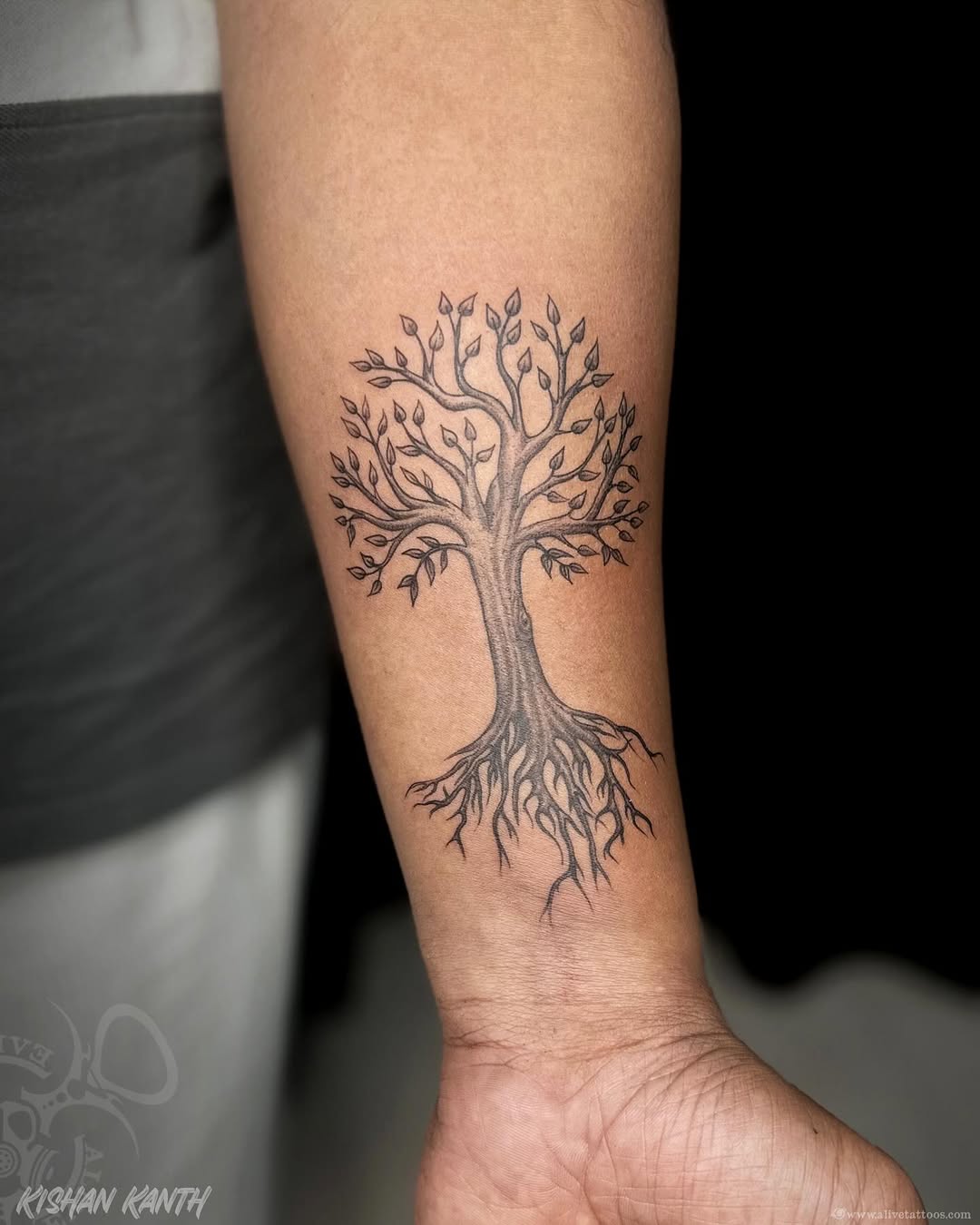
Idea 13 is the tree with exposed roots, and the structural point is that the roots should get as much space as the canopy. The visible life is the branches. The meetings, the phone calls at 11pm, the boring daily maintenance — those are the roots.
Idea 14 is the butterfly, which people sometimes dismiss as generic until they think about what metamorphosis actually involves. The caterpillar does not improve. It dissolves first.
In practice, all three of these age best with slightly heavier linework than the ultra-fine versions trending on social media.
15–17. Phoenix, Mountain, and the Long Climb
Idea 15 is the phoenix, and in a recovery context it is less a metaphor than a description of events.
When I have watched phoenix pieces designed properly, the artist builds the composition around the limb rather than stamping a flat bird onto it — the tail wrapping the forearm, the wings following the deltoid. The phoenix tattoo ideas gallery shows the difference clearly.
Idea 16 is the mountain, usually in clean linework with the summit visible. I like it as a sobriety tattoo because it is honest about scale: the mountain does not shrink because you would prefer it to.
Idea 17 is the arrow drawn at full draw, pulled backwards before it goes anywhere. It is the smallest design in this group and often the cheapest to have done well, which matters more in early recovery than most articles admit.
All three work at a range of sizes, but none of them survive being shrunk below about two inches if there is shading involved.
18–19. Wave and Anchor: Riding It Out and Staying Put
Idea 18 is the wave, and it is more technical than it looks. It references urge surfing — a mindfulness technique developed by the late psychologist Alan Marlatt, in which a craving is observed as something that rises, crests and falls rather than something that must be obeyed.
For anyone who has actually used that technique, a wave mid-break is a precise piece of shorthand.
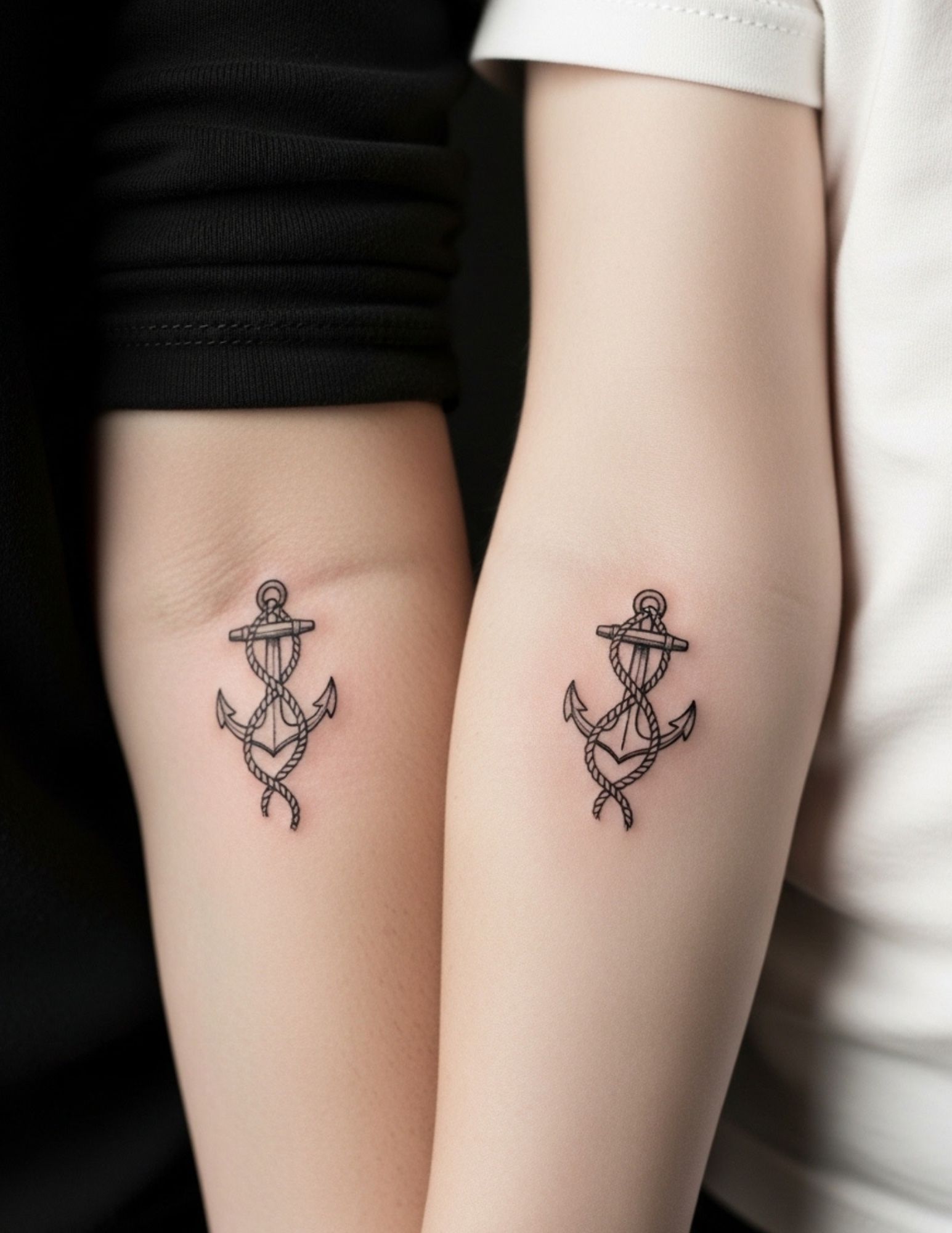
Idea 19 is the anchor: what holds when the current is pulling. People, practices, commitments, a dog that needs walking at 7am.
Traditional anchors were designed with heavy outlines because they were made to age, and that design logic still holds — see the anchor tattoo meaning guide for the traditional variations.
20. The Personal Symbol Nobody Else Could Design
Idea 20 is the one this list cannot give you.
It is the object that was in your hand at the turning point, the view out of a particular window, the coffee cup from the meeting you nearly did not walk into, the handwriting of the person who answered the phone.
These are consistently the sobriety tattoos I find most convincing, because they are unreadable from outside. Nobody asks about them at work. The meaning stays entirely with the wearer.
Bring reference photographs rather than descriptions. An artist can draw from a blurry phone picture of a real object far better than from an adjective.
Variations Worth Considering
Building the Tattoo Out Over Time
Some people start with the date and add an element at each milestone — a second line, a background, another flower. It turns the piece into a record rather than a snapshot.
Tell your artist this at the first appointment so they leave the composition room to grow. Retrofitting space into a finished tattoo is much harder.
Tattooing Over Scars
This comes up often and deserves a straight answer. Tattooing over scar tissue, including old track marks, is possible but it is specialist work.
Scars generally need to be fully matured — many artists want at least a year, and often longer — and they take ink unevenly, so the design usually has to be adapted. If the scarring is raised, keloid, or anything you are unsure about, ask a doctor or dermatologist before you ask a tattooist.
Matching Pieces With Someone in Recovery
Matching sobriety tattoos with a sponsor, sibling or partner in recovery are increasingly common, and they carry an obvious risk if the relationship changes.
The version I have seen work best is a shared symbol rendered differently for each person, rather than two identical copies.
Practical Advice Before You Book
Pick the artist for their portfolio in the specific style you want — script artists and blackwork artists are rarely the same person, and a great one at the wrong discipline will still disappoint you.
Go in sober and rested, obviously, but also fed. Sitting for two hours on an empty stomach makes the experience considerably worse and has nothing to do with willpower.
Expect the healing to take roughly two to four weeks on the surface and a few months underneath. Keep it clean, keep it out of the sun, do not pick at it, and follow whatever aftercare your artist specifies over anything you read online — the tattoo healing stages guide sets out the normal timeline.
If a healing tattoo becomes hot, increasingly painful after the first few days, or starts weeping anything cloudy, that is a doctor conversation and not a forum conversation. Infections are uncommon but they are not rare enough to ignore.
Still Not Sure? The Mistakes Worth Avoiding
The first is choosing a placement for other people. A sobriety tattoo on the back of the hand will be discussed by strangers for the rest of your life, and some days you will not want to discuss it.
The second is booking it as a substitute for the next hard step. The ink is a marker of work, not a replacement for it, and no design has ever held anyone through a difficult week on its own.
The third is over-specifying. A tattoo listing four dates, three names and a quotation rarely ages well — pick the one element that carries the most weight and give it room.
If none of the 20 ideas above land, browse adjacent territory before you commit: tattoos that mean strength and courage and hope tattoo ideas both overlap heavily with recovery symbolism without naming it directly.
And if you are reading this from somewhere earlier in the process than the tattoo chair, the SAMHSA National Helpline is free, confidential and running 24/7, and Alcoholics Anonymous publishes local meeting lists for most regions.
Frequently Asked Questions
Is it bad luck to get a sobriety tattoo early in recovery?
No, and the superstition framing is not helpful. Plenty of people get one in the first weeks and wear it happily for decades. The practical arguments for waiting are about money and about design certainty, not luck. If you can afford it and the design has held your interest for a couple of months, timing is your call.
What is the best placement for a sobriety tattoo?
The inner forearm is the most requested, because you can see it yourself all day and cover it with a sleeve when you would rather not explain it. The wrist works for small dates and symbols. The ribs, chest and upper back suit pieces you want to keep private. Choose based on who you want to be able to read it.
Can I get a tattoo over old track marks or scars?
Often yes, but it is specialist work and not every artist takes it on. Scar tissue usually needs to be fully matured — many artists want a year or more — and it accepts ink unevenly, so the design may need adjusting. Ask a doctor first if the scarring is raised, recent, or changing, then find an artist with healed scar cover-ups in their portfolio.
How much does a sobriety tattoo cost?
It depends entirely on size, detail and your local market, so any single figure would be misleading. A small date or symbol usually falls at a studio’s minimum charge, while a full phoenix or tree runs into multiple hours at an hourly rate. Ask for a quote by email with your reference images attached before you book.
What if I relapse after getting a sobriety tattoo?
It happens, and it does not invalidate the tattoo. Many people in long-term recovery describe the piece as a marker of a decision they have made more than once rather than a claim of an unbroken run. Some add to it later to reflect a new date. If you are in that position now, reaching out to a sponsor, a counsellor or a helpline matters considerably more than what is on your arm.
Quick Summary
- A sobriety tattoo marks work already done — it is a receipt, not a treatment.
- Pick the approach first (date, program symbol, phrase, nature symbol, personal object), then the style.
- Roman numerals and milestone numbers read as design to strangers and as data to you.
- The circled triangle and the semicolon are read instantly by people who share the experience.
- Lotus, tree, phoenix and butterfly all carry the meaning without announcing it in public.
- Placement decides how often you will be asked about it — choose for yourself, not for others.
- Scar and track-mark cover-ups are specialist work; check with a doctor before an artist.
- Proof all lettering twice, size small text up slightly, and expect two to four weeks of surface healing.