The back is the largest uninterrupted canvas the human body offers, and floral work is the subject that uses it best. On the back, a floral tattoo stops being a single flower and becomes an environment.
I have watched people spend months deciding between a forearm rose and a back piece, and the deciding factor is almost always the same one: scale. Stems, leaves, negative space and depth all need room, and the back is the only placement that gives all three at once.
What follows are 20 floral back tattoo ideas for women, running from a single shoulder blade bloom to a full back piece that takes multiple sessions. I have arranged them roughly by ambition, so you can find your comfort level and work outward from there.
One honest note before the list: almost every large floral back piece I have seen turn out well was planned as a composition first and a collection of flowers second.
Which Floral Back Tattoo Is Right for You?
Scale is the first decision, and it drives everything else — sitting time, cost, healing and how much of your back is committed for good.
| Format | Typical commitment | Comfort | Best suited to |
|---|---|---|---|
| Shoulder blade single bloom | Usually one sitting | Generally the easiest area of the back | A first floral piece, or a design you may extend later |
| Spine botanical | One to three sittings | The hardest line on the back for most people | Vertical, symmetrical designs and fine line work |
| Upper back arrangement | Two to four sittings | Manageable for most, sharper near the shoulders | Wildflowers, branches and asymmetric bouquets |
| Full back piece | Often five or more sittings over months | Varies widely by section | Garden scenes, Japanese work and layered compositions |
These ranges are what I have seen quoted most often; your artist’s speed, your design density and how long you can sit will move them in either direction.
What Makes the Back Different for Floral Work
The back is broad, relatively flat and low in bony landmarks across most of its surface, which means a composition can be planned without constantly working around anatomy.
It also moves. Shoulder blades slide under the skin, and a design that ignores that movement can look strangely static when the wearer is standing normally.
Then there is the visibility question. The back is the only large placement most people can cover completely with ordinary clothing, which is why it tends to attract designs that are personal rather than performative.
It is also the placement that best supports growth. In my experience, a surprising number of full back pieces started as one shoulder blade flower that the wearer decided to extend two or three years later.
The trade-off is simple and worth saying plainly: you will never see your own back tattoo the way other people do. Photographs and mirrors are the whole relationship, and some people mind that more than they expect.
20 Floral Back Tattoo Ideas for Women
1. Full Back Rose Garden
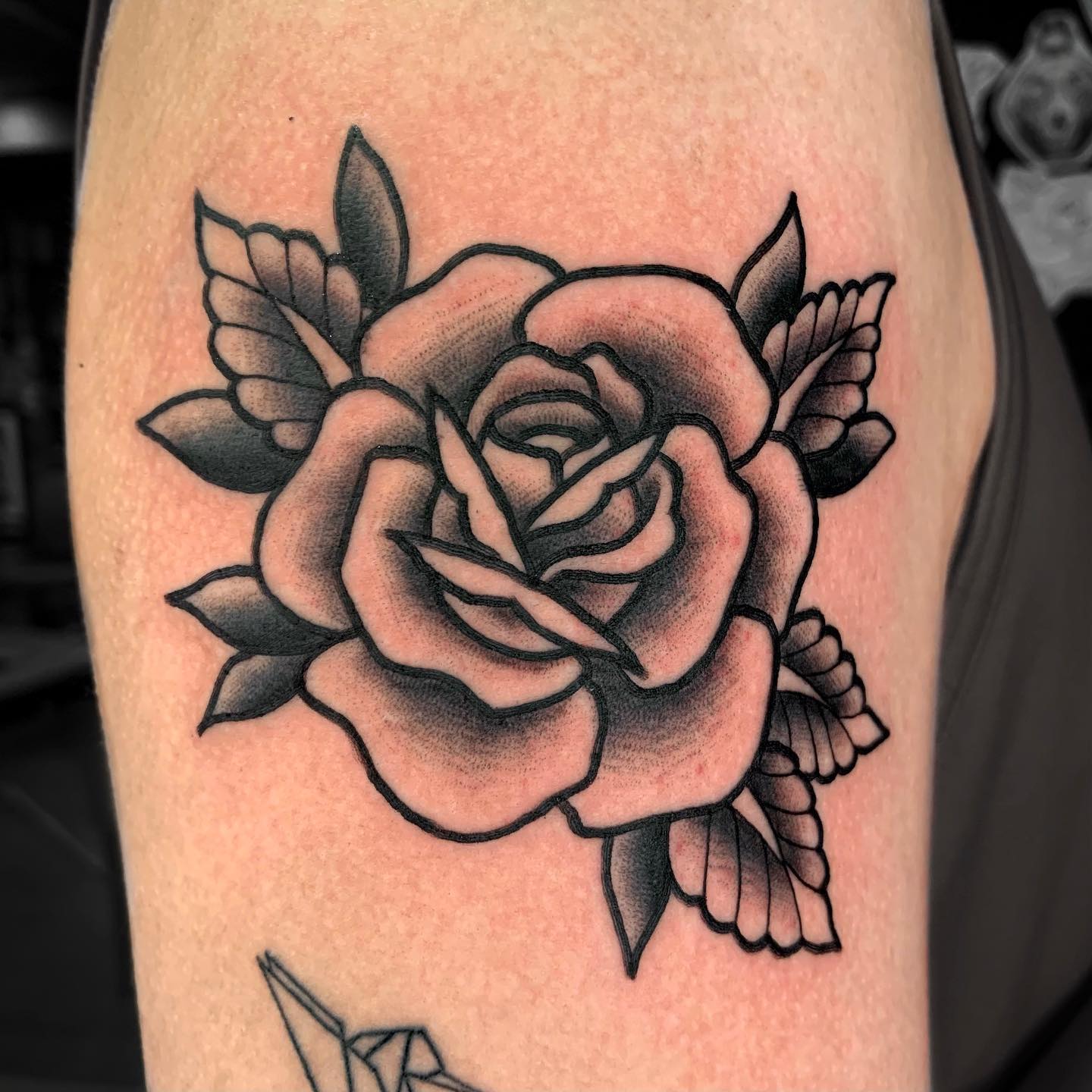
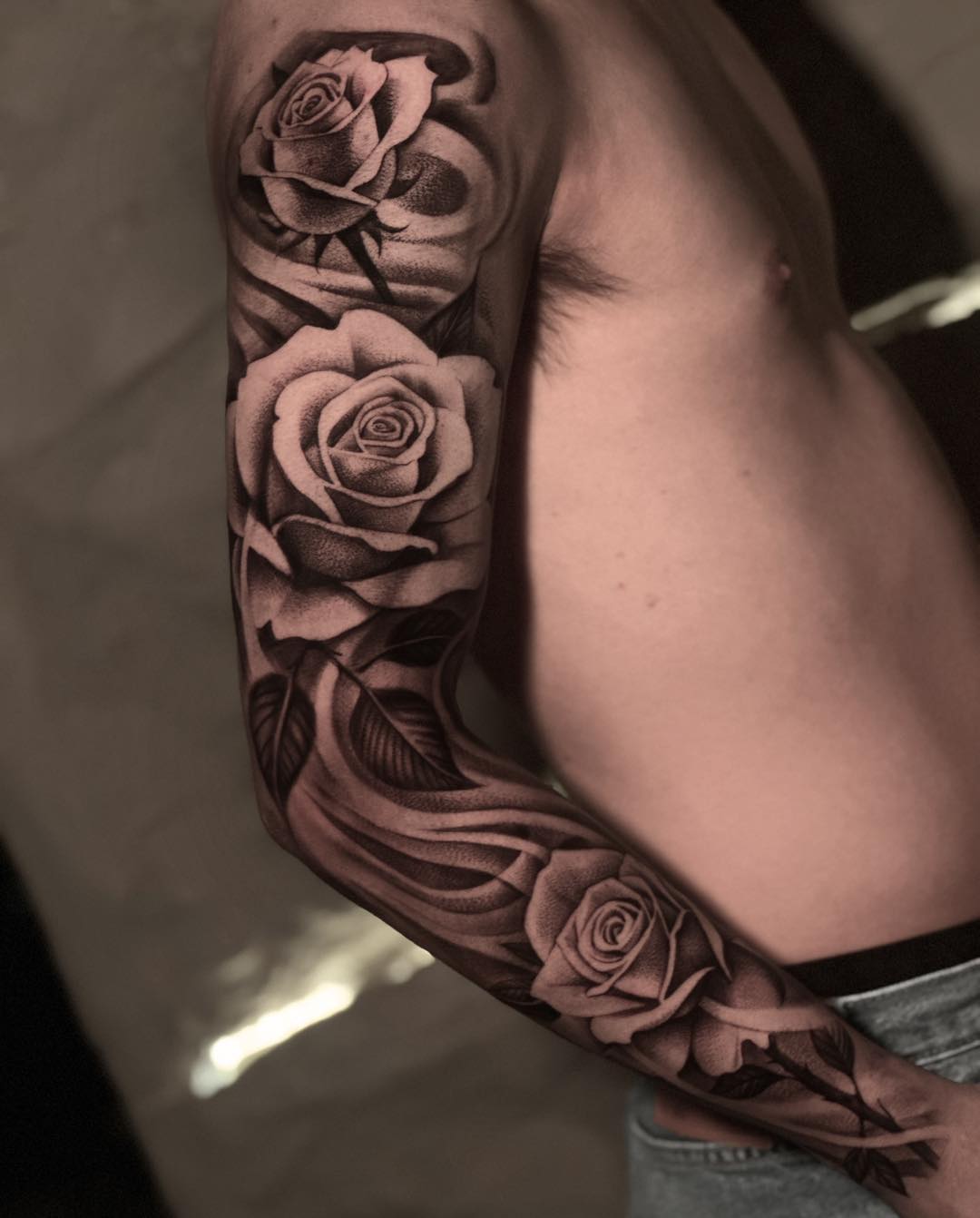
Roses at every stage — tight buds, half-open blooms, flowers past their peak — with stems and foliage filling the space between them.
This is the most ambitious floral subject on the back and the one that most rewards an artist who understands petal structure. Roses are unforgiving: a petal shaded flat reads as a cabbage.
It works in black and grey and in full colour. In my experience black and grey holds its depth slightly better over a decade, but a well-packed colour garden is hard to beat in the first few years.
2. Upper Back Wildflower Arrangement
A loose gathering of poppies, daisies, cornflowers and meadow grasses across the upper back and shoulders.
The point is that it should not look designed. Stems crossing at odd angles and a few flowers turned away from the viewer are what sell the effect.
Fine line and illustrative styles suit this best. Every artist I have asked about wildflower pieces says the same thing: leave more empty skin than feels comfortable.
3. Single Peony Shoulder Blade
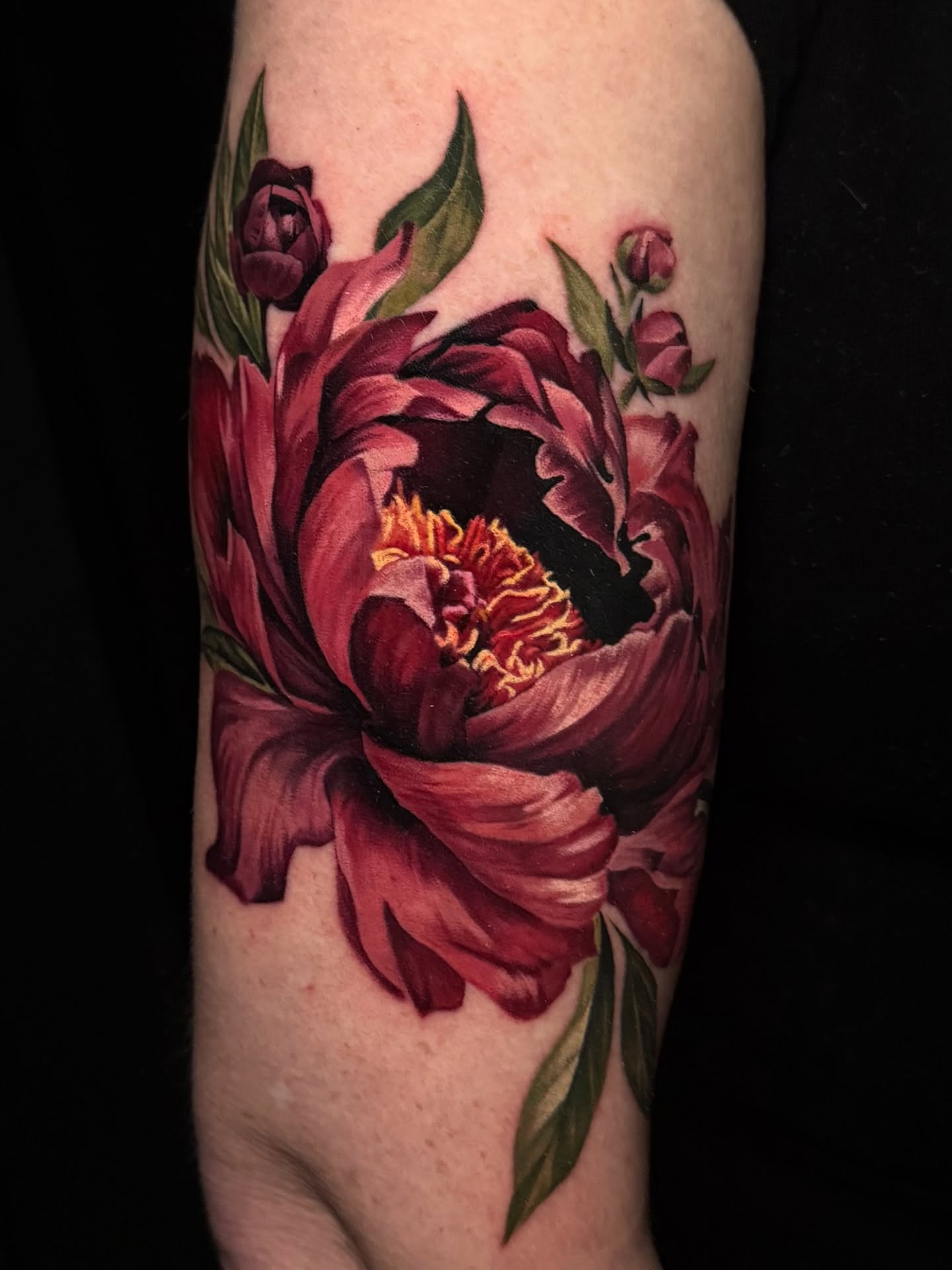
One large peony on a single shoulder blade, rendered in full detail rather than shrunk down.
The peony is the most generous flower in tattooing. Its layered petals build natural depth, so the shading does most of the work and the linework can stay relatively quiet.
If you want a single-session floral piece that still looks substantial, this is my usual recommendation. There are more options in our guide to peony tattoo ideas for women.
4. Botanical Spine with Side Fill
Stems and small blooms tracking the spine, with flowers and leaves reaching outward to one or both sides.
The vertical line gives the piece a structural spine — literally — and the side fill breaks the symmetry so it does not read as wallpaper.
Be honest with yourself about the sitting. The spine is one of the sharper lines on the body for most people; our spine tattoo ideas for women covers the placement in more depth.
5. Japanese Chrysanthemum Back Piece
A chrysanthemum, or a cluster of them, rendered in the formal vocabulary of Japanese tattooing.
The kiku is one of the central floral motifs of irezumi, carrying associations with longevity and the imperial family.
This is a style with rules — background flow, petal direction, how the piece frames the body — and it is worth seeking out an artist who works within that tradition rather than borrowing its surface.
6. Fine Line Botanical Illustration
Several plant specimens drawn the way a botanical plate would draw them: accurate leaf shape, visible venation, correct petal counts.
The appeal here is intellectual rather than decorative. It suits people who want a specific plant, not a generic flower.
One caution I give every time: very fine botanical linework can soften as it ages, particularly on the back where skin is thick. Ask to see healed photographs at three years or more before committing.
7. Climbing Roses
Canes rising from the lower back toward the shoulders, blooms opening at different heights along the way.
The climbing format turns the back’s height into movement. The eye travels upward instead of settling in the middle.
It is also one of the easiest layouts to build in stages, since each new section continues the climb rather than needing to balance what is already there.
8. Magnolia Back Piece
Magnolia blooms on bare branches spreading across the upper back.
Magnolia petals are large and clean, which makes the subject bold without becoming busy. In black and grey the soft petal surface gives an artist an unusually wide tonal range to work with.
The branches matter as much as the flowers — they are what gives the composition its architecture.
9. Watercolour Floral Wash
Blooms and leaves dissolving outward into washes of colour, edges deliberately unresolved.
The back gives this technique the room it needs; watercolour crammed into a small placement usually just looks blurry.
The honest caveat is longevity. Soft-edged pigment with little or no line structure tends to need touching up sooner than bold work — see our watercolor tattoo ideas for how artists handle that.
10. Cherry Blossom Branch
A branch crossing the shoulder blades, blossoms scattered along it, a few petals falling loose.
Sakura carries a specific meaning — beauty precisely because it does not last — which is part of why it remains one of the most requested floral subjects.
At back scale you get both mass and delicacy in one design. Our full guide to the cherry blossom tattoo goes deeper into the symbolism.
11. Neo-Traditional Floral Bouquet
A dimensional bouquet occupying the centre of the back, built on bold outlines and rich, saturated colour.
Neo-traditional is the style I most often suggest to people who want colour and are worried about how it will age. The heavy linework is structural — it holds the shape even as pigment softens.
The bouquet format also lets you combine several meaningful flowers without the design fragmenting.
12. Poppy Field
Poppies at varied heights and angles across the back, some facing the viewer, some turned away.
The poppy’s simple silhouette — a few broad petals around a dark centre — stays legible at any size, which makes it a reliable choice for large work.
Red and black is the classic treatment. Black and grey poppies are quieter and, to my eye, age particularly gracefully.
13. Lotus Back Piece
A large lotus, or a group of them, filling the upper or full back.
The lotus is one of the most loaded symbols in tattooing: emergence, clarity, growth out of difficulty. It is requested constantly, which is exactly why the execution has to be individual.
At back scale the petal layering finally has room to be rendered properly. See more directions in our lotus flower tattoo designs guide.
Photo: @stygiantattoo95
14. Dahlia Statement Piece
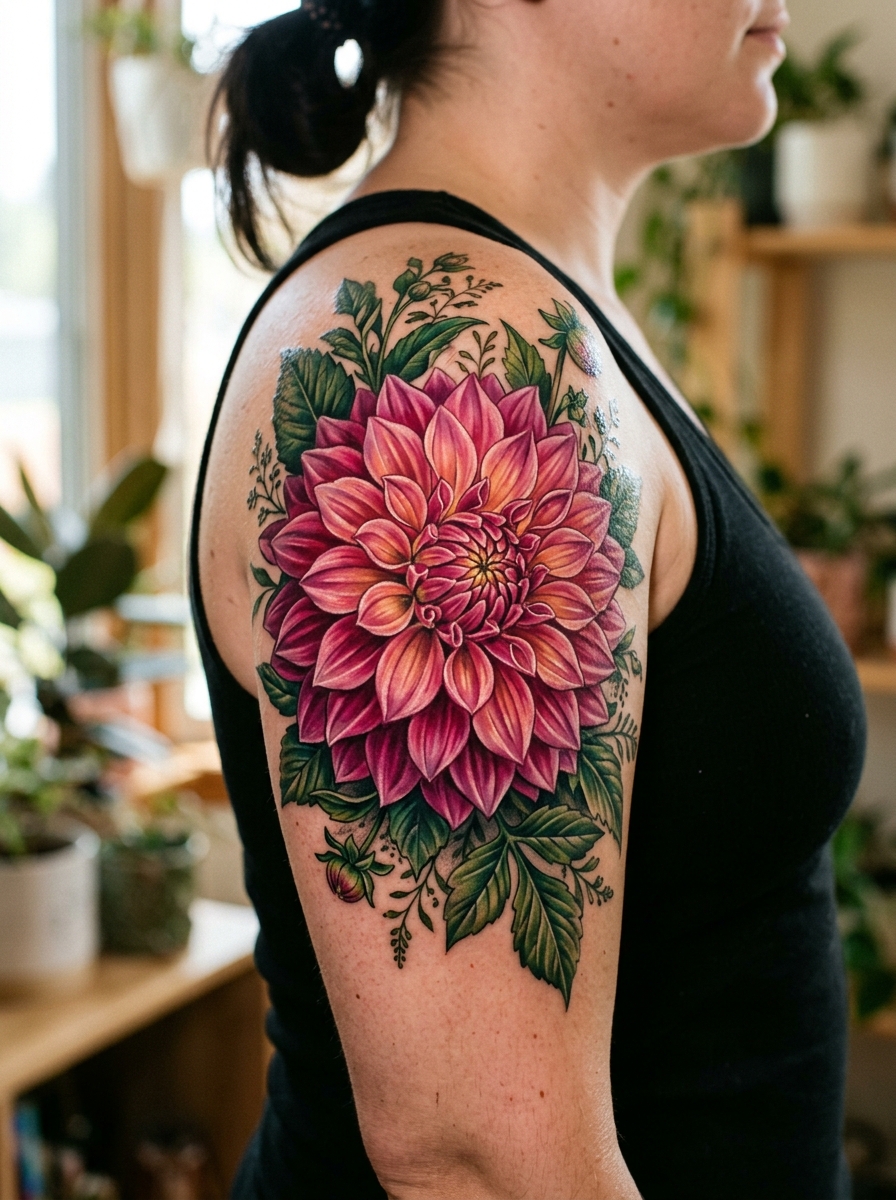
One or several dahlias anchoring the composition.
The dahlia is the most geometric flower in common tattoo use — dozens of pointed, tightly ordered petals radiating from a centre.
A single large dahlia can carry a back piece on its own. Several together produce a density that few other flowers can match, though it is demanding work and takes longer than clients usually expect.
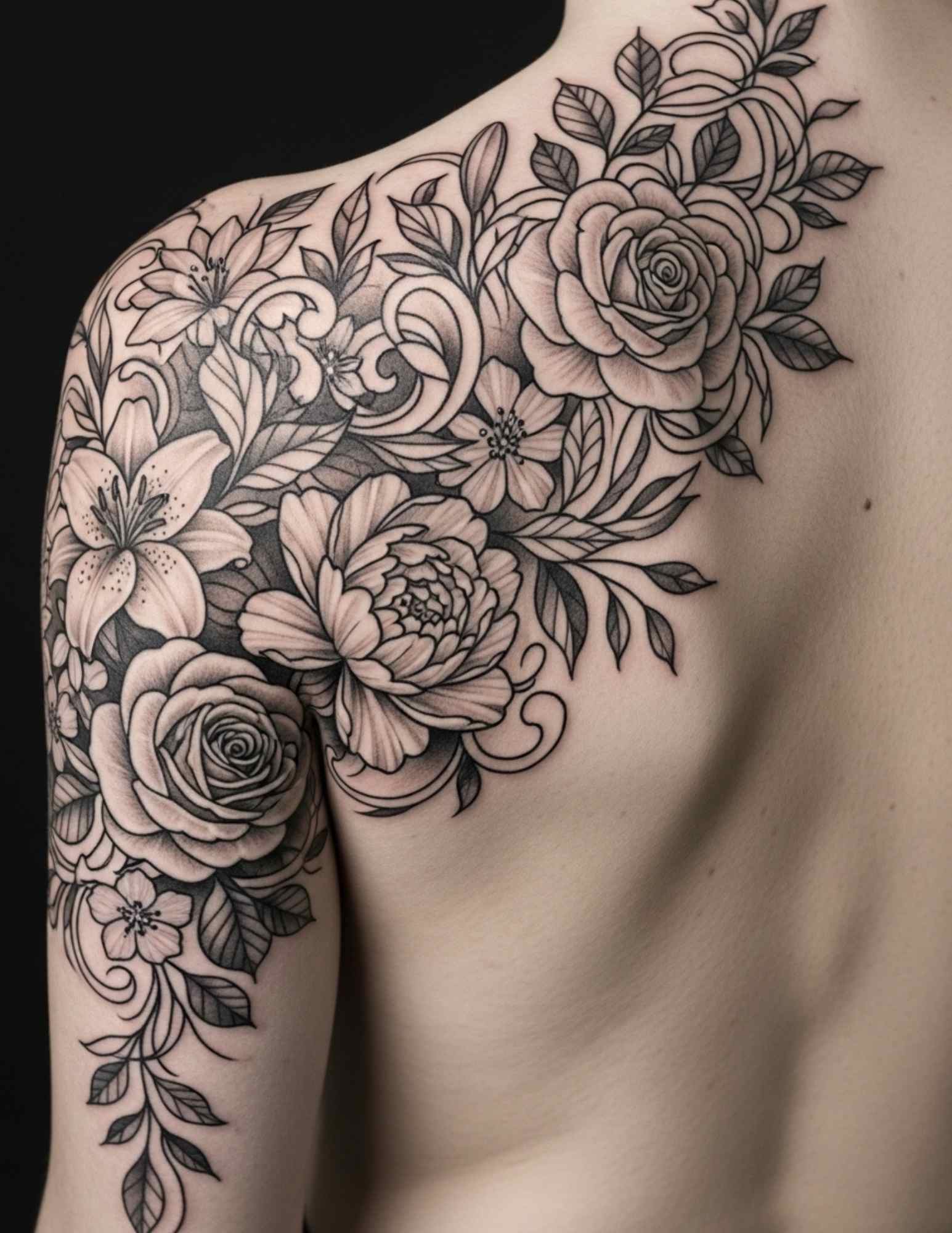
15. Floral Shoulder Cap to Back
Floral work covering the deltoid and upper arm that continues over the shoulder onto the upper back.
This is the layout that connects a sleeve to a back piece, and it is one of the best ways to make separate tattoos read as one plan.
It needs to be designed across the shoulder seam from the start. Retrofitting a connection between two finished pieces is possible but rarely as clean.
16. Pressed Flower Collection
Flowers rendered as though pressed flat between book pages: slightly compressed forms, muted colour, a specimen quality.
It reads as memory rather than living growth, which suits commemorative pieces well.
Small handwritten labels beneath each specimen are a common addition. When they carry real dates or names, they are the detail people tell me they are gladdest they included.
17. Tropical Floral
Hibiscus, plumeria, birds of paradise and monstera foliage in full colour across the back.
Tropical blooms are large-petalled and high-contrast, which means they hold up well at scale and carry some of the boldest colour in floral tattooing.
Colour this saturated does ask more of you afterwards — consistent sun protection is the difference between vivid at ten years and faded at four.
18. Art Nouveau Floral
Flowing whiplash lines, flowers woven into decorative framing, ornament and botany treated as one thing.
Art Nouveau is a natural fit for tattooing because it was designed around organic line from the beginning.
The frame elements do real work here: they give a large piece structure without needing a heavy background.
19. Lower Back Floral Arrangement
A composition sitting in the lumbar area, centred or deliberately off-centre.
Horizontal, outward-spreading designs suit this placement because they follow the natural curve of the waist.
The lower back went out of fashion for a while and has come back on its own terms. Treated as a serious botanical placement rather than an afterthought, it is one of the most flattering areas on the body.
20. Full Back Garden Scene
Not an arrangement but a place: multiple species at different scales, foreground and background, sometimes an arch, wall or path giving the scene structure.
Depth is what separates this from a bouquet. Distant plants are drawn softer and smaller so the eye reads space rather than pattern.
This is the most immersive floral concept available on the body, and the most demanding. Expect a long consultation, a drawing process measured in weeks, and a build across many sessions.
If the Back Is Not the Right Canvas
Not everyone wants to commit their whole back, and several placements give you floral work at a smaller scale without losing the composition.
Chest and Sternum
Symmetrical floral work reads beautifully across the collarbones and sternum, and it is visible to the wearer, which the back never is. Our floral chest tattoo ideas for women covers the layouts that work there.
Shoulder Blade Only
A single shoulder blade is the back’s low-commitment entry point, and it leaves the rest of the canvas open. Start here if you suspect you may want more later — shoulder blade tattoo ideas has more directions.
Ribs and Side Body
Climbing botanicals suit the ribs because the vertical space mirrors how plants actually grow. It is a sharper sitting than the back for most people, so plan shorter sessions.
Half Back, Deliberately
One side of the back, ending at the spine with an intentional edge rather than a fade. Done confidently this looks like a choice, not an unfinished project.
Planning, Sitting and Healing a Floral Back Piece
Book a consultation before you book the tattoo. For anything larger than a single bloom, I would treat a stencil-day-only approach as a warning sign — large back compositions need drawing time.
Eat properly beforehand and plan for the sitting to be longer than quoted. Back sessions of four to six hours are routine for larger pieces, and the last hour is where most people struggle.
Healing a back piece has one complication the arm does not: you cannot reach it. Arrange help for aftercare before the first session, and expect sleeping position to be the real inconvenience for the first week. Our tattoo aftercare guide covers the routine in detail.
Anything that looks like infection — spreading redness, heat, pus, fever — is a doctor’s question, not a forum question. Allergic reactions to specific pigments are uncommon but real, and red pigments are the ones most often implicated; the FDA’s tattoo fact sheet is a reasonable starting point. Nothing here is medical advice — ask your artist first, and a clinician if anything is genuinely wrong.
Still Not Sure? Mistakes Worth Avoiding
Filling every centimetre. Negative space is what makes botanical work look like plants rather than decoration, and it is the first thing people sacrifice when they are excited.
Choosing the flower before the composition. Which bloom you love matters less than how the arrangement sits on your specific back.
Underestimating the spine. If your design crosses it, ask about splitting that section into its own shorter sitting — our guide to the most painful tattoo spots explains why that line is different.
Judging an artist on fresh photographs only. Fresh floral work almost always looks good. Healed floral work, at two years and beyond, is what tells you whether the shading technique holds.
Committing to a full back on day one. Nearly every experienced artist I have spoken to would rather start you with one section and expand than rush a plan for the whole canvas.
Frequently Asked Questions
How long does a full floral back tattoo take?
Most full back floral pieces are built across several sessions rather than one marathon sitting. Sessions of four to six hours are common, and larger compositions often run to five or more of them spread over months, with healing time between. Density is the main variable: a garden scene with layered background takes far longer than a branch with open space around it. Your artist can give you a realistic session count once the drawing exists.
Do floral back tattoos hurt more than other placements?
Most of the back is considered one of the more tolerable large placements, because there is muscle and tissue over much of it. The exceptions are consistent: the spine, the shoulder blades where bone sits close to the surface, and the lower ribs at the sides. Pain is individual, so treat any chart as a rough guide rather than a prediction. Shorter sessions on the sharper areas make a real difference.
Can I start small and extend it into a full back piece later?
Yes, and it is one of the better ways to approach a back. A single shoulder blade bloom or a spine botanical can both be designed as the anchor of something larger. Tell your artist at the first session that expansion is possible, because it changes how they place and orient the first piece. Staying with the same artist makes the eventual join far easier.
Will fine line floral work last on the back?
Fine line work does hold on the back, but it usually softens more over time than bold linework does. Line weight, placement, sun exposure and your skin all affect it, and touch-ups are a normal part of maintaining delicate work rather than a sign something went wrong. If long-term crispness matters most to you, a slightly heavier line is the safer choice. Ask any artist to show you their healed fine line photographs, not just fresh ones.
Black and grey or colour for a floral back piece?
Both work, and the choice is mostly about how you want the piece to age. Black and grey tends to hold its contrast and depth for longer with less maintenance. Colour gives you saturation and mood that black and grey cannot reach, but generally asks for more sun protection and more willingness to touch up. In my experience people who pick black and grey for a first large piece rarely regret it.
Quick Summary
- The back is the only placement that gives floral work true compositional scale — stems, depth and negative space all at once.
- Decide the format first: single bloom, spine botanical, upper back arrangement or full back piece. Everything else follows from that.
- Roses, peonies, magnolias and poppies are the most forgiving subjects at large scale; dahlias and garden scenes are the most demanding.
- Japanese chrysanthemum and Art Nouveau work carry their own design rules — choose an artist who works inside those traditions.
- Bold linework ages more predictably than fine line or watercolour; plan for touch-ups if you choose the softer styles.
- The spine and shoulder blades are the sharper areas of an otherwise tolerable placement — split them into shorter sessions.
- Arrange aftercare help before the first session, because you cannot reach your own back.
- Judge every artist on healed floral photographs, not fresh ones.