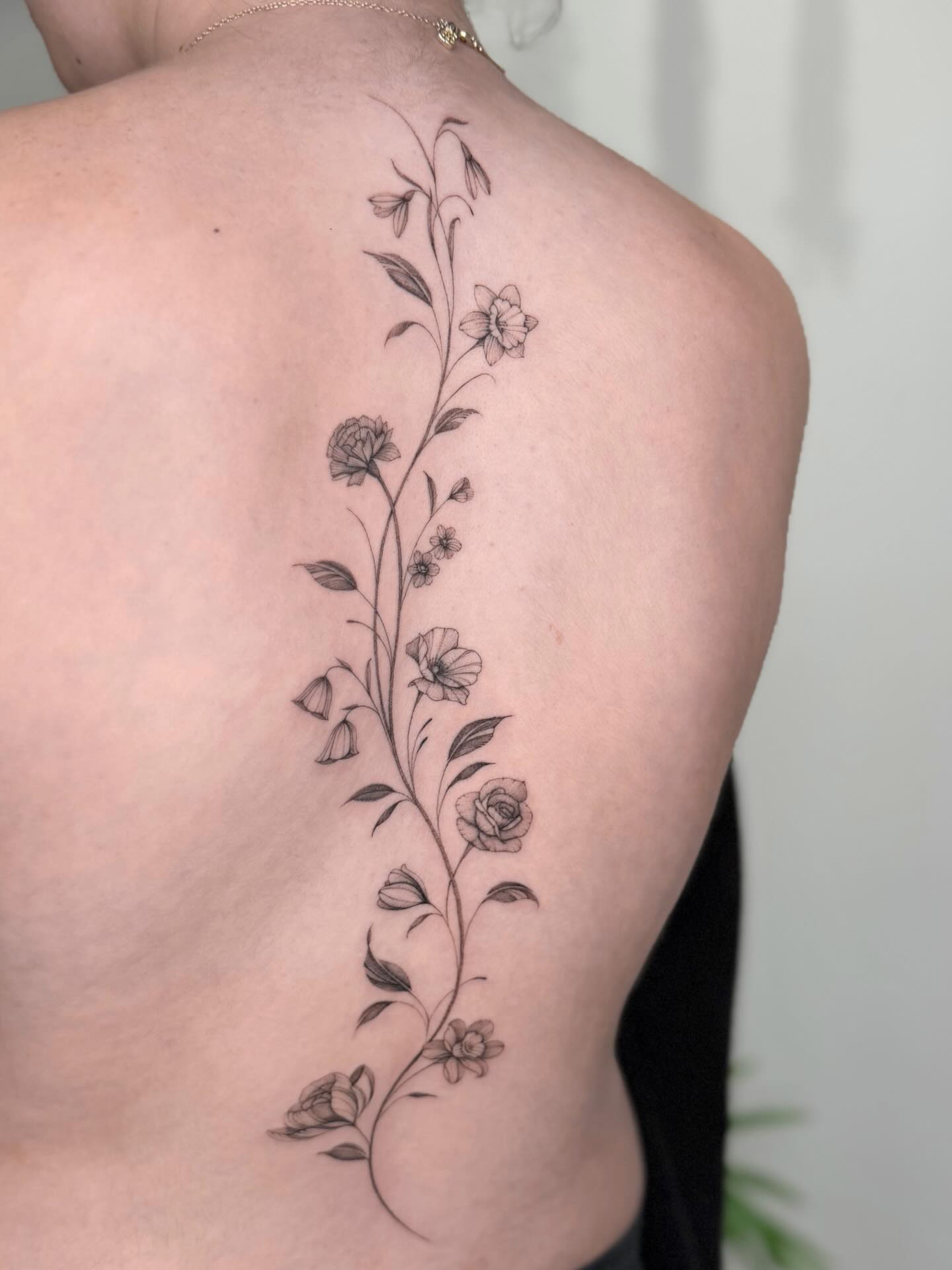
The spine is the most architectural placement on the body. It runs from the base of the neck to the tailbone along the body’s central axis, and a spine tattoo does not sit on you the way an arm or thigh piece does — it follows your structure, which is exactly why it looks so deliberate.
I have spent a lot of time looking at spine work, and the thing that separates a good one from a mediocre one is almost never the subject matter. It is whether the design actually respects the vertical line underneath it.
Designs that drift even slightly off centre are obvious in a way they would never be on a shoulder. That is the trade you make for the drama of this placement.
The 20 ideas below are grouped by style rather than listed at random, so you can find the family your taste sits in first. If you already know you want something delicate, start with fine line spine tattoos and work outward from there.
Which Spine Tattoo Style Is Right for You?
Before picking a subject, it helps to know roughly how long you will be lying face down and how the style ages. These are the ranges I have seen quoted most often by artists, not fixed prices.
| Style | Typical sitting | Best for | How it ages |
|---|---|---|---|
| Fine line botanical | 2–4 hours | First spine piece, subtle look | Softens; may need a touch-up in a few years |
| Script or lettering | 1–3 hours | Meaning-led designs | Very well if letters are spaced generously |
| Ornamental / mandala | 4–8 hours, often split | Symmetry lovers | Strongly, thanks to bolder linework |
| Snake or dragon | Multiple sessions | Full-length statement | Well when shading is committed, not faint |
| Minimal dots and lines | Under 2 hours | Lowest commitment | Dots can blur slightly over time |
What Makes the Spine Different From Every Other Placement
The spine is narrow and long. That single fact rules out most designs that were drawn for a broad canvas.
A rose that looks generous on a shoulder blade becomes a blob on the spine, because the width available is roughly the span of your own vertebrae plus a little either side.
Skin over the spine is also thin, with bone directly beneath it for most of the run. In my experience this is the single biggest thing people underestimate, and it matters more at the top of the neck and at the very base than in the middle of the back.
The placement moves, too. When you bend forward the design stretches; when you stand straight it compresses. Artists who work this area regularly will often mark you up while you are standing rather than lying down, which is a small detail that tells you a lot about whether they have done it before. If you are still weighing the placement itself, this look at whether spine tattoos are risky is worth reading first.
The upside is that no other placement gives you a natural frame that is already perfectly symmetrical. You do not have to invent a centre line — you were born with one.
20 Spine Tattoo Ideas for Women
Grouped into seven families, so you can narrow down quickly rather than scrolling through twenty unrelated pictures.
1. Botanical Trails, Ferns and Long Stems
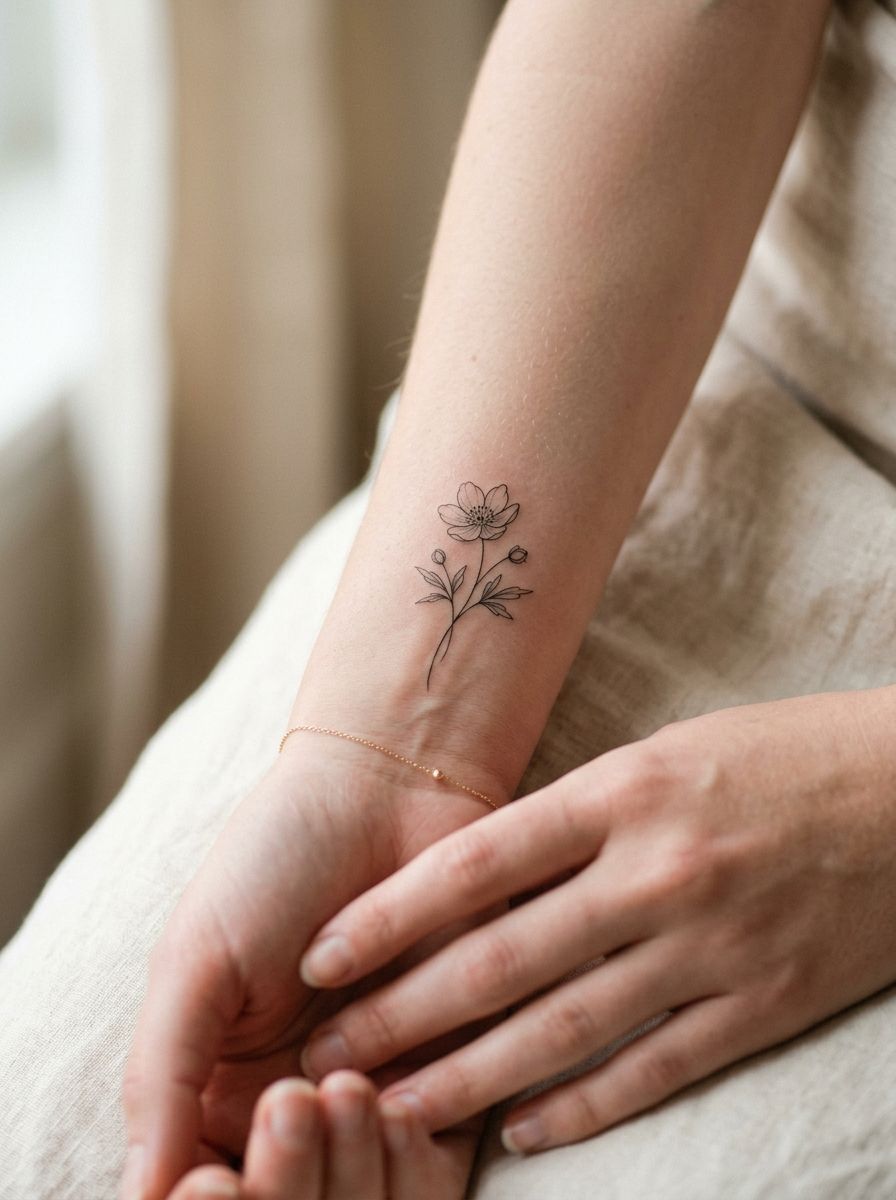
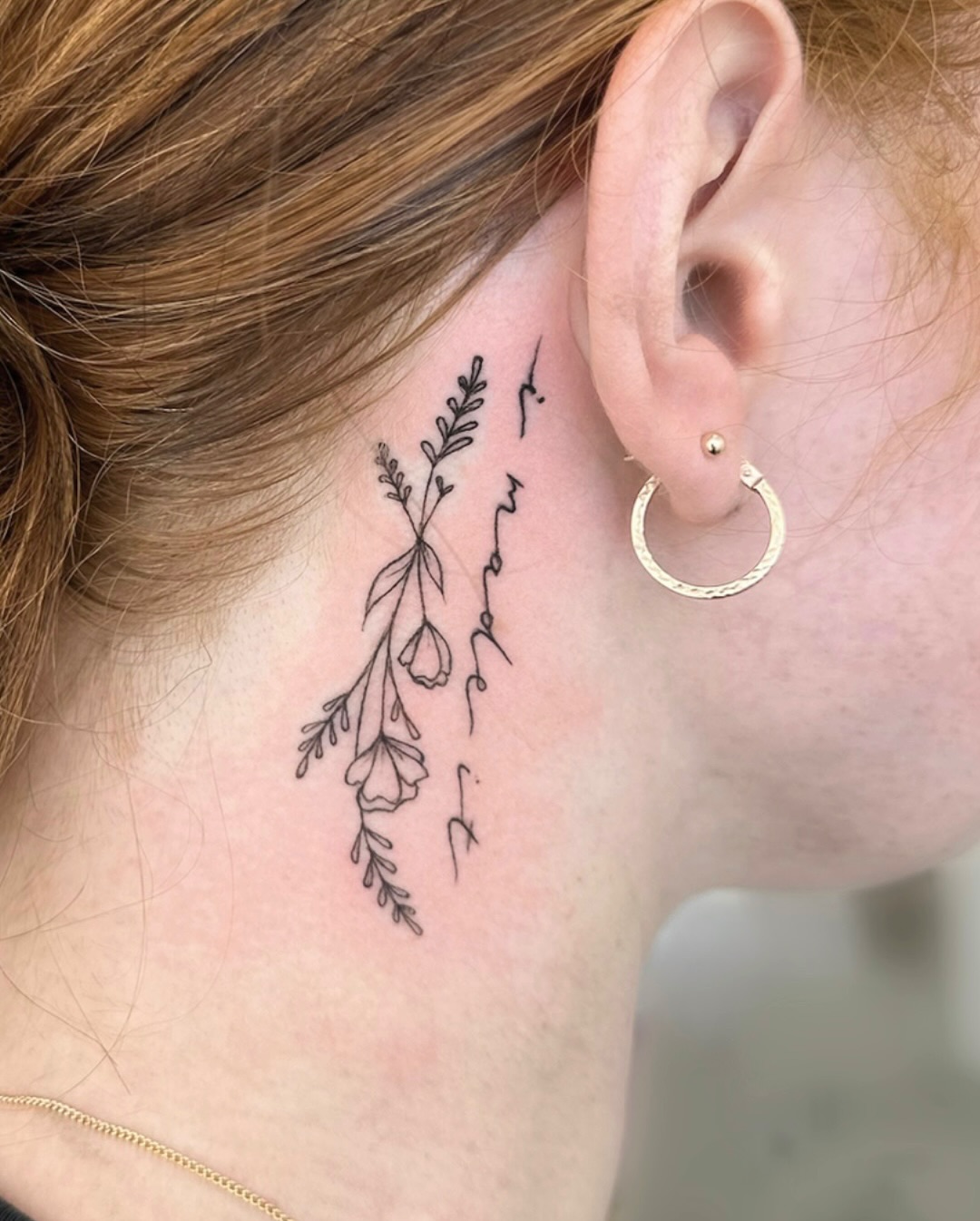
This is where most people start, and for good reason. A stem with leaves branching off it is already vertical, so it needs almost no reinterpretation to fit the spine.
The three ideas in this family are the botanical trail, the single long fern, and the sunflower-with-leaves column. A botanical trail scatters small elements down the line; a fern fills it continuously; a sunflower column anchors a heavier bloom at the top or bottom with foliage running away from it.
Every artist I have asked about long botanicals says the same thing: the negative space between elements is what makes it work. Crowd the stems and it turns into a dark stripe within a decade.
Ferns in particular reward patience, because each frond is a separate small commitment of line weight. If you like the family but want more colour and body, the same botanical language simply needs more room than the spine can give it.
2. Moon Phases and Celestial Columns
Moon phases are the most naturally column-shaped subject in tattooing. Eight circles stacked down the back is a design that essentially draws itself.
The trick is spacing, not the moons themselves. When I have seen these go wrong, it is because the gaps were even in the artist’s stencil but not even on a curved back.
The wider celestial version adds a sun at one end, small stars filling the gaps, and sometimes a thin connecting line running the full length. It reads as one continuous object rather than eight separate ones, which suits people who want the piece to feel finished rather than expandable.
Both work in pure blackwork or with light grey wash inside the moon faces. Sun and moon spine designs go into the symbolism side of this family in more detail.
3. Script, Names and Roman Numerals
Vertical lettering is the highest-risk family on this list, and also the one people regret least when it is done properly.
Two of the twenty ideas live here: a script quote running the full spine, and a column of Roman numerals marking dates. A third variation stacks names — often children’s — one under another.
Legibility is entirely a function of letter height and spacing, not font choice. Thin decorative scripts set tightly are the ones that turn into a smudge, because thin lines spread as they settle into the skin.
Ask to see healed photos of the artist’s lettering, not fresh ones. Fresh script always looks crisp. If a short phrase is all you want, small meaningful tattoo ideas covers wording that stays strong at a small size.
4. Snakes, Dragons and Anything That Coils
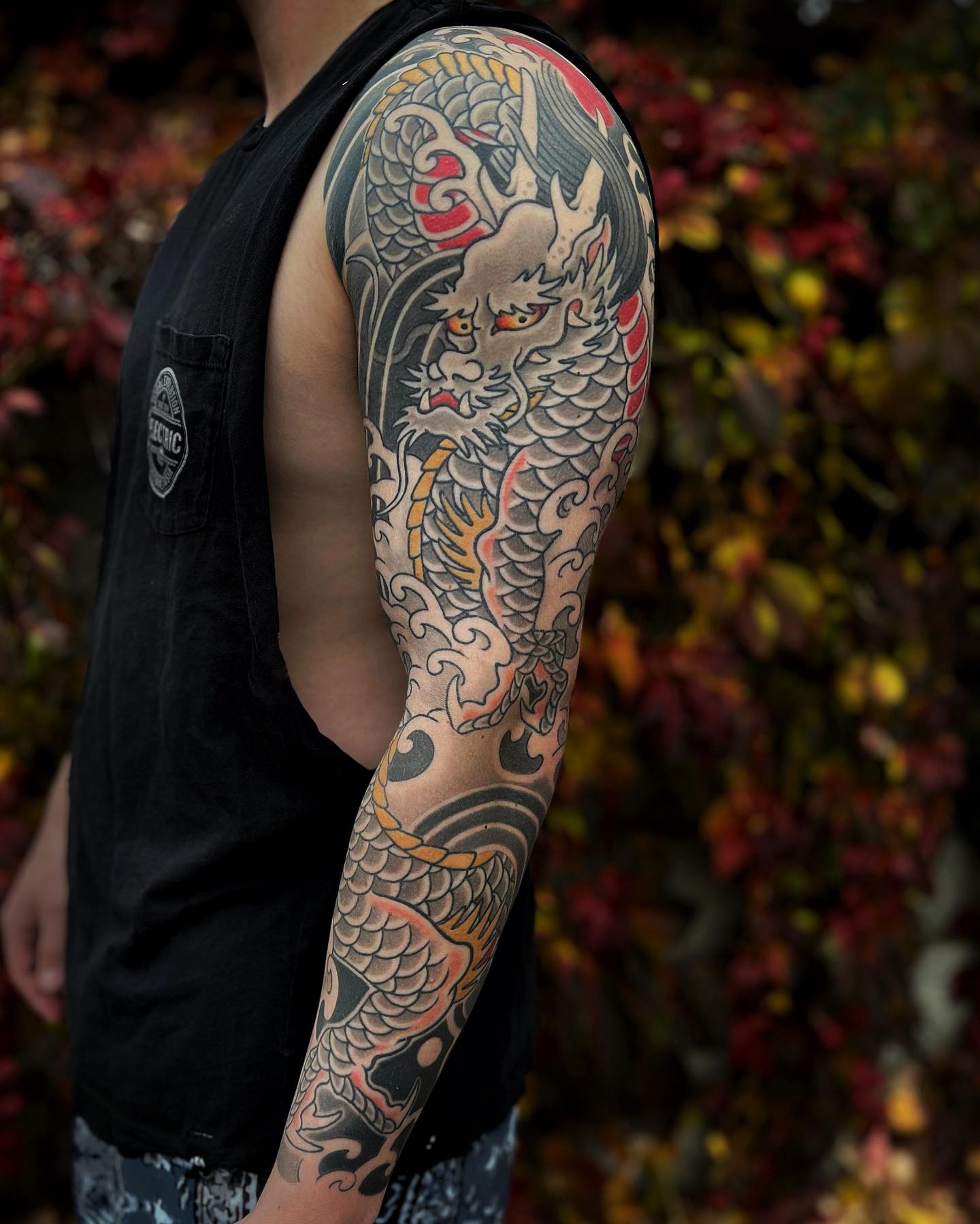
Serpentine subjects are the most flattering use of this placement I have seen, because a snake or dragon body already wants to travel and curve.
The idea list here covers three: a snake winding the full spine, a dragon running nose-down from the neck, and an abstract line flow that borrows the same movement without a creature attached.
What separates a great one is whether the body crosses the centre line or hugs it. Crossing gives depth and makes the tattoo appear to wrap the body; hugging keeps it flat and graphic. Neither is wrong, but they are very different tattoos and worth deciding before the stencil goes on.
These are usually multi-session pieces. Chinese dragon spine designs show how much length the subject can actually use.
5. Mandalas, Geometry and Ornamental Stacks
Ornamental work suits the spine better than almost any other placement, because symmetry has an obvious axis to be symmetrical about.
Four of the twenty ideas sit here: a mandala stack, a geometric column, a lotus trail, and an ornamental piece that reads like a drop of jewellery laid along the back.
Repeating geometry is unforgiving. Any drift of a millimetre repeats down the whole design and the eye picks it up instantly, so this family is worth paying a specialist for rather than a generalist.
Bolder linework in this style also tends to hold up better over decades than fine line does, which is a genuine argument for it if you want the piece to still read clearly in twenty years.
6. Minimal Dots, Dashes and Single Lines
The quietest family, and the one I most often suggest to people who are nervous about a first spine tattoo.
Three ideas belong here: minimal dots and lines running the length of the back, a single unbroken vertical line, and constellation maps where the dots are placed to match a real star pattern.
Small does not mean quick to heal, but it does mean a short sitting — often under two hours, which makes a difference on a placement this bony.
Be aware that single dots can soften and spread slightly over time, more than lines do. That is normal settling rather than bad work. This family also leaves the whole back open for later, which is worth thinking about if you might expand into a larger back piece down the line.
7. Feathers, Arrows and Botanical Specimens
The last family covers the single-object designs: a feather running the length of the spine, an arrow pointing up or down, and spaced botanical specimens that sit like pressed flowers in a book.
Feathers reward soft grey shading. In pure black outline they can look flat, because a feather is mostly texture rather than shape.
Arrows are the most direction-dependent tattoo on this list. Pointing up reads as ascent, pointing down reads as grounding, and people feel strongly about which one they meant once it is permanent.
Spaced specimens are the most forgiving option of all, because you can add another sprig a year later without redesigning anything. Vine variations belong to the same idea; vine spine tattoos covers those specifically.
Variations If the Full Spine Feels Like Too Much
You do not have to commit to neck-to-tailbone. Four partial approaches come up constantly.
Upper spine only
From the base of the neck to roughly the shoulder blades. Easier to cover with a collar, and noticeably less painful than the lower run in most accounts I have heard.
Lower spine only
Sits above the waistband and pairs naturally with hip or rib work later. It is also the section most often hidden by everyday clothing.
Offset rather than centred
Running the design a few centimetres to one side of the spine. It softens the formality of the placement and is far more forgiving of stencil drift.
Spine plus a wrap
A central design with elements that spill onto the ribs. This is the most expensive route and the most striking. A black rose spine tattoo is a common starting point for this kind of build-out.
Pain, Preparation and Aftercare
Spine tattoos are widely described as one of the more demanding placements, and that matches everything artists have told me. Thin skin over bone, plus vibration transmitted through the vertebrae, is a combination people usually feel.
Eat properly beforehand and book a session length you can realistically sit through rather than trying to do the whole thing in one go. Splitting a long piece into two sittings is normal and not a failure of endurance. Practical pain management tips are worth reading the week before.
Healing on the back has one specific problem: you cannot see it and you cannot easily reach it. Arrange for someone to help you with aftercare, or use a mirror deliberately rather than guessing.
Follow your artist’s aftercare instructions rather than internet consensus — they know what ink and technique they used. General guidance from the American Academy of Dermatology and the US Food and Drug Administration is a reasonable baseline.
If you see spreading redness, heat, swelling that increases after the first few days, pus or a fever, see a doctor rather than waiting it out. Those are signs of infection, not normal healing, and this article is not medical advice. Never attempt to tattoo or remove a tattoo yourself.
Common Mistakes, and What to Do If You Are Still Not Sure
The most common mistake is choosing a design drawn for a different shape and asking an artist to stretch it. Vertical subjects exist in abundance; borrowing a horizontal one rarely ends well.
The second is going too fine, too dense. Thin lines set close together are the classic cause of a spine piece that looks muddy at ten years.
The third is booking a full-length piece as a first tattoo. It is not impossible, but starting smaller on the same placement tells you a great deal about how you handle it.
If you are undecided, look sideways at related placements before committing. Shoulder blade designs use much of the same visual language with a shorter sitting and a gentler experience.
Frequently Asked Questions
How painful is a spine tattoo compared to other placements?
Most people describe it as toward the higher end of the scale, and that matches what artists consistently report. The skin over the spine is thin with bone directly underneath, and the vibration travels. The very top of the neck and the base near the tailbone are usually named as the sharpest sections. Pain is individual, though, and plenty of people find the middle of the back manageable.
How long does a spine tattoo take?
It depends almost entirely on style rather than length. A minimal dot-and-line design can be done in under two hours, while a full ornamental or dragon piece is normally split across multiple sessions. Fine line botanicals commonly land somewhere in the two-to-four hour range. Ask your artist for their own estimate, since technique varies a lot.
Will a spine tattoo stretch if my weight or posture changes?
The spine is more stable than the stomach or thighs, so moderate weight change usually has little visible effect. Pregnancy and larger changes can affect the lower back more than the upper. Designs with generous spacing tolerate change better than dense ones. No placement is completely immune.
Can I get an epidural if I have a spine tattoo?
This comes up constantly and the honest answer is that it is a decision for the anaesthetist at the time, not something anyone online can promise. Many people with spine tattoos have received epidurals without issue. Practice varies between hospitals and clinicians, particularly with freshly healed ink. Ask your own care provider well before you need an answer.
Should I get the whole spine done at once?
Usually not, unless you are experienced with long sittings. Splitting the work into two or three sessions is standard for anything full length, and most artists will suggest it themselves. It also gives you a chance to see how the first section heals before committing to the rest. There is no prize for doing it in one go.
Quick Summary
- The spine is narrow, long and perfectly symmetrical, so pick a subject that is already vertical.
- Botanical trails and ferns are the most popular entry point, and spacing matters more than the subject.
- Moon phases and celestial columns fit the placement almost without adaptation.
- Vertical script survives ageing when letters are tall and generously spaced, not when they are thin and tight.
- Snakes and dragons use the full length better than anything else, but expect multiple sessions.
- Ornamental and geometric work ages strongly thanks to bolder lines, and demands a specialist.
- Minimal dots and single lines are the lowest-commitment option and leave the back open for later.
- Expect a demanding sitting, arrange help with aftercare, and see a doctor for any sign of infection.