
The back is the largest flat canvas the human body offers. It is also the one you cannot see yourself without effort, which means a full back tattoo is, in a specific sense, a gift to others. Or a private declaration that you carry something significant regardless of whether anyone else ever sees it.
Either way, a full back piece is among the most ambitious commitments in tattooing. These 19 ideas are worthy of that commitment.
Before You Begin: What a Full Back Piece Requires
A full back tattoo typically requires multiple sessions, often spread across months or years. Budget accordingly, both in time and money. The healing between sessions matters as much as the sessions themselves. Choose an artist whose work specifically demonstrates they can handle a large-scale composition with consistent line quality, proportion, and shading across sessions that might be separated by months.
The back heals well and is relatively low-friction compared to limbs. But the spine and lower back are more sensitive than the shoulder blades and upper back. Pain tolerance varies by area and by session length.
19 Full Back Tattoo Ideas for Women
1. Flowering Tree in Full Bloom
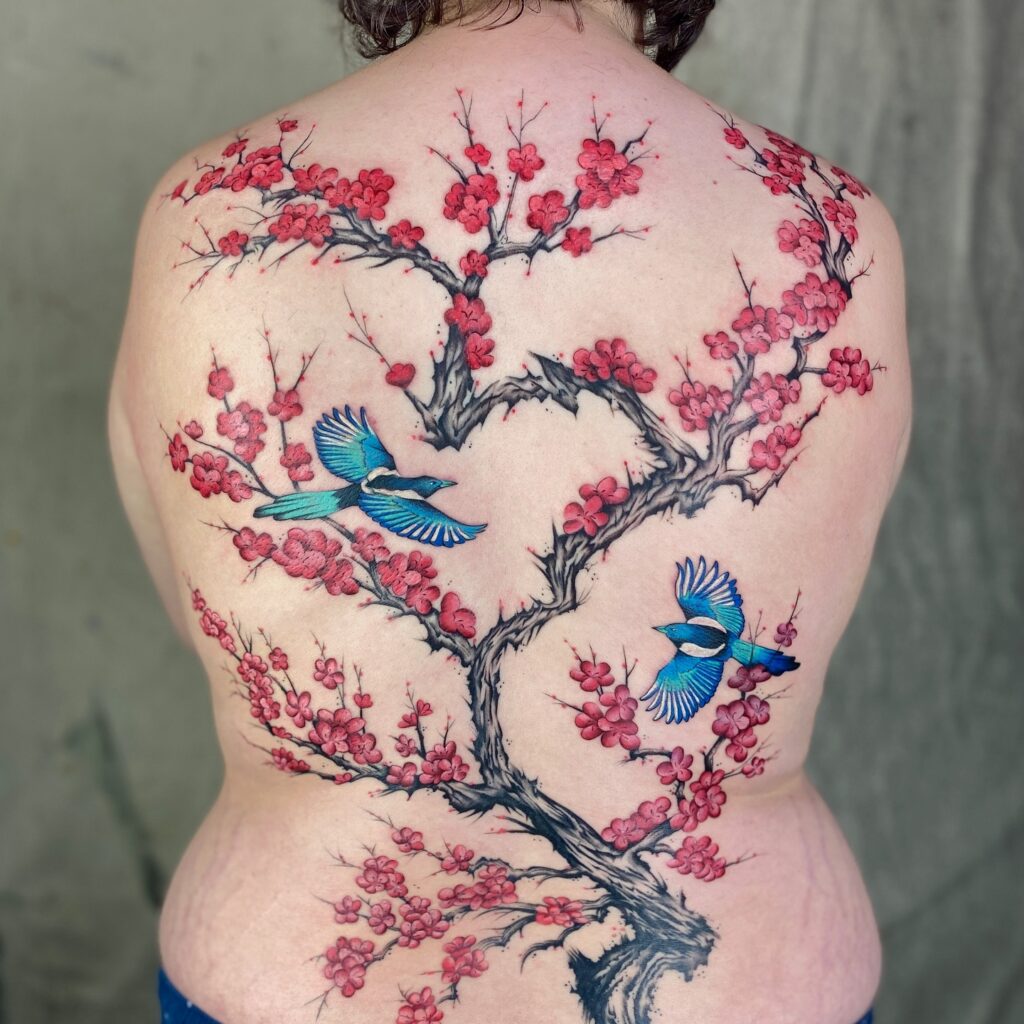
Photo: @patch_tattoo_therapy
A single tree with roots spreading into the lower back and branches reaching to the shoulders, covered in blossom. Cherry or wisteria are the most popular choices. The vertical axis of the tree works perfectly with the back’s proportions. In fine line or watercolour, the result is breathtaking.

2. Angel with Full Wings
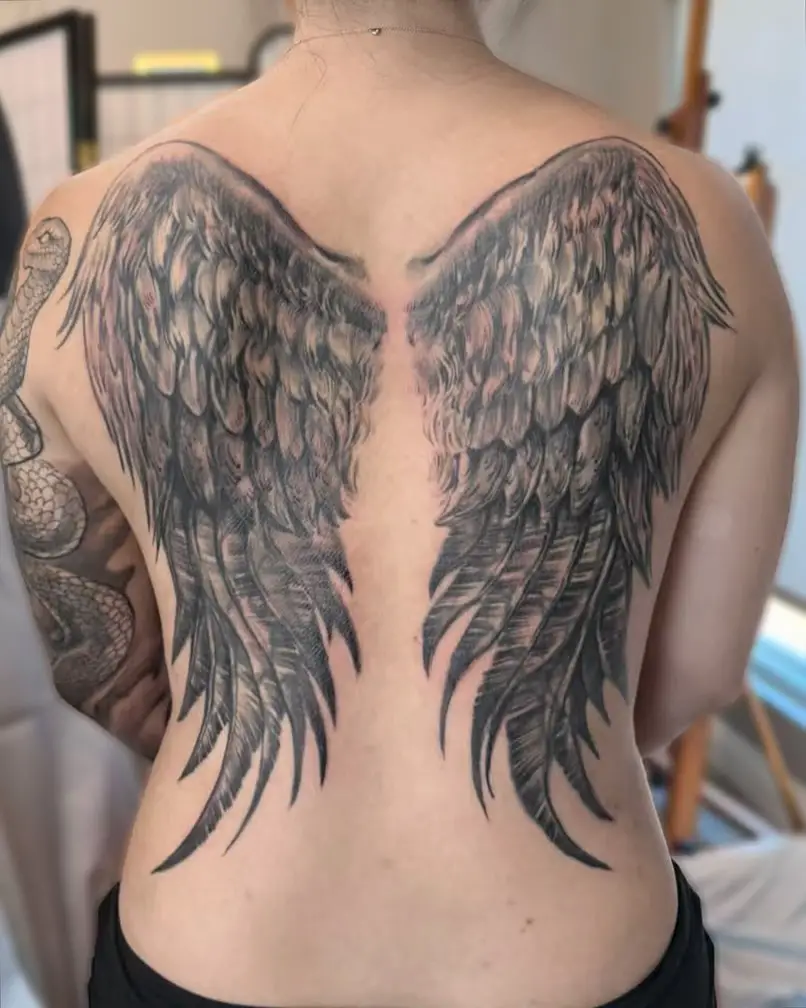
Photo: @shanghaitattoo916
A full-scale angel with wings spread from shoulder to shoulder. The wingspan can fill the upper back entirely while the figure extends down to the lower back. In black and grey realism or in a more illustrative style, the scale and symmetry of this piece on the back are extraordinary.
3. Japanese Full Back (Irezumi)
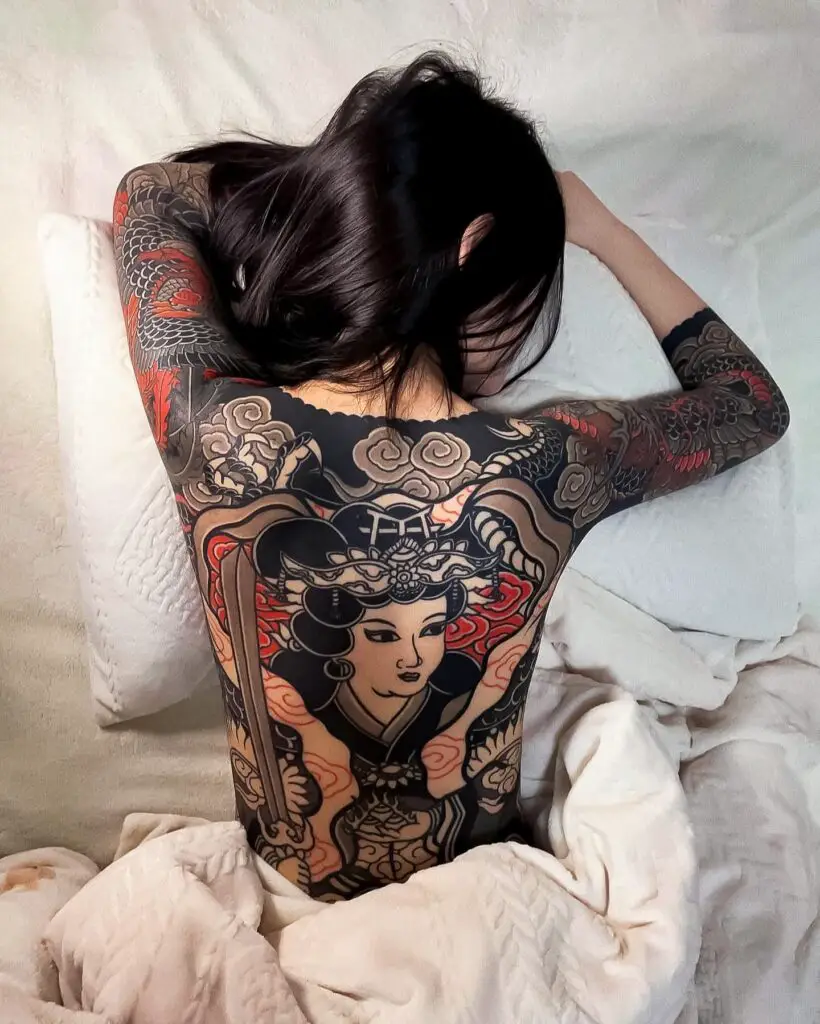
Photo: @japanese.ink
The traditional Japanese back piece, or Horimono, is considered the pinnacle of Japanese tattooing. A central figure, typically a goddess, dragon, or mythological creature, surrounded by waves, clouds, peonies, and wind bars. The formal compositional rules of irezumi are specifically designed for the back. This is a life’s work piece done by a specialist.
4. Mandala Centrepiece
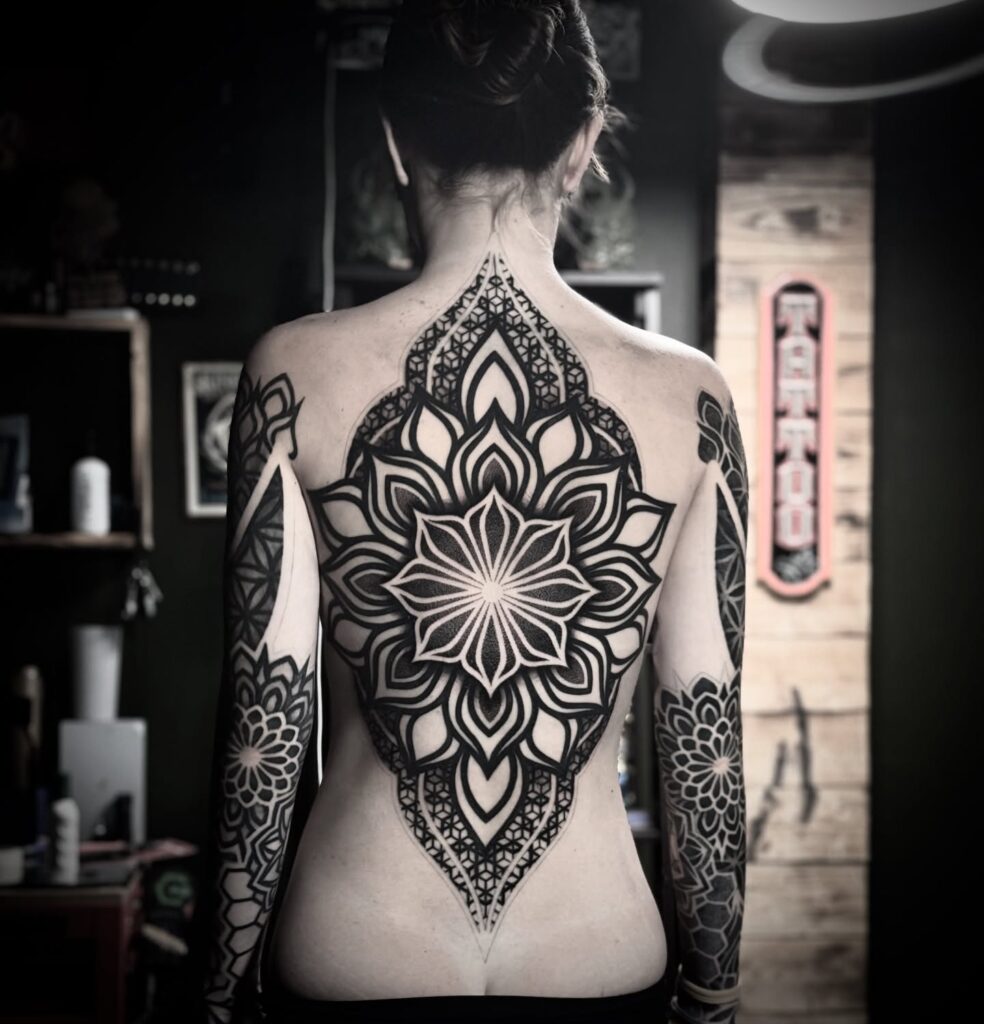
A large central mandala with secondary botanical or geometric elements radiating outward toward the edges of the back. The mandala’s circular symmetry creates a natural focal point. The surrounding elements frame it without competing. In fine line or dotwork, the precision required is extraordinary.
5. Forest and Sky
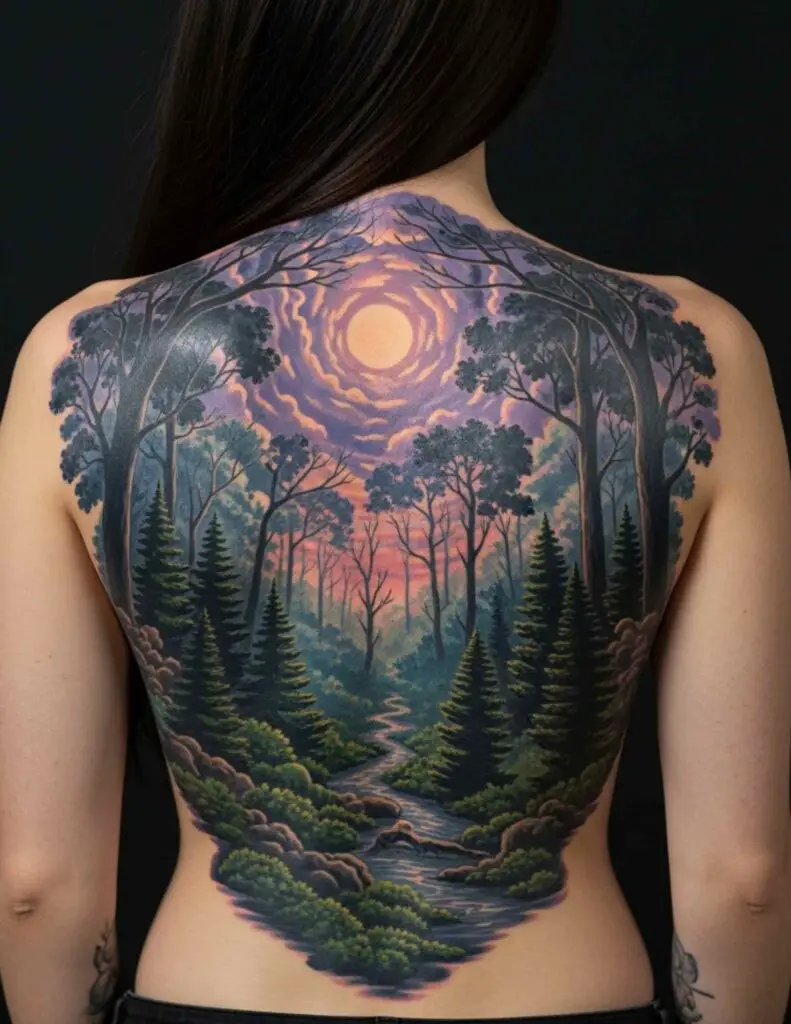
A dense forest at the lower back, the trees thinning as they approach the shoulders, giving way to sky with stars, a moon, or a galaxy above. The landscape travels up the back. The perspective is ground-level, looking up. In black and grey, the depth of the forest is rendered in shadow and fine detail.
6. Goddess or Divine Feminine Figure
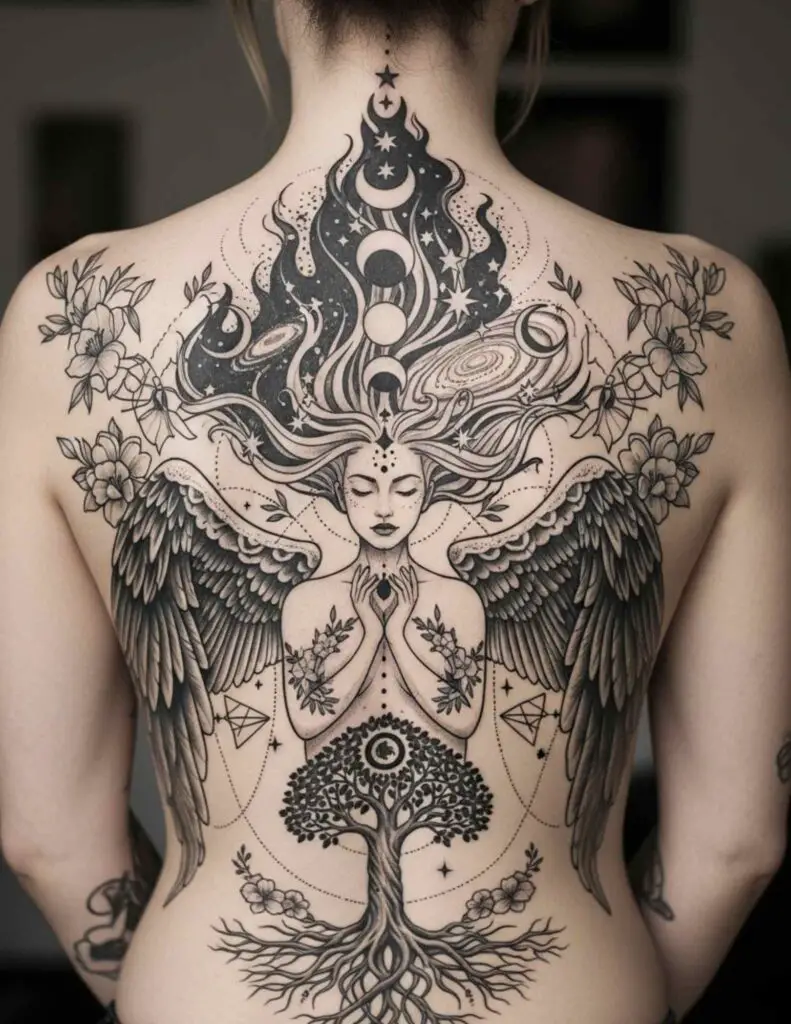
A central female figure, arms spread or raised, radiating energy. This could reference a specific goddess, a personal archetype, or an abstract figure of power. The back’s vertical space suits a standing or ascending figure perfectly. The design becomes a statement about female power and the body as sacred.
7. Botanical Garden
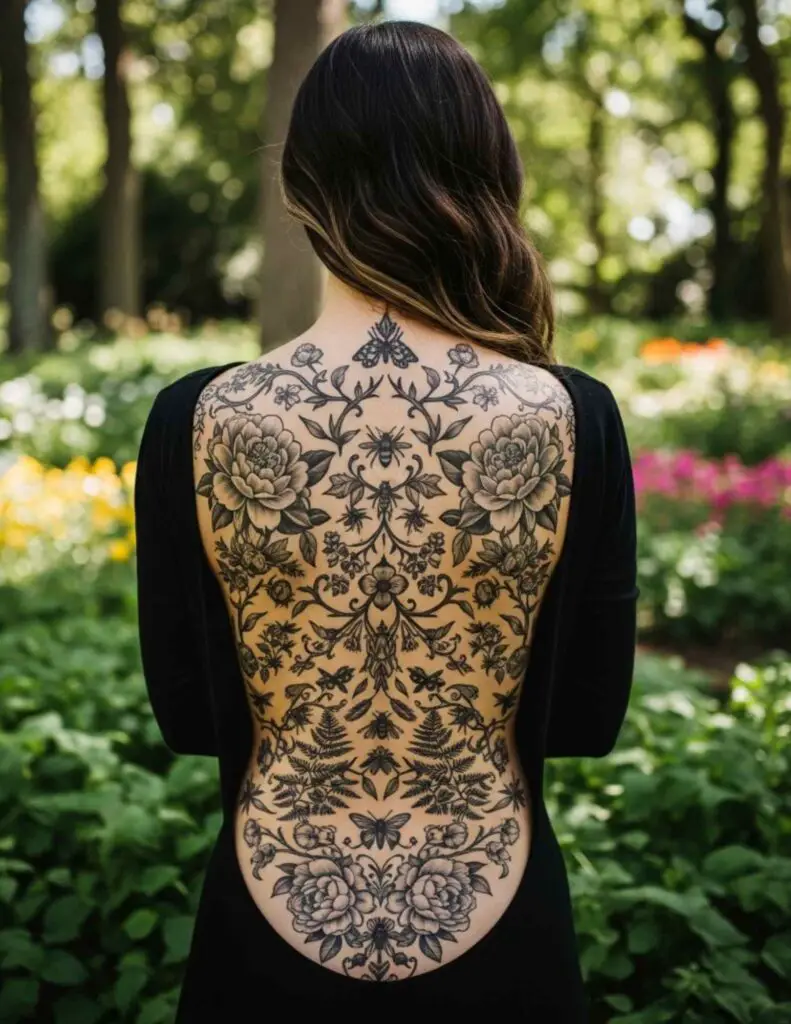
An abundant arrangement of botanicals covering the full back. Roses, peonies, dahlias, wildflowers, trailing vines, and leaves. Lush, abundant, and gloriously complex in colour realism or fine line. A botanical back piece celebrates the body as a garden.
8. Phoenix Rising
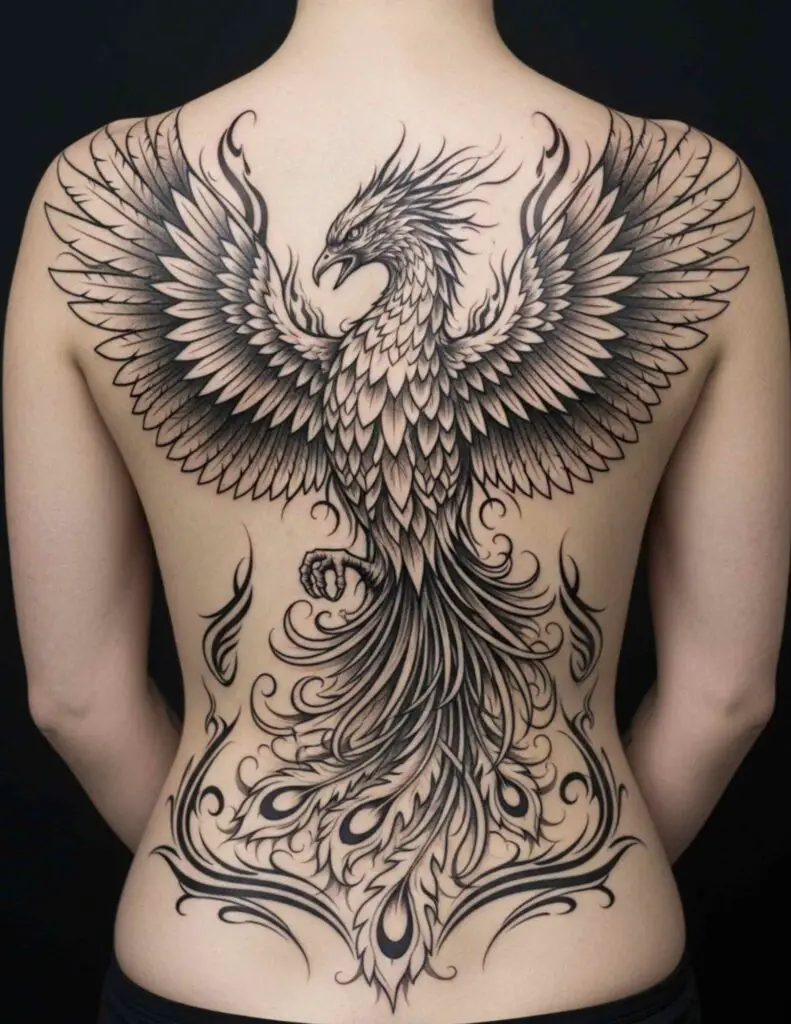
A phoenix with wings filling the upper back, body ascending the spine, tail feathers trailing into the lower back. The phoenix at this scale is magnificent. The fire and the bird can fill every inch of the canvas and the vertical energy of the rising bird works naturally with the back’s orientation.
9. Ocean Scene
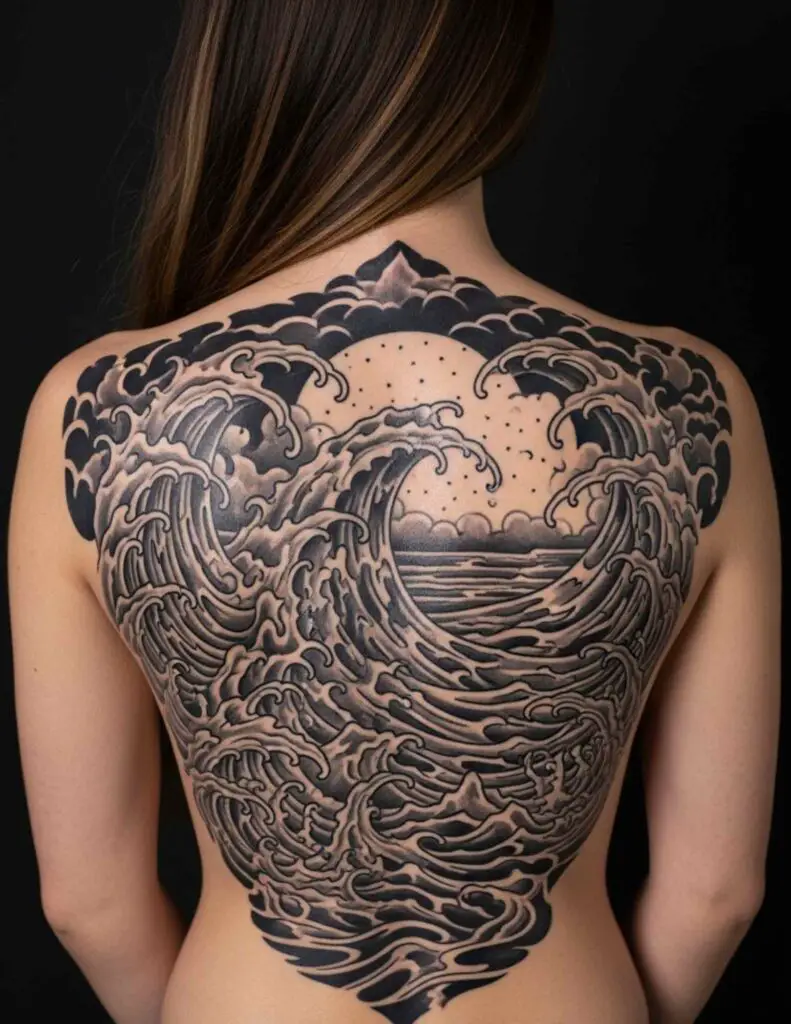
An ocean composition: waves breaking at the base of the back, open sea in the middle, horizon and sky above. Marine life visible beneath the surface. Light filtering through water. The back as a window onto an underwater world. Stunning in colour realism.
10. Dragon
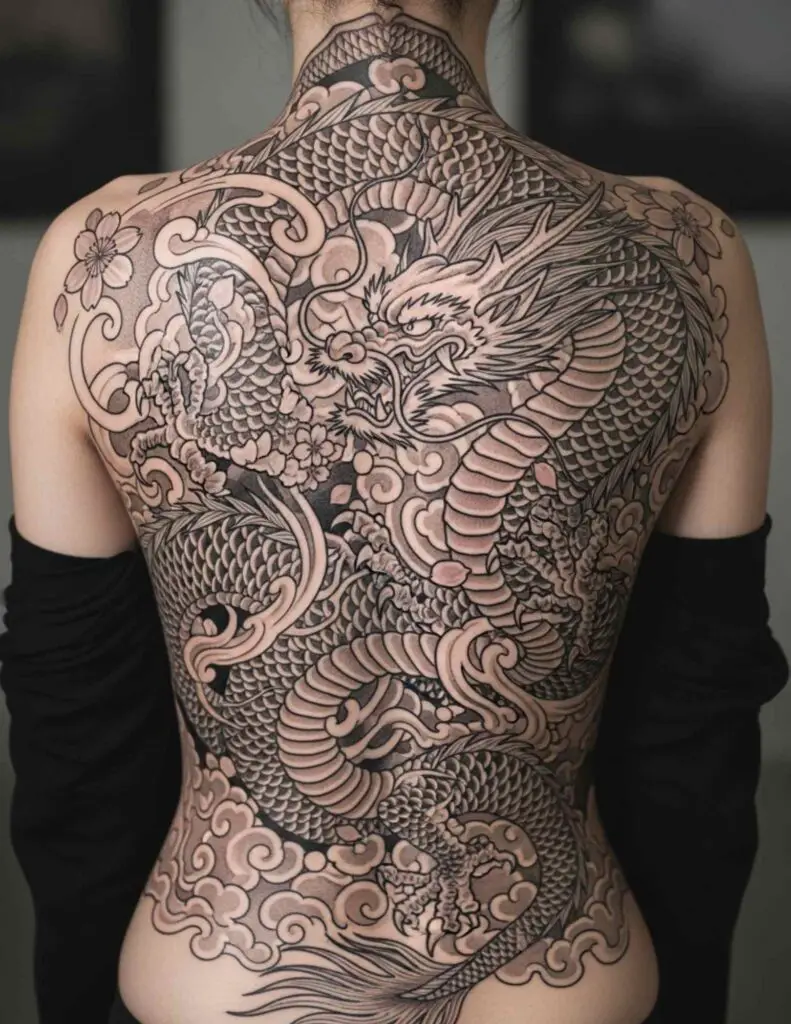
A full-scale dragon coiling up the back. Western or Eastern style: both work, but they produce fundamentally different pieces. A Western dragon in bold blackwork is aggressive and dramatic. A Japanese dragon in irezumi style is sinuous and formally composed. Both use the back’s scale the way the design deserves.
11. Geometric Sacred Geometry Panel
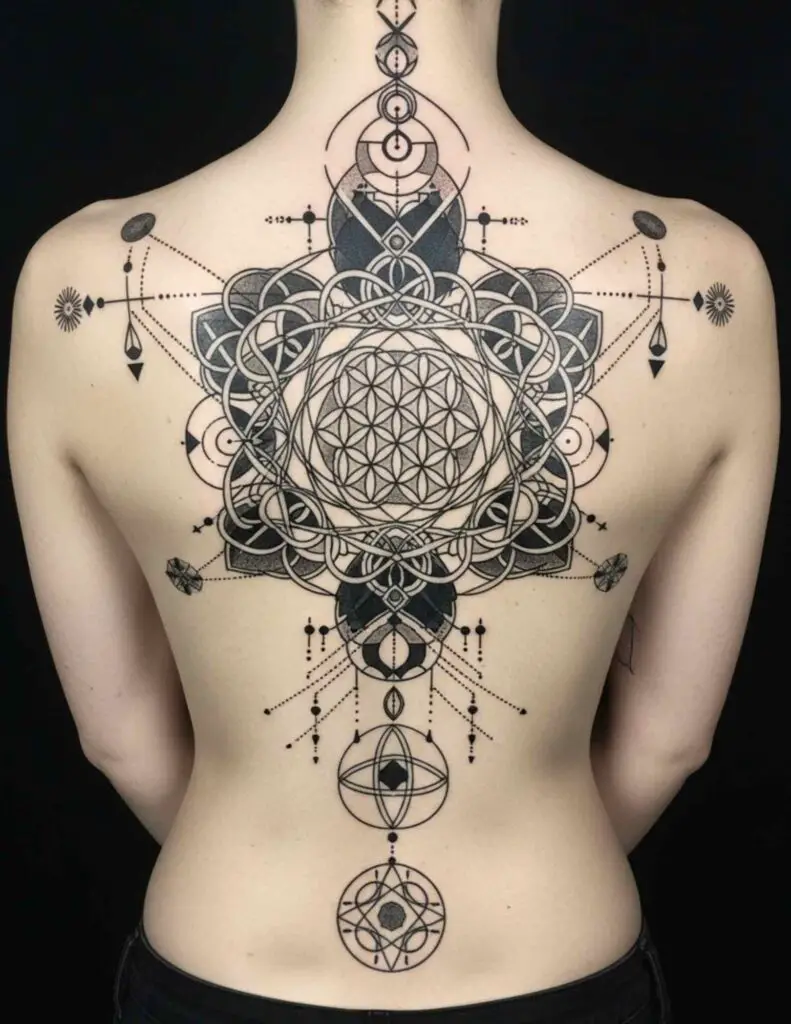
A large-scale sacred geometry composition covering the full back. The Flower of Life, Metatron’s Cube, and nested geometric forms creating a design of mathematical complexity. In fine line blackwork, a sacred geometry back piece is almost architectural in its precision.
12. Koi Fish and Lotus
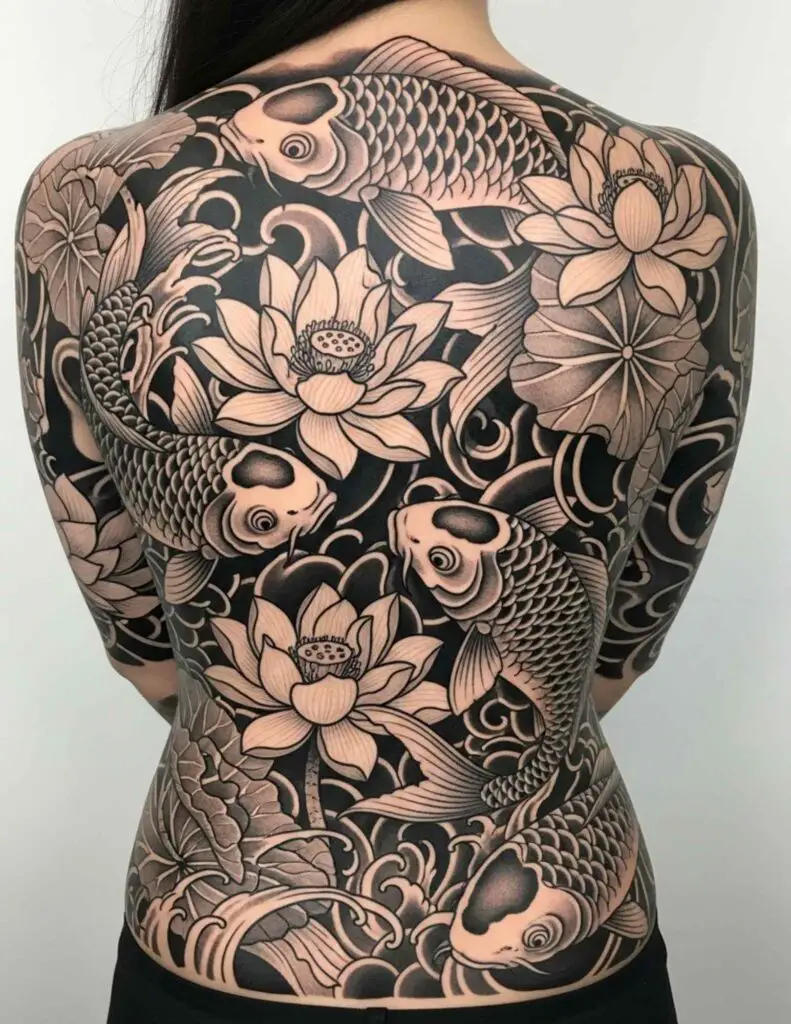
Two or more koi fish swimming among lotus flowers, waves, and botanical elements. The koi’s symbolism of perseverance and transformation, the lotus’s symbolism of growth through difficulty. In Japanese style or detailed colour realism, this is one of the most satisfying back piece compositions.
13. Map of a Meaningful Place
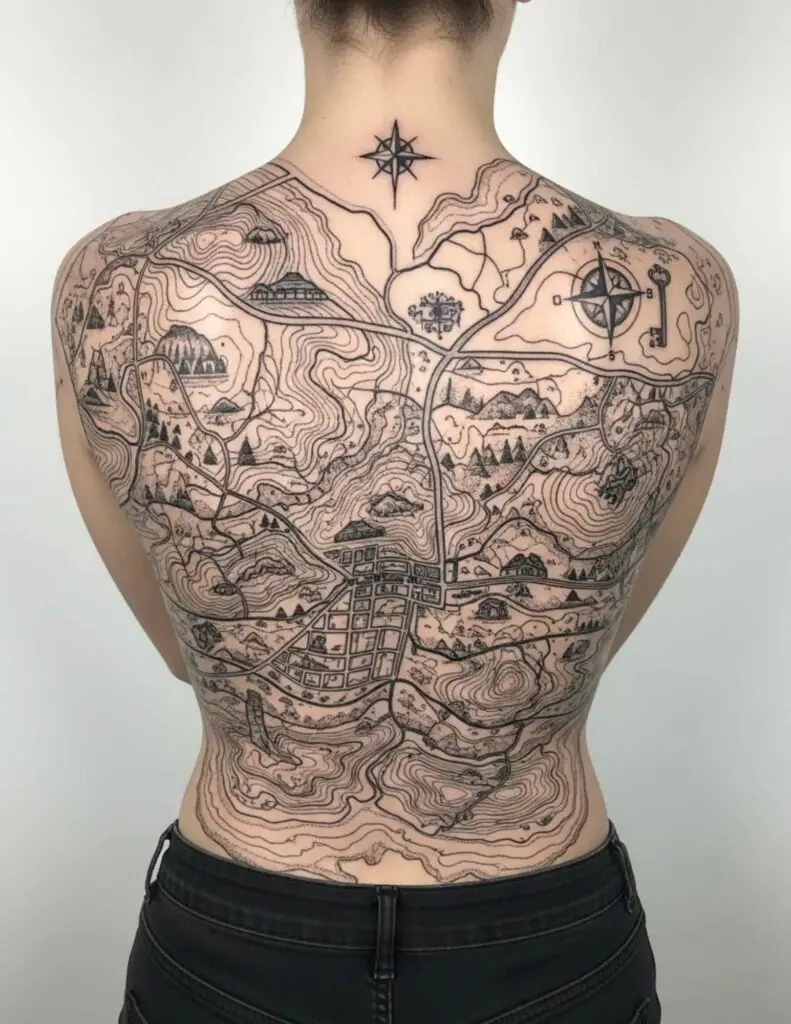
A detailed map of a city, country, or landscape that has shaped you. Hand-drawn in the style of historical cartography, with decorative elements from the tradition of old maps. The back as a territory of personal significance. Unusual, specific, and genuinely yours.
14. Whimsical Forest Scene
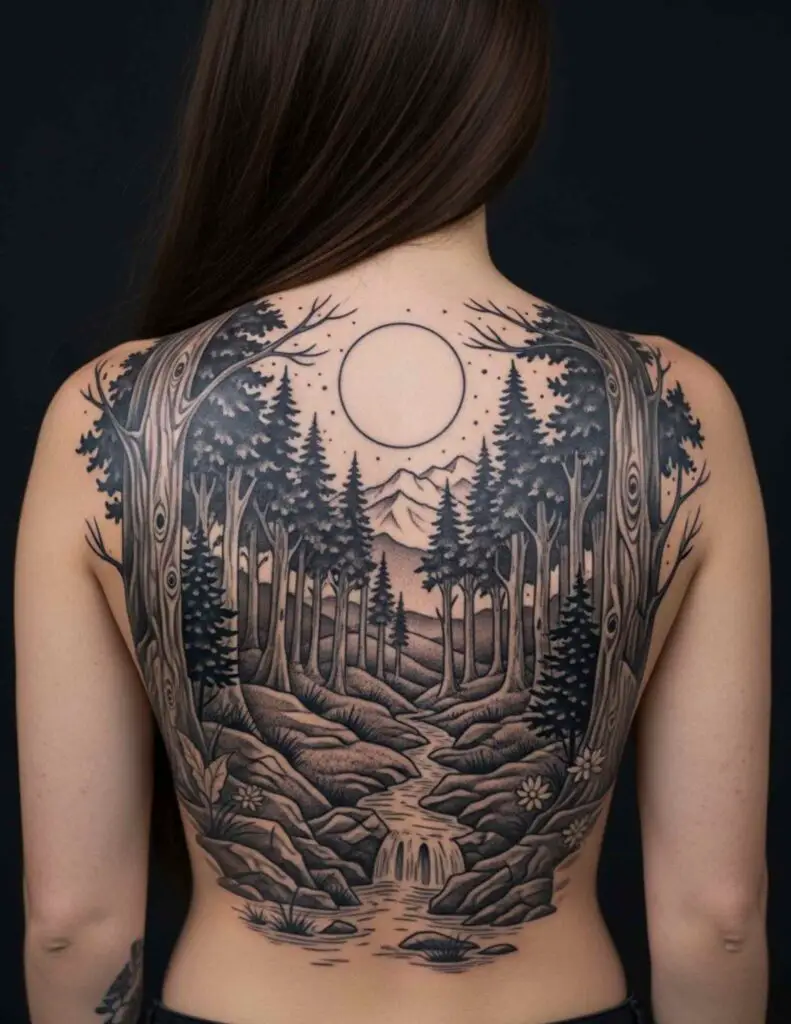
A forest populated with mythical or whimsical creatures: deer made of stars, foxes with flame tails, birds with geometric wings. The back as a storybook illustration. This style requires an illustrative artist with real character design skill. The results are unlike anything in more traditional styles.
15. Spine-Aligned Vertical Design
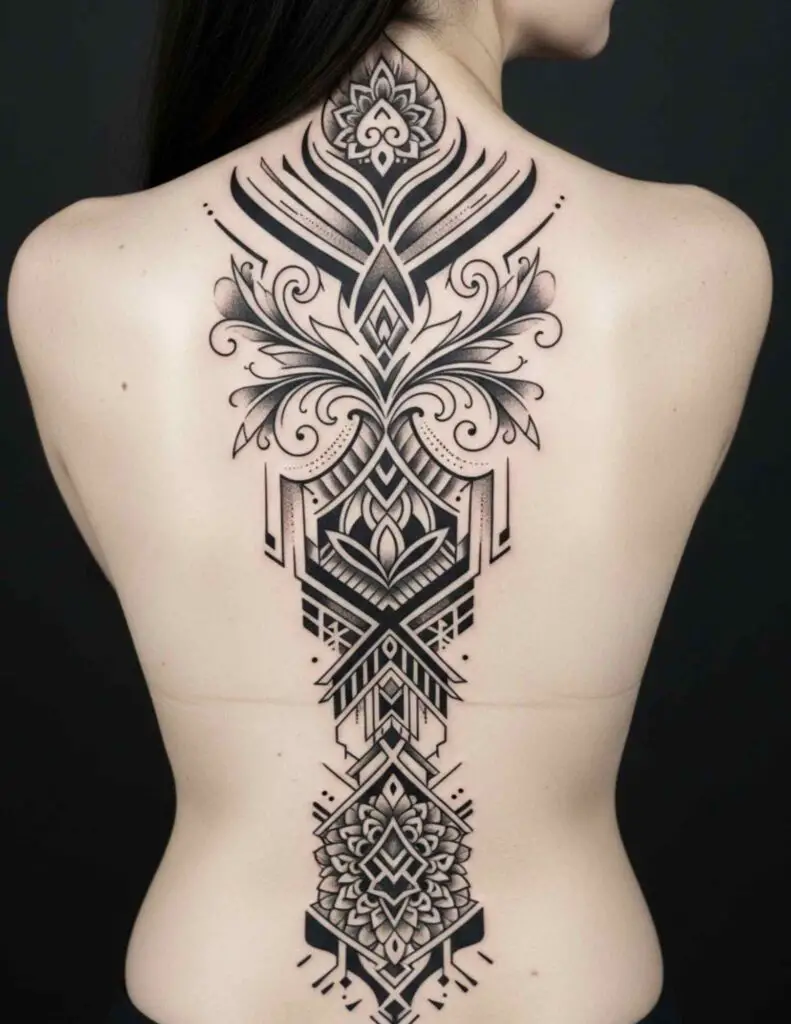
A design that runs the length of the spine, flanked by symmetrical elements spreading outward. The spine as the central axis of the piece. Lotus, tree, sword, or abstract forms. The vertical structure uses the body’s own architecture as the design’s foundation.
16. Celestial Map
The night sky across the back: constellations mapped to their actual positions, the Milky Way rendered in fine stippling, planets placed within the composition. A personal star map based on the night of a significant date. Private, precise, and visually extraordinary.
17. Tiger in a Jungle
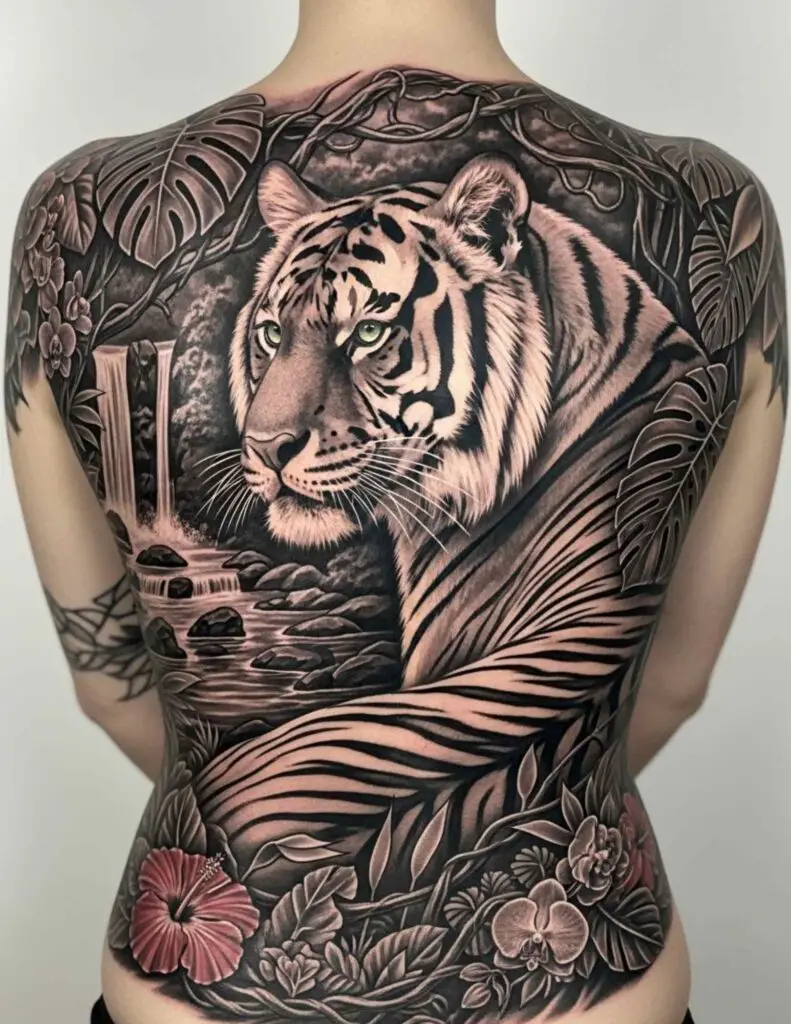
A tiger emerging from dense vegetation, the jungle wrapping around the shoulders and narrowing toward the lower back. The tiger’s face at the centre of the upper back creates a design with real presence. In colour or black and grey, the contrast between the tiger’s form and the surrounding foliage is powerful.
18. Art Nouveau Back Piece
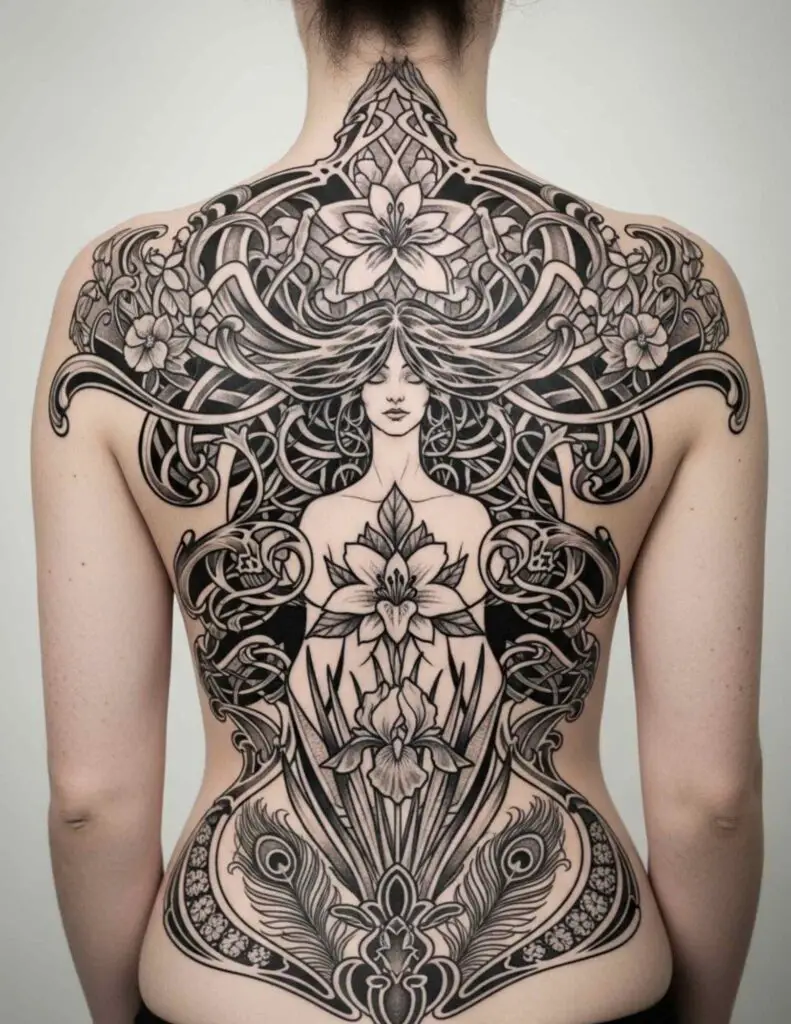
Inspired by Alphonse Mucha and the Art Nouveau tradition: a female figure surrounded by flowing botanical and decorative elements, ornate borders, and the distinctive organic forms of the style. The back’s proportions suit a Mucha-style composition almost exactly. Visually rich and historically specific.
19. Abstract Fluid Forms
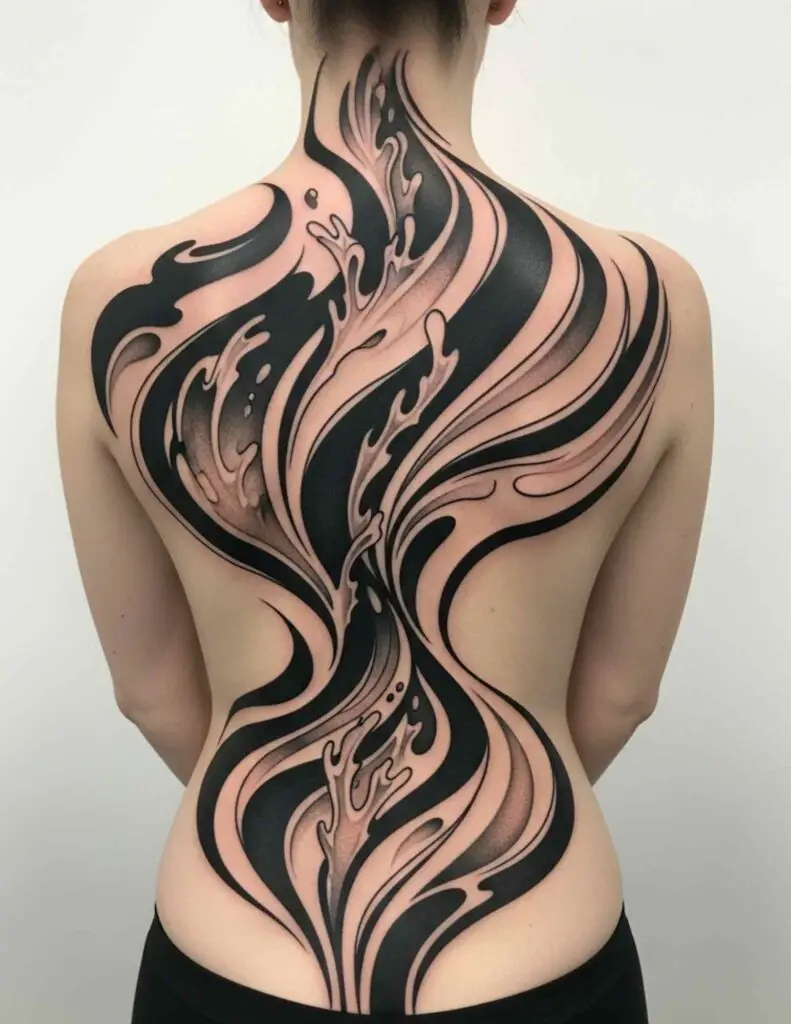
Not a representational image. Flowing abstract forms that trace the curves and contours of the back, expanding with the shoulder blades and following the spine’s natural line. The design shapes itself to the body rather than sitting on it. This requires a genuinely skilled artist who works with the body’s specific form. When done well, it is unlike anything else.
Choosing Your Artist
For a full back piece, spend as much time choosing the artist as you spend deciding on the design. Look at their healed large-scale work. Read reviews from clients who have completed multi-session pieces with them. Your relationship with this artist will span years. The trust, communication, and shared vision need to be there from the first consultation.
This is not a piece to rush. The planning, the consultation, and the design process are as important as the sessions themselves.