
Ganesha is one of the most beloved deities in the Hindu tradition and one of the most visually rich subjects in any tattooing canon. The elephant-headed son of Shiva and Parvati, the remover of obstacles and the lord of new beginnings, carries a visual complexity that rewards the tattoo artist’s craft: four arms each holding specific attributes, the distinctive elephant head with its single tusk, the rotund body, the mouse at his feet. Every element has specific meaning.
These 20 ideas approach Ganesha tattooing with the respect the subject deserves and the visual range the tradition allows.
Ganesha’s Symbolism
Ganesha is invoked at the beginning of new ventures, journeys, creative projects, and important life transitions. His name is called first in Hindu prayers precisely because he is the one who clears the path. His attributes are all meaningful: the broken tusk represents the willingness to sacrifice for knowledge, the modak (sweet) in one hand represents the sweetness of spiritual knowledge, the axe severs attachments, the lotus represents enlightenment, and the mouse at his feet represents the ego brought under control. A Ganesha tattoo drawn from genuine understanding of these elements carries a depth that purely decorative versions cannot match.
20 Ganesha Tattoo Ideas
1. Traditional Ganesha Portrait
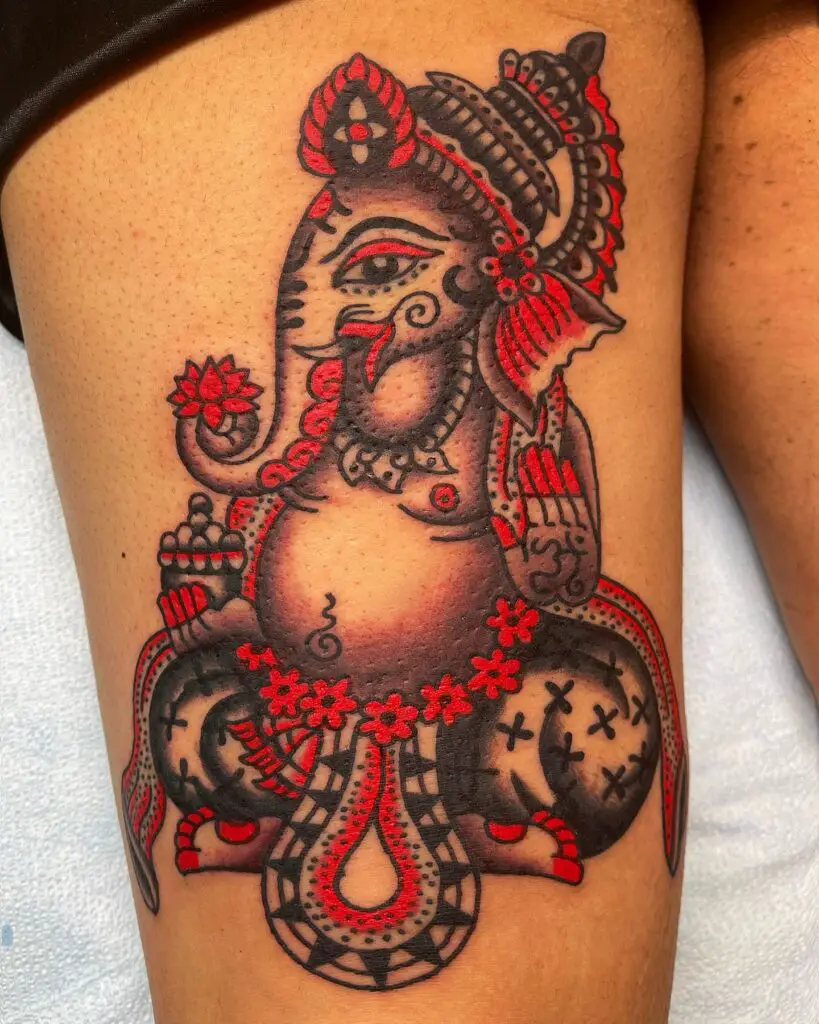
Photo: @gunga_ma
Ganesha rendered in the formal style of traditional Indian religious art: the specific proportions of the deity’s form, the correct attributes in each of the four hands, the characteristic posture. A tattoo that honours the iconographic tradition rather than reinterpreting it. Requires research into the specific iconographic conventions and an artist with experience in this subject.
2. Mandala Ganesha
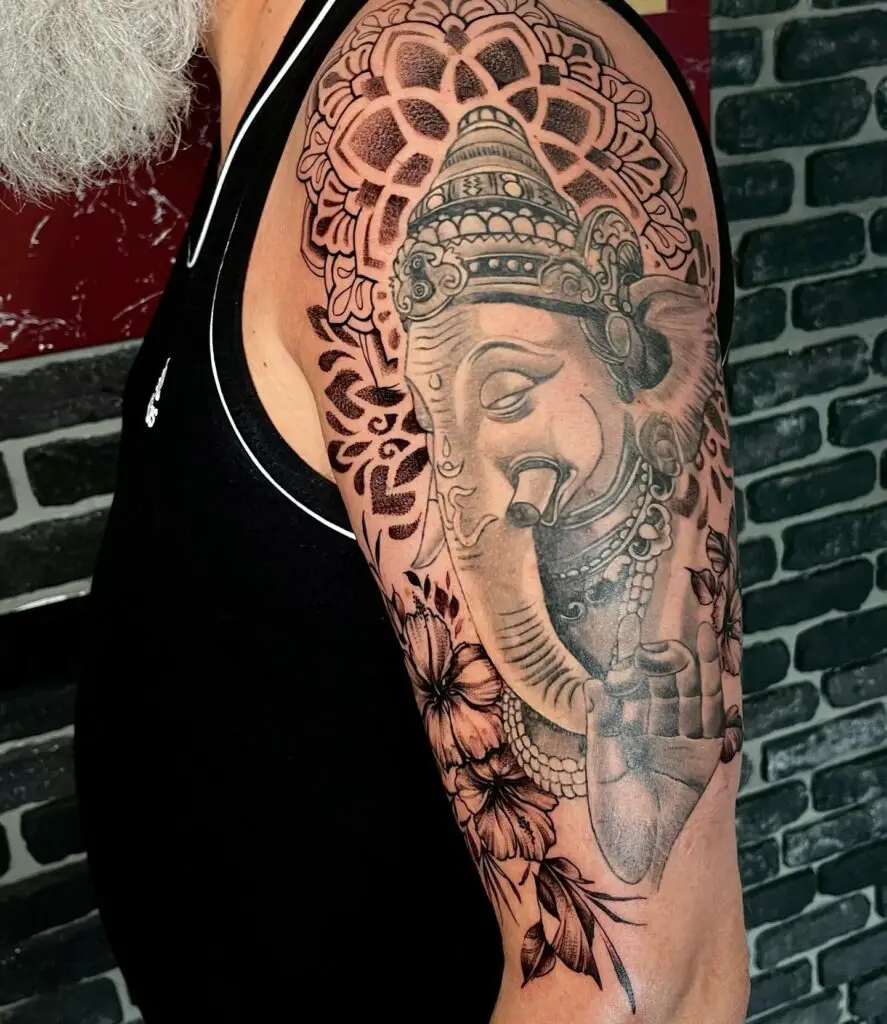
Photo: @blackhouse_ink_side

Ganesha’s face at the centre of an elaborate mandala, the geometric patterns radiating outward from the deity’s form. The mandala context suits Ganesha’s associations with spiritual practice and the centring of the mind before new endeavours. In fine line or bold blackwork.
3. Ganesha in Lotus
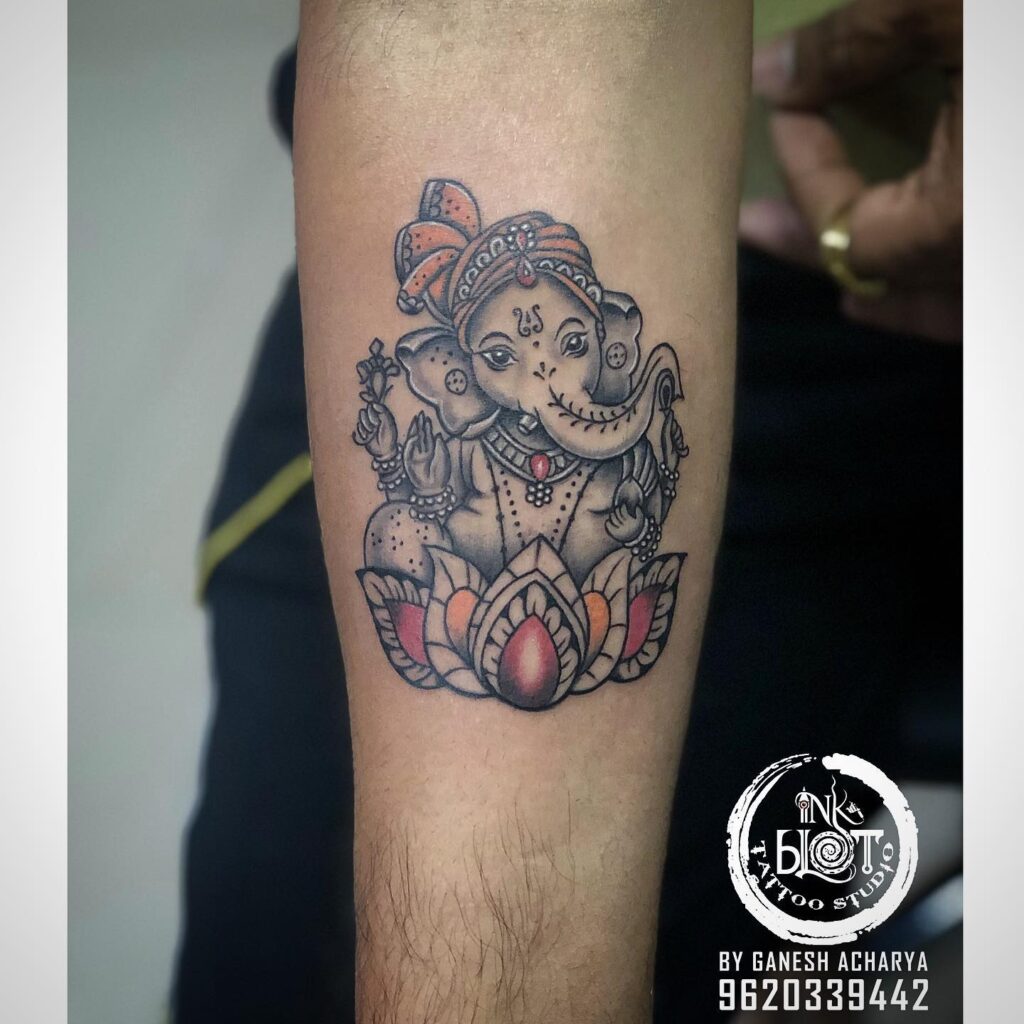
Photo: @inkblottattooz
Ganesha seated within a lotus flower, the petals framing the deity. The lotus in Hindu iconography represents spiritual purity and the emergence of consciousness from the material world. Ganesha within the lotus creates a composition about spiritual clarity achieved through the deity’s blessing.

4. Fine Line Ganesha
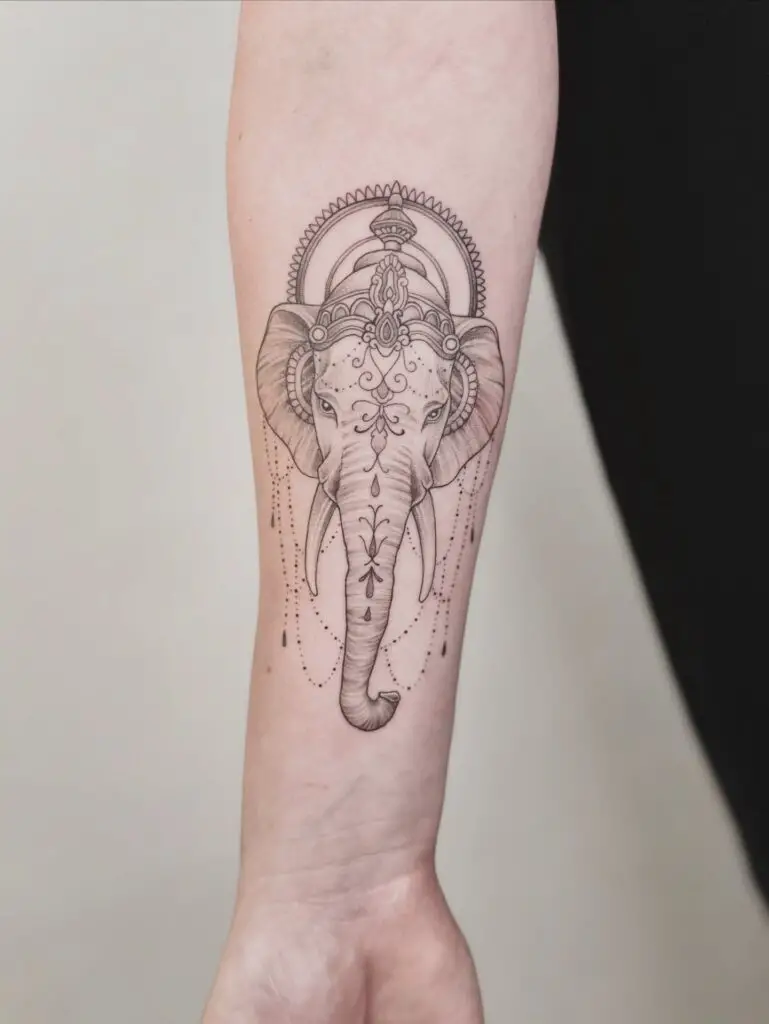
Photo: @lotustattoo_studio
Ganesha rendered in delicate fine line work: the details of the deity’s form captured in thin precise lines without heavy shading or fill. The fine line approach requires an artist skilled in rendering complex figurative subjects at reduced line weight. The result is elegant and detailed without being visually heavy.
5. Geometric Ganesha
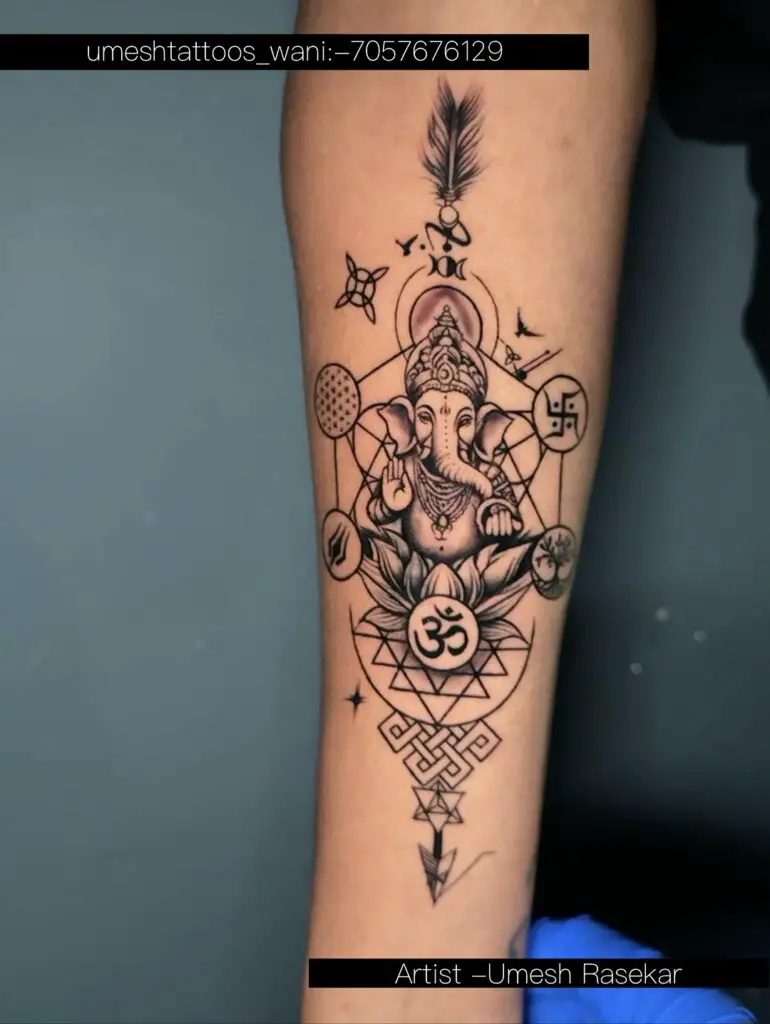
Photo: @umeshtattoos_wani
Ganesha’s form interpreted through geometric planes and angular construction. The geometric treatment creates a Ganesha that reads as both the deity and a composition of sacred geometric principles. The geometric style suits Ganesha’s associations with order, structure, and the removal of chaos from new beginnings.
6. Ganesha with Om
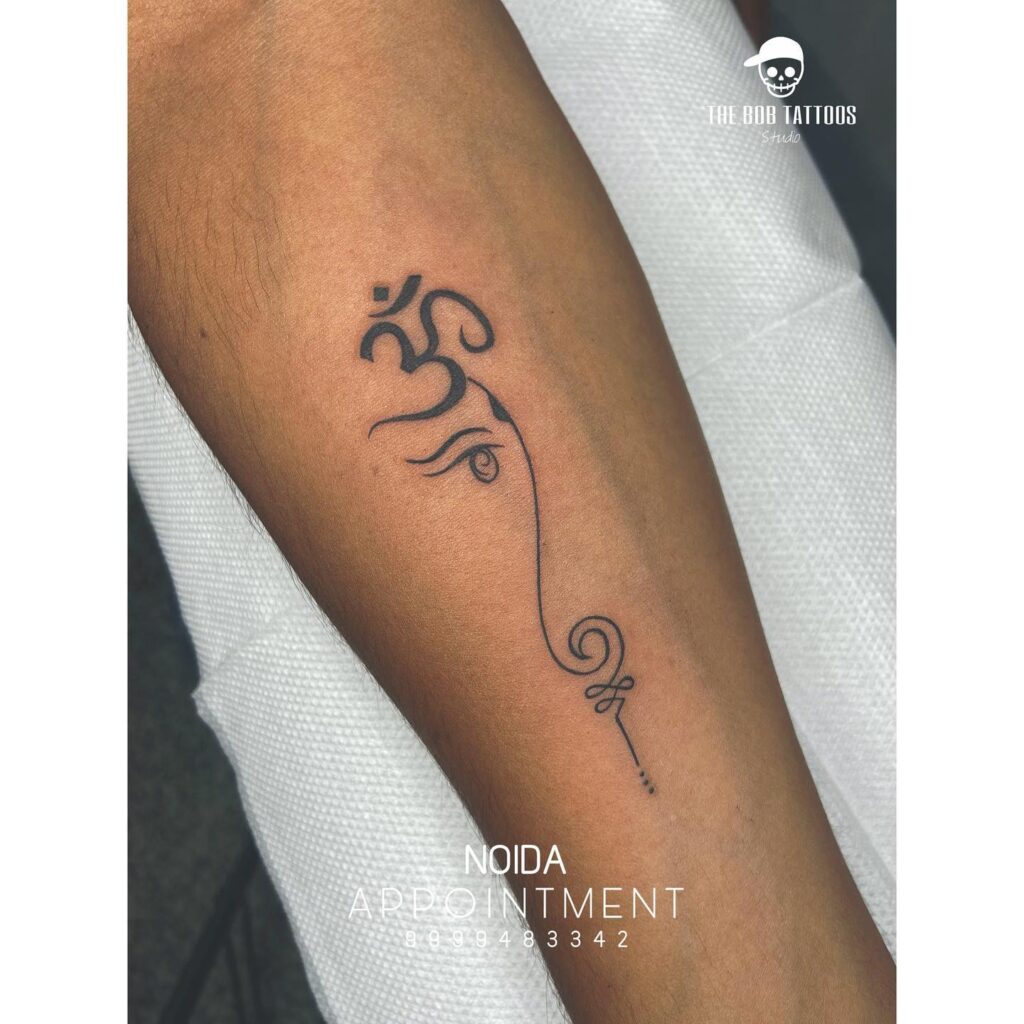
Photo: @thebobtattoosindia
Ganesha alongside or incorporating the Om symbol. The Om is the primordial sound of creation in Hindu tradition and is closely associated with Ganesha, who is sometimes described as the living manifestation of the Om syllable. The combined design carries both the visual form of the deity and his fundamental sonic symbol.
7. Ganesha Back Piece
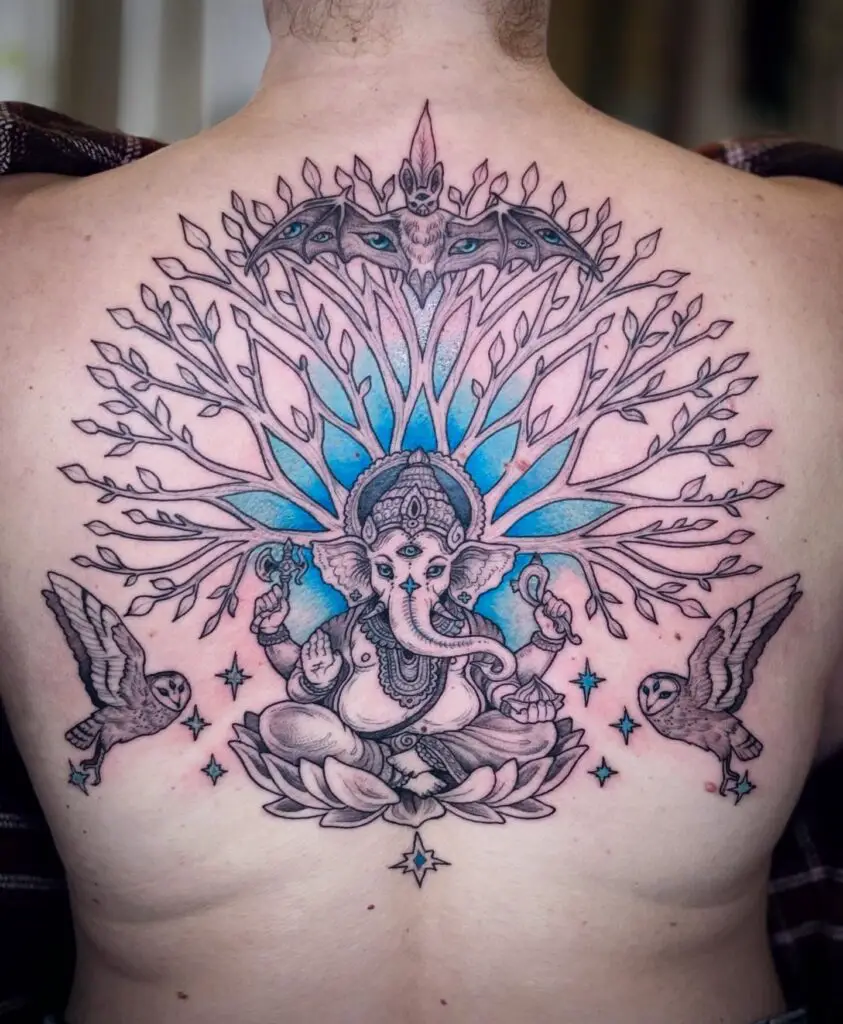
Photo: @caitlin_hackett
A full or upper back Ganesha in elaborate detail, the deity’s four arms and complete attribute set rendered at a scale that allows each element its proper representation. The back provides sufficient space for a Ganesha that does justice to the iconographic complexity of the subject.
8. Watercolour Ganesha
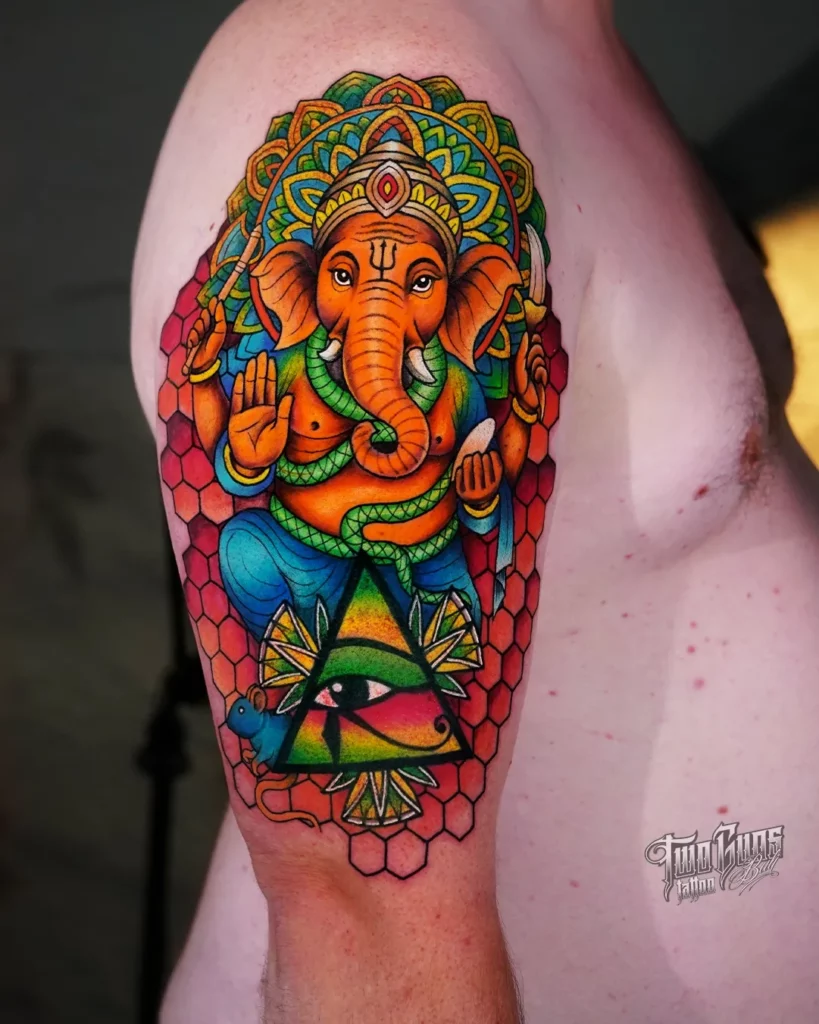
Photo: @twogunstattoo_bali
Ganesha rendered with a watercolour wash background: the deity’s form outlined in black, the surrounding area in soft washes of orange, yellow, and gold. The colour palette references the colours associated with Ganesha in festival contexts. The soft edges create an atmospheric quality that suits the deity’s benevolent associations.
9. Ganesha Chest Piece
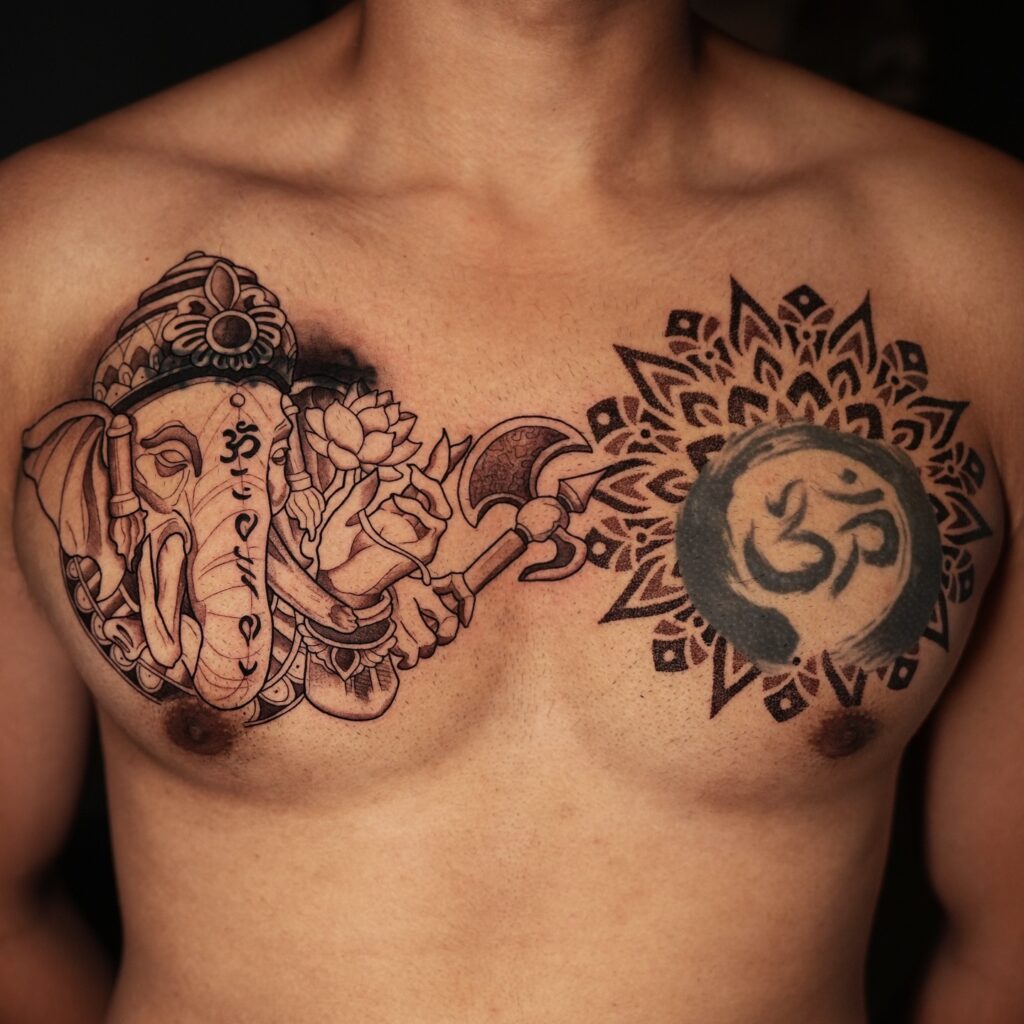
Photo: @stefanjude
A Ganesha centred on the chest, the deity’s form filling the sternum area. Invoking Ganesha close to the heart is a form of personal devotion: the deity who clears the way carried at the body’s vital centre. In line work or in detailed colour.
10. Dancing Ganesha
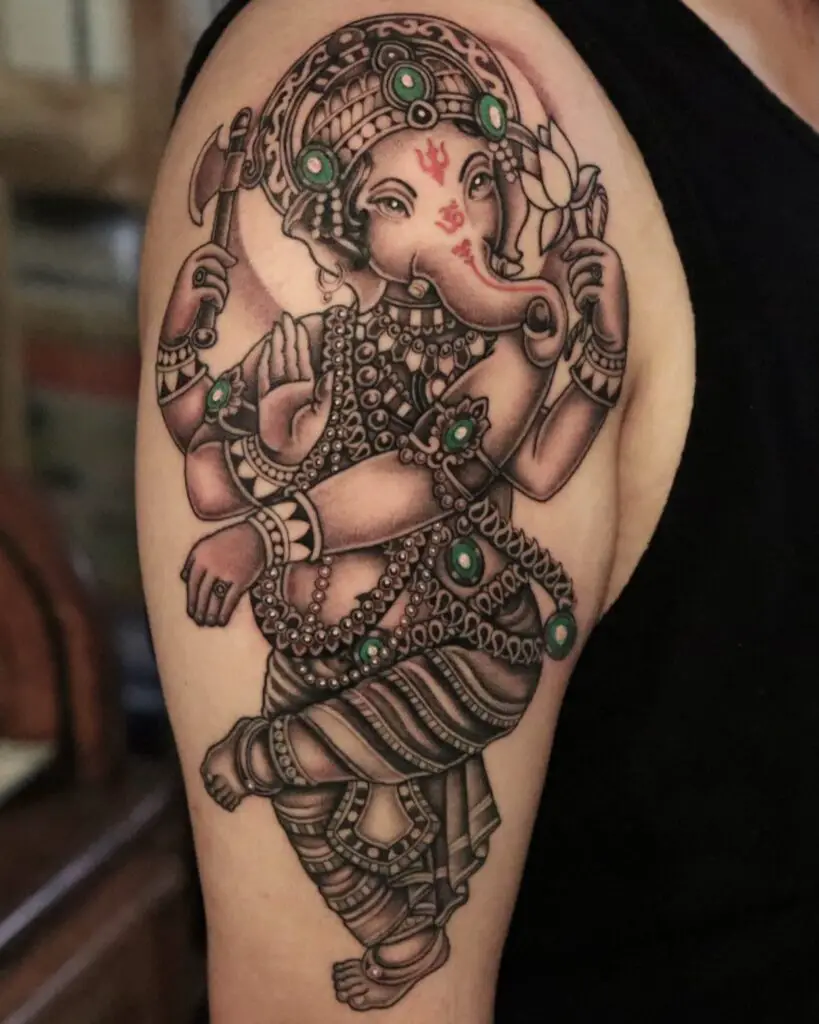
Photo: @oliviatattoo__
Ganesha in the Nritya Ganapati pose, the dancing form of the deity with all four arms extended in movement. The dancing Ganesha captures the deity’s joyful aspect and the association with music, arts, and celebration. The dynamic posture creates a more energetic composition than the typically seated Ganesha portraits.
11. Ganesha with Lotus and Flame
Ganesha holding the lotus in one hand and a flame in another, two of the deity’s most common attributes. The lotus and flame represent spiritual knowledge and the burning away of ignorance. A composition focused on these two attributes alongside the deity’s characteristic form.
12. Blackwork Ganesha
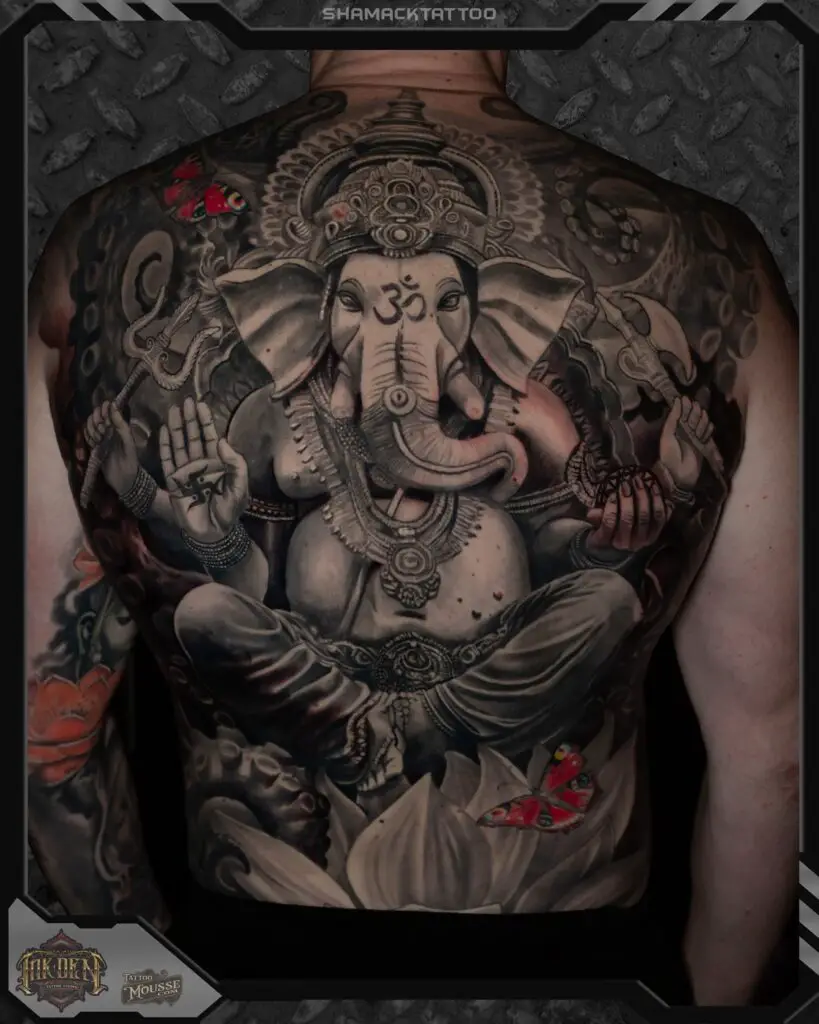
Photo: @shamacktattoo
Ganesha in pure blackwork: the deity’s silhouette and detail rendered in bold black fills and negative space. The blackwork approach creates a Ganesha with graphic authority and strong visual presence. The form reads clearly at any distance without requiring colour to define it.
13. Ganesha Sleeve
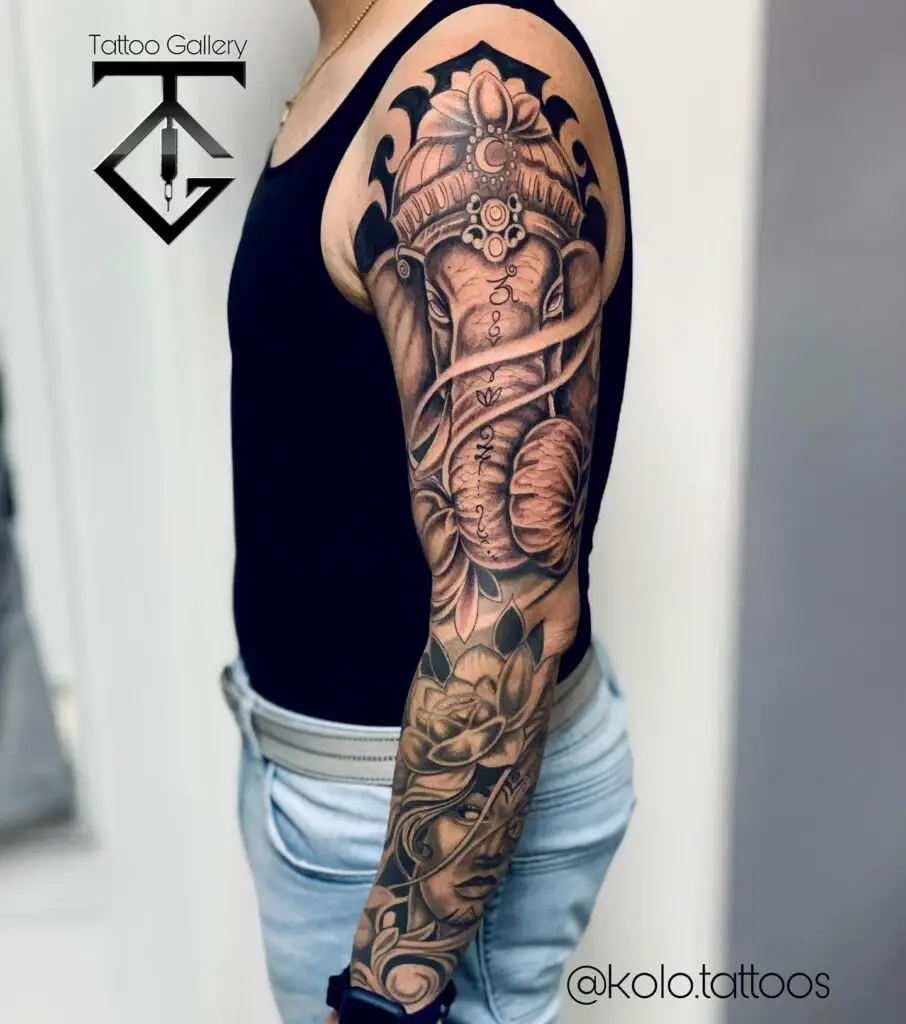
Photo: @kolocartagenapr
Ganesha as the central figure of a sleeve, with lotus flowers, elephants, and traditional Indian decorative elements building through the composition. The sleeve format allows Ganesha to be placed in his full iconographic context: surrounded by the imagery that belongs to his tradition.
14. Abstract Ganesha
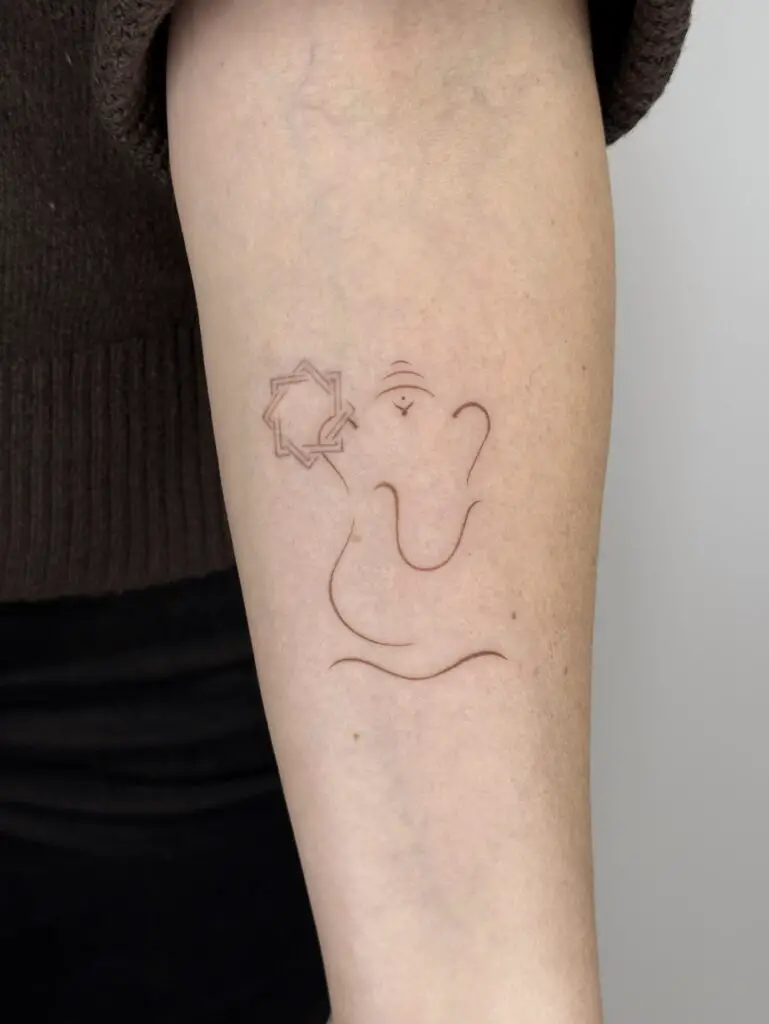
Photo: @yusun_tattoo
The essential qualities of Ganesha, the elephant head, the rotund body, the multiple arms, expressed abstractly. Not a precise iconographic rendering but a composition that carries Ganesha’s recognisable form in a contemporary artistic language. Abstract enough to be distinctive, specific enough to be identified.
15. Ganesha and Marigold
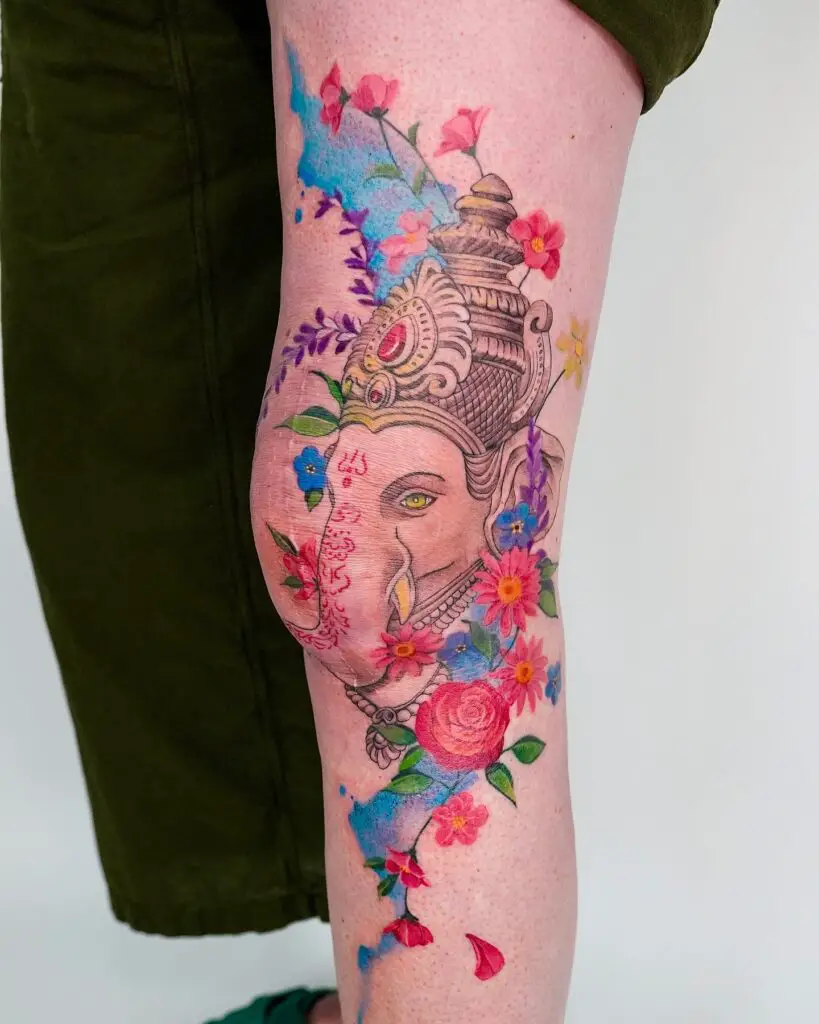
Photo: @tattoojune
Ganesha surrounded by marigold flowers, the flower most associated with Hindu worship and celebration in the Indian tradition. The marigold wreath around Ganesha creates a composition specific to the ritual context in which the deity is most often encountered: the festival, the puja, the flower garland offered in devotion.
16. Ganesha Third Eye Detail
A close detail of Ganesha’s face, with the third eye at the forehead prominent in the composition. The third eye represents divine wisdom and the capacity to perceive beyond ordinary sight. A Ganesha face portrait centred on the third eye creates a design specifically about the deity’s role as the knower of all paths.
17. Minimalist Ganesha Silhouette
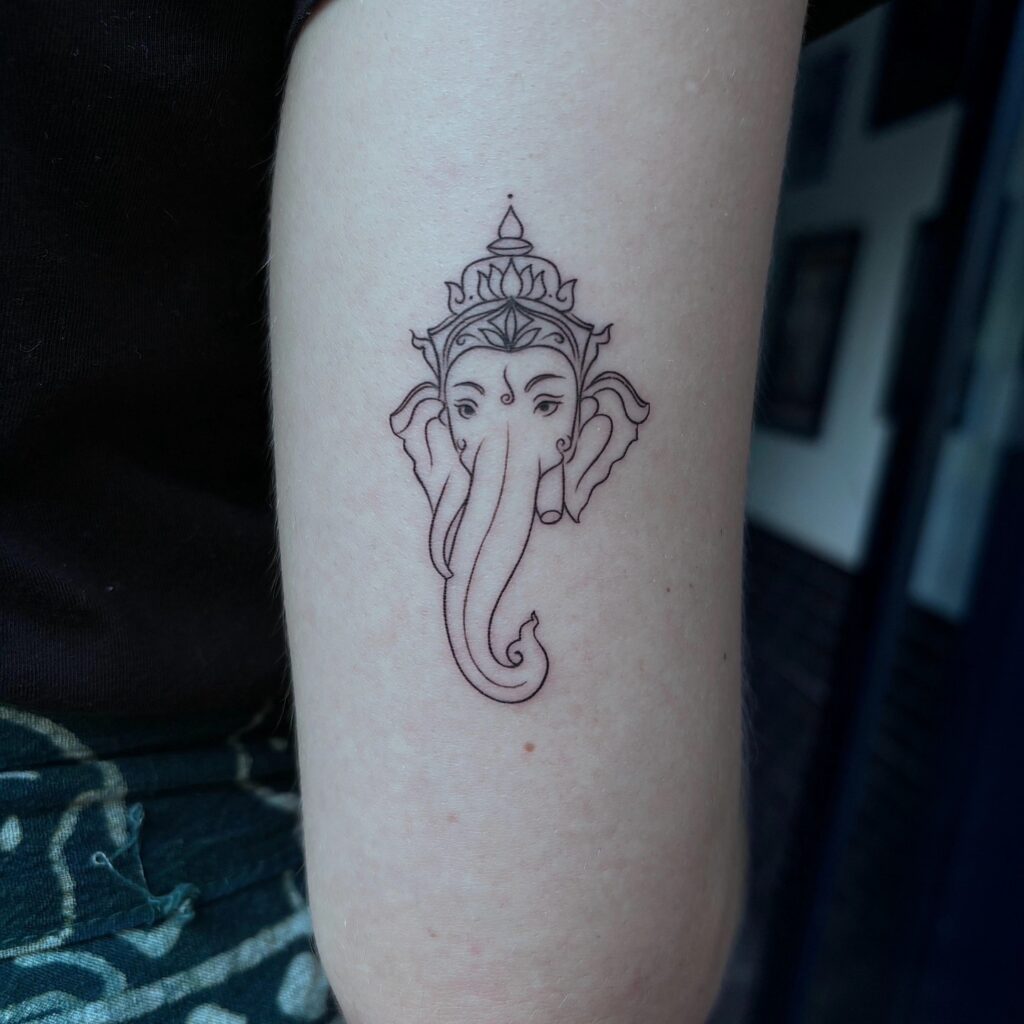
Photo: @aemmistattoo
Ganesha reduced to a clean silhouette: the elephant head, the characteristic ears and trunk, the rotund body. The minimal silhouette approach works at small scales where the full detail of the traditional rendering would be impossible. The silhouette is immediately recognisable and carries the deity’s presence even in reduced form.
18. Ganesha and Shiva
Ganesha alongside his father Shiva in a paired composition. The son and father relationship between the deities is one of the most important in the Hindu tradition. A paired Ganesha and Shiva tattoo creates a design about lineage, devotion, and the connection between the deity who removes obstacles and the deity from whom all reality proceeds.
19. Ganesha Forearm
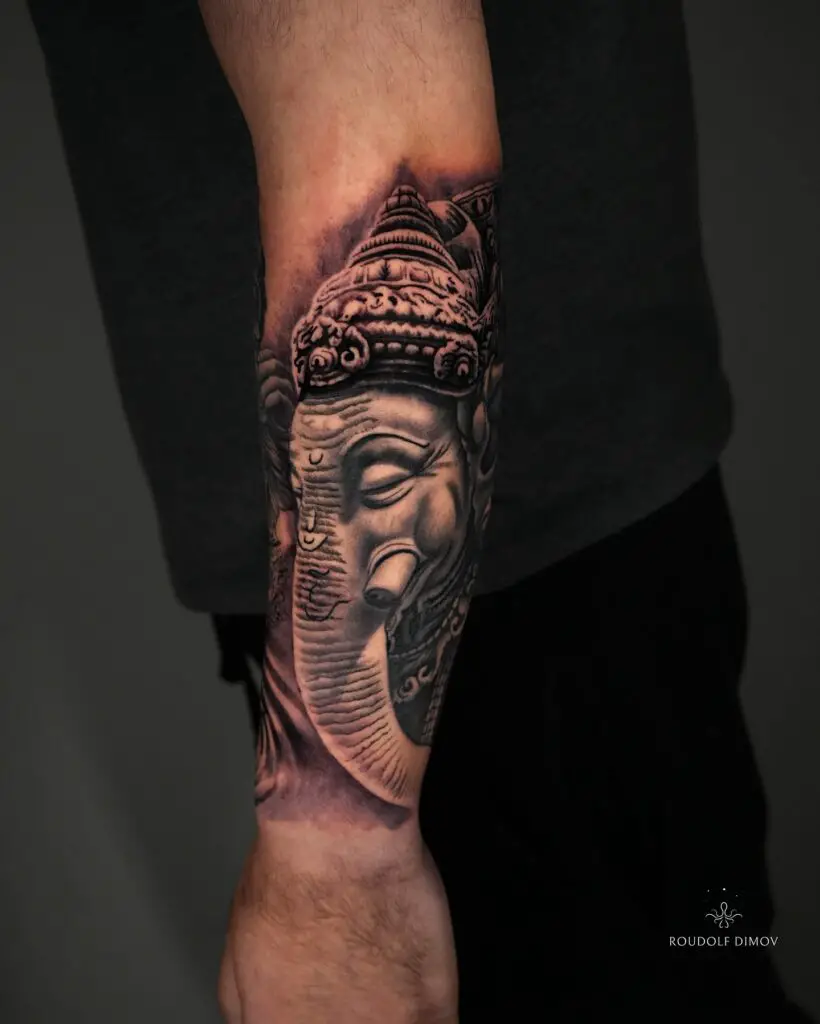
Photo: @roudolfdimovtattoos
A Ganesha on the inner forearm at a scale that allows the essential attributes to be rendered. The forearm placement means the deity is visible throughout the day, a constant invocation of the remover of obstacles. Works in line work or in subtle colour depending on the aesthetic.
20. Ornate Ganesha with Decorative Frame
Ganesha within an elaborate decorative frame in the style of traditional Indian religious art: intricate border patterns, floral decoration, the deity enclosed in the formal visual structure of temple iconography. The framed format treats the tattoo as a permanent devotional image carried on the body.
Cultural Respect and Intent
Ganesha is a living deity for hundreds of millions of people. The decision to carry his image should be made with awareness of this. Many Hindu practitioners are pleased to see the deity honoured in ink by people outside the tradition, provided the image is treated with respect: placed above the waist, rendered accurately, and chosen for genuine devotion or philosophical resonance rather than purely aesthetic reasons. Research the iconographic conventions before commissioning the design and find an artist who has tattooed Ganesha before and who treats the subject with appropriate seriousness.