
A child’s name is the most personal information a parent carries. Wearing it permanently is not a sentimental gesture in the diminished sense of the word. It is a statement of the relationship that matters most, made in the most permanent medium available. The challenge is finding the design and format that does justice to the name and the person it belongs to.
These 20 ideas range from the direct and simple to the elaborate and personalised, covering the full range of ways a child’s name can be carried permanently.
Design Principles for Name Tattoos
The name itself is the content. The design decisions, font, accompanying elements, placement, are the form. A name in the wrong font looks wrong regardless of how much the name means. A name in a font that suits the child’s personality and the parent’s aesthetic has the right feeling immediately. If you are tattooing a child’s name, spend time on the font decision: it is the most important design choice in the piece.
20 Kids Name Tattoo Ideas for Parents
1. Classic Script Name
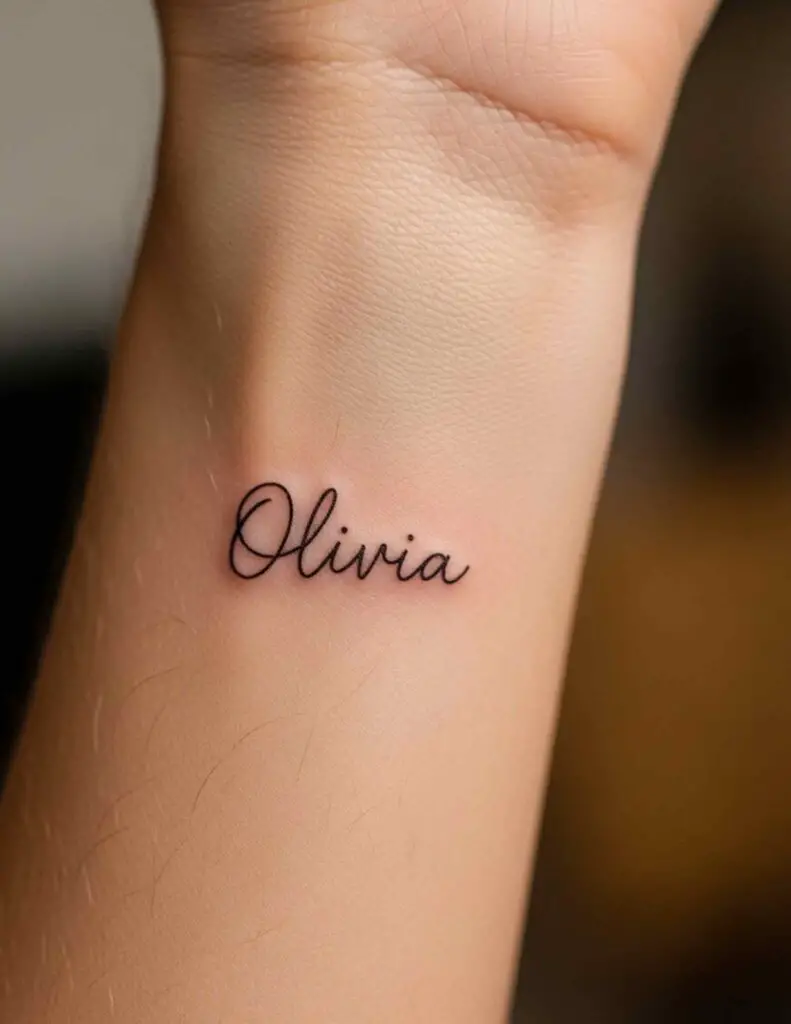
The child’s name in clean, flowing script on the inner forearm. The script approach is the most direct and timeless: the name in cursive with the natural grace of handwriting. The forearm placement means the name is seen regularly and is easily shown when you want to share it.
2. Name with Birth Date
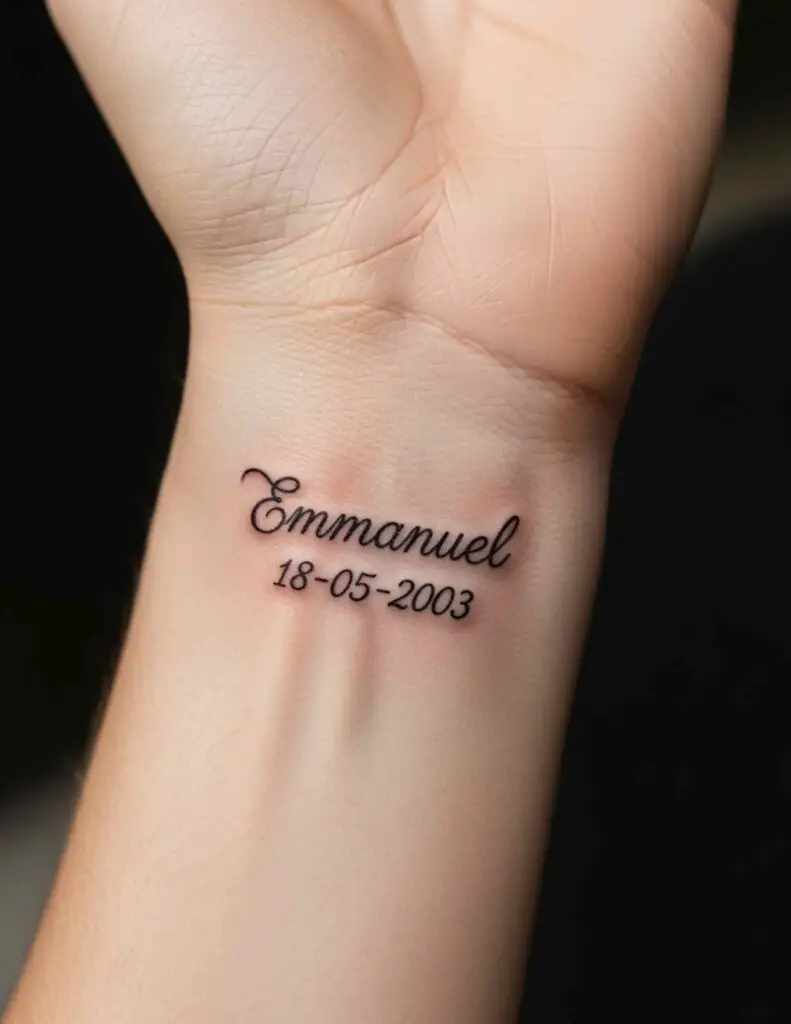
The name paired with the birth date in Roman numerals or numerals below. The name and date together create a complete record: who and when. For parents who want both pieces of information, the pairing is practical and personal.
3. Children’s Own Handwriting
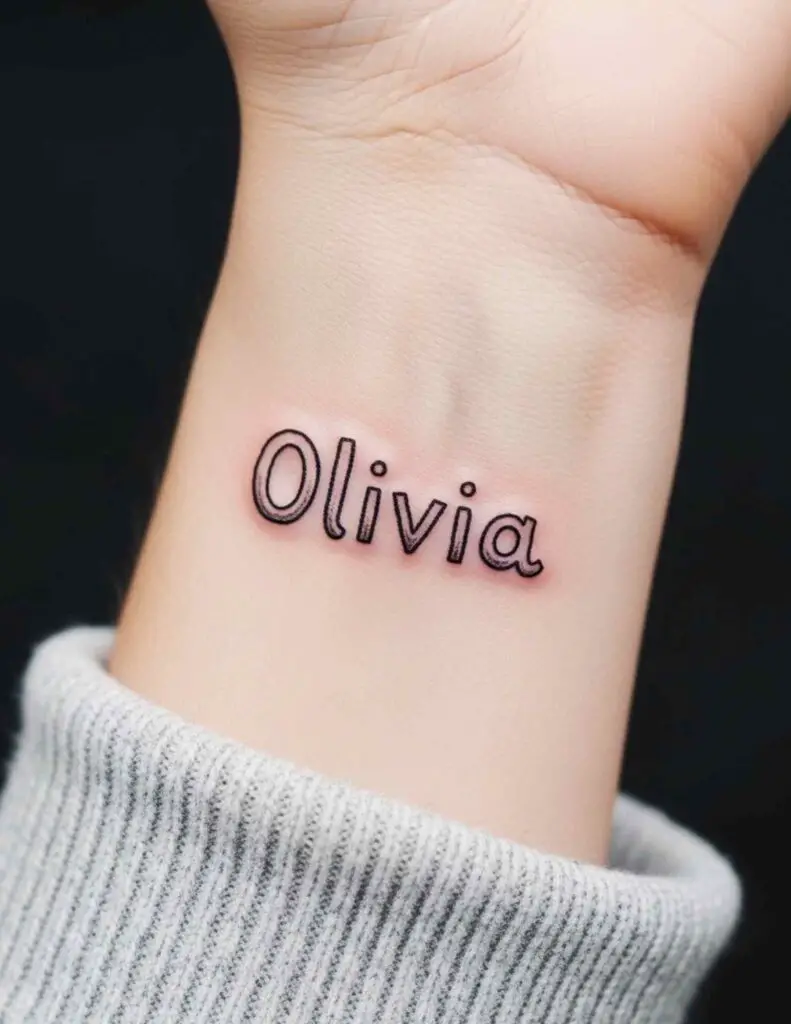
The child’s name in their own handwriting, photographed and given to the artist to replicate precisely. The handwriting tattoo carries the specific mark of the actual child: not a font that approximates the name, but the name as the child themselves wrote it. One of the most intimate name tattoo options.

4. Name and Fingerprint
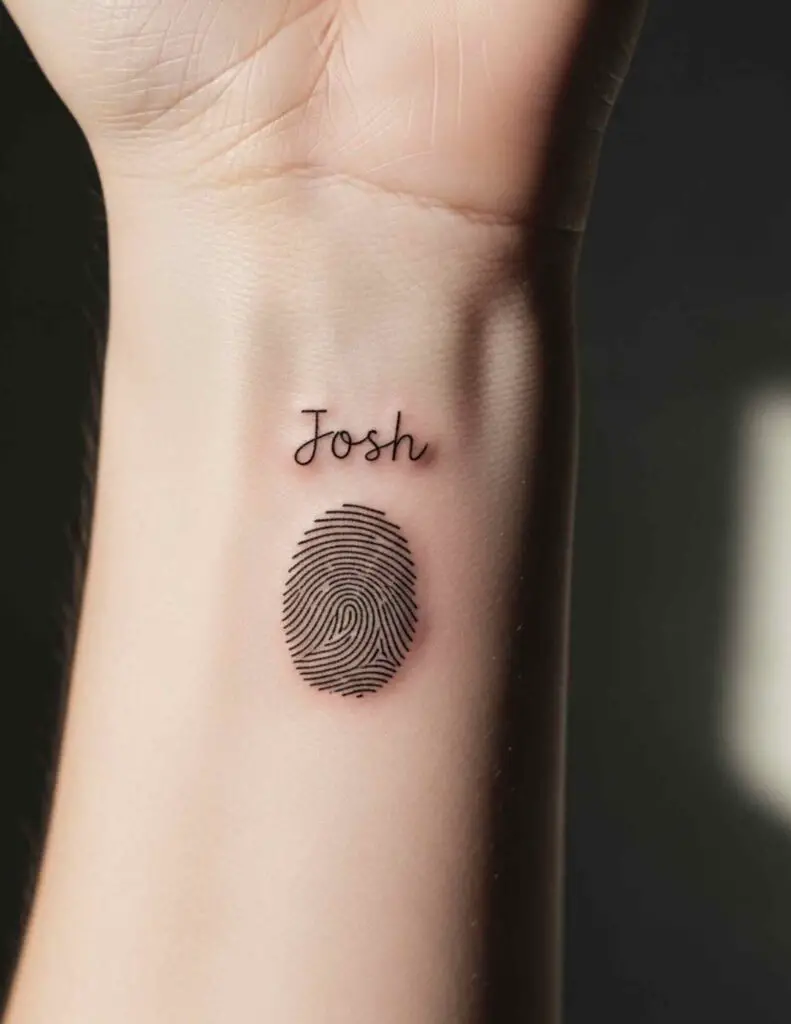
The child’s name with their actual fingerprint incorporated: as background, as a swirl from which the name emerges, or as a separate element alongside the name. The fingerprint as the unique biological mark of the specific person. Requires taking an ink fingerprint from the child and giving it to the artist.
5. Multiple Children Stacked
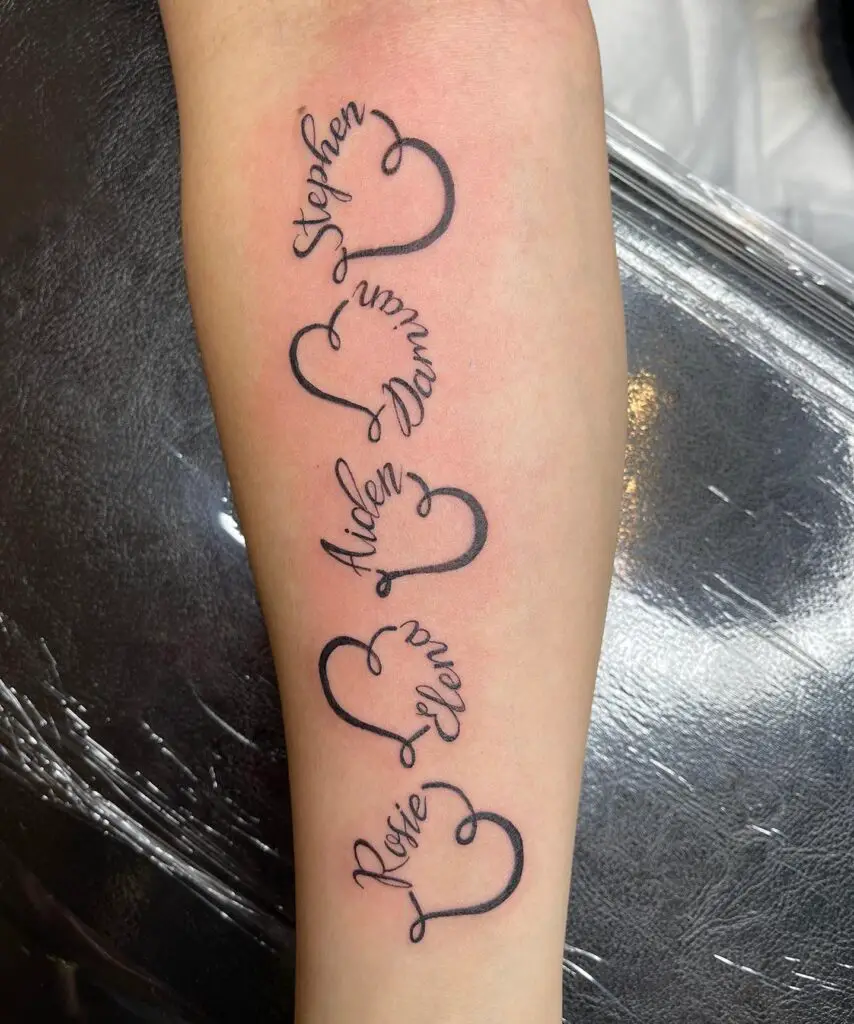
The names of multiple children arranged vertically, one below the other, in matching script or font. The vertical stack creates a list that reads as a record of the family. Works on the inner forearm, the ribs, or along the spine.
6. Name with Birth Flower
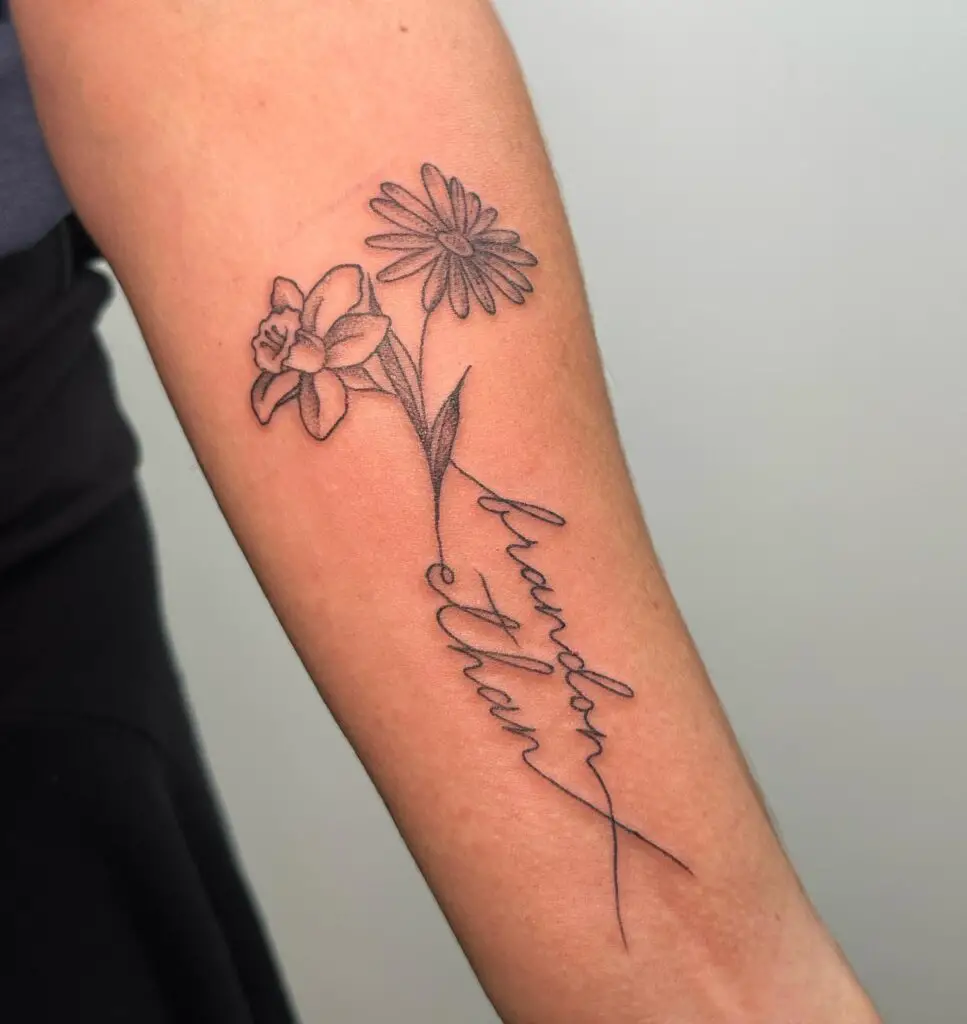
The child’s name alongside their birth month’s flower. The birth flower adds a botanical element personalised to the child’s specific arrival. The name and flower create a design that is both text and image without requiring one to dominate the other.
7. Initials with Dates
Each child’s initial with their birth date below, arranged in a row or stacked format. The initials approach is more compact than full names and suits parents with multiple children who want all of them represented without the piece becoming unwieldy.
8. Name in Block Capitals
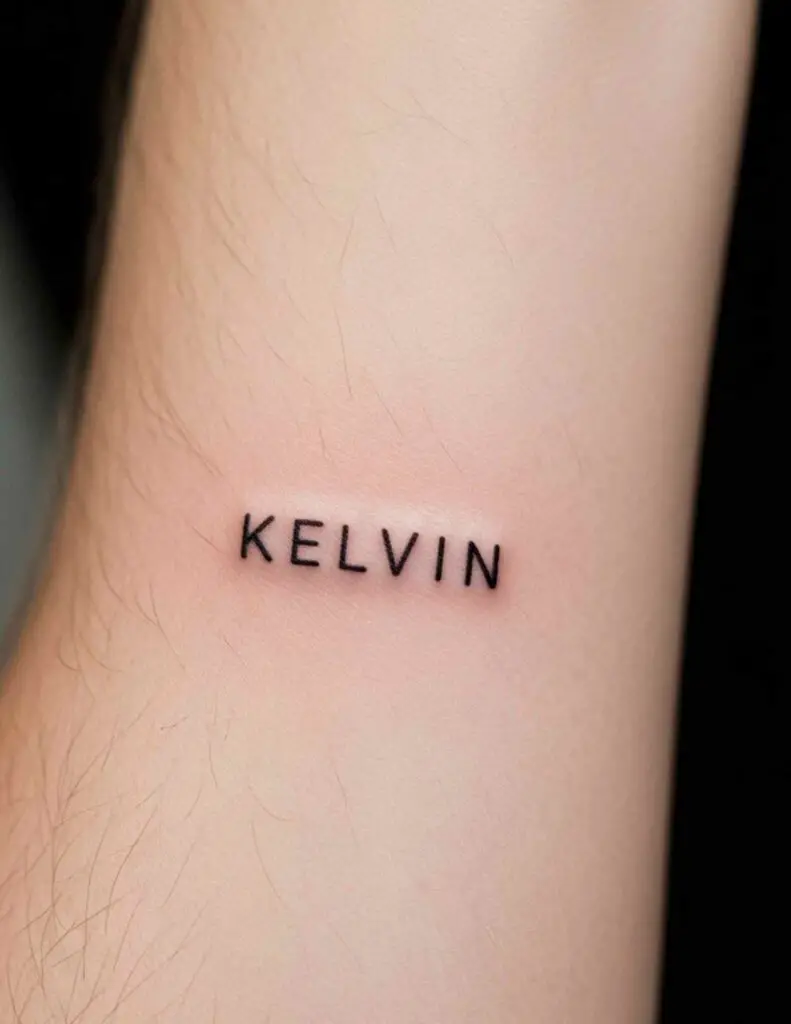
The child’s name in clean bold capitals rather than script. The block capital approach suits parents who prefer a more graphic, less decorative aesthetic. Strong serif capitals or clean sans-serif in the right size carries the name with direct authority.
9. Name and Heartbeat
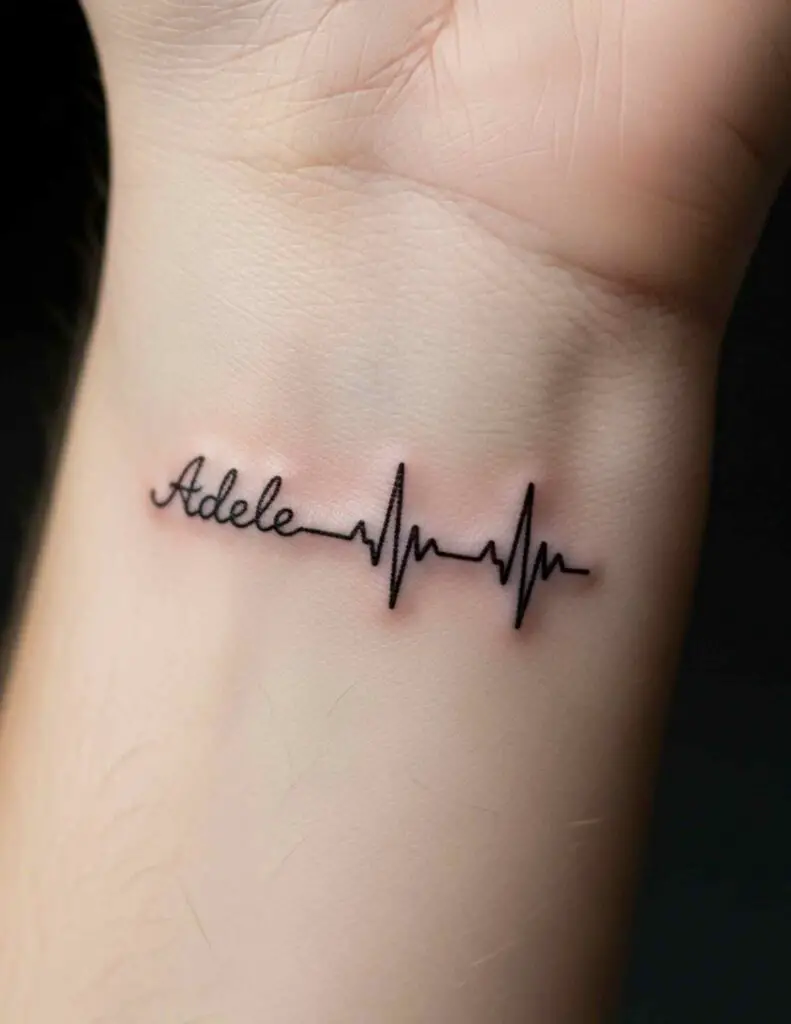
The child’s name with an ECG heartbeat line incorporated. The heartbeat suggests the specific living reality of the child: not just the name but the pulse behind it. The heartbeat line extending from or connecting to the name creates a design with biological specificity.
10. Name and Birthstone
The child’s name with their birthstone gemstone incorporated in illustrative form: a diamond, ruby, emerald, or sapphire rendered in fine line or neo-traditional colour. The birthstone adds colour and a specifically personal element to what might otherwise be a text-only piece.
11. Names Interlocked
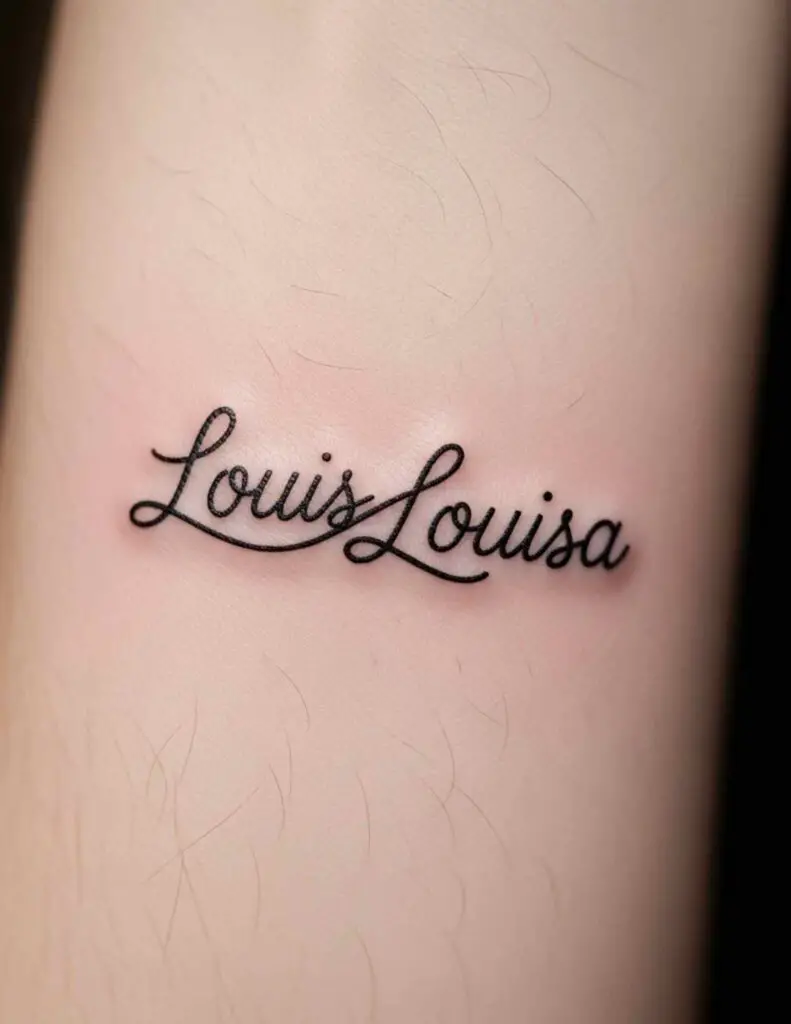
Two or more children’s names interlocked or overlapping, the letters of one name weaving through the letters of another. The interlocked format creates a design about the relationship between the children as well as the relationship between parent and each child.
12. Name Inside a Shape
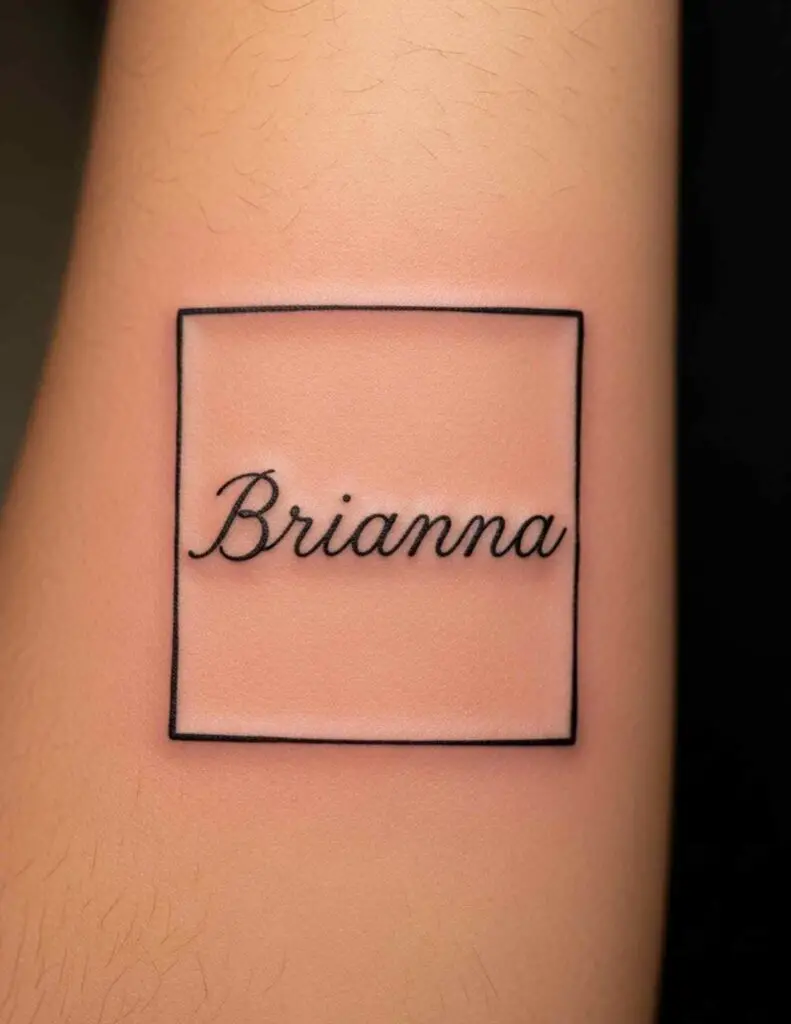
The child’s name contained within a shape: a heart, a star, a circle. The shape frames the name and creates a composed design rather than floating text. Works well at medium scale on the inner forearm or upper arm.
13. Name with Small Portrait
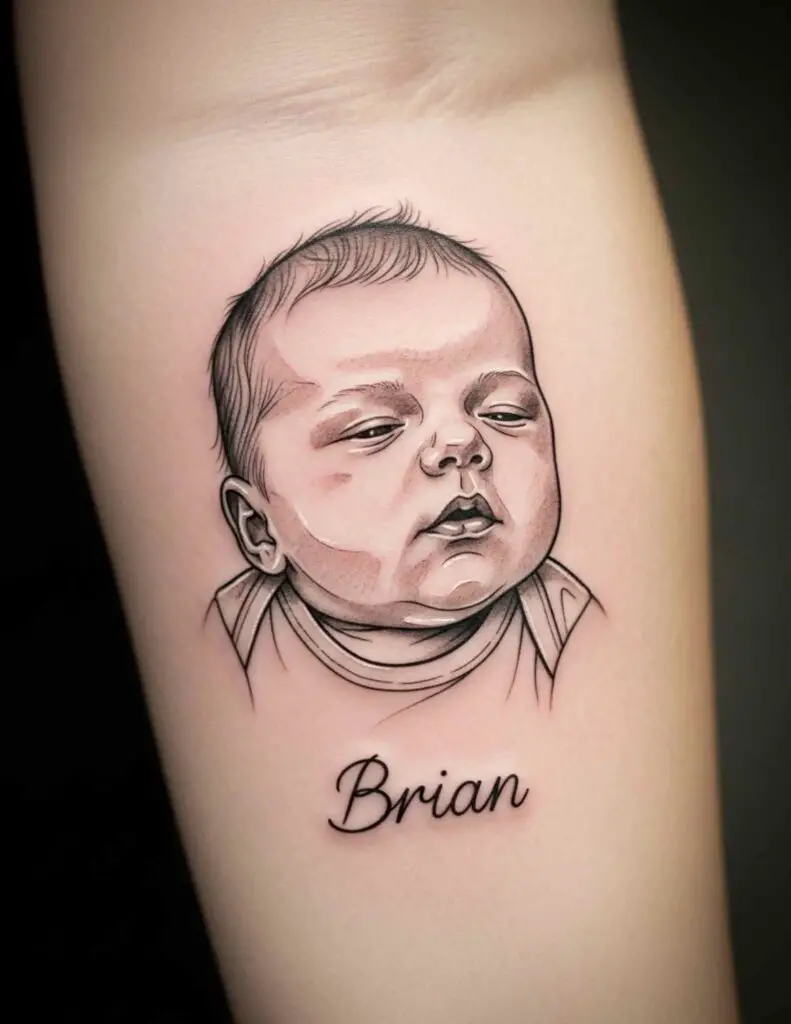
The child’s name beneath a micro-portrait of their face. The portrait with name creates the most complete possible record of the child: their face and their name together. Requires a specialist in micro-portrait work whose healed portfolio shows maintained likeness.
14. Name and Footprint
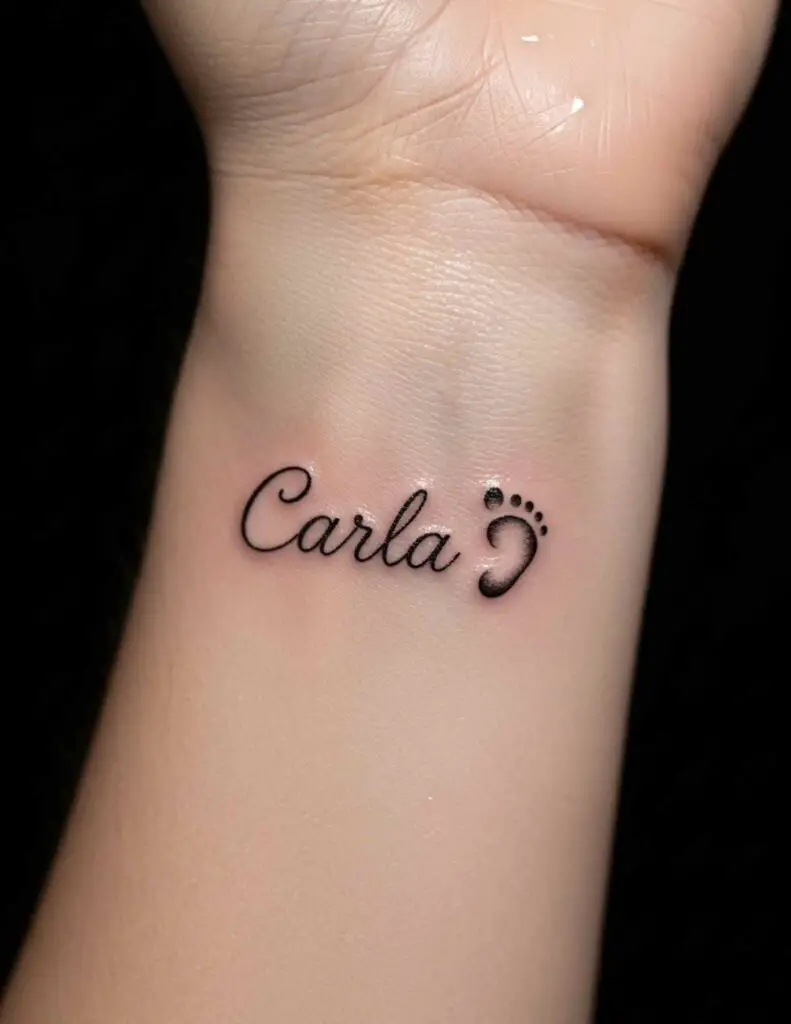
The child’s name with their newborn footprint. The footprint captures the physical scale of the child at birth: the tiny proportions of the newborn foot. The footprint and name together create a record of how small the beginning was.
15. Name in Blackletter
The child’s name in Gothic blackletter, the formal historical calligraphic style. Blackletter names carry historical weight and visual authority. The style contrasts with the softness of the parental subject matter in an interesting way: the most formal possible font for the most personal possible content.
16. Name with Angel Wings
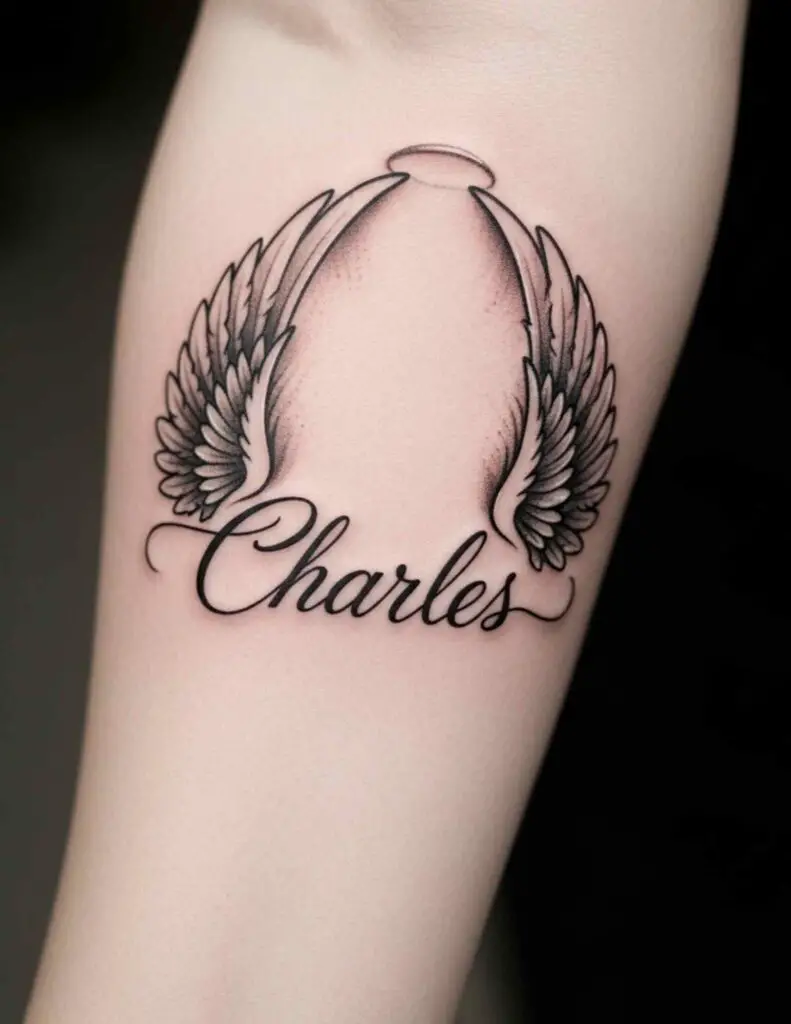
A child’s name with small angel wings incorporated, most often used as a memorial for a child who has died. The wings carry the memorial meaning precisely: the name of someone who is gone, marked with the symbol of their continued presence in another form.
17. Names as a Family Tree
The parent’s name or initials as the trunk and the children’s names as branches. The family tree format makes the structural relationship explicit: the parent as the foundation from which the children extend. In fine line botanical style or in clean typographic form.
18. Name with Zodiac Symbol
The child’s name with their zodiac sign symbol. The zodiac symbol adds an astrological element that is specific to the child’s birth date without requiring the full constellation map. Simple and compact alongside the name.
19. Name as a Forearm Band
The child’s name repeated as a band encircling the forearm, the name written continuously around the arm. The band format treats the name as a constant presence rather than a single reading. Unusual and committed: the name wrapping the arm completely.
20. Name with a Personal Symbol
The child’s name alongside a symbol that is specifically theirs: their favourite animal when young, the sport they play, a subject they love. The personal symbol makes the tattoo specific to that particular child rather than generically the name of a child. The symbol may change in meaning as the child grows, but the name remains as the anchor.
Placement Options for Parents
The inner forearm is the most practical placement: visible when you look at your own arm, easily shown to others, and in an area where the skin maintains good quality through decades. The chest or heart area suits parents who want the name to be genuinely private rather than display. The wrist works for smaller names or initials. The ribs accommodate multiple names in vertical arrangement. Whatever the placement, ensure the font size is large enough to remain legible: name tattoos that become illegible are among the most common regret cases in tattooing.