
The lotus mandala combines two of the most symbolically rich elements in tattoo art. The lotus represents emergence from difficulty: the plant that roots in mud and blooms above the water.
The mandala represents wholeness, the universe as a unified pattern, and the meditative focus of sacred geometry. Together they create a composition that carries genuine meaning while also being one of the most visually harmonious designs available.
These 20 ideas explore every dimension of the lotus mandala tattoo.
Why This Combination Works
The lotus and mandala work together because they share structural logic. The lotus petal, seen from above, has its own radial symmetry that echoes the mandala’s concentric circular geometry. When an artist designs a lotus mandala, they are working with two forms that naturally want to become each other: the botanical and the geometric reinforce rather than compete. The result is a design that feels inevitable rather than forced.
20 Lotus Mandala Tattoo Ideas
1. Classic Thigh Lotus Mandala
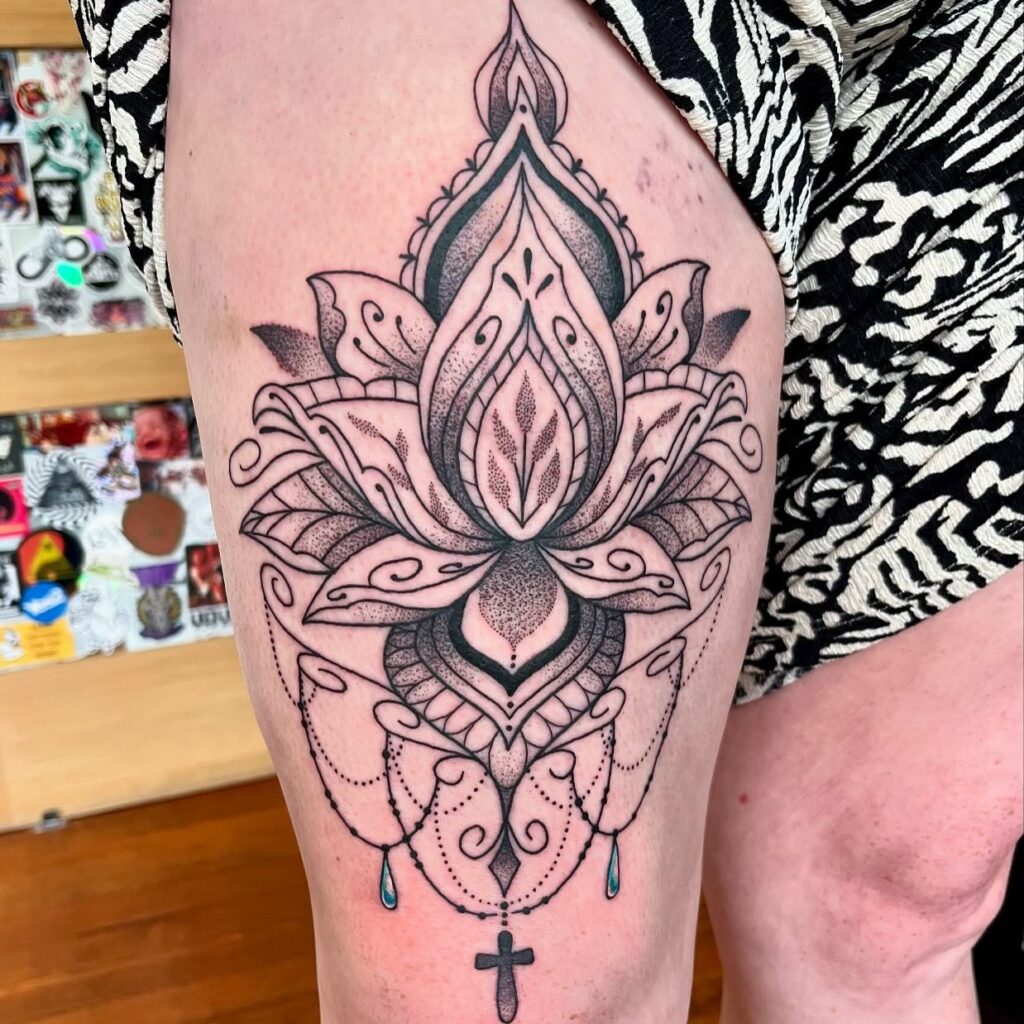
A large lotus mandala centred on the outer thigh: the central lotus bloom surrounded by mandala rings of increasing intricacy. The thigh is the ideal placement for a lotus mandala at the scale where the design can be fully realised. Black and grey fine line for maximum geometric precision.

2. Spine Lotus Mandala
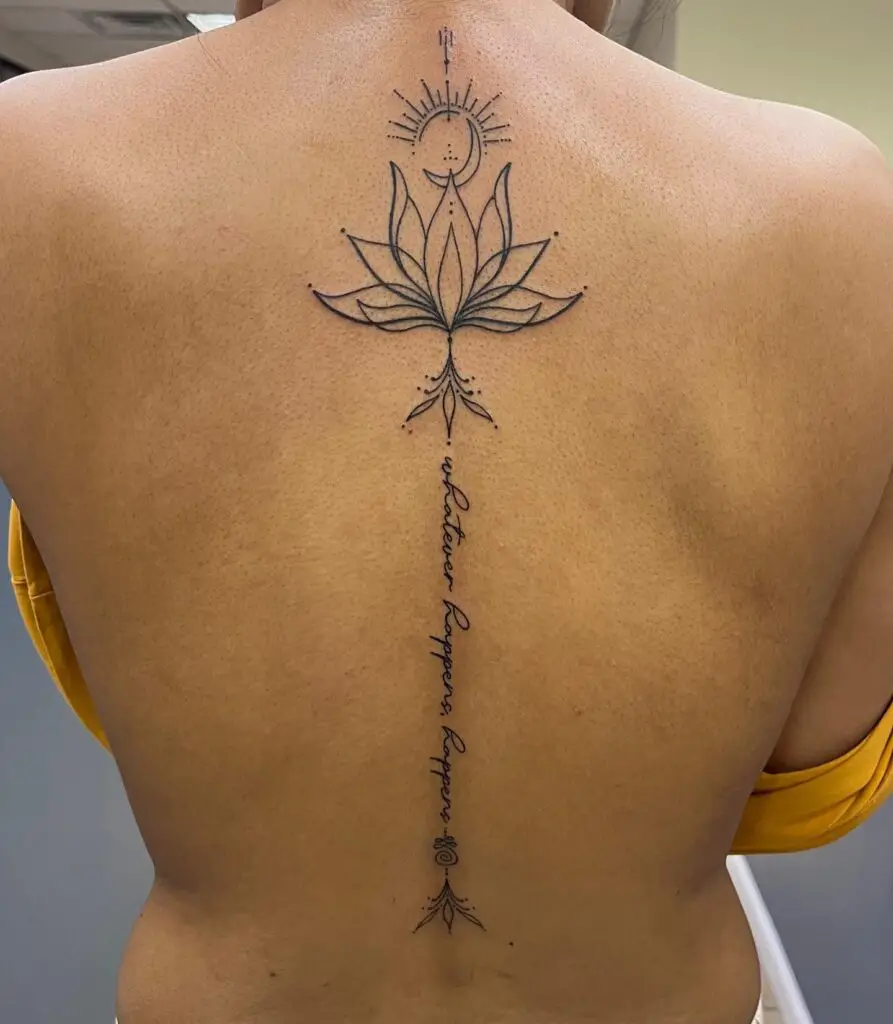
A lotus mandala centred on the upper or lower spine, the circular form sitting perfectly on the vertebral column. The spine placement has natural spiritual associations and places the mandala at the body’s central line. Can extend downward with a small lotus bloom at the base.
3. Sternum Lotus Mandala

A lotus mandala on the sternum: the circular composition centred on the breastbone with petals and geometric elements extending outward. The sternum placement is dramatic and intimate. One of the most popular placements for this design on women.
4. Back of Neck Lotus Mandala

A medium-scale lotus mandala on the back of the neck, the design visible above a collar. The nape placement has a specific quality: visible in certain clothing, concealed in others. The lotus mandala here reads as a personal talisman.
5. Full Back Lotus Mandala

A full back lotus mandala: the design at a scale that fills the entire back, the lotus at the centre with mandala rings extending to the edges. A significant commitment that produces one of the most impressive large-scale tattoo compositions available. Requires multiple sessions with an experienced geometric artist.
6. Watercolour Lotus Mandala

A lotus mandala in watercolour technique: the geometric structure of the mandala in fine black line with watercolour washes of colour in the lotus petals. The combination of geometric precision and painterly colour creates a striking contrast. The colour in the petals against the black line of the mandala.
7. Coloured Mandala with White Lotus
A mandala in deep colour with the lotus petals left in white or very pale tones, the lotus appearing to emerge from the coloured geometry. The contrast between the rich coloured mandala and the pale lotus creates a design that reads as the lotus floating above the pattern beneath it.
8. Unalome Lotus Mandala

A lotus mandala with an unalome: the Buddhist spiral symbol representing the path to enlightenment, rising from the centre of the lotus. The unalome and lotus are already a natural pairing. Adding the mandala creates the complete spiritual composition: the path, the emergence, and the universal pattern.
9. Dotwork Lotus Mandala

A lotus mandala executed entirely in dotwork: each line of the mandala composed of carefully placed dots rather than solid ink. The dotwork technique creates a mandala with a different visual texture: the design appears to be made of light and space rather than solid forms. Exceptionally fine detail at close range.
10. Ribcage Lotus Mandala

A lotus mandala on the ribcage, the design following the natural curve of the ribs. The ribcage placement makes the lotus mandala visible in side profiles and with certain clothing. The curved surface of the ribs gives the mandala a slightly different appearance in motion.
11. Ankle Lotus Mandala

A small but detailed lotus mandala on the ankle or inner ankle. Scaled down for placement precision rather than size. The ankle lotus mandala works as a personal marker that is visible in sandals and bare feet but concealed in most footwear.
12. Geometric Half Lotus Mandala

A lotus mandala where one half is the organic botanical lotus form and the other half is the pure geometric mandala pattern. The split composition makes explicit the two elements that the design normally blends. A concept piece for those who want the contrast made visible.
13. Lotus Mandala with Moon Phases

A central lotus mandala with moon phases arranged in a row beneath or around it. The addition of the lunar cycle adds a time element to the sacred geometry: the mandala as the unchanging pattern, the moon phases as the cycle of change. Fine line black and grey.
14. Lotus Mandala Sleeve Element

A lotus mandala as the anchor element of a sleeve: the large mandala on the upper arm or shoulder with floral or geometric elements extending down toward the elbow. The lotus mandala as a sleeve centrepiece rather than a standalone piece.
15. Multi-Layered Gradient Mandala
A lotus mandala where each concentric ring is in a slightly different shade, creating a gradient effect from the dark outer rings to pale inner rings or vice versa. The gradient gives the mandala depth: the sense that the pattern has layers and that the lotus emerges from within rather than sitting on top.
16. Lotus Mandala with Hamsa
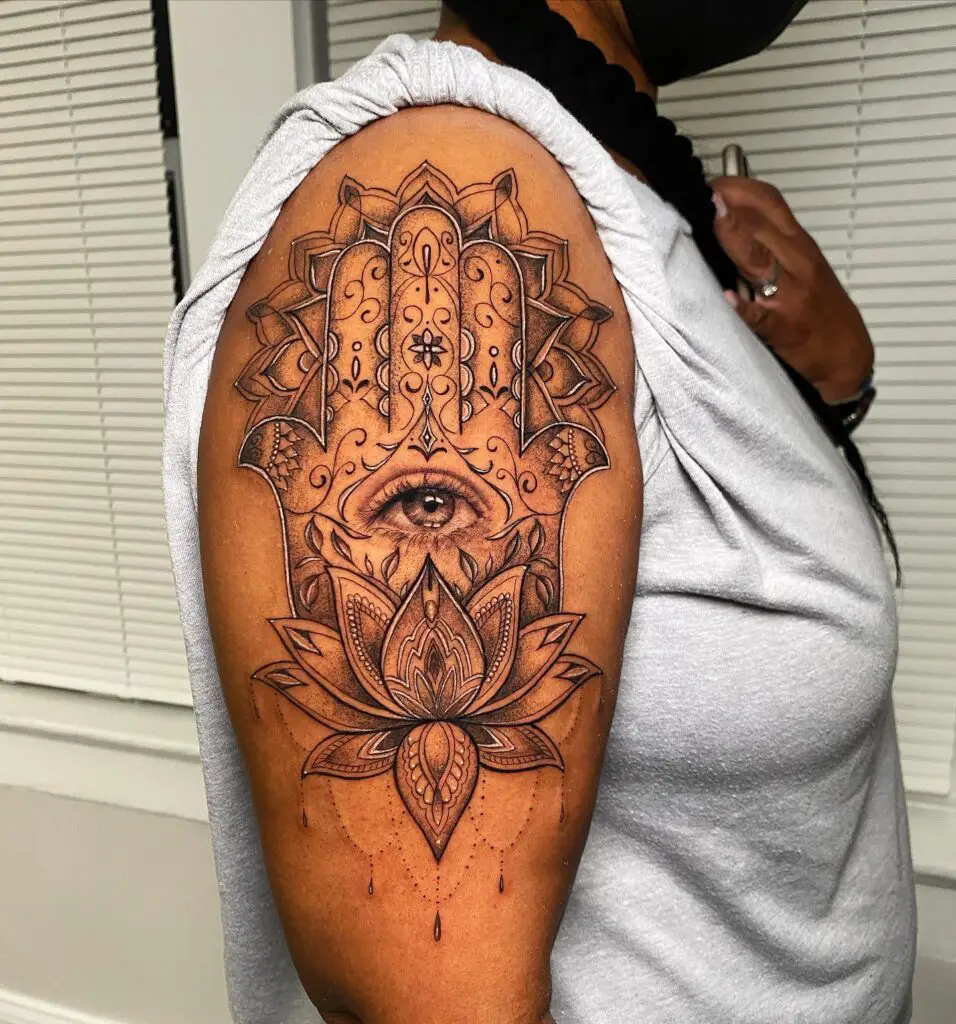
A lotus mandala incorporating the hamsa hand symbol: the hand of protection placed at the centre of the mandala, the lotus petals forming the frame. The hamsa and lotus are both ancient protective and auspicious symbols. The mandala structure unifies them.
17. Ornamental Lotus Mandala

A lotus mandala in ornamental style: fine black line, jewel-like detail, the mandala rings composed of intricate repeating ornamental patterns rather than simple geometric lines. The ornamental approach creates a mandala that reads as jewellery rather than pure geometry.
18. Shoulder Cap Lotus Mandala

A lotus mandala centred on the shoulder cap: the circular design fitting the round of the shoulder, petals and mandala elements extending down the upper arm and onto the shoulder blade. The shoulder cap placement uses the natural roundness of the shoulder to enhance the mandala’s circular form.
19. Matching Lotus Mandala Pair
The same lotus mandala design placed on matching positions on two people: inner wrists, ankles, or the backs of shoulders. The matching lotus mandala as a paired design for partners, close friends, or family members. The shared mandala as a symbol of shared values or connection.
20. Abstract Decomposed Lotus Mandala
A lotus mandala where the geometric elements break apart at the edges, the clean lines of the mandala dissolving into loose brushstroke-style marks or geometric fragments. The decomposed mandala is a contemporary interpretation that questions the idea of perfect pattern: order at the centre, dissolution at the edges.
Finding a Geometric Specialist
Lotus mandala tattoos require an artist with specific geometric skills. The symmetry must be exact: even small deviations in the circular geometry are immediately visible. Look for an artist who lists geometric or mandala work as a speciality and review their portfolio specifically for mandala precision. A well-executed lotus mandala is one of the most technically demanding tattoo styles.