
The magnolia is one of the oldest flowering plants on earth, its family predating bees by millions of years. The flower’s large, clean petals and simple structure have survived essentially unchanged for that entire time, which says something about the quality of the original design. As a tattoo subject, the magnolia is one of the most rewarding large-petalled florals: the petal surfaces have a natural smoothness that suits shading, the buds have a pointed elegance before opening, and the branch structure creates natural compositional frameworks.
These 20 ideas cover the range of magnolia tattooing across styles and placements.
The Magnolia’s Symbolism
The magnolia carries associations with endurance, nobility, and the beauty that exists because it has always existed rather than because it is fashionable. In Chinese culture, the magnolia (yulan) is associated with purity and feminine elegance. In the American South, it is associated with dignity, resilience, and the particular quality of beauty that does not announce itself but simply is. For tattooing purposes, it is also one of the most technically satisfying florals to render.
20 Magnolia Tattoo Ideas
1. Fine Line Magnolia Branch
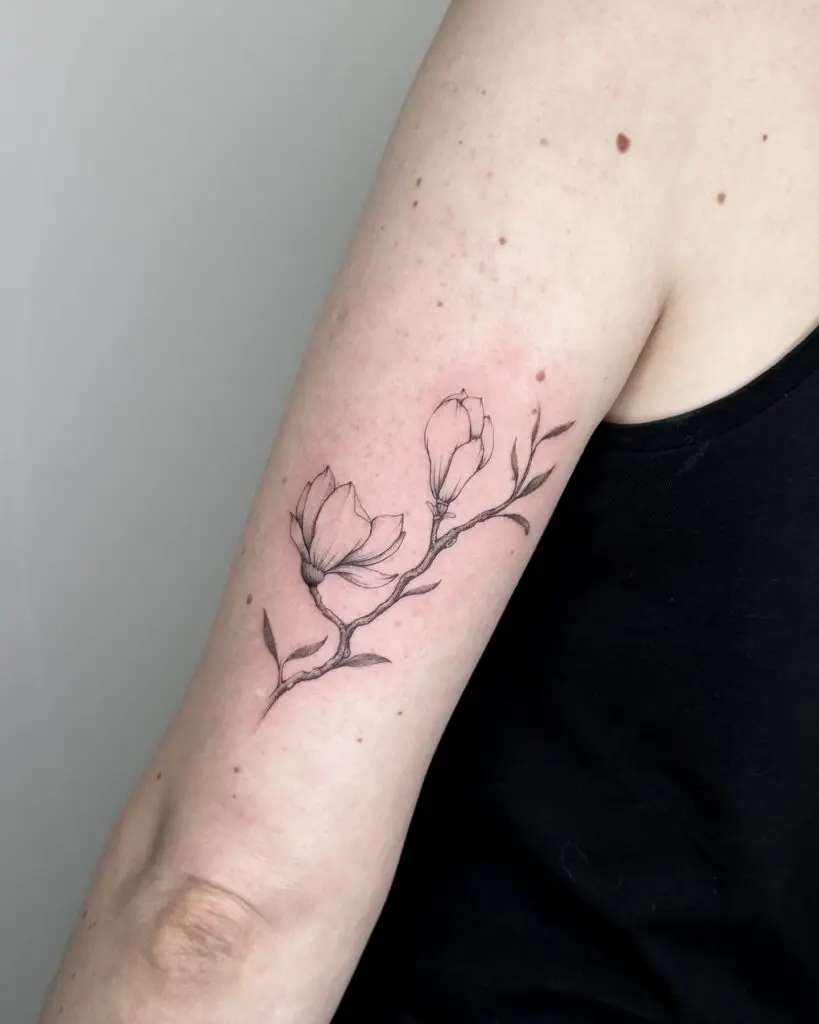
Photo: @jasminwalshtattoo
A magnolia branch in fine line: the bare branch with several flowers at various stages of opening, from tight bud to full bloom. The branch structure creates a natural composition with organic movement. In fine line black and grey, the petals’ smooth surfaces create a clean, architectural quality.
2. Single Open Bloom
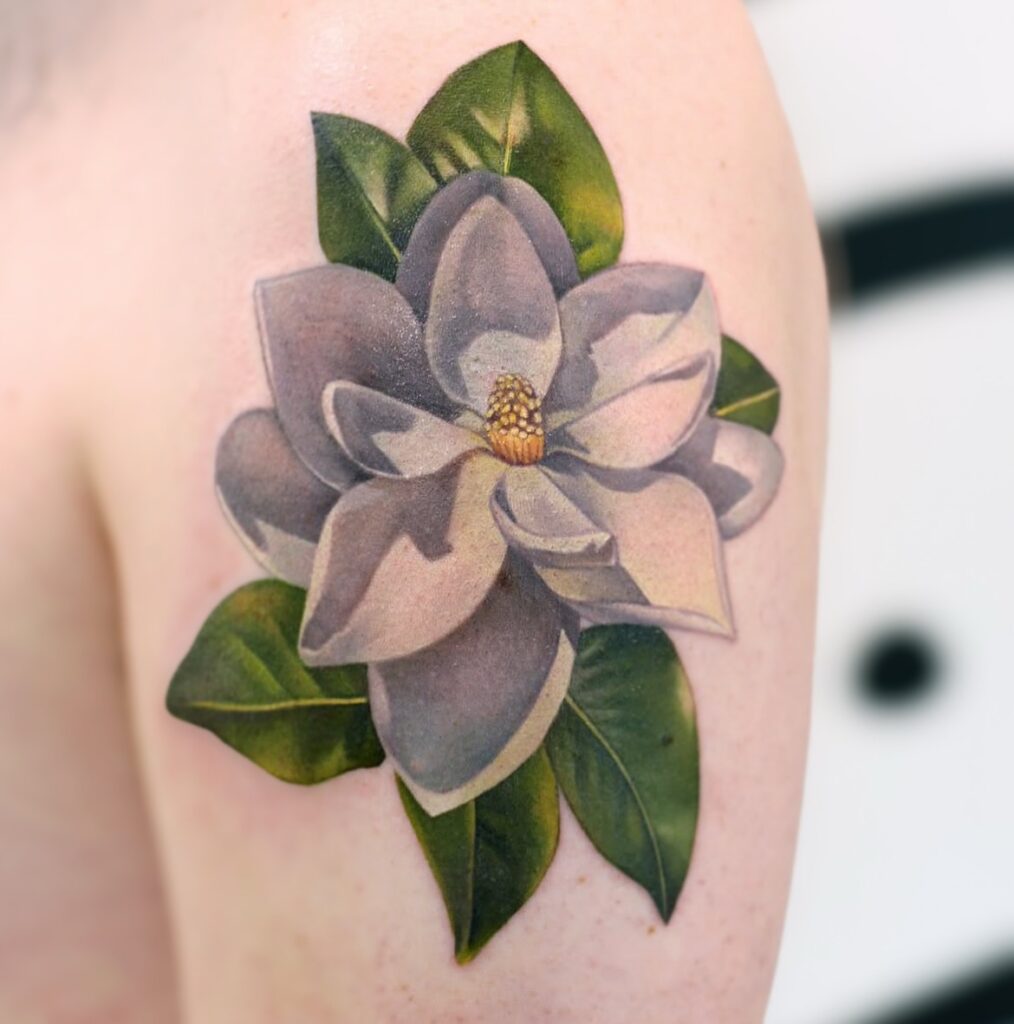
Photo: @inkgallerynj

One fully open magnolia bloom in detailed black and grey or colour realism. The open magnolia’s large, clean petals and distinctive central cone make a single bloom a complete and powerful design. At forearm or thigh scale, the petal surfaces can be rendered with real tonal depth.
3. Magnolia Shoulder Piece
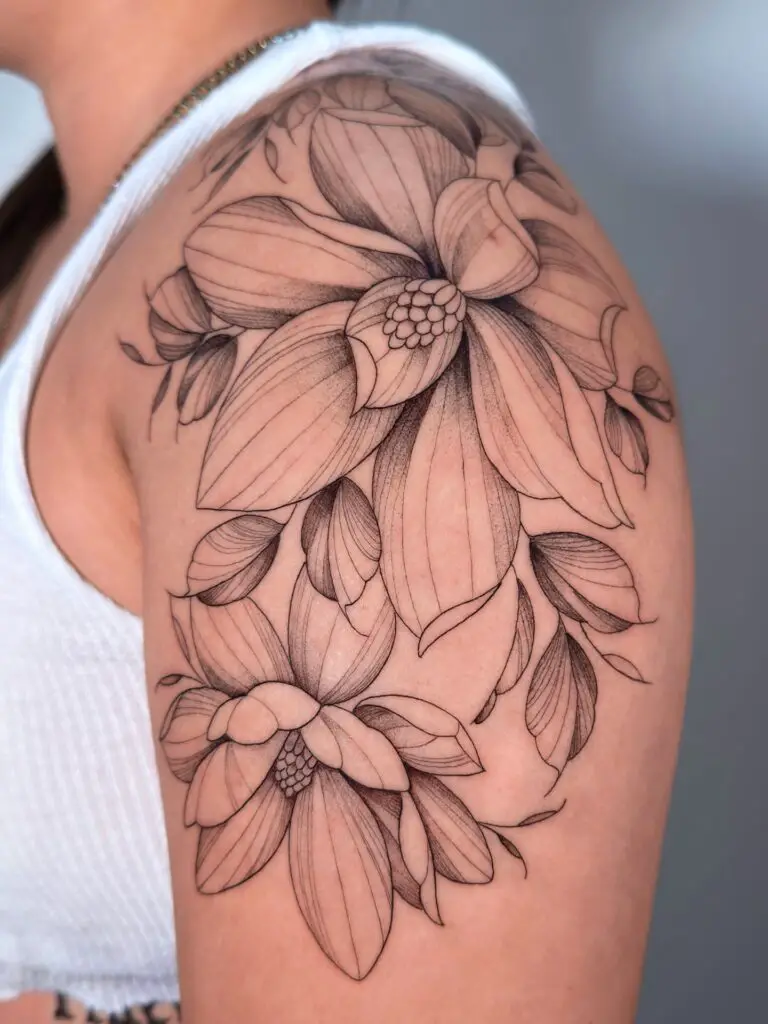
Photo: @inkwith.sarah
A magnolia branch extending across the shoulder, blooms and buds following the shoulder’s curve from the upper chest toward the arm. The shoulder placement gives the magnolia branch a three-dimensional quality as it wraps from flat chest to rounded shoulder.

4. Watercolour Magnolia
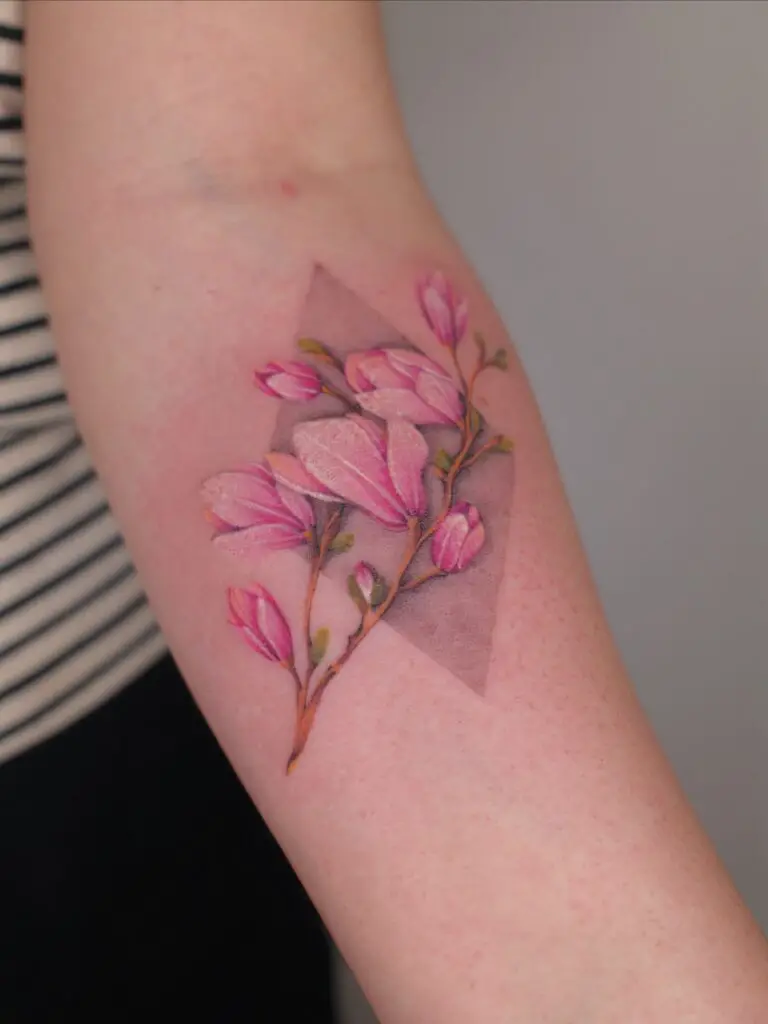
Photo: @maiko.only
A magnolia in watercolour technique: the petals in soft washes of white, cream, and pale pink, the centre in deeper tones. The watercolour approach creates a magnolia that looks painted rather than outlined. The soft transitions between tones suit the magnolia’s naturally smooth petal surfaces.
5. Blackwork Magnolia
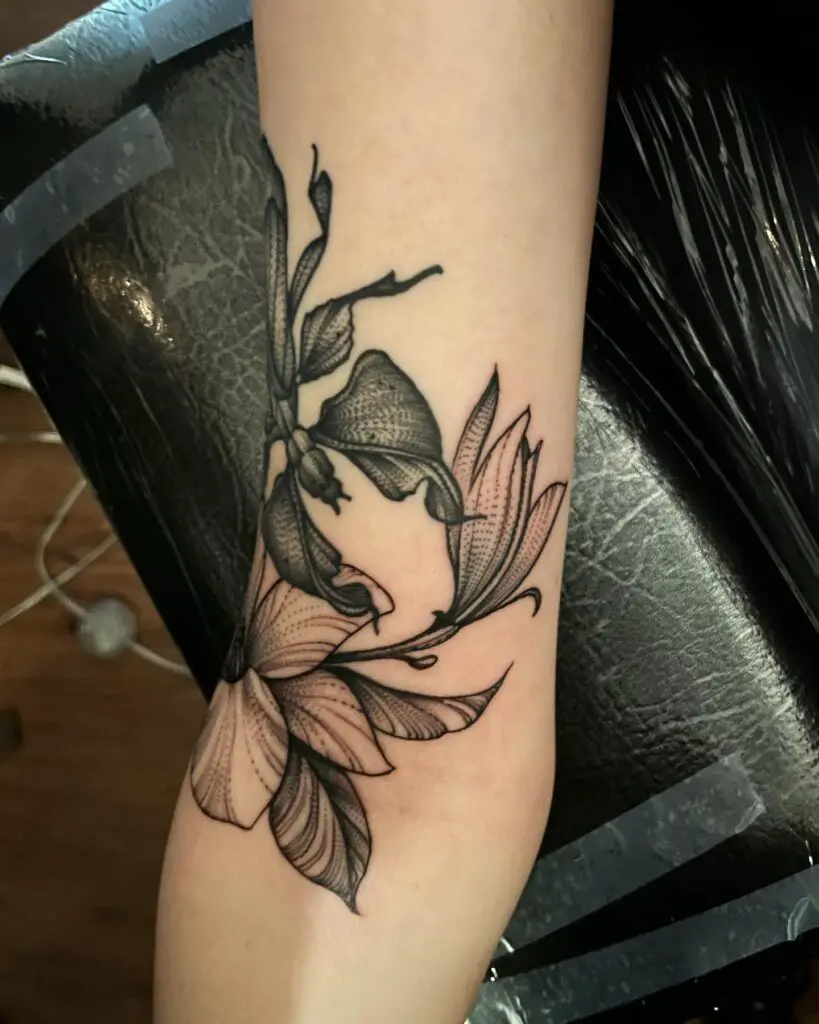
Photo: @jacobkearney
A magnolia in pure blackwork: the petals rendered in bold black outlines and negative space, the central cone in dense black. The blackwork treatment creates a graphic, architectural magnolia distinct from the soft tonal versions. The flower’s clean petal shapes suit the precision of blackwork.
6. Magnolia and Bird
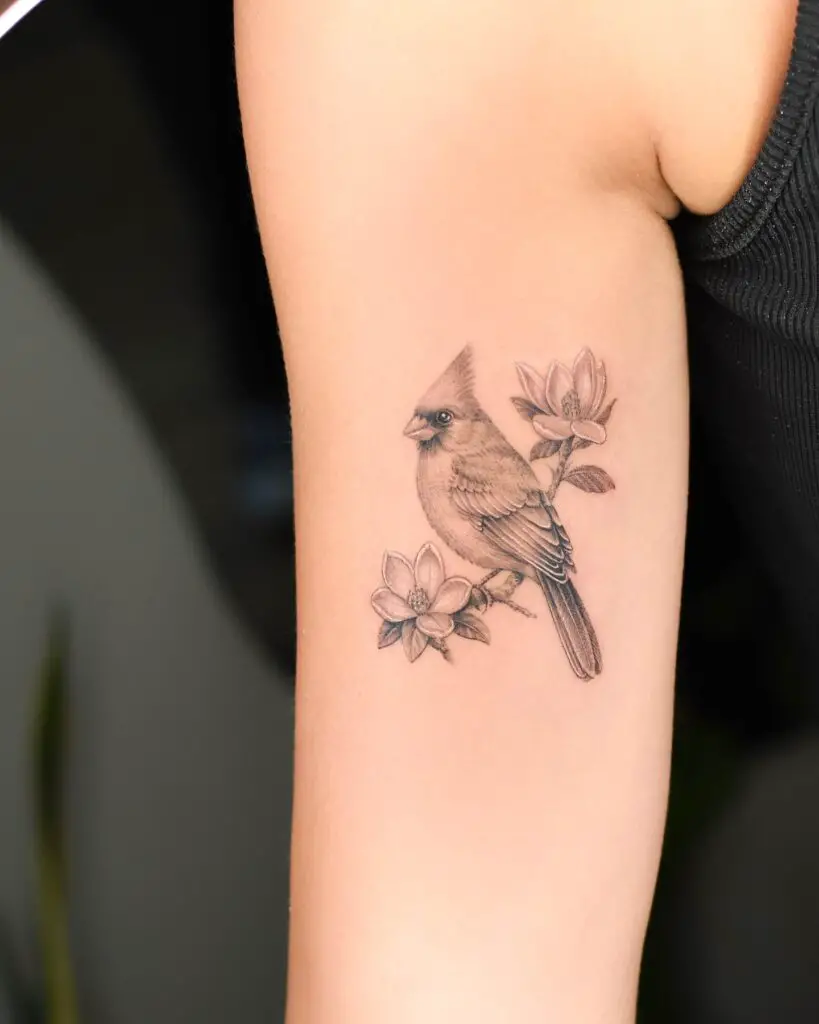
Photo: @bryan.gee
A magnolia branch with a bird: a sparrow, a bluebird, or a robin perched among the flowers. The bird and magnolia combination is a classical composition in East Asian painting traditions. In fine line or in neo-traditional style, the bird adds life and movement to the botanical subject.
7. Magnolia Back Piece
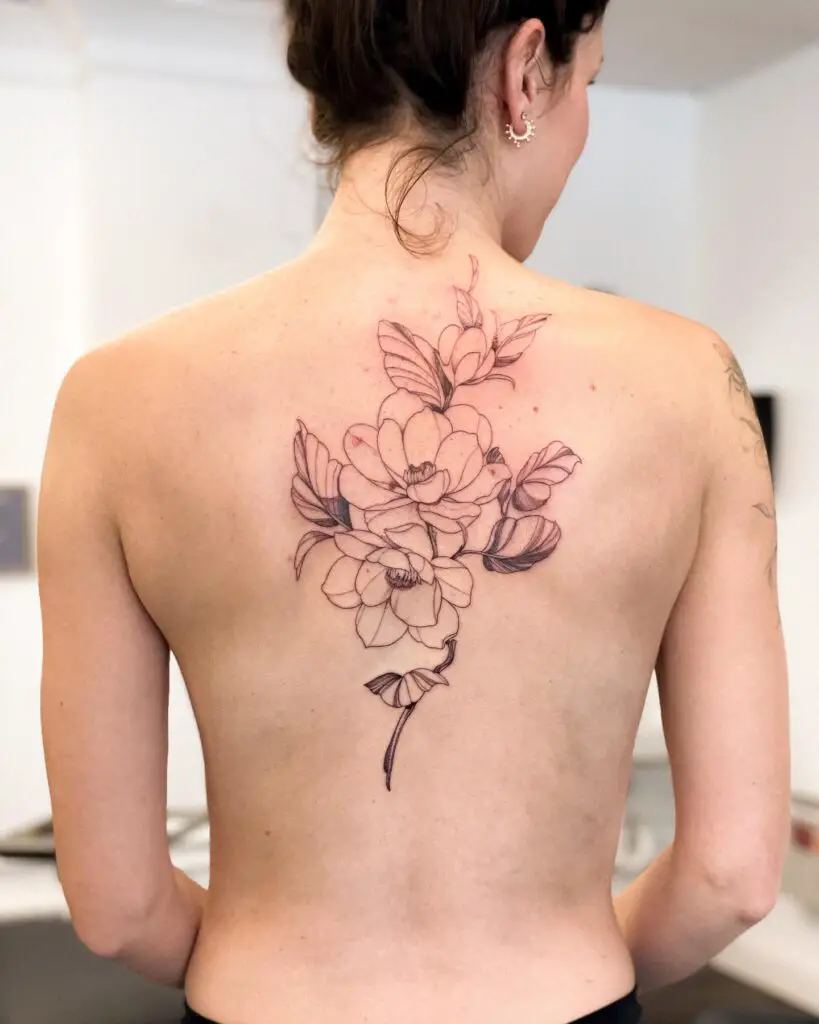
Photo: @caseybresso
Magnolia branches across the upper back or full back, the flowers at multiple scales creating a composition that uses the back’s broad surface. The magnolia’s large blooms suit back scale: the petals can be rendered with detail at the size the back allows.
8. Japanese Magnolia
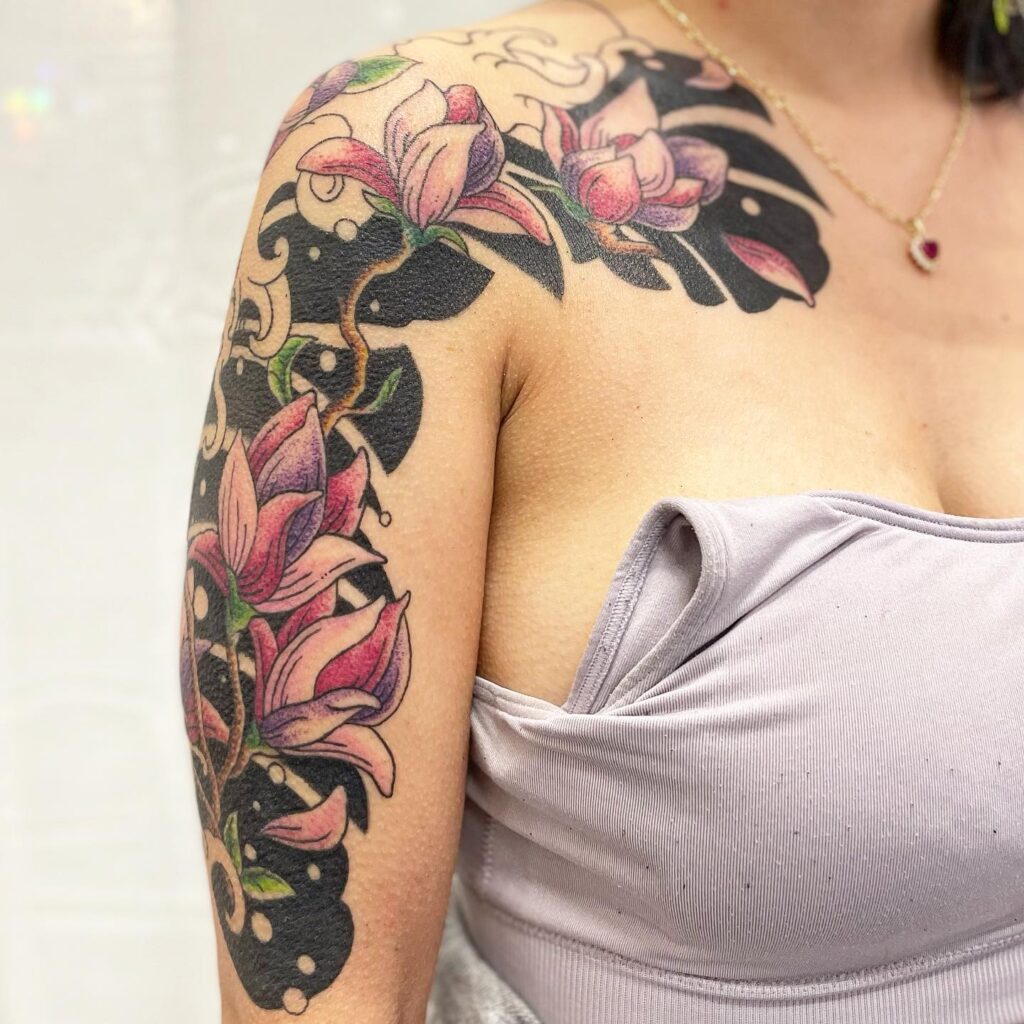
Photo: @belltreeink
A magnolia in the formal vocabulary of Japanese tattooing: bold outlines, the petals in the decorative quality of irezumi, the branch rendered with the specific brushwork authority of the tradition. The magnolia appears in Japanese botanical art and suits the Japanese tattoo tradition’s formal treatment of natural subjects.
9. Magnolia and Moon
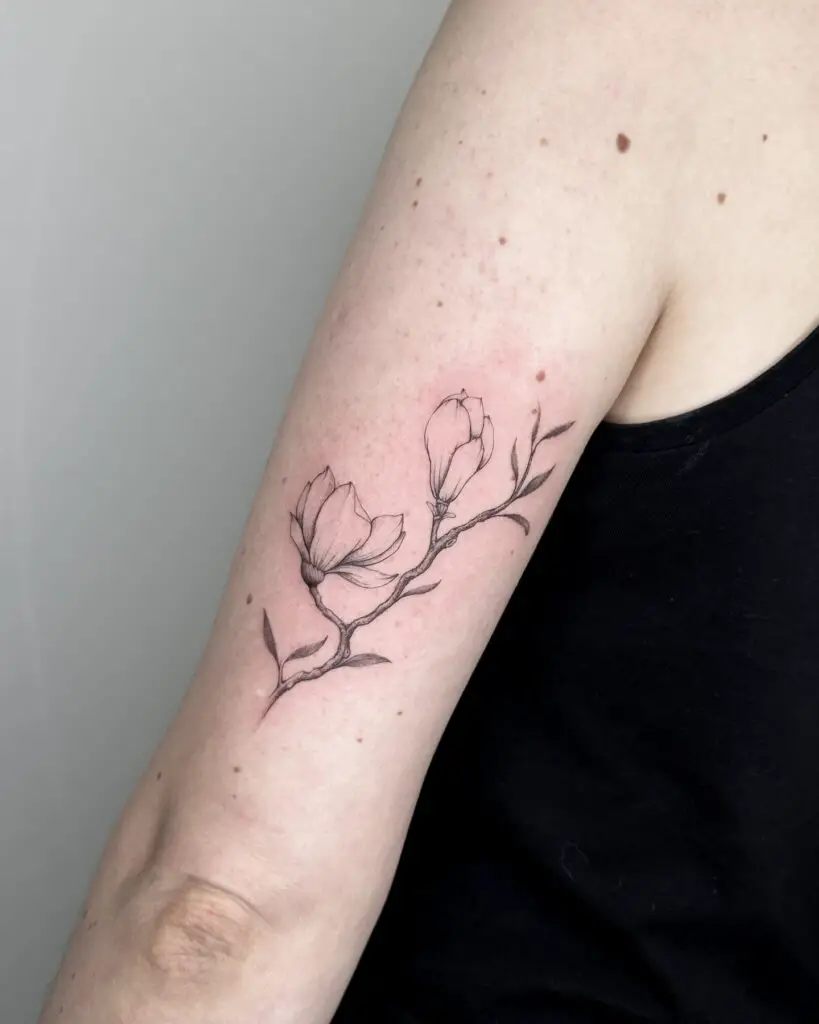
Photo: @jasminwalshtattoo
A magnolia branch with a moon visible through or beside the flowers. The magnolia blooms before its leaves appear, making it a marker of the earliest spring. The moon alongside the magnolia creates a composition about the transition between seasons and the appearance of beauty before the world is ready.
10. Neo-Traditional Magnolia
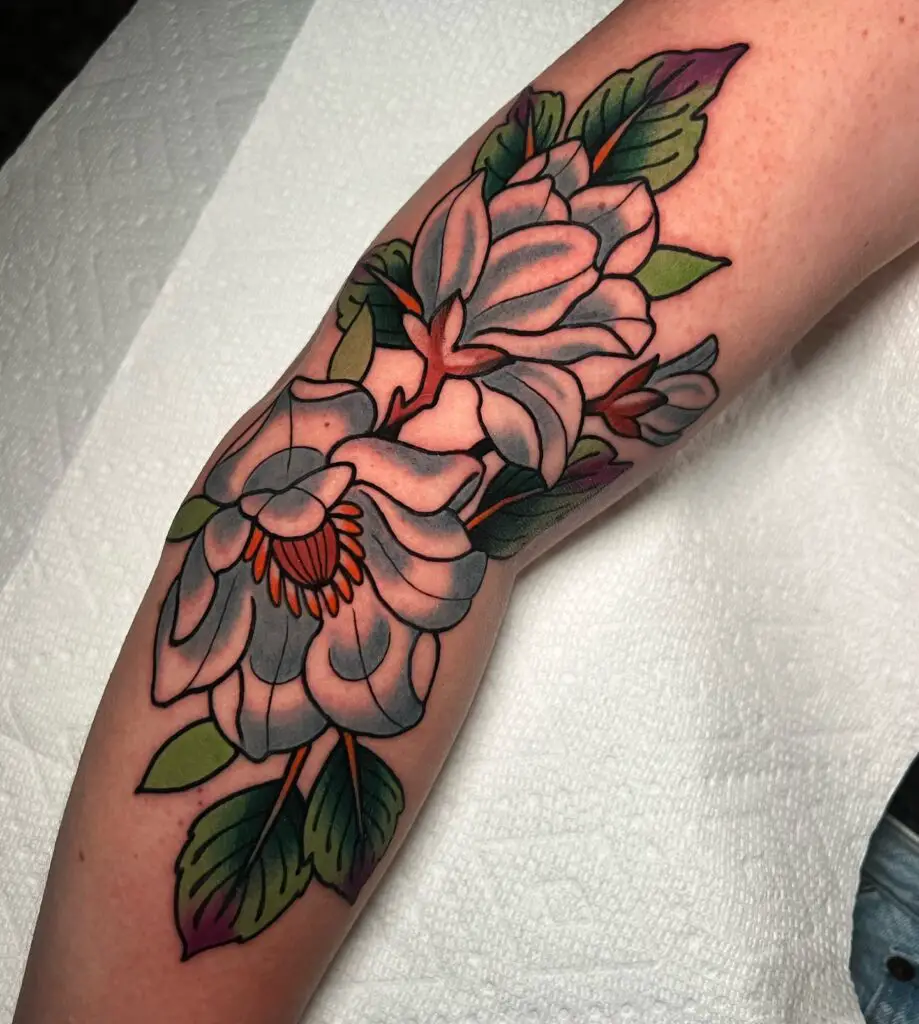
Photo: @inkbybrina
A magnolia in neo-traditional style: bold lines, dimensional shading, the petals’ smooth surfaces rendered in controlled colour fills. The neo-traditional approach brings visual weight and contemporary illustrative quality to a classically elegant floral subject.
11. Magnolia Forearm Piece
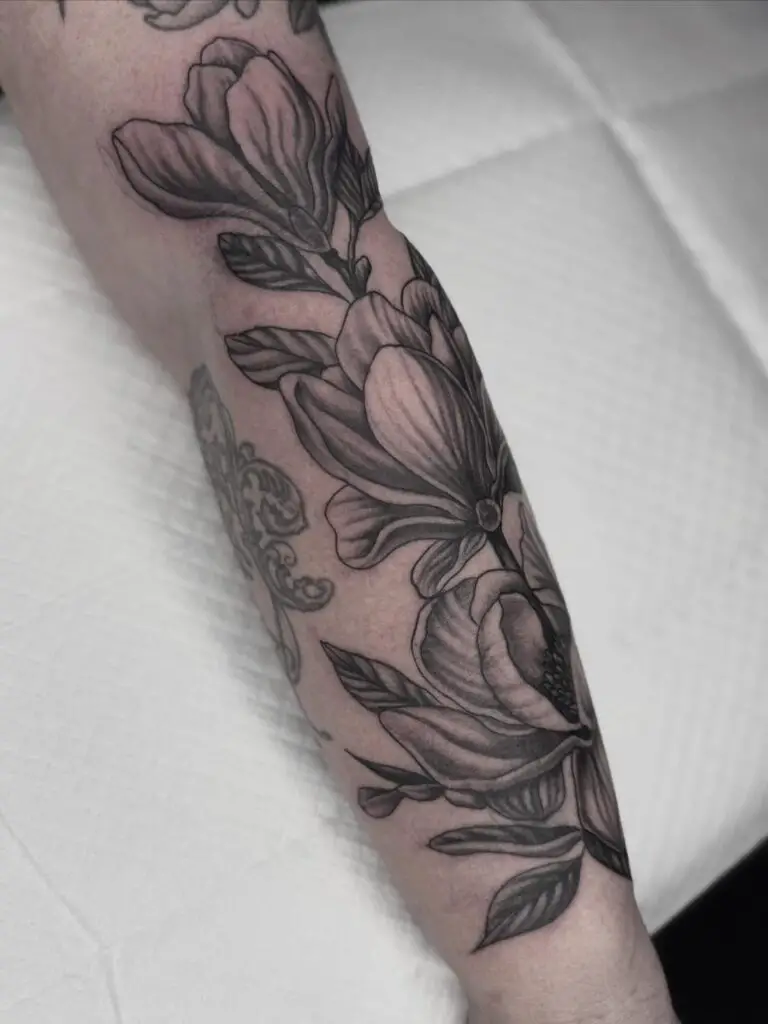
Photo: @chandlerbtattoo
A magnolia branch running the length of the inner forearm, a single bloom at the wrist and the branch ascending toward the elbow. The forearm’s length suits a magnolia branch composition naturally. The single prominent bloom at the lower end creates a focal point while the branch creates movement.
12. Pink Magnolia in Colour
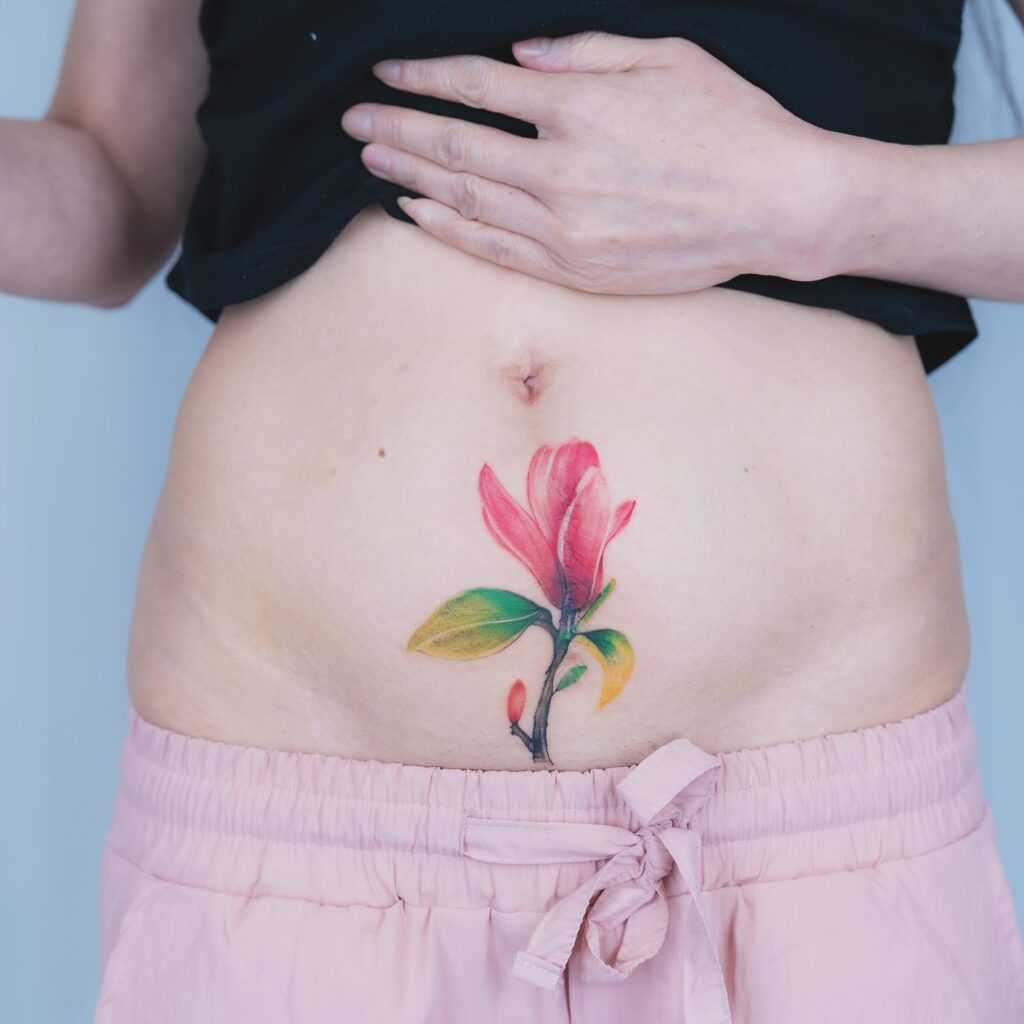
Photo: @leo.6tattoo
A pink magnolia (Magnolia x soulangeana) in colour realism: the characteristic deep pink to pale pink gradient of the petals rendered with careful colour work. The pink magnolia is one of the most visually distinctive spring flowers. In colour realism, the petal gradient from deep base to pale tip creates natural tonal interest.
13. Magnolia and Butterflies
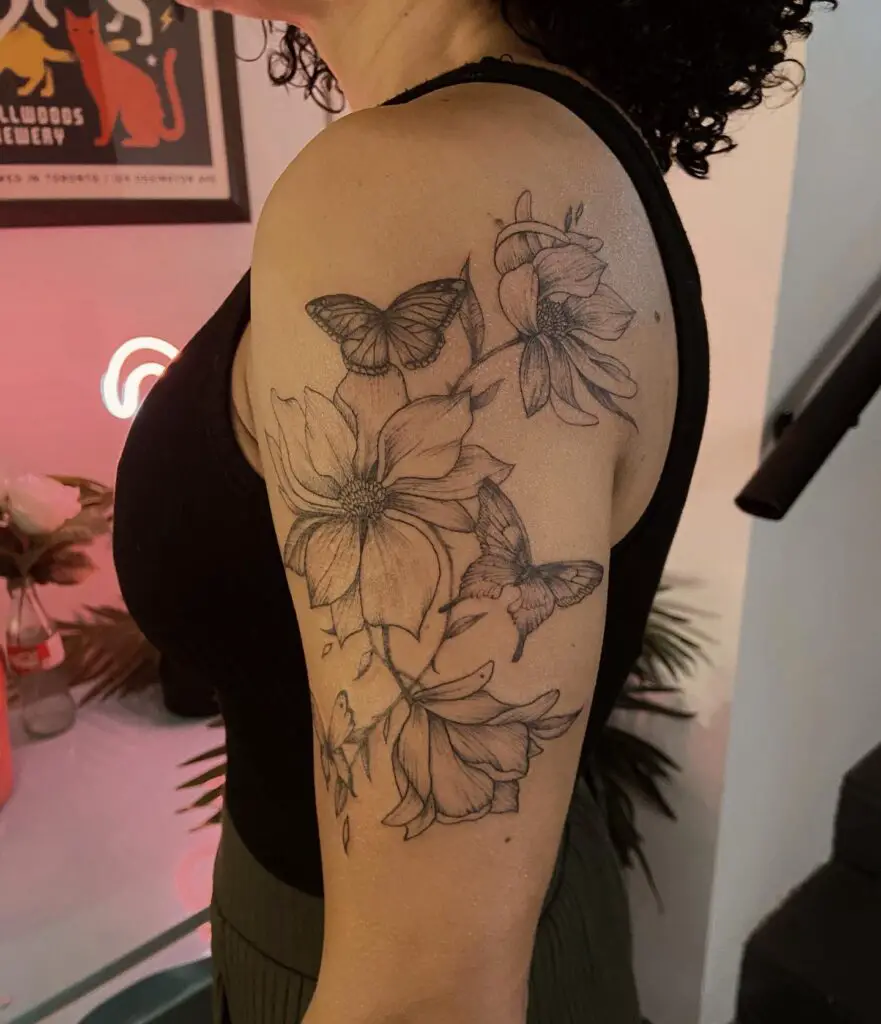
Photo: @bailey.tattoos
Magnolia blooms with butterflies among the flowers. The magnolia predates butterflies evolutionarily but the visual pairing creates a composition about delicate beauty and the arrival of spring warmth. Fine line or neo-traditional style depending on the treatment preferred for both subjects.
14. Magnolia Spine
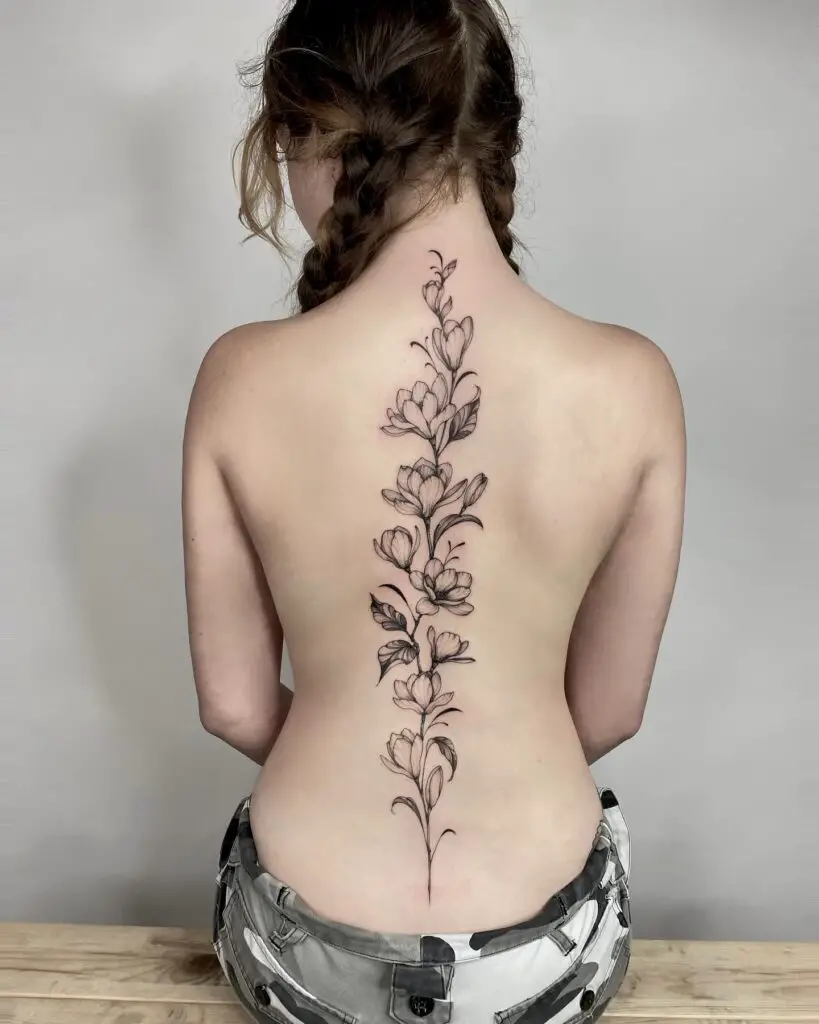
Photo: @i.want.it.black.tattoo
A magnolia branch running along the spine, the vertical stem of the branch following the spinal column with blooms extending outward. The magnolia’s branch structure suits the spine’s vertical format. The flowers can appear at intervals along the branch, creating visual anchors along the placement.
15. Botanical Illustration Magnolia
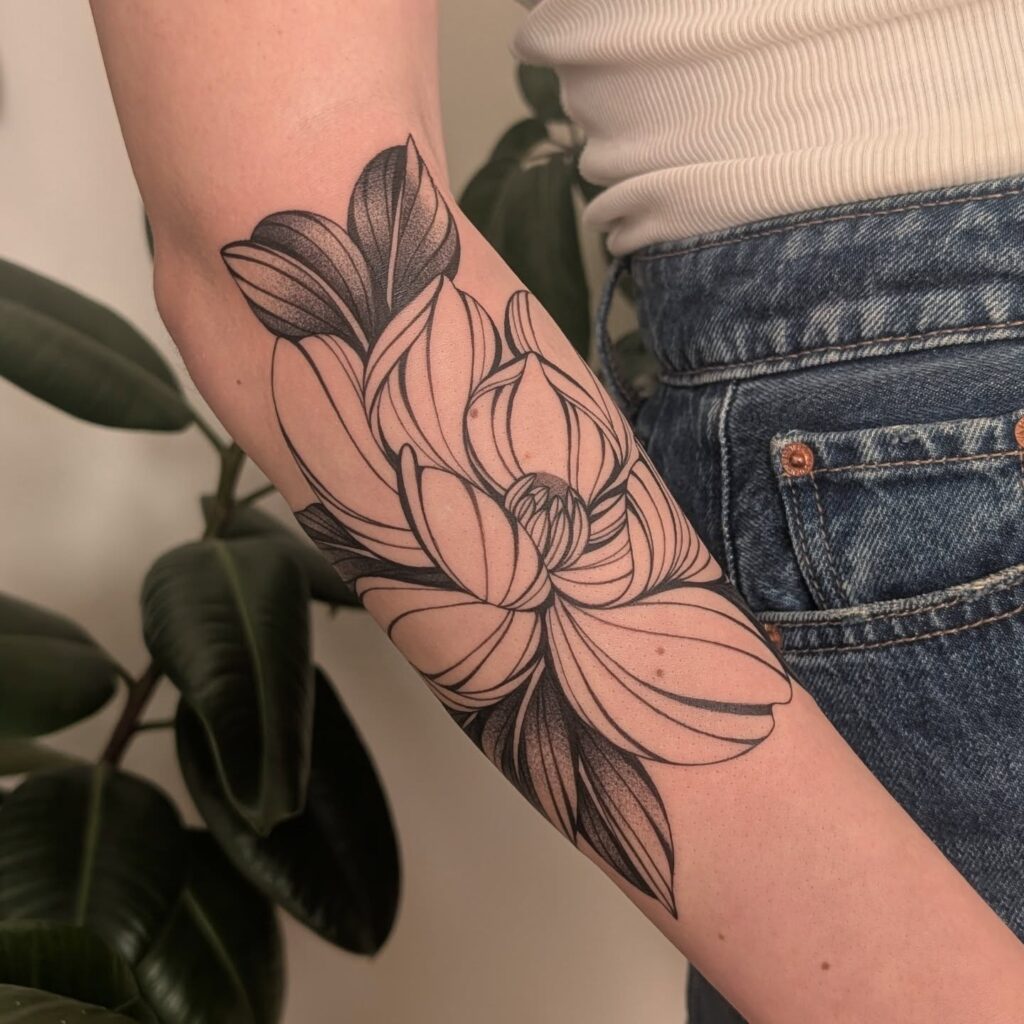
Photo: @j_nooodle
A magnolia in the precise style of scientific botanical illustration: accurate petal count and arrangement, the internal structure visible, the botanical details rendered with scientific fidelity. The botanical illustration style gives the magnolia the quality of a specimen rather than a decorative motif.
16. Magnolia and Cherry Blossom
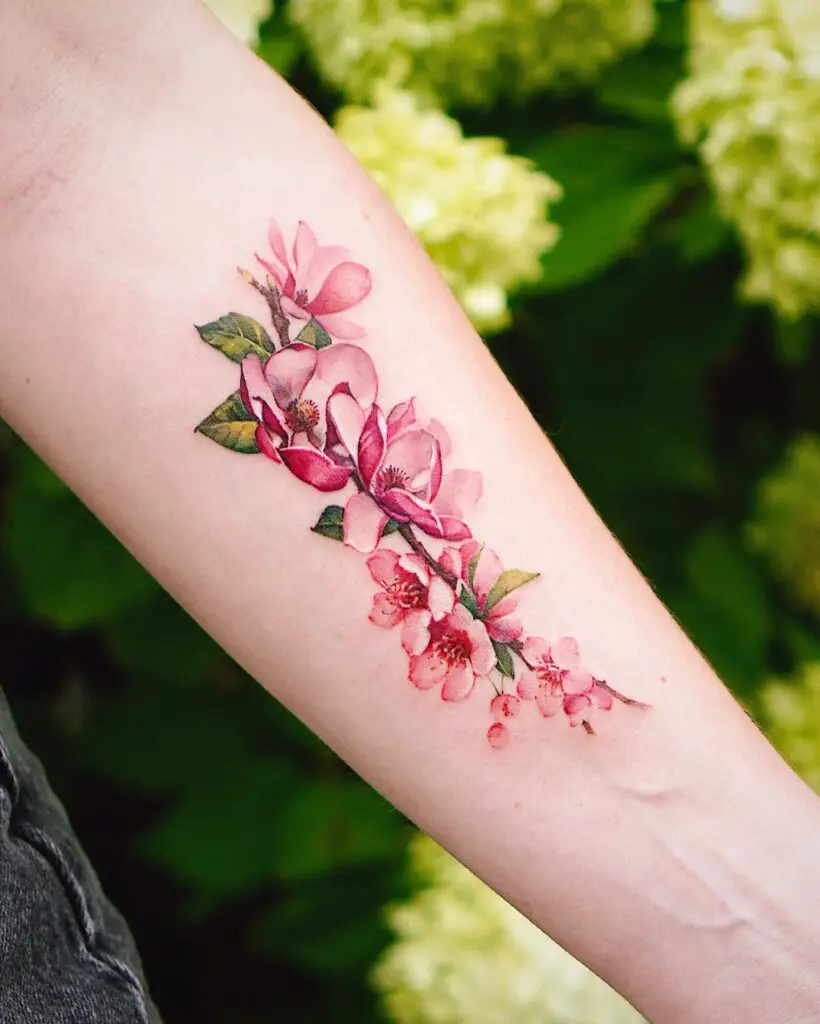
Photo: @abii_tattoo
Magnolia and cherry blossom on the same branch or in adjacent compositions. Both are spring-blooming trees that flower before their leaves appear. The pairing creates a composition specifically about the brief, beautiful moment before summer: two flowers associated with transient beauty.
17. White Magnolia in Greyscale
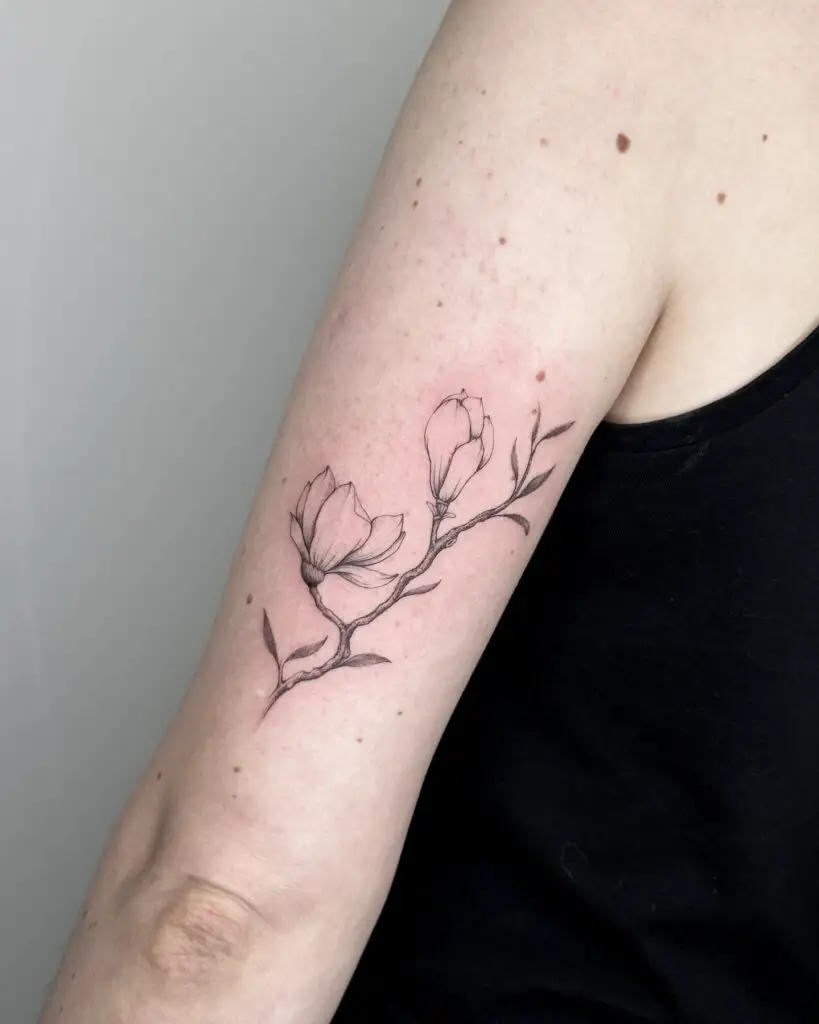
Photo: @jasminwalshtattoo
A white magnolia rendered in greyscale realism: the petals in the palest grey tones, the centre in slightly deeper values. White flowers are among the most technically interesting floral subjects for black and grey work because the artist must create luminosity through the near-absence of pigment. The magnolia’s smooth petals make this particularly effective.
18. Magnolia Sleeve
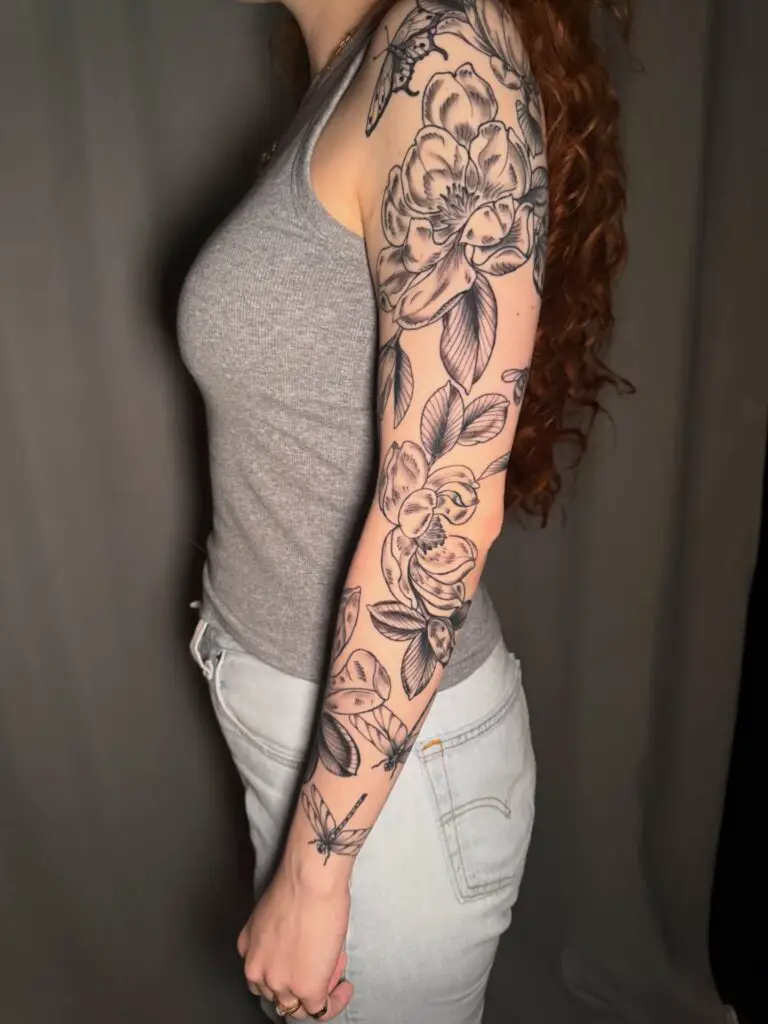
Photo: @shannon.tattoos
Magnolia branches building through a half or full sleeve, the flowers and buds creating a continuous botanical composition from shoulder to wrist or elbow. A magnolia sleeve in fine line or neo-traditional style is one of the most elegant botanical sleeve concepts available.
19. Magnolia and Architectural Element
A magnolia branch framed by or overlapping an architectural element: an arch, a window frame, or a geometric border. The combination of the organic branch with an architectural structure creates a composition about the relationship between the cultivated and the natural.
20. Southern Magnolia
The Southern magnolia (Magnolia grandiflora), with its distinctive glossy dark green leaves and large white flowers, in colour realism. The leaf colour, a deep shining green on top and coppery brown underneath, creates natural colour contrast that makes the composition visually rich even before the white flower is introduced. A specifically American botanical subject with strong regional associations.
The Magnolia in Black and Grey
The magnolia is one of the most effective floral subjects for black and grey tattooing because the smooth petal surfaces create ideal conditions for tonal shading. The artist can create depth and luminosity through value contrast alone without requiring colour. If you are considering a magnolia tattoo and are undecided about colour versus black and grey, look specifically at healed black and grey magnolia work: it is consistently one of the most beautiful applications of the style to a botanical subject.