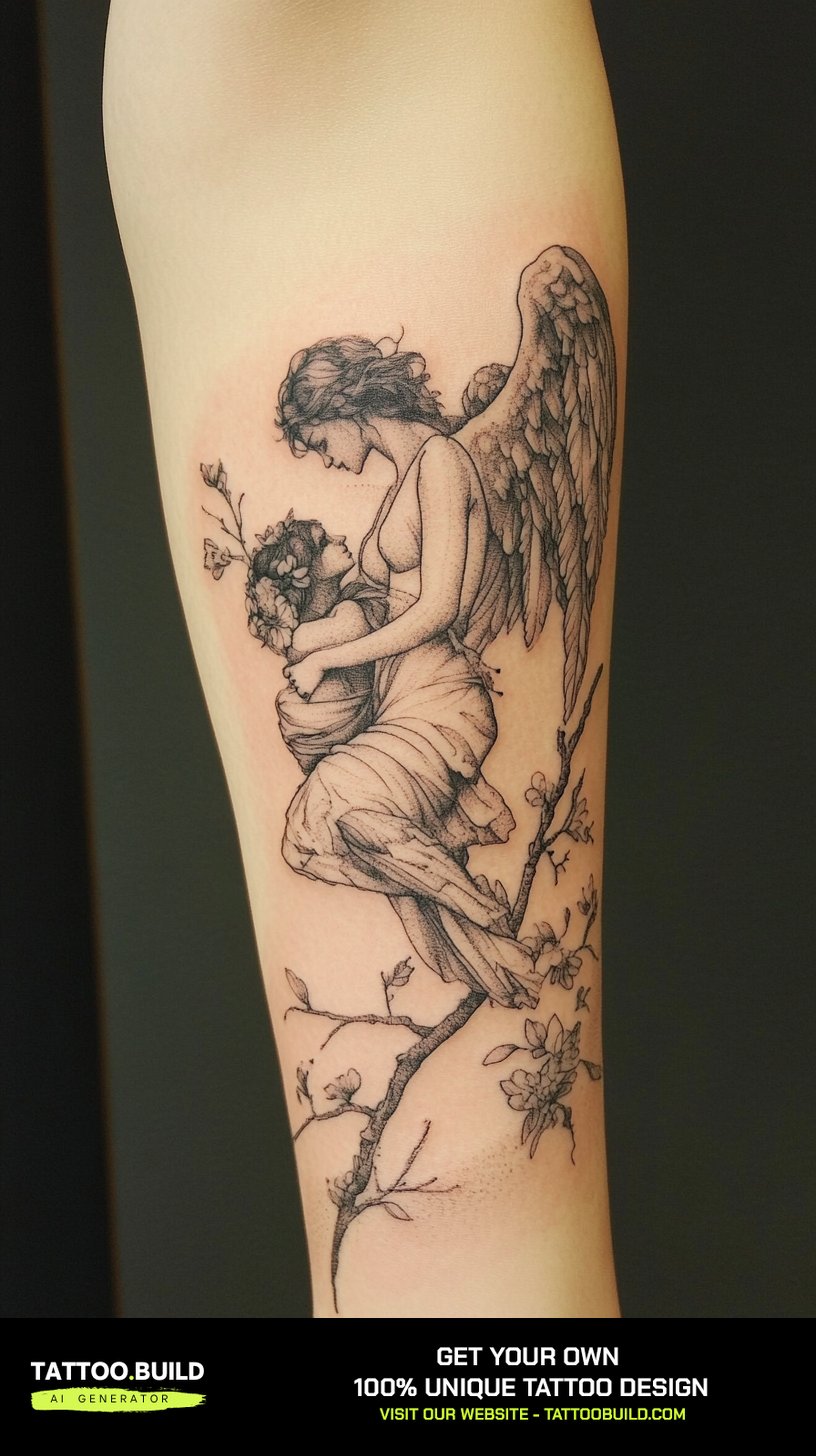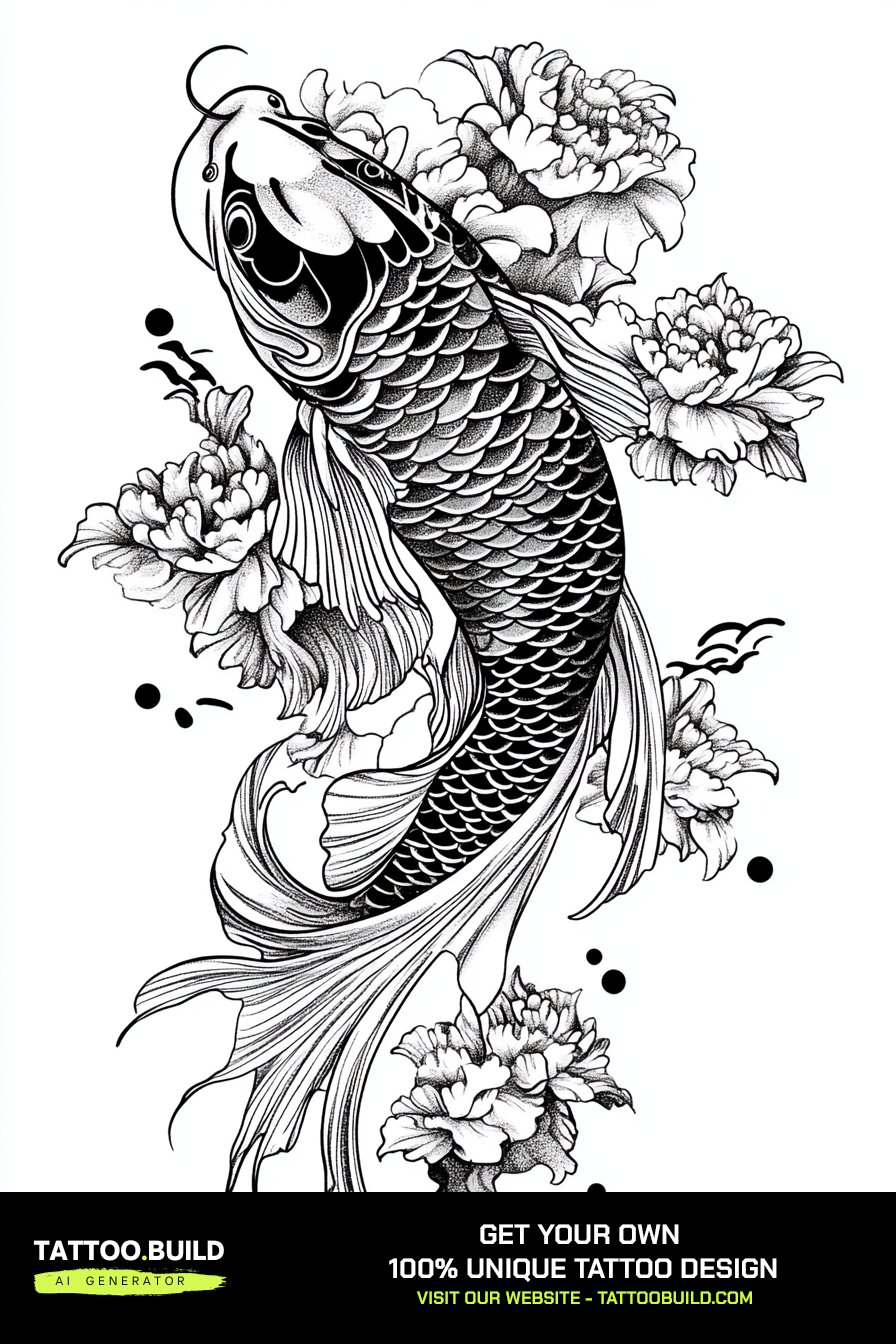
I have lost count of the number of consultations I have sat in on where someone opens their phone, scrolls past forty saved images, and lands on a moon. Moon tattoo ideas endure because the moon is one of the few symbols that reads as personal and universal at the same time — everyone who sees it brings their own meaning to it.
The moon also happens to be one of the most forgiving shapes in tattooing. A crescent bends around a wrist, a full moon anchors a landscape, and a phase sequence stretches along a collarbone or spine without fighting the body.
What follows is the list I actually hand people: fifteen directions worth taking, with honest notes on which ones hold up over a decade and which ones need touch-ups. If you are drawn to the wider night-sky family, our guide to celestial tattoo ideas covers the stars, planets and constellations that pair with these designs.
I have grouped them by style rather than by size, because in my experience style is what determines how the tattoo looks in year ten — not how big it was on day one.
Which Moon Tattoo Style Is Right for You?
Before the design, pick the style. It dictates the artist you should book, the budget, and how much maintenance the piece will need.
| Style | Best for | Placements that work | Ageing & upkeep |
|---|---|---|---|
| Fine line | Small, quiet, first tattoos | Inner wrist, ankle, behind the ear, collarbone | Softens and spreads slightly; expect a refresh eventually |
| Blackwork | Bold graphic statements | Forearm, calf, shoulder, upper back | The most durable option; solid black holds shape well |
| Grey wash realism | Photorealistic lunar surfaces | Upper arm, thigh, back | Subtle mid-tones can fade; needs a specialist |
| Watercolour | Soft, painterly colour | Shoulder, thigh, ribs — sun-protected areas | The highest-maintenance of the group; sunscreen is non-negotiable |
| Geometric & mandala | Symmetry and structure | Forearm, sternum, spine, back of arm | Ages well when line weight is varied rather than uniformly thin |
| Illustrative / storytelling | Landscapes, animals, scenes | Upper arm, thigh, back, half sleeve | Good longevity if the composition has real contrast |
What the Moon Symbolises — and Why It Changes Your Design
The moon carries different weight in different traditions, and being clear about which meaning you are after usually simplifies the design conversation enormously.
Cycles and change are the most common thread. The lunar cycle runs roughly 29.5 days from one new moon to the next, and it is traditionally divided into eight named phases — a fact worth knowing if you want a phase sequence that is astronomically correct rather than decorative. NASA’s overview of the moon’s phases is the reference I send people to before they commit to a sequence.
Intuition, femininity and the subconscious are the second cluster of meanings, which is why crescents so often appear alongside eyes, water, or florals rather than on their own.
Then there is the moon as a marker of a specific moment — a birth, a loss, a night that mattered. If your moon commemorates a date, bring the actual phase from that date rather than a generic crescent, because the shape itself becomes the memorial.
Every artist I have asked says the same thing here: people who arrive knowing which of those four meanings they are after leave with a better tattoo. The ones who arrive with only an aesthetic tend to over-decorate.
15 Moon Tattoo Ideas Worth Considering
1. Crescent Moon with Stars
This is the default request, and there is a reason it never gets old. A thin crescent with a handful of dotwork stars reads instantly, sits comfortably in a small footprint, and costs less than almost anything else on this list.
The trap is scale. When I have seen these go wrong, it is almost always because the stars were tattooed too small — single dots under about a millimetre can blur into a smudge as the ink settles over the years.
Ask your artist to vary the star sizes and to give at least a few of them a little more weight. The composition looks more deliberate and it survives ageing far better.
2. Full Moon Landscape
A full moon rising behind a treeline, a mountain ridge or a stretch of water turns a symbol into a scene. This is the design I recommend most often to people who want something meaningful but do not want an obviously symbolic tattoo.
It needs room. On anything smaller than roughly a palm’s width, the foreground detail collapses and you lose the depth that makes the piece work in the first place.
The single biggest factor here is contrast, not detail. A dark silhouette against an open, lightly shaded moon will still read clearly across a room in fifteen years; a scene rendered entirely in mid-greys will not.
3. Moon Phases Sequence
A row of moons moving from new to full and back again is the most literal way to tattoo the idea of change, and it suits linear body real estate beautifully — collarbone, spine, forearm, the outside of a calf.
Two decisions matter. First, how many phases: five, seven and eight all work, but eight is the traditional set and the one that reads as complete. Second, spacing — uneven gaps are the most common flaw I see in finished phase tattoos, and they are very hard to fix afterwards.
Ask for a stencil placed on the body and photographed before any needle touches skin. Our dedicated guide to moon phase tattoo ideas goes deeper on layouts and orientation.
Moon designs and the prompts behind them
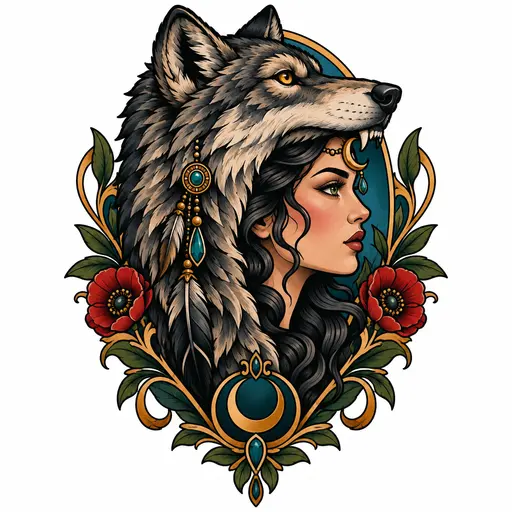
A woman's profile wearing a wolf-head headdress, a jewelled crescent moon on her brow
Use this idea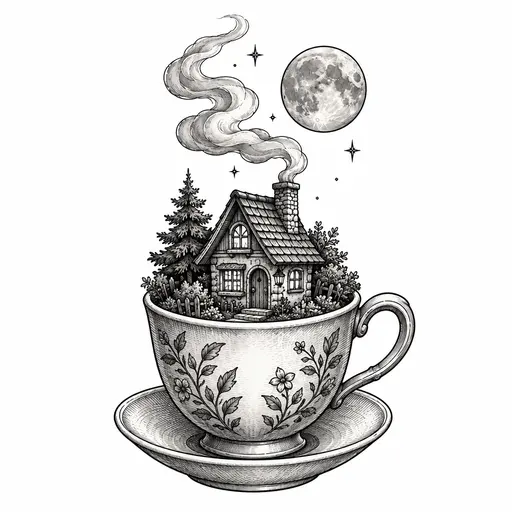
A tiny house inside a teacup, smoke curling from its chimney and a moon overhead, drawn like an old storybook etching
Use this idea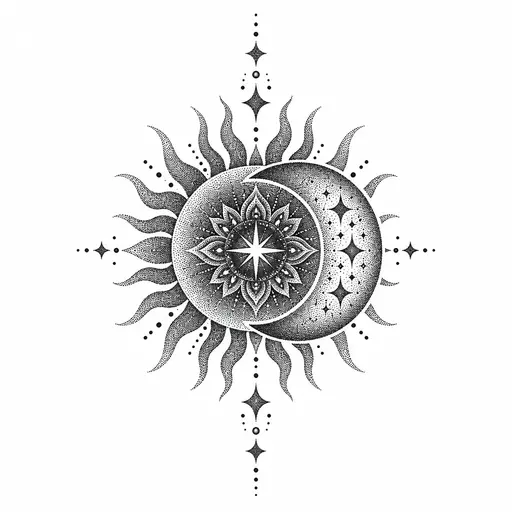
A sun and a crescent moon overlapping, shaded entirely in stippled dots that fade from dark to light
Use this idea
4. Geometric Moon
Framing a moon inside a triangle, a hexagon or a set of intersecting arcs gives the design structure without adding literal content. It is a good fit for people who want something modern rather than mystical.
The technical demand here is line consistency. Geometric work exposes a shaky hand immediately, so this is not a style to book with a generalist — look specifically for a portfolio full of clean, straight, unwavering lines.
In my experience the best geometric moons use two or three different line weights rather than one. It stops the piece from flattening into a diagram.
5. Watercolour Moon
Soft washes of blue, violet and teal bleeding out from a moon shape look extraordinary fresh, and this is genuinely one of the prettiest things you can put on skin.
I want to be honest about the trade-off, though. Watercolour relies on light, low-saturation pigment and often skips a black anchor line, and those are the two things that help a tattoo stay crisp. Expect it to soften faster than anything else in this article.
If you want watercolour, put it somewhere your clothes usually cover and use sunscreen on it forever. Our watercolour tattoo ideas guide has more on choosing an artist who builds in a subtle line structure underneath the colour.
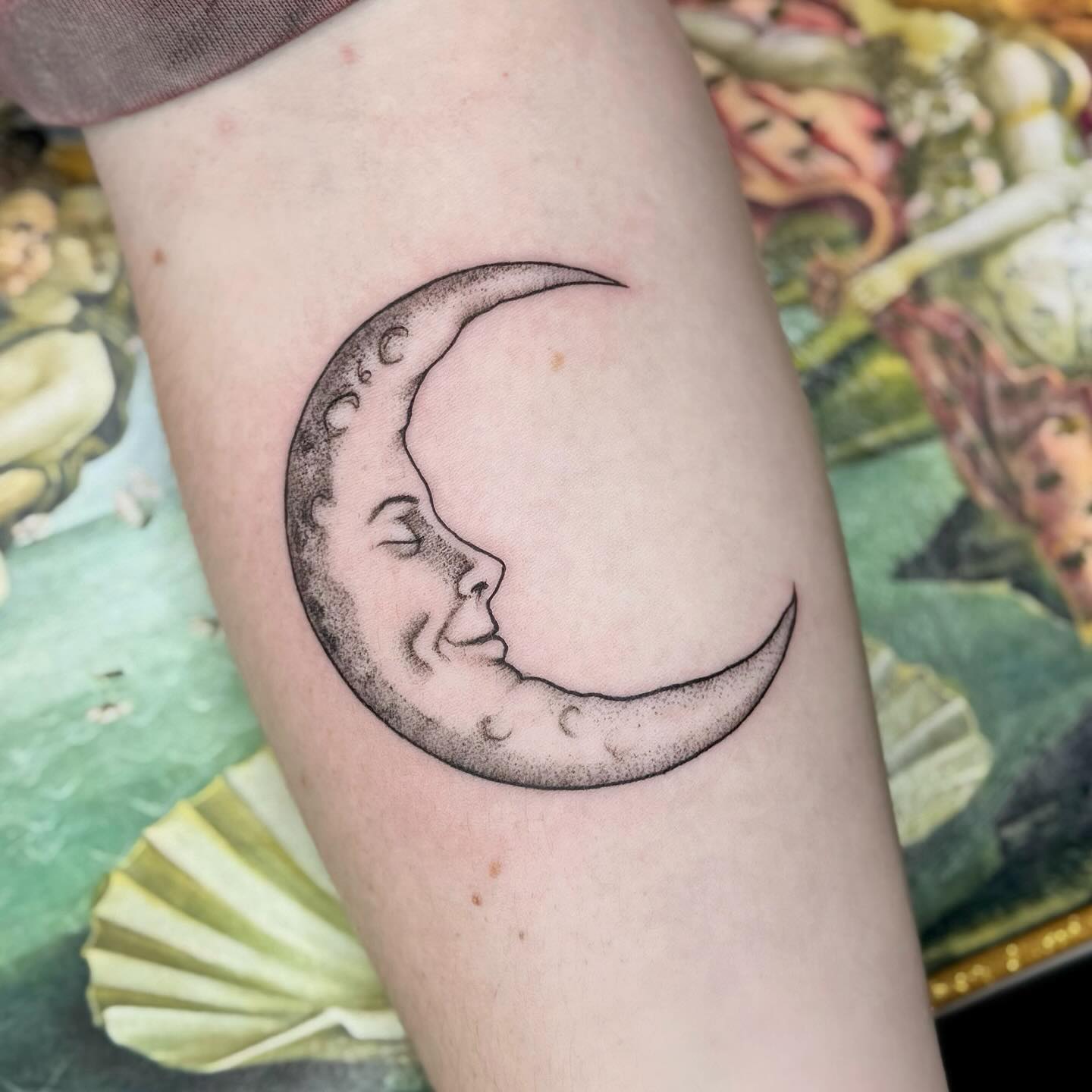
6. Celestial Moon Face
The moon with a face — usually a serene profile with closed eyes, sometimes surrounded by stars or ornamental rays — pulls directly from vintage tarot and old engraving traditions.
It is a surprisingly difficult piece to execute. A face at small scale needs very few marks to be correct, and a millimetre in the wrong place changes the expression entirely.
When I have watched artists nail this, they have all done the same thing: sized it up. Anything under a few inches and the features stop being readable within a couple of years.
7. Sun and Moon Combination
Half sun, half moon inside a single circle is the classic duality design: light and dark, waking and sleeping, two people, two sides of one person.
It is also the most popular matching tattoo I encounter, usually split between two people rather than combined on one. If that is the plan, agree on line weight and size before either of you books, because two artists working separately will produce two visibly different tattoos.
There is a lot of design range inside this one idea — see our full collection of sun and moon tattoo ideas for interlocking, mirrored and stacked layouts.
8. Gothic Moon
Heavy black ink, ornamental filigree, bats, thorns, moths, a hint of Victorian mourning jewellery — the gothic moon is the darkest end of this list and one of the most striking.
Because it leans on solid black and strong silhouette, it is also one of the best-ageing designs here. Density is doing the work, not fine detail.
Worth knowing: large areas of solid black usually take longer to heal and can feel more tender for the first few days than a light line piece of the same size.
More Moon Variations Worth Considering
If none of the eight above is quite right, these five variations cover most of the remaining ground.
9. Blackwork Moon
A solid filled crescent, or a full moon rendered as negative space inside a black field, is about as durable as tattooing gets. No fine detail to lose, no light tones to fade.
This is the style I point people toward when they say they want something they will never need to touch up. The blackwork tattoo designs guide covers what to look for in an artist who packs black evenly.
10. Mandala Moon
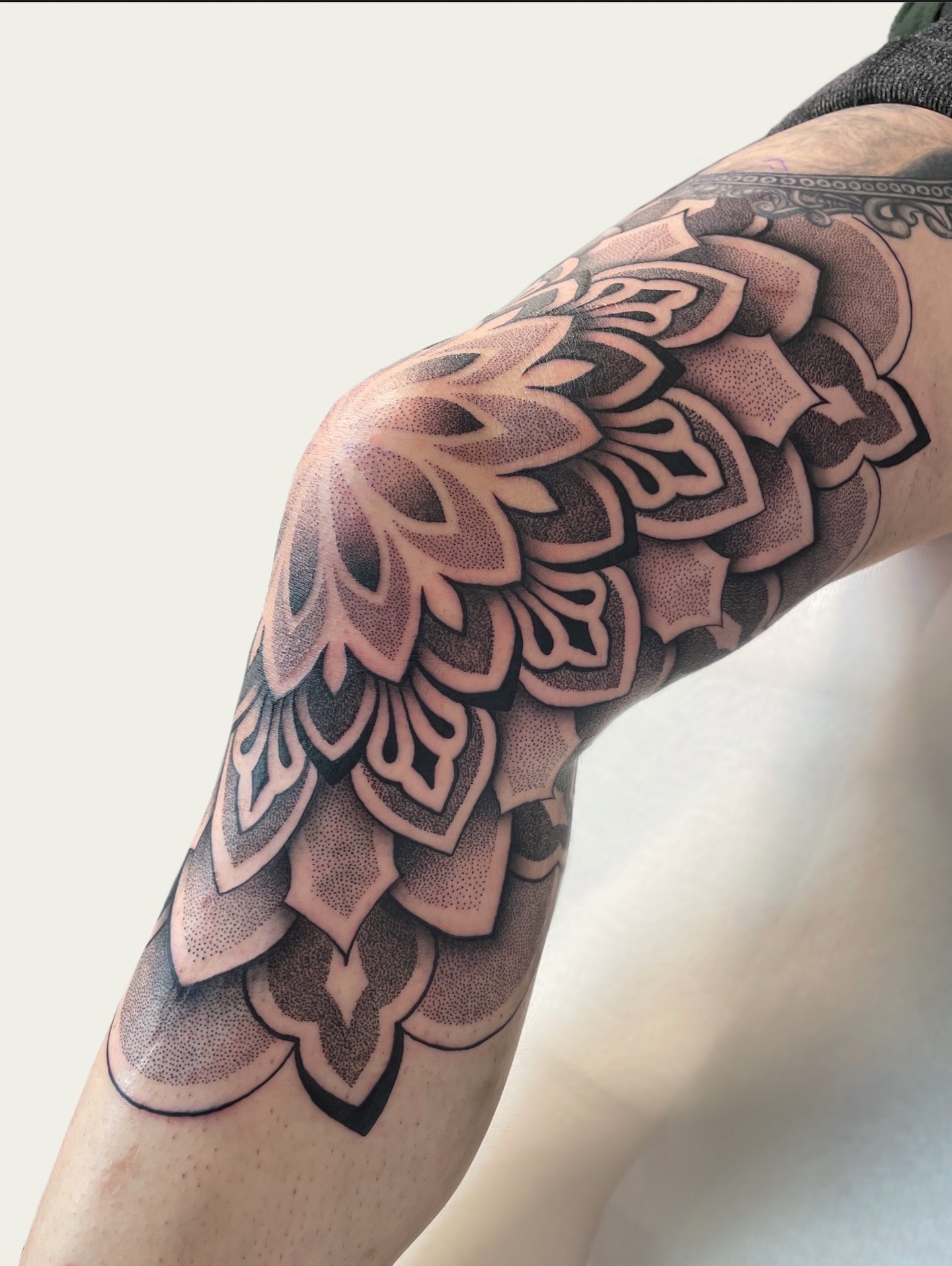
Radiating dotwork petals around a crescent or full moon give the design a meditative, symmetrical quality that suits the sternum, spine and back of the upper arm particularly well.
Dotwork is slow. A mandala moon that looks like a two-hour piece is often a five-hour piece, so budget for the time as well as the money. Our mandala tattoo ideas collection shows how the symmetry is usually built out from the centre.
11. Realistic Moon
A photorealistic lunar surface — craters, terminator line, the whole thing — is genuinely impressive when it is done by the right person, and disappointing when it is not.
This is the one design on this list where I would tell someone to travel for the artist rather than settle locally. Look for healed photos in the portfolio, not just fresh ones; grey wash realism is judged on how it looks a year later.
12. Floral Moon
Wrapping blooms around a crescent softens the design and opens up a lot of personalisation — birth flowers, a plant from a garden that mattered, something with a family association.
The composition rule I have seen work best is to let the flowers break the crescent line in one or two places rather than sitting politely behind it. It stops the two elements looking like separate tattoos that happen to be touching.
13. Moon and Wolf
The howling wolf against a full moon is iconic to the point of cliché, which is exactly why the execution matters so much. Done as a flat silhouette it can look like clip art; done with a real sense of atmosphere it is one of the strongest pieces in this article.
Give it space — upper arm, thigh, back — and let the artist build a background. If the animal is the part you care about, our wolf tattoo design ideas guide covers the poses and styles that work best.
14. Moon Over Water
A moon above a stretch of ocean, with the reflection broken across the waves, ties the lunar symbol to the tides it actually controls. It is a quieter alternative to the wolf and it suits long, narrow placements like the outer forearm or the calf.
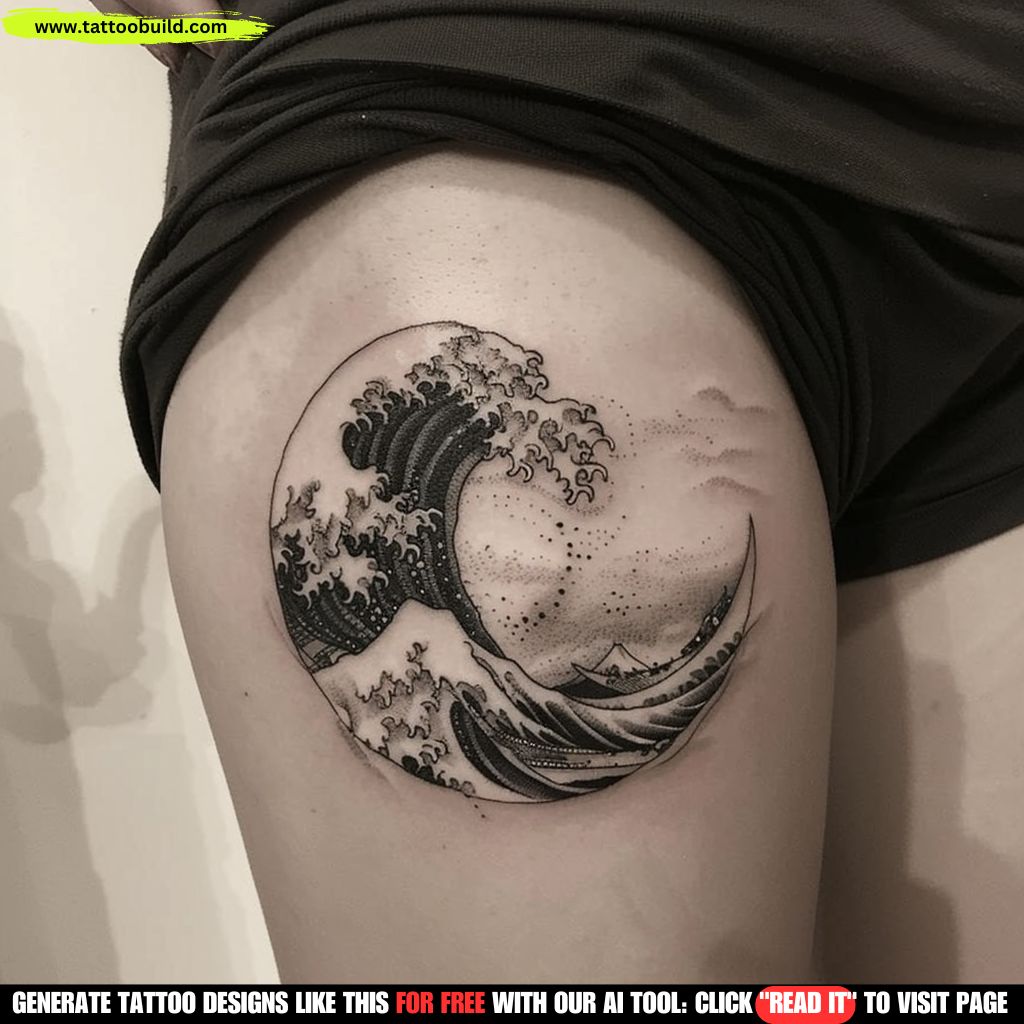
Japanese-influenced wave linework pairs with this beautifully, and it gives the artist a repeating pattern to work with rather than a large empty field to shade.
15. Single-Line Micro Moon
One continuous unbroken line forming a crescent, sometimes with a face or a mountain folded into it, is the most understated option on this list — the kind of tattoo you can cover with a thumb.
Be realistic about lifespan on very small single-line work. A design that relies on a millimetre of white space between two lines will eventually lose that gap as the ink spreads, so build in more breathing room than looks necessary on paper.
Practical Tips Before You Book
Choose the artist before the design. The single strongest predictor of how your moon tattoo turns out is whether the person holding the machine already makes this exact kind of work, so scroll their portfolio for the style rather than for moons specifically.
Ask to see the stencil on your skin and photograph it from a few feet away before you agree to start. Placement mistakes are far more common than line mistakes, and this is the last easy moment to move something an inch.
Follow the aftercare your artist gives you rather than advice from the internet, since it is tailored to the ink and technique they used. Broadly, healing means keeping it clean, keeping it lightly moisturised, and leaving scabs alone — the American Academy of Dermatology’s guidance on caring for tattooed skin is a reliable general reference.
Long term, sunscreen does more for a tattoo than anything else. This matters most for watercolour and grey wash, but it is worth doing for solid black too.
One safety note I will not soften: if a healing tattoo becomes increasingly painful, hot, swollen, or starts weeping after the first few days, or if you develop a rash or fever, contact your artist and see a doctor. Tattoo infections and allergic reactions to pigment are uncommon but real, and Mayo Clinic’s overview of tattoo risks covers the warning signs. Nothing in this article is medical advice, and never attempt to tattoo or remove a tattoo yourself.
Common Mistakes — and What to Do Instead
Going too small for the amount of detail. This is the mistake I see more than every other one combined. If a design has a face, a landscape, or more than a few internal elements, it needs size — and if budget is the constraint, simplify the design rather than shrinking it.
Copying another person’s tattoo line for line. Bring three or four references and describe what you like about each, then let the artist build something for your body. Most good artists will decline an exact copy anyway.
Ignoring pain and placement together. Ribs, sternum, spine and the inside of the elbow are consistently reported as the harder spots, which matters for a long dotwork or realism session — our guides to the most painful tattoo spots and tattoo pain management are worth reading before you commit to a placement.
Underestimating cost. Small does not automatically mean cheap, because most studios have a minimum charge that covers setup and sterilisation regardless of size. If you are budgeting a first piece, what a small tattoo actually costs is a useful reality check.
Frequently Asked Questions
What does a moon tattoo mean?
There is no single fixed meaning, which is part of the appeal. The most common associations are cycles and change, intuition and the subconscious, femininity, and the marking of a specific date or memory. A crescent often reads as growth or new beginnings, while a full moon tends to signal completion. Your own reason matters more than any traditional reading.
How small can a moon tattoo be?
A plain fine line crescent works at around an inch, and single-line micro versions can go smaller still. The limit is detail, not size — once you add stars, a face, a landscape or shading, the design needs more room or those elements will blur together as the ink settles. Ask your artist for their honest minimum for your specific design rather than picking a size first.
Where is the best place for a moon tattoo?
It depends entirely on the design. Crescents suit the wrist, ankle, behind the ear and the collarbone because the curve follows the body. Phase sequences want a straight run — spine, collarbone, forearm or calf. Landscapes, realism and wolf compositions need the upper arm, thigh or back. Consider visibility at work and sun exposure alongside aesthetics.
Do moon tattoos fade quickly?
That is a function of style and care, not subject. Solid blackwork holds up longest, while very fine lines, light grey wash and watercolour soften fastest. Sun exposure is the main accelerator, so sunscreen once healed is the most useful habit you can build. Many fine line pieces need a refresh at some point, and that is normal rather than a sign of bad work.
How long does a moon tattoo take to heal?
The surface usually looks settled within about two to three weeks, though the deeper layers keep healing for a couple of months and the tattoo can look slightly dull during that window. Larger, heavily shaded pieces generally take longer than small line work. Follow your artist’s specific aftercare, and if you see spreading redness, increasing pain, swelling or fever, contact a doctor rather than waiting it out.
Quick Summary
- Decide which meaning you are after — cycles, intuition, duality or a specific date — before you pick a shape.
- Choose the style first; it determines the artist, the budget and how the piece ages.
- Fine line and watercolour are the softest over time; blackwork and strong-contrast illustrative work last longest.
- Match the design to the placement: crescents follow curves, phase sequences need a straight run, landscapes need space.
- If your moon marks a date, use the real phase from that date rather than a generic crescent.
- Book the artist on their style portfolio and their healed photos, not on their follower count.
- See the stencil on your skin and photograph it before anything starts.
- Sunscreen after healing does more for longevity than any product, and see a doctor if healing goes wrong.