A scar is a mark the body made without asking you. Tattooing over it is the first mark on that patch of skin that you get to choose, and that difference is the entire point. The scar does not vanish under ink, but it stops being the only thing the skin is saying.
I have sat in on a lot of these consultations, and the pattern is consistent: people arrive expecting the artist to promise erasure, and the good artists never do. What they promise instead is redirection.
That is a more honest goal and, in my experience, a more satisfying one. A well-planned scar piece works like any other cover-up tattoo — it gives the eye somewhere better to go before it ever finds the mark underneath.
Below are 18 approaches that hold up on real scar tissue, grouped by the design logic they use, plus what I have learned about which scars take ink well and which ones do not.
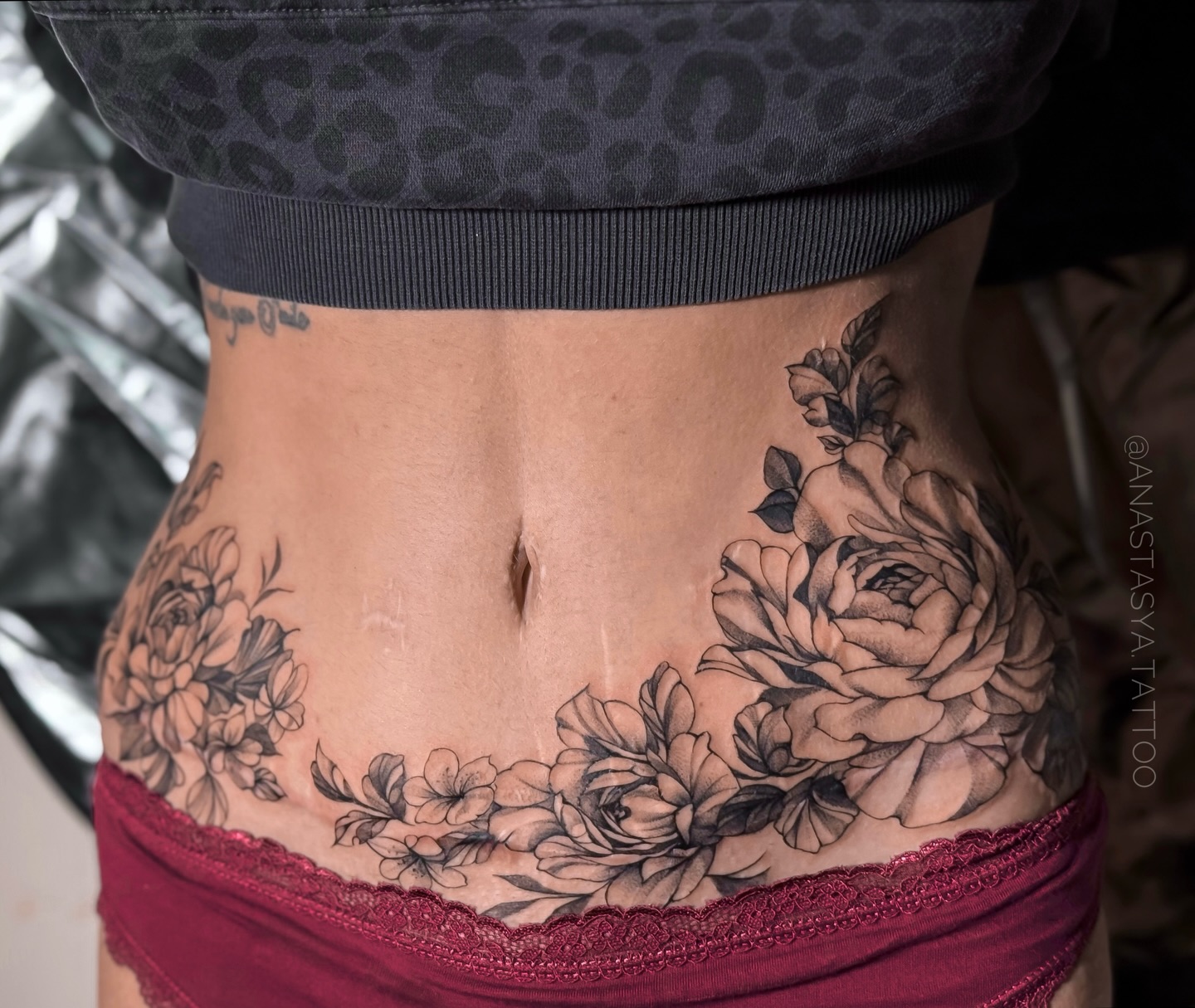
Photo: @anastasya.tattoo
Which Approach Fits Your Scar?
Scar type matters more than style preference here. This is the rough shape of the conversation I have watched artists have with clients, and it is worth reading before you fall in love with a design.
| Scar type | How it usually takes ink | Styles that tend to work | What artists watch for |
|---|---|---|---|
| Flat, faded surgical line | The most predictable of the group; often close to normal skin | Fine line, florals, linework, most illustrative work | Whether the line still shifts colour when stretched |
| Raised or hypertrophic | Ink can sit unevenly; saturation is harder to control | Watercolour, texture-heavy botanicals, forgiving abstract work | Height of the raise and how firm the tissue feels |
| Keloid | Frequently declined; needling can provoke further growth | Often none — dermatology consult first | Growth beyond the original wound border |
| Atrophic or indented | Ink reads darker in the dip and can pool visually | Designs with intentional shadow, dotwork, negative space | Depth of the indent under raking light |
| Burn or graft scar | Highly variable across a single area; thin in places | Loose organic shapes, staged in multiple sessions | Grafted edges and areas with little sensation |
| Fresh scar (under a year) | Still remodelling; results can change as it settles | Wait, then reassess | Colour, tenderness and whether it is still changing |
Why Scar Tissue Changes What Ink Can Do
Scar tissue is not damaged skin — it is different tissue. The collagen is laid down in denser, more uniform bundles than in surrounding skin, which is exactly why it looks and feels different.
That structural difference is what changes the tattoo. Ink deposited into scar tissue can spread more than expected, sit shallower in one spot and deeper a centimetre away, or drop out entirely during healing.
Every artist I have asked about this says the same thing in different words: they can predict the outcome on normal skin and they can only estimate it on a scar. Touch-ups are planned in from the start rather than treated as a failure.
Timing is the other half. The usual guidance is to let a scar mature fully before tattooing, which commonly means waiting at least a year from the injury or surgery — the American Academy of Dermatology notes that scars keep changing in appearance for months after a wound closes.
Sensation is worth flagging too. Some scars are numb, some are unexpectedly sharp, and neither matches what you remember from ordinary skin — the normal healing stages can also run slightly differently over an old mark.
18 Tattoo Over Scar Ideas That Actually Hold Up
These are grouped by the visual problem they solve rather than by subject matter, because that is how the good scar artists I have watched actually think about it.
1–4. Botanical Growth: Florals, Wildflowers, Ferns and Lotus
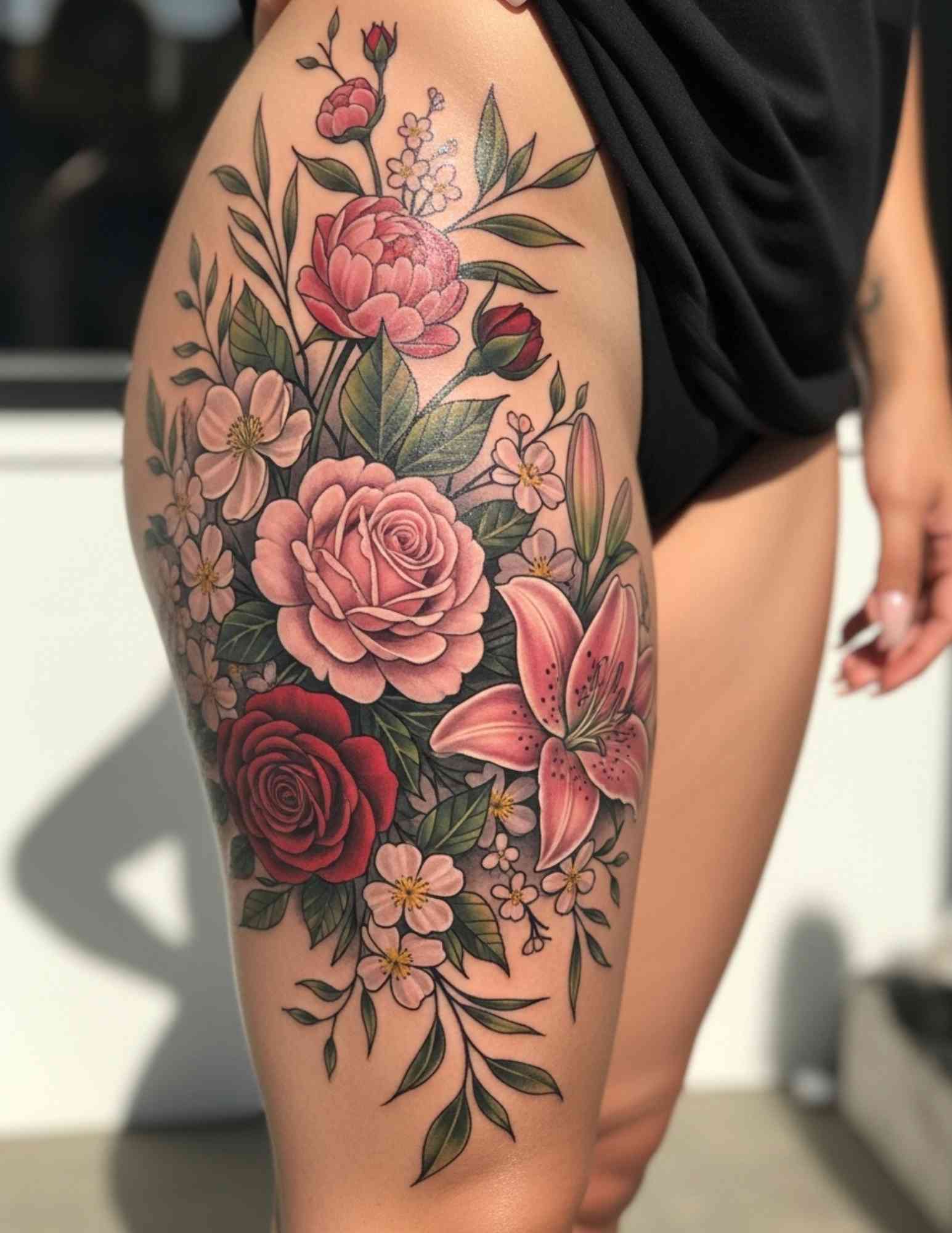
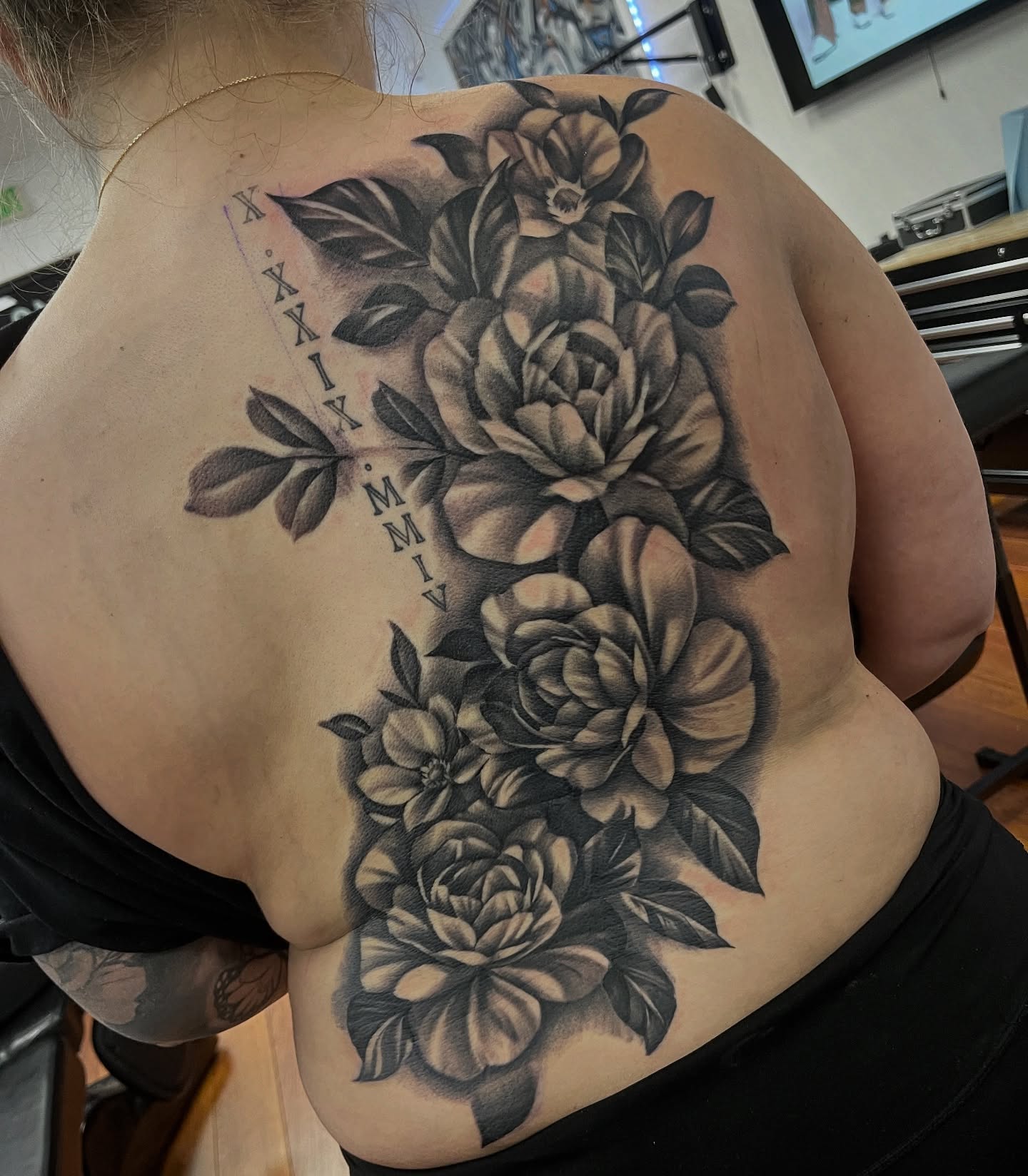
Botanical work is the default recommendation for scar coverage, and for good structural reasons rather than sentimental ones. Stems, petals and leaf edges are irregular by nature, so a slightly uneven line does not read as a mistake.
Floral over a surgical scar treats the incision as a stem line, with blooms opening along it. This is the approach I see most often on abdominal and chest scars, and it is the one that photographs best once healed.
A wildflower meadow suits scars that are irregular in shape, because a scattered arrangement has no symmetry to violate. Nothing looks off-centre when nothing was meant to be centred.
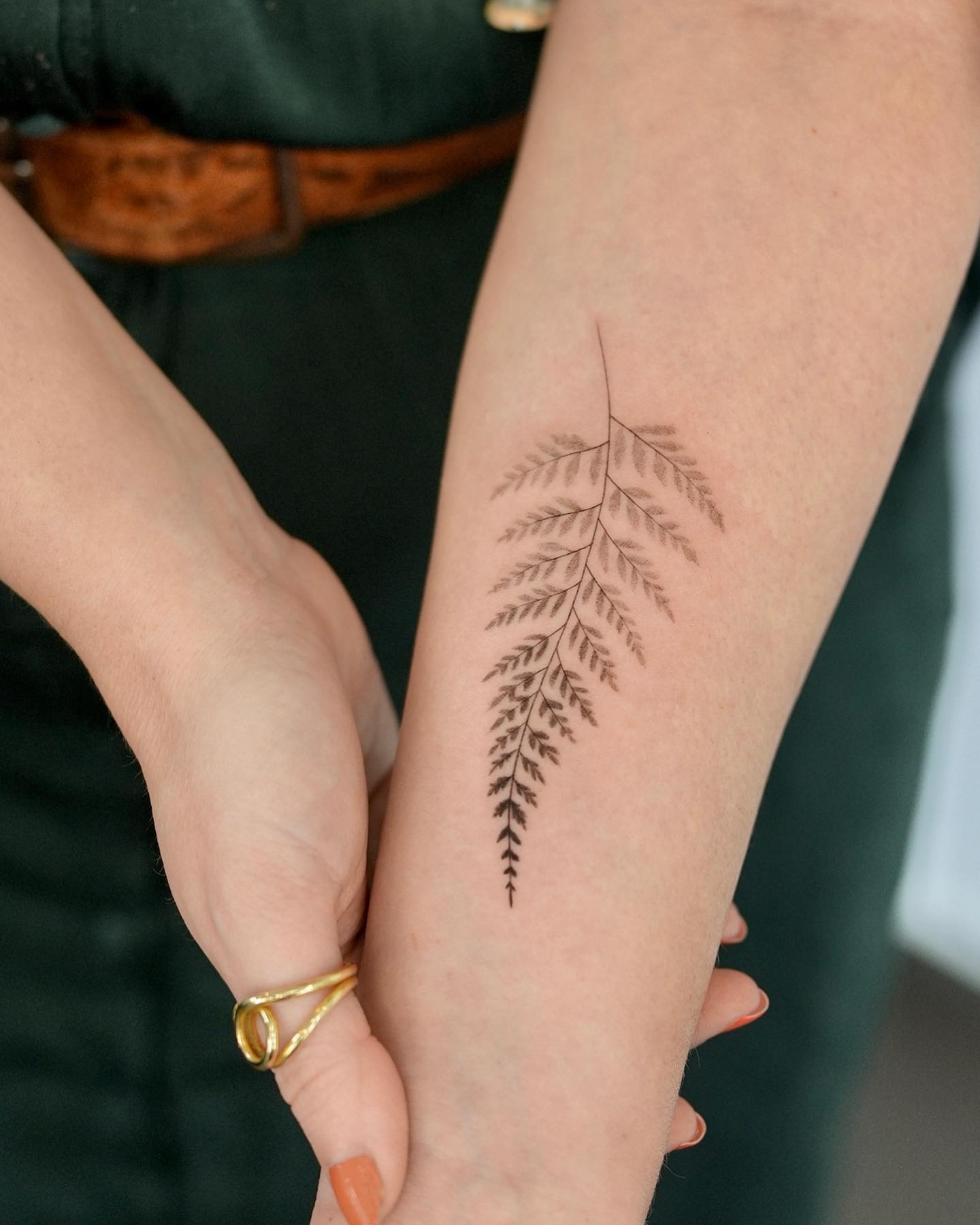
Ferns are a quieter option with fine, repeating edges that break up a straight mark — worth looking at alongside other fern tattoo designs before you commit to a layout.
The lotus works when the scar has a definable centre to build around. It is a heavily used symbol, so if you want it to feel specific, ask your artist to depart from the standard lotus tattoo template rather than repeating it.
5–7. Wings and Flight: Feathers, Moths and the Phoenix
Wing imagery over a scar carries obvious symbolism, but it also does real visual work: a wing is a long shape made of many small repeating elements, which is ideal for disguising a long straight line.
Feathers and wings across a chest scar are a well-established choice after mastectomy or top surgery. The barbs of a feather break up the scar’s edge in a way a solid shape cannot.
Moths and butterflies let you run the scar straight through the insect’s body, so the mark becomes the axis of the design rather than something the design avoids — the symbolism attached to moths tends to matter to people choosing this one.
The phoenix is the least subtle option on this list and, for some people, the correct one. If you go this way, size it properly; a cramped phoenix design loses the detail that makes it work.
8–10. Landscapes: Treelines, Mountains and Constellations
Landscape designs exploit a simple trick: a long scar already looks like a horizon, so you build the scene on top of it instead of fighting it.
A forest treeline uses the scar as ground level, with trunks rising from it. It works especially well on forearms and along the ribs where the scar runs roughly horizontally.
Mountain ranges do the same job with harder edges and more negative space, which suits people who want something less decorative — a lot of mountain tattoo layouts adapt to a scar line with almost no redrawing.
Stars and constellations are the lightest-touch version. Connecting line work anchored at points along the scar turns the mark into a navigational feature rather than the subject.
Photo: @katechallinorbodyart
Photo: @kbalzer_tattoos
11–13. Geometry: Mandalas, Geometric and Abstract Linework
Geometric work takes the opposite approach to botanicals. Instead of camouflaging the scar in organic chaos, it recruits the scar as a structural line.
A mandala centred on the mark pulls the eye outward into the repeating pattern. I would only recommend this on a flat, well-healed scar, because precise geometry punishes uneven ink more than any other style.
Geometric linework can run the scar’s own line into the composition as a deliberate axis. When it lands, it is the most confident-looking option here — it is not hiding anything.
Abstract linework is the same idea without a subject. No symbolism to explain, no reference image to live up to, and it adapts to any scar shape.
Photo: @linesofaddictiontattooco
14–15. Creatures That Follow the Line: Serpents and Dragons
A serpent is the single most adaptable shape for a long, curved or awkwardly angled scar. Its body can be drawn to any path, which means the design conforms to the scar rather than the reverse.
Serpents also carry shedding symbolism that people choose this design for, though I would argue the practical fit matters more. A snake can wrap a limb, cross a joint and change width as it goes.
Dragons do the same with more surface area to play with. The extra scale texture and detail help on tissue where saturation is inconsistent, because variation is already built into the design.
Photo: @delicz.ttt
16. Waves and Water
Wave forms are the most forgiving option for long linear scars with a slightly raised or uneven surface.
The undulation gives the eye continuous movement, so it never settles long enough to register the texture change underneath. In my experience this is the style that best survives an imperfect heal.
It also scales well. The same wave logic works as a small piece over a single scar or as a full sleeve element that happens to pass through one.
Photo: @amaltheatattoos
17. Watercolour and Soft Colour Washes
Watercolour is technically the most forgiving style on scar tissue, because soft, bleeding edges are the intended effect rather than a defect.
Where a crisp black line would show every wobble in the tissue, a wash simply reads as a wash. Artists who work this style on scars often build it in layers across sessions.
The honest caveat is longevity: soft, low-contrast colour work generally needs more maintenance over the years than bold black linework, on scarred skin or otherwise.
Photo: @_rony_tattoo
18. Words, Dates and Personal Symbols
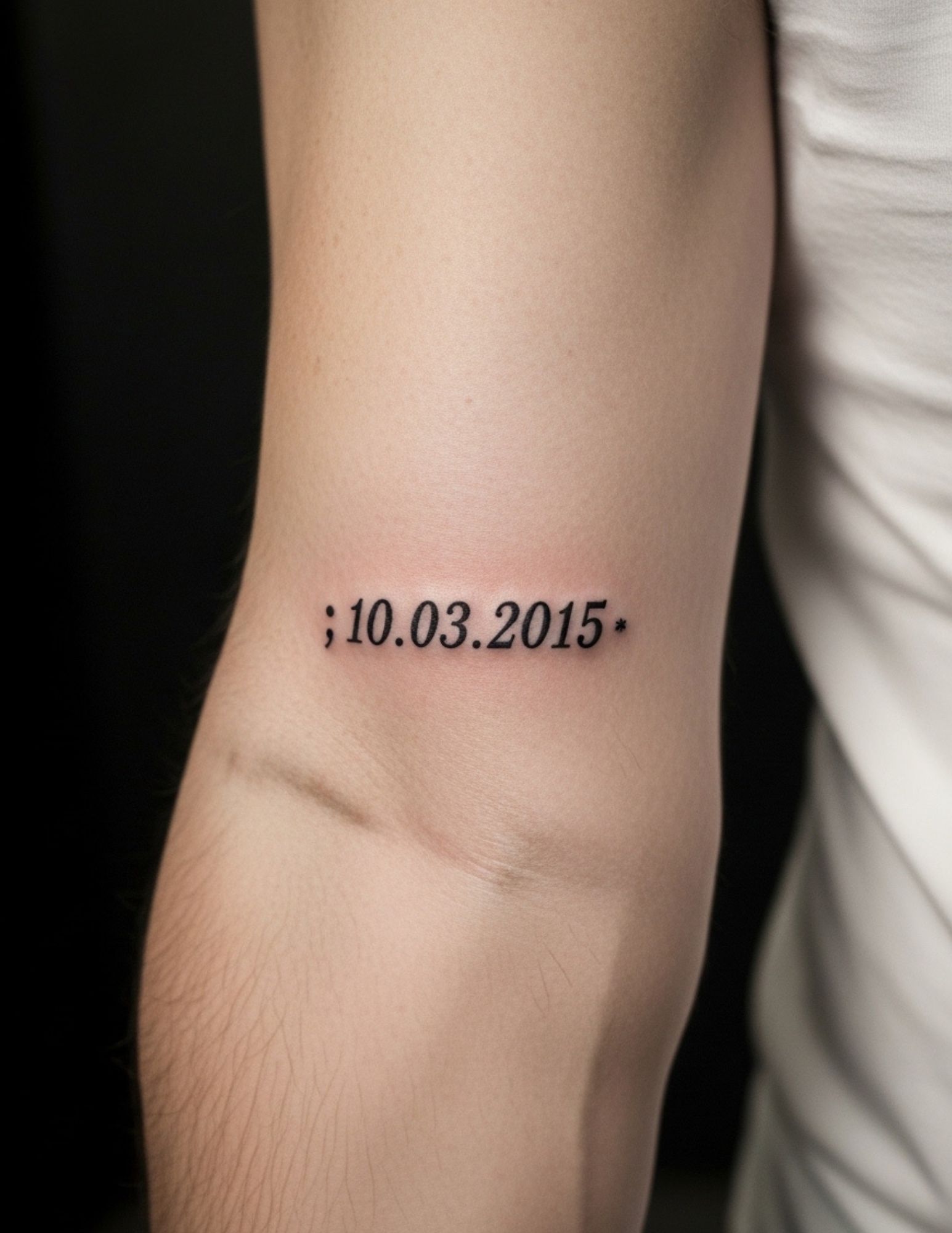
Sometimes the right answer is not imagery at all. A date, a name, or one word placed directly on the mark.
This is the highest-risk option technically, because lettering shows distortion immediately. On a flat, mature scar it can be beautiful; on raised tissue, most artists will steer you elsewhere.
If you want lettering, ask for a heavier weight than you would normally choose. Thin script is the first thing to blur when scar tissue spreads ink.
Alternatives to Covering the Scar
Covering is not the only option, and it is not automatically the best one. These come up often enough that they belong in the same conversation.
Framing rather than covering
Some designs deliberately stop at the scar’s edge, surrounding it without inking over it. The scar stays visible and becomes the focal point by intention.
This is worth considering when the scar means something you do not want obscured, and it avoids every technical problem of tattooing scarred tissue.
Paramedical scar camouflage
This is a separate discipline from decorative tattooing: skin-tone pigment matched to your surrounding skin, applied by a specialist trained in it.
Results vary and it is not a fit for everyone, particularly on skin that tans. Ask to see healed work on skin like yours before booking, not fresh photos.
Blast-over and blackwork
Dense black or heavy blast-over work can absorb a scar into a much larger design. It is effective and it is permanent in a way that limits future options.
I would only take this route with an artist who has healed examples on scarred skin to show, because solid black is where uneven saturation is most visible.
Waiting
Waiting another year is a real option and often the correct one. A scar that is still pink, tender or changing is not finished remodelling.
Healing a Tattoo Over Scar Tissue
Healing over a scar is usually slower and less even than healing over ordinary skin. Plan for that rather than being alarmed by it, and follow your artist’s aftercare instructions exactly as given.
Expect at least one touch-up session, and budget for it before you start. Patchy saturation after the first pass is normal on scar tissue, not a sign the artist did poor work.
Watch the area more carefully than you would a standard tattoo. Spreading redness, heat, swelling that increases after the first few days, pus, or fever are reasons to contact a doctor promptly — not reasons to wait and see.
If your scar is a keloid, or if you have ever had one, talk to a dermatologist before you talk to a tattoo artist. Needling keloid-prone skin can trigger further growth, and the AAD guidance on keloids is a reasonable place to start reading. Nothing in this article is medical advice, and a scar with any ongoing symptoms should be seen by a clinician first.
Still Not Sure? Common Mistakes to Avoid
The most common error is booking on enthusiasm. An artist who says yes immediately, without examining the scar in person, is not the artist you want for this.
The second is choosing a design that requires perfection. Crisp geometry and thin script are the least forgiving choices on tissue that is unpredictable by definition.
The third is underestimating sensation. Scarred skin can be numb in one spot and unusually sharp in another, so read up on managing tattoo pain and tell your artist which areas feel different as you go.
And if the scar is connected to something you are still processing, there is no deadline. Plenty of people find the right design years later — some of the mental health tattoo ideas on this site came from exactly that kind of wait.
Frequently Asked Questions
How long should I wait before tattooing over a scar?
Most artists want a scar to be fully mature, which commonly means at least twelve months from the injury or surgery, and longer for larger or surgical scars. A mature scar has usually stopped changing colour, flattened as much as it is going to, and is no longer tender. If yours is still pink, raised or sensitive, it is still remodelling and the tattoo result will change as the scar does. When in doubt, ask a doctor or dermatologist rather than guessing from a photo.
Does tattooing over scar tissue hurt more?
It varies more than it hurts more. Some scars are partly numb because nerve endings were damaged, and others are noticeably sharper than surrounding skin. In my experience people report the sensation as unpredictable rather than uniformly worse, which is its own kind of difficult to sit through. Tell your artist which spots feel different so they can adjust their pace.
Can you tattoo over a keloid scar?
Usually not, and most experienced artists will decline. Keloids grow beyond the boundary of the original wound, and the trauma of tattooing can provoke further growth in skin that is prone to them. If you have a keloid or a history of keloids, see a dermatologist before you approach an artist. A doctor can tell you whether the scar is genuinely keloid or hypertrophic, which changes the answer.
Will the tattoo completely hide the scar?
Almost never, and any artist promising that is overselling. A well-designed piece redirects attention so effectively that most people never notice the scar, but the texture of the tissue remains and is usually visible in raking light or up close. Going in expecting redirection rather than erasure is what makes people happy with the result. Raised scars stay raised, whatever is drawn on them.
How many sessions does a scar cover-up take?
More than the equivalent design on unscarred skin, in most cases. Scar tissue holds ink inconsistently, so patchy areas after the first pass are common and are corrected in a touch-up once everything has healed. Many artists deliberately plan two or three passes for anything larger than a small piece. Ask for that plan up front so the cost and timeline are clear before you start.
Quick Summary
- Wait until the scar is fully mature — commonly at least a year — before booking anything.
- Scar type matters more than style preference; keloids need a dermatologist, not a tattoo artist.
- Botanicals, waves and watercolour are the most forgiving styles on uneven tissue.
- Geometry and lettering are the least forgiving and need a flat, well-healed scar.
- Long linear scars work best as horizons, stems or the axis of a serpent or wing.
- Plan and budget for at least one touch-up from the beginning.
- Ask to see healed scar work in the artist’s portfolio, not fresh photos.
- The goal is redirection, not erasure — anyone promising erasure is overselling.