
A sleeve that is a collection of individual tattoos placed randomly will always look like exactly that. The filler is what transforms a series of separate pieces into a unified composition. Getting the filler right requires understanding what the existing work needs: whether to blend, to frame, to provide contrast, or to create the continuous visual environment that makes a sleeve read as a whole.
These 21 ideas cover the most effective filler approaches across different sleeve styles.
Before You Add Filler
Consult with a tattoo artist who can look at your existing sleeve and propose a filler strategy before committing to any specific element. The filler needs to respond to what is already there: the existing line weights, the colour palette or lack of it, the subjects and their scale. Filler added without this consultation often creates more visual confusion than the negative space it replaces. A good sleeve artist will see the existing work and know what it needs.
21 Tattoo Sleeve Filler Ideas
1. Traditional Background Fill
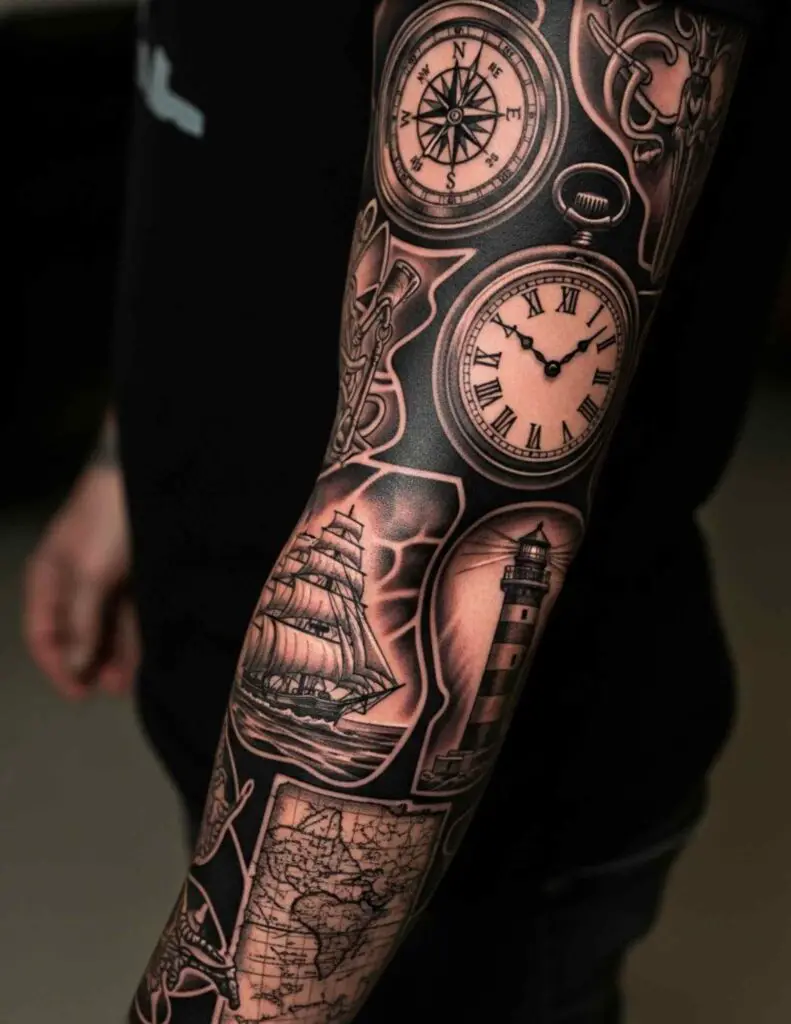
Solid black or very dark background fill around existing pieces, the dark background making the subjects float against depth rather than against skin. The background fill is the most decisive filler approach: it unifies the sleeve through the consistent dark field behind every subject. Most effective in traditional and neo-traditional sleeves.
2. Japanese Cloud Formations
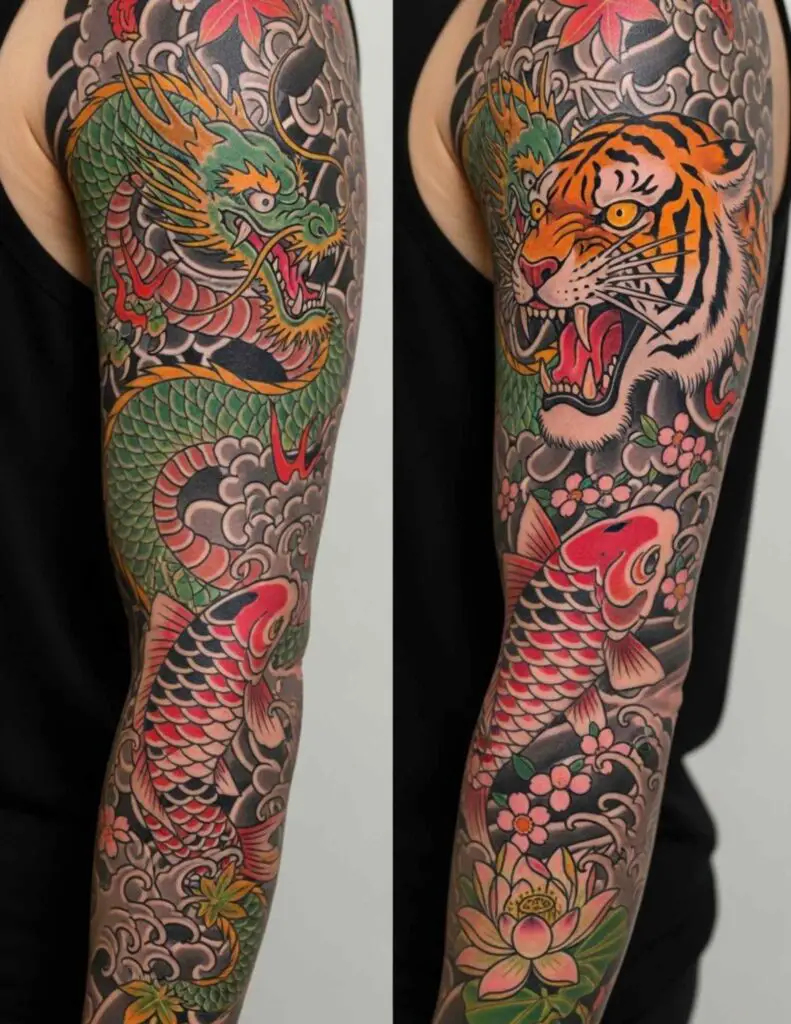
Japanese cloud (kumo) patterns filling the space between subjects. Japanese clouds are one of the most versatile traditional filler elements: they can wrap around subjects of any shape, create the impression of sky and depth, and are scalable from small gaps to large open areas. Essential in irezumi sleeves, effective in many other styles.
3. Floral Fill
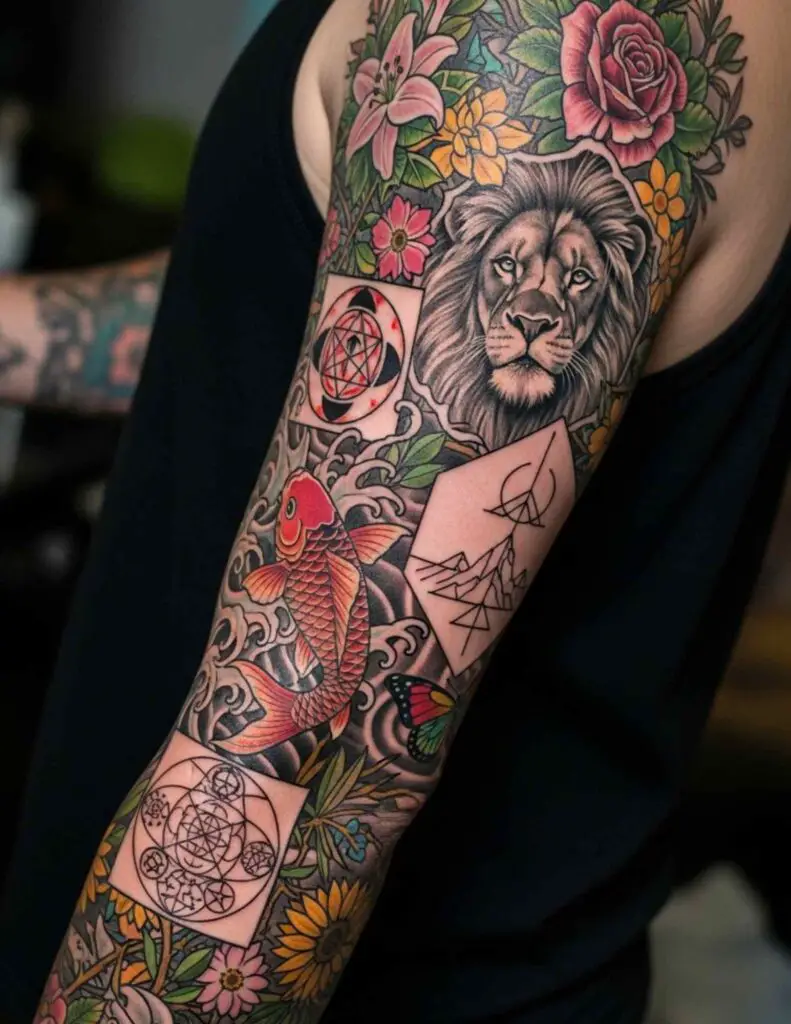
Flowers and botanical elements filling the negative space between existing subjects. The floral fill can be designed to echo or complement the existing work: matching the line weight and style of the surrounding pieces. Fine line botanical sprigs for fine line sleeves, bold traditional roses for traditional work.

4. Geometric Linework
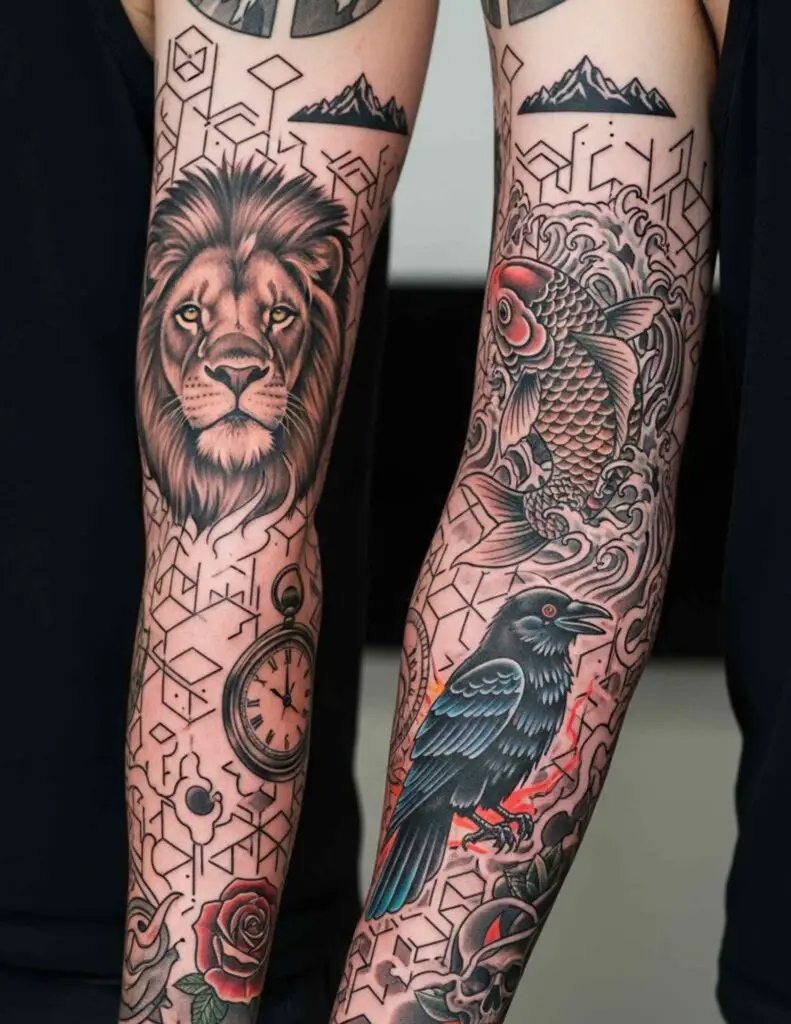
Geometric lines and patterns filling the space between subjects, the lines creating structure and connecting the existing pieces through a consistent geometric framework. Works particularly well in sleeves that already contain some geometric elements. The geometry provides visual order where organic subjects create complexity.
5. Water and Waves
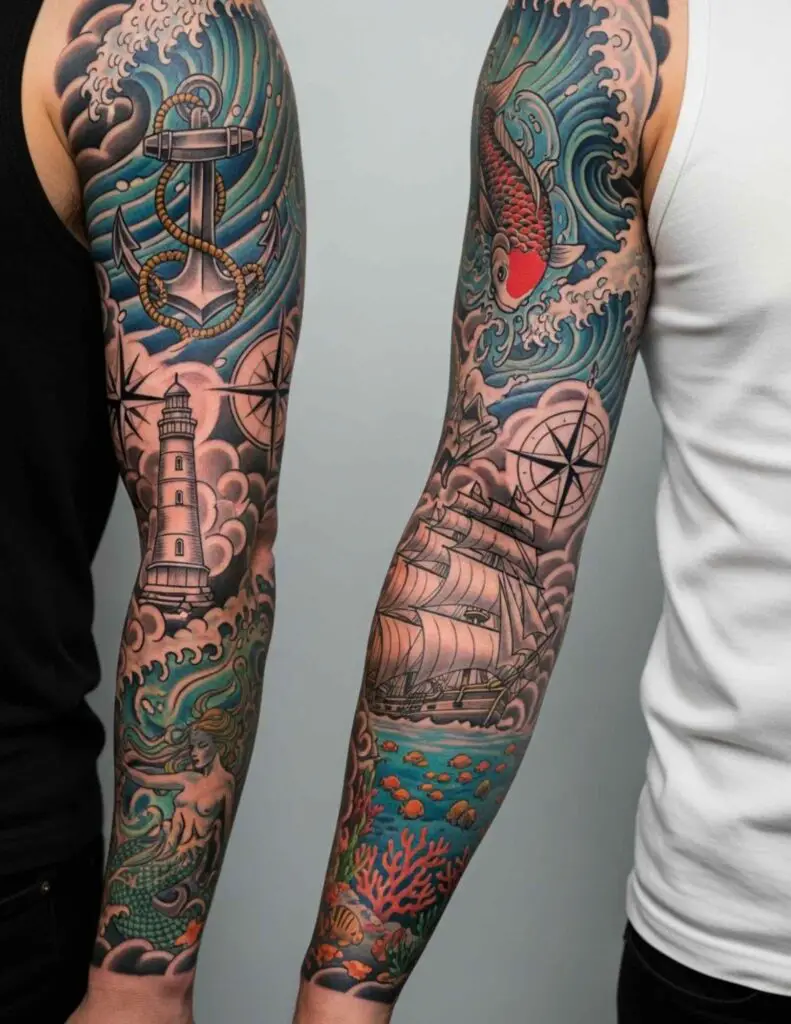
Japanese-style waves filling the negative space, the water providing movement and depth between subjects. Water filler suits sleeves with marine subjects (koi, octopus, shark) but also works as a general connector in Japanese-influenced sleeves. The waves can be scaled to fill gaps of any size.
6. Dotwork Fill
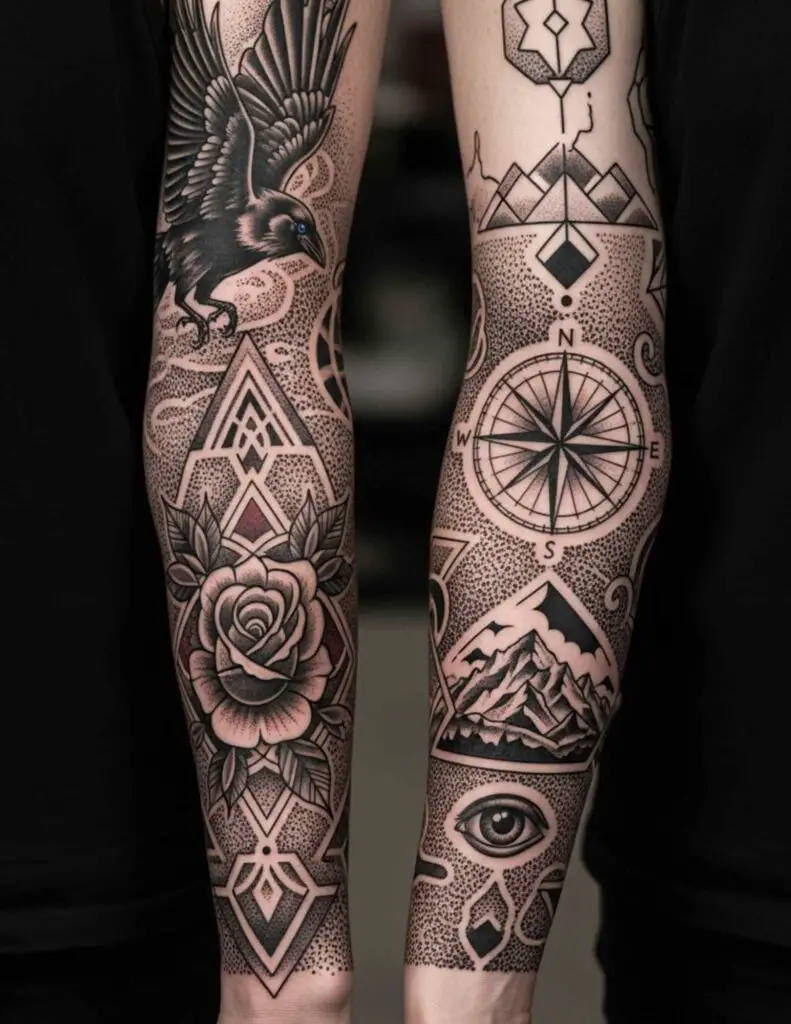
Dense stippled dotwork filling the space between subjects, creating a subtle textured background that is distinct from both solid black fill and open skin. The dotwork field ties subjects together without dominating them. Works best when the surrounding subjects have similar tonal weight.
7. Mandala Elements
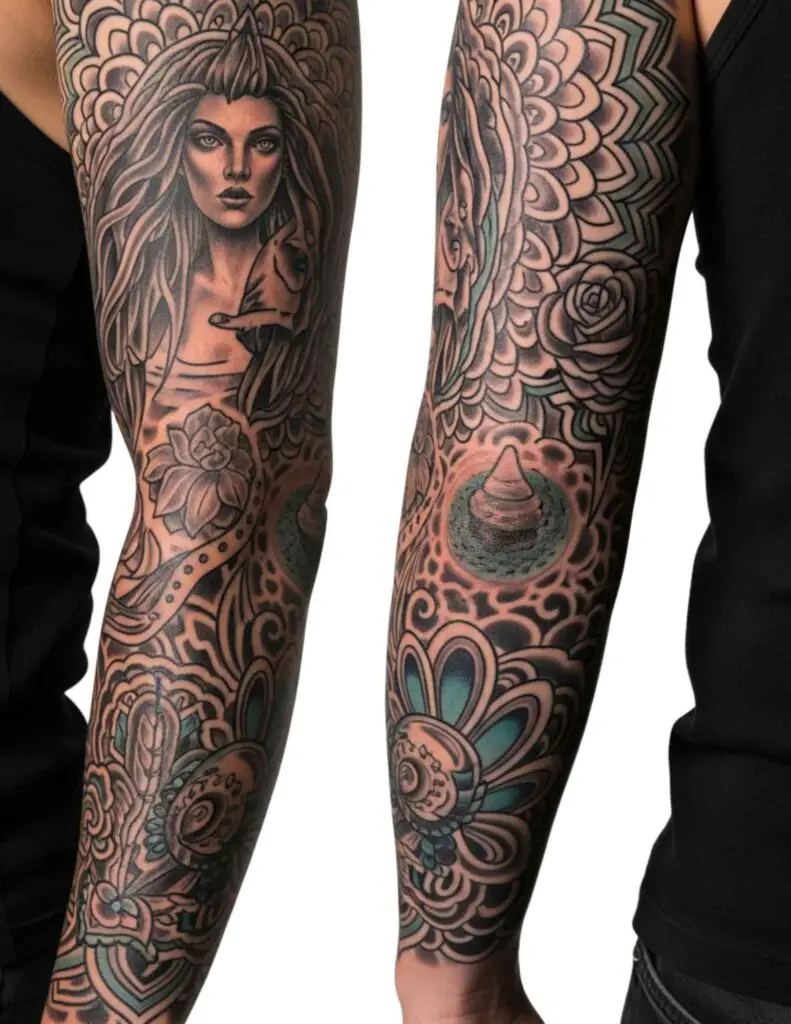
Mandala segments, partial mandalas, or mandala-inspired geometric patterns filling gaps between subjects. Mandala elements can be scaled precisely to fill irregular spaces and their radial structure creates visual anchoring points within the sleeve’s composition.
8. Leaves and Vines
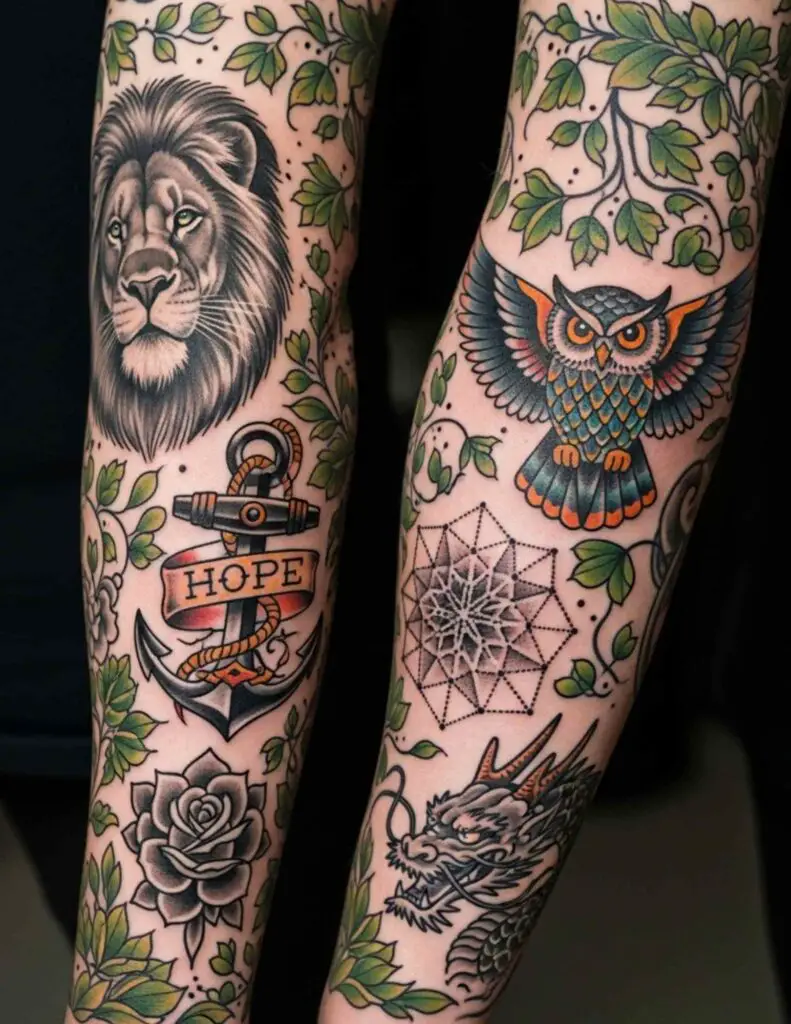
Leaf and vine elements winding through the negative space, connecting subjects through botanical tendrils. Leaves and vines are among the most flexible filler options because they follow irregular paths naturally. They can fill narrow gaps, frame subjects, and create organic connection between pieces that would otherwise read as isolated.
9. Stars and Constellations
Stars, constellation lines, and celestial elements scattered through the negative space. Celestial filler works particularly well in sleeves with celestial subjects but can add dimension to any sleeve by suggesting the spaces between subjects as night sky. Small stars require fine line precision to hold at tiny scales.
10. Smoke and Mist
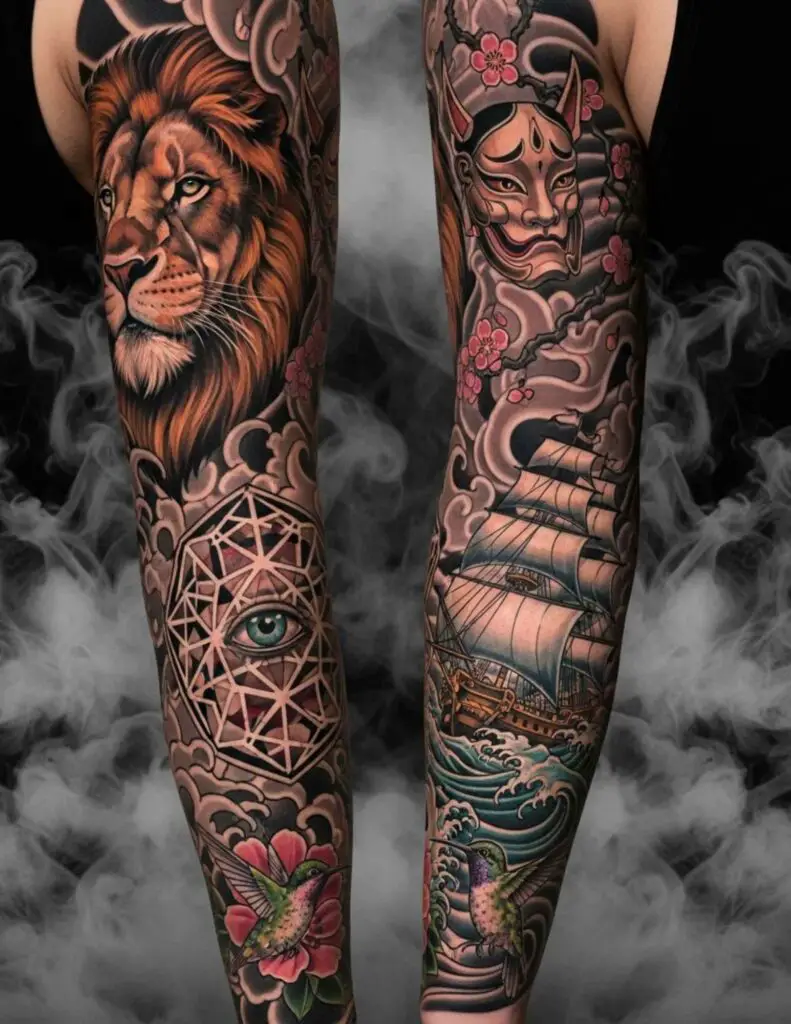
Smoke or mist in grey tones flowing between subjects, creating atmospheric connection without hard outlines. Smoke filler is subtle and impressionistic, providing visual continuity without competing with the subjects it surrounds. Particularly effective in dark, atmospheric sleeves.
11. Traditional Roses
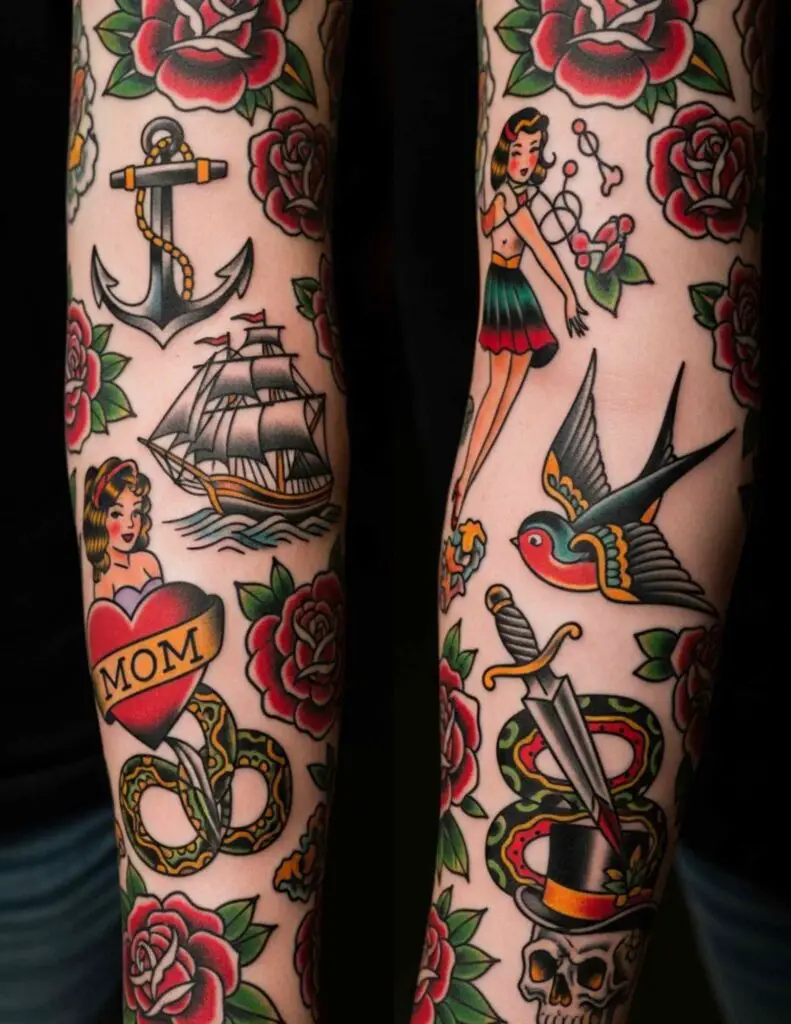
American traditional roses filling the gaps between existing pieces. The traditional rose is one of the most established and versatile filler elements in tattooing’s history. Bold linework roses in red and green (or black and grey) suit traditional sleeves naturally but can be adapted to neo-traditional work as well.
12. Scales and Texture
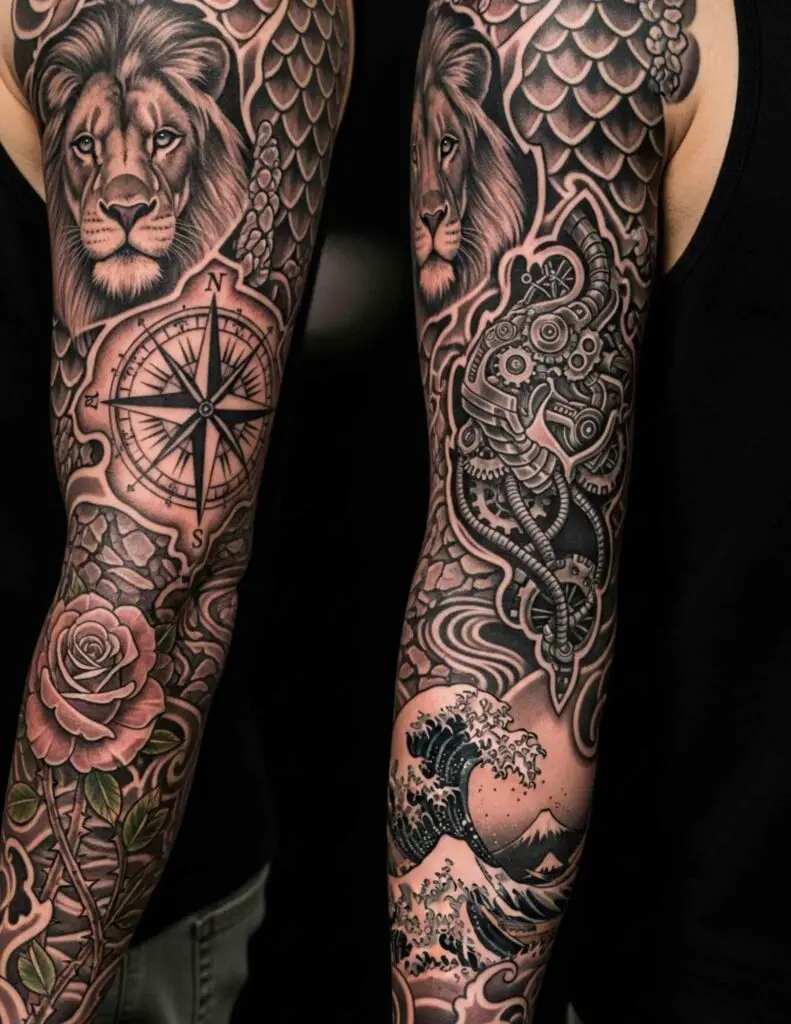
Fish scales, snake scales, or similar repeating textural patterns filling the space between subjects. Textural fills create a consistent surface quality across the sleeve that makes the subjects feel embedded in a continuous material rather than floating in blank space. Works particularly well in oceanic or reptilian-themed sleeves.
13. Feathers
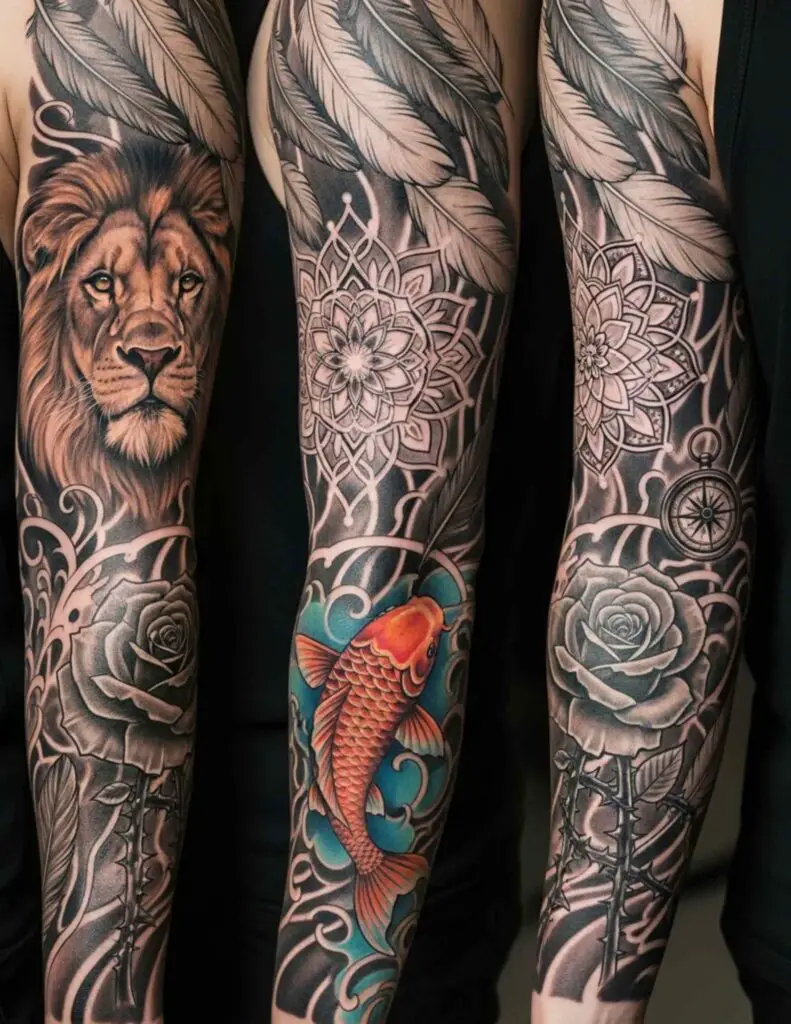
Feathers scattered through the negative space, the quills pointing in varying directions. Feathers are one of the most versatile filler elements: they suit sleeves with bird subjects but work in many other contexts, adding organic texture and implied movement. Fine line feathers for fine line sleeves, bold outlined feathers for traditional work.
14. Hatching and Linework
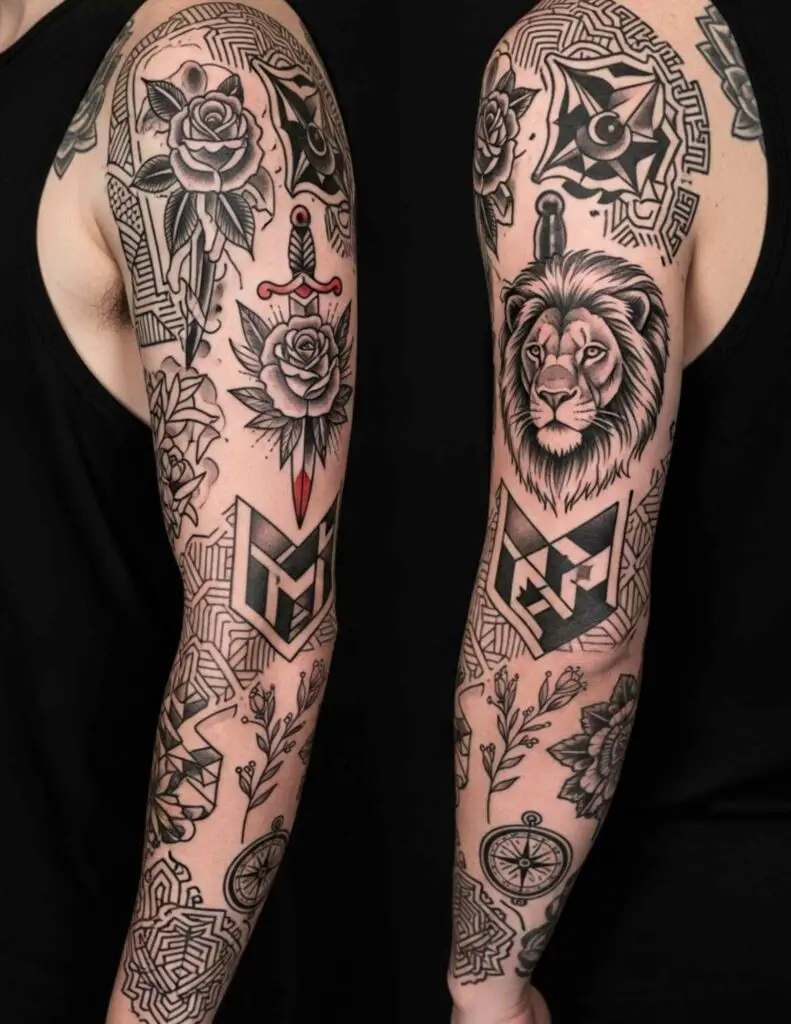
Parallel hatching lines or cross-hatching in the negative space, creating a textured grey fill through linework rather than solid black or dotwork. The hatching approach suits illustrative and neo-traditional sleeves where the existing linework has expressive quality that solid fills would diminish.
15. Small Ornamental Elements
Small ornamental motifs filling the space: arrows, diamonds, small anchors, small stars, small daggers. These micro-elements suit traditional sleeves where the ornamental vocabulary of the style includes these classic small subjects. Each element is independently coherent but the collection fills space without creating visual competition with the main subjects.
16. Abstract Shapes
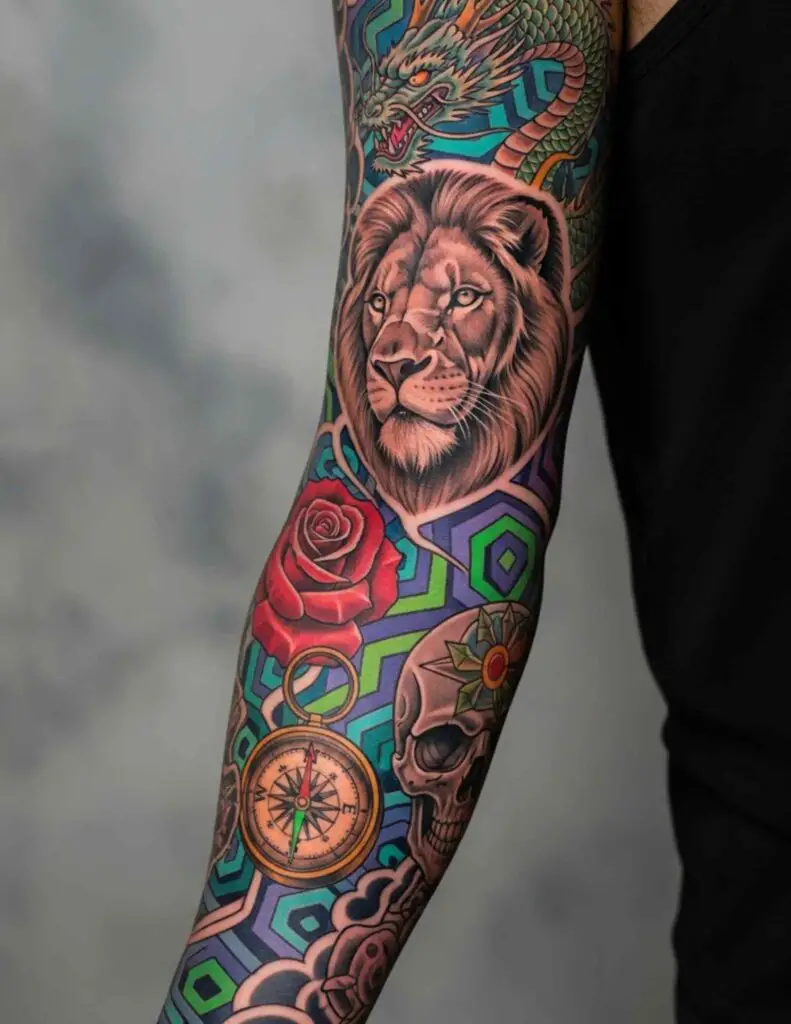
Abstract organic shapes filling the negative space: forms that are neither representational nor strictly geometric. Abstract filler can be customised to exactly fit the irregular shapes of the gaps in a sleeve’s composition, flowing into corners and narrow spaces where more structured filler cannot reach.
17. Blackout Fill
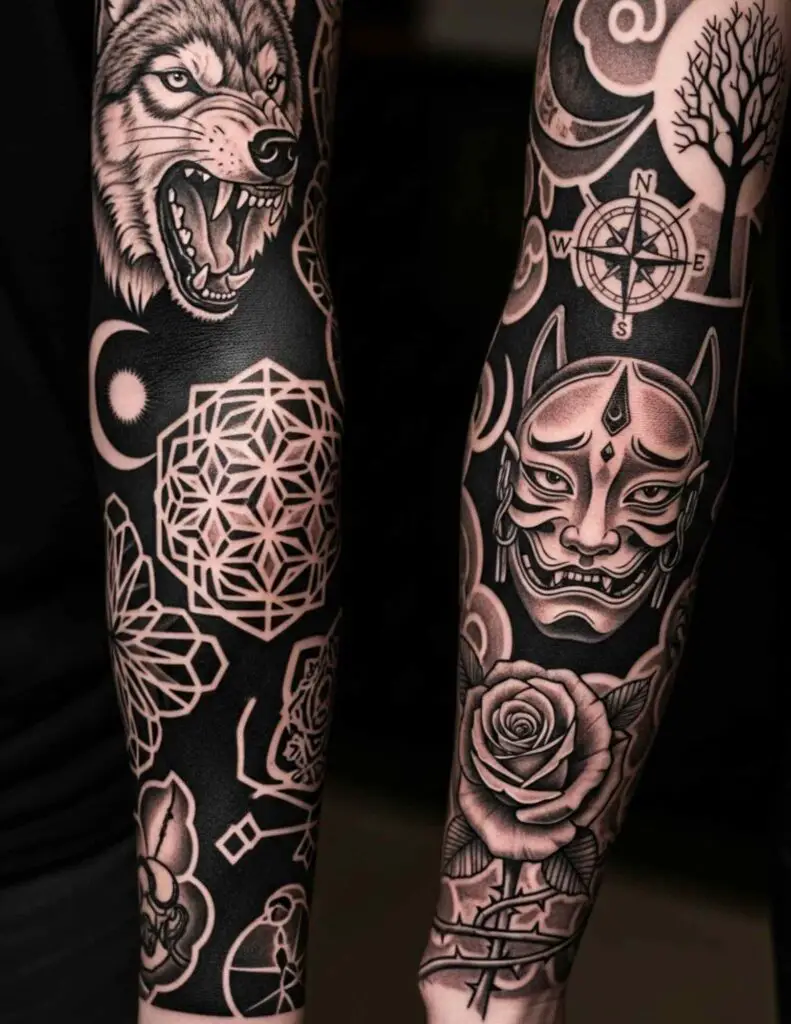
Solid black fill over large areas of the sleeve’s negative space, creating a bold graphic contrast between the inked subjects and the surrounding black. Blackout filler is a decisive commitment: it permanently changes the sleeve’s visual character. Consult with a highly experienced sleeve artist before choosing this approach.
18. Japanese Peonies
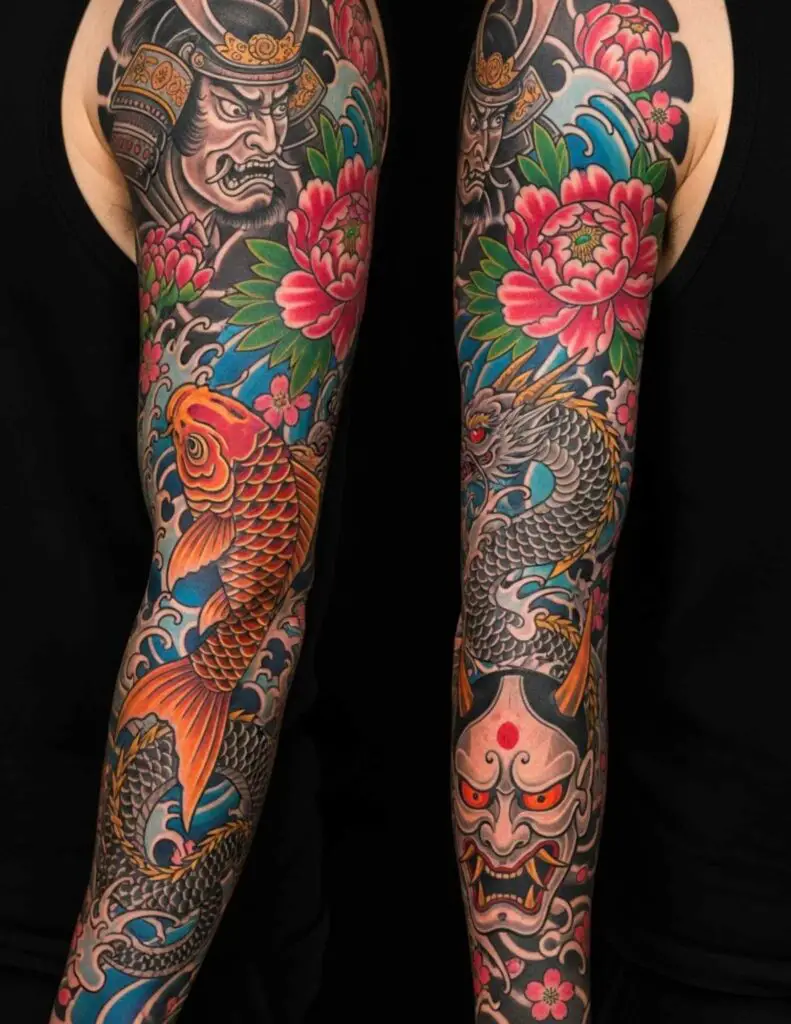
Peony flowers in Japanese style filling the negative space between existing Japanese-style subjects. The peony is one of the most established filler flowers in irezumi, its large rounded form and layered petals providing visual weight and covering significant areas without the composition becoming crowded.
19. Thin Line Details
Very fine decorative lines extending from existing subjects: the kind of detail that would not stand alone but extends and enriches existing work. Thin line extending details suit sleeves where the existing work has space around its subjects that needs to be occupied without adding competing visual weight.
20. Colour Gradient Background
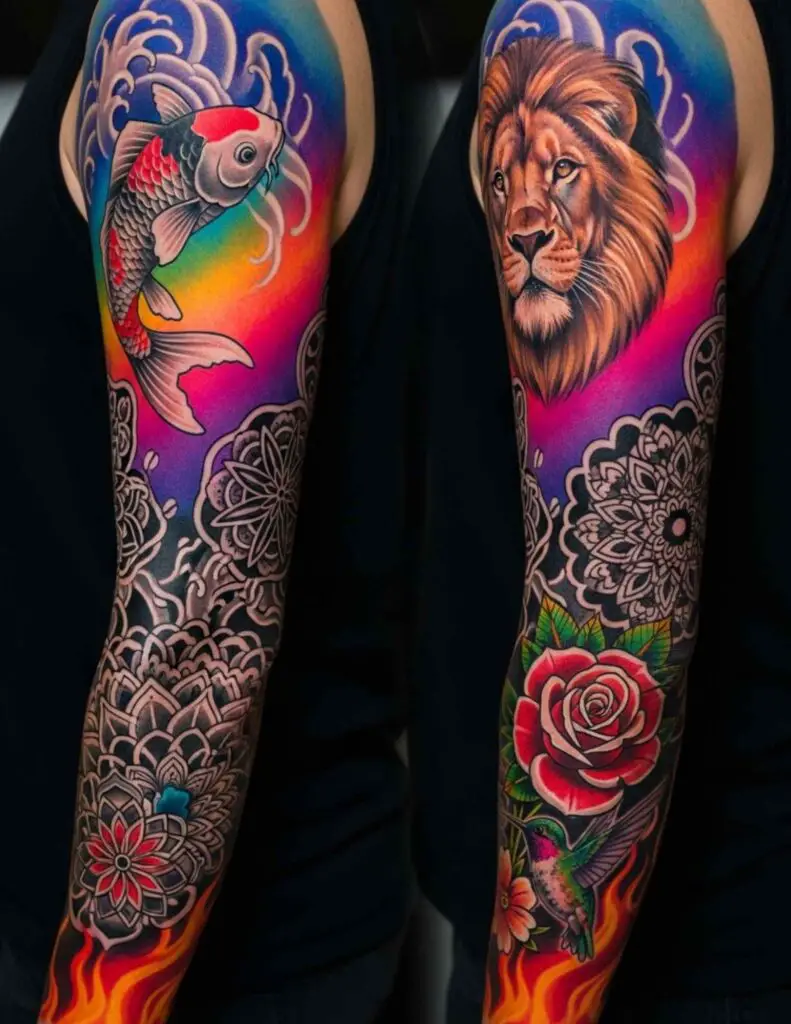
A colour gradient fill in the negative space, transitioning from one tone to another across the sleeve’s length. The gradient background creates depth and atmospheric lighting across the sleeve, the subjects appearing in different light conditions as they move from one tonal zone to another.
21. Traditional Flash Fill
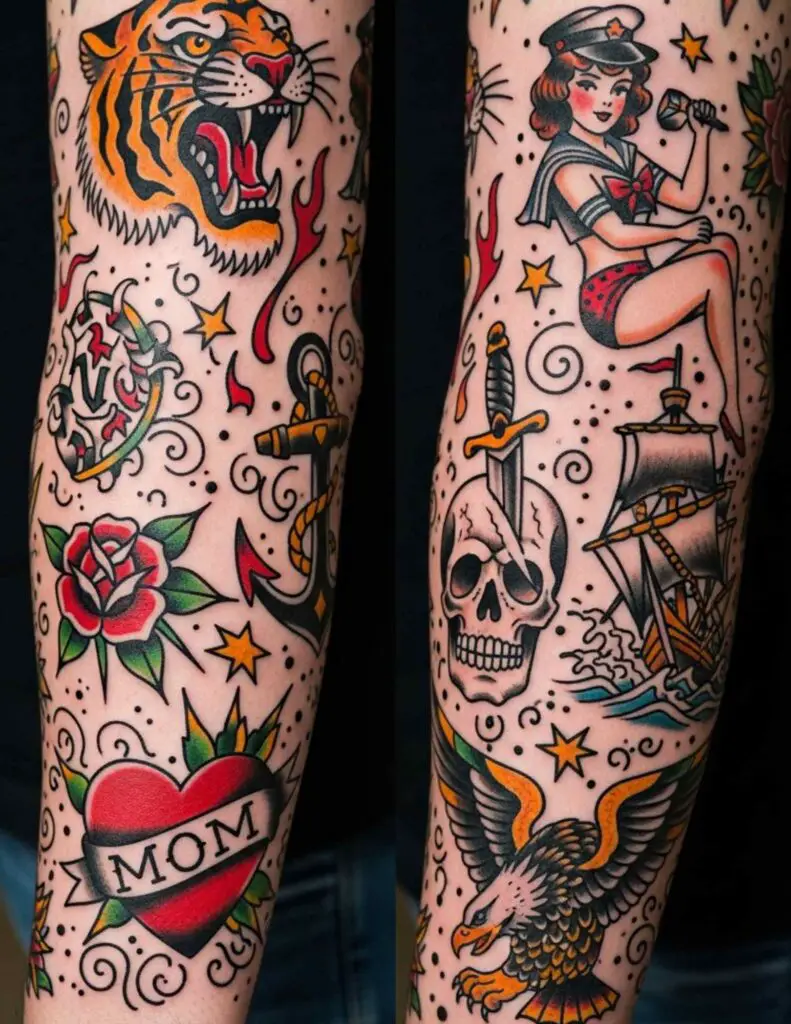
Small traditional flash motifs filling the gaps: horseshoes, dice, swallows, playing card elements. In sleeves that already use traditional or neo-traditional subjects, small flash motifs honour the visual tradition of the style and create a sleeve that reads as steeped in tattooing history rather than contemporary isolation.
Matching Your Style
The most important principle of sleeve filler is style consistency. Filler that is executed in a different style from the existing work will always look added rather than integrated. If your sleeve is Japanese, the filler should use Japanese cloud, wave, or flower vocabulary. If it is traditional, roses and small flash motifs suit it. If it is black and grey realism, smoke and atmosphere suit it. The filler should look like it belongs to the same world as the work it surrounds.