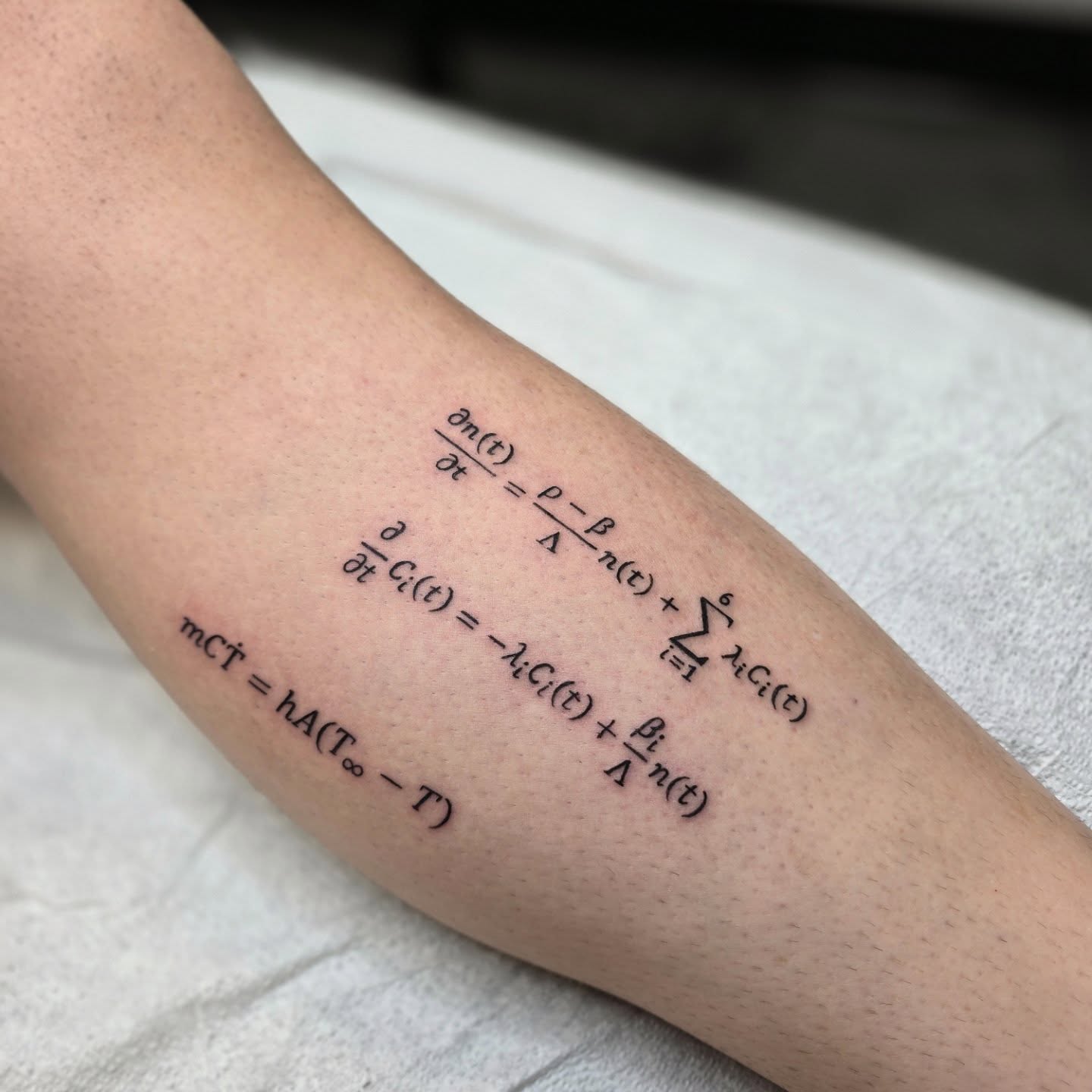
Most tattoos that get called “unique” are really just less common versions of the same fifty designs — and the difference between a tattoo nobody else has and a tattoo nobody else could have comes down to where the reference image came from.
I have sat in consultations where someone opened a folder of forty saved images and, halfway through scrolling, admitted that all forty were the same fine line butterfly with slightly different wings.
That is not a failure of taste. It is what happens when the search starts on a platform that ranks images by how many people already liked them.
The ideas below all start somewhere else — a drawer, a voice note, a handwritten card, a place you can point to on a map. Some are tiny enough to sit alongside small meaningful tattoos for women; others take a full thigh. All of them are impossible to duplicate exactly.
Which Kind of Unique Are You After?
There are three honest routes to a one-of-a-kind piece, and they ask very different things of you.
| Route | What you bring to the shop | Best for | The trade-off |
|---|---|---|---|
| Real artifact | A scan or photo of something that already exists — handwriting, a pressed flower, a nose print | People who want meaning built in from day one | The source has to be legible; blurry phone photos limit how small it can go |
| Personal data | Coordinates, a birth chart, a waveform, an equation, a star map | Clean, graphic, modern designs that read as abstract to strangers | Needs accurate source data, and fine detail can blur over the years |
| Invented imagery | A brief, a mood, a story — and trust in the artist’s drawing | Larger custom pieces and anyone who enjoys collaboration | Longer wait for a design, higher cost, less control over the outcome |
Why “Unique” Is Harder Than It Sounds
Tattoo trends move through visual platforms, which means the moment a design reads well in a thumbnail it starts multiplying.
Fine line work has been the dominant look for several years now, and it photographs beautifully — which is exactly why so much of it looks alike.
Uniqueness usually comes from the source material, not the style. A fine line tattoo of your grandmother’s handwriting is unrepeatable; a fine line tattoo of a generic script font is not.
In my experience the consultations that produce genuinely personal work start with a question most people do not expect: not “what do you want tattooed?” but “what do you already own that means something?”
The other thing worth saying plainly — a tattoo does not need to be unique to be good. Plenty of people love a classic rose precisely because thousands of women before them loved it too. This guide is for the ones who want the opposite.
21 Unique Tattoo Ideas for Women
These are grouped by where the idea comes from rather than by style, because the source is the part you cannot copy.
Handwriting, Signatures and Real Marks
1. Your own handwriting. Write the word or phrase twenty or thirty times on plain paper, pick the version that looks least careful, and let the artist trace that one. The slightly wrong letters are the point.
2. A parent’s signature. Signatures are already designed to be unrepeatable, which makes them close to perfect tattoo source material. Bank paperwork, the back of a photograph and old birthday cards are the usual places people find one.
3. A recipe in the original handwriting. I have seen this done in Korean, Polish and Gujarati, and it lands the same way every time — it is a document, not a decoration.
One practical note from every artist I have asked: handwriting shrinks badly. Below roughly the width of two fingers, thin loops start to close up as the ink settles over the years. Give it room.
Places That Shaped You
4. A map of a specific place. Not a world map — a neighbourhood, a lake, a coastline you know by heart, or the fictional world you reread every winter.
5. The sky above your birthplace. Free planetarium software such as Stellarium will render the exact star positions for a date, time and set of coordinates, and that render becomes the reference.
6. An architectural detail. A single window arch, a stair rail, a tile pattern from a building that mattered. It reads as ornament to everyone else and as an address to you.
Maps are one of the few personal subjects that genuinely earn a large placement. Compressed onto a wrist, the labels turn to grey mush within a few years; across a thigh or a full back panel they stay readable, which is why so many of them end up alongside other full back tattoo ideas for women.
Objects From Your Own Life
7. A childhood object, drawn from the real thing. The chipped teacup, the specific bike, the lamp from a bedroom that no longer exists.
Photograph the object from three angles in daylight and bring all three. Artists build depth from the shadows, and a single flash photo strips those out.
8. A pressed flower from a particular day. Bouquets from a wedding, a funeral or a first apartment window box get pressed far more often than they get used — this is the use.
9. The cross-section of something. A halved fig, a tree ring, a seed pod, a nautilus. Botanical cross-sections sit naturally beside other wildflower tattoo ideas without looking like anyone else’s bouquet.
Your Animals, Exactly As They Are
10. A nose print. Many veterinary clinics and groomers will take a nose or paw print with pet-safe ink on request, and dog nose prints are as individual as fingerprints.
11. The one strange thing your animal does. The specific way she sleeps, the crooked ear, the missing whisker — details a portrait usually smooths away.
Pet memorial pieces are where I most often suggest going bigger than planned. A dotwork print sized to a coin can lose its texture as it heals and settles; the same print at palm size keeps it.
If a full portrait feels like too much, a print with a name works the same way that cat tattoo ideas for women often do — recognisable to you, quietly abstract to everyone else.
Data, Formulas and Personal Systems
12. Your birth chart wheel. Stripped back to the aspect lines alone, a natal chart becomes a geometric figure that no two people share exactly.
13. An equation you actually use. Engineers, nurses, chemists and musicians all have notation that means something specific to their working life.
14. A sound wave. A waveform generated from a real recording — a voice note, a laugh, a few seconds of someone saying your name.
Be careful with the sound wave versions that promise to play back through an app. The audio lives on a company’s servers, not in your skin, so if that service shuts down you are left with the lines. Choose the shape because you like the shape.
Graphic pieces like these suit long, straight placements. The forearm, the outside of the calf and the spine all hold a horizontal or vertical line well, which is part of why spine tattoo ideas for women keep circling back to linear designs.
Portraits and Realism, Done Differently
15. A negative space portrait. The face is implied by the shapes around it rather than drawn directly, which sidesteps the uncanny quality a mediocre portrait can have.
16. Surreal realism. A realistic face merged with something that does not belong — a skull half, chain, smoke, a rose growing through it.
17. A single frame from a film. Not the poster and not the famous shot; the frame you personally rewind to.
Realism is the one category on this list where the artist matters more than the idea. Book by portfolio evidence of healed work, not fresh photos — black and grey realism can look extraordinary on day one and flat two years later if the contrast was pushed too far.
Colour, Abstraction and Invented Symbols
18. Your favourite colour as an abstract wash. No subject at all — just brush-like movement, in the one colour you have chosen for yourself since childhood.
19. An invented symbol. Write out what you want it to mean, hand the artist the paragraph rather than a picture, and let them build a mark from scratch.
20. A scene from a recurring dream. Dream imagery is strange in ways that reference-image searching never produces, which is exactly its value.
Abstract work asks for trust. If you cannot describe the finished piece before it exists, you are in the right territory — browse abstract tattoo ideas for a sense of how loose it can go, then find an artist whose own drawings you would hang on a wall.
One honest caveat about colour: soft washes and pastels usually need more upkeep than solid black work, and they fade faster on skin that gets regular sun. That is a maintenance choice, not a dealbreaker.
The One Nobody Expects
21. Something entirely out of character. The traditional swallow on the person who only wears fine line. The tiny cartoon on the person with a full black-and-grey sleeve.
Collections that mix registers tend to age more interestingly than collections built to a single aesthetic rulebook.
When I have asked artists which of their own tattoos they like best, the answer is almost never the most technically impressive one. It is usually the odd small thing they got on a slow afternoon.
Variations Worth Considering
Change the placement instead of the design
The same handwriting reads as sentimental on an inner arm, architectural down a spine and almost hidden along a rib.
Placement is the cheapest way to make a familiar idea feel unfamiliar, and it costs nothing to test with a temporary stencil at the shop before you commit.
Go smaller — or considerably bigger
A map at wrist size is a different tattoo from the same map across a thigh, not merely a shrunken one; detail has to be redrawn rather than reduced.
If budget is the limiting factor, a genuinely small piece done well beats a medium piece rushed. Our guide to how much a small tattoo costs covers what shop minimums typically look like.
Translate the idea into another style
A pet nose print can be dotwork, bold blackwork, or a soft watercolour smudge — same source, three unrelated tattoos.
Ask your artist which style they would choose for your reference if the decision were theirs. Their answer is usually the one that will heal best.
Getting It Made: Practical Advice
Bring the source material physically where you can. A scanned card at 600 dpi gives an artist far more to work with than a photo of a card taken at an angle in a dim kitchen.
Book a consultation rather than a walk-in for anything custom. Most shops apply the consultation fee to the tattoo, so it rarely costs anything in the end, and it is where the design actually gets decided.
Then leave the drawing alone. Sending a fourth round of small tweaks the night before an appointment is the fastest way to turn a good custom piece into a committee design.
On aftercare, follow the instructions your artist gives you for your specific piece. Reputable general guidance on caring for tattooed skin is published by the American Academy of Dermatology, and the U.S. Food and Drug Administration explains what is and is not regulated about tattoo inks.
If a healing tattoo becomes increasingly painful, hot, swollen or starts weeping after the first few days, or if you develop a rash or fever, contact a doctor rather than a forum. Infections and ink allergies are uncommon but real, and both are treatable when caught early — the Mayo Clinic outlines the risks worth knowing before you book. Nothing in this article is medical advice.
Common Mistakes — and What to Do If You’re Still Not Sure
The most common mistake is treating a saved image as a design brief. Handing an artist someone else’s finished tattoo asks them to copy a colleague, which good artists will decline and mediocre ones will do badly.
The second is over-explaining. A tattoo does not have to carry the whole story; it only has to point at it.
The third is chasing uniqueness so hard that you end up with something you do not actually like looking at. Novelty fades faster than ink does.
If none of the twenty-one ideas has landed, try browsing by feeling instead of by subject — strength tattoo ideas for women for something declarative, tiny wrist tattoo ideas for women for a first piece, or memorial tattoo ideas for mom if you are working through a loss.
And if nothing fits yet, wait. In my experience the ideas that survive six months in a notes app are the ones worth booking.
Frequently Asked Questions
Can I get a tattoo of my own child’s drawing or handwriting?
Yes, and it is one of the most common custom requests artists receive. Scan the original at high resolution rather than photographing it, so the artist can see where the pen pressed hard and where it lifted. Ask them to trace rather than tidy — the wobble is the whole appeal. Expect the piece to be sized a little larger than you first imagined, because thin childlike lines need space to stay readable.
Do unique custom tattoos cost more than flash?
Usually, yes, because you are paying for drawing time as well as tattooing time. Some artists build design work into their hourly rate, others charge a separate design or deposit fee, and practice varies by shop and by country. Ask directly at the consultation what is included — it is a normal question and nobody will be offended. A pre-drawn flash piece from an artist you love is still a perfectly good tattoo if the custom route is out of budget.
Will a fine line tattoo blur over time?
Some softening is normal for any tattoo, and it tends to be more visible in very thin lines and tightly packed detail. How quickly it happens depends on line spacing, placement, sun exposure and your own skin. High-friction spots like fingers, palms and feet generally hold fine detail worst. Talk to your artist about spacing and size at the design stage rather than after, and be prepared for a touch-up somewhere down the line.
Does a tattoo need to have a meaning?
No. Plenty of well-collected people have tattoos chosen purely because the drawing was good. Meaning is one route to a piece you will not tire of, but so is genuinely loving the image. The ideas in this guide lean personal because personal sources are hard to duplicate, not because meaningless tattoos are a mistake.
How do I find an artist who does this kind of work?
Look for healed photos in their portfolio, not only fresh ones, and look for pieces that are clearly custom rather than repeated designs. Artists who post their sketchbooks and personal drawings are usually the ones most comfortable inventing something from a brief. Book a consultation with two or three before committing, and choose the one who asks you the most questions. In my experience that single signal predicts the outcome better than follower counts do.
Quick Summary
- Uniqueness comes from the source material, not the style — a personal artifact cannot be copied, a trending motif can.
- Handwriting, signatures and recipes make the strongest source material, but size them generously so thin strokes stay readable.
- Places translate well: maps, star positions and architectural details all reward a larger placement.
- Photograph objects from three angles in daylight before your consultation so the artist can see the shadows.
- Pet nose prints are as individual as fingerprints and most vets or groomers will take one on request.
- Data-based designs — charts, waveforms, equations — read as abstract geometry to everyone but you.
- Book realism and colour work on healed portfolio evidence, and expect colour to need more upkeep than black work.
- Bring a brief rather than someone else’s finished tattoo, then let the artist draw without four rounds of edits.