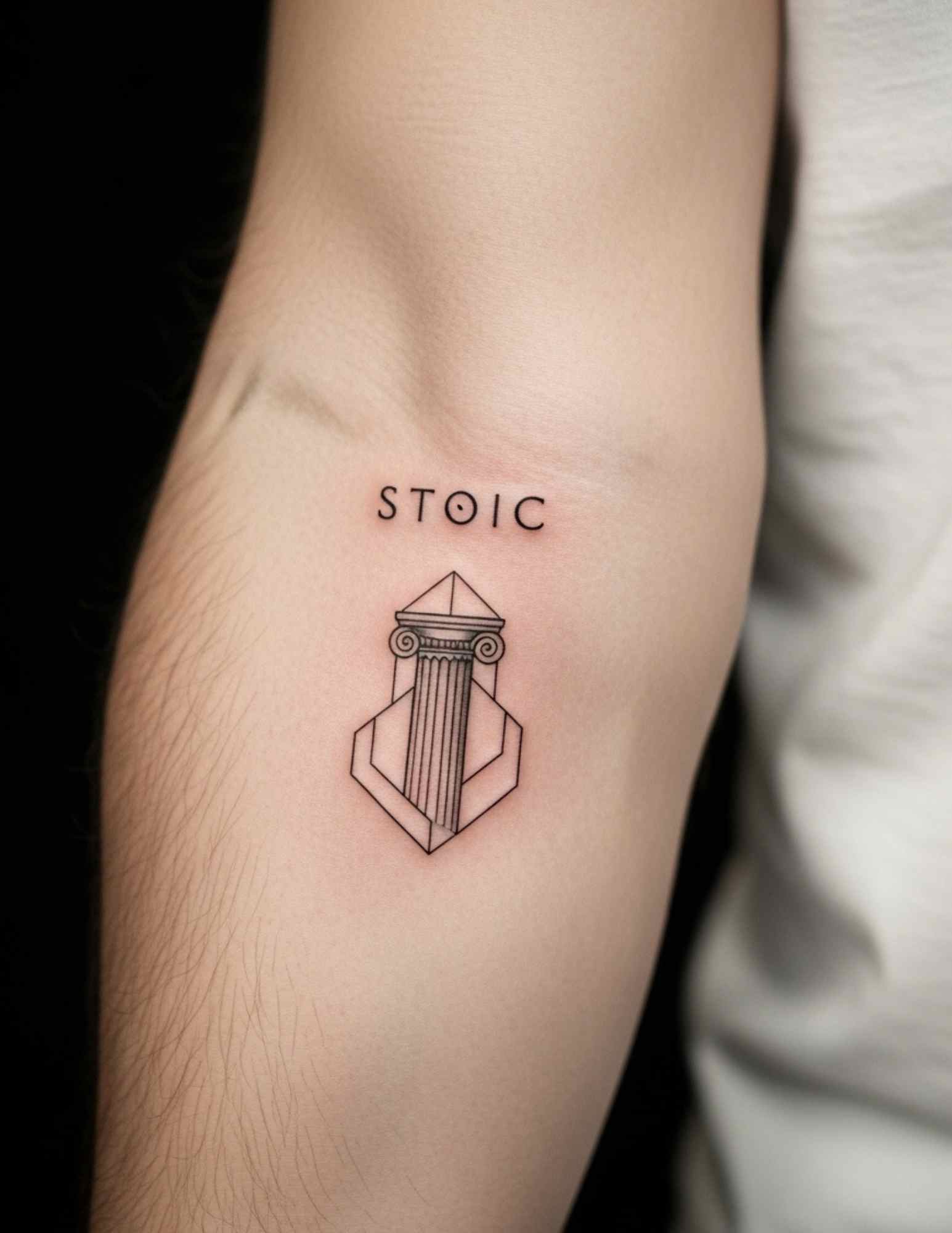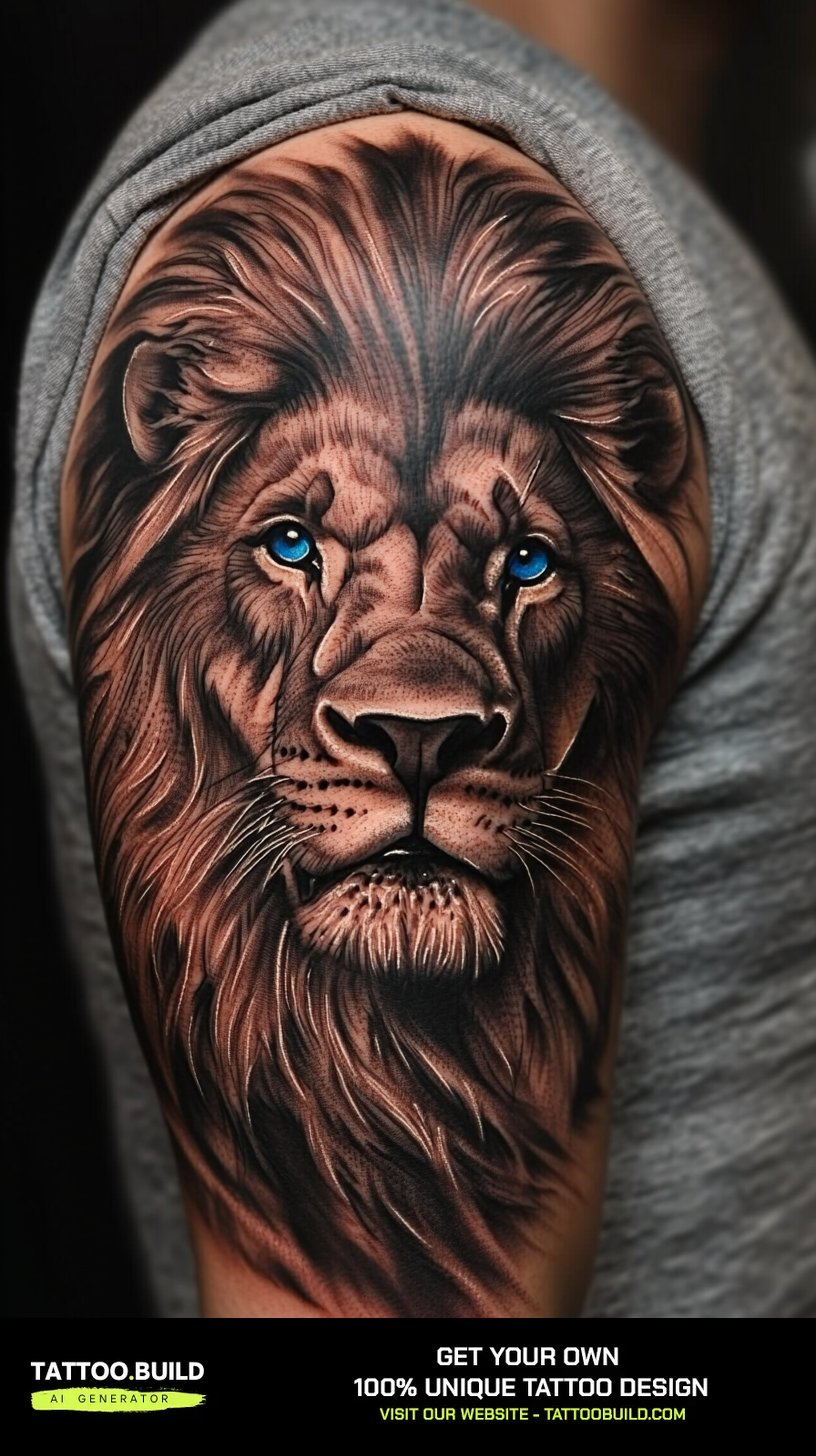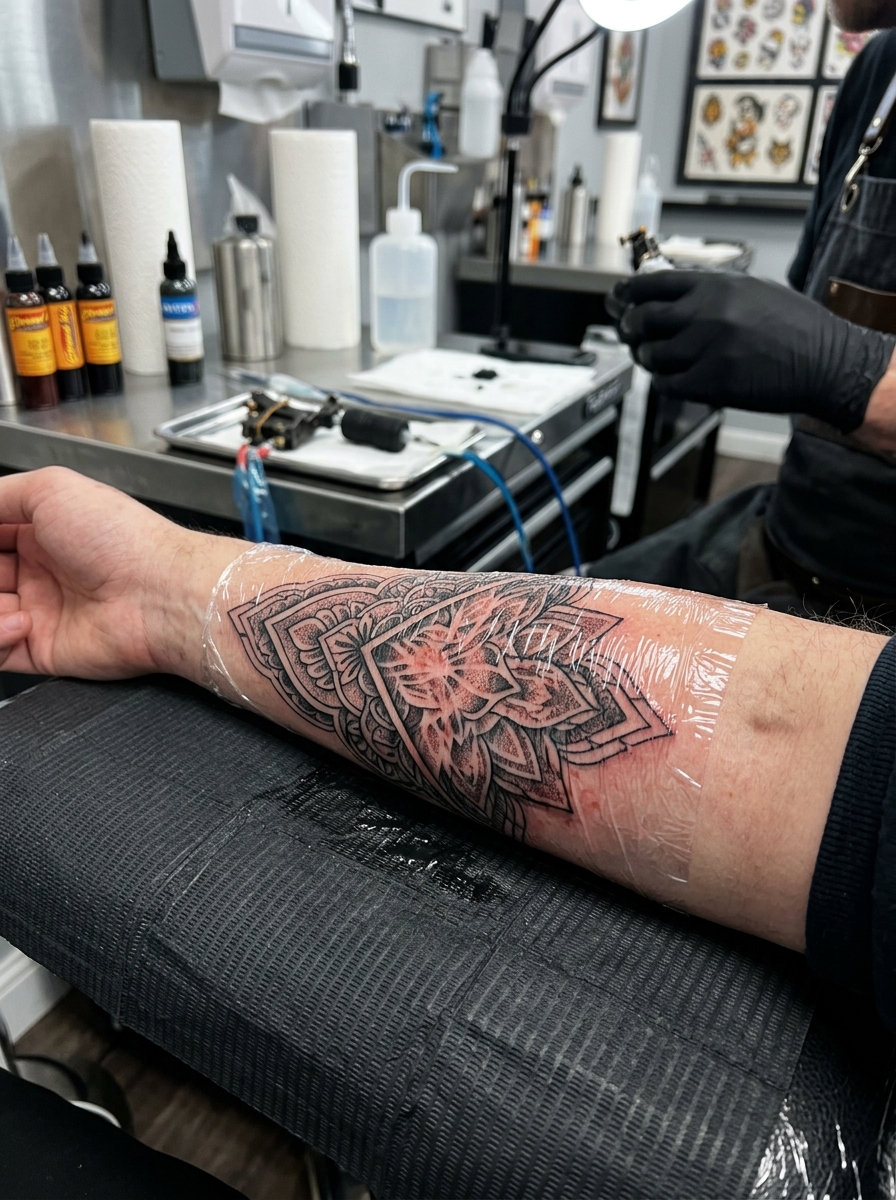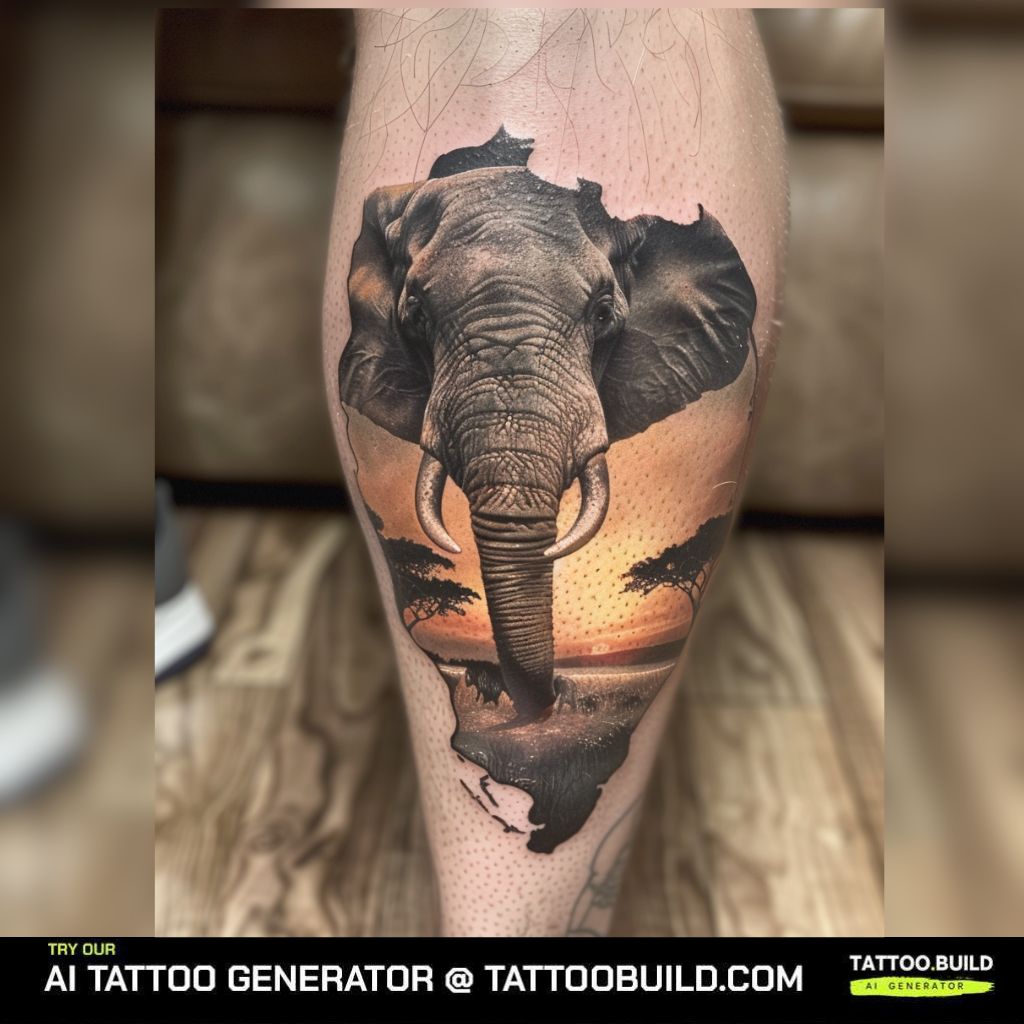
Cool is the most overused adjective in tattooing and, awkwardly, still the most useful one. Not beautiful, not meaningful, not complex. Cool is the quality that makes a stranger look twice and then want to know something about the person wearing it.
I have spent a lot of hours in studio waiting rooms and a lot more scrolling healed-work portfolios, and the pattern is consistent: the designs that hold up share confidence, restraint in the right places, and the sense of having been chosen rather than defaulted to.
The 22 ideas below earn the description. Each one comes with a real photo, the artist who made it, and the honest limitation that comes with the style, because a list that only tells you what looks good is half a list.
If you want a wider net before you commit, the collection of unique tattoo ideas for men covers subjects that are stranger and more specific than anything here.
Which Style Is Right for You?
Most of the ideas on this list can be executed in more than one style, and the style you pick matters more than the subject. Here is how the five styles below actually behave.
| Style | Best For | Visual Impact | How It Usually Ages | Watch Out For |
|---|---|---|---|---|
| Blackwork | Bold animal and figure subjects | Highest at distance | Very well; solid fill stays solid | Heavier scabbing while healing |
| Fine Line | Detailed objects, portraits, skylines | Low at distance, high up close | Softens; may need a touch-up | Needs a genuine fine line specialist |
| Japanese Traditional | Tigers, masks, large flowing panels | High, built for large areas | Excellent; the style was designed to | Cultural motifs deserve real research |
| Black & Grey Realism | Hands, faces, objects, watches | Medium; depends on contrast | Mid greys fade first | Artist skill gap is enormous |
| Geometric | Faceted animals, negative space | High; reads as graphic design | Well if lines were clean to start | Any wobble is permanent and obvious |
What Actually Makes a Tattoo Cool
It does not try too hard. The tattoos that announce their own significance are usually the least convincing ones in the room.
The coolest designs understate. They are specific without being obscure, bold without being aggressive, and personal without requiring a two-minute explanation every time someone asks.
There is a practical version of this too. A design that is cool at the stencil stage and unreadable in ten years was never cool; it was just new.
Placement does as much work as the drawing. The same samurai reads as commanding on an outer bicep and cramped on an inner wrist, and no amount of artist skill fixes a subject fighting the shape of the limb it sits on.
If placement is the part you have not settled, the guide to chest pieces for men is worth reading before you sit down with an artist.
22 Cool Tattoo Ideas for Men
Each idea below is a real tattoo by a working artist. Credits are in the captions, and I have added the trade-off that comes with each one.
1. Blackwork Samurai
A samurai figure in bold blackwork, armour detailed enough to read at three metres, sitting on the upper arm or across the chest.
The subject carries specific weight: discipline, skill, and a code of conduct placed above personal interest.
What makes this one work is the fill, not the linework. Every heavy blackwork samurai I have seen age well had large committed areas of solid black rather than a fussy grey wash.
Ask your artist to mock it up at final size before you book. Samurai armour is the single easiest subject to over-detail, and detail that small closes up within a decade.
2. Fine Line Anatomical Heart
The actual organ rather than the symbol: aorta, ventricles, the vessels branching off the top.
It is a cool tattoo precisely because it picks accuracy over sentimentality, and the subject is literally what keeps you running.
Fine line work like this needs a specialist. When I have compared healed photos, the artists who tattoo almost nothing but single-needle work produce lines that are still crisp after five years; general artists often do not.
Give it space. A fine line heart crammed into a small gap loses the internal detail that justified the style in the first place.
3. Astronaut
A lone suited figure, helmeted, in a pose that suggests either exploration or free float.
The subject stands for the frontier and for human curiosity taken to its furthest practical extreme.
This is one of the few designs that genuinely works in two opposite styles. Fine line gives you the fragility of a person in a vacuum; bold blackwork gives you the machinery of the suit.
Decide which of those two readings you want before the consultation, because the artist cannot do both at once.
4. Handshake
Two hands mid-grip in black and grey realism, sleeves or cuffs cropped so there is no context at all.
The composition is deliberately ambiguous: an agreement, a greeting, or a reckoning, depending on what you bring to it.
Hands are one of the hardest subjects in realism. Knuckles, tendons and the fold of skin between thumb and forefinger are where a portrait artist separates from a general tattooer.
When I have asked artists which realism subject they would refuse to rush, hands come up more often than faces.
5. Wolf in Geometric Composition
A wolf portrait built from geometric polygon facets, the animal’s intensity expressed through angular structure instead of organic rendering.
Instinct and mathematical precision occupying the same square of skin, which is a fair description of the animal itself.
Geometry is unforgiving. A line that drifts a millimetre off in a realistic wolf disappears into the fur; the same drift in a faceted design is visible forever.
Look for an artist whose healed geometric wolf work still shows clean vertices, not just fresh photos taken an hour after the session.
6. Fine Line Clock Face
A clock stopped at one specific time, rendered in precise fine line with legible numerals.
The specificity is what makes it personal: the hour of a birth, a loss, or the moment something started.
The detail only rewards people who get close enough to read it, which is the opposite of how most tattoos work and part of why it feels quieter and more confident.
Roman numerals hold up better at small sizes than Arabic ones. Straight strokes survive ink spread; the curves of a hand-drawn 3 or 8 often do not.
7. Eye of Providence
The eye set within a triangle, bold fills, proportions worked out properly rather than traced from a stock image.
It rewards anyone who knows the reference and functions as pure striking geometry for everyone who does not.
Proportion is the whole game here. A triangle that is even slightly off-square reads as a mistake rather than a style choice, especially on a flat panel like the forearm or the centre of the chest.
Ask to see the stencil on your skin, standing up, in a mirror, before any needle touches you.
8. Japanese Hannya Mask
The Hannya mask, with its horns, metallic eyes and open jaw, is one of the most graphically powerful subjects tattooing has.
In traditional Japanese Irezumi or in neo-traditional, both readings command attention and hold onto it.
It also carries real cultural meaning: in Noh theatre the Hannya represents a woman transformed by jealousy and grief, not a generic demon.
Worth knowing before you wear one for the rest of your life. An artist who works in the Japanese tradition will tell you the same thing unprompted.
9. Old Map Fragment
A section of a historical nautical or exploration chart, drawn in the cartographic style of the 16th or 17th century.
The documentary aesthetic sits between art and artefact, which is unusual on skin.
Pick a real map of a place that matters to you rather than a generic parchment. Bring a high-resolution reference from a library archive to the consultation.
Every artist I have asked about this subject says the same thing: the compass rose and the coastline hatching are what sell it, so give those room to breathe.
10. Tiger in Motion
A tiger caught mid-movement, muscle visible under the fur, in either Japanese Irezumi tradition or bold blackwork.
In motion rather than static, it brings a large canvas to life in a way a portrait cannot.
In Japanese tattooing the tiger represents strength and courage and acts as the earthly counterpart to the dragon.
Give it a big panel. A tiger squeezed onto a small forearm patch loses the flow of the body, and flow is the entire reason to choose a moving subject.
11. Fine Line Portrait of Someone Unexpected
Not a family member and not a celebrity: a portrait of someone who mattered to you for reasons that are not obvious from the outside.
A teacher, a coach, a historical figure who shaped how you think about something.
The fact that most people will not recognise the face is what makes it interesting. You get to decide, every time, whether to explain it.
Portraits are the least forgiving work in tattooing. Look only at healed portraits in an artist’s portfolio, ideally two or more years old, before you commit.
12. Viking Longship
A longship under sail in fine line or blackwork, referencing exploration, endurance, and the Northern European habit of heading into the unknown on purpose.
The silhouette is instantly recognisable and carries genuine historical weight rather than borrowed mystique.
This is one of the more adaptable Viking tattoo ideas for men because it scales. It reads on a small inner forearm and it reads across a full back.
Resist adding runes unless you have checked the translation with someone who actually reads Old Norse.
13. Abstract Face in Bold Lines
A human face deconstructed into abstract bold linework, features suggested rather than rendered, closer to Cubist portraiture than to tattoo tradition.
It reads as human without being specific to any individual, and the abstraction is itself the statement.
This style depends entirely on the artist’s drawing hand rather than on technical rendering skill.
Look at an artist’s sketchbook and their loose abstract drawing, not just their healed pieces. If the drawings are weak, the tattoo will be too.
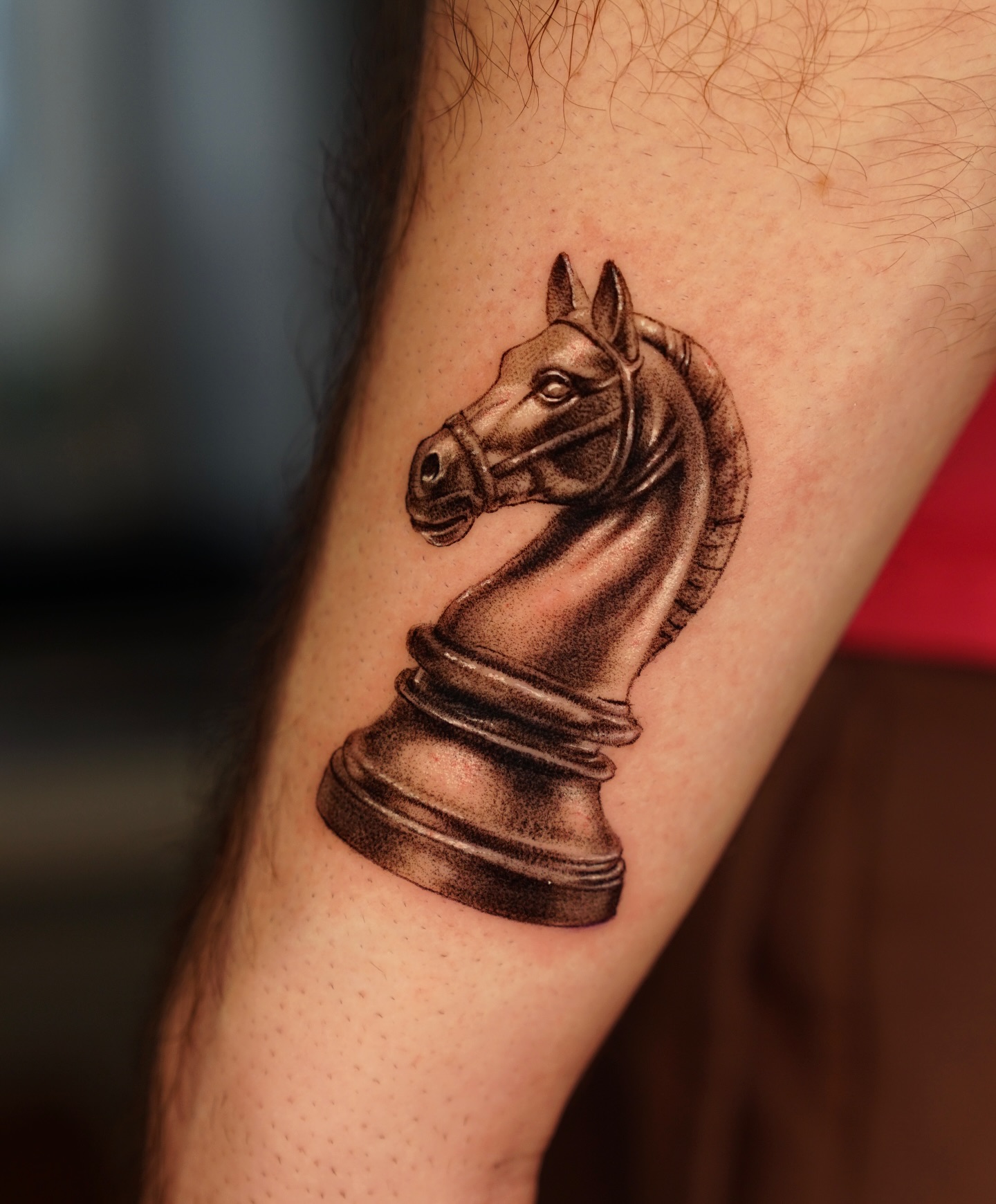
14. Chess Knight
The chess knight in fine line detail, carved horse-head profile and all.
The knight moves in a way no other piece does: non-linear, unpredictable, and effective anyway.
The symbolism of unconventional movement toward a conventional goal suits a certain kind of person exactly, and it does not need explaining to anyone who plays.
A small carved-wood texture in the mane keeps it from looking like a clip-art icon. That texture is the difference between a good one and a flat one.
15. Skull With Architectural Detail
A skull where the cranial space is replaced with an architectural scene: a library, a cathedral interior, a street visible through the eye sockets.
The skull as a container for whatever fills a mind, which is a better idea than most skull tattoos manage.
It is cool because the concept only reveals itself on close inspection, and it survives being explained.
The interior scene needs contrast against the bone. If your artist shades both at the same value, the whole thing turns into grey mush within a few years.
16. Custom-Designed Tribal Armband
A tribal armband designed for one specific person, drawing on their heritage or built with an artist trained in a particular tradition.
Custom tribal work looks nothing like off-the-shelf flash, and the difference is visible to everyone who looks.
Real Polynesian and Marquesan practitioners design around the shape of your arm and around motifs that mean something specific.
If you are drawn to the look but have no connection to those traditions, an honest artist will steer you toward contemporary blackwork banding instead. That is not a downgrade.
17. Blackwork Bear
A bear in bold blackwork, dense fur suggested through layered fill and edge texture rather than individual hairs.
On the upper arm or chest in heavy black it carries real visual weight.
The animal’s associations with strength and protectiveness are not subtle and are not meant to be.
Solid black areas need proper aftercare while healing, because heavily saturated skin scabs more than line work does and pulling at it costs you ink.
18. Fine Line Cityscape
The skyline of a city that means something to you, rendered in fine line with enough architectural accuracy to be identifiable.
Not a postcard silhouette but a real drawing of real buildings.
The city becomes a permanent personal landmark, and people who know that skyline will spot it immediately.
Long horizontal subjects suit the inner or outer forearm better than anywhere else. Wrapping a skyline around a bicep almost always crops the buildings that made it recognisable.
19. Negative Space Geometric
A bold geometric composition where the design is formed by what the ink does not cover, the bare skin making the pattern and the black fill surrounding it.
High contrast, visually precise, and genuinely different from conventional tattooing.
This only works on skin that will stay relatively even in tone. Negative space on an area that tans heavily loses contrast in summer and gets it back in winter.
Ask your artist about that trade-off honestly; the good ones raise it before you do, and many of the best geometric tattoo ideas for men depend on it.
20. Broken Watch
A pocket watch face broken at a specific time, glass cracked, hands stopped where they stopped.
The stopped clock is a classic memento mori symbol; the broken version adds a layer of specific drama.
Something ended here, and the moment is preserved in its disruption rather than in its beauty.
The cracks are the technical difficulty. They need to sit on the glass plane and not on the dial behind it, which takes an artist who understands how to render two overlapping surfaces in black and grey.
21. Smoke and Fog Abstract
A large-format abstract composition suggesting smoke or moving cloud in loose blackwork and grey wash, with no defined subject inside it.
Something atmospheric and permanent, which is an odd and appealing combination.
It resists easy categorisation, so nobody asks what it means, which some people will consider the main selling point.
Soft grey wash is the one style most likely to soften with age. Ask your artist to build in a few genuinely dark anchors so the piece keeps its structure in twenty years.
22. A Single Playing Card
One specific playing card, drawn with the precision of a real card down to the pip spacing and the border.
Which card depends entirely on what you are prepared to commit to.
The Ace of Spades carries one set of associations, the King of Hearts another, the Joker something else again.
The choice tells a story before you say a word, which is the most efficient thing a tattoo can do.
Variations Worth Considering Instead
If nothing above is quite landing, the problem is often scale or category rather than subject. These three directions solve most of it.
Go Smaller and More Specific
A small, precise tattoo in an unexpected place often reads cooler than a large one in an obvious place.
The inner bicep, the ribs under the arm and the back of the upper arm all hold small work well. There is a full set of small meaningful tattoo ideas for men if that is the direction.
Go Bigger and Commit to a Panel
Several of these subjects — the tiger, the longship, the smoke abstract — are better as one large panel than as a standalone patch.
A half sleeve planned around one subject almost always looks more considered than four unrelated pieces added over five years.
Build a Set Rather Than a Statement
Three or four smaller tattoos in one consistent style read as a deliberate collection.
This is the low-risk route: you can stop after one and it still looks finished, which is not true of a half-finished sleeve.
Getting It Done Properly
Choose the artist before you finalise the design. A great artist will improve your idea; a mediocre one will execute exactly what you brought and it will still be worse.
Look only at healed photos. Fresh work looks good almost universally, and the gap between fresh and healed is where most regret lives. The guide to first tattoo ideas for men covers the consultation questions worth asking.
Expect the surface to look healed in roughly two weeks and the deeper skin to keep settling for a couple of months. The American Academy of Dermatology has straightforward aftercare guidance, and the US Food and Drug Administration covers what is and is not known about tattoo inks.
On pain: heavy blackwork on the ribs or the inner bicep is genuinely uncomfortable, and pretending otherwise helps nobody. Some practical tattoo pain management tips will do more for you than bravado.
If a healing tattoo becomes hot, increasingly painful after the first few days, or starts weeping anything cloudy, that is a doctor’s question and not a forum question. This article is not medical advice, and no reputable artist will tell you otherwise.
Still Not Sure? Common Mistakes to Avoid
Copying a tattoo you saw online exactly. Bring it as a reference and let the artist redraw it for your body; most will insist on this anyway.
Choosing the style before the subject. The subject should suggest the style, not the other way round.
Booking with whoever has the earliest availability. Waiting four months for the right artist is the cheapest decision in this entire process.
Filling space for the sake of it. If you are working toward a sleeve, look at deliberate sleeve filler ideas rather than adding whatever fits.
And if you are still circling, that is useful information. The idea that survives six months of second-guessing is the one worth wearing.
Frequently Asked Questions
What is the coolest tattoo for a man to get?
There is no single answer, and any list that claims one is selling you something. In practice the coolest tattoo is a subject you have a real connection to, executed in a style that suits it, by an artist who specialises in that style. Blackwork animals, Japanese traditional panels and precise fine line objects are the three categories that consistently look good years later. The specific subject matters far less than those three variables.
How much do these tattoo ideas usually cost?
Prices vary enormously by city, artist reputation and size, so any figure quoted online is close to meaningless for your situation. Most studios charge either a shop minimum for small work or an hourly or day rate for larger pieces. The reliable approach is to email two or three artists whose healed work you like with your subject, rough size and placement, and compare their quotes. Expect the artists with the strongest portfolios to be the most expensive and the most booked.
Which of these ideas ages the best?
Bold blackwork and Japanese traditional generally age best, because both styles were built around solid shapes and strong contrast that survive ink spreading over decades. Fine line work is the most likely to soften, particularly at very small sizes or on high-friction areas like hands and feet. Black and grey realism sits in between; its mid-tone greys tend to lighten first. None of this makes fine line a bad choice, but it does mean planning for an eventual touch-up.
Where is the least painful place to get one of these?
Areas with more muscle and fewer nerve endings are usually the most tolerable: the outer bicep, the outer thigh and the forearm are commonly reported as easier. Ribs, sternum, inner bicep, elbow ditch, hands and feet are usually reported as harder. Pain is individual, though, and people who expect one area to be unbearable often find another one worse. If pain is your main concern, start with an outer bicep or forearm piece and learn how your own body handles it.
Can I combine two of these ideas into one tattoo?
Often yes, and some of the strongest combinations on this list already are: the skull with an architectural interior is two ideas fused, and so is the geometric wolf. The risk is that two strong subjects compete for attention and neither wins. Bring both references to your artist and ask them directly whether the combination reads clearly at the size you want. A good artist will tell you honestly if one idea should be dropped.
Quick Summary
- Cool comes from restraint and specificity, not from complexity or size.
- Pick the subject first, then let the subject suggest the style.
- Blackwork and Japanese traditional age the most reliably; fine line ages the softest.
- Judge every artist on healed photos, not fresh ones.
- Placement does as much work as the drawing — match the subject to the shape of the limb.
- Geometric and negative space work is unforgiving; any wobble is permanent.
- Research cultural motifs like the Hannya mask or Polynesian tribal before wearing them.
- Treat unusual heat, spreading pain or cloudy discharge during healing as a doctor’s question.
The coolest tattoo is the one you thought about long enough to know it was right. Not the first idea — the one that survived being second-guessed.