I have spent the last decade in and around tattoo studios, and if there is one placement guys ask about more than any other, it is the arm. The arm is the most forgiving canvas on the body for a first serious tattoo, and it is also the one that scales the furthest as you add more work over the years.
When I sat down to rebuild this guide, my goal was simple: cut the filler, keep the placement advice that actually matters at the chair, and show style directions that are still holding up in 2026 rather than only what looked good in a 2019 Instagram feed.
You will see six major arm zones broken out with what each one actually suits, seven style directions with real trade-offs, a placement comparison table, and a practical FAQ. If you already know you want a longer piece, you can jump ahead to my write-up on full sleeve tattoos for men for how those get planned across sessions.
Everything below is written from the chair side of the room. I have picked pieces I have watched heal, artists I have booked with, and questions I have answered more times than I can count on shop nights. Take what applies to you, ignore what does not, and bring a printed reference the day of your appointment.
Which Arm Placement Is Right for You?
Every arm zone has its own trade-off between visibility, pain, healing behavior, and how much design real estate you actually get. This is the shortlist I run through with people who are still deciding where their first piece should go.
| Placement | Visibility | Pain (1-10) | Best For |
|---|---|---|---|
| Upper Arm / Bicep | Concealable under a sleeve | 4-5 | Large statement pieces, portraits, Japanese panels |
| Forearm | Always visible in short sleeves | 3-5 | Script, geometric, symbolic pieces, first tattoos |
| Inner Bicep | Rarely visible | 6-7 | Private script, dates, hidden symbols |
| Tricep / Back of Arm | Only when your arm moves | 4-6 | Filler for a sleeve, wraparound bands, minimalist work |
| Half Sleeve | Shows below a t-shirt cuff | Averaged 4-6 | Building a project over 2-4 sessions with room to grow |
| Full Sleeve | Fully visible below a short sleeve | Averaged 4-7 | A committed multi-session project with a unifying theme |
Why Arm Placement Matters More Than Style
Most guys walk in already fixated on a style — realism, Japanese, blackwork — and treat placement as an afterthought. In my experience, that is backwards. The zone you pick constrains what actually looks good on the body far more than the reference image you brought in.
A portrait rendered on a curved bicep reads differently than the same portrait laid across a flat forearm panel. Fine linework on the inner arm ages faster than it does on the outer forearm because the skin there is softer and stretches more with everyday movement.
Placement also drives session length, cost, and how visible the piece is for work. Every artist I have asked will happily rework a style suggestion if you are locked in on a placement — but very few will move a piece to a zone that fights against the design you brought.
The section below breaks the arm into six practical zones. If a placement is not on this list, it is usually a variation of one of these. Read them with your own use case in mind: sleeve or shirt at work, gym life, how often you push heavy weight, and whether you plan to build a bigger project later.
Arm Placement Zones and What Each One Actually Fits
1. Upper Arm and Bicep
The upper arm is the workhorse of arm tattoos. It gives you a large, relatively flat area on the outer bicep and shoulder cap that reads well from a distance, which is why almost every classic portrait and Japanese-style panel lives here.
Pain here is manageable for most people — I typically hear a 4 out of 10 through the meat of the bicep, with a jump when the machine hits the inner seam. The area is also the easiest to hide: a standard t-shirt sleeve covers it completely, which matters if you work anywhere with a dress code.
One thing I always warn people about: if you plan to grow the piece into a half or full sleeve later, plan the upper arm composition with that expansion in mind. A dense, self-contained bicep tattoo is hard to blend into a sleeve without recoloring or reworking.
2. Outer Forearm
The forearm is the most common first tattoo I see, and for good reason. It is long, flat, and lets you and everyone else see the finished piece without a mirror. Script, geometric work, and single-focus symbolic pieces all sit naturally on this zone.
Pain runs 3-5 for most guys — the ulnar edge (little finger side) is noticeably softer than the outer bone side. Forearm ink also gets more sun than almost any other placement, so sunscreen habits are genuinely part of aftercare here.
A common mistake I see: choosing a tightly detailed image that will not read from arm’s length. If someone cannot recognize the subject from three or four feet away, the design is too busy for a forearm panel.
3. Inner Bicep and Inner Forearm
The inner arm is the private zone of arm tattoos — usually only you see it, and often only when your arm is raised. That makes it a natural home for dates, meaningful script, and symbols you want available but not on display.
Fair warning: the pain here is legitimately higher, usually 6 or 7. The skin is soft, thin, and full of nerve endings. It is also thinner across the antecubital fossa (the inside of the elbow), which is why most artists will steer that specific stripe away from heavy detail.
Inner arm work also spreads and softens faster than outer arm work. When I plan fine-line pieces here I tell people to expect a touch-up around year three, not year eight.
4. Tricep and Back of the Arm
The back of the arm is the underused zone. It flexes with movement, wraps naturally, and gives you a canvas that is only visible when you choose to reveal it. I use this area a lot for band tattoos, wraparound elements, and filler work that connects a bicep piece to a forearm piece for a sleeve.
Pain runs 4-6 depending on how close you are to the underarm — the closer to the pit, the worse it stings. The tricep also sees very little sun compared to a forearm, so pieces here tend to stay saturated for years longer than the outer arm work I have done at the same time.
This is not the zone I recommend for a fully self-contained single design. It works best as a supporting player in a bigger arm composition.
5. Full Sleeve
A full sleeve — shoulder cap down to wrist — is a commitment, and I want to say that plainly. Most projects I have watched take between 25 and 50 hours of chair time spread across 4-8 sessions, and they age far better when a single artist plans the whole composition from the start.
If you are seriously considering one, do not book the first session until you have discussed the anchor points (shoulder, elbow, wrist), the transition ideas between them, and a coherent theme. My longer breakdown of sleeve tattoo ideas for men walks through the planning specifics.
Pain averages 4-7 depending on the section — elbow ditch and inner bicep are the honest low points; the outer bicep and outer forearm are almost boring by comparison.
6. Half Sleeve
A half sleeve typically covers either shoulder-to-elbow or elbow-to-wrist. It is the placement I recommend more than any other for guys building their first larger project, because it can be planned in 2-4 sessions and it either stops naturally at the elbow or leaves room to extend down later.
If you want the “sleeve look” without the commitment, an upper half sleeve is honestly hard to beat. It is fully hideable, it has enough space for a strong central subject and complementary elements, and it costs roughly a third to half of a full sleeve.
My separate write-up on half sleeve tattoos for men lays out session pacing and cost expectations in more detail.
Cool Arm Tattoo Style Directions Working in 2026
These are the seven style directions I see holding up in 2026 — meaning they still book well, they age well, and I can honestly point you toward artists who specialize in each.
Black and Grey Realism and Portrait Work
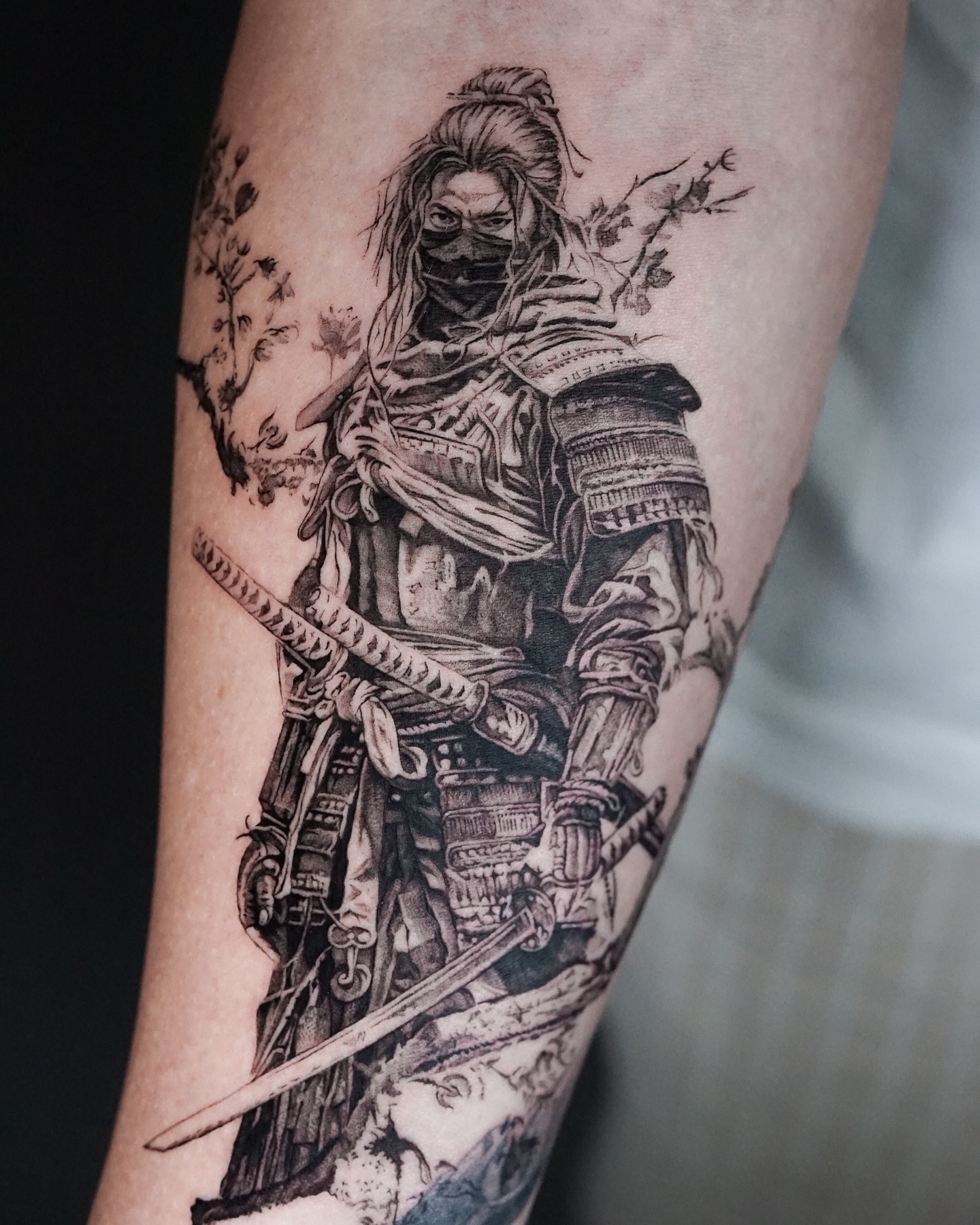
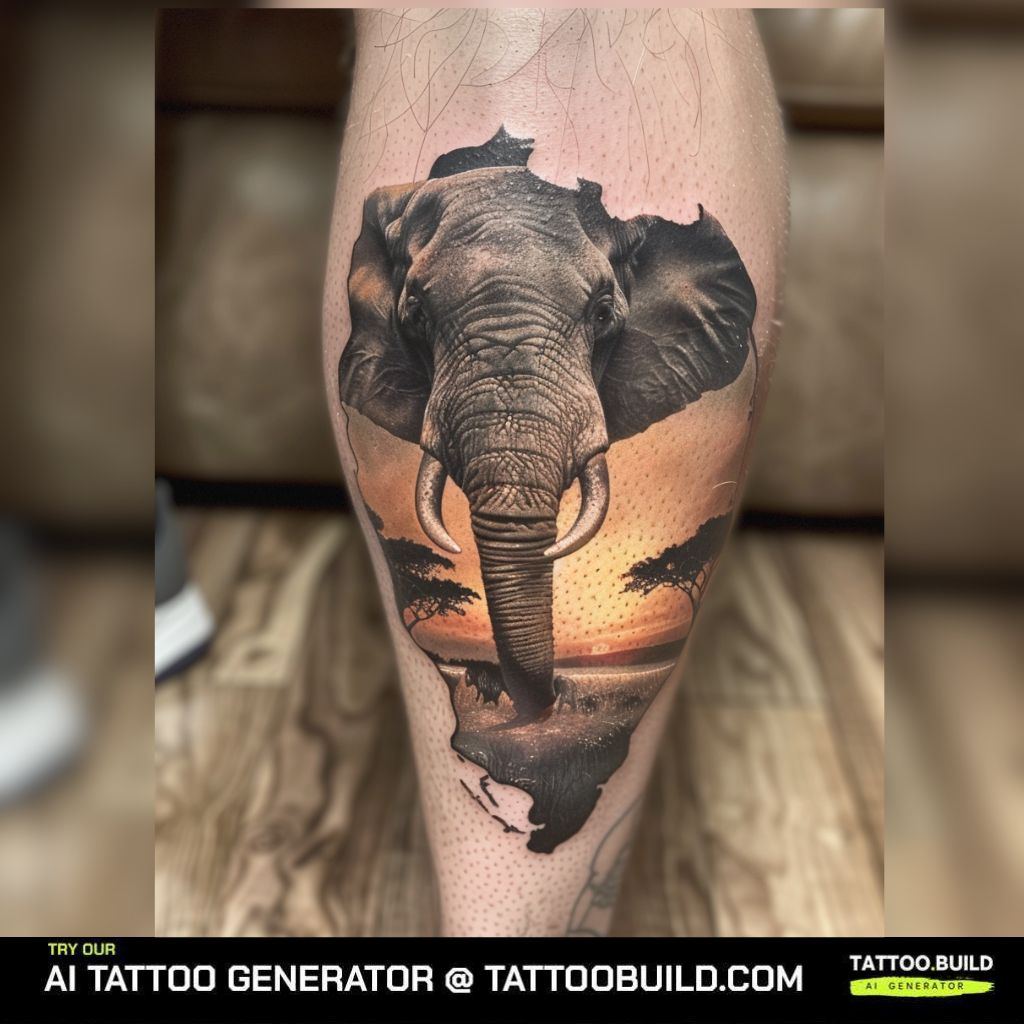
Realism has quietly become the default American arm tattoo of the last decade. Portraits of family, animals, historical figures, and single-object studies (a watch, a rose, a lion) still book more chair time than almost any other style in the shops I know.
What separates modern realism from the muddy chest pieces of the early 2010s is composition and skin tone awareness. In my experience, a good realism artist plans the piece around your skin tone from day one — darker skin sits better with less pushed grey wash and more contrast; lighter skin can take softer transitions.
Realism ages faster than almost any other style if the artist does not respect skin depth. Ask to see healed work from at least three years back before you book. If they cannot produce healed photos, keep looking.
Neo-Traditional and American Traditional
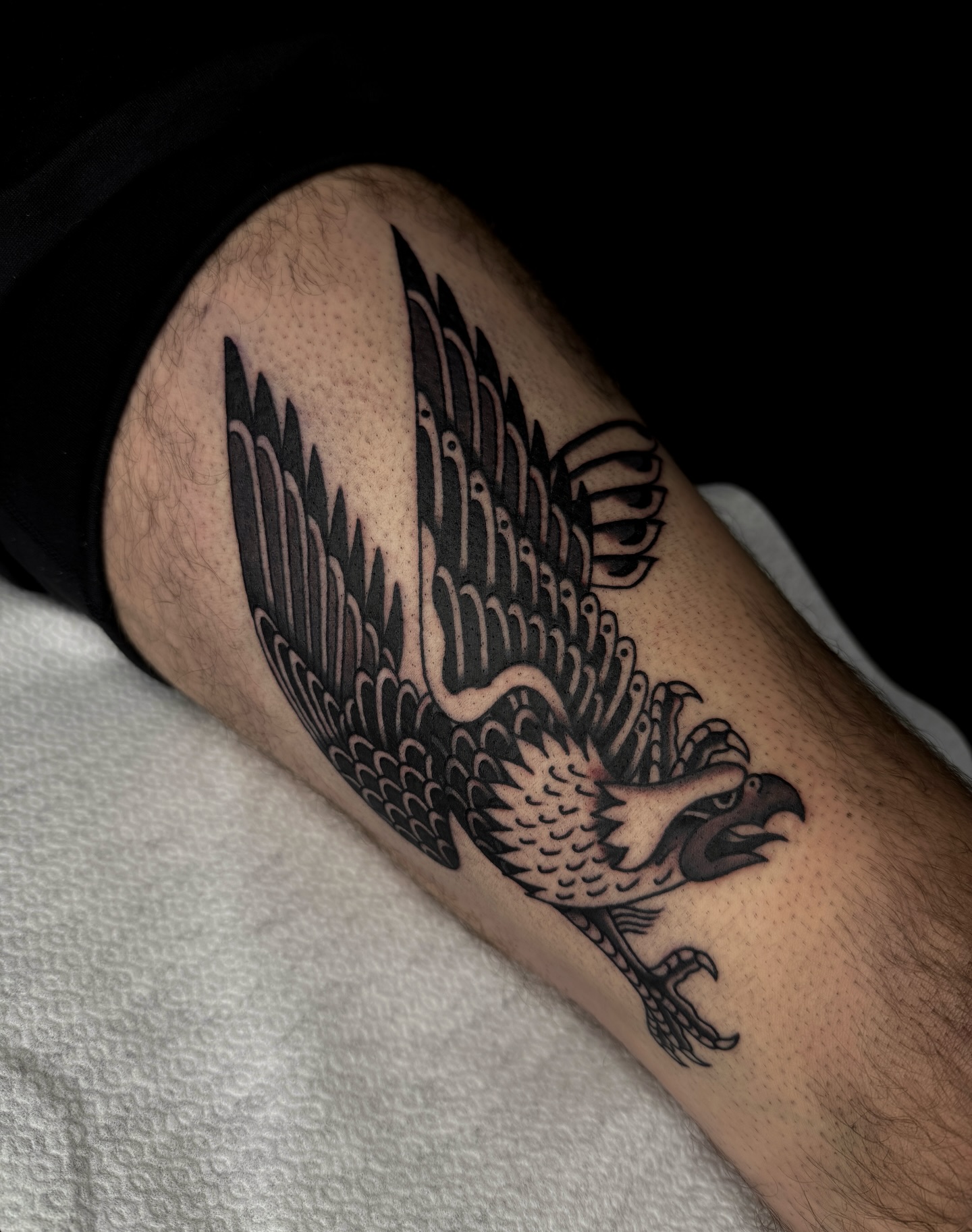
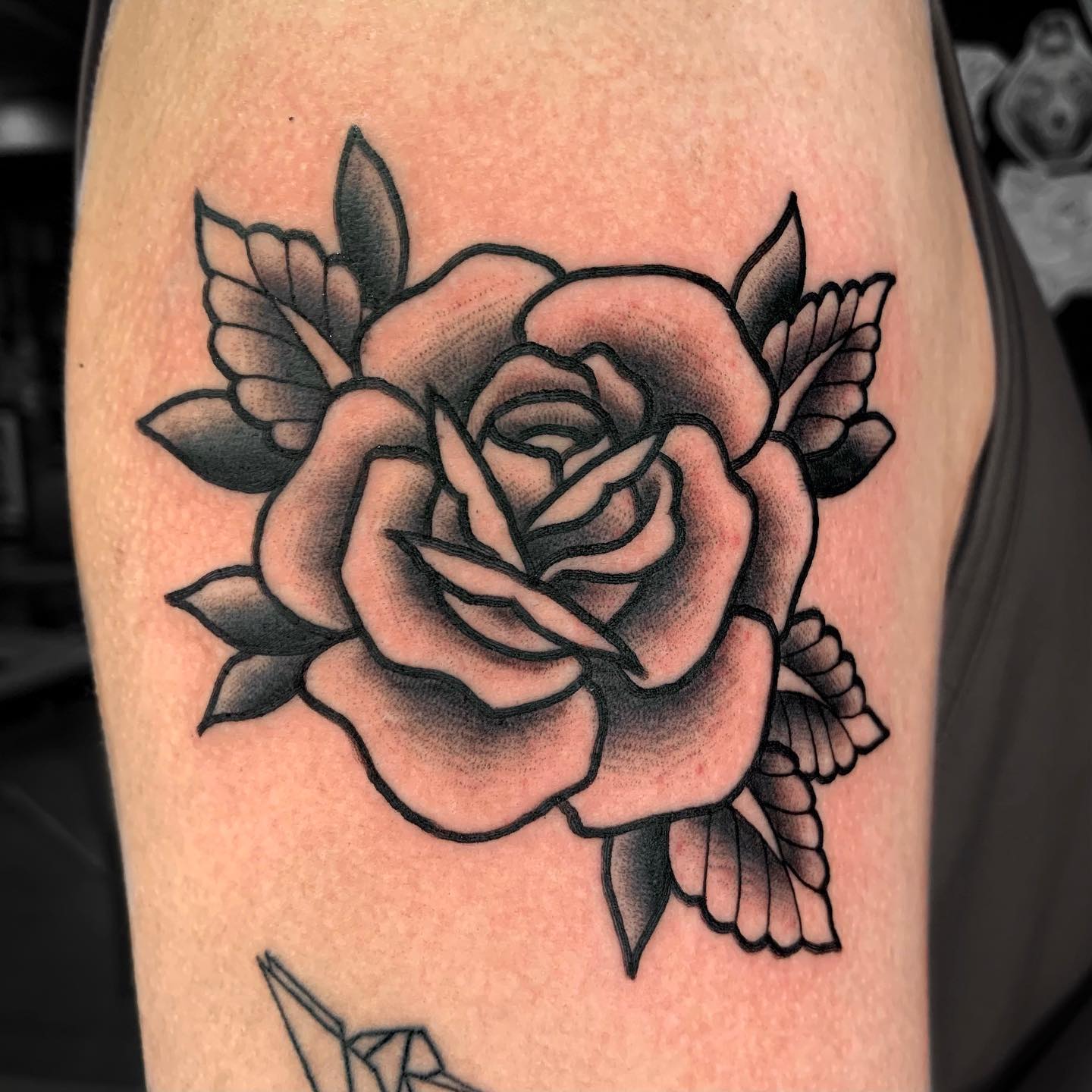
Traditional and neo-traditional continue to be the safest bet for longevity. Bold outlines and packed color read cleanly at five years and at fifteen. If you want a piece that will still look sharp when you are showing it off to your kids, this is the style I recommend without hesitation.
Neo-traditional loosens the palette and gives artists room to add ornamental detail while keeping the structural bones of the traditional approach. It is where most of the interesting eagle, dagger, and animal-portrait pieces I have seen this year have landed.
Traditional does not scale well past a certain density — a solid traditional bicep piece is usually best left as a self-contained tattoo rather than a sleeve component.
Japanese Irezumi Sleeves
Japanese-style arm work — koi, dragons, waves, phoenixes, hannya masks — remains the gold standard for sleeves that stay legible at twenty years out. The style was literally designed to wrap the human body, and it uses black and colored background elements (wind bars, waves, wind lines) that flatter arm anatomy.
This is not a style to piecemeal. If you want Japanese work, book with a Japanese-focused artist, plan the whole sleeve upfront (even if you tattoo it in pieces), and expect the initial consultation alone to take an hour.
Most artists I trust in this lane will not do a random small Japanese piece with no plan around it, because the aesthetic depends on those background elements to hold the composition together.
Blackwork and Geometric
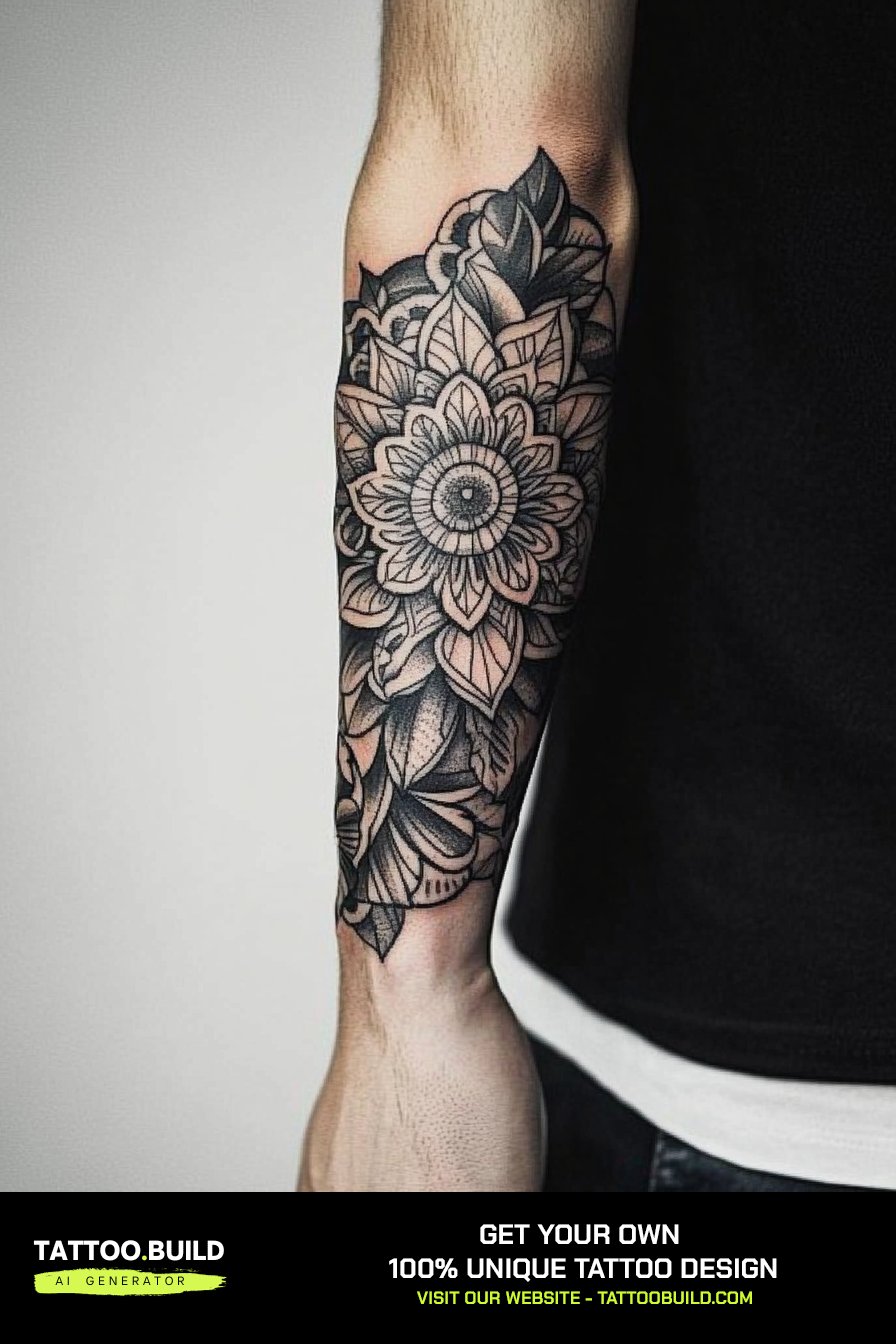
Blackwork covers everything from bold graphic panels to solid-fill sections used as negative space around lighter linework. It also happens to be one of the most photogenic styles under studio lighting, which is why it dominates tattoo Instagram.
Geometric work — sacred geometry, dotwork mandalas, linework tessellations — usually gets grouped in here. My honest take is that dotwork mandalas rendered on the shoulder cap and outer bicep have held up better than the same pieces on the forearm, where sun exposure fades the dot density faster.
If you are heavier on melanin and want a graphic look, blackwork is one of the few styles that reads as clearly on darker skin as it does on lighter skin. Fine linework and colored work often do not.
Fine-Line and Minimalist
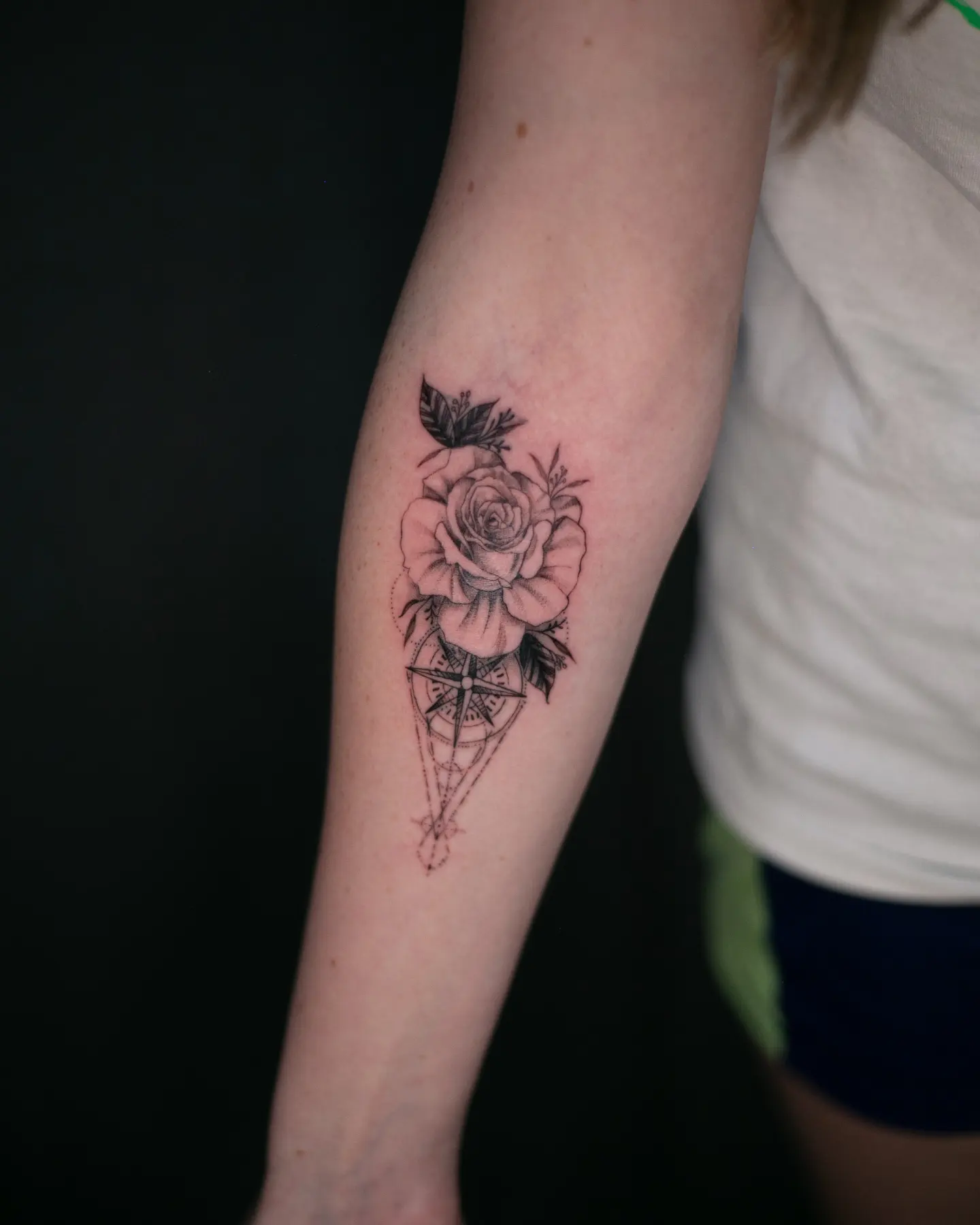
Fine-line work exploded in the late 2010s and has now settled into a real place in the arm tattoo mix. It is what I recommend for guys who want ink but do not want a piece that dominates their arm.
The honest trade-off is longevity. Fine-line pieces done with a single-needle setup, especially on the inner arm or over the antecubital fossa, will need touching up sooner than heavier work. I usually tell people to plan for a small refresh at year 5-7 and again at year 10-12.
Placement matters more here than in any other style. Outer forearm and outer bicep hold fine-line work far better than the inside of the arm. If a smaller minimalist forearm piece is what you have in mind, my collection of small forearm tattoo ideas for men shows scale examples that hold up well.
Symbolic Creatures (Wolf, Lion, Dragon, Snake)
Animal tattoos remain the most common request in the men’s arm tattoo world, and there is a reason. A well-executed wolf, lion, dragon, or snake gives you a strong subject with built-in symbolic weight, and each of those subjects can be rendered in any of the styles above.
Wolves and lions read strongest as portrait realism or bold neo-traditional. Dragons and snakes both benefit from Japanese or blackwork approaches because the shape naturally wraps the arm. If you are into wolves specifically, my breakdown of geometric wolf tattoo ideas covers how the geometric approach compares to a straight realism take.
The mistake I see most often here is fixation on a specific reference photo. Bring three or four references that communicate the vibe and give the artist room to draw the piece around your arm shape.
Script and Symbolic Motifs
Script work — meaningful words, dates, single-line quotes — sits differently on the arm than on the ribs or chest. Inner bicep and inner forearm are the two zones I recommend for personal script. Outer forearm works too if the piece is short and readable at arm’s length.
Symbolic motifs (compass, anchor, clock, cross, arrow) are the other half of this category. These pieces work as standalone tattoos and as the anchors for a bigger composition later. A compass done well can be the centerpiece a whole forearm sleeve grows around.
Keep font choices boring. Trendy scripts date fastest of anything on the body. A clean serif or well-set traditional lettering will still look right in twenty years; the fashionable script of any given year will not.
Alternatives and Variations Worth Considering
Not every arm tattoo has to fit neatly into one of the seven directions above. These are three variations I get asked about often enough to include here.
Coverup and Rework Projects
If you are covering old work, the placement conversation shifts entirely. The existing piece dictates the palette, the scale, and often the style you can realistically use. Blackwork and Japanese are the two lanes that cover reliably; realism almost never does.
Book a longer consultation for coverups — 45 minutes minimum — and bring healed photos of the existing tattoo in daylight rather than studio light. Fluorescent light hides how much of the old work will actually show through.
Wraparound Bands
A tribal band, a wraparound geometric pattern, or a nature-based band (leaves, waves, script) around the upper arm or forearm is one of the few ways to get a striking piece without committing to a large panel. The design has to actually wrap — meaning it reads correctly from every angle — which is trickier to plan than a flat panel piece.
These pieces also age well because they usually stay bold and geometric rather than relying on fine detail.
Micro Pieces You Can Add To
If you are not sure you want a large piece, a single small tattoo you plan to expand later is a reasonable path — as long as you plan the expansion at the same consultation. Isolated micro tattoos can become expensive to blend into a bigger project because most artists have to work around them rather than through them.
Pick a location that would sit inside a future half sleeve if you commit to one. That is almost always the outer forearm or outer bicep.
Aftercare and Longevity Tips I Give Everyone
The first two weeks decide how a tattoo heals; the next twenty years decide how it ages. Both matter, and both are within your control.
For the first two weeks, follow whatever aftercare instructions your artist gives you rather than what the internet says. Every studio has settled on a slightly different protocol, and consistency inside that protocol beats mixing methods. If your artist did not give you clear instructions, that is a red flag worth noting.
For the long term, sunscreen is by far the single most important thing. UV exposure fades tattoo ink faster than any other single factor. I use a mineral sunscreen — SPF 30 or higher — on any exposed tattoo during summer, and I have watched the tattoos of guys who do the same age noticeably better than those who do not. For anything more than a healing question, ask your artist rather than assuming; the American Academy of Dermatology also has practical guidance on caring for tattooed skin long term.
Hydration matters more than most people credit. Skin that stays hydrated holds pigment better, plain and simple. Cheap unscented lotion twice a day for the first year is more useful than any expensive tattoo-branded balm.
Common Mistakes I Watch Guys Make
The pattern is remarkably consistent. Most of the regret I have heard in ten years of shop conversations traces back to the same few decisions.
Booking on price rather than portfolio. A $150 forearm piece and a $600 forearm piece are almost never comparable work. If your budget is tight, book smaller work with a stronger artist rather than larger work with a cheaper one.
Copying an exact reference from Instagram. Every reputable artist I know will draw a custom piece for you rather than replicate someone else’s. If they will not, that itself is a warning sign about the shop.
Ignoring healing red flags. If something during healing looks unusual — spreading redness beyond the tattooed area, a fever, streaks of red away from the piece, pus that is not clear plasma — see a doctor rather than posting in a tattoo forum. Infections are rare with proper aftercare but they do happen, and they need real medical attention rather than crowdsourced advice. The CDC has published notes on tattoo-related skin risks that are worth a read if you want the clinical side.
If you are still torn between placements, my write-up on meaningful forearm tattoos for guys and outer bicep tattoo ideas should help you compare the two most common first-piece zones side by side.
More Arm Tattoo Inspiration by Style
A last set of arm pieces I have grouped for reference — good for showing an artist the range you are drawn to before your consultation. The best consultations I have sat in on always started with the client bringing five to ten images that shared a mood, not one image they wanted copied.
Frequently Asked Questions
How much does a cool arm tattoo cost in 2026?
Costs vary widely by region and artist reputation, but the rough averages I see in North America are $150-$300 for a small forearm piece (2-3 hours), $600-$1,200 for a bicep panel (4-6 hours), $2,000-$4,000 for a half sleeve (8-12 hours), and $4,000-$10,000+ for a full sleeve (25-50 hours). Shop minimums typically start around $80-$150. Custom work with well-known artists runs significantly higher.
Which arm placement hurts the least?
The outer forearm and outer bicep are consistently the least painful zones on the arm, usually reported at a 3-4 out of 10. The muscle underneath and the thicker skin blunt the machine well. The inner bicep, elbow ditch, and areas close to the armpit are the hardest zones on the arm, often reported at 6-8 depending on the person. If pain is a real concern, plan your first session in one of the outer zones.
How long does a full sleeve take to complete?
Most full sleeves take between 25 and 50 total hours of chair time, spread across 4-8 sessions. Sessions are usually 4-6 hours each, with 4-8 weeks of healing between sessions. From first consultation to a fully finished sleeve, six months to a year is normal for a well-planned project. Compressing the timeline further is possible but usually harder on both healing and pigment retention.
Can I get an arm tattoo if I work in a professional office?
Yes, but placement matters. Upper arm, tricep, and inner arm work stays fully covered by a standard business shirt or a t-shirt sleeve. Forearm work will show anytime you roll up your sleeves. Company policies vary widely by industry — finance, law, and healthcare are still more conservative than tech or creative industries, though attitudes have shifted considerably in the past decade. If you are unsure, keep your first piece to a zone a shirt covers.
Should I get a stencil or freehand arm tattoo?
The vast majority of arm tattoos are done from a stencil the artist prepares from your approved design. Freehand work has a place — usually for background elements, wraparound flow lines, and organic filler — but the main subjects of a piece almost always start from a stencil. If an artist offers to freehand your primary piece with no stencil at all, ask why and look at their portfolio carefully before agreeing.
Quick Summary
- Pick your arm zone before your style. The zone constrains what actually looks good more than the reference photo does.
- Outer forearm and outer bicep are the safest first-piece placements: visible or hideable, forgiving pain levels, most style options.
- Traditional and neo-traditional age the best. Fine-line ages the fastest, especially on the inner arm.
- Plan sleeves and half sleeves as a full composition upfront, even if you tattoo them in pieces over months.
- Sunscreen is the single most important long-term care factor. Mineral SPF 30+ on exposed tattoos in summer, always.
- Book on portfolio, not price. A stronger artist doing smaller work beats a cheaper artist doing bigger work every time.
- Bring three to five references that share a mood rather than one image to copy. Let the artist draw a custom piece.
- If healing shows spreading redness, fever, or streaking away from the tattoo, see a doctor – not a forum.