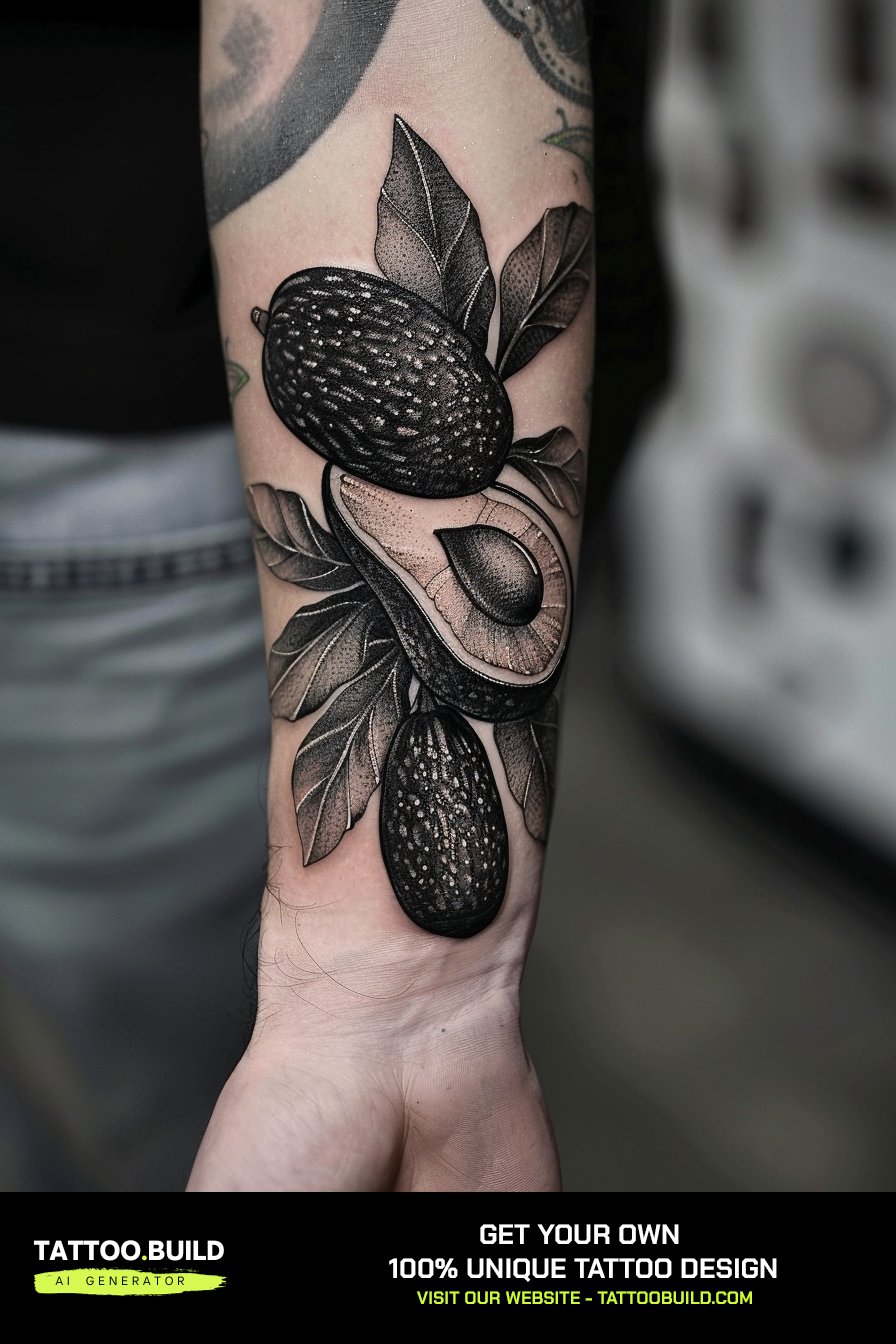
I have been writing about tattoo design for years, and the arm is still the placement I get asked about more than every other spot combined. The arm is the most forgiving canvas on the body: it holds ink well, it heals predictably, and you can cover it with a sleeve on the days you need to.
That combination is why almost every artist I have asked says the same thing when a first-timer walks in with no plan — start on the arm.
This guide walks through the arm tattoo styles that actually hold up: what each one costs you in time and pain, where on the arm it sits best, and what tends to go wrong. If you already know you want the whole arm covered, the dedicated guide to sleeve tattoo ideas for men goes deeper on planning a full piece.
Below there are dozens of real arm tattoos grouped by style. Use them the way I would — as a shortlist to hand your artist, not as something to copy line for line.
Which Arm Tattoo Style Is Right for You?
This is the comparison I sketch out for people who cannot decide. Times and sitting counts are rough working figures from artists I have talked to, not fixed prices.
| Style | Best Arm Placement | Typical Commitment | How Well It Ages |
|---|---|---|---|
| Full sleeve | Shoulder to wrist | Many sessions over months | Very good when planned as one design |
| Blackwork | Outer arm, bicep, full wrap | One to several long sittings | Excellent — solid black is the most durable |
| Black and grey realism | Outer forearm, bicep | Several sessions, specialist artist | Good with strong contrast, poor without |
| Animal designs | Bicep and upper arm | One to three sessions | Good — bold shapes survive |
| Skulls | Outer forearm | Usually a single session | Very good — naturally high contrast |
| Geometric and dotwork | Shoulder, outer upper arm | Long sittings, precise work | Mixed — thin lines soften first |
| Japanese irezumi | Full or half sleeve only | A long-term project | Excellent — the style is built for it |
| Script and lettering | Inner forearm, bicep | Under two hours in most cases | Depends entirely on line weight |
What Actually Decides Whether an Arm Tattoo Ages Well
Almost everything people blame on a bad artist is really a design decision made in the first ten minutes of the consultation.
Contrast is the single biggest factor. Ink spreads slightly under the skin over the years, so a design with real black next to real open skin stays readable, while one built entirely from mid-grey turns muddy.
Line weight comes second. In my experience the hairline linework that looks so sharp in a healed photo taken two weeks after the appointment is a different tattoo at year seven.
Placement matters more than most people expect. The outer forearm takes the most sun of any arm surface, and sun is what fades ink faster than anything else you can control.
Then there is scale. Detail needs room, and an arm has less usable flat area than a back or a thigh — cramming a complicated scene into a small forearm panel is how good ideas turn into a grey blob.
Cool Arm Tattoo Ideas for Men, Style by Style
These are the eight styles I see requested most. Each one has a different sweet spot on the arm.
1. Full and Half Sleeve Arm Tattoos
A sleeve is not a collection of tattoos on the same arm — it is one design that happens to be very large.
The difference shows immediately. A planned sleeve has background elements that tie separate subjects together; a collected arm has gaps and mismatched black levels that no amount of filler ever fully fixes.
When I have watched artists map a sleeve, they almost always start by deciding where the piece ends. A clean stop line at the wrist, mid-forearm, or above the elbow is what makes a sleeve look deliberate.
Half sleeves are the sensible entry point. They cost less, sit under a t-shirt sleeve, and can be extended later — the half sleeve tattoos for men guide covers how to leave that door open.
Expect a full sleeve to take months rather than weeks, with healing time between sittings. Artists I have spoken to usually book them as a series rather than one marathon.
2. Blackwork and Solid Black Arm Tattoos
Blackwork is the most durable thing you can put on an arm. Solid black packed properly holds its edge longer than any shaded or coloured style.
It is also the most honest style about its own limits — there is nowhere for a weak line to hide, so a blackwork piece tells you immediately how good the artist is.
The trade-off is commitment. Large areas of solid black are difficult to cover later and difficult to remove, which is exactly why I tell people to sit with the design longer than they want to.
Negative space work is the softer version: the black becomes the background and your own skin draws the subject. There are more directions to take it in the blackwork tattoo ideas for men collection.
Packing black is also a slower, more uncomfortable process than outlining. Every artist I have asked recommends splitting a large blackwork panel across two sittings rather than pushing through one.
3. Black and Grey Realism
Realism is the style people fall in love with online and regret choosing the wrong artist for.
It is a specialism. A great traditional artist is not automatically a great realism artist, and the portfolios make that obvious once you know to look for healed work rather than fresh photos.
When I compare realism pieces that have aged well against ones that have not, the difference is almost always whether the artist built in true black anchors — deep shadows that keep the image structured as the greys soften.
The outer forearm and the bicep are the usual homes for realism because they offer the flattest, largest surfaces on the arm.
Ask to see the artist’s work at three to five years old. Any realism specialist worth booking will have those photos and will be pleased you asked.
4. Animal Arm Tattoos
Animals are the most common subject on men’s arms, and there is a practical reason beyond symbolism: an animal head is a naturally high-contrast shape.
Wolves, lions, bears and eagles all have strong silhouettes, defined eyes and texture that gives an artist somewhere to put shading without inventing detail.
Placement rule I have seen artists follow consistently: put the head where the arm is widest, usually the outer bicep or the upper forearm, so the face is not distorted by a curve.
If you are drawn to one animal in particular, the wolf tattoo ideas gallery shows how much variation a single subject can carry.
Skip the photo-copy request. Handing an artist a stock photo and asking for it exactly produces a flatter tattoo than letting them redraw it for the arm.
5. Skull Arm Tattoos
Skulls have been in tattooing since the beginning, and they remain one of the safest bets for an outer forearm piece.
The reason is structural. A skull is already built from hard edges and deep sockets, so it holds contrast as the ink settles — the same quality that makes blackwork durable.
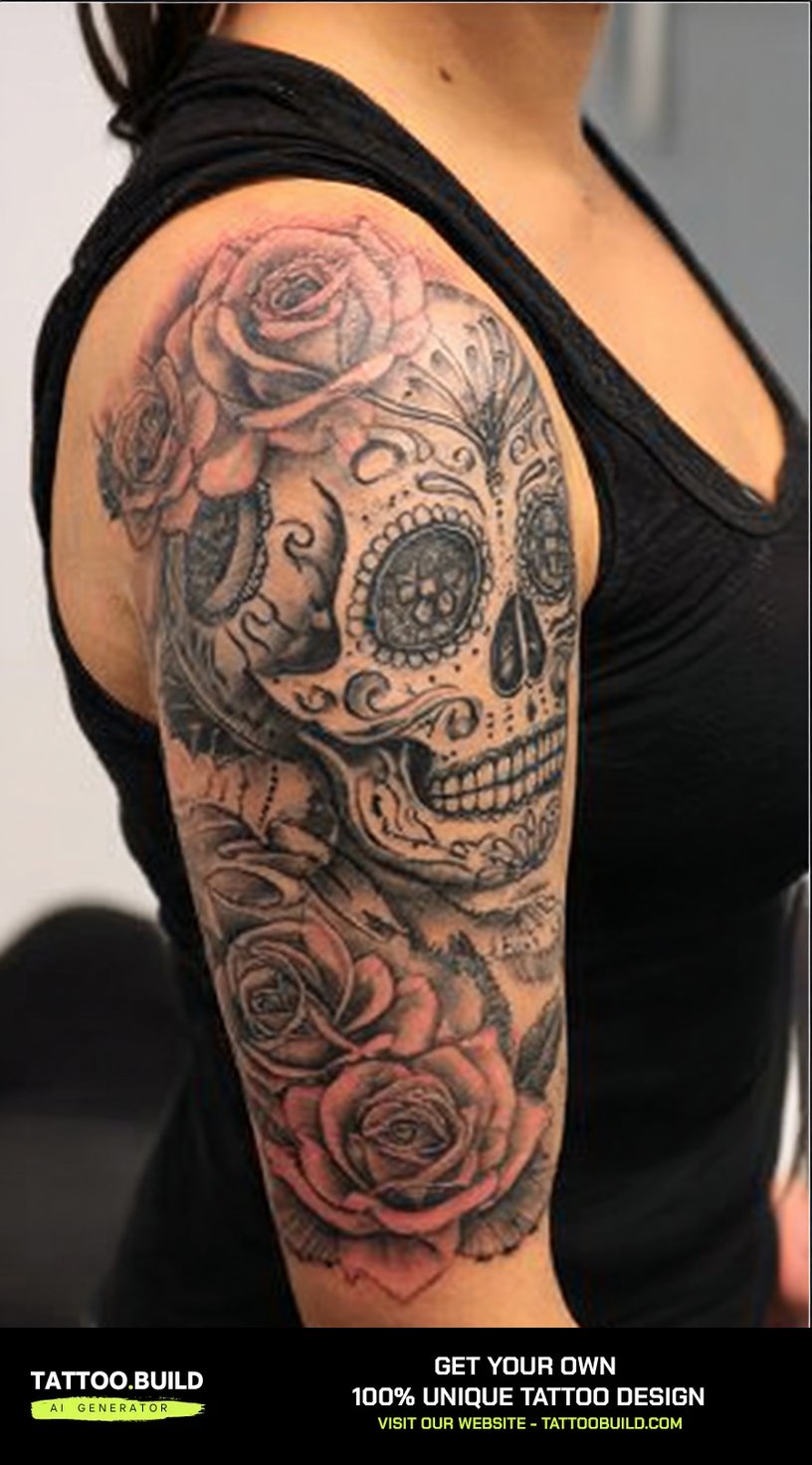
There is enormous range inside the theme. A clean traditional skull, an anatomical study, a sugar skull, a skull worked into a floral or serpent composition — they read completely differently.
The skull tattoo ideas for men collection is worth scrolling before you commit to one interpretation.
One practical note from artists: a skull sized smaller than roughly a palm tends to lose its internal detail, so give it room on the forearm rather than tucking it into a gap.
6. Geometric and Sacred Geometry
Geometric work is unforgiving in a way that photographs beautifully and heals honestly.
Every line is a straight comparison against the line beside it, so wobble that would vanish inside an organic design is instantly visible here.
The shoulder and outer upper arm suit it best because the curve is gentle and consistent — geometry across the elbow rarely works as well as the reference image suggests.
Dotwork shading is the usual partner to it, softening the hard edges without introducing colour. The geometric tattoo ideas for men gallery has strong examples of both.
Be realistic about the sitting. Precise linework is slow, and in my experience geometric pieces take longer per square inch than almost anything except realism.
7. Japanese Irezumi Arm Tattoos
Traditional Japanese tattooing is the style with the strongest built-in rules, and those rules are exactly why it ages so well.
Heavy outlines, a limited palette, and background elements — wind bars, water, clouds — that connect every subject into one moving composition.
It is not really a style for small standalone pieces. Irezumi is designed at sleeve scale, and a single isolated motif loses most of what makes it work.
If you go this route, find someone who works in the tradition rather than someone who will draw a Japanese subject in their own style. The two are very different tattoos.
Every artist I have asked about it frames it as a multi-year relationship rather than an appointment, and prices it that way too.
8. Script and Lettering
Lettering is the cheapest arm tattoo to get and the easiest one to get wrong.
The inner forearm is the natural home for it because it runs long and flat, and it stays out of direct sun more than the outer surface.
Line weight is everything. Thin, decorative script with fine flourishes is the most common thing I see people return to have reworked a few years later.
Keep the phrase short. A few words in a solid, well-drawn typeface reads better at arm’s length than a full sentence squeezed into the same space.
Proofread it, then have someone else proofread it, then check any non-English text with a native speaker. This is not a hypothetical problem in tattoo shops.
Variations Worth Considering Before You Commit
Not every arm tattoo needs to be a style statement. These four approaches solve more practical problems.
Nature and Landscape Pieces
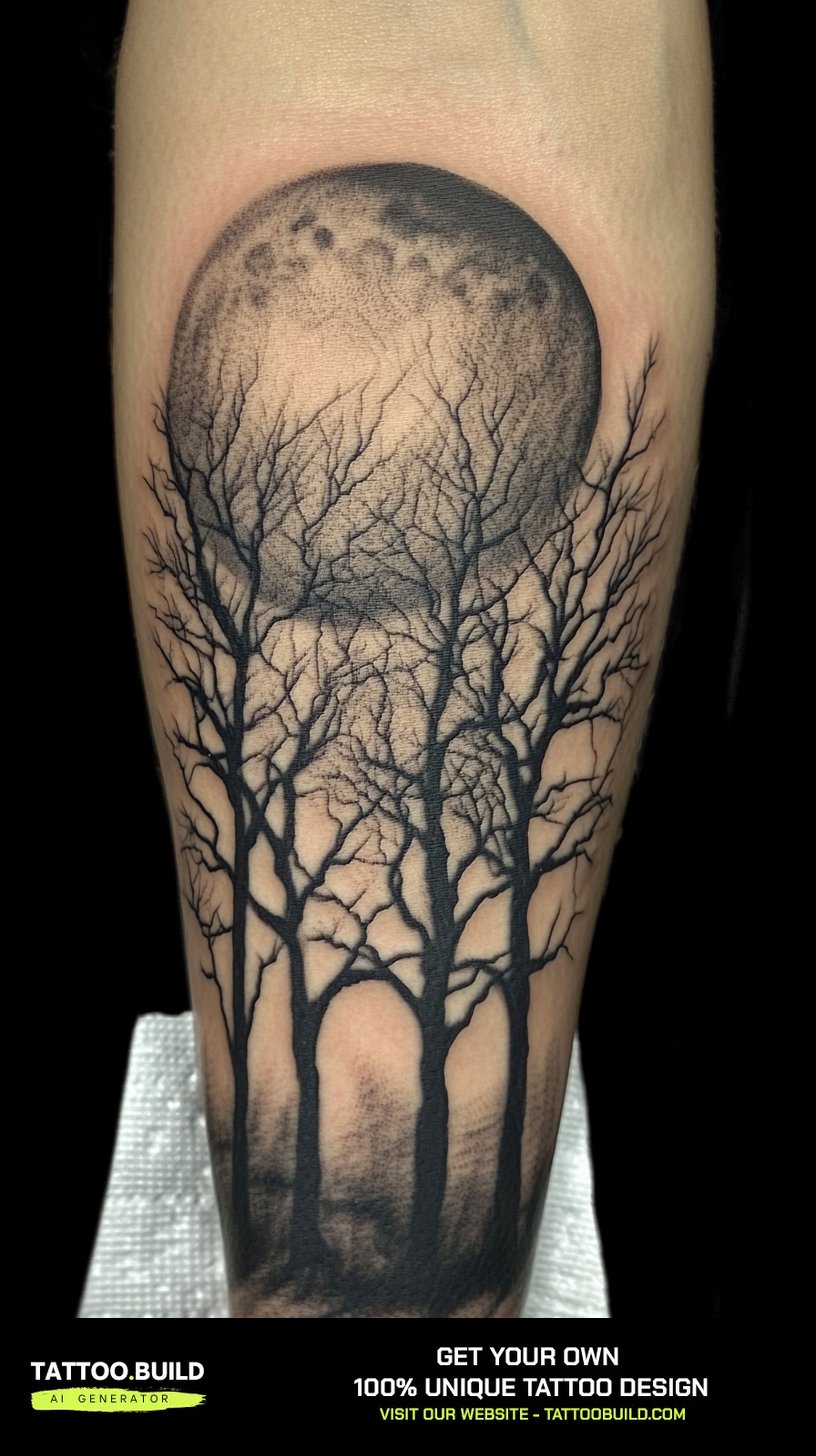
Mountains, forests and coastlines fill an arm without locking you into a hard theme, and they scale up or down easily.
The trick is the horizon: it should follow the arm’s length rather than cut across it, or the piece looks tilted whenever your arm is at your side.
Forearm-Only Pieces
A forearm tattoo is a finished tattoo, not half a sleeve waiting to be completed.
It is also the most visible arm placement, which matters if your workplace has a view on it. The forearm tattoo ideas guide covers designs built for that specific shape.
Inner Arm and Bicep Placements
The bicep is the easiest arm placement to keep covered under a normal t-shirt, which makes it the usual choice for people testing the water.
The inner arm is a different experience — thinner skin, more nerve endings, and generally a sharper sting than the outer surface.
Small Standalone Arm Tattoos
Small pieces are underrated. One well-placed design on the forearm often looks more considered than three mediocre ones fighting for space.
If you think a sleeve might happen eventually, tell the artist now so they can place the small piece where a larger composition can absorb it later.
Practical Tips and Aftercare for Arm Tattoos
Sun is the main thing standing between your arm tattoo and how it looks in ten years. Once it is fully healed, sunscreen on exposed arm work is the highest-value habit there is.
For the healing period itself, follow the written instructions your artist gives you — they know their own technique. The American Academy of Dermatology publishes general guidance on caring for tattooed skin that is worth reading alongside them.
Eat properly and turn up hydrated. A long arm sitting is physically demanding, and artists will tell you they can see the difference in how someone sits after four hours.
Know the risk side honestly. Infection, allergic reaction to pigment, and scarring are all real possibilities, and the Mayo Clinic outlines them plainly. If a healing tattoo becomes hot, swollen, increasingly painful, or starts weeping after the first few days, see a doctor rather than asking the internet.
Choose a licensed studio that opens sterile equipment in front of you. The US FDA notes that tattoo inks are not pre-approved before they reach the market, which is another reason the studio’s own standards matter so much. Never let someone tattoo you outside a professional setting, and never attempt DIY removal.
Common Mistakes — and What to Do If You Are Still Not Sure
The most expensive mistake is booking on the day you decide. Sitting on a design for a month costs nothing and changes a surprising number of minds.
The second is choosing an artist by price rather than by portfolio. Arm work is visible every day, and the gap between a good and a mediocre execution is permanent.
The third is underestimating what a large piece costs in total. The breakdown in how much a sleeve tattoo costs is a realistic starting point for budgeting.
The fourth is worrying about pain in the wrong places. The arm is genuinely one of the more tolerable areas — the most painful tattoo spots comparison puts it in perspective.
If you are still undecided, do what I suggest to everyone: pick the style first, the artist second, and the exact design last. That order fails far less often than the reverse.
Frequently Asked Questions
Do arm tattoos hurt a lot?
The arm is usually described as moderate, and it is where most artists suggest a first tattoo. The outer forearm and outer bicep tend to be the most tolerable areas because there is muscle and fat between the needle and the bone. The inner arm, the elbow ditch and the wrist are noticeably sharper for most people. Pain is individual, though, so treat any chart as a rough guide rather than a promise.
How long does a full arm sleeve take?
A full sleeve is a project measured in months, not a single appointment. Artists normally break it into a series of sittings with several weeks of healing between each one, and the total depends heavily on the style and the level of detail. Realism and Japanese work generally take the longest. Your artist can give a realistic session count once the design is drawn.
Which arm tattoo style lasts the longest?
Solid blackwork and traditional styles with heavy outlines hold up best over decades. They rely on strong contrast rather than fine gradients, so the natural softening of ink under the skin affects them far less. Fine-line work and pale grey shading are the first things to lose definition. Sun protection makes a bigger difference to longevity than the style choice does.
Should I get a forearm or an upper arm tattoo first?
It depends mostly on visibility. The upper arm and bicep stay hidden under a t-shirt, which suits anyone whose workplace has a dress code or who simply wants the option. The forearm is on display constantly, so it is the better choice if you want the tattoo to be seen. Both heal well, and neither is harder to sit through in any meaningful way.
Can an arm tattoo be covered up or removed later?
Cover-ups are common on the arm and often work well, though a new design generally has to be larger and darker than the original. Laser removal is possible but is a course of treatments over many months, can be expensive, and does not always clear the ink completely. A qualified practitioner should assess it in person. Never attempt to remove a tattoo yourself with creams, salt, or any at-home method — the scarring risk is serious.
Quick Summary
- The arm is the most forgiving placement on the body — good ink retention, predictable healing, easy to cover.
- Contrast and line weight decide how a design ages, far more than the subject you choose.
- Blackwork and traditional Japanese are the most durable styles; fine-line and pale grey soften first.
- Realism is a specialism — ask to see the artist’s healed work from three to five years ago.
- Half sleeves are the sensible entry point and can be extended into a full sleeve later.
- Keep lettering short and bold, and place it on the inner forearm.
- Sunscreen on healed arm work is the single highest-value habit for longevity.
- Pick the style first, the artist second, the exact design last.