A sleeve is the point where a tattoo stops being a decoration and starts being a design project. The coolest men’s sleeve tattoos are not the busiest ones — they are the ones where every element belongs to a single idea.
I have sat through enough long sessions, and asked enough artists the same awkward questions, to be confident about one thing: the sleeves that still look sharp five years later were planned as one piece from the beginning.
That planning is also the part most people skip. They collect twenty saved photos, walk in with all of them, and end up with an arm that reads like a scrapbook.
This guide walks through the styles that actually work at full-arm scale, how they age, and what to sort out before your first sitting. If you want the money side first, our guide to how much a sleeve tattoo costs covers that in detail.
Which Sleeve Style Is Right for You?
Style choice drives everything else — the artist you book, the number of sessions, and how the piece looks in a decade. The session figures below are the ranges I have seen quoted most often for a full sleeve; your artist’s estimate for your specific design is the one that matters.
| Style | Best For | Sessions (rough) | How It Ages |
|---|---|---|---|
| Black & gray realism | Portraits, statues, animals, religious scenes | 5–9 long sittings | Softens gradually; mid-tones fade first |
| Neo-traditional | Colour, animals, florals, bold storytelling | 4–7 long sittings | Holds shape well thanks to strong outlines |
| New school / surreal | Humour, pop culture, dream imagery | 4–7 long sittings | Depends heavily on colour saturation |
| Japanese (irezumi) | Dragons, koi, waves, wind bars | 6–12 long sittings | Excellent – the style was built to age |
| Geometric / dotwork | Pattern, symmetry, minimal subject matter | 4–8 long sittings | Fine dots can blur; heavier dots hold |
| Blackwork | High contrast, graphic statement pieces | 3–6 long sittings | Very well, but hardest to change later |
If a full arm feels like too much for a first commitment, a half sleeve is a reasonable way in. It uses the same design thinking at roughly half the cost and time.
What Actually Makes a Sleeve Work
A sleeve has to survive being looked at from every angle, in motion, on a limb that bends in two places. That is a harder design problem than a flat back piece.
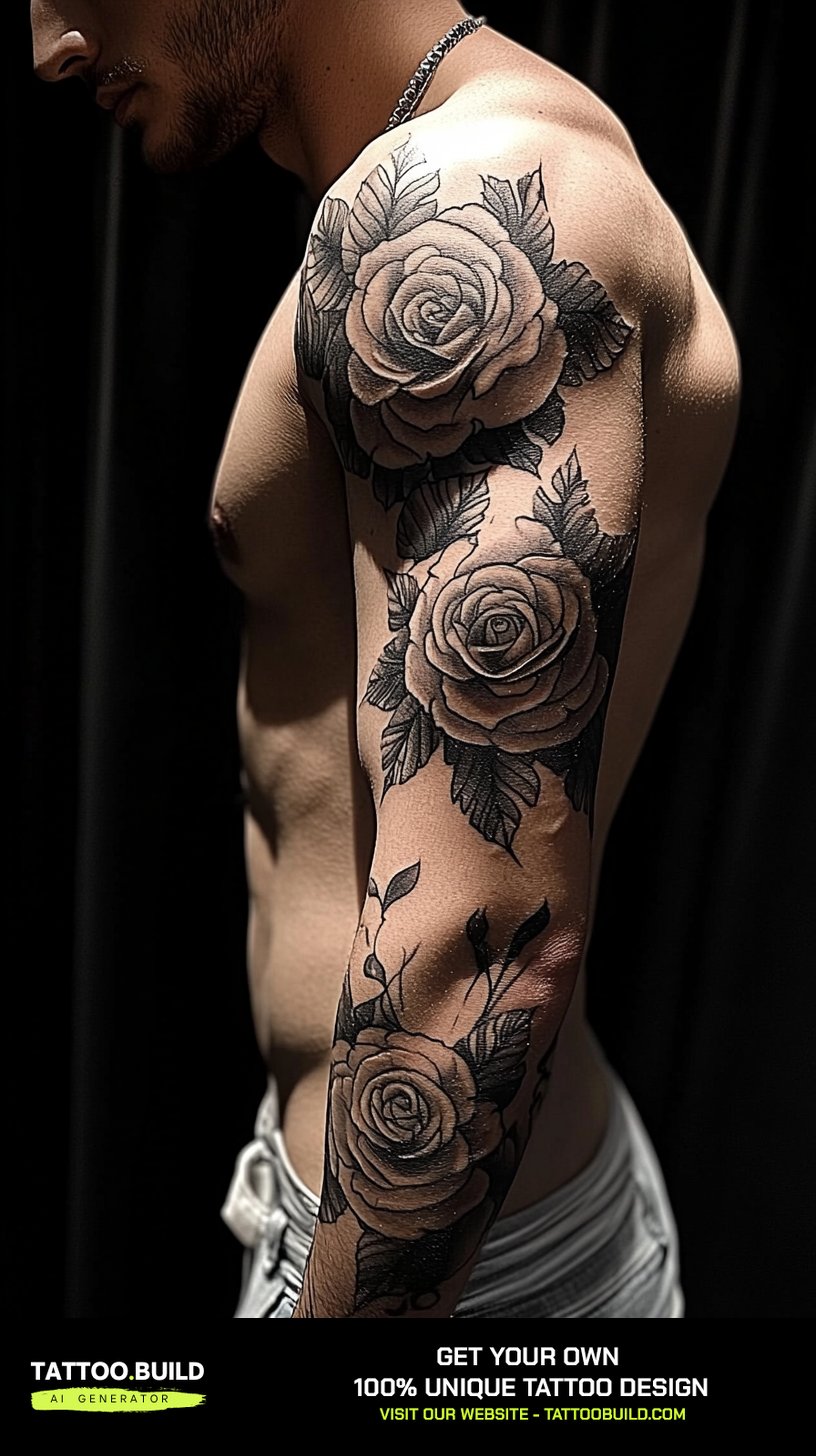
The first thing that makes one work is flow. Strong sleeves follow the muscle — imagery spirals around the arm rather than sitting on it like a poster.
The second is contrast. Every artist I have asked about this says the same thing: without planned areas of open skin or solid black, the whole arm collapses into one grey tone from three feet away.
The third is a hierarchy. There should be one main subject that catches the eye, a couple of secondary elements, and background work that supports both without competing.
The last is honesty about your own life. A sleeve is visible in short sleeves, at the gym and in most job interviews, and that is worth thinking through before the outline goes on.
The Coolest Men’s Sleeve Tattoo Ideas by Style
These are the directions that hold up at full-arm scale. Each one asks something different of the artist, which is why matching the style to the right specialist matters more than matching it to the closest studio.
1. Warrior and Mythology Sleeves
Spartans, Vikings, samurai, Roman statues — this is the most requested sleeve theme I have come across, and it earns the popularity.
It works because armour, drapery and weapons give an artist natural lines to wrap around a limb, which solves the flow problem before it starts.
The failure mode is density. Three helmeted faces stacked up the arm with no breathing room turns into a grey smudge within a few years, so ask for planned gaps.
The strongest versions usually pick one figure as the hero and use ruins, banners or smoke as supporting texture rather than adding more characters.
2. Black and Gray Realism
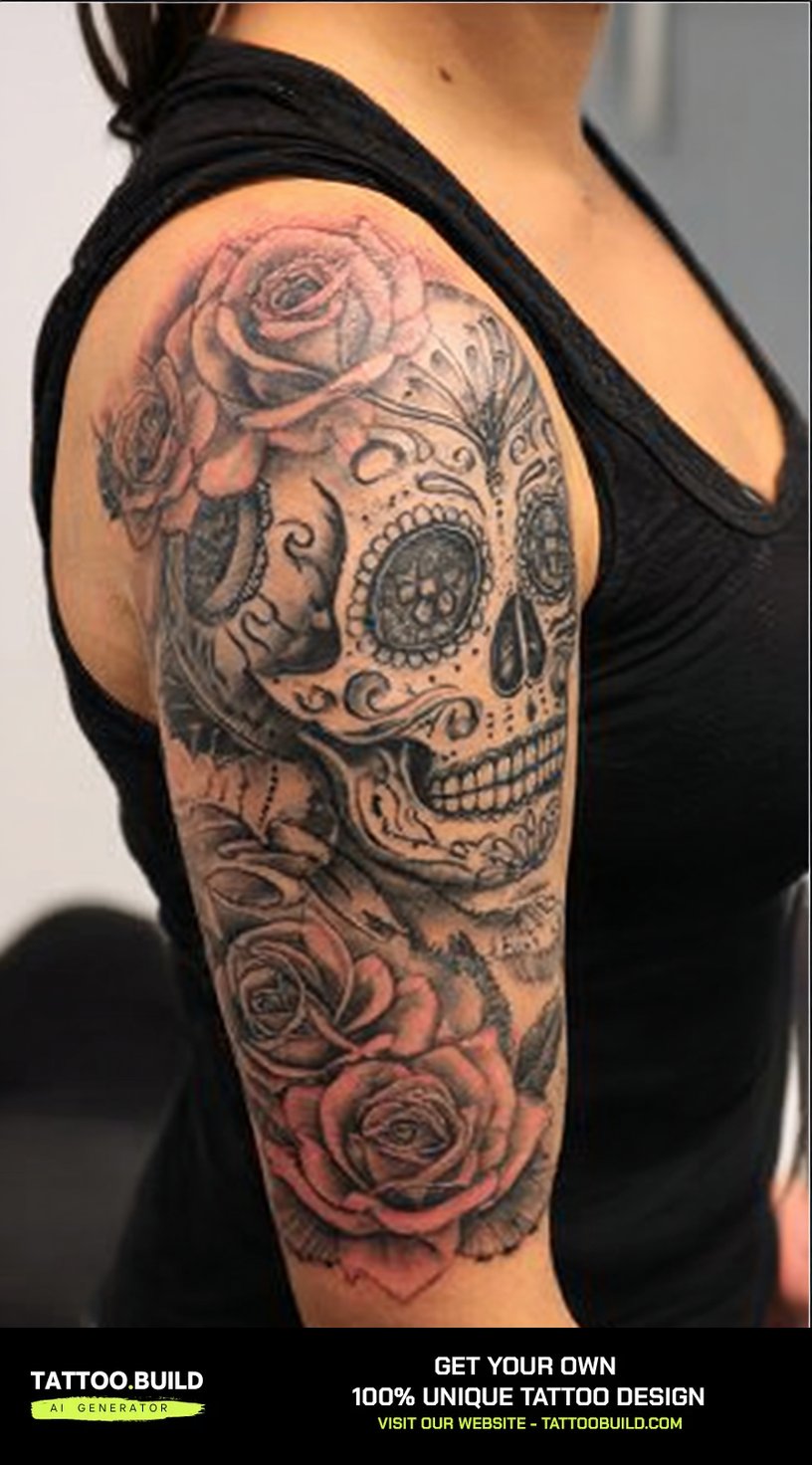
Realism is the technical high-water mark of sleeve tattooing, and the style where artist choice matters most.
Portraits, animals, religious scenes and architecture all sit comfortably here, rendered in smooth grey washes rather than hard outlines.
When I tested how different portfolios compare, the honest tell was always healed photos. Fresh realism looks incredible on everyone; six-month-old realism separates the specialists from the rest.
Expect longer sessions than average, because shading large areas smoothly cannot be rushed without leaving patchy transitions.
3. Neo-Traditional Colour Sleeves
Neo-traditional keeps the bold outlines and readable shapes of old-school tattooing, then adds a far richer palette and more sophisticated shading.
It is a genuinely practical choice, not just an aesthetic one — those heavy outlines hold the design together as the colour inside softens over time.
Animals, daggers, florals, skulls and stylised portraits are the standard vocabulary, and they combine well because the style already has a consistent visual language.
If colour is the part that appeals to you, our roundup of colorful sleeve tattoo ideas for men shows how far the palette can go.
4. New School and Surreal Sleeves
New school leans into exaggeration: cartoon proportions, graffiti energy, saturated colour and a sense of humour.
Surrealism goes the other way — melting forms, fragmented faces, impossible architecture, imagery that asks a question instead of answering one.
Both reward a strong concept. In my experience the surreal sleeves that work are built on one repeated visual idea, while the ones that fail are twenty unrelated dream images fighting for space.
This is the most personal category on the list, which also makes it the hardest to brief. Bring your artist a mood, not a shopping list.
5. Nature and Landscape Sleeves
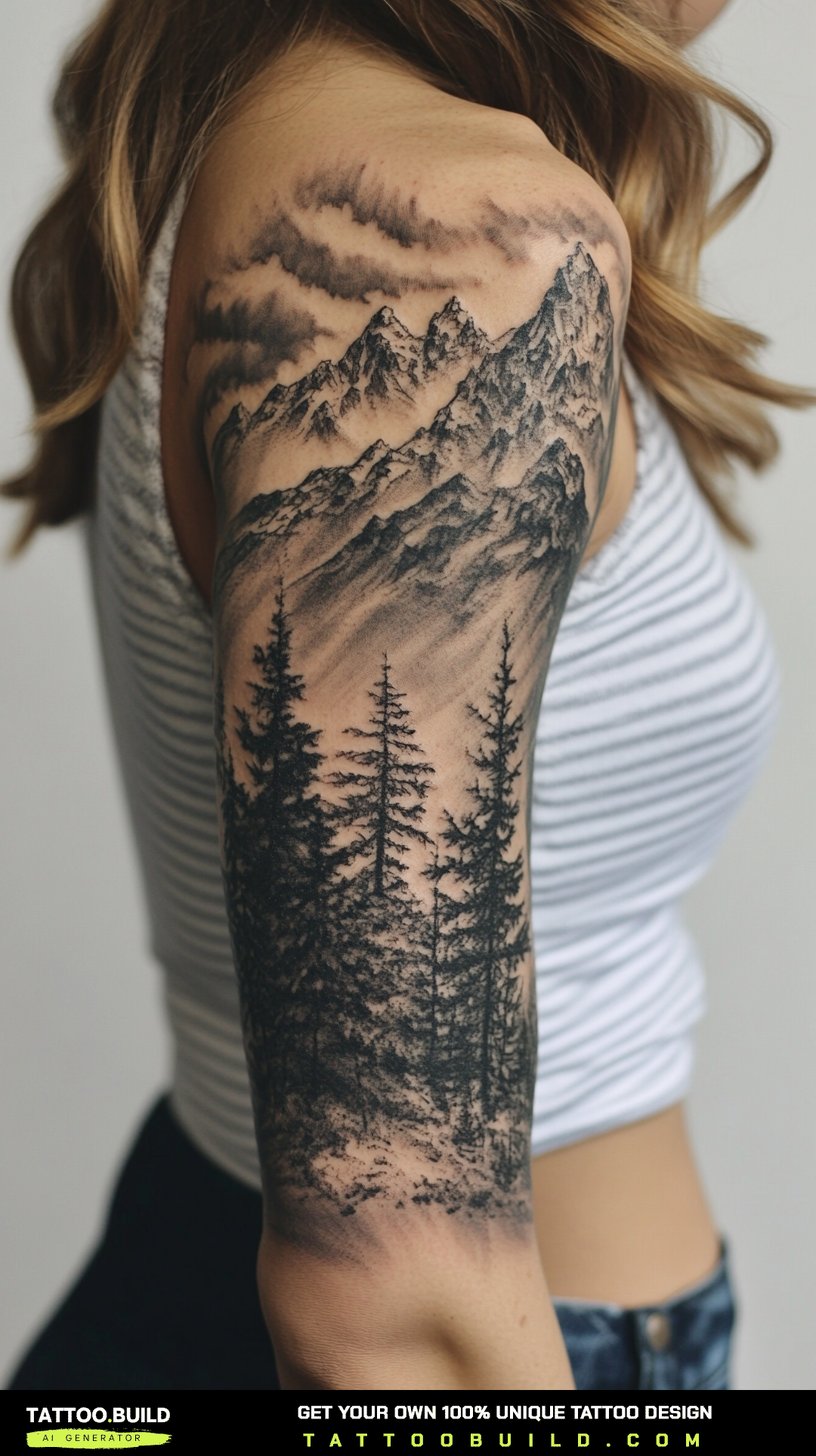
Mountains on the shoulder, forest around the bicep, a river or night sky running down the forearm — landscapes are almost purpose-built for arms.
The reason is simple: a landscape already has a top and a bottom, so the design has a natural direction before the artist does anything clever.
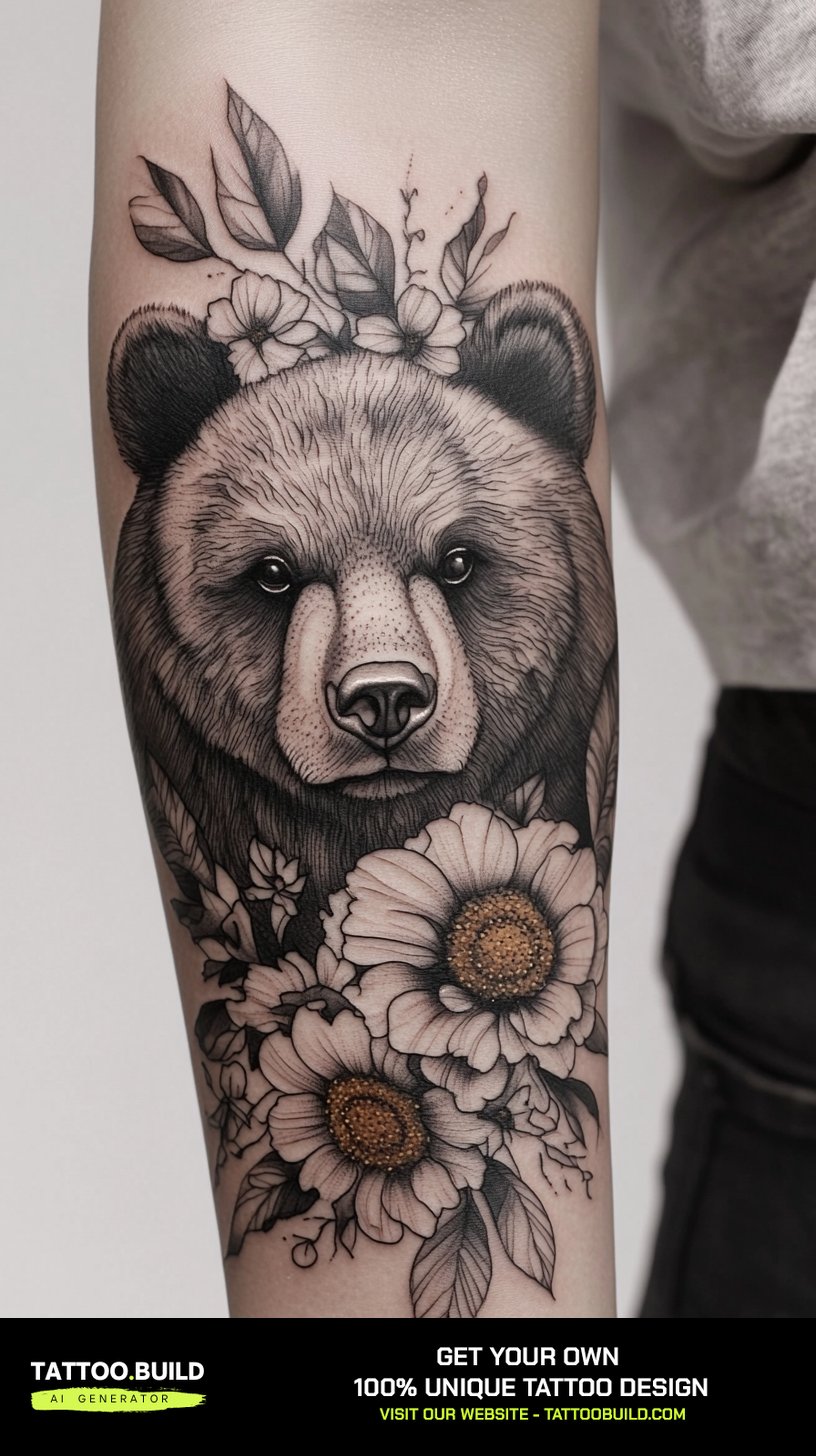
Wildlife anchors the composition. A wolf, bear, stag or eagle gives the eye somewhere to land, and each carries meaning most viewers read without explanation.
For more in this direction, see our collection of nature tattoos for men.
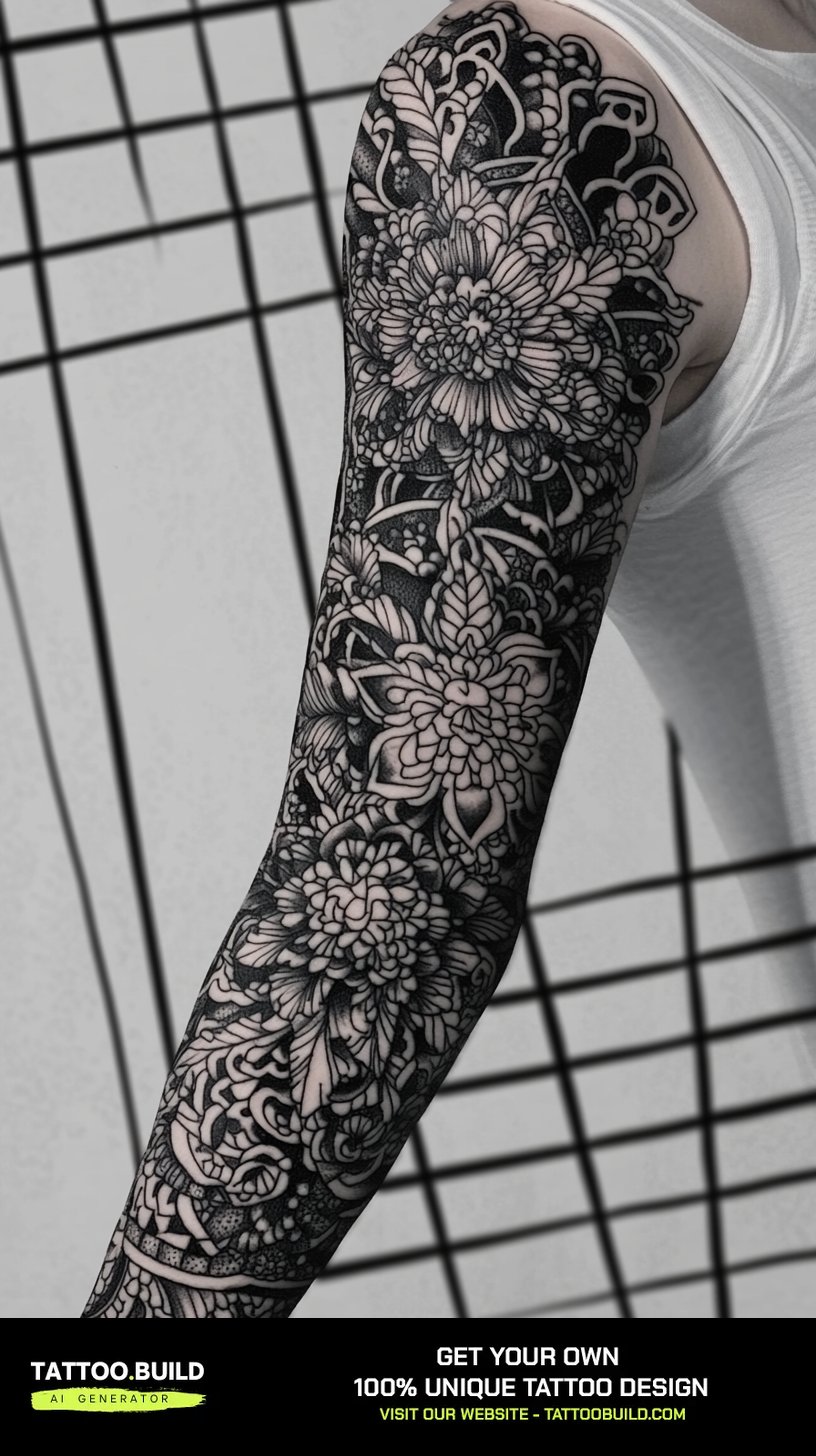
6. Geometric and Dotwork Sleeves
Geometry translates unexpectedly well to skin, because repetition and symmetry read cleanly even from a distance.
Mandalas, sacred-geometry grids, honeycomb fields and stippled shading all sit in this family, and they are usually done in black ink only.
The trade-off is time. Dotwork shading is slower to apply than whip shading, so a geometric sleeve can take as many sessions as a realism one despite looking simpler.
Combining pattern with a silhouette — a wolf, a lion, a mountain range — keeps it from feeling purely mechanical. Our geometric sleeve tattoo ideas for men gallery has more examples of that balance.
7. Blackwork and Heavy Black Sleeves
Blackwork uses large areas of solid black as the design itself, with negative space carrying the imagery.
It photographs brilliantly, ages about as well as anything on this list, and makes an unmistakable statement in short sleeves.
It is also close to permanent in a way other styles are not — covering or removing heavy black is difficult, slow and expensive. Go in knowing that. If it appeals, our blackwork tattoo ideas for men guide goes deeper.
Sleeve Variations Worth Considering
A full sleeve is not the only option, and for a lot of men it is not the right first step either.
The Half Sleeve
Shoulder to elbow, or elbow to wrist. Roughly half the commitment, half the cost, and easy to extend into a full sleeve later if you plan the edge sensibly.
The Three-Quarter Sleeve
Stops just above the wrist, which keeps the piece hidden under a long-sleeved shirt. A practical compromise in more conservative workplaces.
The Patchwork Sleeve
Separate tattoos placed with intentional gaps rather than one continuous scene. Done deliberately — with consistent style and line weight — it looks considered rather than accidental.
Getting the spacing right is the whole game here, and sleeve filler ideas are how most people eventually tie a patchwork arm together.
The Japanese Sleeve
Traditional irezumi has centuries of established rules about wind bars, waves and how a design terminates at the shoulder and wrist.
Those rules exist because they work. It is the style with the best track record for aging, but it demands an artist trained specifically in it.
Planning, Sitting and Aftercare Tips
Book a consultation before you book a session. A good artist will spend that appointment talking you out of at least one of your ideas, which is exactly what you want.
Eat a proper meal beforehand and bring a snack. Long sittings go badly on an empty stomach, and every artist I have asked lists this as their number-one piece of practical advice.
Between sessions, treat the arm as the large open wound it is. Keep it clean, use only the aftercare product your artist recommends, keep it out of the sun and the pool, and do not pick at flaking skin. Our guide to the tattoo healing stages covers what normal healing actually looks like day by day.
Watch for the things that are not normal: spreading redness, pain that increases after the third day, discharge, or fever. Those warrant a doctor, not a forum thread. The US Food and Drug Administration’s Think Before You Ink: Tattoo Safety page is worth reading before your first session — it covers ink contamination, allergic reactions and scarring in plain language. The agency’s tattoos and permanent makeup fact sheet goes further on how tattoo inks are and are not regulated.
Common Sleeve Mistakes — and How to Avoid Them
Starting at the forearm. It is the most visible panel and usually the trickiest to design, so most artists prefer to begin on the upper arm where there is more room to establish the theme.
Choosing the artist by price. A cheap sleeve that needs reworking costs more than the good one you did not book, and reworking is not always possible.
Underestimating the sitting. If you have never been tattooed for more than an hour, our tattoo pain chart gives a realistic sense of which parts of the arm are the harder ones.
Filling every square inch immediately. Negative space is not wasted skin — it is the thing that makes everything else legible.
Copying someone else’s sleeve exactly. Most reputable artists will decline, and the version drawn for your arm and your proportions will be better anyway.
Frequently Asked Questions
How long does a full sleeve tattoo take?
In my experience a full sleeve is a project measured in months, not days. Most artists I have worked with book four to eight sessions of three to six hours each, spaced two to six weeks apart so the skin can recover. Detailed realism and large Japanese pieces often run longer than that. If an artist promises you a complete, well-executed sleeve in a single weekend, treat that as a warning sign rather than a bargain.
Does a sleeve tattoo hurt more than a smaller piece?
The per-minute pain is not usually worse, but the total exposure is much higher. The outer upper arm is one of the easier areas on most people, while the inner bicep, the elbow ditch and the wrist are noticeably sharper. What actually catches people out is session length rather than peak intensity. Eat properly beforehand, and tell your artist when you need a break instead of trying to tough it out.
Should I plan the whole sleeve before starting?
I would say yes for the layout, and no for every last detail. Agreeing the overall flow, the main subjects and the negative space up front prevents the patchwork look that comes from stitching unrelated tattoos together later. Beyond that, leaving some filler areas open gives you room to react to how the design actually sits on your arm. Most experienced sleeve artists prefer working this way too.
Can an existing tattoo be worked into a new sleeve?
Often, yes, and a good artist will tell you honestly when it is not worth it. Older pieces can be incorporated as-is, reworked with added shading, or covered depending on their size, darkness and placement. Heavy solid black is the hardest thing to hide, which is worth remembering before committing to a fully blacked-out section. Bring photos to your consultation so the artist can assess it properly.
How do I care for a healing sleeve?
Follow the specific instructions your artist gives you, since they know what film, ink and technique they used. In general that means keeping the area clean, applying a thin layer of the recommended ointment, avoiding soaking, sun and gym friction, and never picking at flaking skin. Because a sleeve is a large open wound, redness that spreads, increasing pain after day three, or fever are reasons to contact a doctor rather than wait it out. When in doubt, ask the artist who did the work first and a medical professional second — not a comment section.
Quick Summary
- Decide on a single unifying theme before you book anything — it is what separates a sleeve from a collection.
- Pick your style first (realism, neo-traditional, Japanese, geometric or blackwork), then find an artist who specialises in it.
- Expect four to eight sessions over several months, with healing time between each one.
- Budget for the whole project, not the first sitting, and confirm the artist’s hourly or day rate up front.
- Plan the flow around your arm’s shape so the design still reads when your arm is down and relaxed.
- Leave deliberate negative space and some filler areas open rather than packing every inch at the start.
- Ask to see healed photos of the artist’s work, not just fresh ones taken the day of the appointment.
- Follow aftercare precisely between sessions, and see a doctor if you get spreading redness, worsening pain or fever.