A sleeve is the one tattoo you cannot ease into. You are not choosing a design, you are choosing a direction for your entire arm — and once the first session is done, every future tattoo on that limb has to answer to it.
I have sat in on enough sleeve consultations to notice the pattern. The guys who walk out happy came in with a theme, not a Pinterest board of thirty unrelated images.
This guide is built around that idea. Below are the styles that actually hold up on a full arm, what each one costs you in sessions and pain, and the planning decisions I would make differently if I were starting over.
If you are still deciding between a full arm and something smaller, it is worth reading the half sleeve options for men before you commit — the shoulder-to-wrist decision is much harder to reverse.
Which Sleeve Style Is Right for You?
Every style below can fill an arm, but they do not demand the same things from you. This is the comparison I wish someone had put in front of me.
| Style | Best if you want | Typical full-sleeve sessions | How it ages |
|---|---|---|---|
| Japanese / Irezumi | One unified story with built-in background flow | Often 6–12 sessions | Excellent — the style was designed for large-scale skin |
| Blackwork / Tribal | Maximum impact and the boldest silhouette | Often 4–8 sessions | Very well, though solid black needs occasional touch-ups |
| Black-and-grey realism | Portraits, animals, photographic detail | Often 8–15 sessions | Softens noticeably; contrast is what saves it |
| Geometric / Ornamental | Symmetry, dotwork, mandalas, pattern | Often 5–10 sessions | Good, but crooked lines become obvious over time |
| Biomechanical | A design that reacts to your own anatomy | Often 6–12 sessions | Depends heavily on the artist’s shading control |
| Neo-traditional colour | Saturated colour with heavy outlines | Often 6–10 sessions | Strong, provided the colour stays out of the sun |
Session counts vary enormously with arm size, artist speed and how long you can sit, so treat the middle column as a planning range rather than a quote.
What Actually Makes a Sleeve Work
A sleeve is not a collection of tattoos that happen to be near each other. It is one composition that has to read as a whole from three metres away.
The first thing I look for is flow — whether the major shapes follow the arm’s own lines, wrapping around the bicep and tapering with the forearm rather than sitting flat like a sticker.
The second is contrast. An arm covered edge to edge in mid-grey turns into a smudge within a few years, because skin scatters light and detail collapses long before the ink fades.
The third is negative space. Every good sleeve I have looked at closely leaves some skin showing, and that untouched skin is what lets the eye find the focal point.
The last one is honesty about your own tolerance. Inner bicep, elbow ditch and wrist are the sections most people find hardest, and they are the ones that get rushed when someone is trying to finish in one marathon sitting.
The Coolest Men’s Sleeve Tattoo Ideas Worth Stealing
These are the directions I keep seeing hold up, grouped by the design problem each one solves.
1. Biomechanical and Machinery Sleeves
Biomechanical work pretends your arm has been opened up to show gears, pistons or plating underneath. Done well, it is the most anatomically clever style on this list.
What makes it work is that the design is drawn onto your arm rather than onto paper — the plating follows your forearm’s actual taper, so the illusion holds when you move.
In my experience it is also the least forgiving style to shop for. A mediocre realism artist produces a mediocre portrait; a mediocre biomechanical artist produces something that just looks like grey scribble.
Ask specifically for healed photos of biomech work, not fresh ones. The whole style lives on shading gradients, and gradients are exactly what changes most between day one and month six.
2. Serpent and Snake Sleeves
A snake is the single most efficient shape for an arm. It has a natural head, a natural tail, and a body that can be routed around any limb without needing a background to justify it.
That is why artists reach for it so often when a client wants coverage without committing to a full narrative scene.
The head placement is the decision that matters. Head at the shoulder reads as looming and aggressive; head at the wrist puts the focal point where you and everyone else will see it most.
Snakes also sit comfortably in almost any style — fine-line, Japanese, or heavy blackwork — which makes them one of the safest picks if you are unsure of your long-term aesthetic.
3. Japanese Dragons and Irezumi Structure
Traditional Japanese tattooing solved the full-sleeve problem centuries before anyone else attempted it, and the solution was background.
Wind bars, water, clouds and finger waves are not decoration — they are the connective tissue that turns separate motifs into one continuous piece and give the arm its flow.
If you want a dragon, commit to the whole system rather than pasting one onto blank skin. Every artist I have asked about half-finished Japanese sleeves says the same thing: the background is what people skip and later regret.
There is a lot more range here than most people expect, and the dragon tattoo ideas for men guide covers the variations worth considering.
4. Botanical and Floral Sleeves
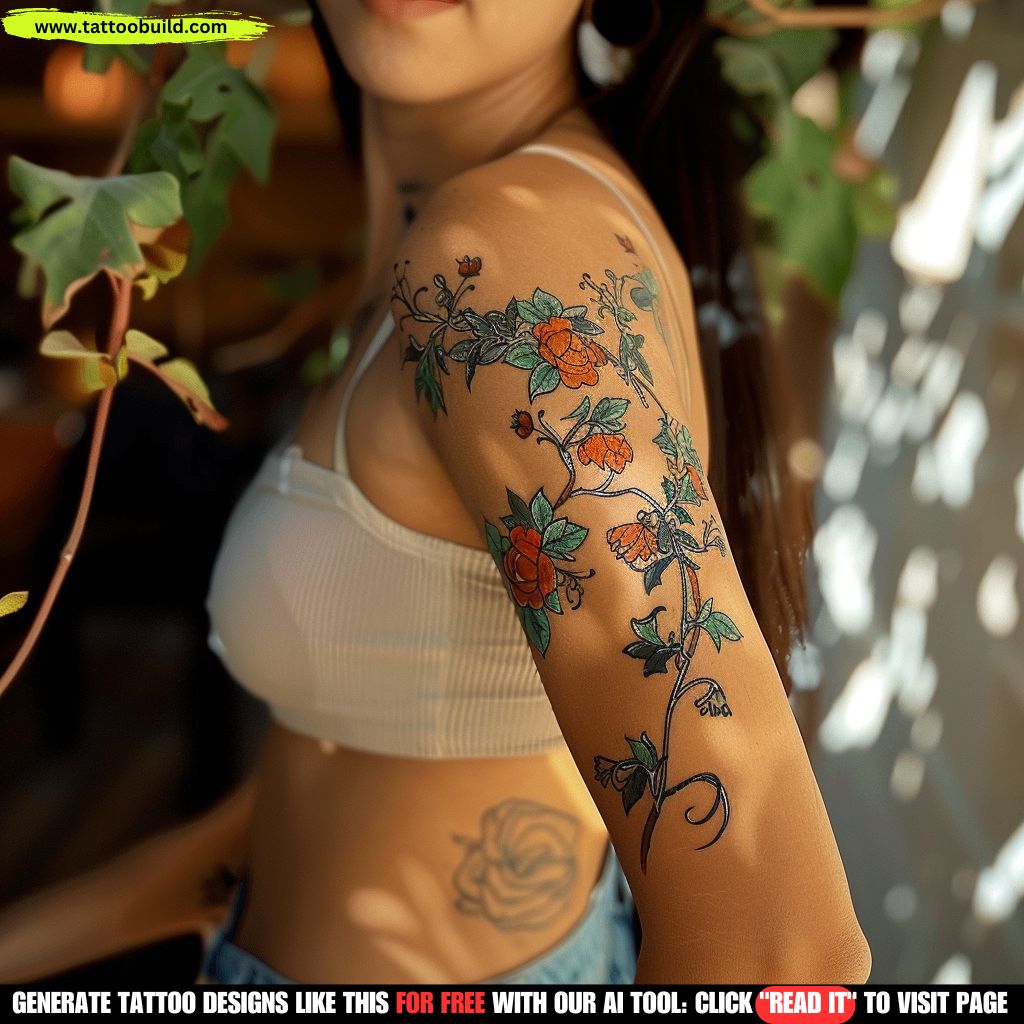
Florals on men have gone from unusual to completely mainstream in the last decade, and for good reason — they solve the flow problem effortlessly.
Petals and stems fill awkward areas like the inner arm without needing hard edges, and they scale down neatly into the wrist where space runs out.
The trick is scale variation. Sleeves built from flowers that are all the same size look like wallpaper; mixing one or two large blooms with smaller filler gives the eye somewhere to land.
Black-and-grey florals tend to age more predictably than colour ones, mostly because they rely on line weight and contrast rather than pigment saturation.
Outer-arm placement is the practical choice if you want the piece visible in a t-shirt without a full commitment to the inner bicep.
5. Geometric, Tribal and Ornamental Patterns
Pattern-based sleeves are the most demanding on execution and the most forgiving on subject matter — there is nothing to recognise, so nothing to get wrong conceptually.
What you are buying is line quality. A single wobbly line in a repeating pattern is visible forever, in a way that a slightly-off leaf never is.
Celtic knotwork sits in the same family and adds an interlacing puzzle that rewards close viewing without losing its shape from a distance.
If bold solid black is the direction you are drawn to, the blackwork tattoo ideas for men collection shows how far the style stretches, and the geometric tattoo ideas guide covers the pattern side.
Banded and armband designs are the low-risk way to test whether you actually enjoy the sensation of a wrapping tattoo before booking a full arm.
Solid black panels broken with negative-space botanicals are one of the strongest looks going right now, and they hold up unusually well as the years pass.
6. Skulls and Memento Mori
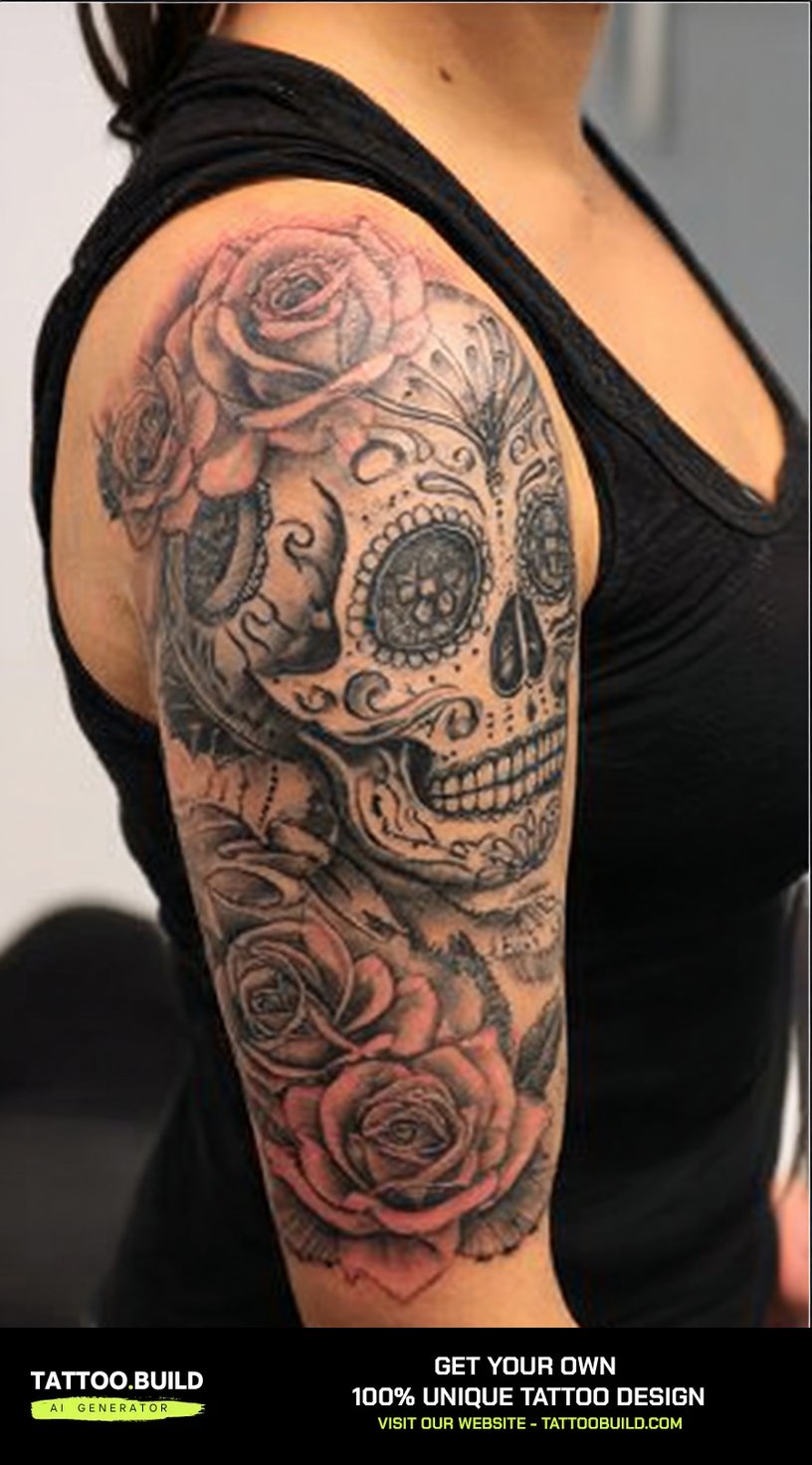
The skull-and-flowers pairing is old, obvious and still one of the most reliable compositions available.
It works because it gives you a hard geometric object surrounded by soft organic shapes — instant contrast, without needing colour to create it.
Skull quality is a direct test of an artist’s skill. The proportions of the eye sockets and cheekbones are unforgiving, and a slightly-wrong skull reads as wrong to everyone, even people who cannot say why.
The skull tattoo ideas for men guide is worth a look for the range of interpretations, from anatomical realism to heavy stylisation.
7. Nature, Wings and Wildlife
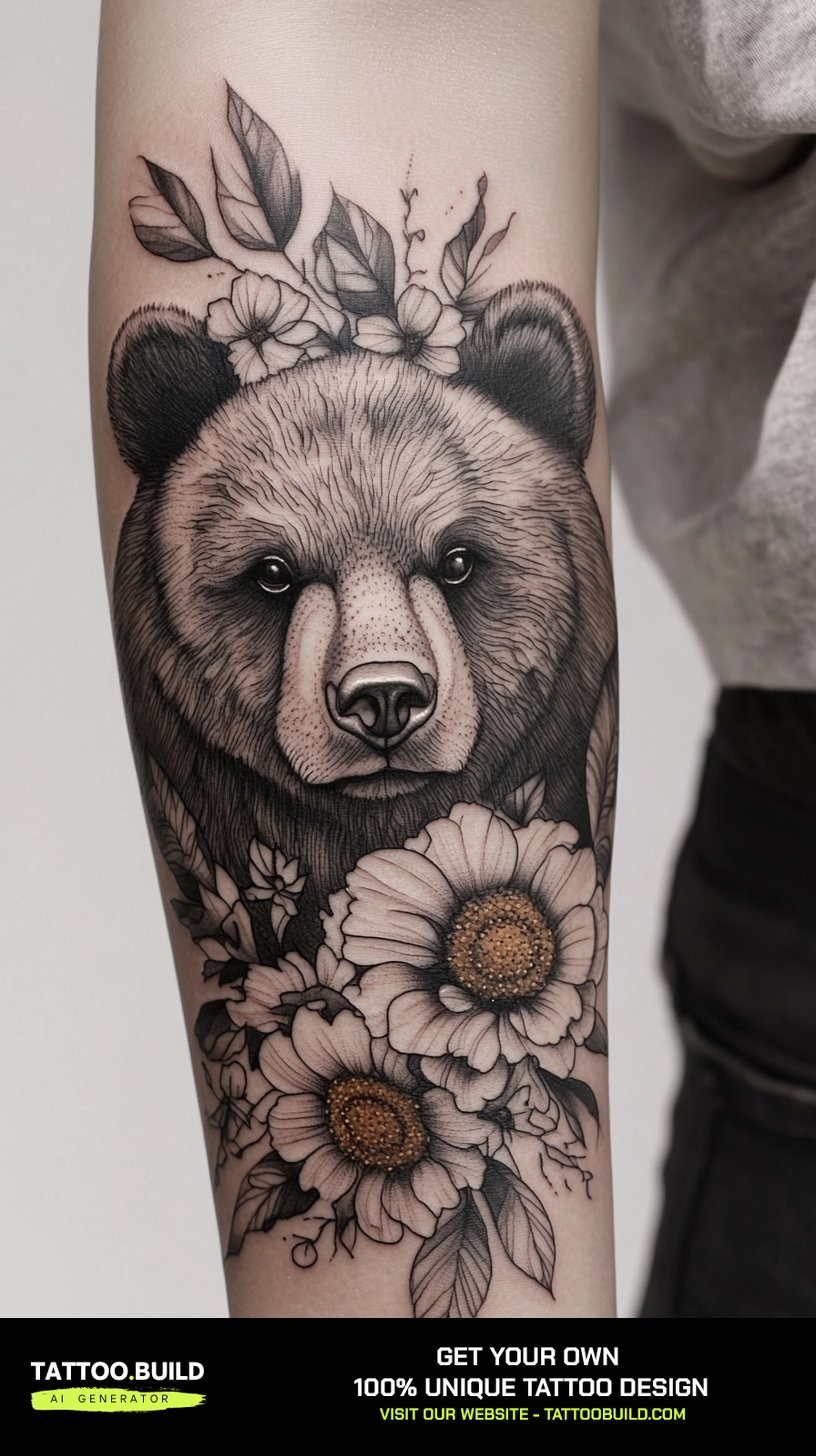
Animal and nature sleeves give you something the abstract styles cannot: a subject that means something specific to you.
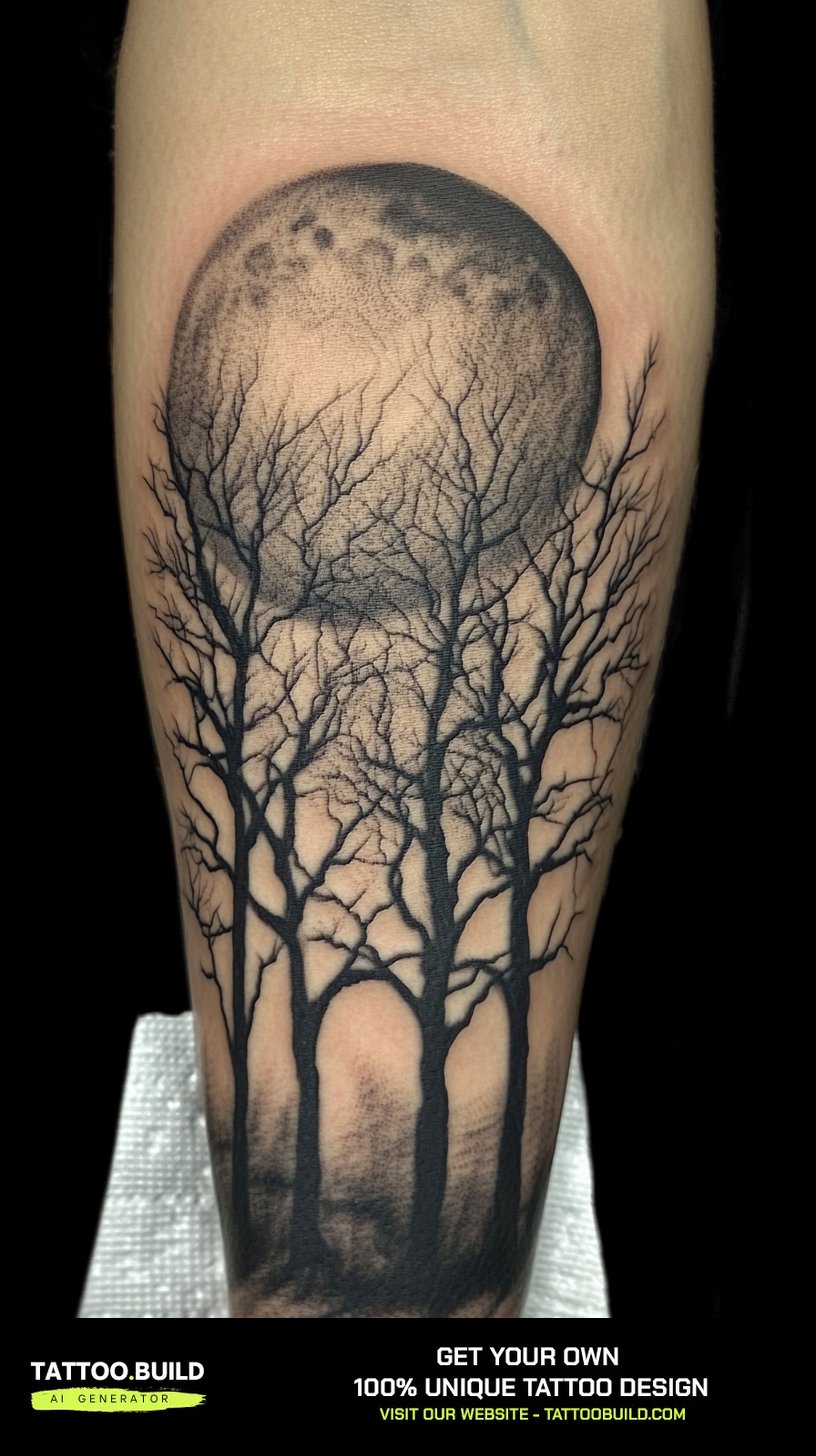
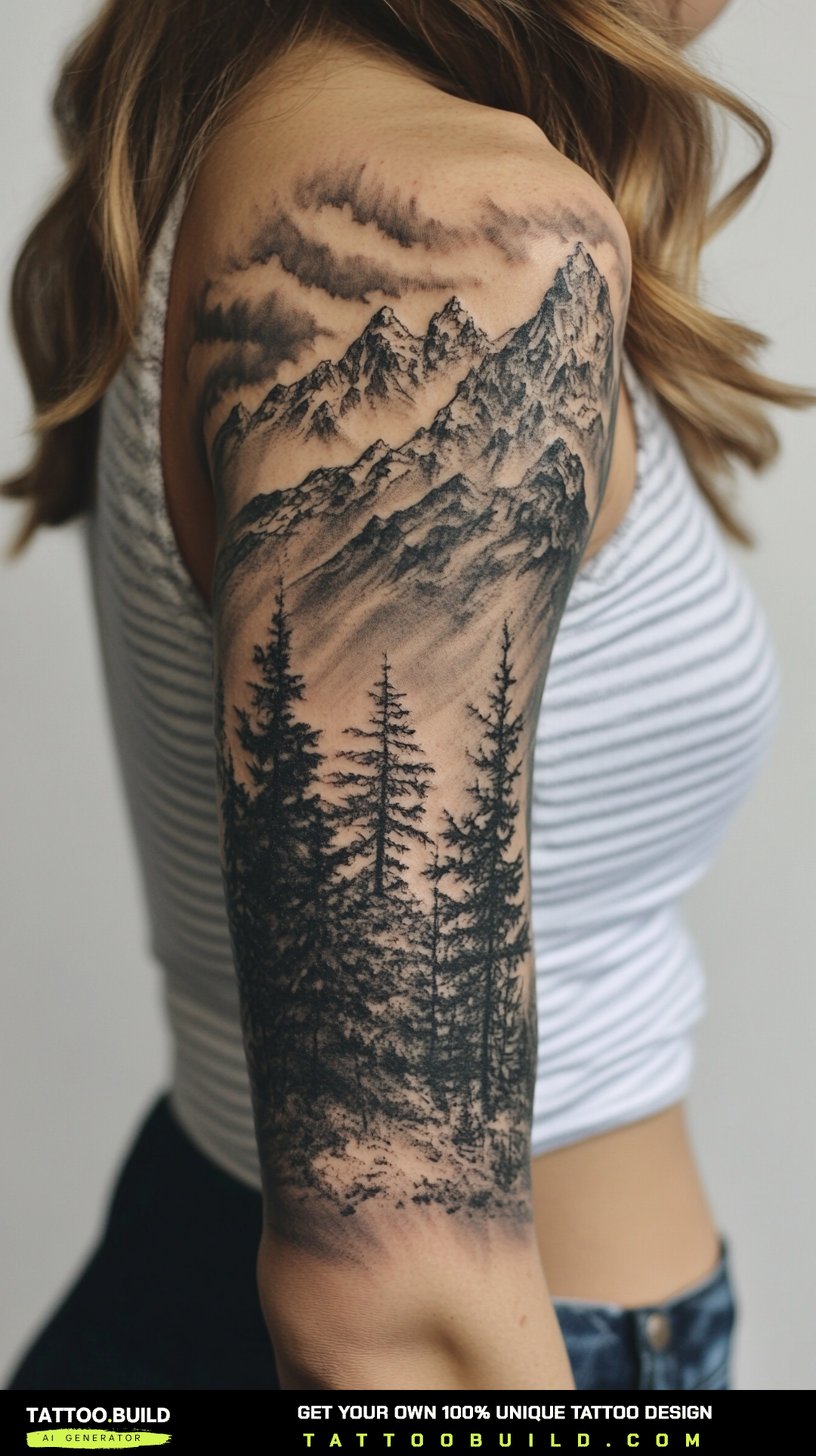
Wings, feathers, forests and mountain ranges also happen to have long directional lines, which makes them easy to route from shoulder to wrist.
When I have seen these fail, it is usually because the client picked five unrelated animals. Pick one ecosystem and the arm holds together.
Symmetry is an underrated option here — mirroring elements across the arm makes the piece look deliberately composed rather than accumulated.
8. Mandalas and Ornamental Dotwork
A mandala on the shoulder cap is one of the best-fitting shapes in tattooing, because the deltoid is already round.
From there, ornamental filigree can run down the arm and shrink toward the wrist, which gives the sleeve a natural sense of tapering.
Dotwork shading takes far longer than it looks. A section that would take an hour in whip shading can take three in stippling, and that difference shows up directly on your invoice.
Alternatives If a Full Sleeve Is Too Much
A full sleeve is not the only way to get the look, and three of these alternatives leave the door open to finish later.
Half sleeve, shoulder to elbow
The classic compromise. It gives you a complete composition, stays hidden under a short-sleeved shirt, and can be extended to a full sleeve later if you design the elbow border with that in mind.
Quarter sleeve or forearm-only
Elbow to wrist, roughly half the sessions and half the cost. It is also the most visible option, which is worth thinking about if your workplace has any dress expectations.
Leg sleeve instead
Same design logic, more surface area, far easier to cover. Most people also find the outer thigh and calf easier to sit through than the inner bicep. The leg sleeve tattoo drawings guide covers the layouts that work there.
Patchwork rather than a unified sleeve
Separate designs with skin left between them. It is honest about how most people actually collect tattoos, and it removes the pressure of committing to one theme for your whole arm on day one.
Patchwork does have a real trade-off: filling the gaps later is harder than it sounds, because each existing piece constrains what can sit beside it.
Getting a Sleeve That Still Looks Good in Ten Years
Bold holds. That old tattooing saying survives because it is true — line weight and contrast are what keep a design readable once the skin has softened everything by a few percent.
Use one artist for the whole sleeve if you possibly can. Different hands mean different line weights and different shading habits, and the seams between them become more visible as the work settles.
Budget for the whole thing before the first session rather than session by session. A half-finished sleeve is a worse outcome than a smaller finished piece, and it is the most common way these projects stall.
Cost varies hugely by city and artist tier, so ask for a full-project estimate up front — the sleeve tattoo cost breakdown explains what actually drives the number.
Healing and Aftercare, Honestly
Sleeves heal in sections, which means you will spend months cycling through the same two-week healing window rather than getting it over with once.
The general advice from medical sources is consistent: keep it clean, wash gently, moisturise lightly, stay out of the sun and skip swimming until it has fully closed. Mayo Clinic sets out roughly a two-week healing routine along those lines.
Follow your artist’s specific instructions over anything you read online, including this page — they know what they put in your skin and how they wrapped it.
This article is not medical advice. Spreading redness, increasing pain after the first few days, pus, or a fever are reasons to see a doctor rather than to search for reassurance. The US FDA’s tattoo fact sheet also documents infection and allergic-reaction risks worth knowing before you book.
Wrapping practice varies a lot between shops and between film types, which is why the question of how long to keep a tattoo wrapped does not have one universal answer.
Still Not Sure? The Mistakes I See Most
Booking the artist who is available this week instead of the artist whose portfolio matches your style. Waiting six months for the right hand is almost always the better trade.
Starting at the wrist. It is the most visible, most painful and most detail-limited part of the arm, and it is a poor place to discover you have picked the wrong style.
Designing around a single reference photo. A sleeve has to work from every angle, and a flat reference tells you nothing about how the piece looks from behind.
Underestimating the commitment. If you are not certain, the full sleeve tattoos for men gallery is worth an hour of browsing before you contact anyone.
Frequently Asked Questions
How long does a full sleeve tattoo take to finish?
Most full sleeves take several sessions spread over months rather than weeks, because each section needs to heal before the next sits comfortably beside it. A common pattern is a session every three to six weeks, with each sitting running three to six hours. Larger arms, heavier detail and slower artists all push that number up. Your own pain tolerance matters too, since a session that ends early still costs a full booking slot.
Does a sleeve tattoo hurt more than a smaller tattoo?
It is not usually more intense per minute, it is simply longer, and duration is what most people actually struggle with. The inner bicep, elbow ditch, wrist and armpit area are the sections most people rate as the worst. Outer arm and forearm are generally reported as much easier. Eating properly beforehand and stopping when you genuinely need to will do more for you than any numbing product.
Can I mix styles in one sleeve?
You can, but it takes more planning than a single-style sleeve, not less. The mixes that work usually share a common thread — the same colour palette, the same line weight, or a consistent background tying the sections together. Mixing black-and-grey realism with saturated neo-traditional colour is the combination I have seen go wrong most often. If you want variety, patchwork is a more honest structure than forcing unrelated styles to blend.
Should I get black-and-grey or colour?
Black-and-grey generally ages more predictably and is easier to touch up, which is why so many large-scale pieces use it. Colour gives you impact that grey cannot match, but it is more sensitive to sun exposure and tends to need more maintenance over the years. Skin tone matters as well, and a good artist will tell you honestly which colours will read on you. In most cases, it comes down to whether you would rather have maximum longevity or maximum impact.
Can a sleeve tattoo be removed or covered up later?
Covering a full sleeve is possible but heavily constrained — you are limited to designs darker and denser than what is already there. Laser removal of that much area is a long, expensive process, usually many sessions with real potential for scarring, and it is a medical procedure that belongs with a qualified practitioner rather than a home device. Never attempt DIY removal of any kind. The practical takeaway is to treat a sleeve as permanent when you are choosing it.
Quick Summary
- Pick a theme before you pick a design — the theme is what makes an arm read as one piece.
- Japanese, blackwork and ornamental styles were built for large-scale skin and tend to hold up best.
- Bold lines and real contrast are what survive a decade; delicate mid-grey detail is what does not.
- Leave negative space deliberately, so the eye has somewhere to rest and a focal point to find.
- Use one artist for the whole sleeve wherever possible, and check their healed photos, not their fresh ones.
- Budget the full project up front instead of session by session, or you risk stalling half-finished.
- Half sleeves, forearm sleeves, leg sleeves and patchwork are all legitimate alternatives, not compromises.
- Follow your artist’s aftercare instructions, and see a doctor — not a forum — if healing goes wrong.