The first dagger I ever tattooed was on a friend’s forearm, and I remember thinking it would be the easy one. It was not. A dagger tattoo is one of the most unforgiving designs in the book, because it is mostly straight lines and symmetry — and the human eye catches a crooked blade instantly.
That difficulty is also why a well-executed dagger looks so good. There is nowhere to hide.
Daggers have carried the same handful of meanings for well over a century of Western tattooing: protection, betrayal, sacrifice, courage, and the sharp edge between life and death. What changes is the company the blade keeps — a rose, a snake, a skull, a banner.
Below are the styles I get asked for most, what each one actually means, and the practical notes I wish someone had given me before my own first piece. If you want a second gallery to browse afterwards, our roundup of awesome dagger tattoo ideas covers a different set of designs.
Which Dagger Style Is Right for You?
Style choice matters more than subject choice with daggers. The same blade reads completely differently depending on how it is drawn.
| Style | Best For | Typical Size | How It Ages |
|---|---|---|---|
| American Traditional | Maximum legibility and a classic look | 3–6 inches | Excellent — bold lines hold shape |
| Neo Traditional | Wider colour range, more shading | 4–8 inches | Very good if outlines stay bold |
| Blackwork | High contrast, long-term durability | 4–10 inches | Excellent, but hard to cover later |
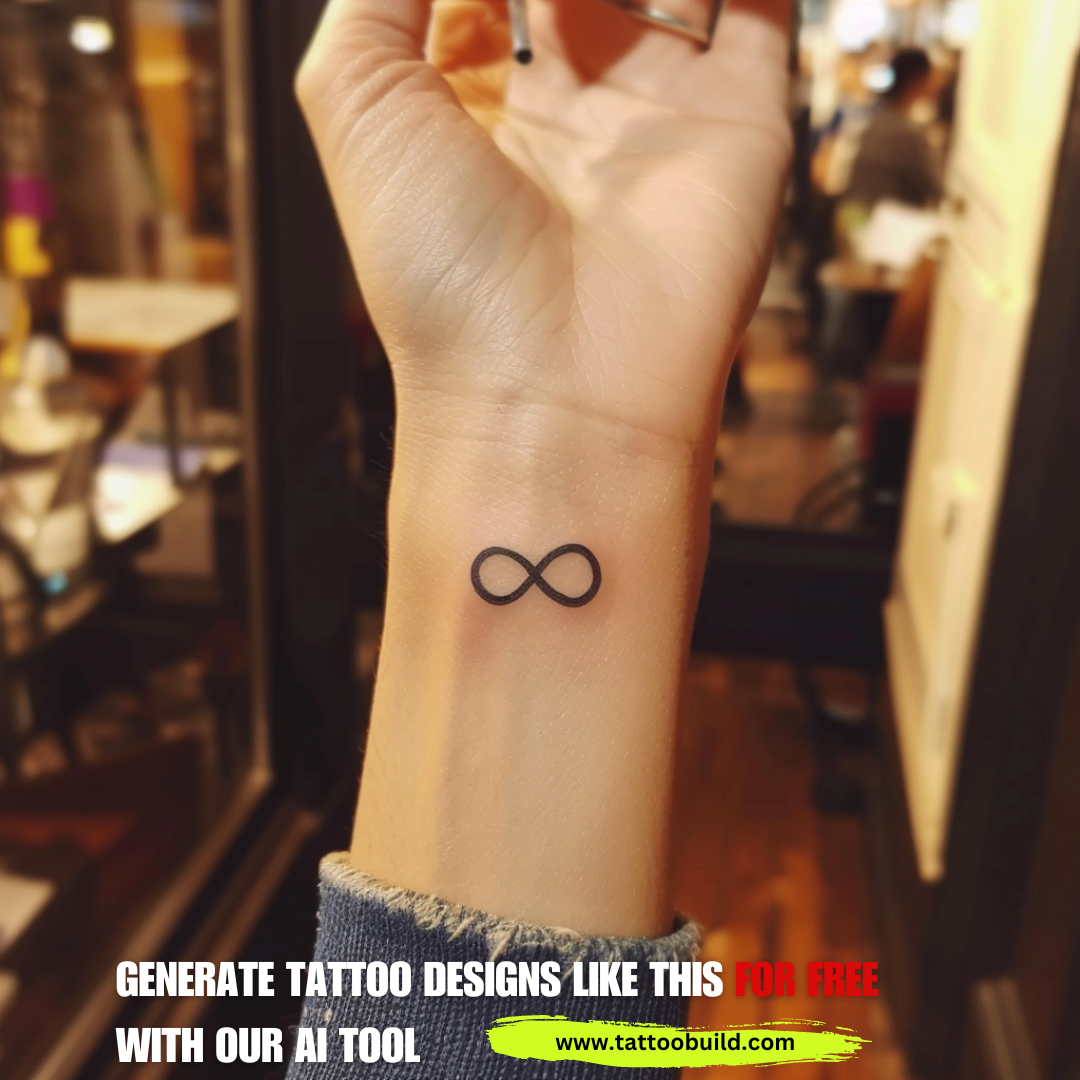
| Fine Line | Subtle, delicate, easy to place | 2–5 inches | Softens sooner; plan for touch-ups |
| Black & Grey Realism | Detailed skulls, textures, depth | 5–10 inches | Good at size, poor if cramped |
If you are torn, my honest advice is to pick the style your chosen artist already does well rather than the one you saw on a mood board. An artist working inside their own style will nearly always give you a better tattoo than one stretching to copy someone else’s.
Why Dagger Tattoos Have Lasted So Long
Dagger designs survived from early sailor tattooing into modern studios for a fairly unglamorous reason: they are built out of shapes that tattoo well.
A long triangle, a crossguard, a handle. Those forms hold their shape as the ink settles and spreads slightly over the years, which is more than can be said for a lot of fine detail.
There is also the meaning, which is unusually flexible. A dagger can be a memorial piece, a marker of surviving something, a warning, or simply a shape somebody liked. Nobody else has to know which one it is.
The historical associations are real but often overstated online. Daggers appear in old flash sheets alongside swallows, anchors and hearts, and much of the symbolism attached to them was assembled after the fact rather than passed down as strict code.
In my experience, most people who book a dagger are not thinking about maritime history at all. They want something that looks decisive on the arm.
Dagger Tattoo Ideas by Style and Pairing
American Traditional Dagger Tattoos
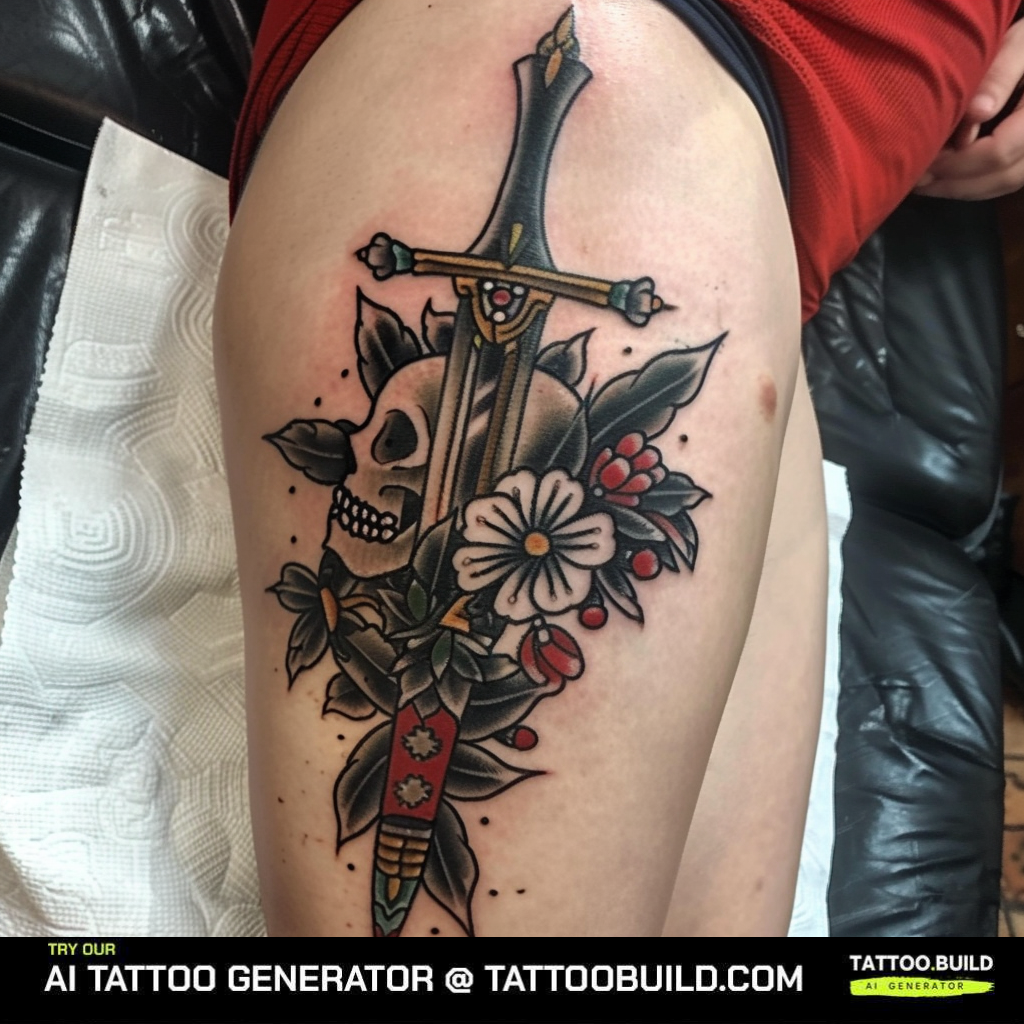
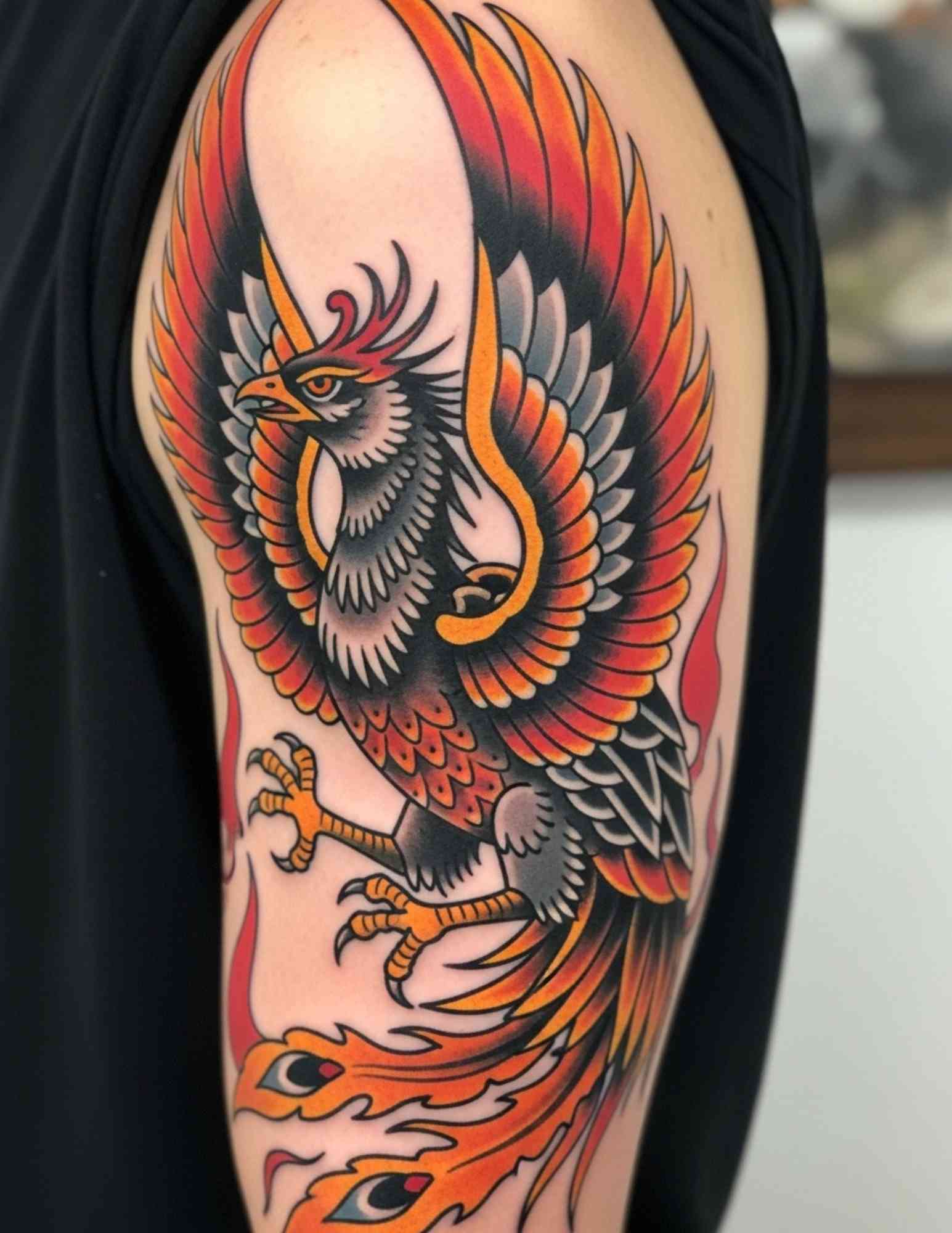
This is the default, and for good reason. Thick black outlines, a narrow palette of red, green, yellow and black, and almost no gradient work.
Traditional daggers usually sit between three and six inches — big enough for the outline to breathe, small enough to fit an outer forearm or calf in one sitting.
The reason this style keeps winning is legibility at distance. A traditional dagger is still readable across a room after twenty years, which is not true of most fine detail work.
Every traditional artist I have asked says the same thing about daggers: the crossguard is the hard part. Get the guard slightly off-centre and the whole blade looks bent, even when it is not. The same rules that govern American traditional animal tattoos apply here — bold will hold.
Dagger and Rose Tattoos
The most requested pairing I see, and the one with the clearest read: something soft, something sharp, in one frame.
People bring it in for love that hurt, for a relationship that ended badly, and quite often for no stated reason at all beyond liking how it looks.
Compositionally the rose does useful work. It breaks up the long straight run of the blade and gives the artist somewhere to put colour and shading, which stops the design from feeling flat.
Ask for the rose to overlap the blade rather than sit beside it. Overlap creates depth; two elements side by side usually read as two separate tattoos that happen to be neighbours. If you want to see the flower on its own first, our rose tattoo ideas gallery is a good starting point.
Dagger Through Skull Tattoos
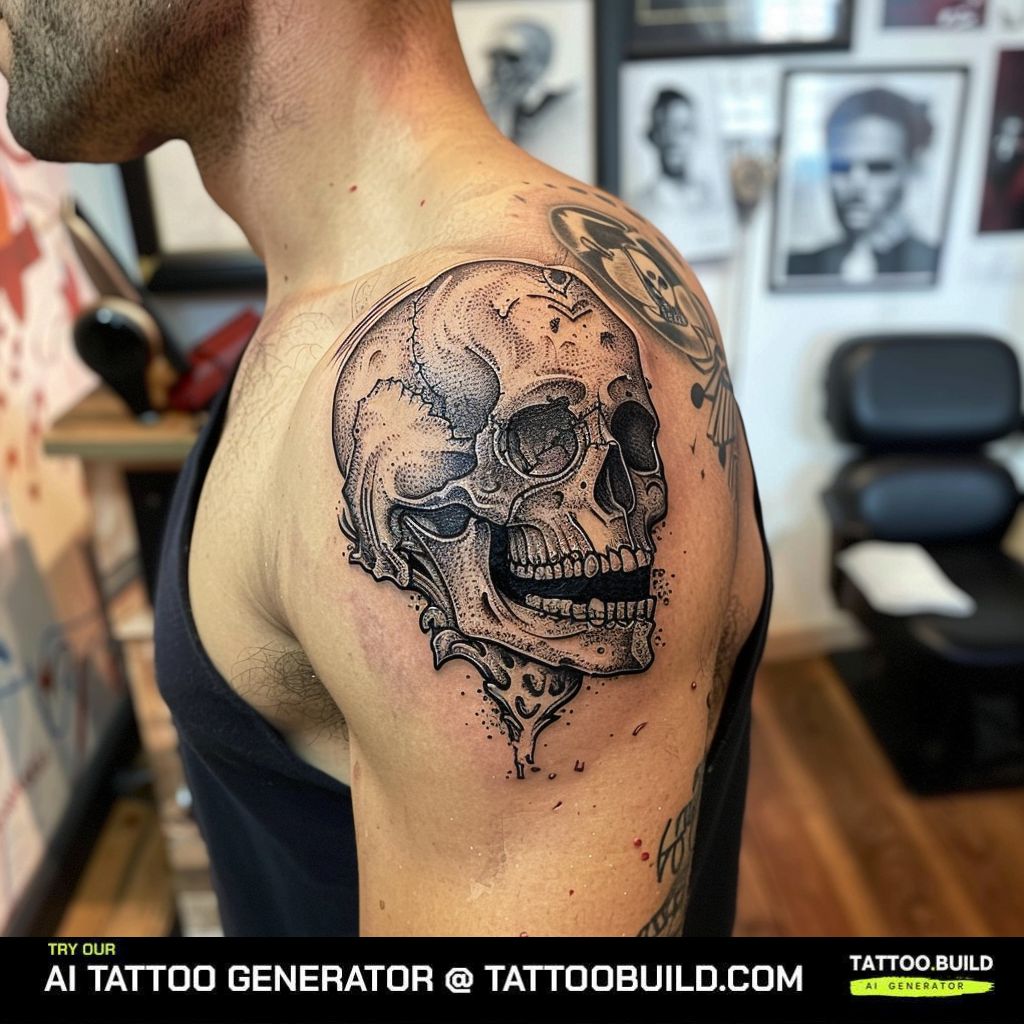
The bluntest version of the idea. A blade entering a skull is a mortality symbol with no ambiguity left in it.
These need more room than most people expect. A skull carries its own detail load — eye sockets, teeth, cheekbone shadow — and cramming it under four inches usually turns the teeth into a grey smudge within a few years.
I would give this one five inches minimum, and I would take the arm or the thigh over the forearm if the design is detailed.
Placement decides whether the skull stays readable, not the artist’s skill. We break the symbolism down further in our guide to the skull with dagger tattoo meaning.
Snake and Dagger Tattoos
A serpent coiled around a blade solves the biggest practical problem with dagger tattoos, which is that a dagger is a stiff vertical shape and limbs are curved.
The coil gives the artist a reason to wrap the composition around the arm or leg, so the tattoo moves with the body instead of sitting on it like a sticker.
Symbolically the two are in tension — the snake as temptation, danger or renewal, the dagger as the response to it. That tension is exactly the point.
When I have tested this design on a forearm, the version with three coils read far better than the one with five. Fewer, larger coils survive the years; tight ones tend to close up. There is more on the serpent side of it in our snake tattoo meaning guide.
Fine Line and Minimalist Daggers
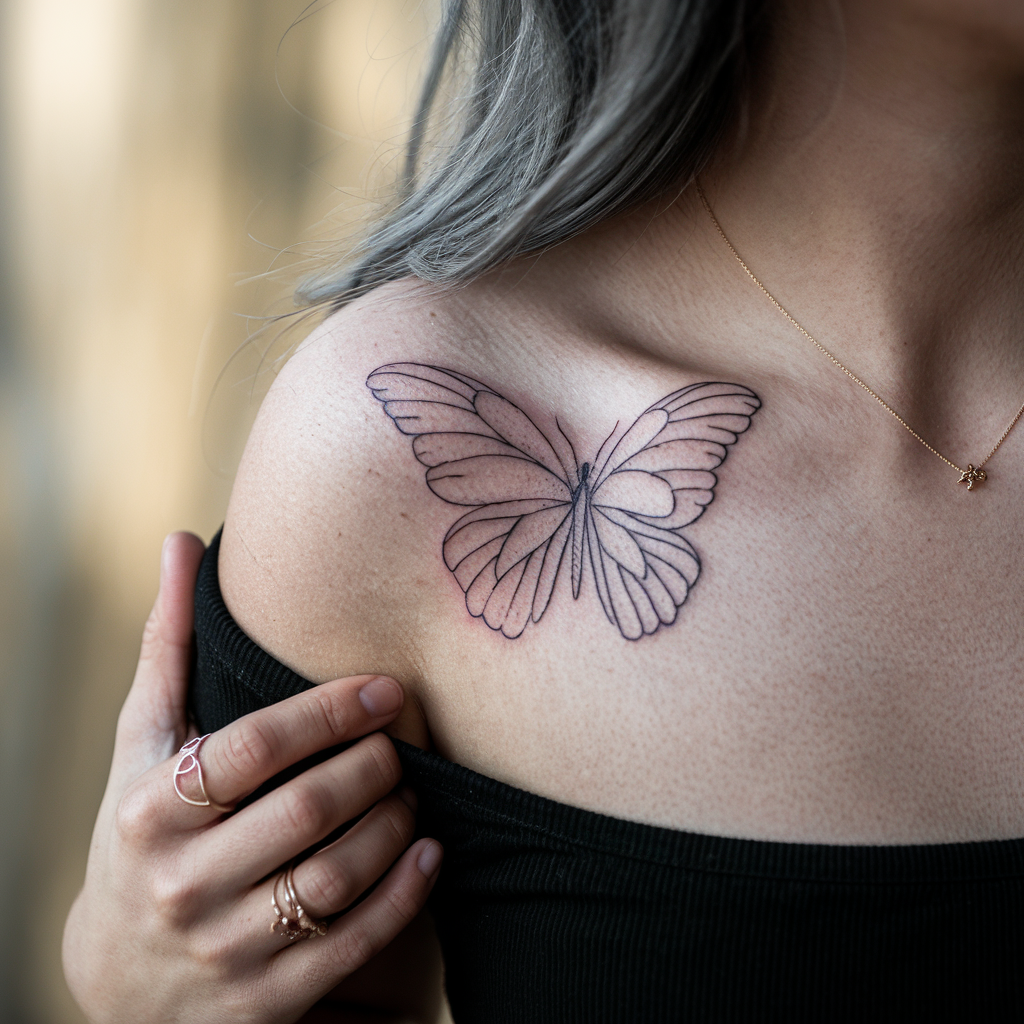
The modern counterweight to traditional. Single-needle or very light linework, no fill, often no shading at all.
They look extremely good for the first few years. I want to be straight about the trade-off: thin lines placed on high-friction areas — fingers, wrists, the side of the hand — commonly need touching up sooner than bolder work.
That is not a reason to avoid the style. It is a reason to choose placement carefully and budget for a touch-up rather than being surprised by one.
The inner forearm and the outer bicep are the two spots where I have seen fine line hold up best. Our fine line tattoo ideas collection covers the style more broadly.
Blackwork and Heavy Shading
At the other extreme: solid black fill, negative space doing the drawing, and very little line detail.
Blackwork daggers are the most durable option on this list. Dense black holds its shape for decades, which is why so much old military and maritime tattooing was heavy black to begin with.
The catch is that large solid black takes longer to heal and is harder to cover or modify later. Treat a blackwork piece as close to permanent in a way that lighter styles are not.
Sessions run long, too. A fully filled forearm dagger is usually two sittings rather than one, and packing black over an area that has just been outlined is uncomfortable in a way outlining is not. For more of the style, see our blackwork tattoo designs.
Dagger, Heart and Banner Designs
The blade through a heart is old, obvious, and still one of the best-composed shapes in traditional flash.
The heart gives the design a wide anchor point at the middle of the blade, which balances the composition far better than a bare dagger does.
Banners are the other classic addition — a ribbon across the blade or wrapped around the handle, usually carrying a name, a date or a short phrase.
My one warning on banners: leave them blank if you are not certain of the wording. An empty ribbon looks intentional and can be filled later. Lettering you regret is far harder to fix than lettering you never got.
Variations Worth Considering
Neo Traditional Daggers
Traditional bones with a wider palette and more shading. Muted purples, teals and burnt oranges show up here that old school flash never used.
It ages nearly as well as traditional as long as the outlines stay bold, which is the part people sometimes skip.
Ornamental and Filigree Handles
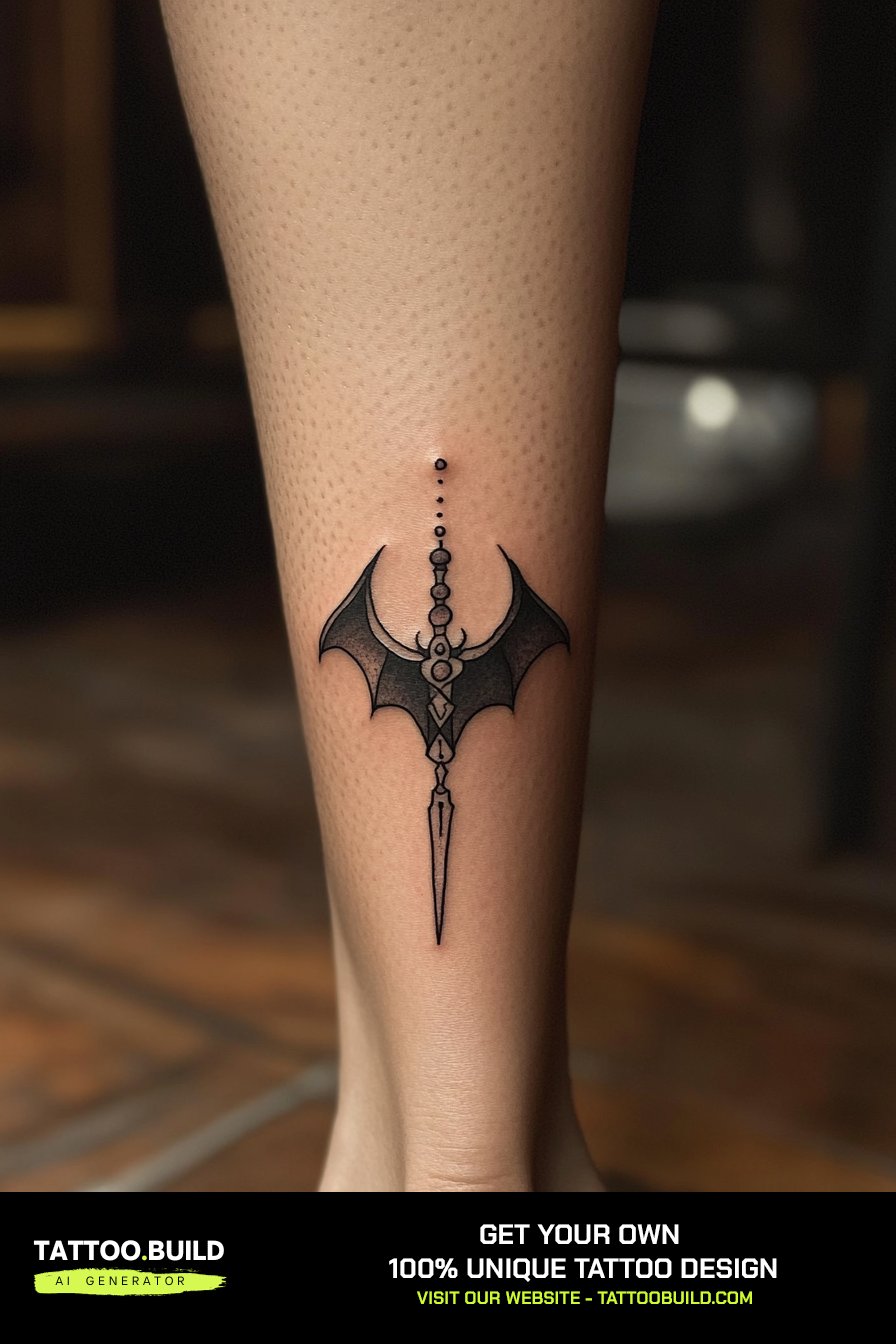
Most of a dagger’s personality lives in the hilt. Filigree, gemstones, engraved patterns and small hidden initials all go there.
It is also the safest place to add personal meaning, because it does not disturb the silhouette that makes the tattoo readable.
Animal and Object Combinations
Moths, wolves, clocks and hands all pair naturally with a blade, and each shifts the meaning somewhere new — a clock toward time, a wolf toward loyalty and instinct.
If that direction appeals, the wolf dagger tattoo meaning is a good example of how much one added element can change the read.
Practical Tips Before You Book
Bring reference, but bring it as direction rather than instruction. Three images that show the feeling you want will serve you better than one you want copied exactly — and copying another artist’s finished tattoo is something most good artists will decline anyway.
Talk about size honestly. In my experience the single most common regret with dagger tattoos is going too small, because the shape looked simple on paper and then lost its detail in the skin.
On healing: keep it clean, keep it moisturised, keep it out of the sun, and follow the specific aftercare your artist gives you over anything you read online, including this page. The American Academy of Dermatology publishes general guidance on caring for a new tattoo that is worth reading before your appointment, and the FDA’s consumer page on tattoo safety covers ink reactions.
If a healing tattoo becomes increasingly painful, hot, swollen, or starts producing pus after the first couple of days, that is a doctor’s question, not a forum question. Allergic reactions to pigment — red is the one most often implicated — can also appear weeks or months later. See a medical professional rather than trying to treat it yourself, and never attempt to remove or alter a tattoo at home. The Mayo Clinic’s overview of tattoo risks is a reasonable plain-language starting point.
Common Mistakes and What to Do Instead
Going too small is the first one, and it accounts for most of the touch-up requests I have seen on dagger designs.
The second is choosing an artist by price rather than portfolio. Look specifically for straight lines and clean symmetry in their healed work, not just fresh photos — fresh tattoos flatter everyone.
The third is over-loading the design. A dagger plus a rose plus a snake plus a banner plus a skull in a five-inch space is a grey blob waiting to happen.
Still weighing it up? It can help to look at neighbouring subjects before committing — our warrior tattoo ideas cover similar ground with different imagery, and a browse through skull tattoo ideas for men may settle whether it is the blade or the bone you actually want.
Frequently Asked Questions
What does a dagger tattoo mean?
Most commonly it stands for protection, courage, sacrifice, or betrayal, depending on what surrounds it. A dagger through a rose usually points to love that caused pain, while a dagger through a skull leans toward mortality and facing death directly. On its own, a bare blade tends to read as strength or self-protection. Ultimately the meaning is whatever you assign it, and there is no fixed code you are obliged to follow.
How much does a dagger tattoo cost?
Pricing varies enormously by city, artist experience and studio minimum, so any single number would be misleading. A simple traditional dagger is often a shop-minimum or single-hour piece; a detailed skull-and-dagger with heavy shading can run several hours across more than one sitting. The most reliable approach is to email two or three local studios with your reference, size and placement and ask for a quote. Expect a deposit to secure the booking.
Where is the best placement for a dagger tattoo?
The forearm is the classic choice because the long vertical shape of a blade matches the shape of the limb. The outer bicep, calf and thigh all work well for larger designs that need more width. Ribs and spine suit very long, narrow daggers but hurt considerably more. Avoid fingers, hands and feet for detailed versions, since those areas fade and blur faster than almost anywhere else.
Do dagger tattoos hurt more than other designs?
The design itself does not change the pain — placement and session length do. A dagger on the outer forearm is at the milder end for most people, while the same tattoo on the ribs, sternum or inner arm is considerably sharper. Long straight lines are drawn in single passes, which some people find easier to sit through than repeated shading. Pain tolerance varies a lot between individuals, so treat anyone’s pain chart as a rough guide rather than a promise.
Can a dagger tattoo be covered up or added to later?
Yes, and daggers are easier than most designs to build on because the blade gives an artist a strong vertical line to compose around. Adding roses, banners, snakes or background shading later is common and usually straightforward. Covering one is harder if it was done in heavy blackwork, since solid black limits what can be placed over it. Talk to a cover-up specialist before assuming either way.
Quick Summary
- Dagger tattoos generally symbolise protection, courage, sacrifice or betrayal — the surrounding elements decide which.
- American traditional is the most durable and most legible choice, thanks to bold outlines and a limited palette.
- Fine line daggers look excellent early on but usually need touch-ups sooner, especially on high-friction placements.
- Pair with a rose for softness, a snake for movement, a skull for directness, or a banner for personal wording.
- Overlap elements rather than placing them side by side — overlap creates depth and reads as one design.
- Give detailed designs at least five inches; going too small is the most common regret.
- The forearm, outer bicep and calf are the most reliable placements for a vertical blade.
- Follow your artist’s aftercare, and see a doctor for any sign of infection or a delayed pigment reaction.