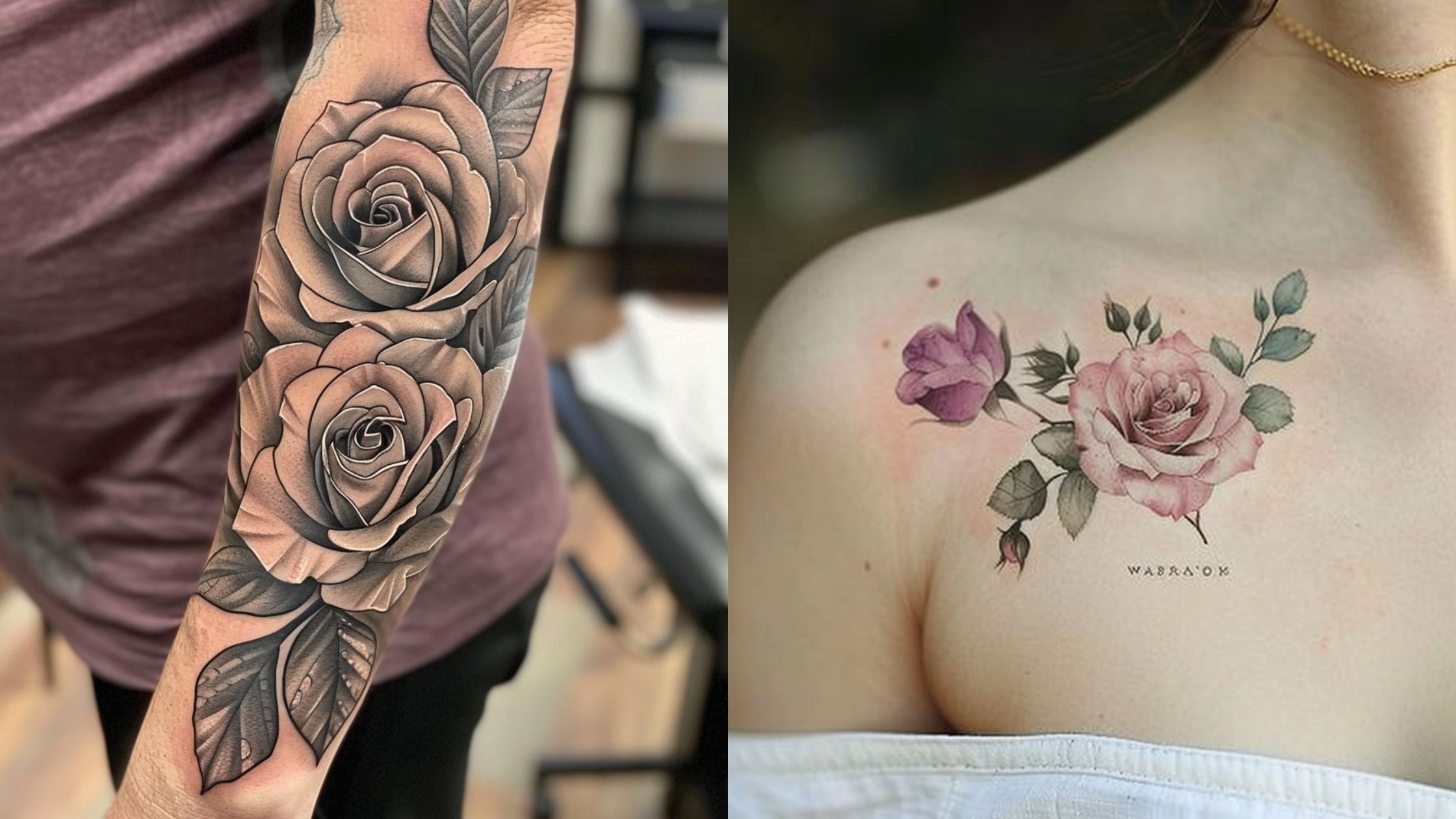
I have been collecting rose tattoo references for years, and the pattern never changes: the rose is the one design that works at almost any size, on almost any body part, in almost any style — which is exactly why it is so easy to get wrong.
A rose can be a two-inch fine line outline on a wrist or a full colour piece that eats an entire thigh. Same flower, completely different commitment.
This guide is the reference library I wish I had when I got my first floral piece. Below you will find over a hundred saved examples sorted by style and by placement, plus what I have learned from artists about which of them actually hold up after a decade. If you are here for the story behind the flower rather than the artwork, the deeper dive on the meaning of a rose tattoo covers that side properly.
Scroll for the designs. Read the sections between them if you want to avoid the mistakes I made.
Which Rose Tattoo Style Is Right for You?
Before scrolling through the designs, it helps to know roughly which family of styles you are shopping in. This is the comparison I sketch out for friends who ask me where to start.
| Style | Best For | Typical Size | How It Ages |
|---|---|---|---|
| Fine line / minimalist | A first tattoo, discreet placements | 1–4 inches | Softens fastest; often needs a touch-up |
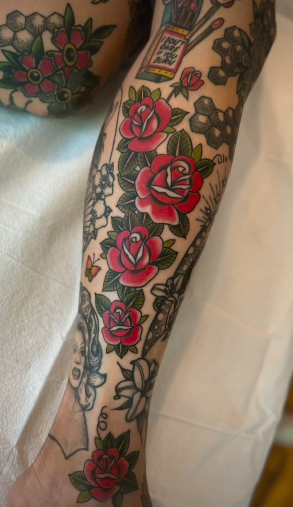
| American traditional | People who want it readable forever | 3–6 inches | The most reliable of the lot |
| Black and grey realism | Larger arm, chest and thigh pieces | 5 inches and up | Well, if the artist keeps contrast strong |
| Watercolour | Colour lovers who want something painterly | 3–8 inches | The softest edges blur first; anchor with linework |
| Geometric / ornamental | Symmetrical placements like forearms and spines | 4–10 inches | Good, though thin geometry can thicken |
| Full colour illustrative | Statement pieces and sleeves | 6 inches and up | Depends heavily on sun exposure |
If you are still torn after that, my honest advice is to pick the style your chosen artist already posts most often, rather than asking them to work outside their lane.
What a Rose Tattoo Actually Means
The short version: roses have carried romantic meaning in European art for centuries, and tattooing inherited that directly from sailors and early flash artists.
But meaning in tattooing is mostly built by context, not by the flower alone. A rose beside a dagger reads very differently from a rose beside a name.
Colour shifts it again. Red is the classic romantic reading, black tends to be used for grief or remembrance, and white or unshaded roses often stand for something newer and less defined.
Thorns matter too. In my experience people who add thorns are usually saying something about a difficult relationship or a hard stretch of life, which is why the rose with thorns variation gets asked about so often.
None of this is a rulebook. If a rose simply looks good on your arm, that is a completely sufficient reason to get one, and every artist I have asked says the same thing.
Rose Tattoo Ideas for Women
These are the styles I see requested most often in women’s floral work — leaning smaller, softer and more placement-driven, though none of this is gendered in any real sense.
1. Minimalist Rose Tattoo
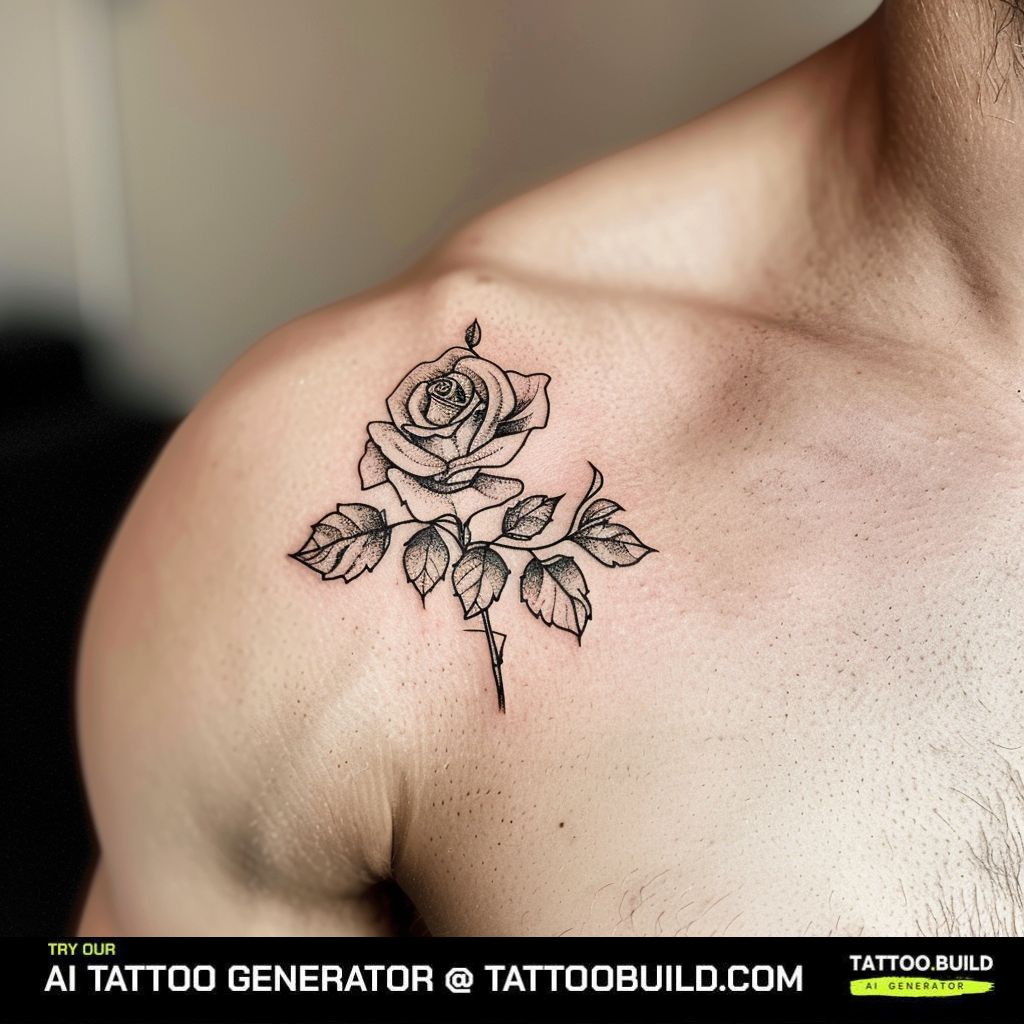
A minimalist rose strips the flower down to an outline and maybe two or three interior lines. It is the design I recommend most often to people getting their first piece.
The appeal is obvious: it is quick, it hurts less because there is less time under the needle, and it sits comfortably on a wrist, ankle or behind the ear.
The trade-off is longevity. Very thin single-pass lines spread slightly as skin ages, and a design with almost no line weight variation can go soft within five to ten years. When I tested this against my own oldest fine line piece, the outline had thickened noticeably and lost some crispness.
Ask your artist to vary the line weight even slightly — a thicker outer contour with finer interior lines holds up far better. The broader fine line tattoo gallery shows how much difference that makes.
2. Watercolour Rose Tattoo
Watercolour roses mimic paint bleeding past the outline — splashes of pink, red or purple that sit deliberately off-register from the drawing underneath.
They look extraordinary fresh. That is both the attraction and the catch.
Every artist I have asked about watercolour says the same thing: the pieces that survive are the ones built on a real linework or black-and-grey foundation, with colour used as an accent rather than as the whole tattoo.
Pure colour-only watercolour, with no dark anchor anywhere, tends to fade unevenly and can look washed out sooner than other styles. If you want the effect, ask to see healed photos from that artist at three years or more — not fresh work. Fresh photos will always look better than what you will be living with.
3. Rose and Butterfly Tattoo
The rose and butterfly pairing is one of the most requested combinations in the shops I have spent time in, and it has been for years.
It works compositionally because the two shapes are opposites — the rose is dense and round, the butterfly is open and angular — so they balance each other without competing.
Placement is where people get tripped up. A butterfly floating vaguely near a rose looks like two separate tattoos; a butterfly landing on a stem or emerging from behind a petal reads as one design.
Ask for a single unified composition, not two elements placed side by side. The dedicated rose and butterfly tattoo gallery is worth a look if this is your direction.
Rose designs and the prompts behind them
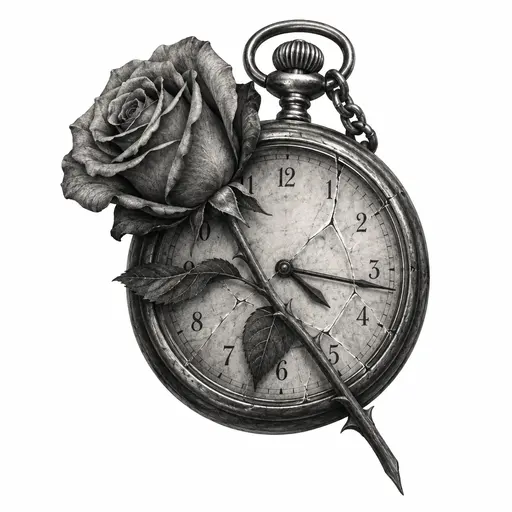
An old pocket watch stopped at 4:17, its glass cracked, a single rose lying across the face
Use this idea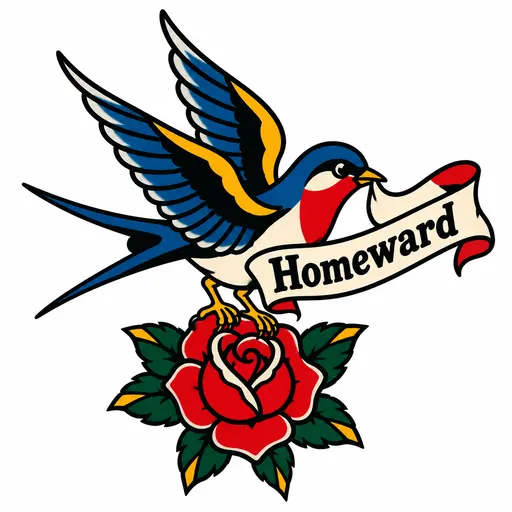
A swallow carrying a banner that reads "Homeward", with a red rose beneath its feet
Use this idea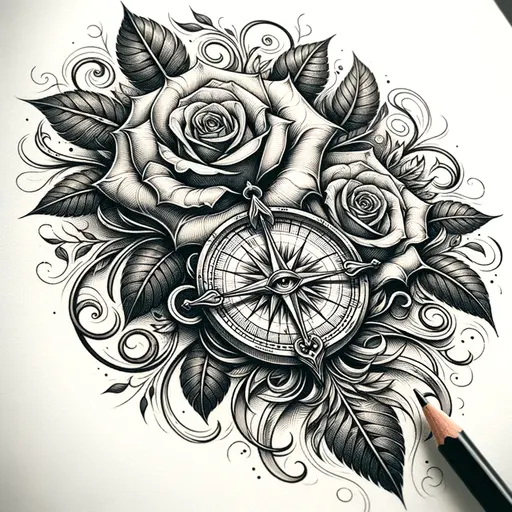
2 roses, stems with thorns, leaves compass eye of providnce
Use this idea
4. Rose and Name Tattoo
Adding a name turns a rose from decoration into a memorial or a dedication. It is the version I see most often for parents, children and people who have died.
A practical note from every artist I have asked: script needs more room than clients expect. Cramped lettering closes up as it heals, and the counters inside letters like a, e and o can fill in.
Give the name its own space — running along a stem, curving beneath the flower, or on a banner — rather than squeezing it into a gap between petals.
On the emotional side, I will be honest: partner names are the single most common regret artists mention. Names of children and family members are a different case entirely.
5. Rose Mandala Tattoo
Mandala roses fuse the flower with symmetrical ornamental geometry — dot work, repeating petals, radiating linework.
They suit placements that are naturally symmetrical: the centre of the back, the sternum, the top of a forearm, the back of a hand.
This is a style where the artist matters more than the design. Symmetry is unforgiving, and a mandala that is even slightly off-centre will bother you every time you look at it.
Look specifically for an artist whose portfolio is full of ornamental work, not a generalist who occasionally does it. A portfolio full of clean, symmetrical ornamental work tells you far more than any single photo.
6. Single Line Rose Tattoo
A single line rose is drawn without lifting the pen — one continuous contour that suggests the flower rather than describing it.
It is the most modern-looking option here and probably the most likely to date, though that is a guess rather than something anyone can prove yet.
Technically it is harder than it looks. There is nowhere to hide a wobble, and the whole piece is usually done in a handful of passes.
Sizes under about two inches are risky, because the line has to stay open enough that the shape does not close up as it heals.
7. Rose and Bird Tattoo
Roses paired with swallows, sparrows or hummingbirds pull directly from American traditional flash, where both were staple images.
The traditional version is bold and readable. The newer fine line and realism takes are softer, but lose some of that clarity at a distance.
If you want the classic look, ask for solid black outlines and limited colour — that is what makes old flash still legible decades later.
I would steer clear of overly detailed feather work at small sizes. Individual feathers on a two-inch bird tend to merge into a grey mass within a few years.
8. Thigh Rose Tattoo
The thigh is, in my experience, the most forgiving canvas on the body for floral work. It is flat, it is broad, and it is easy to keep out of the sun.
That last point matters more than people realise. Sun exposure is the single biggest cause of colour fading, so a thigh piece will usually outlast the same design on a forearm.
Pain is moderate — outer thigh is genuinely manageable, inner thigh much less so. Anyone who tells you the inner thigh is easy has not sat for one.
Because there is so much room, thighs suit designs that flow with the leg rather than sitting as an isolated circle. Vines, trailing stems and multi-flower arrangements all work well here.
Rose Tattoo Ideas for Men
Men’s rose work tends to run bolder, larger and more black-and-grey — but again, these are conventions rather than rules, and plenty of the designs above suit anyone.
1. Traditional Black and Grey Rose
If someone asks me for the single safest rose tattoo, this is my answer every time.
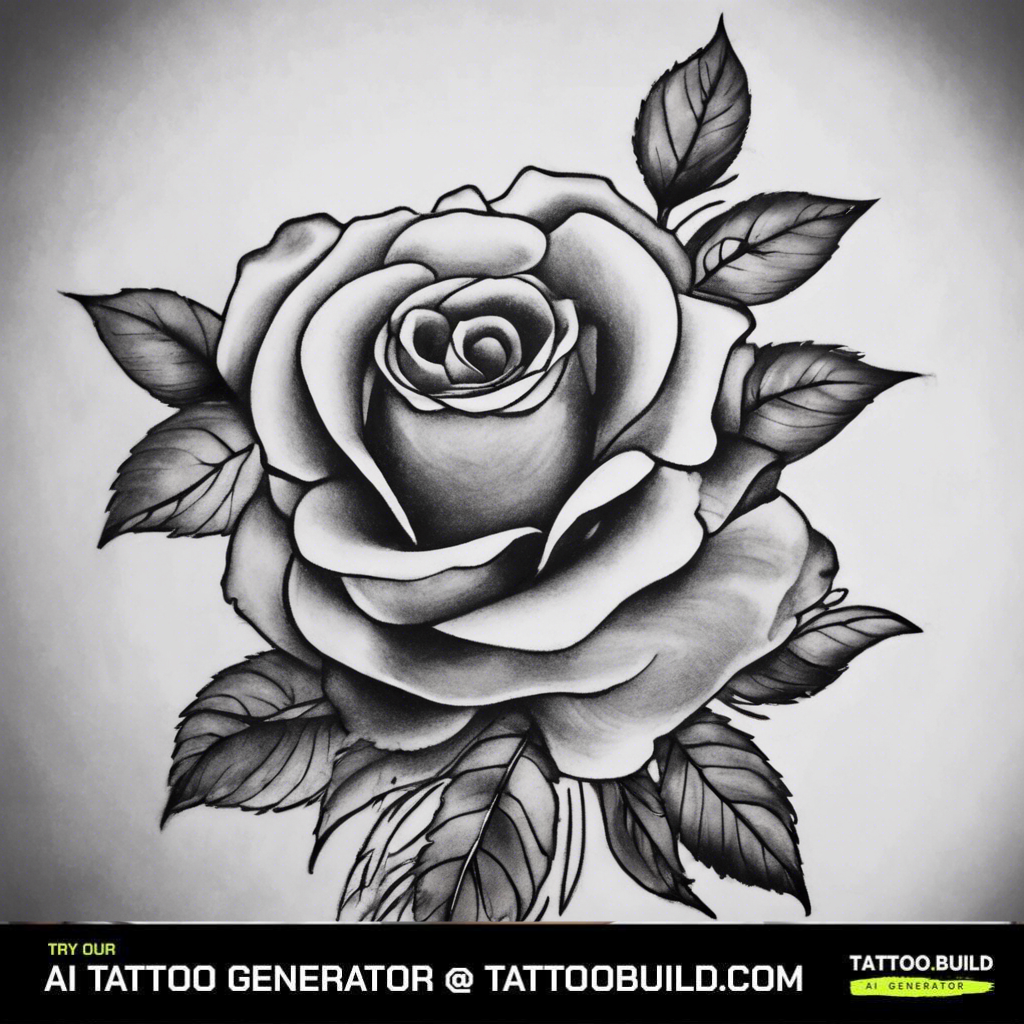
Bold outlines, solid black shadows, grey wash for the mid-tones. There is no colour to fade and no fine detail to blur.
Black and grey traditional work is the style that survives best over decades, which is why it dominates old-school portfolios. Every artist I have asked has said something similar.
The standard forearm size is around three to five inches, which usually fits into a single sitting of two to three hours. Larger versions on the chest or shoulder take longer. The black and grey rose tattoo gallery has more examples if this is your lane.
2. Geometric Rose Tattoo
Geometric roses set the organic shape of the flower against hard lines — triangles, circles, faceted planes, sacred geometry frames.
The contrast is the whole point, and it lands best when the geometry is genuinely rigid. Freehand geometry that is nearly straight looks like a mistake rather than a choice.
Ask whether your artist uses stencils or rulers for the linear elements. Most who specialise in this do.
Forearms and outer biceps suit geometric work particularly well because the flat planes give the straight lines somewhere sensible to sit. Curved, tapering areas like the inner wrist fight the geometry rather than supporting it.
3. Skull and Rose Tattoo
Skull and rose is the oldest pairing in this whole guide — life and death in one image, and it has been tattooed for well over a century.
It is also the combination most likely to look generic if it is not drawn well, because there are so many stock versions floating around.
The strong ones treat the skull and the flower as a single sculptural object: petals growing through an eye socket, a jaw wrapped in stem, the rose partially obscuring bone.
Give it room. This design needs at least four or five inches to work — I have seen small versions turn into an unreadable dark blob within a few years. The skull and rose tattoo gallery is worth studying for composition.
4. Tribal Rose Tattoo
Tribal roses render the flower in solid black shapes with sharp negative space, drawing on Polynesian, Maori and neo-tribal design languages.
A genuine word of caution here: many tribal patterns carry specific cultural and family meaning, particularly in Polynesian traditions. Copying a pattern you found online can be genuinely disrespectful.
If you want authentic tribal work, find an artist who practises within that tradition and can tell you what the elements mean. Neo-tribal, which borrows the visual language without claiming the cultural specifics, is the more honest option for most people.
Either way, tribal ages exceptionally well. Solid black holds better than almost anything else on skin.
5. Rose Sleeve Tattoo
A rose sleeve is a multi-session project, not a single appointment. Half sleeves commonly run three to five sessions and full sleeves considerably more, depending on detail and how well you sit.
The most important decision happens before any needle touches you: whether the whole sleeve is designed as one piece from the start.
Sleeves assembled from unrelated individual tattoos almost always end up with awkward gaps that need filler later. A planned sleeve flows around the arm and uses background to tie everything together.
Budget accordingly and book your sessions in advance — good artists are often months out. The rose sleeve tattoo gallery shows what a properly planned one looks like.
6. Realistic Rose Tattoo
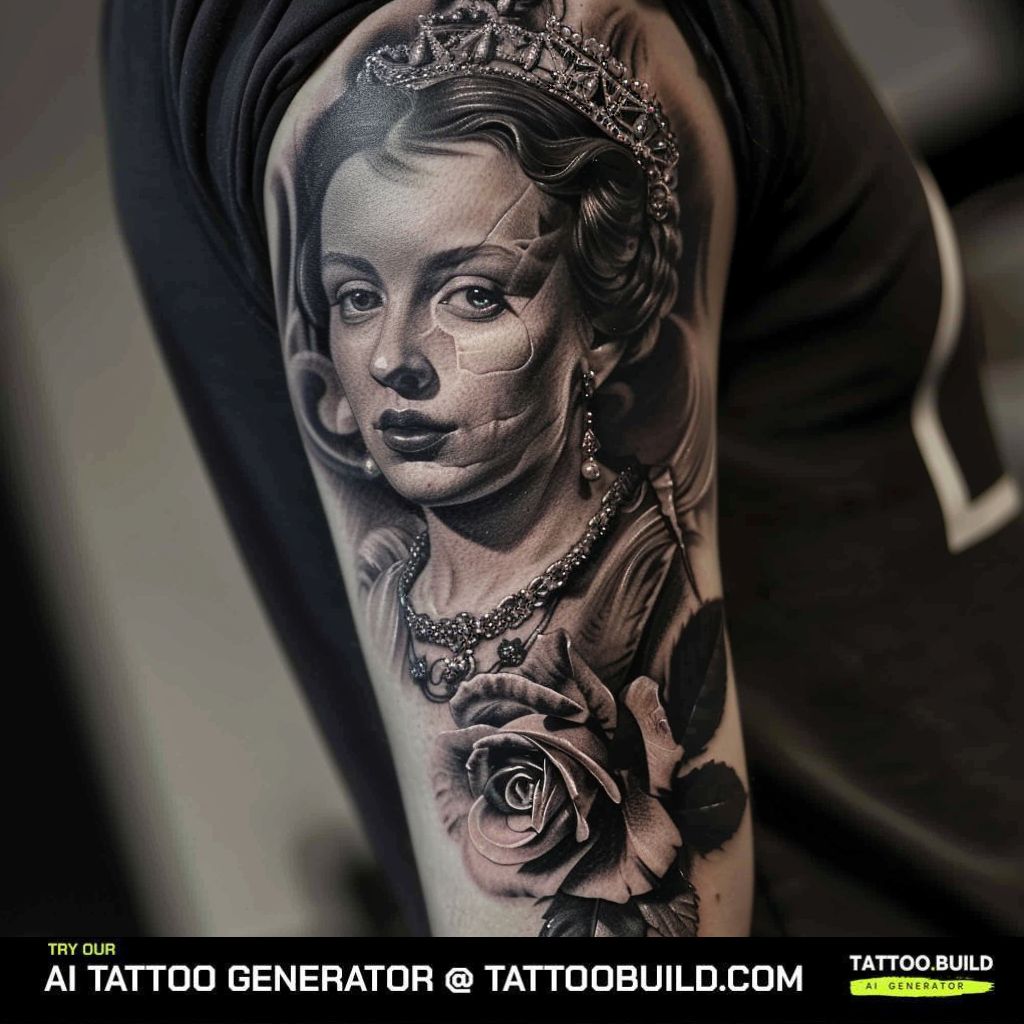
Photorealistic roses depend entirely on shading. There are often no hard outlines at all — the form is built purely from tonal transitions.
This is the least forgiving style on this list and the one where artist choice matters most. Realism is a specialism, and a general artist attempting it usually produces something flat.
It also needs size. Realism packed into three inches loses its tonal range as it heals and settles.
Expect to pay more and wait longer. In my experience realism specialists are the most heavily booked artists in any city.
7. Rose and Dagger Tattoo
Rose and dagger is pure American traditional — a straight vertical element cutting through a round one, which is why the composition works so reliably.
The vertical dagger suits long, narrow placements: the forearm, the outer calf, the side of the ribs, the spine.
Meanings vary and are worth deciding for yourself rather than inheriting. Betrayal, protection, sacrifice and simple defiance all come up regularly.
Keep the dagger simple. Overly ornate handles crowd the flower and reduce the contrast that makes the design work.
Rose Variations Worth Considering
If the classic rose is not quite right, these are the adjacent options I most often suggest.
Peonies and Other Full-Petalled Flowers
Peonies give you a similar layered, round bloom with a softer silhouette and none of the romantic baggage a rose carries.
They also fill space beautifully, which makes them a strong choice for larger pieces.
Birth Flowers
Choosing the flower tied to your birth month gives a personal meaning that does not depend on anyone else.
It is the option I suggest most often to people who want something meaningful but are wary of names or dates.
Roses in Negative Space
Instead of tattooing the flower, the artist tattoos the area around it and leaves the rose as bare skin.
It is striking, and it works best on people with even skin tone in that area. Discuss it honestly with your artist first.
Rose Vines and Wraps
A trailing vine with two or three small blooms covers more ground than a single flower while staying visually light.
Vines suit arms, ankles and ribs particularly well because they follow the natural line of the limb.
Black Rose Work
Solid black roses read as bolder and often carry associations with grief, memorial or defiance.
They also age extremely well, for the simple reason that there is no colour to lose.
Getting a Rose Tattoo That Ages Well
The two things that most determine how your rose looks in fifteen years are artist choice and sun protection — not the design itself.
On artist choice: look for healed photos rather than fresh ones, and look for healed photos of the specific style you want. A brilliant realism artist is not automatically a good fine line artist.
On aftercare, follow whatever your artist tells you, because they know how they packed your skin. Broadly, that means keeping it clean, keeping it lightly moisturised, and not picking at it. The American Academy of Dermatology publishes plain-language guidance on caring for new tattoos and spotting problems.
Once healed, sunscreen on the piece is the single highest-return habit. Ultraviolet exposure breaks down tattoo pigment, and it is the main reason colour work looks tired long before the linework does.
One safety note worth stating plainly: if a healing tattoo becomes increasingly painful, hot, swollen or starts weeping after the first few days, or if you develop a rash or fever, that needs a doctor rather than an internet search. The US Food and Drug Administration has a consumer page on tattoo risks including infection and allergic reaction, and reactions to red pigment in particular are a known issue. Never attempt to treat, remove or fix a tattoo yourself.
Still Not Sure? Common Rose Tattoo Mistakes
These are the ones I see repeated most often, and most of them are avoidable in the consultation rather than in the chair.
Going too small for the amount of detail. This is the number one issue. Detail that does not fit will merge together as the tattoo settles — ask your artist directly whether the design works at your chosen size, and believe them when they say no.
Bringing a reference photo and asking for an exact copy. Good artists will want to redraw it, both because copying another artist’s work is poor form and because the design needs adapting to your body.
Choosing the artist on price. A cheap tattoo you have covered up or reworked later costs far more than the good one would have.
Underestimating aftercare. The healing window is short but it genuinely decides how the piece settles — the tattoo aftercare guide covers the first few weeks properly.
Booking a placement without checking what it feels like. Ribs, sternum, inner arm and the tops of the feet are all significantly harder sits than the fleshy areas, as the tattoo pain chart sets out.
Frequently Asked Questions
How much does a rose tattoo cost?
It depends far more on the artist and the time involved than on the design. A small fine line rose is usually a shop-minimum job, while a detailed forearm piece runs into multiple hours at the artist’s hourly rate. Rates vary widely by city and by how established the artist is, so the only reliable number is the quote you get in a consultation. I would treat a quote that is dramatically below everyone else’s as a warning rather than a bargain.
How long does a rose tattoo take?
A small minimalist rose is often done in under an hour. A shaded forearm piece typically runs two to three hours, and a realistic or full colour piece can take considerably longer or need a second session. Sleeves are measured in sessions rather than hours. Your artist can estimate this accurately once they have drawn the design.
Do rose tattoos hurt more than other designs?
The design does not change the pain — the placement does. A rose on the outer thigh or upper arm is genuinely manageable for most people, while ribs, sternum, inner arm and feet are much harder. Longer sessions also get progressively more uncomfortable regardless of where you are being tattooed. Eating properly beforehand and not turning up hungover makes a real difference.
Which rose tattoo style ages the best?
Bold traditional and black and grey work, consistently. Both use strong outlines and solid shading with no fine detail to blur and no colour to fade. Fine line and pure watercolour are the two styles most likely to need a touch-up. That said, any style ages well if the piece is sized properly and kept out of the sun.
Can a rose tattoo cover an old tattoo?
Often yes, because roses are dense and have plenty of dark areas to work with, which is exactly what a cover-up needs. Whether it works in your case depends on how dark and how large the existing tattoo is. Take it to an artist who specialises in cover-ups rather than a generalist, and be prepared for the new piece to be larger and darker than you first imagined.
Quick Summary
- Pick your style first — fine line, traditional, black and grey realism, watercolour, geometric or full colour — because it drives everything else.
- Bold traditional and black and grey work age the most reliably; fine line and pure watercolour need the most maintenance.
- Size the design for its detail, not the other way round. Detail that does not fit will merge as it heals.
- Choose the artist by their healed work in your specific style, not by price or by their fresh photos.
- Thighs, upper arms and backs are the most forgiving placements; ribs, sternum, hands and feet are the hardest sits.
- Sunscreen on a healed tattoo is the highest-return habit for keeping it looking sharp.
- Combinations like butterflies, skulls and daggers work best when they are designed as one composition rather than two elements placed together.
- If a healing tattoo gets hotter, more painful or starts weeping after the first few days, see a doctor rather than waiting it out.