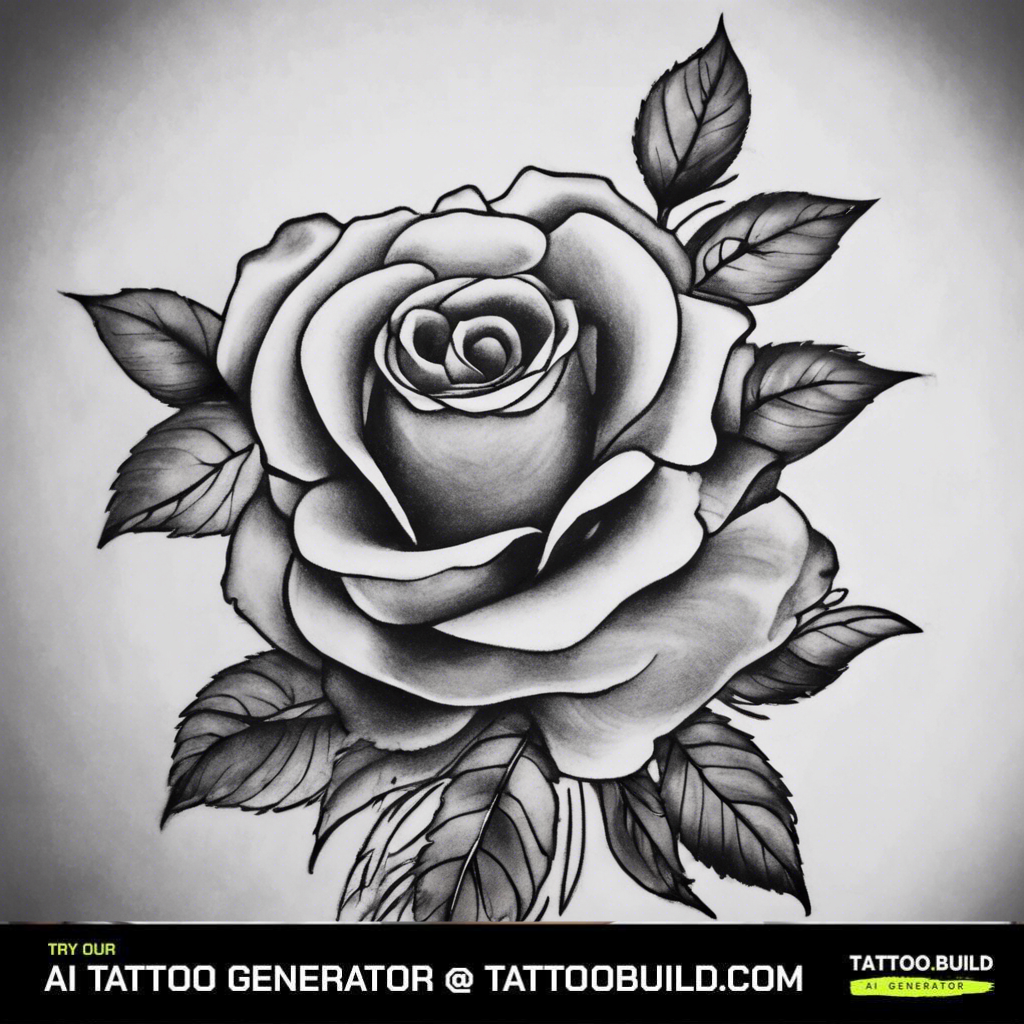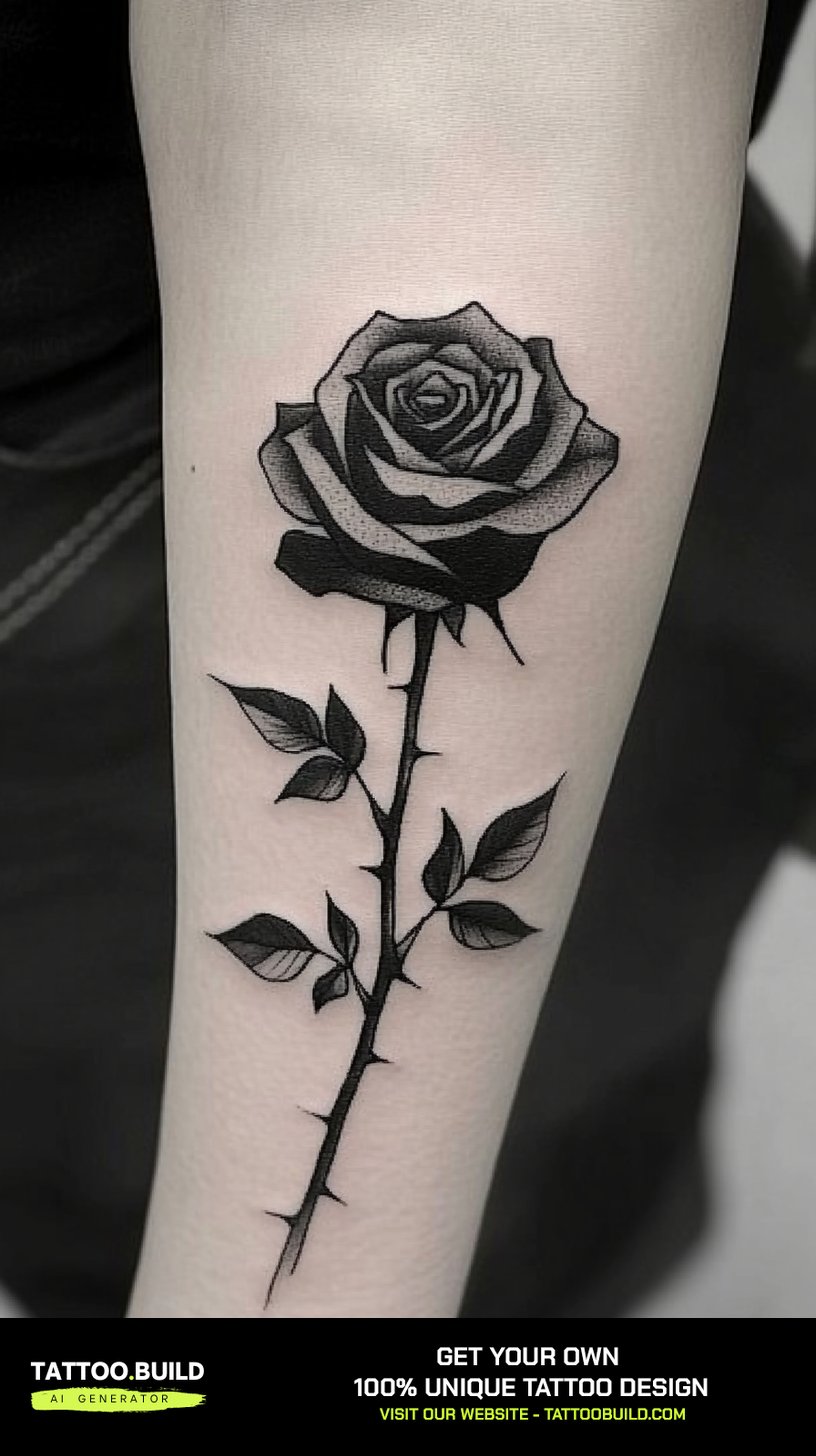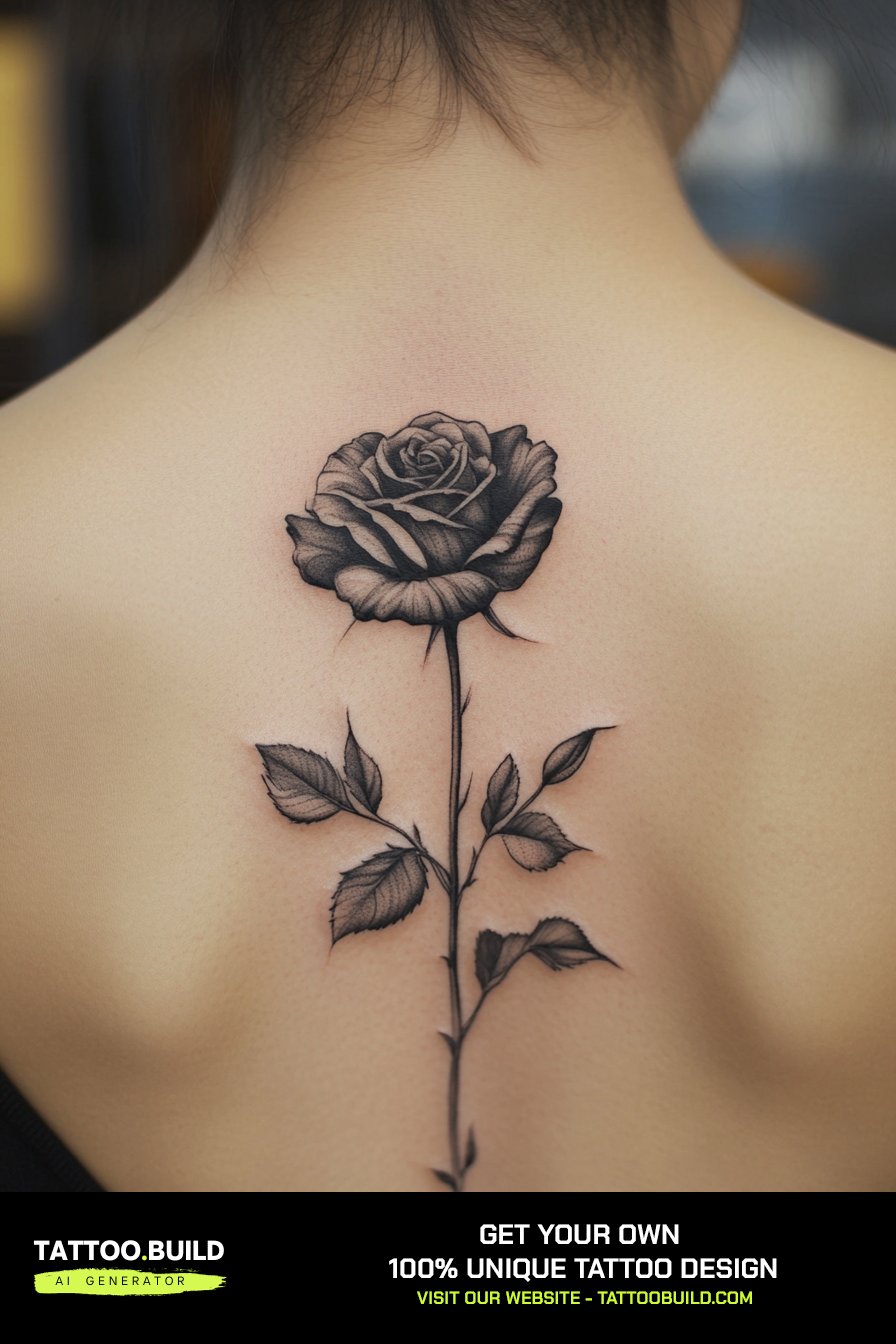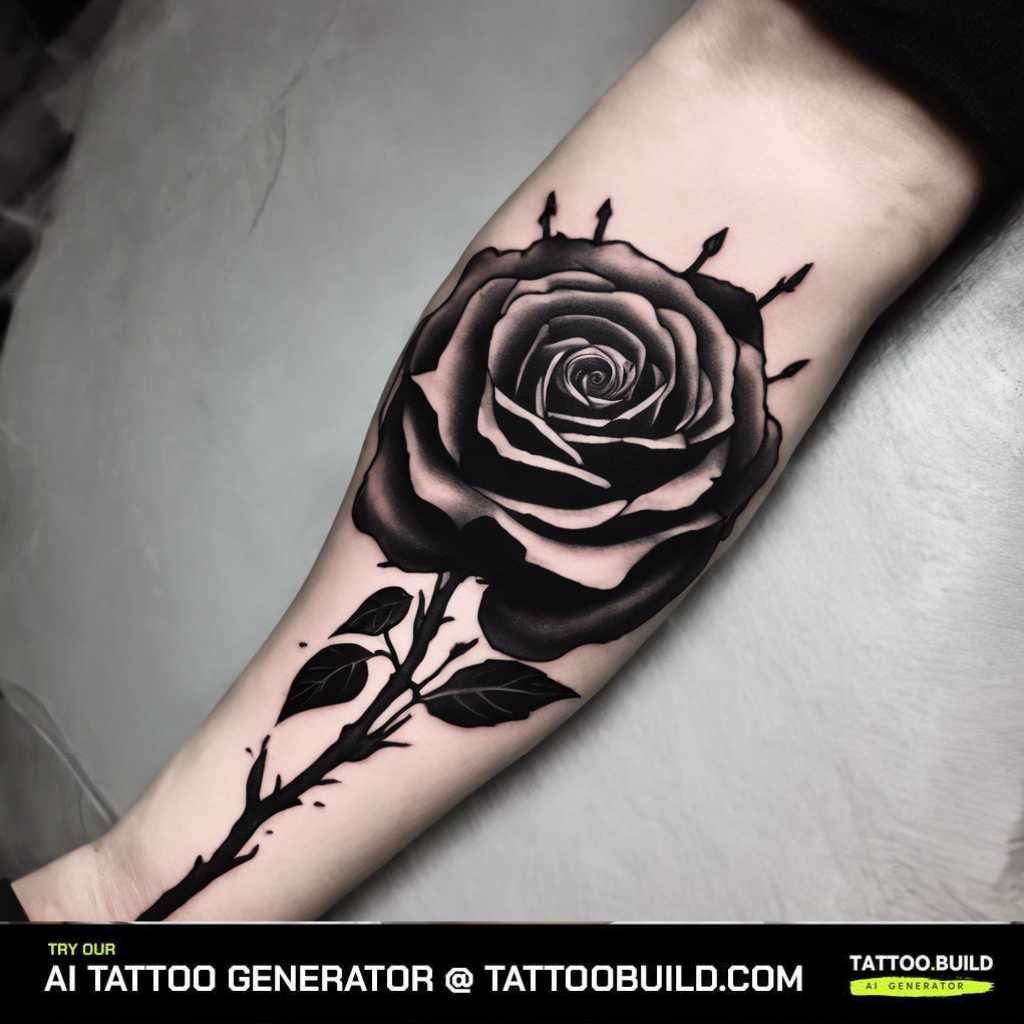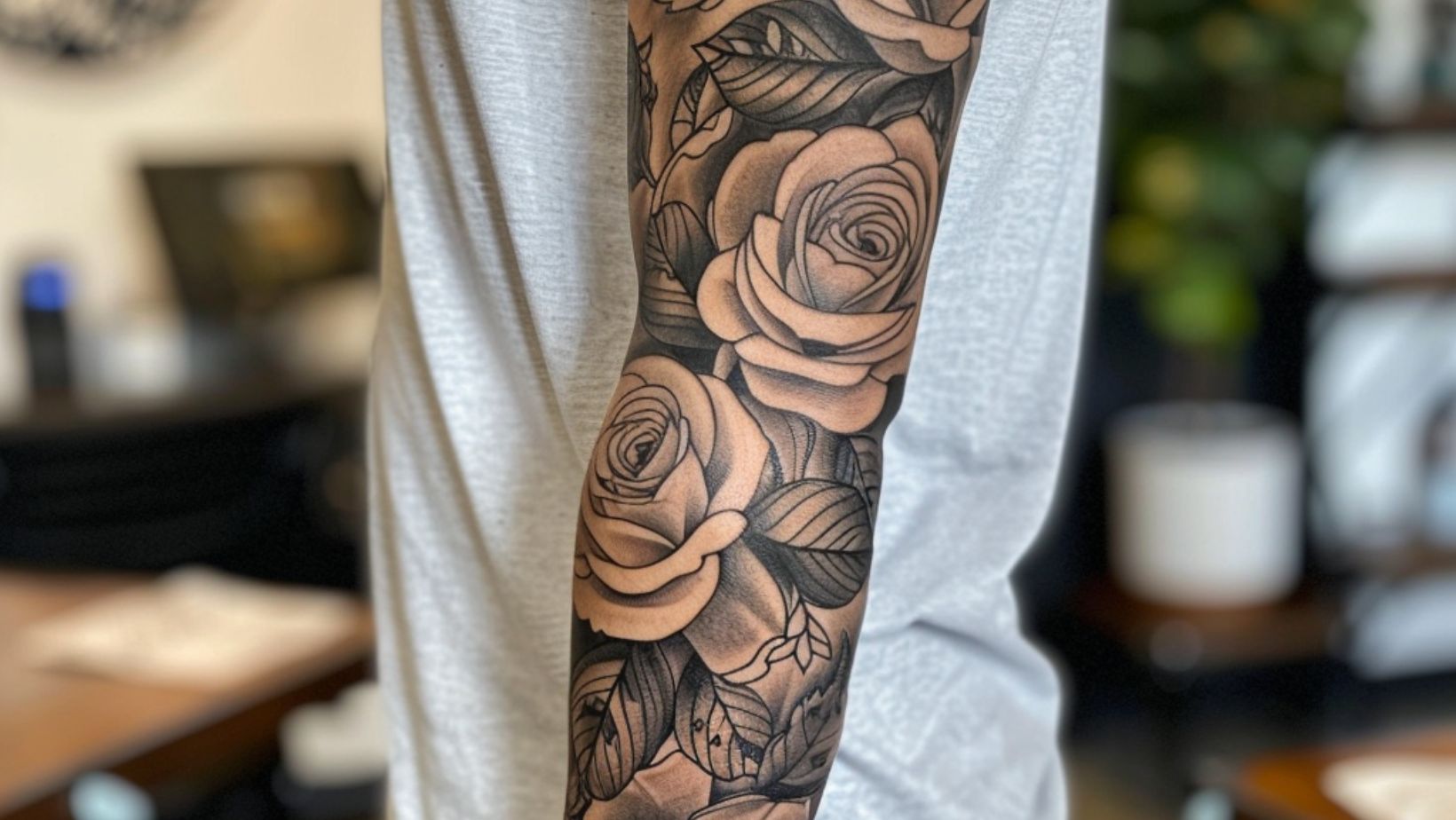
A men’s rose tattoo in black and gray is the rare design that works on a blank forearm and inside a finished sleeve without changing its character. I have sat in on consultations where the same reference photo suited a nervous first-timer and a heavily tattooed regular, and neither one looked out of place.
Pulling the color out of a rose does not soften it. It does the opposite, because once red is gone the whole design has to survive on line weight, contrast, and shading, which is exactly what ages well on skin.
This guide covers the styles, placements, and technical details I keep seeing hold up years down the line, plus what the flower actually signals before you commit to it. If you want the symbolism in depth first, our guide to the meaning of a rose tattoo goes deeper than I can here.
Everything below comes from looking at healed work, not fresh photos — which is the single biggest thing most people get wrong when they pick a design.
Which Rose Style Is Right for You?
Black and gray is a palette, not a style. The table below is how I usually frame the choice for someone who knows they want a rose but has not picked an approach yet.
| Style | Best For | How It Ages | Sitting Time |
|---|---|---|---|
| Traditional / Bold Line | First tattoos, small spaces, high visibility | Excellent — heavy lines stay readable for decades | Short, often a single session |
| Black and Gray Realism | Larger pieces with room for depth | Good with touch-ups; soft grays lift first | Long, frequently multiple sessions |
| Neo-Traditional | Decorative work, ornamental framing | Very good — structure carries it | Moderate |
| Fine-Line | Subtle, small, low-commitment pieces | Weakest of the four — lines soften and spread | Short |
| Blackwork / Solid Black | Graphic impact, covering older ink | Excellent, though hard to alter later | Moderate to long |
If you cannot decide, bold line work is almost always the safer first move. You can add realism around it later, but you cannot add structure back into a piece that never had any.
Why Black and Gray Works So Well for Roses
Gray wash is just black ink thinned down, so every tone in the tattoo comes from the same pigment family. That is why a black and gray rose tends to stay visually coherent as it fades — everything lightens together instead of some colors outlasting others.
Red pigment, by contrast, is one of the more common culprits behind delayed reactions, and the FDA’s guidance on tattoo safety is worth reading before you commit to any heavily pigmented piece.
There is a practical reason too. Black and gray reads clearly on every skin tone, whereas lighter colors can sit muddy or wash out entirely on deeper complexions.
Artists I have talked to also tend to prefer it for flowers, because petals are mostly about how light falls across a curved surface. Strip out color and you are left with the part that actually makes the rose look three-dimensional.
The trade-off is honesty about contrast. A black and gray rose with no real darks in it will look soft and unfinished within a couple of years, and that is usually a design problem rather than a healing one.
Men’s Black and Gray Rose Tattoo Ideas
These are the five configurations I see most often, roughly in order of how frequently people ask for them.
The Single Rose
One rose, no supporting elements, sized somewhere between a playing card and an open hand. It is the version I recommend most to people getting their first piece.
The reason is simple: a single rose gives an artist room to show off shading without committing you to a full composition. If you like it, it becomes the anchor for a larger piece later; if you do not, it stands alone without looking abandoned.
Watch the centre of the bloom. A well-drawn rose has a genuinely dark core with the petals unfurling outward, and a flat or evenly-lit centre is the fastest way to spot rushed work.
I have also noticed single roses hold up better when they are drawn slightly open rather than fully bloomed, because the extra petal overlap gives the artist more places to hide contrast.
Rose with Thorns
Adding a thorned stem changes the read of the tattoo completely — the flower goes from decorative to defensive.
This is the version men most often choose when the piece is about surviving something rather than commemorating someone. The thorns do most of the emotional work, and they only land if they are drawn sharply enough to look like they would actually hurt.
There is a full breakdown of the symbolism in our guide to the rose with thorns tattoo meaning, which is worth a read if that is the story you want the piece to tell.
Technically, a thorned stem is also a gift to the artist. It gives them a long solid black element to run against the soft gray of the petals, and that contrast is what keeps the tattoo legible from a distance.
Rose designs and the prompts behind them
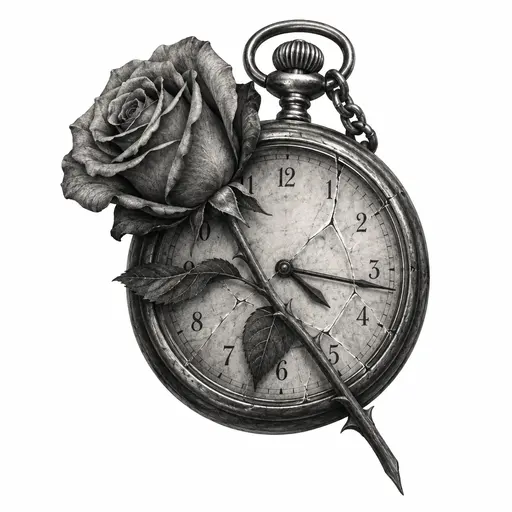
An old pocket watch stopped at 4:17, its glass cracked, a single rose lying across the face
Use this idea
A swallow carrying a banner that reads "Homeward", with a red rose beneath its feet
Use this idea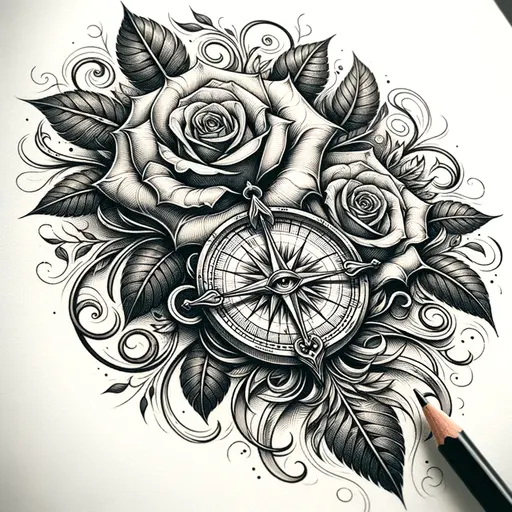
2 roses, stems with thorns, leaves compass eye of providnce
Use this idea
Rose and Skull
The oldest pairing in the book, and still the most requested combination in black and gray. Life next to death, beauty next to decay — it has been in tattoo flash since long before any of us were around.
The mistake I see constantly is giving both elements equal weight. When the skull and the rose are shaded to the same intensity, the eye has nowhere to land and the piece reads as busy.
Pick a hero. Either the skull is rendered in hard realism with the rose kept softer, or the rose carries the detail and the skull sits back in mid-grays as a frame.
If the symbolism is what drew you in, our piece on the flower and skull tattoo meaning covers the variations, including which skull types change the message.
The Rose Sleeve
Roses are one of the few subjects that can carry an entire sleeve without repeating themselves, because each bloom can sit at a different angle and stage of opening.
In my experience the sleeves that fail are the ones designed bloom by bloom over several years without a master layout. The blooms end up crowding and the arm turns into a grey smudge from two metres away.
Negative space is the whole game on a sleeve. The untouched skin between roses is what lets each one register as a separate object rather than texture.
If you are planning the full arm, our roundup of full sleeve tattoo ideas for men shows how roses get used as connective filler between larger focal subjects.
Rose and Clock
A pocket watch or clock face beside a rose is the modern equivalent of the skull pairing — it is about time rather than mortality, though the two sit close together.
Men often set the hands to a meaningful hour: a birth, a loss, a date that changed something. It is a detail almost nobody else will notice and that is usually the point.
Be realistic about scale. Roman numerals and gear teeth need physical room, and every artist I have asked has a story about a clock tattoo that was squeezed too small and blurred into a grey disc within a few years.
Our clock tattoo ideas collection is a good place to look at how much space the mechanism realistically needs.
Rose with Lettering or a Name
Script running under or through a rose is common in memorial pieces, and it is where I would urge the most caution.
Thin script ages faster than almost anything else in a tattoo, because fine lines spread slightly as skin changes. A name that looks crisp at the counter can look furred a decade on.
If you want lettering, ask for it slightly heavier and slightly larger than feels necessary. Artists will usually push you this direction anyway, and there is a reason for it.
Placement matters more here too. High-movement areas like the inner wrist and the side of the hand are the harshest environments for script, and are worth avoiding for anything you want to still read clearly in twenty years.
Placement and Variations Worth Considering
Where the rose goes changes what it costs, how much it hurts, and how long it stays sharp.
Arm and Forearm
The outer forearm is the default for good reason — it is flat, easy for the artist to work, relatively forgiving on pain, and gets moderate sun exposure rather than constant.
The inner forearm is softer and generally more tender, but it holds detail beautifully and is easy to cover for work. Our gallery of black and white rose forearm tattoos shows both orientations side by side.
Chest, Shoulder and Back
These give you the most uninterrupted canvas, which matters for realism where the shading needs room to transition.
The back in particular is the slowest-ageing real estate on the body because it sees less sun and less stretch than the limbs. The downside is obvious — you will rarely see it yourself.
Leg and Calf
The calf is underrated for black and gray. It is muscular enough to hold shape, easy to keep covered, and the curve of the muscle suits a stem wrapping around it.
Shins are a different story. Thin skin over bone makes them one of the more uncomfortable places to sit, and I have never met anyone who described a shin session as easy.
Darker and Alternative Treatments
A solid blackwork rose drops the mid-tones entirely and relies on silhouette and negative space. It is graphic, it is bold, and it is the hardest version to modify or cover later.
Heavier, moodier renderings sit between realism and blackwork, leaning on deep shadows rather than smooth gradients. Our collection of dark rose tattoos for men is the clearest illustration of that range.
Fine-line roses are the opposite extreme — delicate, quiet, and genuinely the least durable of the options here. They can be lovely, but plan for touch-ups rather than assuming you will never need them.
Aftercare and Keeping the Gray Crisp
Black and gray has one specific vulnerability, and it is the sun. Light gray wash is the thinnest pigment in the tattoo and it is the first thing to lift, so a rose that loses its mid-tones stops reading as three-dimensional.
Daily sunscreen on a healed tattoo is the single highest-return habit for keeping shading intact. The American Academy of Dermatology’s guidance on caring for tattooed skin covers the basics properly, and it is short.
During healing, follow the aftercare your artist gives you rather than anything you read online, including this page — they know what ink and technique they used. Keep it clean, keep it lightly moisturised, and do not pick at it.
Watch for genuine warning signs: spreading redness, swelling that worsens after the first few days, heat, pus, or a fever. Those are reasons to see a doctor, not to ask a tattoo forum, and the Mayo Clinic’s overview of tattoo risks lays out what to look for. Nothing here is medical advice.
Plan for a touch-up. Most reputable shops expect one and many include it, particularly on soft gray work where a little pigment drop-out during healing is normal rather than a mistake.
Common Mistakes, and What to Do If You Are Still Not Sure
The most expensive mistake is choosing an artist by price or proximity instead of portfolio. Black and gray is a specialisation, and a brilliant colour artist is not automatically a brilliant gray wash artist.
Ask specifically for healed photos. Fresh work photographs beautifully and tells you almost nothing about how the piece will settle.
The second mistake is going too small for the level of detail requested. Every fine element you add needs proportional space, and compressing a detailed rose into a small area is how tattoos turn into dark blobs.
The third is rushing the placement decision. Sleep on it, draw it on with a marker, live with it for a few days — artists respect this far more than people expect.
If you are still weighing options, it helps to see the range: black shaded rose tattoos for the heavier end, and it is worth browsing wider masculine floral work too if you are not yet certain a rose is the flower you want.
Frequently Asked Questions
Do black and gray rose tattoos last longer than color ones?
In most cases they hold their appearance longer, yes. Black ink and gray wash come from the same pigment base, so the tattoo lightens evenly instead of some colors outlasting others and throwing the balance off. Colored tattoos can absolutely age well with good aftercare and sun protection. But if longevity with minimal maintenance is your priority, black and gray is usually the safer bet.
How much does a men’s black and gray rose tattoo cost?
It varies enormously by region, artist demand, and size, so any specific figure you read online is guesswork. Most shops set a minimum charge for small work and price larger pieces by the hour or by the session. A palm-sized single rose is typically one sitting; a sleeve is a multi-session project priced accordingly. Ask for a quote in person after the design is discussed, because remote estimates are rarely accurate.
Does a rose tattoo hurt more in certain spots?
Yes, and the pattern is fairly consistent. Areas with thin skin directly over bone — ribs, shins, the top of the foot, the inner elbow — are generally reported as the most uncomfortable. Muscular areas like the outer arm, thigh, and calf tend to be more manageable. Pain tolerance is individual though, and session length often matters more than location.
Are rose tattoos considered masculine?
Roses have been standard in men’s tattooing since the earliest days of American traditional flash, so the question is more modern than the tattoo is. Sailors wore them, and they have never really left men’s arms since. What shifts the read is execution rather than subject — bold linework, thorns, heavy contrast, and larger scale all push a rose toward the traditional masculine register. A rose is only as soft as you have it drawn.
Is a rose a good choice for a first tattoo?
It is one of the better first choices, in my view. A single rose is flexible in size, works almost anywhere on the body, is quick enough that you are not committing to a long first session, and can be built onto later if you want more. It also happens to be a design nearly every artist has drawn many times, which means you are not asking someone to experiment on you.
Quick Summary
- Black and gray keeps a rose coherent as it fades, because every tone comes from the same pigment family.
- Bold linework is the most forgiving starting point; realism and fine-line both demand more space or more maintenance.
- Thorns shift the meaning from commemorative to defensive, and they need to be drawn sharply to land.
- In a skull-and-rose pairing, pick one element to carry the detail rather than shading both equally.
- Negative space between blooms is what stops a rose sleeve from reading as grey texture.
- Give clocks, lettering, and fine detail more room than feels necessary — compression is what causes blurring.
- Choose your artist on healed black and gray portfolio work, never on fresh photos or price.
- Sunscreen protects gray wash better than anything else, and any sign of infection is a doctor’s call, not a forum’s.
Try Our AI Tattoo Ideas Generator
Tired of scrolling the same handful of rose designs? Our AI Tattoo Ideas Generator lets you describe the black and gray rose you have in mind and see it rendered in seconds.
It is a quick way to test layouts and placements before you ever sit in the chair, and the mockups double as a clear reference to hand your artist. Get started and turn the idea in your head into something you can actually point at.