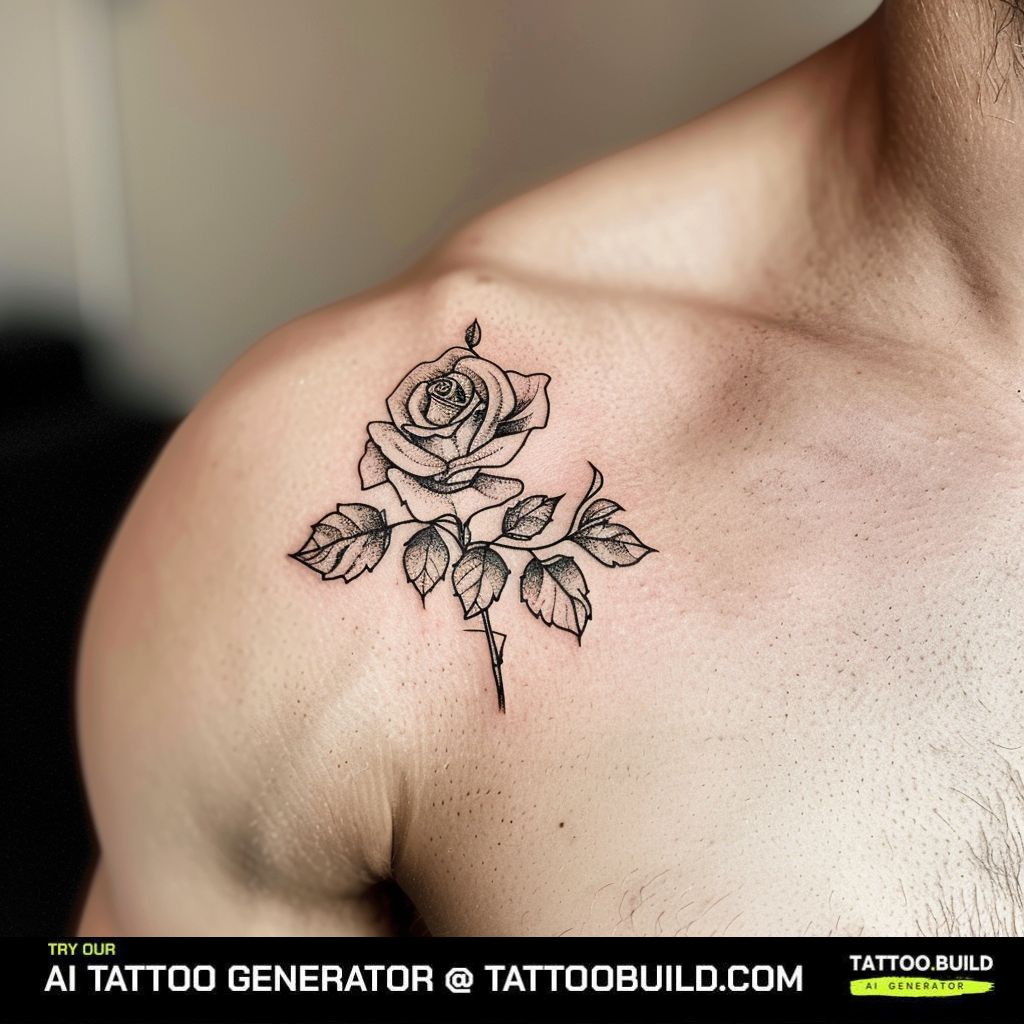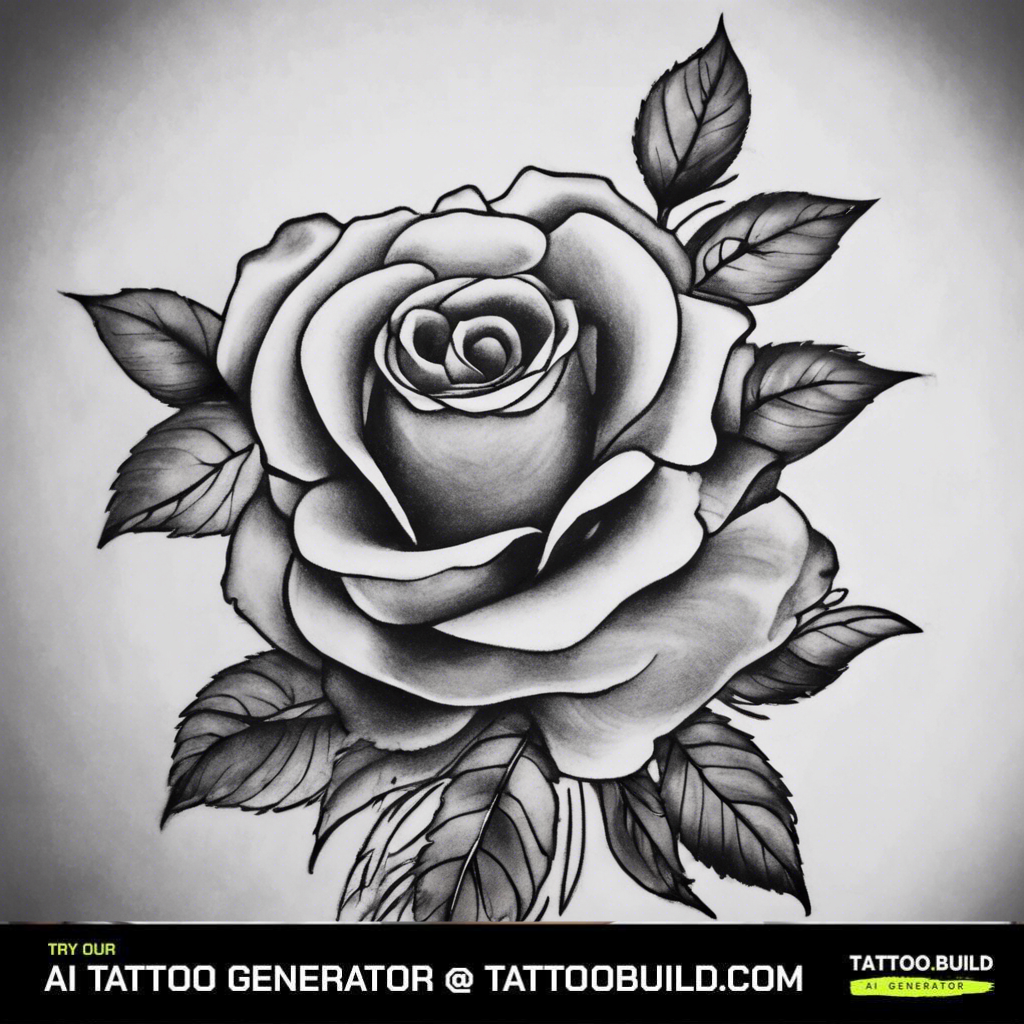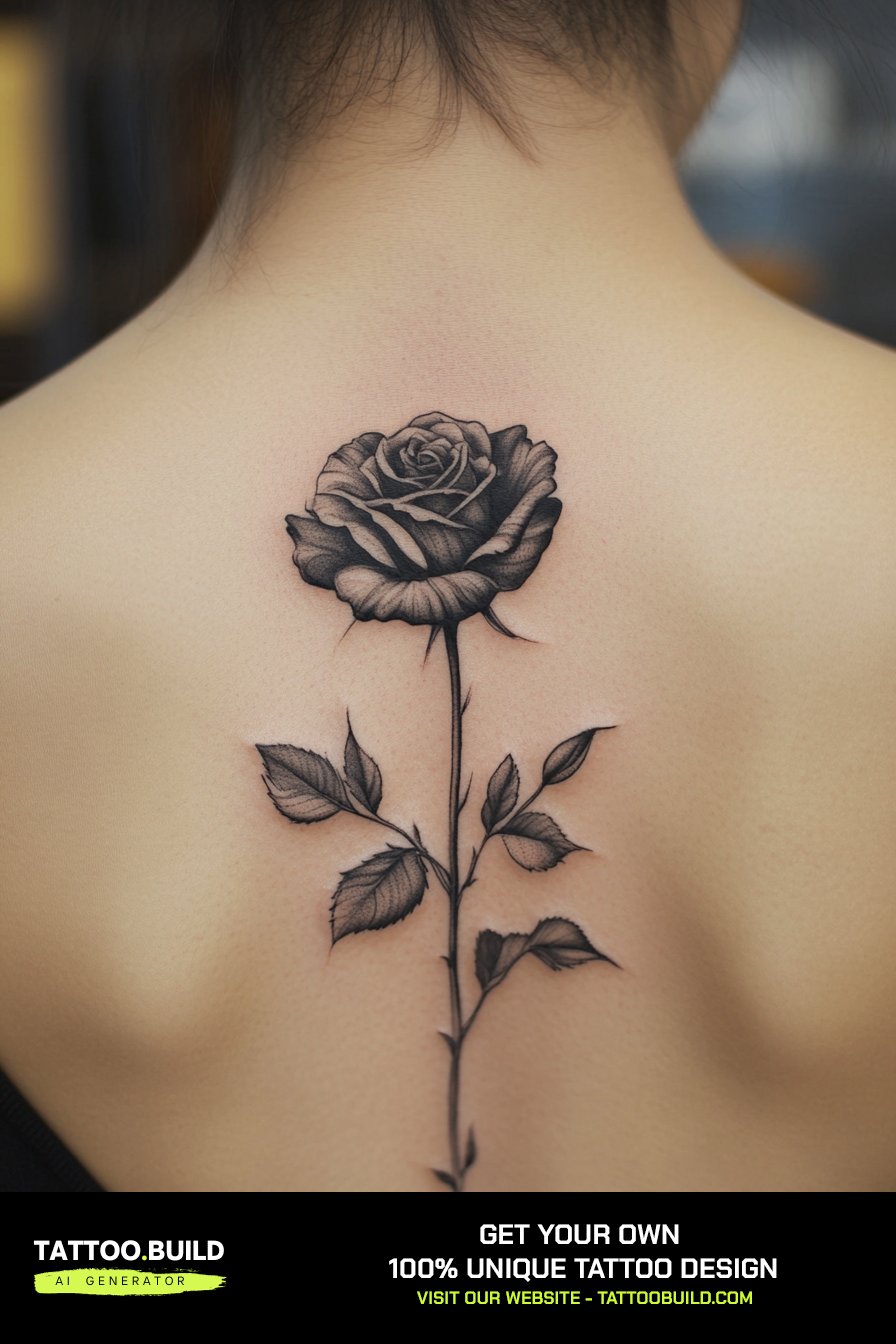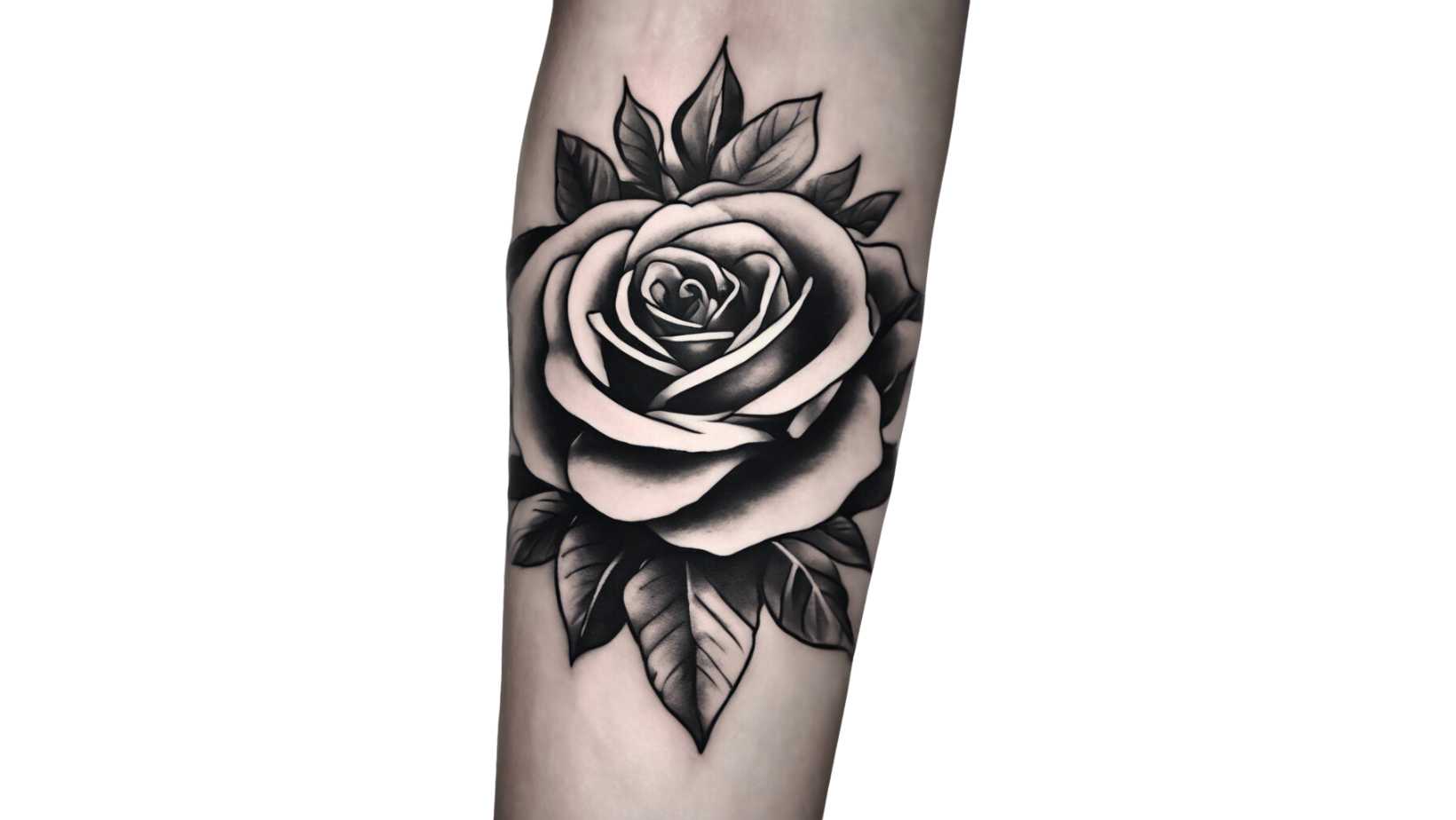
A black and white rose forearm tattoo is one of the few designs that looks equally right on a first-timer and on someone twenty tattoos deep. It is the piece I see requested more than almost anything else at the shops I visit.
Part of that is the flower itself. A rose carries love, grief, memory and defiance depending on who is wearing it, so nobody has to explain their choice.
The rest is the placement. The forearm is flat enough to hold detail, easy to show or cover, and one of the least painful spots to sit through, which is why it dominates lists of black and white forearm tattoos.
Below are seven designs worth showing your artist, plus the honest practical notes I wish someone had given me before my first grey wash piece.
Which Rose Style Is Right for You?
Black and white is not one style. It is at least five, and they age in very different ways.
| Style | Best For | Typical Sitting | How It Ages |
|---|---|---|---|
| Black & grey realism | A single statement rose, palm-sized or larger | 3–5 hours | Soft greys lift first; usually wants a touch-up around year five |
| Fine line | Small, delicate roses on the inner forearm | 1–2 hours | Thin lines can blur; the least forgiving option long term |
| Neo-traditional | Bold outlines with limited grey inside | 2–4 hours | Holds shape for decades because the outline carries the design |
| Dotwork / stipple | Textured petals without heavy black | 3–6 hours | Dots can merge as skin settles; keep the spacing open |
| Blackwork silhouette | High contrast, graphic roses | 2–3 hours | The most durable; solid black stays readable the longest |
The sitting times above are what I have seen quoted by artists for a mid-size forearm rose. Your own quote will vary with detail and with how well you sit.
What Actually Makes a Grey Rose Age Well
The thing nobody tells you at the consultation is that a black and grey tattoo is essentially a contrast drawing. When contrast collapses, the picture disappears.
Solid black is the anchor. Every rose I have seen still looking sharp after fifteen years had real black in it somewhere, usually in the leaves or the deepest petal folds.
The greys are the part that leaves. They are black ink thinned with a mixing solution, so there is simply less pigment sitting in the skin to begin with.
Sun exposure accelerates all of it, and the forearm is the most sun-exposed panel on most bodies. This is the single biggest variable you actually control.
If you like the softest possible look, go in knowing you are choosing a piece that will want maintenance. Plenty of the black and grey tattoo ideas I admire most have been touched up once or twice.
Black and White Rose Forearm Tattoo Ideas
1. Single Rose With a Thorned Stem
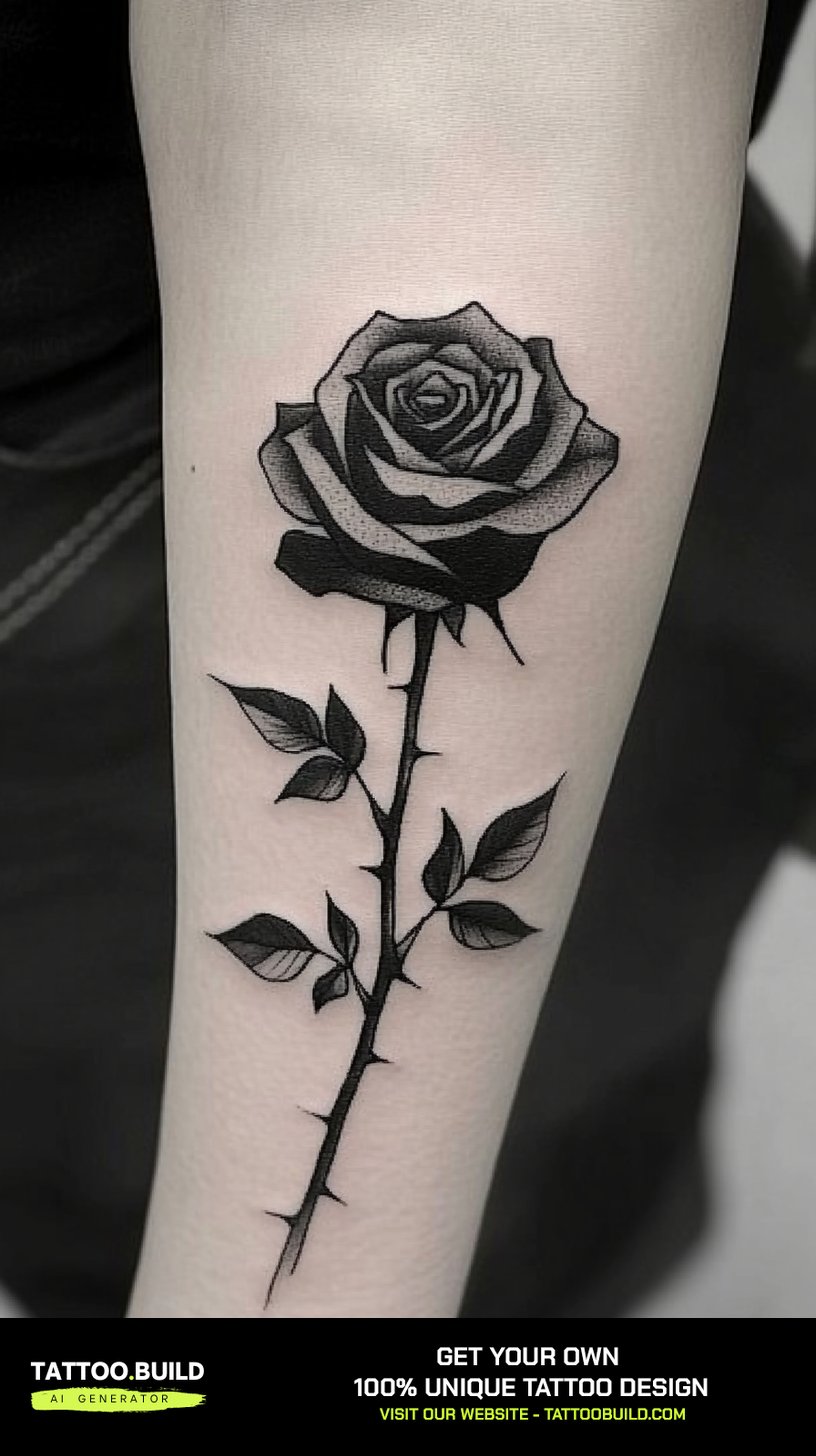
The design at the top of this guide is the classic starting point, and for good reason. One bloom in full open, a stem running with it, thorns picked out in hard black.
What makes it work is the petal shading. The artist has layered grey so the outer petals sit behind the inner ones instead of flattening into a single shape.
The thorns do more than decorate. They give the piece its only sharp edges, which stops a rose from reading as purely soft or purely pretty.
I usually suggest this to anyone getting their first floral piece. It sits comfortably in a three to four inch footprint, needs one session in most cases, and reads clearly from across a room even years later. If you want it darker still, a heavily shaded black rose takes the same layout and pushes the mid-tones much deeper.
2. Monochrome Rose Framed by Dark Leaves
Here the leaves do the heavy lifting. They are inked far darker than the flower, which throws the bloom forward without the artist having to add a single extra line inside it.
This is a trick worth asking for by name. Framing with black is how you get a rose to look bright on skin, because there is no white ink involved — the light tones are just your own skin showing through.
The petals stay relatively open, with texture rather than solid fill. On the forearm that openness helps the piece breathe.
In my experience this style holds up better than heavy internal shading, because the contrast lives in the outline and the leaf mass rather than in fragile mid-greys.
3. Small Rose Near the Wrist
Not every rose needs to fill the arm. This one sits just above the wrist bone, crisp-lined, with dark leaves keeping it grounded.
Small black and grey work asks more of the artist, not less. There is less room for tonal transitions, so the drawing has to be right the first time.
The wrist is also a high-movement, high-friction area. Sleeves rub it, watches sit on it, and it sees a lot of sun.
Every artist I have asked about tiny florals says the same thing: keep the petal count low. Four or five clean petals will still look like a rose in a decade. Nine crowded ones will look like a grey smudge.
4. Three Roses From Elbow to Wrist
This layout uses the whole forearm as one canvas, with three blooms at different stages of opening running down the limb.
The staging is the point. A bud, a half-open flower and a full bloom is a quiet way of showing time passing without adding any text.
Deep black in the leaves separates the three so they never blur together, while the flowers themselves stay in the mid-greys.
This is a two-session piece for most artists. Note how the stems connect the blooms rather than floating them independently — that connective line is what turns three tattoos into one, and it is the same principle behind rose vine tattoos and what they mean.
5. The Full-Width Wrapping Rose
One enormous rose, wrapping from the inside of the arm around toward the outside. The petals are soft, shaded with real skill, and the veined leaves fill everything left over.
Scale changes what is possible. At this size an artist can build genuine depth, with petals that curl back on themselves and cast their own shadows.
The wrap is what makes it a commitment. Once a design crosses the inner arm you are into softer, more sensitive skin, and the sitting gets noticeably harder.
If you are considering this, book a consultation before you book the tattoo. A piece this size should be drawn to your specific arm, not picked off a flash sheet.
6. Stacked Bouquet in Deep Shadow
Three roses stacked along the arm, built almost entirely from deep grey rather than outline. The effect is closer to a charcoal drawing than a traditional tattoo.
Look at how little hard line there is. The petal edges are defined by tonal change, which is the hallmark of a realism-trained artist.
This is the most technically demanding design on the list, and the one I would be most careful about choosing an artist for. Ask specifically to see healed photos, not fresh ones.
Fresh black and grey always looks incredible. Healed black and grey is the honest test, and any artist confident in this style will have those photos ready.
7. Roses Spiralling Around the Forearm
A continuous band of roses in varying sizes, twisting around the limb so the design reveals itself as the arm turns.
Varied scale is what stops a wrap from looking like wallpaper. Large blooms anchor it, smaller ones fill the transitions.
Leaves peek out from behind the flowers to add depth, and the negative gaps between elements are as considered as the elements themselves.
Practically, this is the closest thing on the list to a half sleeve and should be planned like one. Expect multiple sessions, and expect your artist to draw directly on your skin at the start.
Variations Worth Considering
If none of the seven is quite right, these are the directions people most often take the idea.
Adding a Single Element
A dagger, a moth, a compass or a name in fine script placed alongside the rose changes the whole reading of the piece. Skulls are the most common pairing, and skull and rose designs have their own long tradition in tattooing.
Keep the addition smaller than the rose. When two elements compete for attention, neither one wins.
Changing the Placement
The inner forearm is more private and hurts more. The outer forearm is more visible and sits easier. The wrist is the most exposed to sun and friction of the three.
Vertical orientation suits single roses. Horizontal or diagonal suits stems and vines, because the line has somewhere to travel.
Shifting the Contrast
The same drawing can be executed light and airy or dark and heavy. Softer versions read gentler and are popular among the black rose tattoos for women I have seen, while the heavier end of the range shows up most often in the dark rose tattoos for men category.
Neither is more correct. But be aware that lighter work is the version that needs maintenance sooner.
Practical Tips Before and After the Chair
Eat properly and hydrate the day before. A long shading session is genuinely draining, and low blood sugar makes the whole thing worse.
For the first two to three weeks, keep it clean, keep it lightly moisturised, and keep it out of pools and baths. The American Academy of Dermatology publishes straightforward guidance on caring for tattooed skin that is worth reading before your appointment.
After it heals, sunscreen is the highest-return habit for a forearm piece. Nothing else you do preserves grey shading as effectively. The Mayo Clinic also outlines the general risks worth understanding before any tattoo, and the U.S. Food and Drug Administration has consumer guidance on inks.
If something looks wrong — spreading redness, swelling that increases after day three, heat, pus or fever — see a doctor rather than an internet forum. Infections and ink allergies are treatable, but only if you get them looked at. Nothing in this article is medical advice, and no aftercare routine replaces a professional opinion.
Still Not Sure? Common Mistakes to Avoid
Going too small is the mistake I see most. A rose shrunk past its detail threshold stops looking like a rose within a few years.
Choosing an artist by price rather than portfolio is the second. Black and grey realism is a specialism, and browsing rose tattoo drawings will quickly show you the gap between a good drawing and a good tattoo.
Rushing the stencil is the third. If the placement feels even slightly off when it is drawn on, say so — that is exactly what the stencil stage exists for.
And finally, not thinking about what comes next. If there is any chance you will extend this into a sleeve later, tell your artist now so the composition leaves room. More forearm tattoo ideas are worth browsing with that in mind.
Frequently Asked Questions
Does a black and white rose forearm tattoo hurt?
The outer forearm is one of the gentler spots on the body, and most people I have sat beside describe it as a persistent scratch rather than sharp pain. The inner forearm is softer skin and tends to sting more, especially near the elbow ditch and the wrist. Long shading passes are usually more tiring than painful. If you are anxious about it, book a shorter first session and see how your body responds before committing to a full wrap.
How long does a black and grey rose take to heal?
The surface usually looks settled in about two to three weeks, with peeling and itching through the first ten days or so. The deeper layers keep repairing for a couple of months, which is why a grey wash can look patchy before it evens out. Do not judge the shading until at least the six-week mark. Follow your artist’s aftercare sheet, and see a doctor if you notice spreading redness, heat, or discharge.
Will a black and white rose fade faster than a colour one?
Not necessarily, but it fades differently. Solid black is the most stable pigment in a tattoo and tends to hold its shape well, while soft grey washes are diluted black and lift sooner, especially on skin that gets a lot of sun. The forearm is exposed almost every day, so sunscreen genuinely matters here. Expect a touch-up on the lightest greys somewhere in the first five to eight years.
What size should a forearm rose be?
As a rough guide, a single realistic rose reads best at around three to five inches tall, which fills the width of most forearms without crowding it. Anything much smaller starts losing the internal petal detail that makes a black and grey rose work. If you want something delicate, ask for fewer petals and more open space rather than shrinking the whole design. Your artist will usually make a paper stencil so you can see the scale on your own arm before anything permanent happens.
Can a black and white rose cover an older tattoo?
Sometimes, and roses are a popular cover-up choice precisely because their petals give an artist a lot of dark shapes to hide old ink under. It depends entirely on how dark and how large the existing piece is. Bring the old tattoo to a consultation rather than guessing from photos, and be open to a bigger design than you first pictured. A good artist will tell you honestly if laser lightening first would give a better result.
Quick Summary
- The forearm is flat, visible and relatively low-pain, which is why it suits roses so well.
- Black and white covers at least five distinct styles, from fine line to blackwork silhouette.
- Solid black is what keeps a grey rose readable in the long term.
- Soft grey washes lift first and will usually want a touch-up within five to eight years.
- Aim for roughly three to five inches for a single realistic rose; fewer petals beats crowded ones.
- Ask any artist for healed photos, not fresh ones, before booking black and grey realism.
- Sunscreen after healing is the single most effective thing you can do to preserve shading.
- See a doctor, not a forum, if healing looks or feels wrong.