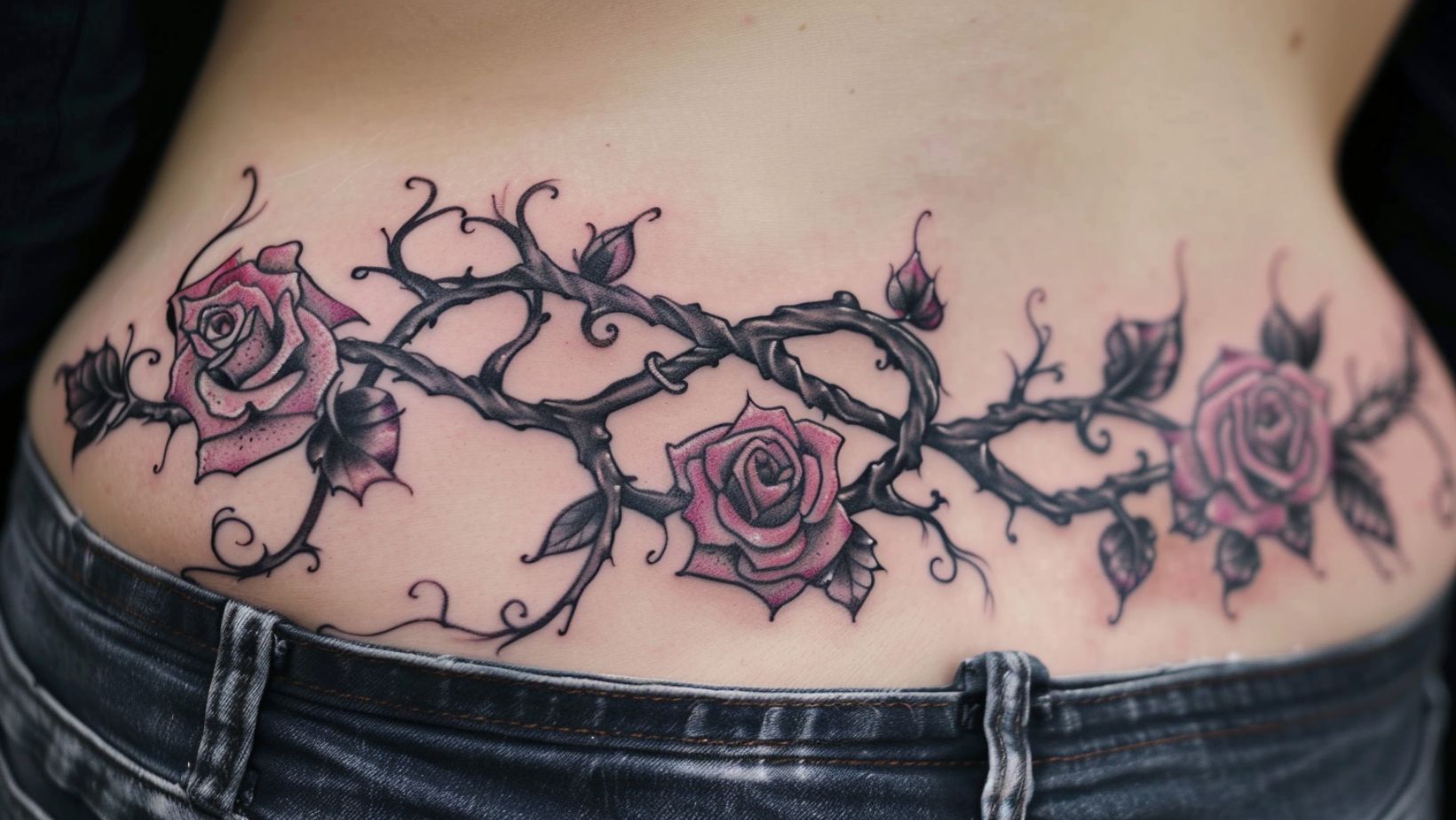
A rose vine tattoo is not just a rose with a stem attached — it is a design about continuity, where the flower carries the meaning and the vine carries the story of how you got there. That distinction matters more than most people realise when they walk into a shop.
I have sat through a lot of consultations for this design, and the same thing happens almost every time. Someone arrives with a photo of a single rose, and twenty minutes later they are drawing a line up their own forearm with a finger, because what they actually wanted was the movement.
So this guide covers the real symbolism behind rose vine tattoos, how the meaning shifts with colour and placement, what the piece costs you in time and pain, and the mistakes I see people make with it. If you are still gathering references, our wider collection of rose tattoo ideas is a good place to start.
Fair warning: some of this is opinion built from watching these heal, not universal law. I will flag it where that is the case.
Which Rose Vine Style Is Right for You?
The style you pick changes the meaning almost as much as the subject does. Here is how the four most common approaches actually compare.
| Style | Reads As | Ages | Best For |
|---|---|---|---|
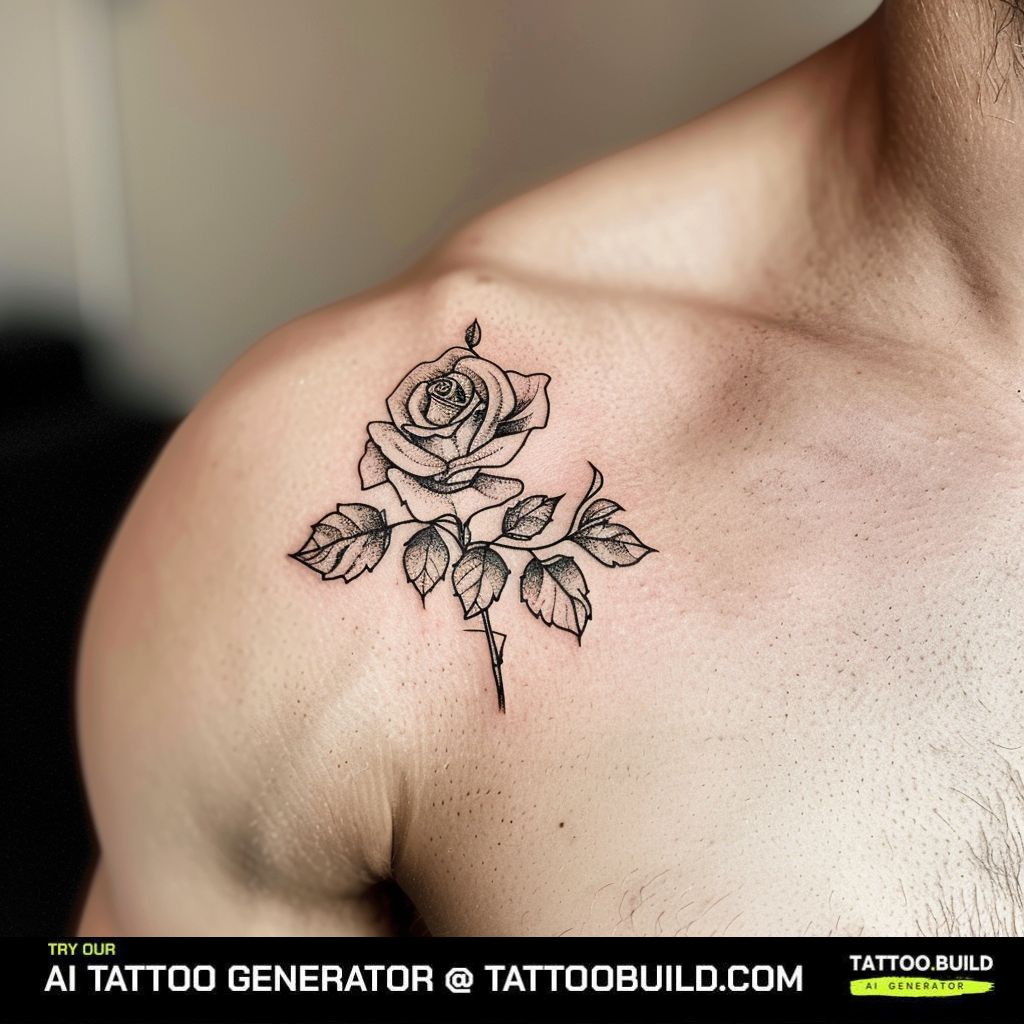
| Fine line | Delicate, modern, quiet | Softens fastest; may want a touch-up within a few years | Inner arm, ribs, small first pieces |
| Blackwork / bold | Graphic, permanent, confident | Holds its shape longest of the four | Forearm, calf, anything you want readable at a distance |
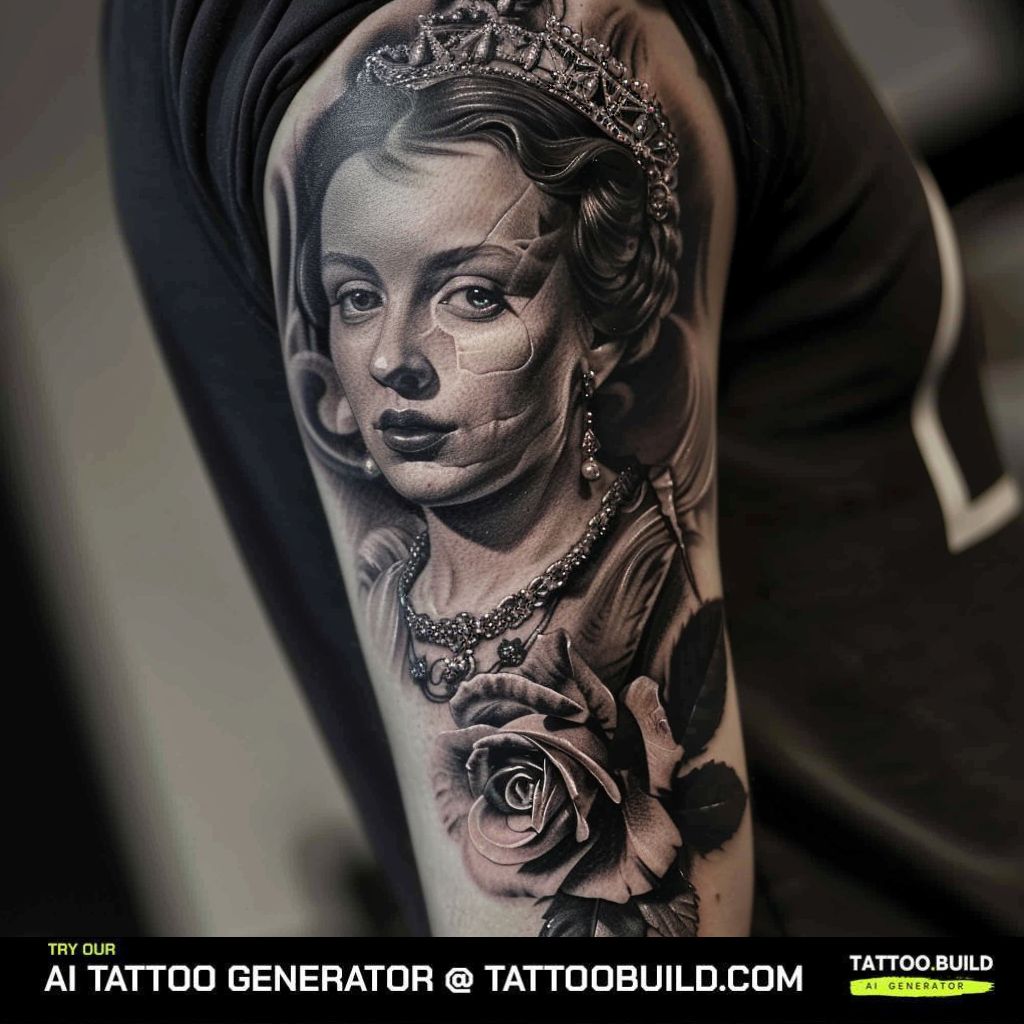
| Black and grey realism | Romantic, heavy, personal | Well, if the artist left contrast in the shading | Thigh, back, upper arm — anywhere with room |
| Traditional colour | Classic, loud, unmistakable | Very well; bold outlines do the work | Outer arm, chest, shoulder |
If you cannot decide, my honest advice is to pick by placement first and style second. The body part you choose narrows the field faster than any mood board will.
What Actually Gives a Rose Vine Tattoo Its Meaning
Two elements are doing the work here, and they say different things.
The rose is the older symbol by a long way. Across European art it has stood for love, beauty, secrecy and martyrdom depending on the century, and that layered history is documented well in the record of rose symbolism.
The vine is the newer addition, and it is the part most people underestimate. A vine implies time passing — it grew from somewhere to somewhere, which is why these pieces so often mark a stretch of life rather than a single event.
Put them together and you get a symbol of something beautiful that survived the process of getting there. That is the reading I hear most often when I ask people why they chose it.
The thorns are the third variable. Leave them off and the piece skews gentle and romantic; put them on and it becomes a statement about cost, protection or a period you would not repeat.
None of this is fixed, though. Your reason overrides the tradition every time, and any decent artist will build the design around your meaning rather than the dictionary one.
Rose Vine Tattoo Meanings, Broken Down by Element
Below are the readings that come up again and again, and what changes each one.
The Vine as Growth Over Time
A vine cannot exist without having travelled. That is the whole point of it as a symbol.
When someone asks for a vine rather than a stem, they are almost always marking a distance — recovery, a relationship, a decade, a move. In my experience this is the single most common reason people choose the design over a standalone rose.
Artists reinforce it by varying the flowers along the run: a tight bud at the start, a half-open bloom in the middle, a full rose at the end. It reads as a timeline without needing a single date.
If you want that progression legible, tell your artist before they draw, because a vine with three identical roses says something quite different.
Thorns, Protection and the Harder Reading
Thorns change the tone of the piece more than any other detail.
On a rose vine they usually mean one of two things: that beauty came at a cost, or that the wearer is not as soft a target as the flowers suggest. Both are legitimate and both are common.
I have also seen thorns used purely as a design device, because they break up long empty sections of stem and give the eye something to catch on. Not every thorn is a statement.
If the harder reading is not what you want, ask for smooth stems and rounded leaves instead. It is a small change on paper and a large one in how the finished tattoo feels.
Colour and What It Shifts
Red is the obvious choice and carries the obvious meaning — love, passion, sometimes grief.
Black and grey is the more popular request now, and it moves the piece away from romance and toward memory. Every artist I have asked says the same thing: black and grey roses are what people pick when the tattoo is about a person who is gone.
White or unshaded roses tend to read as remembrance or new beginnings, though on skin they rely entirely on negative space and outline, so they need a confident hand.
Yellow, purple and blue roses carry looser associations — friendship, enchantment, the unattainable. These are worth discussing with your artist rather than assuming, since the reading varies a lot by region. Our guide to black shaded rose tattoos covers the monochrome end in more depth.
Placement Changes the Message
Where the vine runs is not a neutral decision.
A vine down the spine is private and vertical — you choose who sees it. A vine wrapping the forearm is public and constantly in your own eyeline, which people often describe as the point.
Thigh and calf placements let the vine curve, which suits fuller roses and heavier shading because there is room to breathe. If you are drawn to that, rose tattoo designs for the thigh shows how the curve is usually handled.
The rule I would give anyone: pick the placement that matches how public you want the meaning to be, then let the artist fit the design to it rather than the other way round.
The Spine Vine, Specifically
Spine placements deserve their own note because they behave differently from everything else on this list.
The vine gets a long, straight, uninterrupted run, which is exactly what the design wants, and the symmetry of the body does half the composition for you.
The trade is that spine sessions sit directly over bone and most people find them among the sharper tattoo experiences. Nobody I have spoken to describes it as easy, and it is worth planning a shorter first session.
It also tends to be a multi-sitting piece if the vine runs the full back. Budget for that in both money and healing time. There are more layouts in our vine spine tattoo guide and in the black rose spine tattoo collection.
Rose Vines on Men
There is a persistent idea that rose vines are a feminine design. It does not hold up.
Traditional American tattooing has carried roses since its earliest sailor-era flash, and the bold-outline versions read as classic rather than delicate on almost anyone.
What tends to change is the styling: heavier linework, more shadow, thicker leaves, thorns left in. The vine stays, the softness goes. Darker rose tattoo styling shows the difference clearly.
In my experience the men who hesitate on this design end up happiest when they commit to the bold version rather than shrinking it.
Combining Roses with Other Symbols
A vine is essentially a spine for other imagery, which is why it gets combined so often.
Names, dates, birth flowers, small animals and skulls all get worked into the run. The vine holds them together so the result reads as one tattoo instead of a collection.
The classic pairing is the rose and skull, which sets beauty directly against mortality — there is a full breakdown in our flower and skull tattoo meaning guide.
My one caution: every element you add takes space from the roses. Two strong elements usually beat four competing ones.
Variations Worth Considering Before You Commit
If the standard rose vine is not quite it, these are the versions people usually land on instead.
Single Stem Instead of a Vine
A cut stem with one or two roses is a shorter, quieter statement and costs a fraction of a full vine.
It also suits placements that cannot support a long run, like a wrist or an ankle.
Swap the Rose for Another Bloom
The vine structure works with almost any flower, and the meaning travels with the bloom you pick.
Orchids, lilies and peonies all sit on a vine well. Our orchid spine tattoo guide shows how the same layout reads with a different flower.
Wrapping Vine Instead of Straight Run
A vine that spirals around a limb creates depth because parts of it disappear behind the arm or leg.
It is harder to draw and harder to tattoo, so expect a longer design phase. The vine arm tattoo examples cover this approach.
Negative Space Vines
Instead of drawing the vine, the artist shades around it and lets untouched skin form the shape.
Striking on darker skin tones and on heavily tattooed areas, but it needs an artist who has done it before — ask to see healed photos, not fresh ones.
Practical Advice Before and After the Session
Bring a reference for the flow, not just the flower. A photo of a vine on a completely different body part is still useful if it shows the curve you want.
Ask your artist to draw the stencil directly on your skin if the piece is large. A vine that looks balanced on paper can sit wrong on a moving limb, and stencil-on-skin catches that before the needle does.
Book the long placements across multiple sessions rather than one marathon. Sitting past your limit is how line quality drops, and most artists will tell you the same.
For healing, follow the aftercare your artist gives you rather than anything you read online, including this page. The American Academy of Dermatology tattoo aftercare guidance is a solid general reference, and Mayo Clinic’s overview of tattoo risks covers infection and allergic reaction plainly.
If a healing tattoo becomes hot, increasingly painful after the first few days, swollen, or starts weeping, contact your artist and see a doctor — that is a medical question, not a design one, and nothing on this page substitutes for professional care.
Common Mistakes — and What to Do If You Are Still Not Sure
The mistake I see most is packing too many roses into too short a vine. The piece stops reading as a vine and starts reading as a hedge.
The second is going too fine on a placement that gets sun and friction. Delicate linework on a forearm needs realistic expectations about touch-ups.
The third is treating the vine as filler between the roses. It is the connective tissue of the whole design and deserves as much drawing time as the flowers.
Still undecided? Look at how the design sits on different placements before you commit — rose tattoos on the back shoulder is useful for seeing scale and flow at a glance.
Frequently Asked Questions
What does a rose vine tattoo symbolise?
Most commonly it symbolises growth through difficulty — the rose carries beauty, love or memory, and the vine carries the passage of time it took to get there. Thorns add a layer about cost or protection. The reading shifts with colour, with black and grey usually leaning toward remembrance and red toward love. Your own reason for the tattoo always outweighs the traditional meaning.
Do rose vine tattoos hurt more than other designs?
The design itself is not unusually painful, but the placements it suits often are. Spine, ribs and ankle work sits close to bone and most people find those sharper than fleshier areas like the outer thigh or upper arm. Length is the bigger factor for a vine, since a long run means a long session. Splitting it across sittings is the usual solution.
How much does a rose vine tattoo cost?
It depends almost entirely on size, detail and your artist’s rate, so any figure quoted online is close to meaningless. Small single-stem pieces are typically a shop-minimum job, while a full spine or leg vine is a multi-session commitment. Ask for a quote at consultation rather than budgeting from a blog. Booking a good artist at a higher rate is generally cheaper than a cover-up later.
Are rose vine tattoos only for women?
No. Roses have been a staple of traditional Western tattooing across all genders since its earliest flash sheets. What usually differs is styling rather than subject — heavier outlines, deeper shadow and thorns left intact read differently from fine line versions. The vine structure works either way.
Can a rose vine tattoo be added to over time?
Yes, and it is one of the design’s real strengths. A vine can be extended, given new blooms, or grown into a sleeve later, provided the original artist left the ends open rather than closing the composition. Mention this at your first consultation if you think you may want to expand it. Not every layout accommodates it, so it is worth deciding early.
Quick Summary
- The rose carries beauty, love or memory; the vine carries time and growth.
- Thorns shift the tone toward cost and protection — leave them off for a softer read.
- Black and grey usually reads as remembrance; red reads as love or passion.
- Pick your placement first, then let the style follow the body part.
- Spine and rib placements sit over bone and tend to be sharper sessions.
- Vary the blooms along the vine if you want it to read as a timeline.
- Ask for the stencil on skin for any large piece before the needle starts.
- Leave the ends of the vine open if you may want to extend it later.
Stuck on Rose Vine Tattoo Ideas?
If you cannot picture the layout yet, describing it is often easier than drawing it. TattooBuild’s AI tattoo image generator turns a written description into reference concepts you can bring to a consultation.
It is a starting point for the conversation with your artist, not a replacement for one. Try the studio and take the results to a professional.