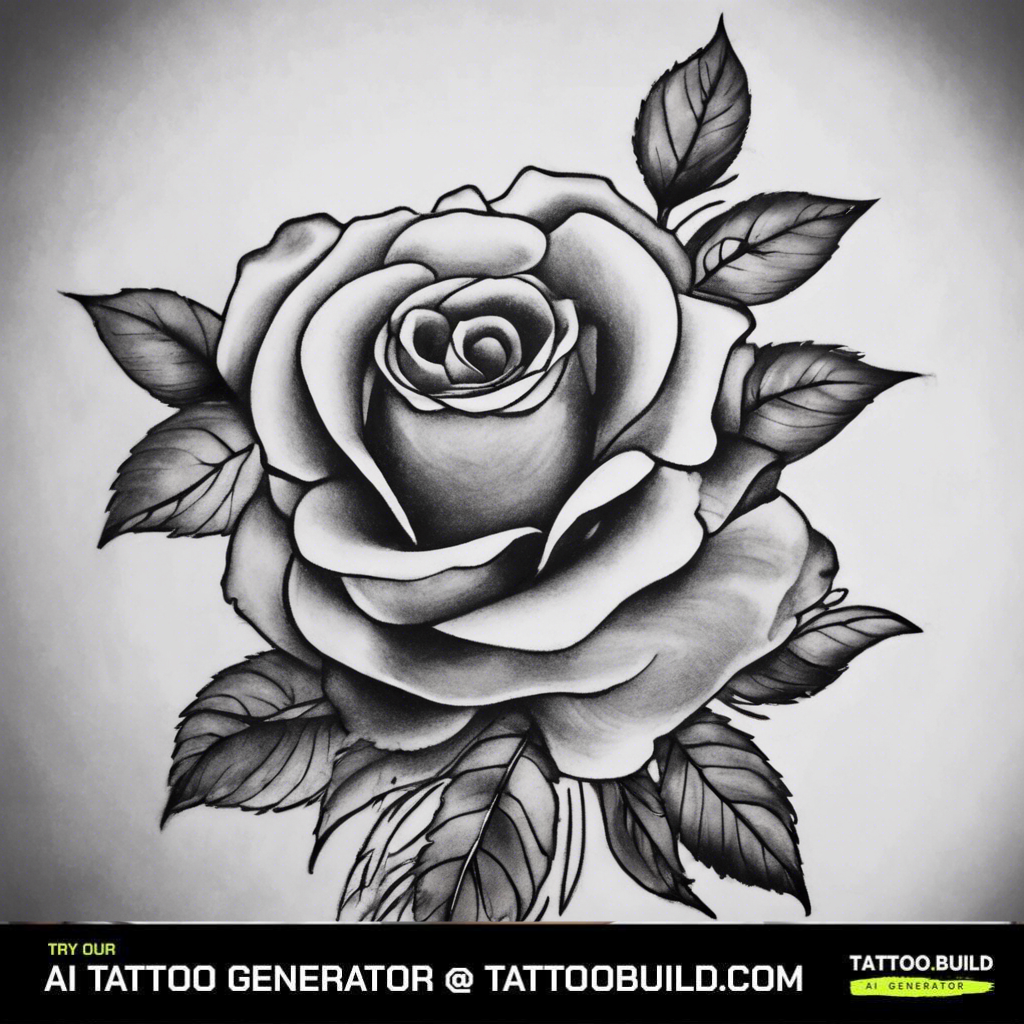
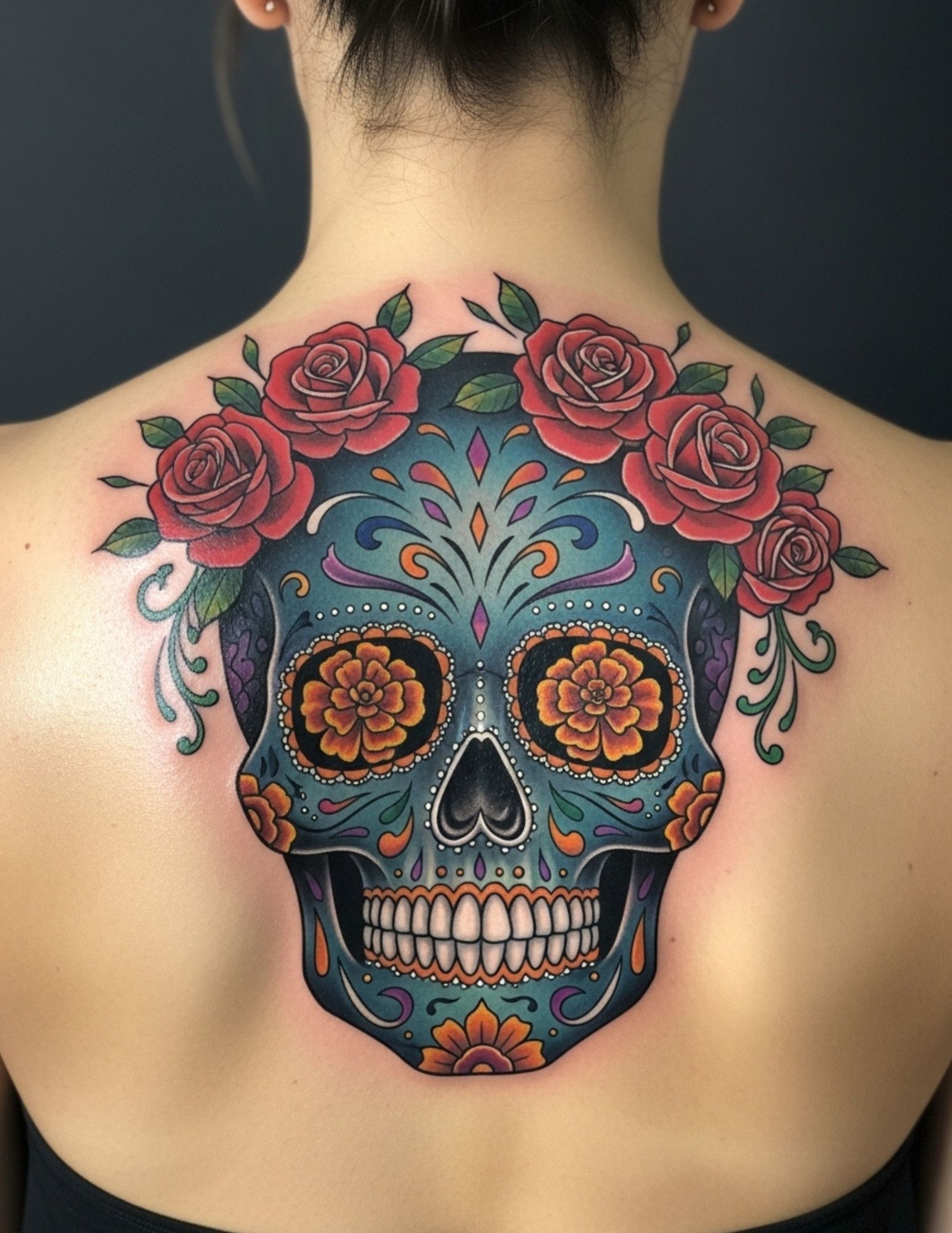
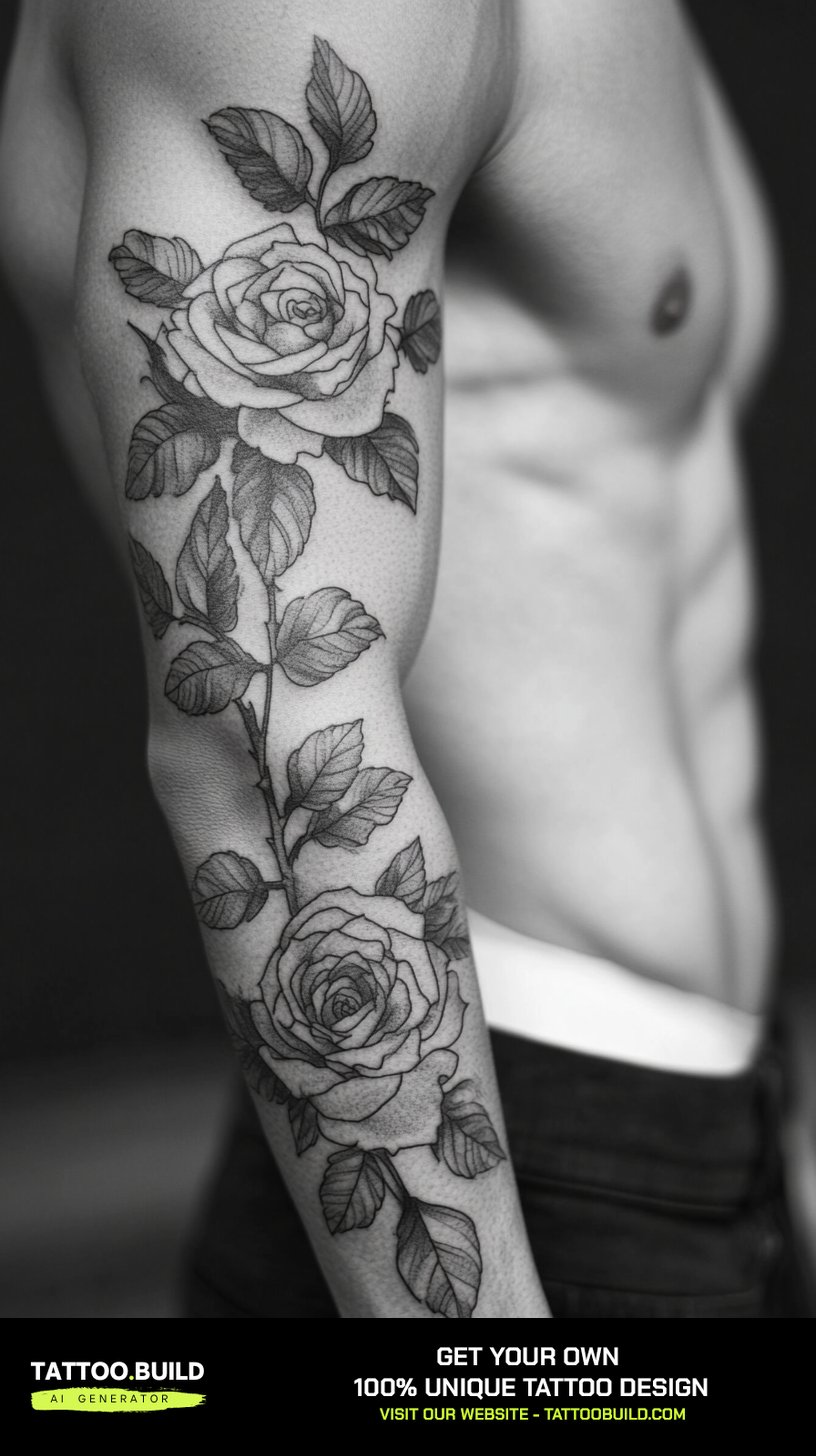
The thigh is the single most forgiving place on the body to put a rose — it gives you a big, flat, gently curved canvas, it heals out of the way of most clothing, and it lets a bloom be drawn at a size where the petals actually read.
I have sat in on and photographed a lot of leg work over the years, and roses come up more often on the thigh than anywhere except the forearm. There is a reason for that.
A rose on a wrist has to be shrunk until the shading turns into a grey smudge. On a thigh you can give the same drawing four or five inches of room, and suddenly the petal edges, the curl of the leaves and the depth in the centre of the bloom all survive the healing. If you are still deciding on subject matter rather than placement, our wider roundup of rose tattoo ideas is a good place to start before you commit to the leg.
Below are 30+ rose thigh tattoo designs pulled together by style, plus the practical stuff nobody tells you until you are already in the chair — how long it takes, how much it hurts, and which of these styles will still look like a rose in fifteen years.
Which Rose Thigh Tattoo Style Is Right for You?
Most of the decision comes down to three things: how much contrast you want, how many sessions you are willing to sit, and how the piece will age. Here is the honest version.
| Style | Best For | Typical Sitting | How It Ages |
|---|---|---|---|
| Black & grey realism | A single large statement bloom | 3–5 hours for one rose | Softens gradually; usually still readable decades on |
| American traditional | Bold, unmistakable, low-maintenance | 2–3 hours for one rose | The most reliable of the lot — heavy line, solid colour |
| Neo-traditional | Bold line with a softer, muted palette | 4–6 hours | Well, provided the line weight is genuinely bold |
| Fine line | Delicate, understated, easily covered | 1–3 hours | Softest of the group; may need a touch-up sooner |
| Watercolour | Colour-forward, painterly pieces | 3–5 hours | Best when built over a black foundation, not floated alone |
| Blackwork / ornamental | Wrapping the whole thigh | Multiple sessions | Very well — high contrast is what survives |
If you take one thing from that table, take this: contrast is what survives, not detail. Every artist I have asked says the same thing in slightly different words.
Why the Thigh Works So Well for Roses
Skin on the thigh is thick, relatively stable and mostly flat across the front and outer surfaces. That combination is unusually kind to detailed work.
It also does not fold the way an elbow ditch or a knee does, so the drawing you approve on paper is close to the drawing you get on skin.
There is a practical argument too. A thigh piece is invisible under almost anything except shorts and a swimsuit, which matters more than people admit when they are three months from a new job. That privacy is a big part of why thigh tattoos for women have stayed so consistently popular.
The trade-off is that thigh skin moves. It is one of the areas most affected by weight change, pregnancy and muscle gain, and heavy stretching can distort a design over time. No artist can promise otherwise.
It is also a slower heal than an arm in my experience — the area rubs against clothing, sweats under a waistband and gets sat on. Plan for a couple of weeks of being a bit careful.
30+ Rose Thigh Tattoo Designs, Grouped by Style
The galleries below are grouped so you can find your lane quickly rather than scrolling past forty images hoping something clicks.
1. The Single Statement Rose
One bloom, drawn large, placed on the front or outer thigh. This is the design I recommend most often to people getting their first big piece.
It works because there is nothing to hide behind. A good artist can make a single rose carry an entire thigh with petal depth alone, and a mediocre one cannot fake it.
Sizing matters more than anything here. Under about four inches the interior shading starts fighting itself; somewhere between five and seven inches across is where these look right on most adult thighs.
Ask for the stem to break the outline of the bloom rather than sitting neatly underneath it — it stops the tattoo reading as a sticker.
2. Black and Grey Roses
Black and grey is the safest bet on a thigh and, to my eye, the best-looking one after ten years.
There are two sub-approaches worth knowing. Grey wash uses diluted black for soft, photographic gradients. Whip shading and stipple build the same darkness out of texture instead, and it holds up slightly better on skin that stretches.
In every healed piece I have looked at closely, the grey-wash roses had lightened by a shade or two but kept their shape. The blackwork sections had barely moved.
If you like the look but want more graphic punch, black rose tattoos for women pushes further into solid fill.
3. Fine Line and Micro-Realism Roses
Fine-line roses use a single needle or a very tight grouping to draw the bloom in outline, with minimal shading.
They are quieter, quicker to sit, and much easier to hide. They are also the least forgiving of a mediocre artist and the most likely to need a touch-up.
One honest caveat: very thin lines placed close together can blur into each other over years as ink spreads slightly under the skin. Leaving deliberate white space between petals is how good fine-line artists design around that.
Look through fine line tattoo ideas before booking, and pick someone whose healed photos you like — not just their fresh ones.
Rose designs and the prompts behind them

An old pocket watch stopped at 4:17, its glass cracked, a single rose lying across the face
Use this idea
A swallow carrying a banner that reads "Homeward", with a red rose beneath its feet
Use this idea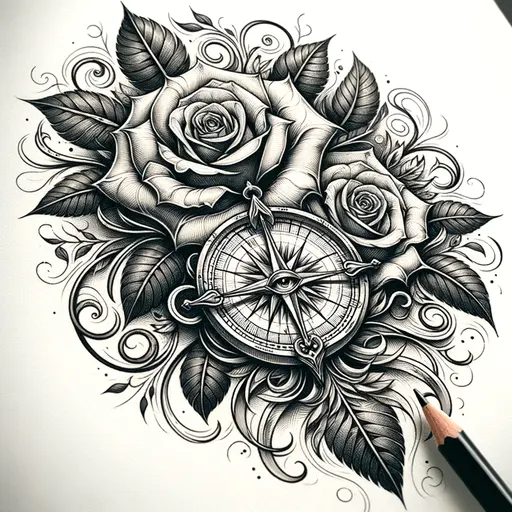
2 roses, stems with thorns, leaves compass eye of providnce
Use this idea
4. Roses on a Vine or Trailing Stem
Instead of one bloom, a vine runs the length of the thigh with two or three roses opening along it.
This is the layout that flatters the leg most, because a curve down the outer thigh follows the shape you already have rather than sitting on top of it.
It also scales beautifully. You can start with a single vine and add blooms in later sessions without the piece ever looking unfinished.
The symbolism is worth a look too — the rose vine tattoo meaning of growth and connection is a large part of why people choose this layout over a single rose.
5. Traditional and Neo-Traditional Roses
The American traditional rose — bold black outline, solid red or muted colour, minimal internal detail — is the oldest design in this article and the one most likely to still read perfectly in forty years.
Neo-traditional keeps the confident linework but widens the palette and adds more illustrative detail: dusty pinks, sages, deep plums, ornamental framing.
If you want something you will never have to explain or repair, this is the group to pick from.
The one thing to watch is line weight. A “traditional” rose drawn with thin lines gets none of the longevity benefit and all of the stylistic constraint.
6. Roses with Skulls, Snakes and Daggers
Pairing a rose with a hard object is old ground in tattooing, which is precisely why it works — the contrast between soft petals and bone or steel is a genuinely good composition.
A skull gives the piece a solid anchor point and a lot of contrast. A snake gives it a curve to follow down the leg. A dagger gives it a vertical spine.
On a thigh, all three have room to be drawn properly instead of compressed into a badge shape.
If you are sketching ideas first, these skull and rose tattoo drawings show how the two elements are usually balanced.
7. Colour Roses: Red, Watercolour and Beyond
Red is the obvious choice and still the strongest one. A properly packed red rose on a thigh is hard to beat.
Worth knowing before you commit: red pigments are the ones most often linked to allergic skin reactions, according to the Mayo Clinic’s guidance on tattoo risks. It is not common, but it is worth mentioning to your artist if you have reacted to anything before.
Watercolour roses — soft bleeds, no hard containing outline — photograph beautifully. My honest experience is that the ones that still look good years later almost always had a black or grey structure underneath doing the heavy lifting.
Browse watercolor tattoo ideas and look specifically for healed work before you decide.
8. Full Thigh Panels and Leg Sleeve Starters
At the top end, a rose design stops being a tattoo on your thigh and becomes a panel that covers it — hip to just above the knee, front wrapping to outer.
These are multi-session projects. Expect several appointments spaced a few weeks apart, and expect to pay by the session rather than the piece.
The critical thing is layout. Have the whole composition mapped before the first needle touches skin, even if you only tattoo a third of it this year.
Panels built one rose at a time without a plan are the most common regret I hear about.
Placement Variations Worth Considering
“Thigh” covers four quite different experiences. Here is how they actually differ.
Front Thigh
The flattest and most visible surface, and generally the most comfortable to sit. Best for a single large bloom you want to see without a mirror.
Outer Thigh
The classic choice for vines and trailing designs, because the natural curve of the leg does half the compositional work for you. Pain is usually mild to moderate here.
Inner Thigh
Private, dramatic, and the most painful part of the leg for most people — thin skin, close to nerves, and a spot the machine has to work at an awkward angle. It also rubs when you walk, so healing takes more care.
Back of Thigh
Underrated. It takes friction well once healed, stays hidden almost permanently, and suits designs that trail downward toward the knee.
Hip to Thigh
Starting the piece at the hip and running it down gives you the most dramatic silhouette, but the hip bone itself is noticeably sharper pain than the thigh below it.
Booking, Sitting and Healing a Thigh Piece
Wear something you can get out of easily. I have watched more than one person try to tattoo a mid-thigh design through a pair of skinny jeans and it never ends well — loose shorts or a skirt makes the whole appointment easier.
Eat properly beforehand and bring something sugary. Thigh sessions run long because there is so much surface area, and the drop in blood sugar around hour three is what actually ends most appointments early.
For healing, general medical guidance is consistent and simple: wash the area gently twice a day with plain soap and water, moisturise lightly, keep it out of the sun, and skip swimming until it has fully closed. The Mayo Clinic puts the main healing window at roughly two weeks, though a large thigh panel can take longer to settle fully.
Loose clothing is the part people get wrong. Leggings and tight jeans sit directly on a healing thigh and lift scabs; give it a week of shorts or a skirt if you possibly can.
One safety note I will not soften: if the area gets hot, increasingly painful after the first few days, or starts weeping anything cloudy, that is a doctor visit, not a message to your artist. The FDA’s tattoo fact sheet also notes that no colour additive is currently approved for injection into skin, which is a good reason to only sit with a licensed artist using sealed, single-use equipment. Nothing in this article is medical advice.
Common Mistakes — and What to Do If You Are Still Not Sure
The most common mistake by a wide margin is going too small. A rose that would look right on a forearm looks lost on a thigh, and shrinking the drawing is what turns shading into mud.
Second is booking on style rather than on artist. Almost every artist will tattoo you a rose; far fewer specialise in the specific style you have saved twenty pictures of. Ask to see healed work in that style, not fresh work.
Third is treating the first session as the whole plan. If there is any chance you will extend the piece later, say so at the consultation so the composition leaves room.
If roses are not quite it, classy feminine thigh tattoo ideas covers softer floral and ornamental options for the same placement, and the best leg tattoos for women widens the search to the whole leg.
And if the pain question is the thing holding you up, a tattoo pain chart will give you a more honest comparison between the thigh and wherever else you were considering.
Frequently Asked Questions
How much does a rose thigh tattoo hurt?
For most people the front and outer thigh sit in the mild-to-moderate range, which makes it one of the easier large placements to get through. The inner thigh is a different story and is genuinely uncomfortable for most people, since the skin is thin and close to nerves. Pain also compounds with time, so a five-hour session feels much worse in hour four than hour one regardless of placement. Everyone’s tolerance is different, so treat any pain chart as a rough guide rather than a promise.
How long does a rose thigh tattoo take?
A single fine-line rose can be done in one to three hours. A detailed black and grey bloom the size of a hand usually runs three to five hours, and a full thigh panel is a multi-session project spread over weeks or months. Ask your artist for a session estimate rather than a total, because most of them price and schedule that way. Booking two shorter sessions instead of one marathon is often the better call for a first large piece.
Will a thigh tattoo stretch or distort over time?
It can. The thigh is one of the areas most affected by significant weight change, pregnancy and muscle gain, and large shifts can distort a design. Moderate fluctuation usually causes little visible change, and designs with organic shapes like roses tend to hide movement better than geometric or lettering-based work does. No artist can guarantee a tattoo will not move, so anyone who promises otherwise is overselling.
Which rose tattoo style ages the best on the thigh?
In healed work I have looked at, American traditional and bold blackwork hold up best, because heavy line weight and solid contrast survive the gradual softening that happens to all tattoos. Black and grey realism ages well too, though it tends to lighten a shade or two. Very fine linework and unanchored watercolour are the most likely to need a touch-up within several years. If longevity is your priority, ask for bolder line weight than you think you want.
Can I get a rose thigh tattoo over a scar or stretch marks?
Often yes, but it depends on the scar. Most artists will want a scar to be at least a year old and fully settled before working over it, and raised or keloid scarring behaves unpredictably with ink. Stretch marks generally take ink, though the texture can affect how lines sit. This is a decision for an in-person consultation with your artist, and for a doctor or dermatologist if the scarring is significant.
Quick Summary
- The thigh is the most forgiving canvas for a rose because it is large, flat and mostly hidden.
- Size it properly — five to seven inches across is where a single bloom starts to read correctly.
- Contrast, not detail, is what survives the decades. Bolder line weight ages better every time.
- Black and grey and American traditional are the safest long-term bets; fine line and watercolour are the softest.
- Vines and trailing stems flatter the leg’s natural curve and let you extend the piece later.
- Front and outer thigh are comfortable; the inner thigh is the painful one.
- Plan the full composition before the first session if there is any chance of extending it.
- Heal it in loose clothing, keep it out of the sun, and see a doctor — not your artist — if it looks infected.