Fine line tattooing is the most demanding kind of quiet art I have watched artists make. A single needle leaves almost no room to hide a shaky hand, which is exactly why a well-done fine line tattoo looks like a drawing that grew out of the skin.
I have sat through fine line sessions where the artist stopped every few minutes just to re-stretch the skin, because at that line weight a millimetre of drift is visible forever.
The style suits anyone who wants a tattoo that whispers. It reads as jewellery from across a room and as detailed illustration up close, which is a combination bold traditional work simply cannot do.
Below are 15 fine line tattoo ideas I keep coming back to, with honest notes on how each one tends to age. If you like the restraint but want a broader look at the category, the minimalist tattoo ideas guide is a good companion read.
Which Line Style Is Right for You?
Fine line is one option among several, and it is not automatically the right one. This is how I explain the trade-offs to friends who are choosing between styles.
| Style | Typical Needle | How It Ages | Best For |
|---|---|---|---|
| Fine line | 1RL or 3RL | Softens gradually; usually wants a touch-up in a few years | Florals, script, constellations, small detail |
| Single needle micro | 1RL | Fades fastest of any style, especially on hands and fingers | Tiny pieces under a few centimetres |
| Illustrative blackwork | 5RL to 9RL | Holds shape well for decades | Bold botanical and animal designs |
| Traditional / American | Heavy liners plus solid fill | Ages best of all; built for it | Long-term, high-contrast pieces |
| Fine line with light stipple | 1RL plus 3RL shader | Stipple can blur before the linework does | Portraits and soft depth |
What Fine Line Tattooing Actually Is
Fine line work uses a single round liner, or a very tight grouping such as a 3RL, to lay down hair-thin lines with minimal trauma to the skin.
Because so little pigment goes in, the finished tattoo sits lighter in the skin than a bold-outlined piece. That lightness is the whole appeal and also the main compromise.
Every artist I have asked about longevity says roughly the same thing: fine line holds beautifully in low-friction, low-sun areas, and softens faster on hands, fingers, feet and the outer forearm.
The style is not new, but the current wave of it grew out of illustrative and micro-realism work, and it now shows up everywhere from botanical sprigs to lettering.
It also demands a specialist. A brilliant traditional artist is not automatically a brilliant fine line artist, because the machine setup, needle depth and pacing are different disciplines.
15 Fine Line Tattoo Ideas Worth Stealing
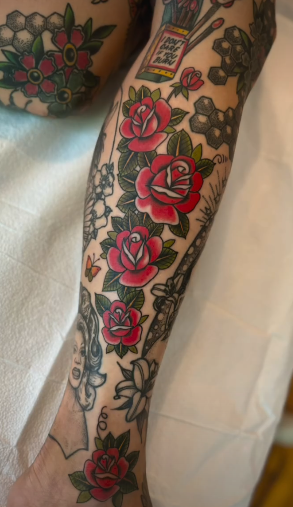
1. Delicate Rose
A fine line rose is the piece I have seen requested more than any other in this style, and there is a reason it does not get old.
The thin lines catch the curl of each petal and the taper of the leaves without the heavy black outline that makes a traditional rose read as graphic rather than botanical.
Inner wrist, collarbone and behind the ear are the classic placements. On the inner forearm it has the most room to breathe and tends to hold its detail longest.
Pair it with a short stem and two or three thorns if you want texture without adding weight. If you want the full range of options first, the rose tattoo ideas roundup covers bolder takes too.
2. Botanical Branch
Eucalyptus sprigs, olive branches and fern fronds translate into fine line better than almost anything else, because the source material is already made of thin lines.
The effect is close to a pressed botanical illustration, which is why these read as elegant rather than decorative.
In my experience a branch works best when it follows the natural line of the limb — down the forearm, along the spine, or curving over a shoulder.
Ask your artist to vary the leaf spacing slightly. Perfectly even leaves look printed; slight irregularity looks drawn.
3. Minimalist Portrait
A fine line portrait reduces a face to the few lines that carry the likeness: a jaw curve, the sweep of an eyelid, the shape of the mouth.
When it works it is the most impressive thing in the style. When it does not, it is unmistakably off, and there is no bold outline to rescue it.
This is the one design where I would tell someone to travel for the right artist rather than settle for whoever is available locally.
Ask specifically to see healed portraits, not fresh ones. Fresh fine line always looks perfect; healed fine line tells you the truth.
4. Geometric Shapes
Sacred geometry, mandalas, nested triangles and interlocking circles suit fine line because the style can hold a clean angle without thickening it.
The quiet, meditative feel of these pieces comes from symmetry, so placement matters more than usual — sternum, centre spine, or squarely on the forearm.
A good artist will stencil geometric work twice and check it in a mirror before starting. If yours does not, that is worth asking about.
Larger geometric pieces age better than tiny ones, because the negative space between lines stays legible as the lines soften.
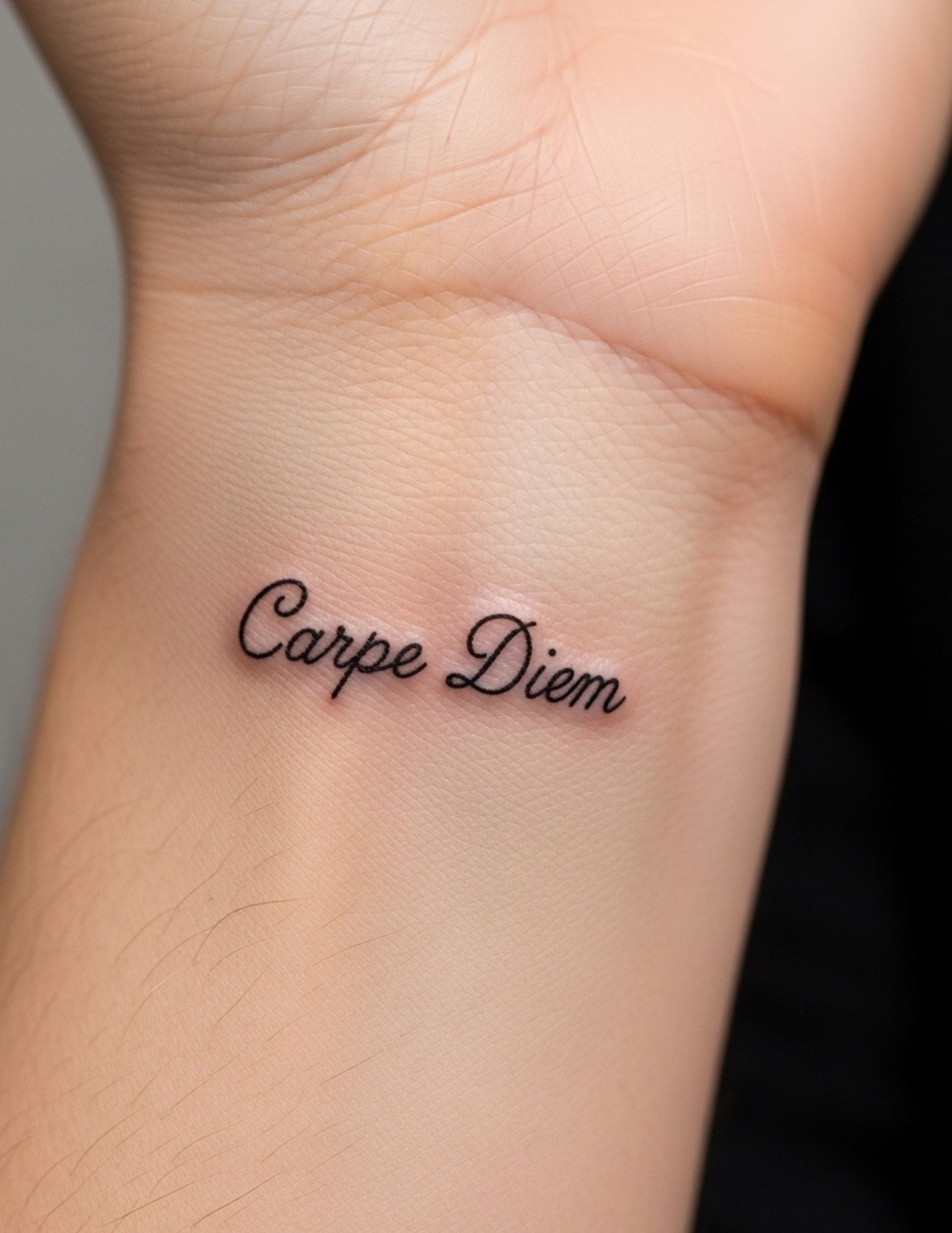
5. Script or Quote
Fine line script has an intimacy that bold lettering cannot reach. A name, a word, a short phrase — something you read up close, not across a room.
Keep it short. Long quotes in hair-thin cursive are the pieces I most often see people wanting reworked a few years later, because the letters close up as the ink settles.
Ask your artist about letter spacing specifically. Fine line lettering needs more gap between characters than it looks like it should on paper.
Inner arm and rib placements hold script well. Fingers and the side of the hand do not, no matter how good the artist is.
6. Constellation
Tiny dots joined by the thinnest possible lines — a constellation is one of the easiest fine line designs to get right and one of the hardest to get wrong.
Your birth sign is the obvious choice, but I have seen far better versions built from a date-specific sky or a constellation that simply means something to the person.
Wrist, ankle and the back of the shoulder are the common spots. The shoulder blade gives the design room to spread out.
One practical note: ask for the dots slightly larger than feels right. Single tiny dots are the first thing to fade. There are more layouts in the constellation tattoo ideas collection.
7. Butterfly
Fine line butterflies range from an almost anatomical monarch with full wing venation to a five-line outline that reads from three metres away.
The symbolism — transformation, freedom, a new chapter — is well travelled, but the fine line treatment keeps it from feeling generic.
Collarbone, sternum and the back of the arm all work. Avoid placing a detailed wing pattern anywhere that folds or creases constantly.
If you want wing detail, go bigger than you think. A butterfly under three centimetres cannot hold true venation for long.
8. Sunflower
A fine line sunflower gets the cheerfulness of the flower without the solid black fill a traditional version needs.
The petal outlines and the stippled centre give it a sketchbook quality that suits people who want something warm but not loud.
Sunflowers carry associations with loyalty and warmth, which is why I see them chosen often as a tattoo for a person rather than an idea.
The seeded centre is where fine line sunflowers usually blur first. Ask for slightly more space between the stipple dots than the reference image shows.
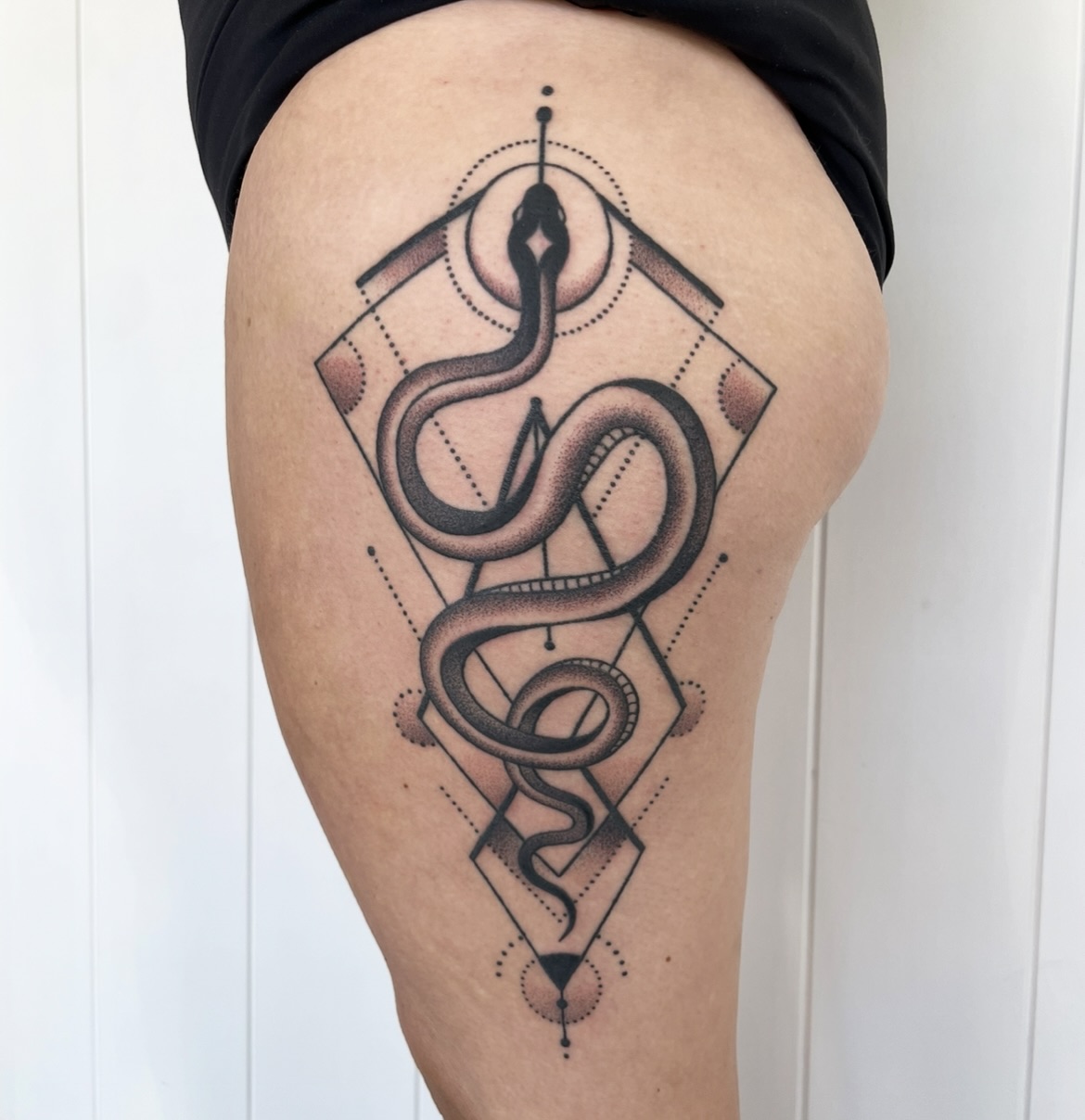
9. Snake
A fine line snake is the edgiest design that still fits comfortably in this style, because a snake’s body is already a long flowing curve.
Wrapped around an ankle, winding up a forearm, or coiled into a tight circle behind the arm — all three work, and all three read very differently.
The fine line treatment softens an image that is otherwise confrontational, which is exactly why it appeals to people who want the symbolism without the aggression.
Scale detail is the thing to discuss in advance. Suggested scales age better than fully drawn ones. See more variations in the snake tattoo ideas guide.
10. Sun and Moon
A sun and moon pairing is shorthand for balance, and in fine line it stays graphic instead of becoming a heavy black disc.
You can wear them overlapping as one piece, side by side, or split across both wrists — the split version is the one I find most people are happiest with long term.
Fine line lets you pack ray detail and lunar texture into a small footprint without the design turning into a solid mass.
If you like the celestial direction, the sun and moon tattoo ideas roundup has fuller compositions to borrow from.
11. Feather
Feathers are a natural fit here: individual barbs, the curve of the quill, the taper at the tip — all of it is thin-line work by nature.
The meanings attached to feathers vary a lot by culture, so it is worth being deliberate about which bird and which tradition you are referencing.
Collarbone, spine and inner arm all give the elongated shape somewhere to sit without crowding it.
A common request I would push back on: do not ask for every barb drawn. Suggesting the barbs and leaving gaps ages far better than filling them all in.
12. Lotus Flower
The lotus carries genuine spiritual weight across several traditions, and in fine line the layered petals unfold with a calmness that suits that.
Because a lotus is symmetrical, it wants a symmetrical placement — centred on the sternum, the middle of the back, or squarely on the wrist.
This is one of the better-ageing designs in the list. The clean concentric lines stay legible even once they soften.
Ask about petal overlap. Where two petal lines nearly touch is where the ink is most likely to run together over time.
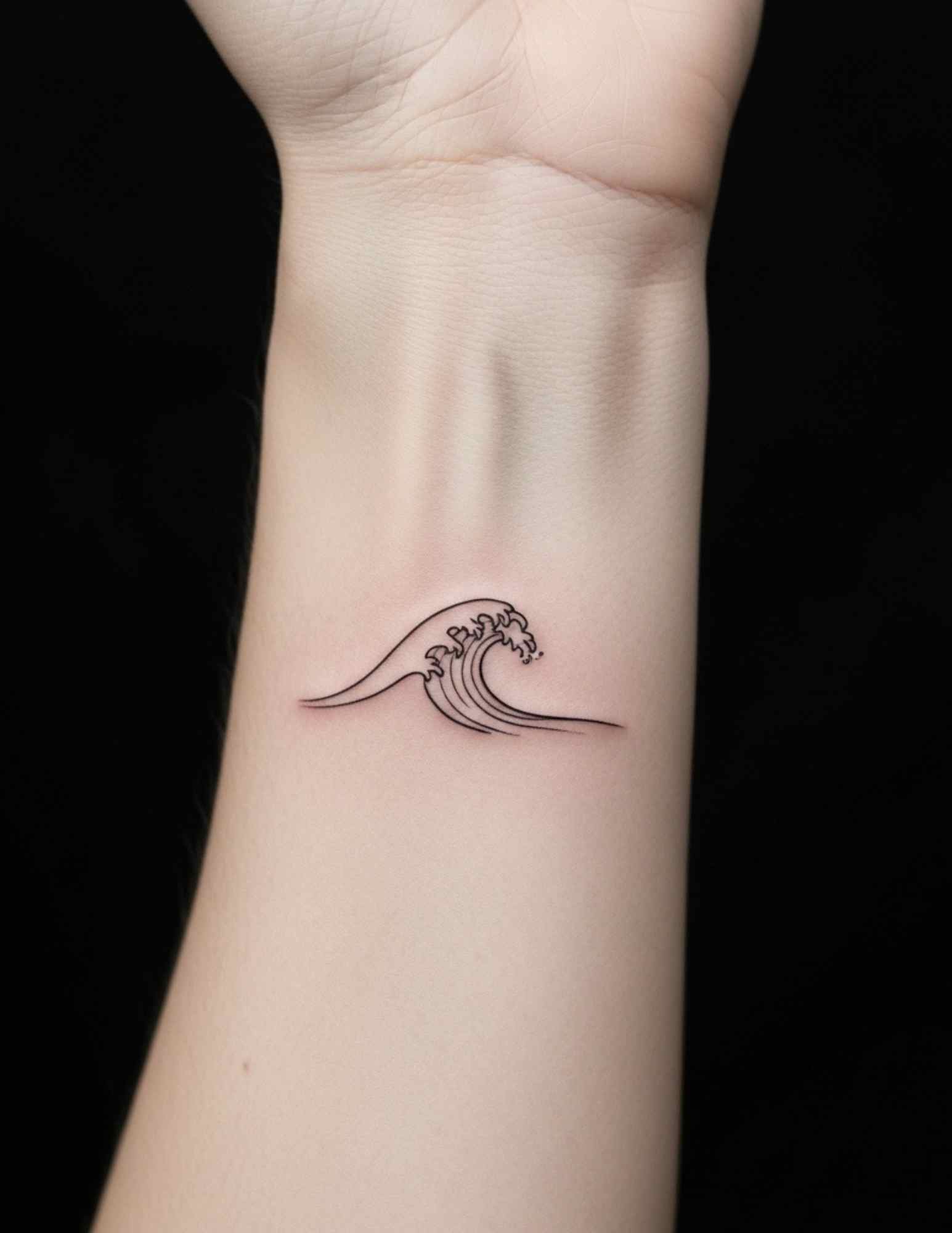
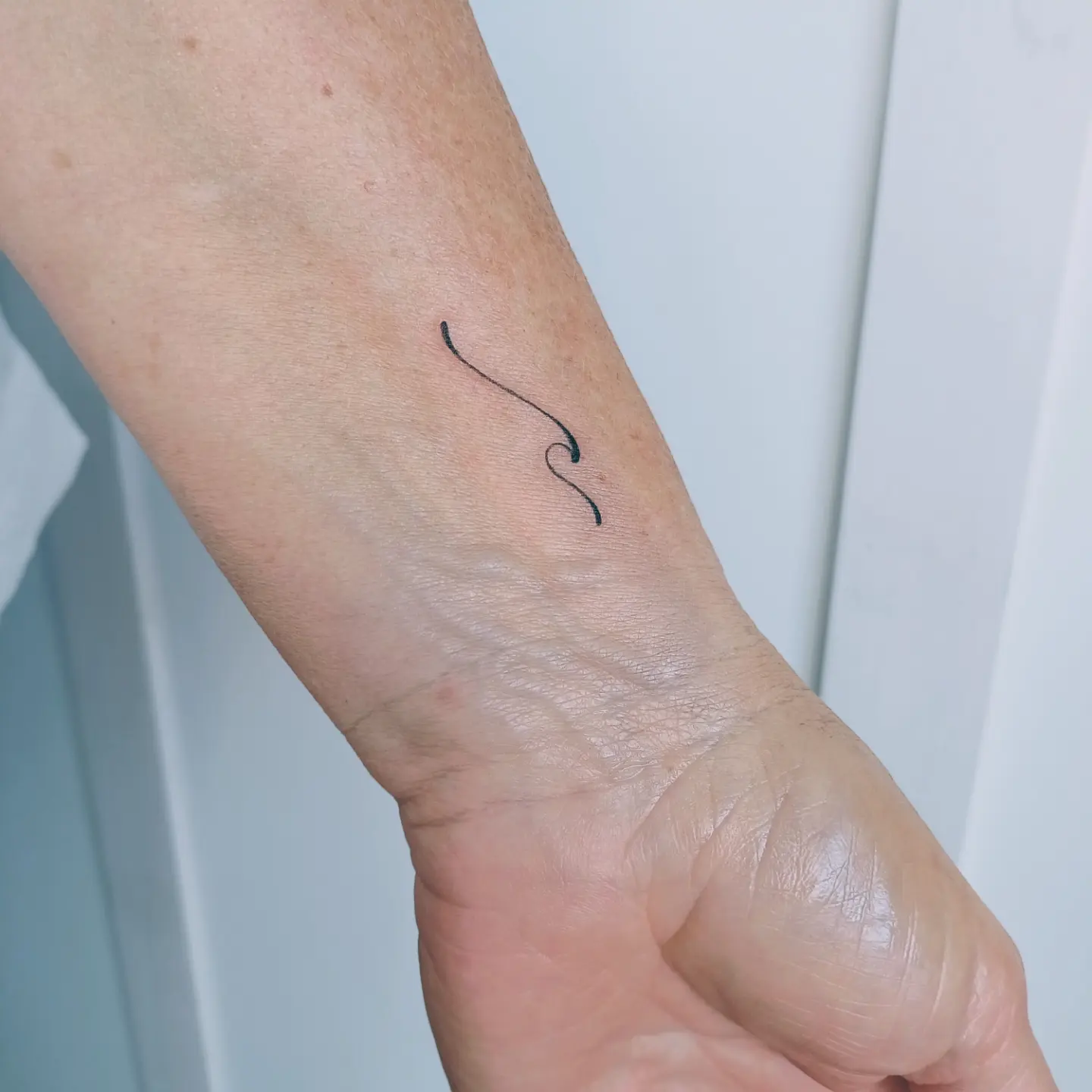
13. Wave or Water
Fine line waves have a rhythm that few other subjects do, whether that is one continuous line, a cresting Hokusai-style wave, or loose abstract water shapes.
The single-line version is the sleeper hit here. It looks almost too simple in the stencil and then reads beautifully on skin.
These often hold personal meaning for people connected to the ocean, but they stand up perfectly well as pure design.
Give a wave room. Compressed into a tiny space, the crest detail collapses into a smudge within a couple of years.
14. Mountain Range
A fine line mountain range is the most graphic design in this list — sharp peaks, a horizon line, occasionally a thin stipple of shadow on one face.
Forearm, wrist and upper arm suit the horizontal shape. A range that follows the collarbone is an underused and very good option.
This one appeals to people who want a tattoo about a place or an experience rather than a symbol, which tends to make it a low-regret choice.
Keep the shading minimal. Heavy stipple on a fine line range is the detail that most often blurs and unbalances the piece.
15. Hummingbird
A hummingbird is the technical showpiece of fine line work: wing structure, the long beak, and the suggestion of iridescence without any colour.
It is not a beginner design and it is not a cheap one. Expect a longer session than the size of the tattoo suggests.
Shoulder, upper back and outer forearm give the wings the space they need. Anything smaller than about six centimetres loses the wing detail entirely.
Hummingbirds are associated with joy and resilience, which is a large part of why they keep appearing in this style rather than in bolder ones.
Variations Worth Considering
If the ideas above are close but not quite right, these adjacent directions solve most of the common objections.
Fine Line With a Touch of Colour
A single muted colour — a dusty red petal, a pale blue wave — keeps the delicacy but adds a focal point.
Colour in fine line fades faster than black, so treat it as an accent rather than a foundation.
Fine Line Plus Soft Stipple Shading
Adding whip or stipple shading gives depth without turning the piece into blackwork.
This is the most common hybrid I see now, and it is a good middle ground if pure linework feels too sparse.
Scaling Up Instead of Down
Most fine line regret I hear about comes from going too small, not too big.
A larger composition in the same line weight keeps the delicacy and buys you years of legibility. The fine line sleeve guide shows how the style works at full-arm scale.
Going Genuinely Tiny — With Eyes Open
If you want something truly small, that is a valid choice, but it is a different commitment.
Read up on how micro tattoos behave over time before booking, and budget for touch-ups.
How to Make a Fine Line Tattoo Last
Placement is the single biggest factor. Inner arm, ribs, upper back and thigh hold fine line work far longer than hands, fingers, feet and the outside of the forearm.
Sun exposure is the second. Daily sunscreen on a healed fine line tattoo does more for its lifespan than any aftercare product.
Follow your artist’s healing instructions rather than a routine you read online, and see a doctor rather than a forum if you get spreading redness, heat, swelling that worsens after a few days, or discharge — those are signs of infection, not normal healing. General guidance from the American Academy of Dermatology is a reasonable baseline, and the US FDA tattoo fact sheet covers what the regulators do and do not verify about inks.
Plan for a touch-up. Most fine line pieces benefit from one somewhere between two and five years in, and many artists include the first one. Our tattoo aftercare guide covers the healing window in more detail.
Still Not Sure? Common Fine Line Mistakes
Booking a generalist. Fine line is a specialism, and a portfolio of bold work does not predict it. The how to find a tattoo artist guide covers how to vet one properly.
Judging by fresh photos only. Ask every artist you shortlist for healed work at one year or more.
Choosing the size before the design. Let the detail level decide the size, not the other way around.
Putting delicate work on a high-friction spot. If your heart is set on a small wrist piece, the tiny wrist tattoo ideas roundup shows what actually survives there.
Expecting permanence at bold-line standards. Fine line is a trade: more elegance now, more maintenance later. That is a fair deal if you go in knowing it.
Frequently Asked Questions
Do fine line tattoos fade faster than other styles?
In most cases, yes. Less pigment is deposited and the lines are thinner, so the same amount of natural fading is more visible than it would be on a bold tattoo. Placement changes this a lot — an inner-arm piece can look sharp for many years while the same design on a finger may blur within one or two. Sun protection and a touch-up when it is needed close most of the gap.
Are fine line tattoos more painful?
Usually they are less painful than bold work, because a single needle does less damage to the skin per pass. The trade-off is time: intricate fine line pieces often take longer than their size suggests, so the session can feel more tiring even if each moment hurts less. Bony and thin-skinned areas still hurt regardless of needle size.
How small can a fine line tattoo be?
Technically very small, but legibility is the real limit rather than the machine. As a rough guide, anything with internal detail — wings, faces, lettering, scales — wants at least five or six centimetres to stay readable over time. Simple shapes such as a small crescent or a few constellation dots work fine at two or three centimetres.
How much does a fine line tattoo cost?
It varies enormously by city, artist demand and design complexity, so ask for a quote rather than trusting a figure online. What surprises people is that fine line often costs more than its size implies, because the work is slow and the artist pool is smaller. Expect to pay a shop minimum for even a very small piece.
Can a fine line tattoo be covered up later?
Generally yes, and more easily than most styles, because there is so little ink in the skin to work around. A cover-up artist has far more freedom over a faded fine line piece than over solid blackwork. Removal is also usually simpler for the same reason, though that is a conversation for a qualified laser clinic rather than a tattoo shop.
Quick Summary
- Fine line uses a single or tight-grouped needle to make hair-thin, drawing-like lines.
- It suits florals, script, constellations, geometry and small portraits best.
- Book a fine line specialist, not a generalist — the technique is its own discipline.
- Always ask to see healed work at a year or more, never just fresh photos.
- Placement decides longevity: inner arm, ribs, thigh and upper back hold it best.
- Going slightly larger than feels necessary is the single best longevity decision.
- Daily sunscreen matters more for fading than any aftercare product.
- Budget for a touch-up somewhere in the first few years and treat it as normal.