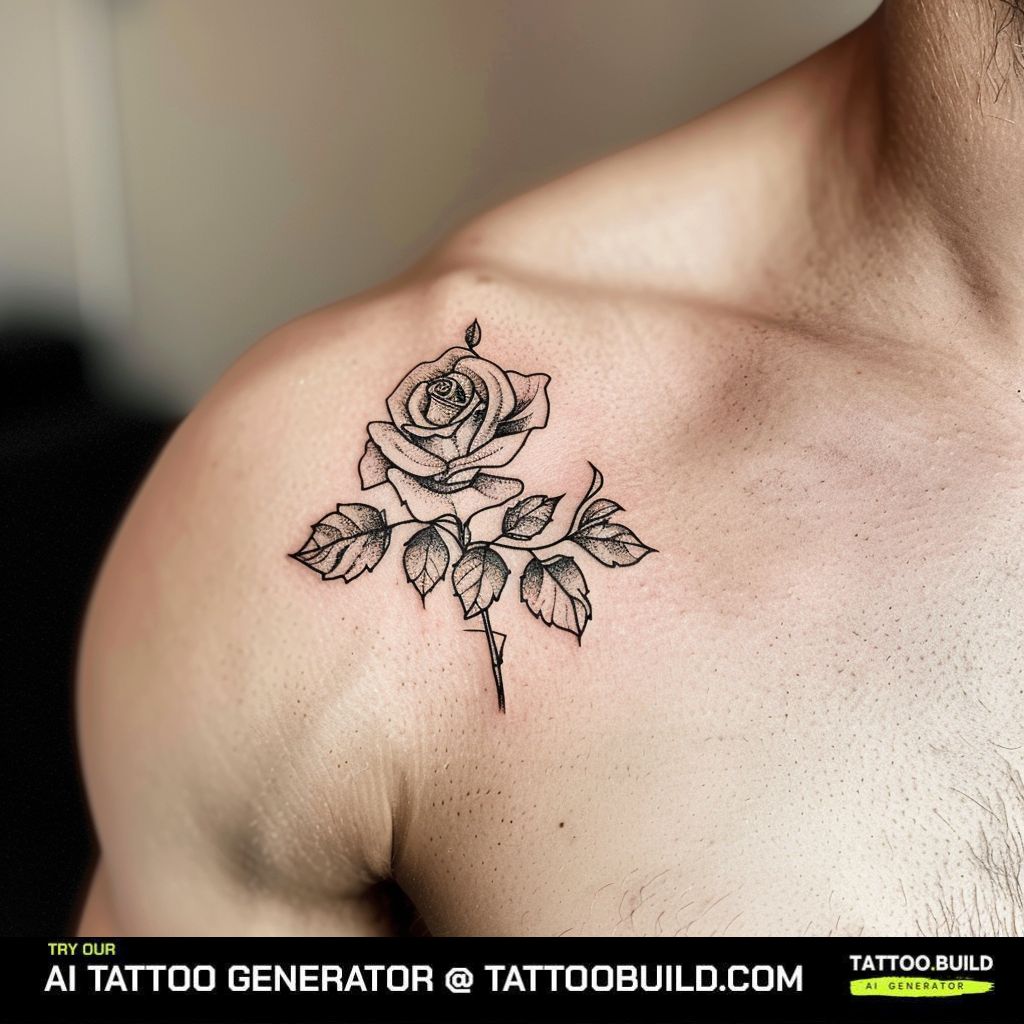
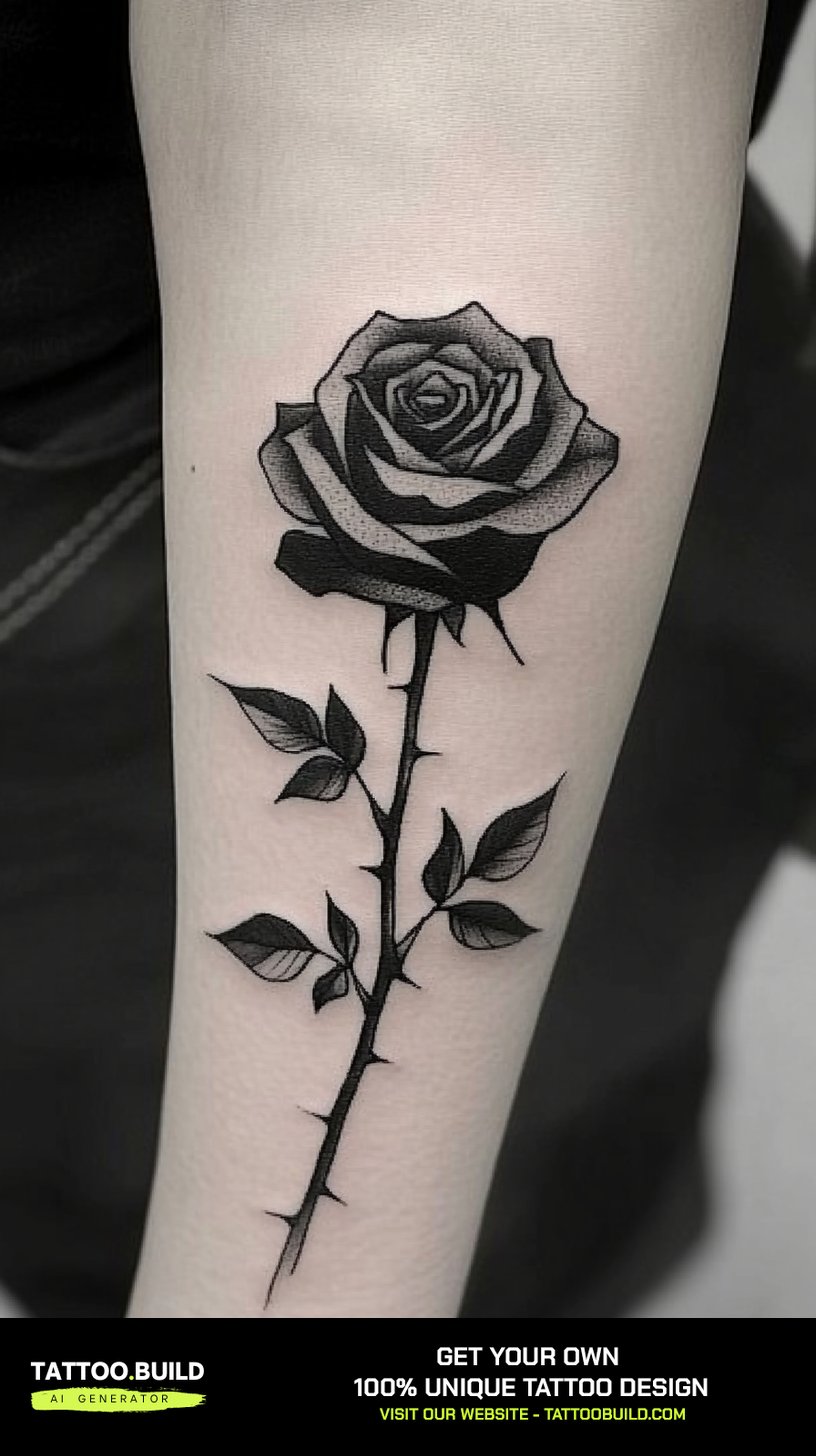
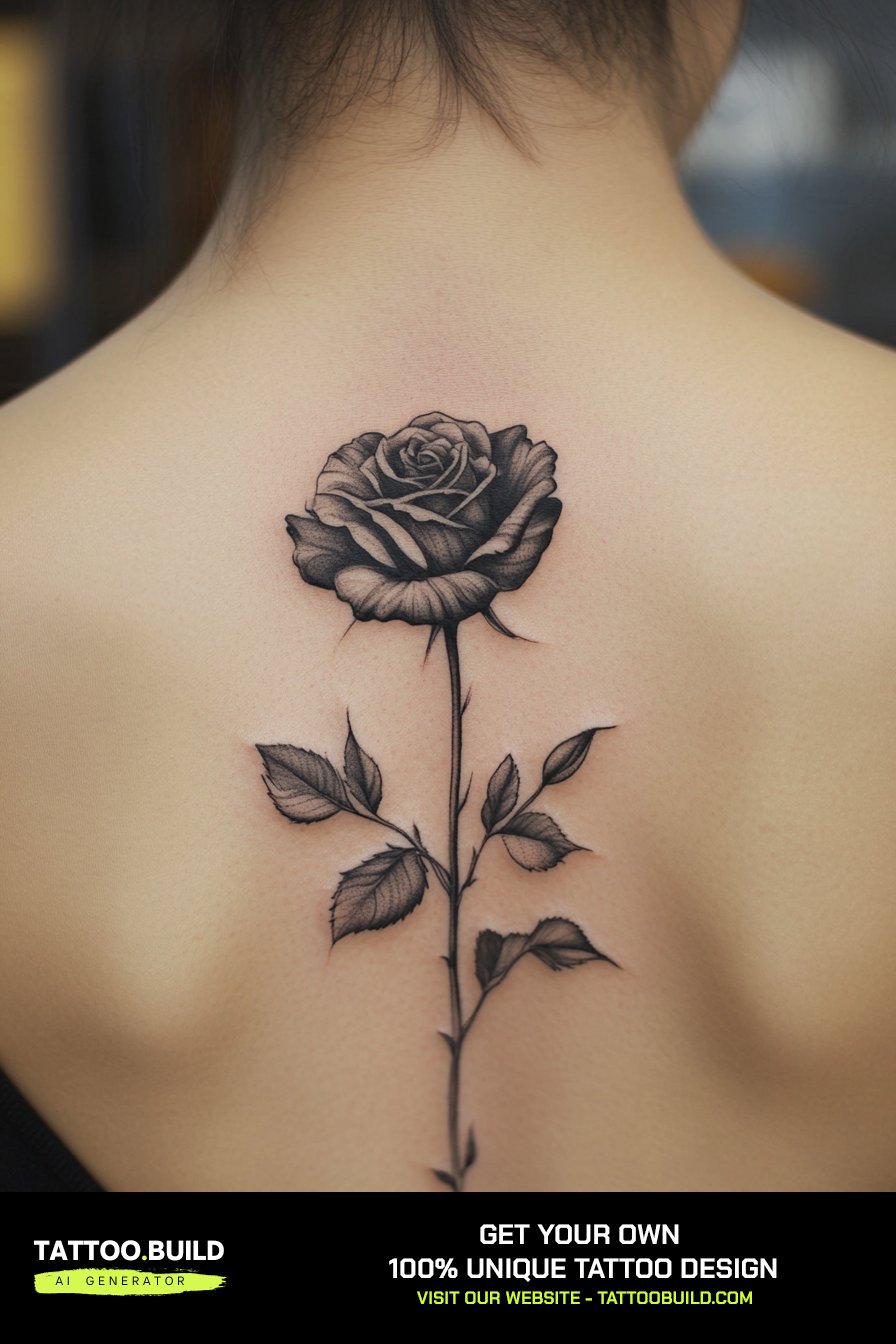
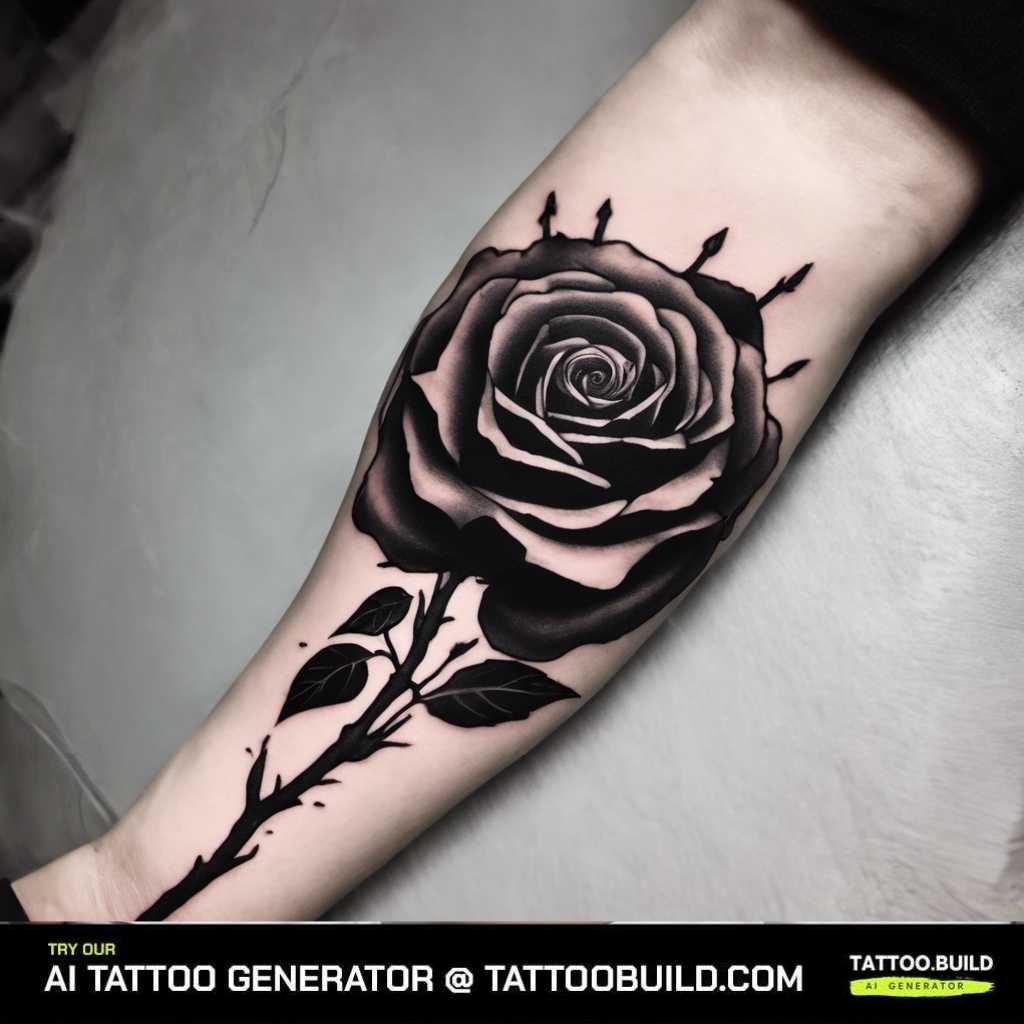
A black and gray rose tattoo drawing is the closest thing tattooing has to a safe bet — it suits almost every body part, ages more gracefully than color, and still leaves room for a design nobody else is wearing.
I have been collecting rose references for years, and the drawings that keep working are never the busiest ones. They are the ones where the shading does the storytelling and the linework just holds it together.
Below are 15 black and gray rose drawings from our own library, grouped by the kind of design they are, with honest notes on placement, size and what each one actually asks of your artist. If you are still deciding on the concept rather than the drawing, it is worth reading what a rose tattoo actually symbolizes before you book.
One thing to say up front: a reference image is a conversation starter, not a stencil. Bring it to a consultation and let the artist redraw it to fit your body.
Which Black and Gray Rose Style Is Right for You?
The five directions below cover almost every black and gray rose I have seen walk out of a shop. Pick the row that matches your pain tolerance and your budget, not just the one that photographs best.
Sitting times are rough averages from the artists I have talked to and will shift with your size, placement and how much detail you ask for.
| Style | Best For | Smallest Size That Holds Up | Typical First Sitting | Ages Well? |
|---|---|---|---|---|
| Clean-line minimal rose | First tattoos, forearms, ankles | 2 in / 5 cm | 1–2 hours | Very well — least to blur |
| Soft whip-shaded rose | Shoulder, thigh, upper arm | 3 in / 7.5 cm | 2–4 hours | Well, if values stay separated |
| Cluster or cabbage bouquet | Sleeves, back, full thigh | 6 in / 15 cm | 4–6 hours, often multiple | Only at scale — crowds when small |
| Skull and roses | Outer arm, chest, calf | 5 in / 12.5 cm | 4–6 hours | Good, if the skull carries the darks |
| Thorn, wire or web background | Wrapping a limb, filler-friendly | 4 in / 10 cm | 3–5 hours | Mixed — thin wire thickens over time |
Why Black and Gray Works So Well for Roses
A rose is mostly curves folding over other curves. That is a shape problem, and black and gray solves shape problems better than color does.
With grey wash the artist can build a petal purely out of value — light at the curl, dark in the crease — without needing an outline to explain where one petal ends. That is why a well-made black shaded rose tattoo still reads clearly from two metres away.
Black and gray also ages on a more forgiving curve. All tattoo ink softens and spreads slightly over the years, but grey wash blurring into grey wash is far less obvious than red bleeding into green.
There is a practical point too. Grey wash is mixed from black ink and a diluent, so you are dealing with one pigment family rather than five, which is usually simpler if your skin has ever reacted badly to a colored tattoo.
The limit worth naming: black and gray depends entirely on value contrast. On deeper skin tones the lightest greys have less room to separate from the skin, so most artists compensate by widening the gap between the darks and the mid-tones rather than chasing pale highlights.
15 Black and Gray Rose Tattoo Drawings to Take to Your Artist
Every drawing below comes from our own library, so you are free to save them and bring them in. For a wider spread of shapes and angles, our collection of rose tattoo drawings has more to work from.
1. Budding Rose and Half-Open Blooms
A half-open bud is the most underrated rose drawing there is. Fewer petals means fewer places for the design to go muddy in ten years.
It is also the friendliest option if you want something under three inches. When I have watched artists shrink a full bloom below that, the inner petals collapse into one dark mass; a bud has the space built in.
Ask for the tightest petals to be left slightly open rather than fully closed — a sealed bud can read as a tulip or an artichoke once the lines soften.
2. Clustered Roses and Cabbage-Style Bouquets
Clusters are where black and gray earns its keep, because the only thing separating one bloom from the next is a shift in value.
They also need real estate. In my experience anything under about six inches turns a three-rose cluster into a single grey shape, and no amount of good shading rescues it after that.
Cabbage-style layering — dense, tightly packed petals — is the most demanding version. It is worth asking to see an artist’s healed photos of one before committing, not just the fresh shots.
Every artist I have asked about clusters says the same thing: decide the light source first. If the light comes from the top-left, every bloom has to agree, or the piece looks like three separate tattoos that happen to touch.
3. Rose Paired With an Antique Key
Hard metal against soft petals is a contrast that works almost automatically, which is why the rose-and-key pairing keeps coming back.
The key carries the sharp, high-contrast blacks. The rose stays softer. That division of labour is what stops the two elements from fighting each other.
Keep the key smaller than you think you want it. When the key gets as large as the bloom, the eye reads it as the subject and the rose becomes decoration.
A long-stemmed version with the key hanging from the end suits vertical placements — inner forearm, outer calf, the side of the ribs — better than a compact composition does.
Black and gray rose designs and the prompts behind them
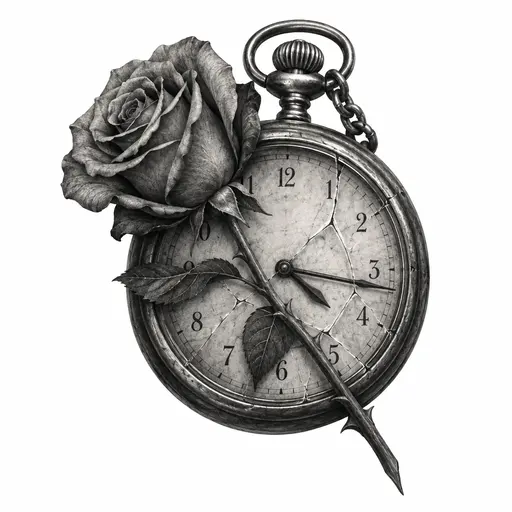
An old pocket watch stopped at 4:17, its glass cracked, a single rose lying across the face
Use this idea
A swallow carrying a banner that reads "Homeward", with a red rose beneath its feet
Use this idea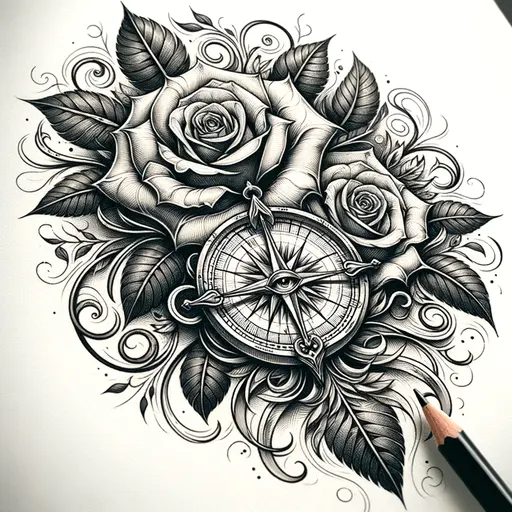
2 roses, stems with thorns, leaves compass eye of providnce
Use this idea
4. Skull Wrapped in Roses
The skull-and-roses combination is old enough to be a genre of its own, and it is still the most requested variation I come across. Our gallery of skull rose tattoo drawings covers the composition in more depth.
The rule that makes or breaks it: let the skull hold the darkest values and keep the flowers lighter. Reverse that and the roses read as blobs sitting on a pale skull.
Heavier shadow work on both elements can look striking, but it needs a genuinely large placement — outer arm, chest panel, full calf — to avoid turning into a dark patch.
Anatomical accuracy in the skull matters more than people expect. A slightly wrong cheekbone or eye socket is the thing strangers notice, even when they cannot say why.
5. Simple, Clean-Line Rose
If this is your first tattoo, start here. A clean-line rose with restrained shading is the most forgiving design in the whole category.
It heals predictably, it touches up easily, and it leaves room to extend the piece later without having to work around a lot of existing detail.
The trap is going too minimal. A rose drawn with outline only and no shading at all tends to look unfinished on skin, even when the drawing on paper looked elegant.
A small amount of grey inside the petal curls is usually enough to give it depth without adding sitting time.
6. Thorn and Barbed-Wire Rose
Thorns and wire give the design a line to wrap around a limb, which is genuinely useful on an arm or a thigh. The symbolism behind a thorned rose is worth knowing before you commit to it.
Keep the wire thin. This is the one place where I would push back on an artist who wants to go bolder, because thin linework thickens slightly as a tattoo settles.
Barbed wire in particular carries associations that vary a lot by region and context, including prison imagery in some places. Worth a moment’s thought rather than a surprise later.
A softer alternative is a thorned stem without the wire — you keep the wrap and the edge, and lose the baggage.
7. Rose Over a Spiderweb Background
A web behind a rose is a background, and it should behave like one. It sits back in value; the rose stays forward.
When the web is tattooed at the same darkness as the bloom, the two patterns compete and the whole piece flattens out.
Ask for the web to fade out at the edges rather than stopping at a hard boundary. A faded edge lets you extend into a larger piece later; a hard edge locks you in.
Webs also carry meaning in some tattoo traditions, including associations with time served. Like the barbed wire, it is a thirty-second conversation worth having with your artist.
Placement Variations Worth Considering Before You Book
The same drawing behaves very differently depending on where it lands. These are the four placements that come up most often.
The Forearm Rose
The inner forearm is flat, easy to sit through and easy to keep clean while it heals — close to an ideal first placement. A black and white rose forearm tattoo shows how the shape sits along the arm.
The outer forearm gets more sun, so expect it to need a touch-up sooner than a covered placement would.
The Spine Rose
A black rose spine tattoo is dramatic and symmetrical, and it is also one of the more painful placements because the needle passes close to bone.
Vertical compositions work best here — a long stem, or two or three blooms stacked, rather than one wide bouquet.
The Thigh Rose
Thighs give you space, low pain relative to ribs or spine, and the option of hiding the piece. Our rose tattoo designs for the thigh lean into that room.
The one caution is friction: waistbands and jeans rub a fresh thigh tattoo constantly, so plan loose clothing for the first two weeks.
Building Toward a Sleeve
If there is any chance a single rose becomes a full arm later, say so at the first consultation. Looking at rose sleeve tattoo ideas early tends to change where the first piece gets placed.
Artists will often shift a standalone rose an inch or two, or angle the stem differently, once they know what it might have to connect to.
Getting the Best Result: Healing and Aftercare
Black and gray lives or dies on value contrast, and value contrast is what you lose when a tattoo heals badly. The American Academy of Dermatology’s guidance on caring for tattooed skin is a sensible baseline, and your artist’s specific instructions should override anything you read online, including this page.
Sun is the single biggest long-term threat to grey wash. Once a piece is fully healed, daily sunscreen on exposed placements does more for its lifespan than any ointment.
Do not pick or scratch the flaking stage. Pulling a scab off early is the most common way people end up with a patchy light spot in the middle of a shaded petal.
If you see spreading redness, swelling that increases after the first few days, pus, or a fever, contact a doctor rather than waiting it out — those are signs of infection, not normal healing. The AAD also covers tattoo skin reactions, and the FDA has a plain-language overview of tattoo safety. This article is not medical advice.
Expect the piece to look slightly lighter once healed than it did in the chair. That is normal; a single touch-up session a couple of months later is routine and most artists build it into the price.
Still Not Sure? Common Mistakes to Avoid
The mistake I see most often is picking a drawing at the size it appears on a phone screen. Hold your fingers apart at the actual size on your arm before you decide.
The second is bringing a single reference and expecting an exact copy. Most reputable artists will redraw it, and that redraw is usually what makes it fit your body.
The third is choosing an artist by price rather than by healed portfolio. Ask specifically to see black and gray work photographed months after it was done — browsing black and gray rose tattoos on men gives you a sense of what settled work looks like.
And the quiet one: adding too much. Names, dates, banners and extra filler all compete with the rose, and the rose usually loses.
Frequently Asked Questions
Does a black and gray rose tattoo fade faster than color?
Generally no — in most cases black and grey holds up at least as well as color over time. Grey wash does lighten, but because the whole design sits in one pigment family, the fading is even rather than patchy. The bigger variable is sun exposure and placement, not the ink choice. A covered forearm piece will outlast an exposed hand piece regardless of whether it is black and grey or full color.
How small can a black and gray rose tattoo go?
Most artists I have spoken to put the practical floor for a simple single rose around two inches, and around three inches for anything with layered petals. Below that the internal shading tends to merge as the tattoo settles. If you want something smaller, a bud or a clean-line outline holds up far better than a detailed bloom. Ask your artist directly — the answer depends on your skin and their needle work.
What does a black and gray rose actually mean?
There is no single fixed meaning. Traditionally roses carry ideas of love, beauty and remembrance, and rendering one in black and grey often shifts the tone toward memorial, loss or resilience. Adding thorns, a skull or a web layers on further associations. Most people I have talked to end up assigning their own meaning, which is usually the version that lasts.
How many sessions will it take?
A simple single rose is typically one sitting of one to three hours. A detailed cluster, a skull-and-roses composition or anything with a background commonly runs four to six hours and may be split across two sessions. Sitting length is a stamina question as much as a technical one, and there is no prize for pushing through. Your artist will give you a realistic estimate at consultation.
Can I add color to a black and gray rose later?
Usually yes, though it depends on how dark the existing shading is. Color layered over heavy blacks tends to read muddy, while lighter grey wash takes color reasonably well. If there is any chance you will want color later, tell your artist before the first session so they can keep the darks restrained. Adding color is also its own separate sitting and cost.
Quick Summary
- Black and gray suits roses because petals are built from value, not from color.
- A half-open bud is the most reliable choice under three inches; full blooms need more space.
- Clusters and cabbage-style bouquets want six inches or more, and one agreed light source.
- In skull-and-roses pieces, let the skull carry the darkest values and keep the flowers lighter.
- Keep barbed wire and web backgrounds thin and faded — both thicken as the tattoo settles.
- Forearm and thigh are the easiest placements; spine is the most painful of the common four.
- Daily sunscreen on a healed piece protects grey wash better than any aftercare product.
- Bring the drawing as a starting point and let your artist redraw it to fit your body.