A rose tattoo on the hand means love you are no longer willing to hide. Every other reading — beauty, grief, devotion, defiance — grows out of that one decision to put it somewhere you cannot cover.
I have spent years asking artists and collectors why they chose this placement, and the answer is almost never about the flower alone. It is about visibility.
The rose is the most requested flower in almost every shop I have walked into. It carries centuries of symbolism in a shape anyone recognises from across a room, which is exactly why it survives being shrunk down to the back of a hand.
In this guide I break down what the rose actually signifies, how placement bends that meaning, which styles hold up on hand skin, and the honest trade-offs nobody mentions until you are in the chair. If you want to see the placement before you read about it, my gallery of a rose tattoo on the hand pairs well with this one.
Which Rose Hand Tattoo Style Is Right for You?
Most people arrive with the meaning settled and the style wide open. That is backwards, because on the hand the style decides how long the meaning stays readable.
Here is how the four approaches I see most often compare, based on what I have watched hold up on real hands over years rather than weeks.
| Style | Reads Best As | How It Ages on the Hand | Typical Touch-Up Cycle |
|---|---|---|---|
| American traditional | Loud, timeless, unmistakably a rose | Best of the four — heavy outlines hold the shape even as colour softens | Often 3–5 years |
| Black and grey | Soft, moody, quietly personal | Strong, provided the artist keeps real contrast rather than all mid-tones | Often 3–6 years |
| Realism | A photograph of a specific flower | Hardest — fine gradients blur first and detail is what carries the piece | Often 1–3 years |
| Geometric or tribal | Graphic, structural, modern | Good on shape, unforgiving on line weight — thin lines spread and lose crispness | Often 2–4 years |
Those touch-up ranges are the ballpark I hear in consultations, not a promise. Your skin, your job and your sun exposure move the number more than the style does.
Why Placement Changes What a Rose Means
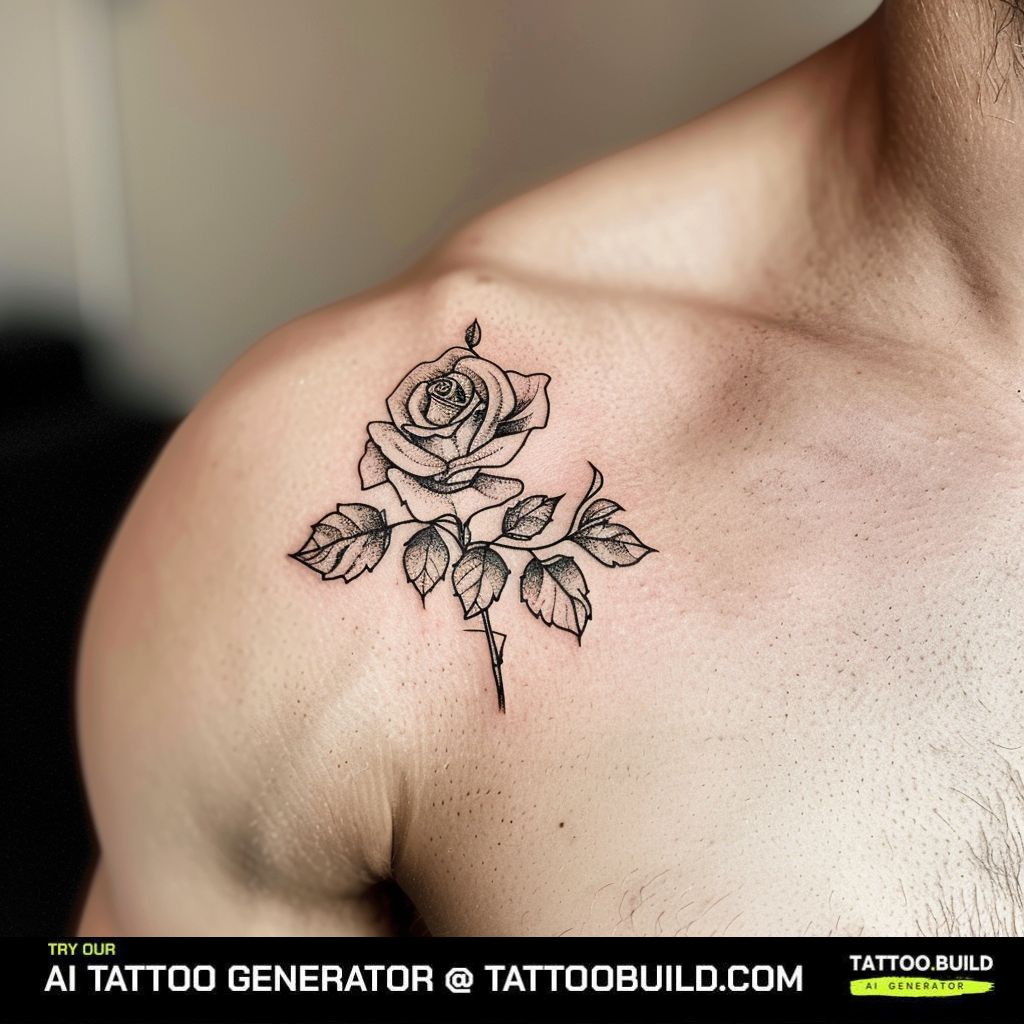
The same rose means different things on a shoulder and on a hand. Placement is part of the sentence, not just the paper it is written on.
A shoulder rose is private by default. You choose who sees it. A hand rose introduces itself before you do — at a job interview, at a funeral, across a dinner table.
That is why the hand version so often carries a commitment reading. The people I have interviewed about theirs almost always describe a moment of decision rather than a moment of taste. Compare it with the broader meaning of a rose tattoo on less exposed placements and the difference is obvious.
There is a second layer. The hand is the part of the body that does things — it works, it holds, it gives, it fights. A symbol placed there gets attached to action rather than identity.
A rose on the hand reads as a promise you are prepared to keep in public. Whether that promise is to a person, to a memory, or to yourself is the part only you supply.
The Core Meanings of a Rose on the Hand
Rose symbolism is old enough that the layers have stopped competing and started stacking. Most hand pieces carry two or three of these at once.
Love and Passion
This is the oldest and still the most common reading. The rose has stood for romantic love in European art and poetry for centuries, and nothing has displaced it.
On the hand it becomes a declaration rather than a confession. You are not keeping the feeling to yourself.
I have seen couples get matching roses on the outside edge of the hand so the flowers meet when they hold hands. It is a simple idea and it works better than most matching tattoos I have watched age.
Red is the shorthand, but not the only route. A deep burgundy or a saturated black-red carries the same weight with more restraint, which is why black rose designs keep gaining ground.
Beauty and Impermanence
A rose is beautiful specifically because it will not last. Cut flowers are a memento mori that people keep on the kitchen table without thinking about it.
Tattooing one freezes that moment on purpose. The contradiction is the point.
When someone tells me they picked a rose after a hard year, this is usually the meaning underneath, even if they do not name it that way.
Artists often lean into it by drawing one petal falling or one edge curling. It is a small detail that changes the entire tone of the piece.
Honor, Grief and Remembrance
Roses are laid at graves and memorials across most of the Western world, which gives them a settled second life as a symbol of loss.
Memorial roses on the hand tend to be smaller and quieter than romantic ones. A name, a date, or a single initial worked into the leaves is common.
Thorns matter enormously here. A rose drawn with the stem intact reads as love that cost something, which is the whole thrust of rose with thorns tattoo meaning.
In my experience this is the version people are most careful about. They bring reference, they bring specifics, and they rarely rush the booking.
Balance and Duality
Petals and thorns on the same stem is the cleanest duality symbol in tattooing. Soft and sharp, gift and warning, in one shape.
Plenty of people choose it for exactly that reason and never mention romance at all.
It also suits the hand structurally. The bloom sits on the back of the hand and the thorned stem runs down toward the wrist, so the two halves of the idea occupy two different zones.
If you like the idea of the stem doing work, ask for a longer vine that wraps toward the wrist so the two halves have room to separate.
What the Colour Adds
Colour is the fastest way to shift the meaning without changing the drawing. Florists and tattooers use roughly the same vocabulary.
Red reads as love and passion. White reads as purity, new beginnings, and in many places, mourning. Yellow reads as friendship and warmth.
Black is the interesting one. It swings between grief, rebellion and elegance depending entirely on how it is drawn, and solid black roses have become a style of their own.
On the hand, saturation matters more than hue. Pale yellows and soft whites sit on thin, sun-exposed skin that is constantly being washed, and they fade faster than anything else I have watched.
Rose designs and the prompts behind them
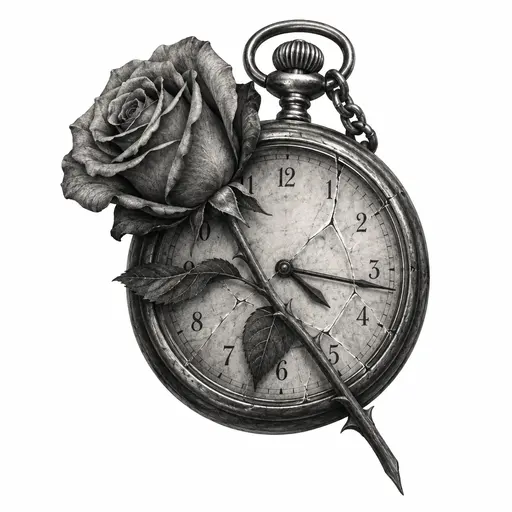
An old pocket watch stopped at 4:17, its glass cracked, a single rose lying across the face
Use this idea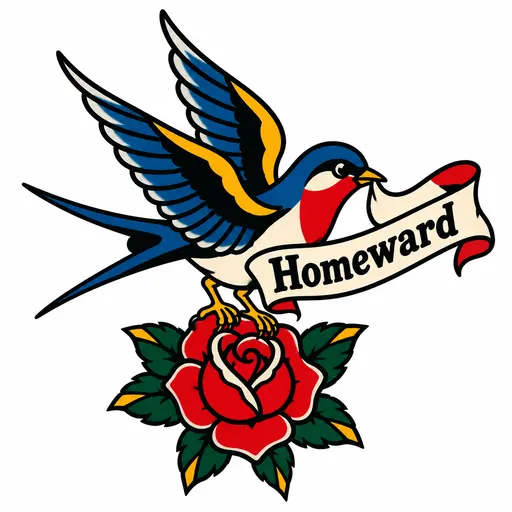
A swallow carrying a banner that reads "Homeward", with a red rose beneath its feet
Use this idea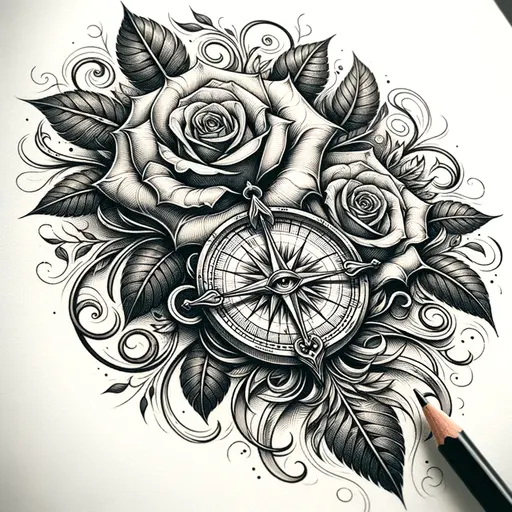
2 roses, stems with thorns, leaves compass eye of providnce
Use this idea
Styles That Actually Hold Up on Hand Skin
The hand is a difficult canvas. Thin skin, constant flexing, frequent washing and near-permanent sun exposure all work against ink retention.
Style choice is how you fight that.
American Traditional
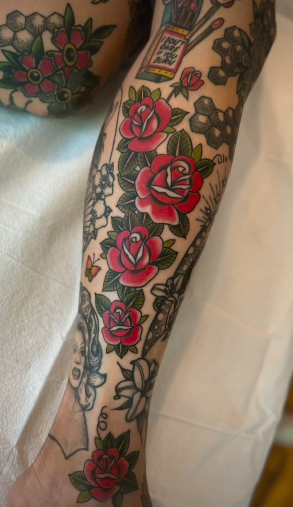
Heavy black outlines, limited colour palette, flat shading. It was built in an era when tattoos had to survive without modern aftercare, and that heritage shows.
It is the style I recommend most for hands, and most tattooers I have asked say the same without hesitation.
The reason is structural. When the colour inevitably softens, the outline still carries the shape, so the rose still reads as a rose at arm’s length.
It also sits comfortably alongside other work, which is worth thinking about if you plan more hand tattoo ideas later on.
Realism
Realistic roses are genuinely beautiful and genuinely the riskiest choice for this placement.
Realism relies on fine gradients and subtle value shifts, and those are the first things to blur when ink migrates slightly in thin skin.
That does not make it a bad idea — it makes it a maintenance commitment. Go in expecting touch-ups rather than being disappointed by them.
If you want realism on the hand, scale up. A larger rose gives the artist room for detail that survives; a small one packs detail into a space that cannot hold it.
Black and Grey
Black and grey splits the difference. You get depth and softness without depending on colour pigments that fade unevenly.
The failure mode is different, though. A black and grey rose that sits entirely in the mid-tones goes flat and muddy over time.
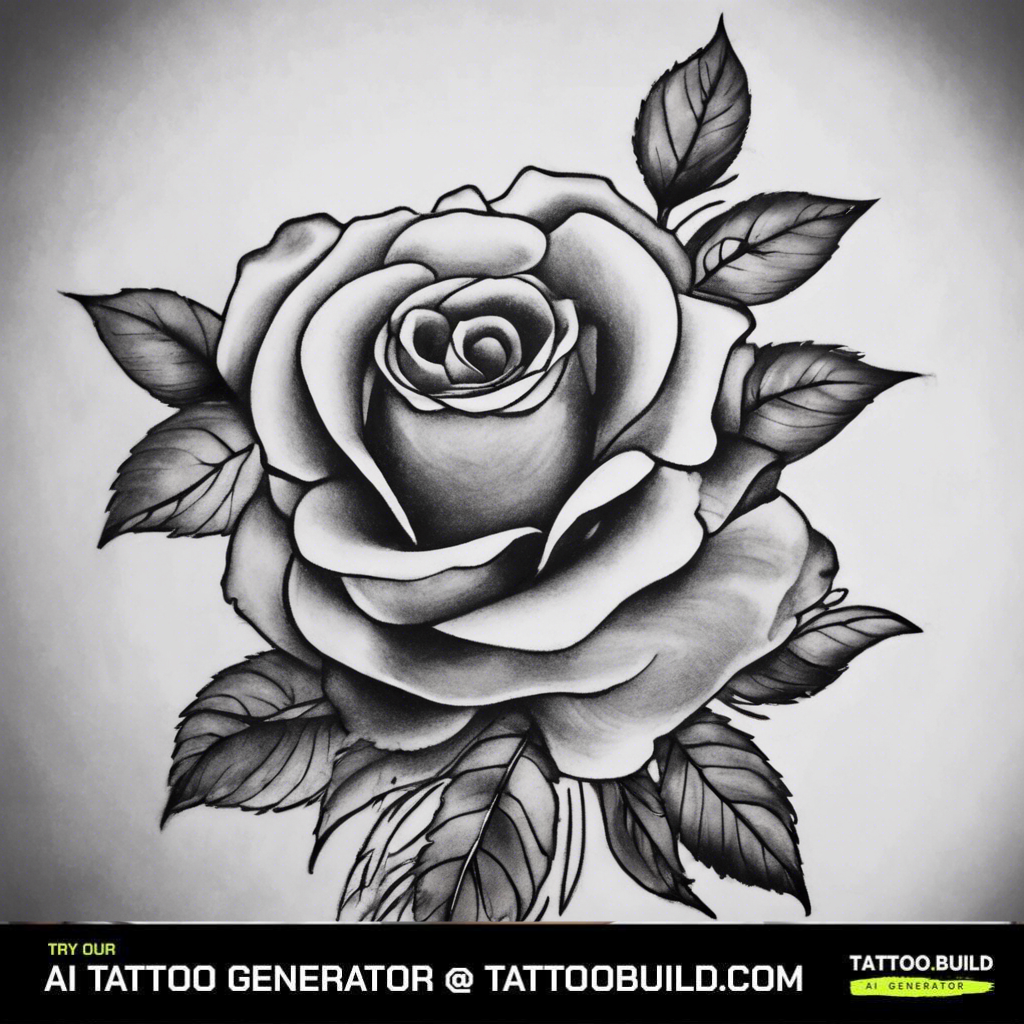
Ask your artist to keep real blacks and real open skin in the design. That contrast is what keeps it legible, and it is what the best black and grey rose work always has.
Every artist I have asked about this placement says the same thing about shading: heavier now, because it will lighten. If you like the softer end of the spectrum, heavy shading still needs an anchor of true black somewhere to push against.
Geometric and Tribal
These treatments abstract the rose into shapes, angles or bold blackwork rather than trying to reproduce a flower.
Structurally they suit the hand well. Bold solid areas hold up, and the graphic quality flatters the bones and tendons underneath.
The caution is line weight. Very thin geometric lines spread over the years, and on a hand they spread faster, which turns crisp geometry into something fuzzy.
When I have seen this style done well, the artist used a mix of weights — thick anchors with thinner detail inside — rather than a uniform hairline.
Fine Line and Micro Roses
Delicate single-needle roses are everywhere right now, and they photograph beautifully the week they are done.
On the hand they are the shortest-lived option I have seen. Fine line depends on lines staying fine, and hand skin does not cooperate.
I am not telling anyone not to get one. I am telling you to budget for maintenance and to look at fine line hand work that is three or four years old before you commit.
Ask any artist to show you healed photos, not fresh ones. Fresh photos tell you about their line work; healed photos tell you about your future.
Variations and Where Exactly on the Hand
“On the hand” covers at least four meaningfully different placements, and they do not behave the same way.
Back of the Hand
The flattest, largest and most forgiving zone. This is where a single bloom has room to breathe.
It is also the most visible from the outside, since it faces the world when your arms are at your sides.
If you only get one rose, this is where I would put it.
Fingers and Knuckles
The highest-turnover skin on the body. Fingers wash, rub, grip and flex constantly, and ink there fades noticeably faster than anywhere else.
Side-of-finger placements hold slightly better than the tops. A rose ring tattoo around the base of a finger is the version I have seen age best.
Go in knowing patchy healing is normal here, not a sign of a bad artist, and plan around it. Browse finger tattoo ideas with that in mind.
Thumb, Wrist Edge and Palm Side
The thumb and the outer edge of the hand are underrated. They are less exposed than the fingers and less crowded than the back.
The palm is the outlier. Palm skin regenerates so quickly that most palm tattoos drop out substantially, and many artists decline them outright.
If an artist tells you they will not tattoo your palm, that is experience talking, not reluctance.
Roses With Companions
Roses share space well, which is part of why they endure. The companion element usually carries the specificity while the rose carries the emotion.
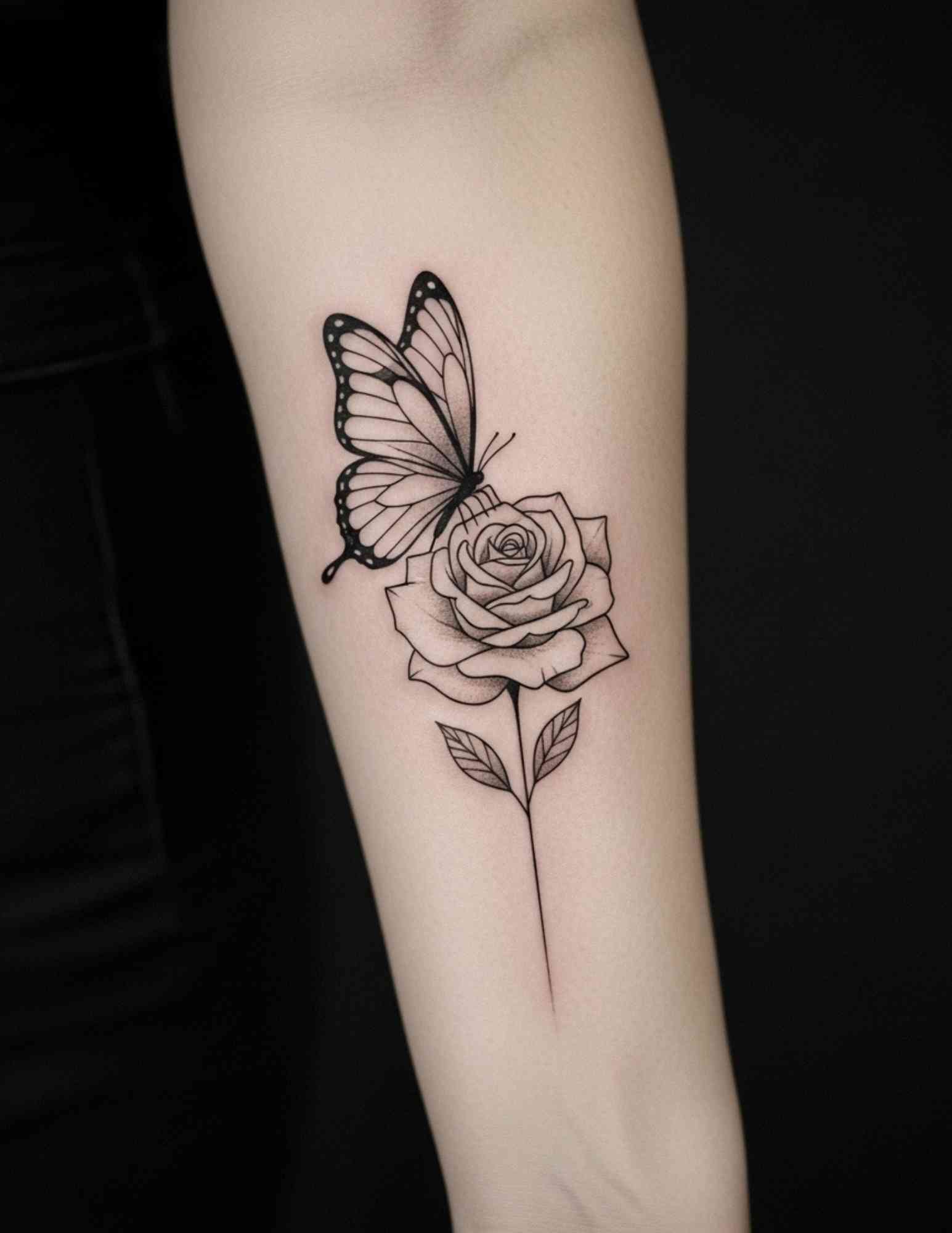
Skulls add mortality, and the skull and rose pairing is one of the oldest combinations in Western tattooing. Butterflies add transformation, and swallows add homecoming.
Daggers add sacrifice or betrayal. Names and dates add a person. Each of these narrows the meaning, which is usually what people want by the time they sit down.
Aftercare and Practical Advice for Hand Tattoos
Hands are the hardest placement to heal well, purely because you cannot stop using them.
Follow the aftercare instructions your artist gives you rather than a routine you read online — they know their ink, their machine and how your skin took it. The common thread across every set of instructions I have been handed is the same: keep it clean, keep it lightly moisturised, and keep it out of the sun while it heals.
The hand-specific problems are washing and friction. You will wash your hands dozens of times a day and every wash is a small interruption to healing.
Sun is the long game. Your hands get more incidental UV than almost any other part of you, and UV is the single biggest driver of fading. Daily sunscreen once it is fully healed does more for longevity than any aftercare product.
On risk: infection, allergic reaction to pigment, granulomas and delayed healing are all real possibilities with any tattoo, and the FDA fact sheet on tattoos and permanent makeup lists them plainly if you want the unvarnished version.
If a healing tattoo is hot, spreading, oozing, or getting more painful after the first few days, that is a doctor question rather than a forum question. Nothing in this article is medical advice.
It is also worth knowing that tattoo inks themselves are not pre-approved the way drugs are, and the FDA tracks recalls and contamination warnings for them. A reputable studio using sealed, single-use supplies is your practical protection there.
Common Mistakes and Things to Weigh First
The mistakes I see repeat themselves, and almost all of them are decisions made before the needle ever comes out.
Going too small is the most common. A rose has a lot of internal structure — petals, layers, a centre — and squeezing it into a two-inch space guarantees it blurs into a dark blob within a few years.
Choosing an artist by price rather than by healed hand work is the second. Hands are a specialty; plenty of excellent artists are simply not hand artists.
Underestimating the visibility is the third. Attitudes have loosened a great deal, but some fields and some countries still react to visible hand ink, and it is worth being honest with yourself about your next ten years, not just this one.
Still undecided? Compare it against broader rose tattoo ideas in less exposed spots, and look at healed photos to see how these designs actually sit on a real hand before you book.
It also helps to mock the idea up first. Sketching a concept, or generating one, lets you take something concrete into the consultation instead of a description — and it is far easier to change your mind on a screen. Putting a bold version and a delicate version side by side is the fastest way to find out which one you actually want.
Frequently Asked Questions
What does a rose tattoo on the hand mean?
Most commonly it means love, passion or devotion that the wearer has chosen to display openly rather than keep private. Because the hand cannot be covered easily, the placement itself adds a layer of commitment or defiance to whatever the rose already symbolises. Secondary meanings include beauty, impermanence, grief and remembrance, and the balance between softness and pain when thorns are included. Colour and companion elements narrow it further, so two rose hand tattoos can mean quite different things.
Do rose hand tattoos hurt more than other placements?
Generally yes. The hand has thin skin, little fat, and bone and tendon sitting close to the surface, which most people find sharper than fleshier areas like the outer arm or thigh. Fingers and the area over the knuckles tend to be reported as the worst of it. The sessions are usually short, though, since most hand roses are small enough to finish in one sitting.
Do rose tattoos on the hand fade faster?
Yes, and it is not a sign that anything went wrong. Hands see constant friction, frequent washing and heavy sun exposure, and the skin turns over quickly, so ink there generally lightens sooner than on covered placements. Bold styles with strong outlines hold up considerably better than fine line or delicate colour work. Most people with hand tattoos expect at least one touch-up within the first several years.
Which rose colour should I choose?
Red is the traditional choice for love and passion, white for purity and new beginnings, yellow for friendship, and black for grief, elegance or rebellion depending on execution. For hand placement specifically, favour saturated colours over pale ones because light pigments fade fastest on sun-exposed skin. Black and grey is the most reliable option if longevity is your main concern. Talk it through with your artist, since pigments behave differently on different skin tones.
Is a rose on the hand a good first tattoo?
For most people, no. Hands are a difficult placement to heal, they hurt more than average, they fade faster, and they are permanently visible, which is a lot to take on with no prior experience of how your skin handles ink. Many reputable artists will encourage a first-timer to start somewhere less exposed. If you are set on it, choose an artist with a portfolio of healed hand work and go bolder than you think you need to.
Quick Summary
- A rose tattoo on the hand primarily means love and devotion displayed openly, because the placement cannot be hidden.
- Thorns shift the reading toward sacrifice, grief, honour and remembrance.
- Colour changes the message: red for passion, white for purity, yellow for friendship, black for grief or rebellion.
- American traditional and bold black and grey age best on hand skin; realism and fine line need the most upkeep.
- Back of the hand is the most forgiving zone; fingers and knuckles fade fastest, and palms often will not hold ink at all.
- Go bigger than feels necessary — small roses lose their internal detail as the ink settles.
- Choose an artist by their healed hand photos, not their fresh ones.
- Daily sunscreen after healing does more for longevity than any other single habit.