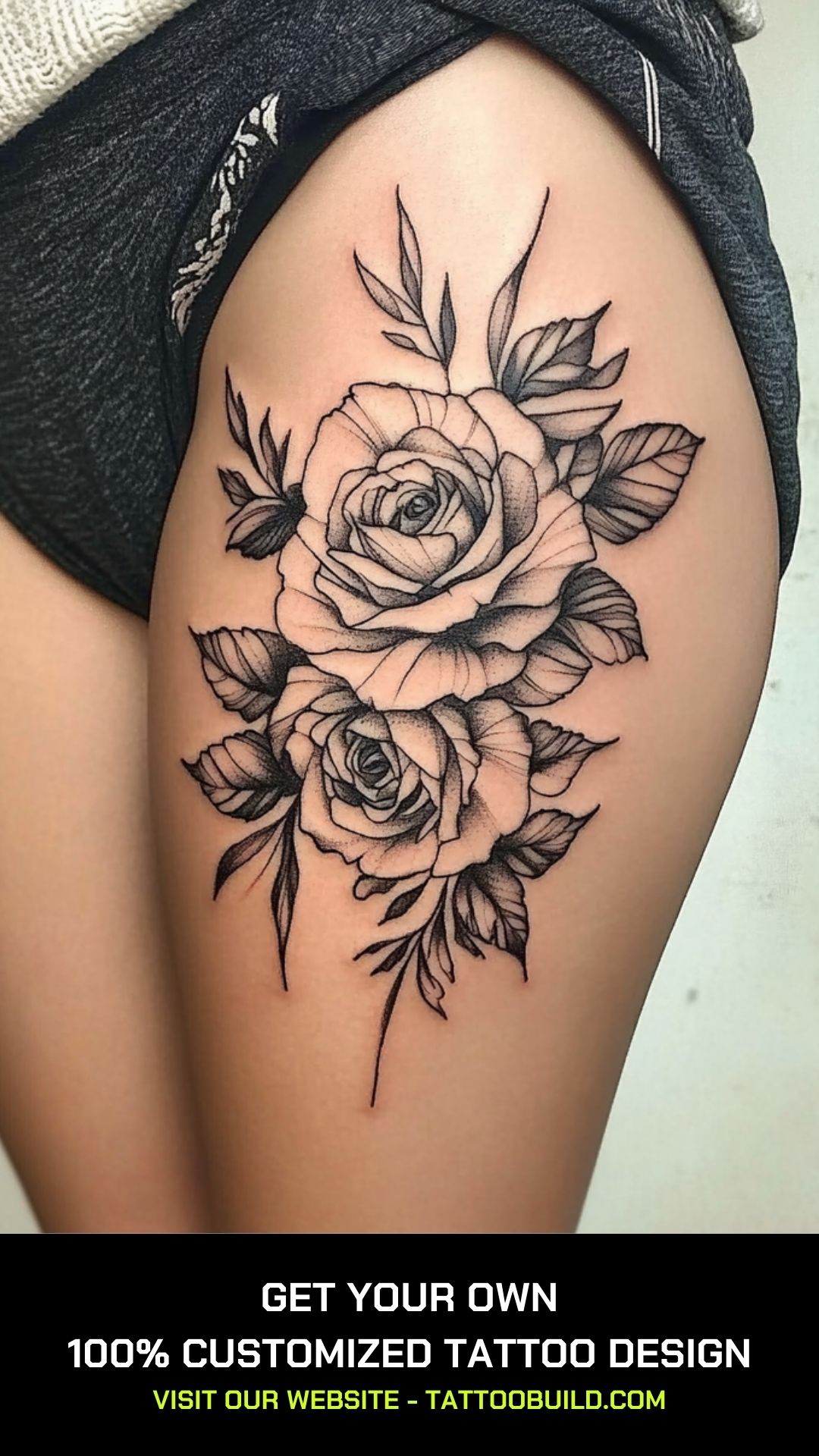
The thigh is the most forgiving canvas on the body, and after years of sitting in shops watching pieces come together I have stopped being surprised by it. If you want a tattoo that looks elegant, holds fine detail for decades, and can be covered by a pair of jeans on any given Tuesday, the thigh is almost always the right answer.
It is flat, it is broad, and the skin there moves less than almost anywhere else. That combination is why delicate linework survives on a thigh long after the same design would have blurred on a finger or a wrist.
This guide collects more than fifty classy feminine thigh tattoo ideas, grouped by style rather than by trend, along with the practical things I wish someone had told me before my first leg piece — sizing, sittings, pain, and what actually happens during healing.
If you are still deciding on placement rather than design, it is worth reading through the broader guide to thigh tattoos for women first, then coming back here for the styles.
Which Thigh Tattoo Style Is Right for You?
Every style on this page ages differently, costs differently, and asks for a different kind of artist. This is the comparison I sketch out for friends who ask me where to start.
| Style | Typical Sitting | How It Ages | Best For |
|---|---|---|---|
| Fine-line floral | 2–4 hours | Softens gradually; may want a touch-up around year five | A first thigh piece you can add to later |
| Black and grey botanical | 4–7 hours, often split | Very well — shading holds its shape | A single statement piece |
| Ornamental / lace | 3–6 hours | Excellent if line weight is varied | Classic, jewellery-like elegance |
| Minimalist symbol | 30–90 minutes | Depends entirely on line weight | Small budget, low commitment |
| Full outer-thigh panel | Multiple sessions | Best of any style when done by a specialist | Building toward a leg sleeve |
Why the Thigh Works So Well for Feminine Designs
Three things make the thigh unusual, and all three matter more than the design you pick.
The first is surface area. You can place a design that is twenty centimetres tall without it crowding a joint, which means an artist can use real negative space instead of compressing everything.
The second is skin stability. Fingers, ribs and feet all stretch or rub constantly. The outer thigh barely moves, and that is why fine linework survives there when it fails almost everywhere else.
The third is control over visibility. A thigh piece is completely private under work clothes and completely visible in a swimsuit, and you choose which day is which.
The trade-off is time. In my experience a thigh design almost always ends up larger than the client first imagined, because the space invites it — and larger means longer in the chair.
Classy Feminine Thigh Tattoo Ideas by Style
These are the styles I see most often on thighs, roughly in order of how frequently they get booked.
1. Fine-Line Florals
Fine-line florals are the default request, and for good reason — a single-needle rose or a spray of wildflowers reads as jewellery rather than as a tattoo.
The technique is unforgiving, though. Thin lines are laid shallow, and if they are laid too shallow they fall out during healing; too deep and they spread into grey mush over ten years.
Ask to see healed photographs of fine-line work, not fresh ones. Fresh linework always looks perfect; healed work is the only honest evidence. Every artist I have asked has been happy to show it, and the ones who hesitate tell you something too.
If you like the look but want it to last with less maintenance, ask for a slightly heavier line weight than the reference photo. It is the single change that makes the biggest difference. There is more on the technique in the guide to fine-line tattoo ideas.
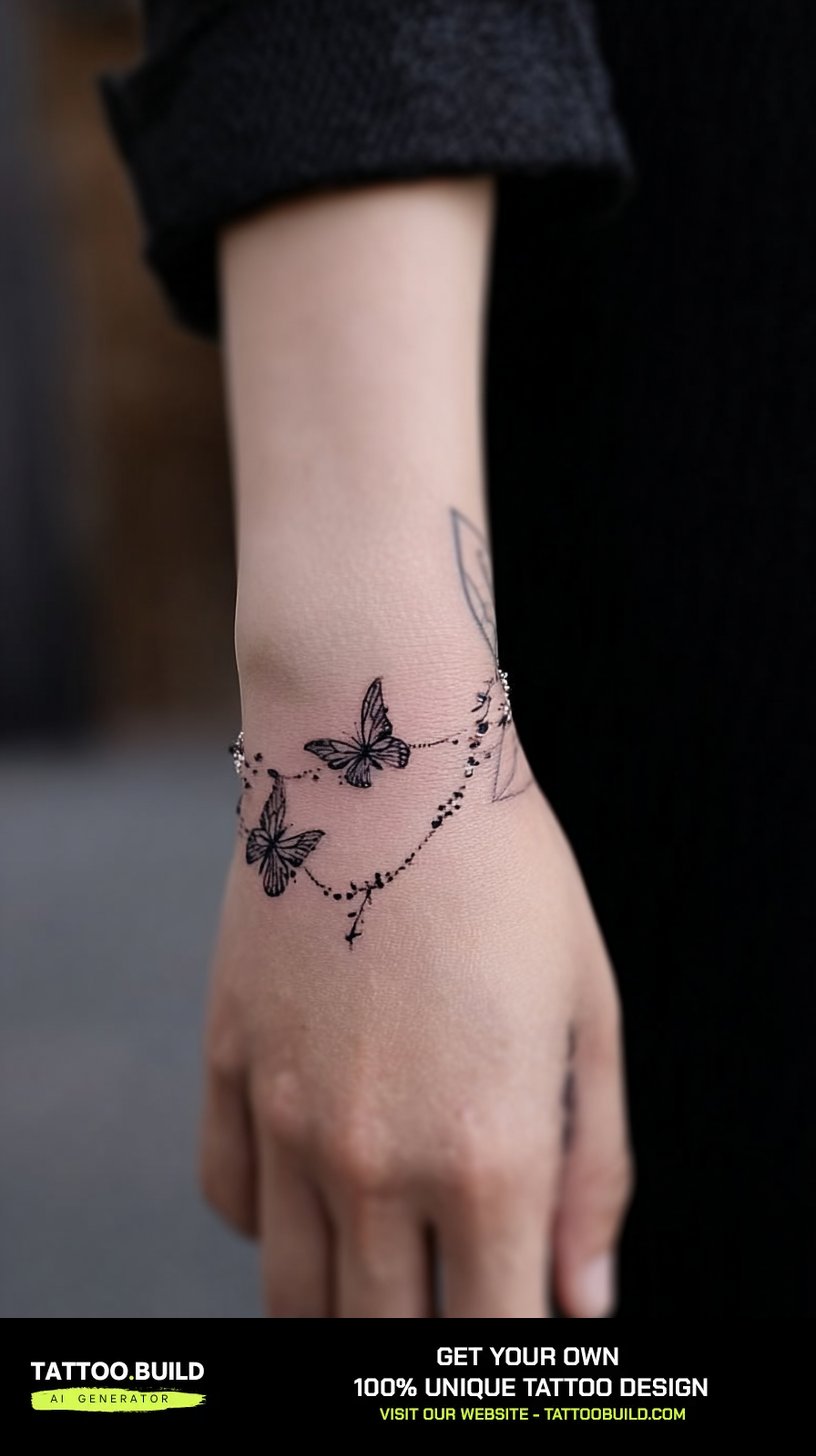
2. Butterflies and Moths
Butterflies are the most-requested feminine motif on any placement, and moths have quietly overtaken them among the artists I know.
A moth gives you a symmetrical body, patterned wings and a natural place for shading — which means it holds interest at a larger size in a way a simple butterfly does not.
Butterflies work best on the thigh when they are either very small and clustered, or single and large enough to carry detail. The awkward middle size is where they tend to age worst.
For a deeper look at scale and placement for this motif specifically, the collection of butterfly thigh tattoo ideas covers the variations well.
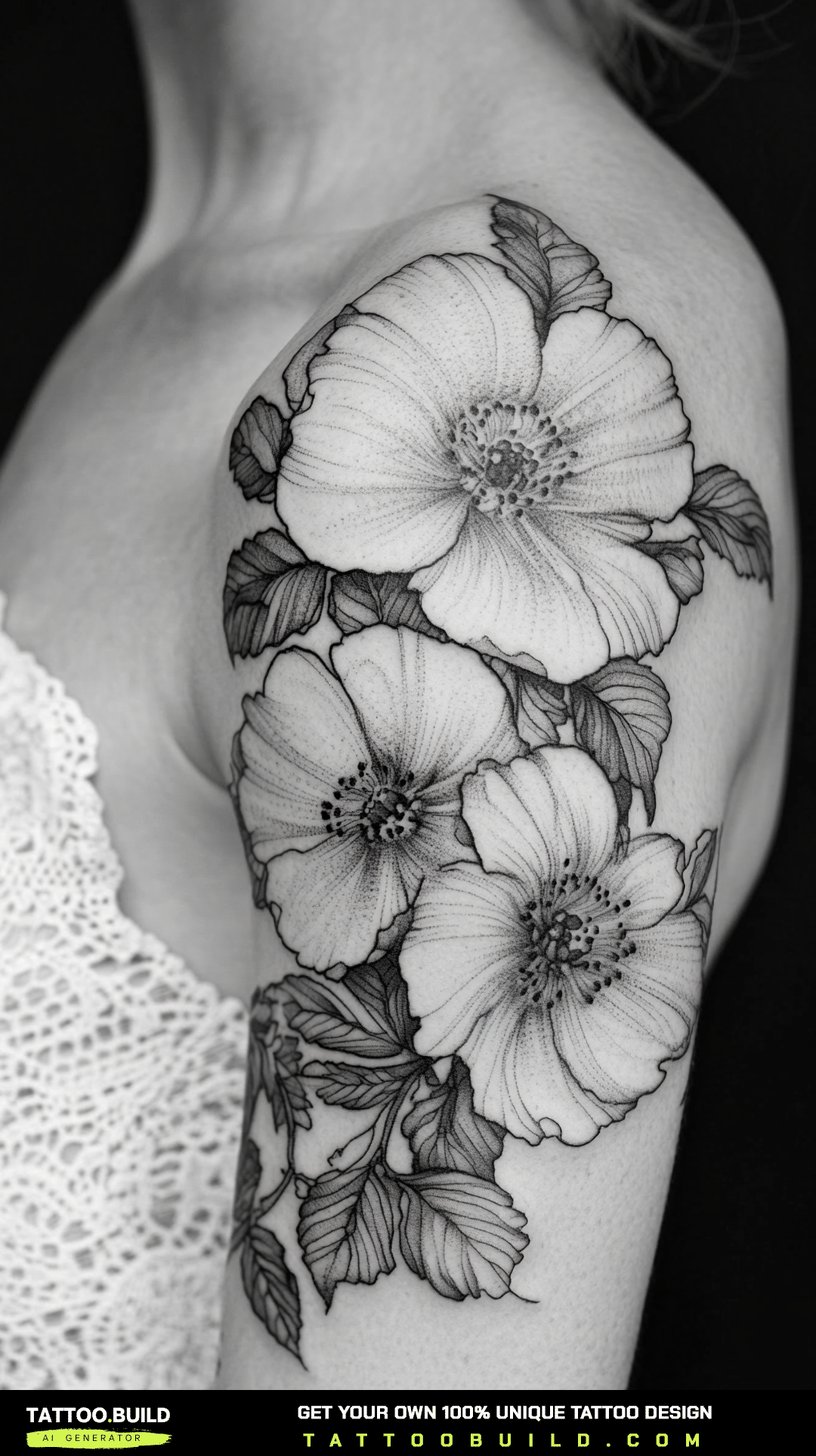
3. Peonies, Roses and Botanical Panels
If you want something that will still look intentional in twenty years, a black and grey botanical panel is the safest bet on this list.
Peonies in particular suit the thigh because the bloom is wide and layered — it fills the space without needing filler around it.
Roses are the more traditional choice and shade beautifully, but they are also the design most likely to look generic if the artist works from a stock reference rather than drawing it to your leg.
Ask for the stencil to be placed while you are standing, then again while you are sitting. A botanical panel that looks balanced on a flat leg can bunch awkwardly when you sit down. If peonies are the direction you are leaning, the peony tattoo ideas for women gallery is worth a look.
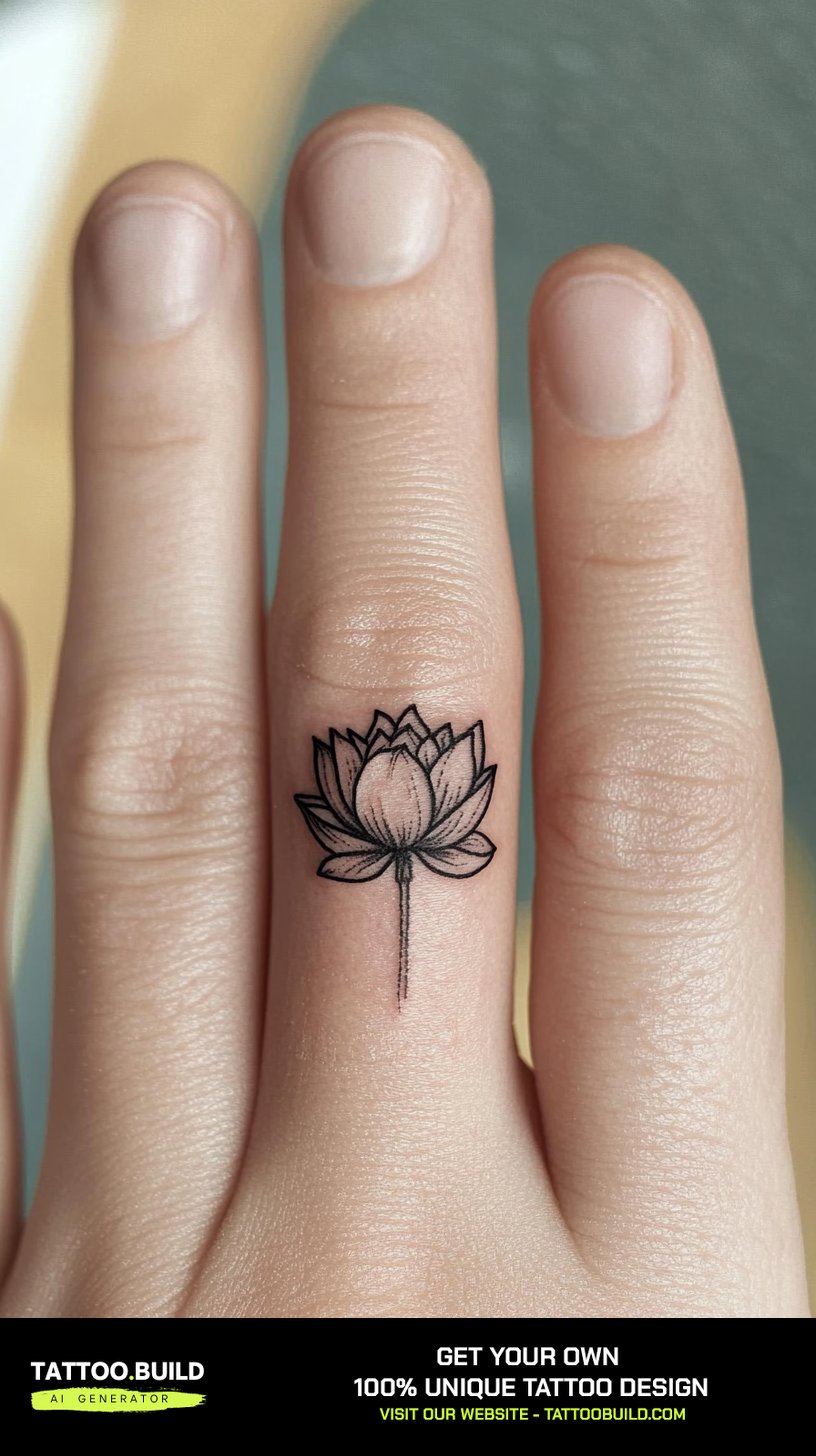
4. Lotus and Mandala Work
Lotus and mandala designs are geometry, and geometry punishes a shaky stencil more than any other style.
On a curved surface like the thigh, a perfectly circular mandala on paper becomes an oval on skin. A good ornamental artist compensates for that at the stencil stage; a less experienced one does not notice until it is permanent.
Dotwork shading inside a mandala is slow, and it stings in a different way than linework — a persistent scratching rather than a sharp line. Most people find it easier to sit through, but longer.
These pieces also expand well. A lotus on the upper thigh can grow into a half-leg design later without redrawing the original. The lotus flower tattoo designs collection shows how the motif scales.
5. Snakes, Cats and Animal Motifs
Animal motifs give a feminine thigh piece some weight, and the serpent-through-flowers combination has been the dominant version of that for several years now.
Snakes work on the thigh because their shape follows the leg. A curve that would be cramped on a forearm has room to move here.
Cats, foxes and small silhouetted animals age exceptionally well, because a silhouette relies on shape rather than internal detail — and shape is the last thing to blur.
Where animal designs go wrong is realism at a small size. A photorealistic animal below about fifteen centimetres will lose its detail within a decade in most cases. Scale it up or simplify it.
6. Birds, Feathers and Wings
Birds are the lightest motif here — a few loose lines, no shading, an hour in the chair.
Feathers suit the length of the outer thigh better than almost any other single object, because they are naturally long and thin and can be shaded softly at one end.
Wings placed symmetrically across the upper thigh look striking, but symmetry is genuinely hard on a curved surface, and it is worth checking the stencil in a full-length mirror standing up before you commit.
Swallows and traditional bird motifs done in a lighter line weight are a nice middle ground between old-school and delicate.
7. Ornamental, Lace and Garter Designs
This is the most classically feminine category on the page, and the one I think is most underrated.
Lace and garter designs wrap the thigh rather than sitting on it, which uses the shape of the leg instead of fighting it.
They are also endlessly adaptable — a chain, a bow, hanging pearls, a filigree band. In my experience these read as more personal than a stock floral because the layout is always drawn to the individual leg.
The one caution is line weight. Very fine ornamental detail packed closely together will merge as it ages, so ask your artist to vary the weight and leave more space between elements than the reference does.
8. Script, Quotes and Minimalist Symbols
Script on the thigh is discreet and quick, and it is the design I most often see people regret — usually because of size rather than wording.
Thin cursive lettering needs generous spacing. Letters that nearly touch when fresh will touch when healed, and a word that closes up is very hard to fix.
The inner thigh is a popular spot for script because it is private, but it is also considerably more painful than the outer thigh. Thinner skin, more nerve endings, less muscle underneath.
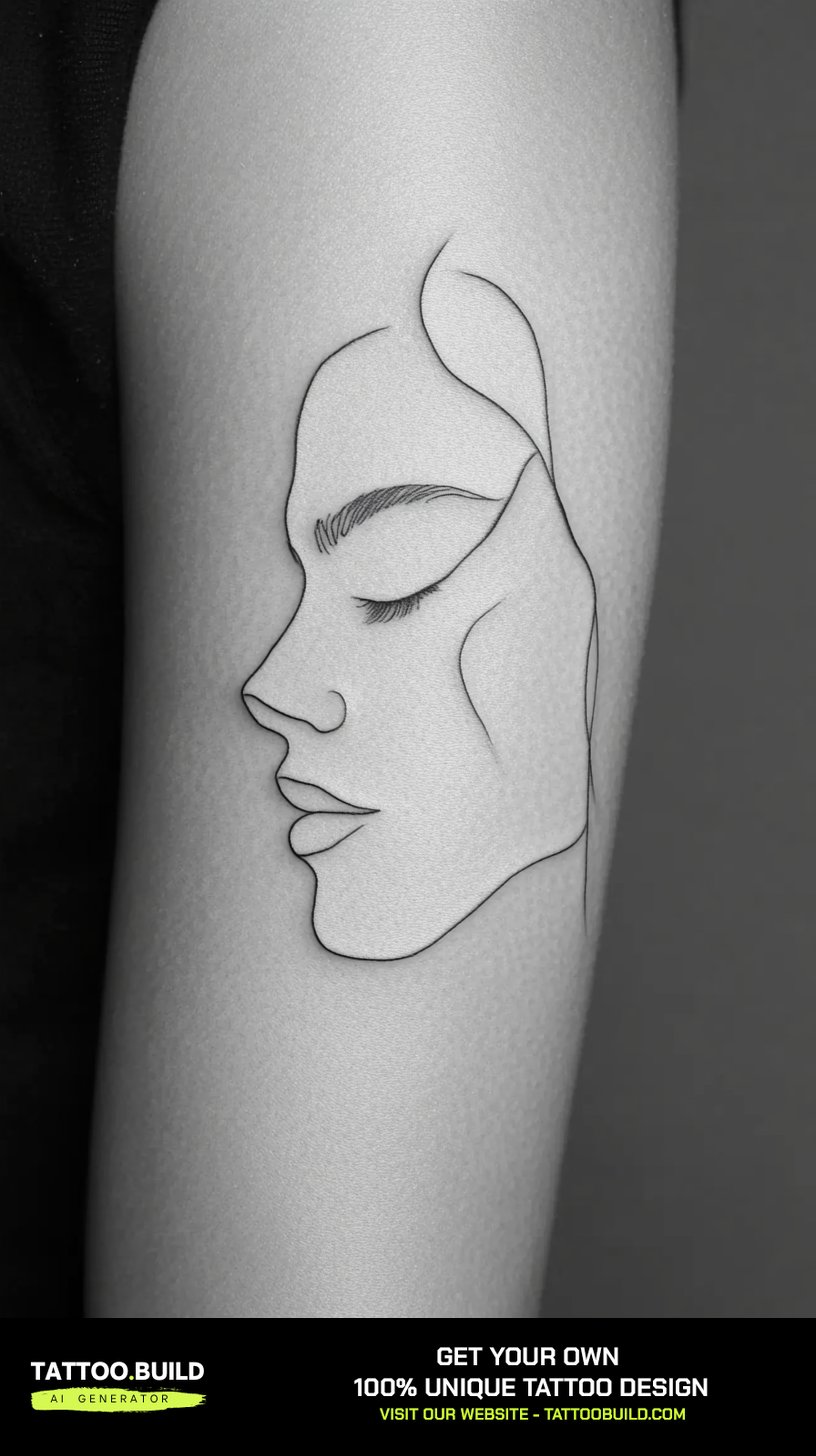
Small symbols — a crescent moon, a wave, a single line drawing — are the easiest possible first tattoo, and often under an hour in the chair.
Variations Worth Considering
If none of the styles above is quite right, these three variations solve most of the remaining cases.
Wrap-Around Placement
Instead of sitting flat on the outer thigh, a wrap-around design continues toward the back of the leg.
It makes a modest piece feel considerably larger, and it hides more of itself in everyday clothing. The back of the thigh is also less painful than the inner thigh, though more awkward for the artist to reach.
Building Toward a Leg Sleeve
A thigh piece is the natural anchor for a larger leg project, and planning for that early costs nothing.
Tell your artist at the first consultation even if the sleeve is years away — they will leave connective space rather than closing the design off. The half leg sleeve tattoo ideas for women guide covers how those layouts are usually staged.
Hip-to-Thigh Designs
Extending a design up over the hip bone gives a piece a strong vertical line and suits florals particularly well.
Be warned that the hip bone itself is one of the sharper spots on the body. Many people split a hip-to-thigh piece into two sessions for exactly that reason. The hip tattoos for women gallery shows the placement in practice.
Pain, Sittings and What to Expect
The outer thigh is genuinely one of the easier places on the body to sit through — plenty of muscle, fewer nerve endings close to the surface.
The inner thigh and the area just above the knee are a different experience entirely, and I would not recommend either as a first tattoo.
Most classy feminine thigh tattoos in the styles above take somewhere between one and six hours. Large black and grey panels are usually split across two or three sittings, both for your comfort and for the quality of the work at hour six.
Eat properly beforehand and bring something sugary. In my experience the single most common reason a session gets cut short is low blood sugar, not pain. A more detailed breakdown of relative pain by placement is in the guide to the most painful tattoo spots.
Aftercare and Healing on the Thigh
Thigh tattoos heal well, with two specific complications: clothing and sweat.
Jeans rub. For the first week, loose trousers or a skirt will do more for your healing than any ointment. Waistbands sitting directly over a fresh hip-to-thigh piece are the other common problem.
Follow whatever aftercare your artist gives you rather than a generic routine from the internet — they know what they put in your skin and how they wrapped it. Our general tattoo aftercare guide covers the standard approach and explains what is normal week by week.
If you see spreading redness, swelling that increases after day three, heat around the area, or any discharge that is not clear plasma, contact your artist and see a doctor. That is a medical question, not a tattoo question, and this article is not a substitute for either. The FDA’s tattoo and permanent makeup fact sheet and the American Academy of Dermatology’s guidance on caring for tattooed skin both have plain-language information on tattoo risks and skin reactions worth reading before you book.
Allergic reactions to pigment are uncommon but real, and red pigments are the ones most often implicated. If you have reacted to a tattoo before, tell your artist and speak to a dermatologist first — the Mayo Clinic has a clear overview of the risks involved.
Common Mistakes — and What to Do Instead
These are the five I see repeatedly, and all five are avoidable at the consultation stage.
- Choosing a size that fits the reference photo, not your leg. A design scaled from someone else’s thigh rarely sits the same on yours.
- Booking on line weight alone. Ask specifically whether the artist works in the style you want every week, not whether they can do it.
- Packing too much detail into a small area. Space between elements is what keeps a piece legible in twenty years.
- Skipping the standing stencil check. Legs curve, and paper does not.
- Planning a single piece with no thought to what might go next to it. Leave room even if you never use it.
If you are torn between scale rather than style, browsing the minimalist tattoo ideas alongside this page is usually enough to settle it — the difference between a small piece and a panel is mostly about how much space you leave.
Frequently Asked Questions
Do thigh tattoos hurt more than arm tattoos?
The outer thigh is usually comparable to the outer arm, and many people find it easier because there is more muscle underneath. The inner thigh is a different matter and is generally reported as significantly more painful, along with the area just above the knee. Pain is individual, so treat any chart as a rough guide rather than a promise. If you are nervous, start on the outer thigh.
How long does a classy feminine thigh tattoo take?
A small minimalist symbol can be finished in under an hour. A fine-line floral typically runs two to four hours, and a full black and grey outer-thigh panel is usually split across two or three sittings. Your artist can give you a realistic estimate once they have drawn the design at actual size. In my experience the estimate given after the drawing is far more accurate than the one given at the enquiry stage.
Will fine-line work fade faster on the thigh?
Fine linework fades everywhere, but the thigh is one of the better places for it because the skin moves and stretches relatively little. Sun exposure is the bigger factor — an untouched, sun-protected thigh piece usually holds up well. Expect that very thin single-needle work may want a touch-up at some point regardless of placement. Ask your artist about their touch-up policy before you book.
Can I get a thigh tattoo in summer?
You can, but healing is harder. Sweat, sun and swimming are all things a fresh tattoo does not want, and a healing thigh piece is difficult to keep out of all three. Most artists I know quietly prefer to book leg work in autumn and winter. If you do go ahead in summer, keep it covered and out of pools until it has fully healed.
What should I do if my thigh tattoo looks infected?
Contact your tattoo artist and see a doctor — do not try to manage it yourself. Warning signs include spreading redness, swelling that worsens after the first few days, heat, significant pain, or discharge that is not clear plasma. Genuine infections are uncommon with a reputable studio and good aftercare, but they need medical treatment when they happen. Nothing in this article is medical advice.
Quick Summary
- The thigh is the most forgiving placement on the body for delicate, feminine designs — broad, flat and stable.
- Fine-line florals are the most popular choice; ask for healed photos and a slightly heavier line weight than your reference.
- Black and grey botanical panels age better than any other style on this list.
- Ornamental and lace designs wrap the leg and tend to feel more personal because they are drawn to your shape.
- Keep space between elements — crowding is the main reason a piece stops reading clearly over time.
- The outer thigh is comfortable to sit through; the inner thigh and the area above the knee are not.
- Loose clothing for the first week matters more for healing than any specific product.
- Any sign of infection or allergic reaction is a question for your artist and a doctor, not for the internet.