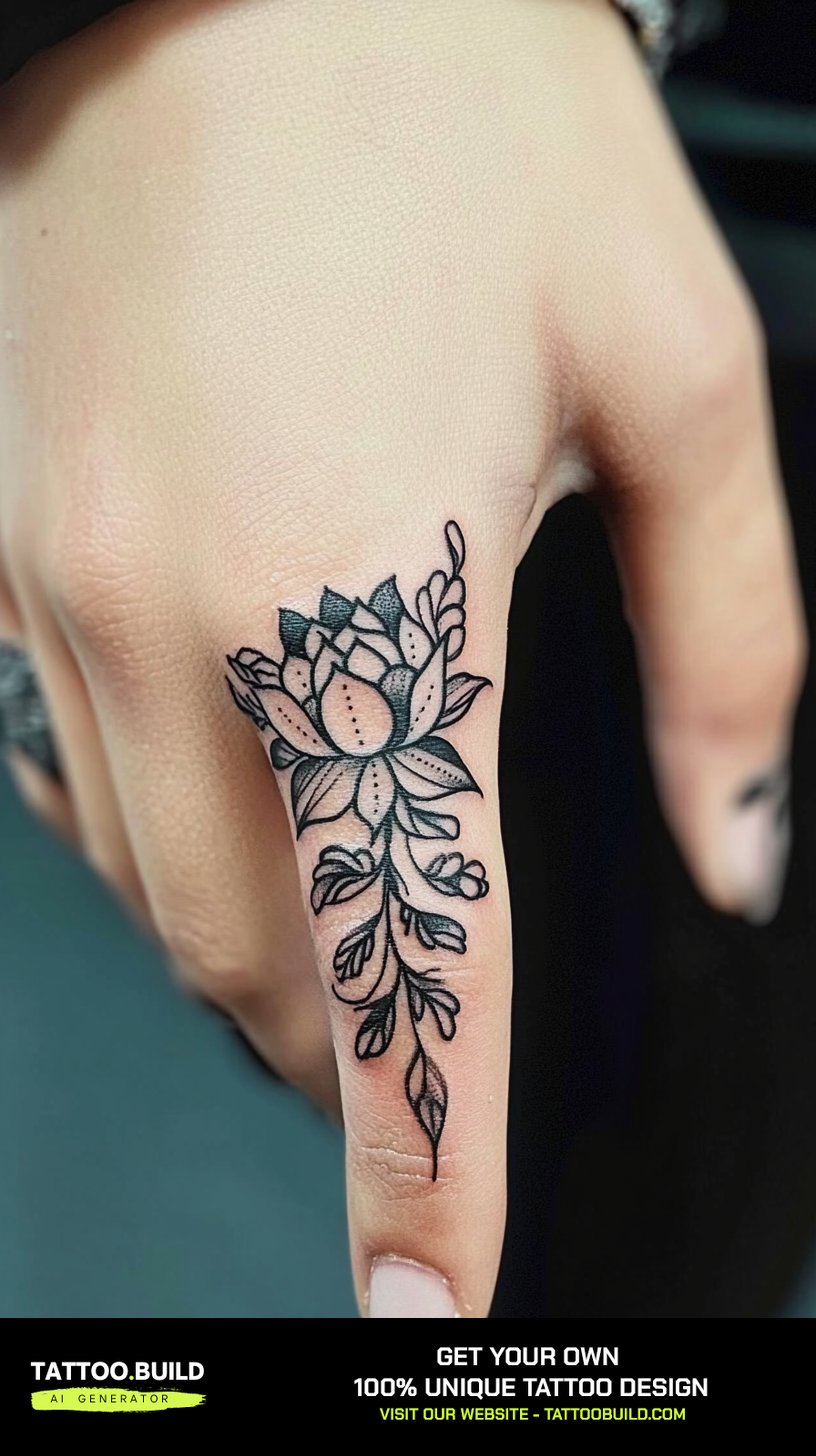
The first finger tattoo I ever watched being done took about four minutes, and the artist spent longer talking the client out of two of her three ideas than she spent tattooing the one that survived. A classy women’s finger tattoo is one of the easiest tattoos to fall in love with and one of the hardest to keep looking sharp.
That tension is the whole story of this placement. Fingers move constantly, shed skin quickly, and get washed more than any other part of the body.
What I want to give you here is not just a gallery. It is the honest version: which designs actually hold their shape after a few years, which ones blur, and how finger work sits alongside broader hand tattoos for women if you are planning the whole hand.
Every design below is small, deliberate, and built to read clearly from arm’s length — which, in my experience, is the only distance most people will ever see your fingers from anyway.
Which Finger Tattoo Style Is Right for You?
I put this together after comparing notes with several artists on what they actually recommend versus what clients walk in asking for.
| Style | How Well It Holds Up | Typical Sitting Time | Best For |
|---|---|---|---|
| Simple band / ring | Very good — thick enough to stay readable | 5–15 minutes | Anyone wanting a permanent jewellery look |
| Single symbol (heart, moon, star) | Good, if kept above 1 cm | 10–20 minutes | A first finger tattoo |
| Fine-line botanical | Moderate — thin lines can soften | 20–40 minutes | Those willing to book touch-ups |
| Micro script / lettering | Hardest to maintain | 15–30 minutes | Short words only, side placement |
| Geometric linework | Good when corners are left open | 15–30 minutes | Clean, modern, low-fuss looks |
The sitting times above are the ones I have seen quoted most often for single small pieces; a full set across four fingers naturally runs longer.
Why Finger Tattoos Fade Faster Than Anything Else
This is the part most inspiration posts skip, and it is the single most useful thing to understand before you book.
The skin on your fingers is thin, it sits over constant movement, and it regenerates quickly. Ink placed there simply has less stable tissue to settle into than ink on a forearm or a thigh.
Expect a finger tattoo to need a touch-up at least once, and possibly more than once. Every artist I have asked about this has said the same thing, usually before I finished the question.
Hand-washing, sanitiser, sun exposure and general friction all speed the process up. The sides of the fingers and the area between the knuckle creases tend to hold better than the tops of the knuckles themselves.
None of this is a reason not to get one. It is a reason to choose a design that ages gracefully rather than one that depends on hairline detail to make sense. The same logic applies to any minimalist tattoo ideas you are considering.
Classy Finger Tattoo Designs That Actually Hold Up
These are grouped by design family rather than by trend, because trends move and the ink does not.
Bands, Stacked Rings and Permanent Jewellery
A plain band around the base of a finger is, design-for-design, the most durable option in this entire guide.
It works because it carries no internal detail. There is nothing inside the shape to blur, so a softened edge after five years still reads as exactly what it was meant to be.
Stacked bands — two or three thin lines with a small gap between them — give more visual weight while keeping that same durability, as long as the gaps are wide enough not to close up. In my experience artists will push for slightly more spacing than looks right on paper, and they are usually correct.
This family also covers the whole world of wedding ring tattoo ideas, which deserves its own conversation about symbolism, cost and whether you want something removable.
Script, Initials and Micro Lettering
Lettering is the most requested finger design and the one artists warn about most consistently.
The problem is structural: letters need internal white space to stay legible, and finger skin is where white space disappears first. A word that reads perfectly on day one can read as a smudge in three years.
If you want lettering, keep it to one short word or a set of initials, and place it along the side of the finger rather than across the top.
The side placement flexes less, sees less sun and takes less friction. It also happens to look more discreet, which is often the point of choosing fingers in the first place.
Botanical and Floral Fine Line
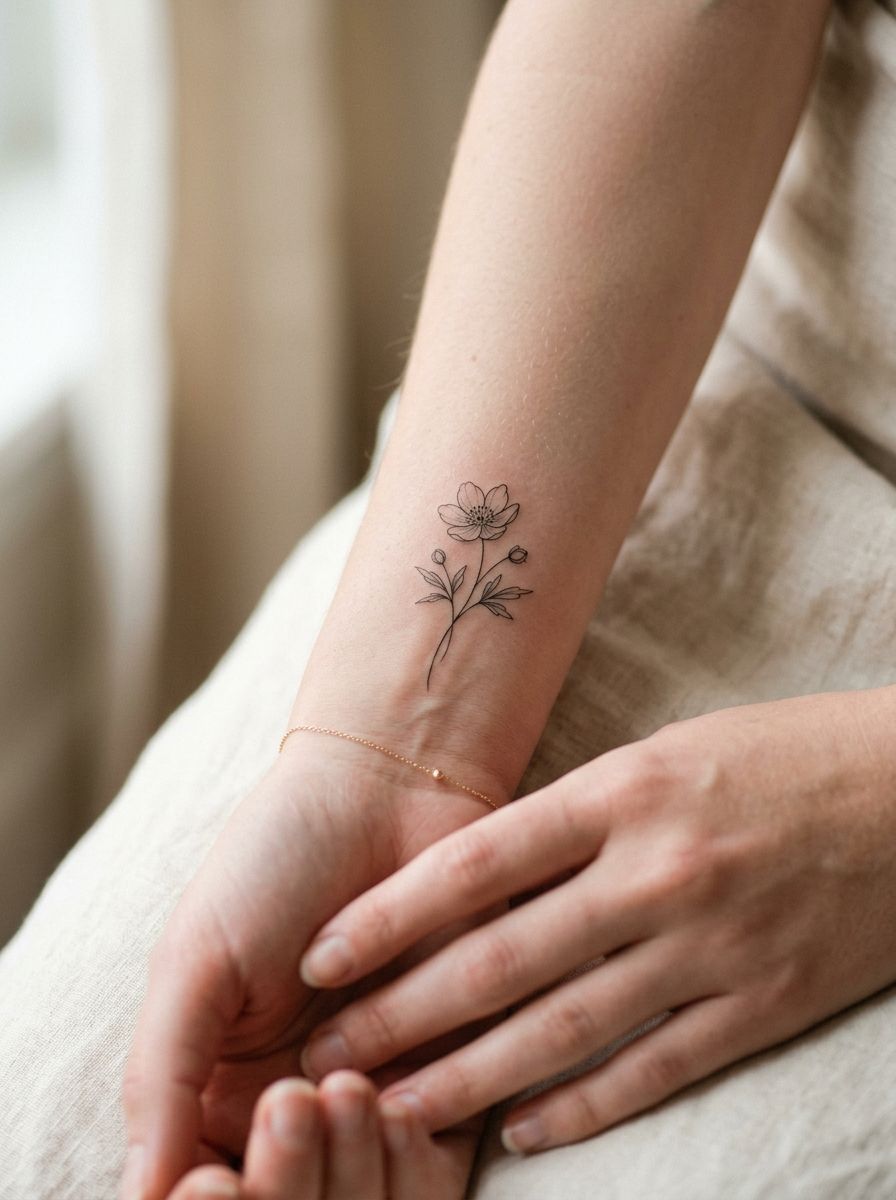
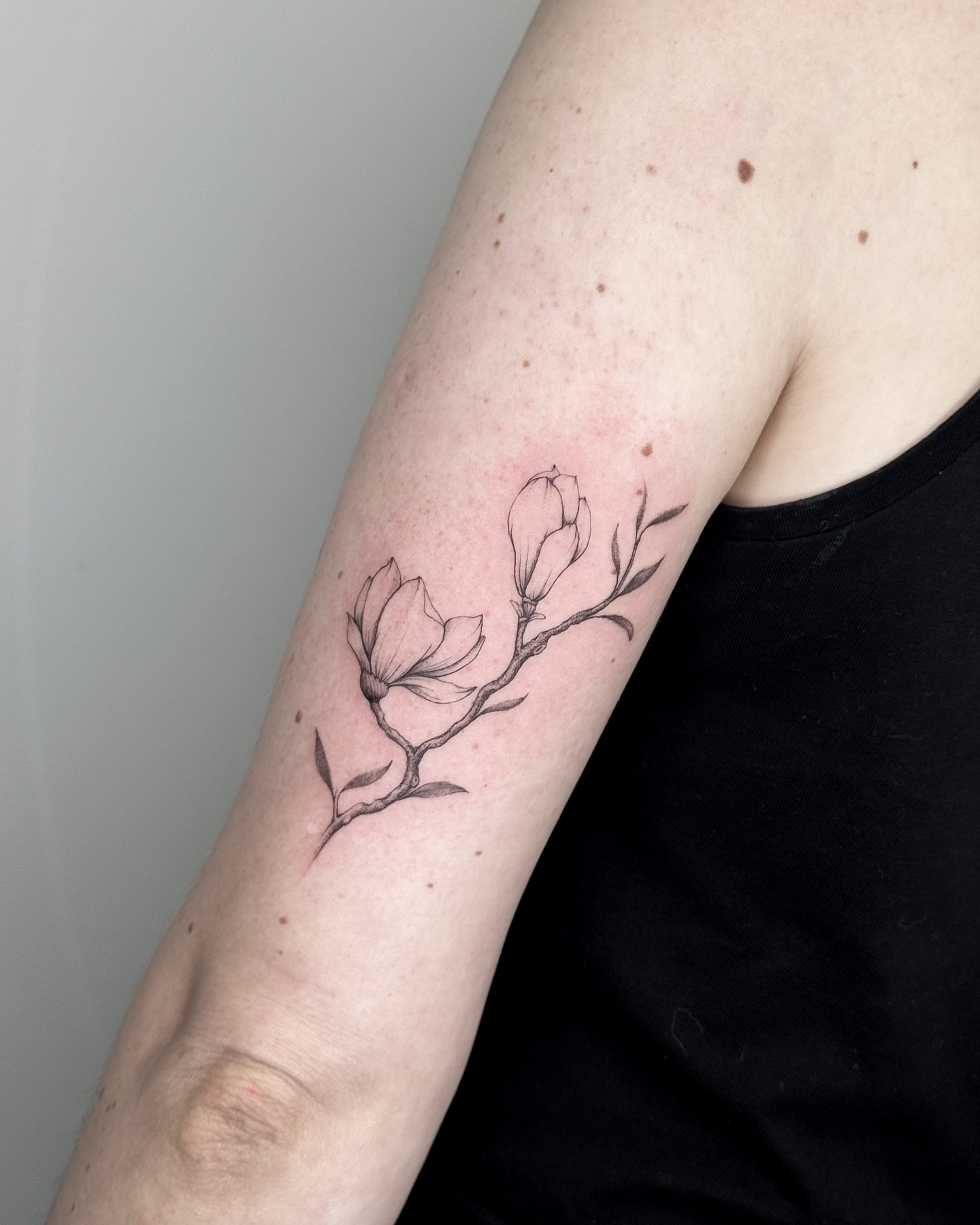
Small florals are where finger tattoos start to feel genuinely elegant rather than merely small.
A single stem, a sprig of leaves, or one open flower outline all sit naturally along the length of a finger — the shape of the design matches the shape of the canvas.
The thing to watch is density. A flower with heavy shading or tightly packed petals will lose its interior definition faster than an open outline of the same size.
When I have compared healed photos of both approaches, the airy version almost always looks more intentional years later, even though the detailed one looked better the day it was done.
Celestial Symbols: Moons, Stars and Suns
Crescent moons are probably the single most requested symbol I see on fingers, and they earn the popularity.
A crescent is a closed curve with no interior detail — the same quality that makes bands durable. Stars and small suns behave similarly, as long as the rays are kept short and separated.
Placement is worth thinking about here. Below the knuckle crease, toward the base of the finger, is generally kinder to the design than directly over the joint.
These pieces also pair well with existing wrist tattoo ideas if you are building a set that travels up the hand and arm.
Tiny Symbols: Hearts, Crosses and Arrows
This is the category most people choose for a first finger tattoo, and it is a sensible instinct.
A heart outline, a small cross or a three-stroke arrow are all fast to sit for, cheap enough to treat as an experiment, and simple enough to recognise even after softening.
The one caution: resist the urge to go smaller than about a centimetre. Below that, the strokes sit so close together that they can merge, and the shape stops reading.
If you want something in this family with more personal weight behind it, the broader world of small meaningful tattoos for women is worth browsing before you commit.
Geometric and Modern Linework
Geometric finger tattoos have held their popularity longer than I expected them to, and I think it is because they suit the placement so well.
Straight lines and simple angles are forgiving. A triangle whose corners have softened slightly still reads as a triangle.
The version that struggles is the tightly interlocking pattern — sacred geometry style work with many intersecting lines packed into a small area. That kind of density is fighting the placement.
Longer linear designs, like a snake or a single line following the finger’s length, work well because they use the natural shape of the canvas rather than crowding one spot.
Alternatives and Variations Worth Considering
If the fading concern is putting you off, these are the directions I would look at first.
Move to the Side of the Hand
The outer edge of the hand and the area just below the fingers hold ink noticeably better than the fingers themselves, while keeping much of the same visual effect.
Go Slightly Larger
A design that spans two fingers, or runs from the finger down onto the back of the hand, gives the linework more room and more stable skin to sit in.
Try a Matching Set First
Two simple designs on adjacent fingers often look more considered than one detailed piece, and they cost less to touch up together later.
Consider the Inner Finger
The palm side of the finger is the least durable spot of all — I would generally steer away from it, but it is the most private option if discretion is the priority.
Look at Non-Permanent Options
Long-wear temporary tattoos are a reasonable way to test a placement for a couple of weeks before committing, particularly if your work environment is a factor.
Aftercare and Long-Term Maintenance
Finger aftercare is ordinary tattoo aftercare made harder by the fact that you cannot stop using your hands.
The first two weeks are where most of the damage happens, and almost all of it comes from washing. Keep the area clean but avoid soaking it, pat rather than rub, and use only a thin layer of whatever moisturiser your artist recommends — too much product can trap moisture against healing skin.
Sunscreen, once healed, does more for longevity than anything else. Hands get more incidental UV exposure than most people realise. The American Academy of Dermatology has practical guidance on caring for tattooed skin that is worth reading before you book, not after.
Plan and budget for a touch-up at roughly the six-month mark. Many artists include the first one, but confirm that before you sit down rather than assuming it.
If anything looks wrong during healing — spreading redness, swelling that increases rather than decreases, discharge, or a fever — stop guessing and see a doctor. Both the U.S. Food and Drug Administration and the Mayo Clinic document infection and allergic reaction as real, if uncommon, risks of tattooing, and this article is not a substitute for medical advice.
Common Mistakes and Still Not Sure?
The mistakes I see repeated are almost all versions of the same error: choosing a design for how it photographs on day one.
Going too small, packing in too much detail, choosing a long quote, and placing work directly across a knuckle joint are the four that come up again and again.
The other one is skipping the artist’s advice. If someone who tattoos fingers weekly tells you a design will not last, that is not them being difficult.
Still deciding? It can help to browse adjacent placements before committing — dainty tattoo designs, pretty small tattoo ideas, and the broader collection of hand tattoos for women all cover ground that overlaps with this one. If you are shopping for a partner or a friend, finger tattoo ideas for men takes a different angle on the same placement.
Frequently Asked Questions
How long do finger tattoos actually last?
The ink itself is permanent, but the crispness is not. Most finger tattoos start softening within the first year and typically need a touch-up somewhere around the six to twelve month mark. Simple, bolder designs hold their shape considerably longer than fine detail. Plan for maintenance rather than hoping you will be the exception.
Do finger tattoos hurt more than other placements?
Most people describe them as sharper than a forearm but very brief. There is little fat between the skin and bone, so the sensation is quite direct. The upside is that a small finger design is often finished in under twenty minutes. Pain tolerance varies a lot between individuals, so treat any description as a rough guide only.
Will an artist refuse to tattoo my fingers?
Some will, and that is worth respecting rather than shopping around to avoid. Artists who decline usually do so because they do not want their name on work they know will blur. Others will happily do it after a conversation about design choices and expectations. Asking to see healed photos of their finger work is a fair and useful request.
What is the best finger tattoo for a first tattoo?
A single simple symbol or a plain band, placed on the side or the base of the finger. Those choices are quick to sit for, straightforward to touch up, and forgiving as they age. They also let you find out how your own skin holds ink before you commit to anything larger.
Can finger tattoos be removed or covered up?
Removal is possible with laser treatment but tends to require multiple sessions, and results on fingers can be less predictable than on other areas. Cover-ups are limited by how little space there is to work with. This is a decision best discussed with both a tattoo artist and a qualified laser practitioner rather than settled from an article.
Quick Summary
- Finger skin is thin and constantly moving, so every design here will soften faster than the same design elsewhere on the body.
- Bands and stacked rings are the most durable option because they carry no interior detail to blur.
- Keep lettering to one short word or initials, and place it on the side of the finger rather than across the top.
- Fine-line botanicals look best when kept open and airy rather than densely shaded.
- Avoid going smaller than about a centimetre — below that, strokes tend to merge as the tattoo settles.
- Place work below the knuckle crease where possible, not directly over the joint.
- Budget for at least one touch-up, and confirm with your artist beforehand whether it is included.
- Sunscreen on healed hands does more for longevity than any other single habit.