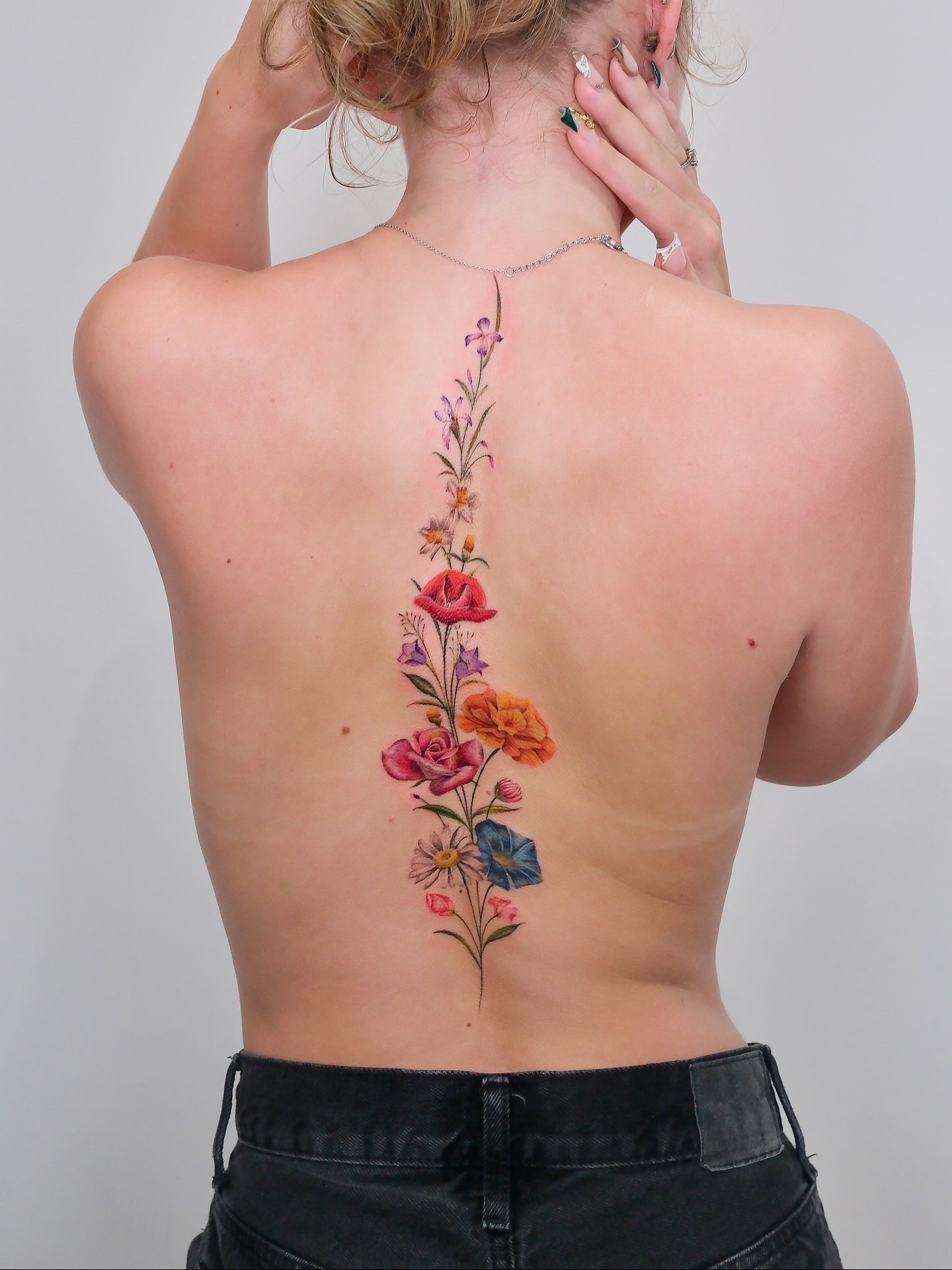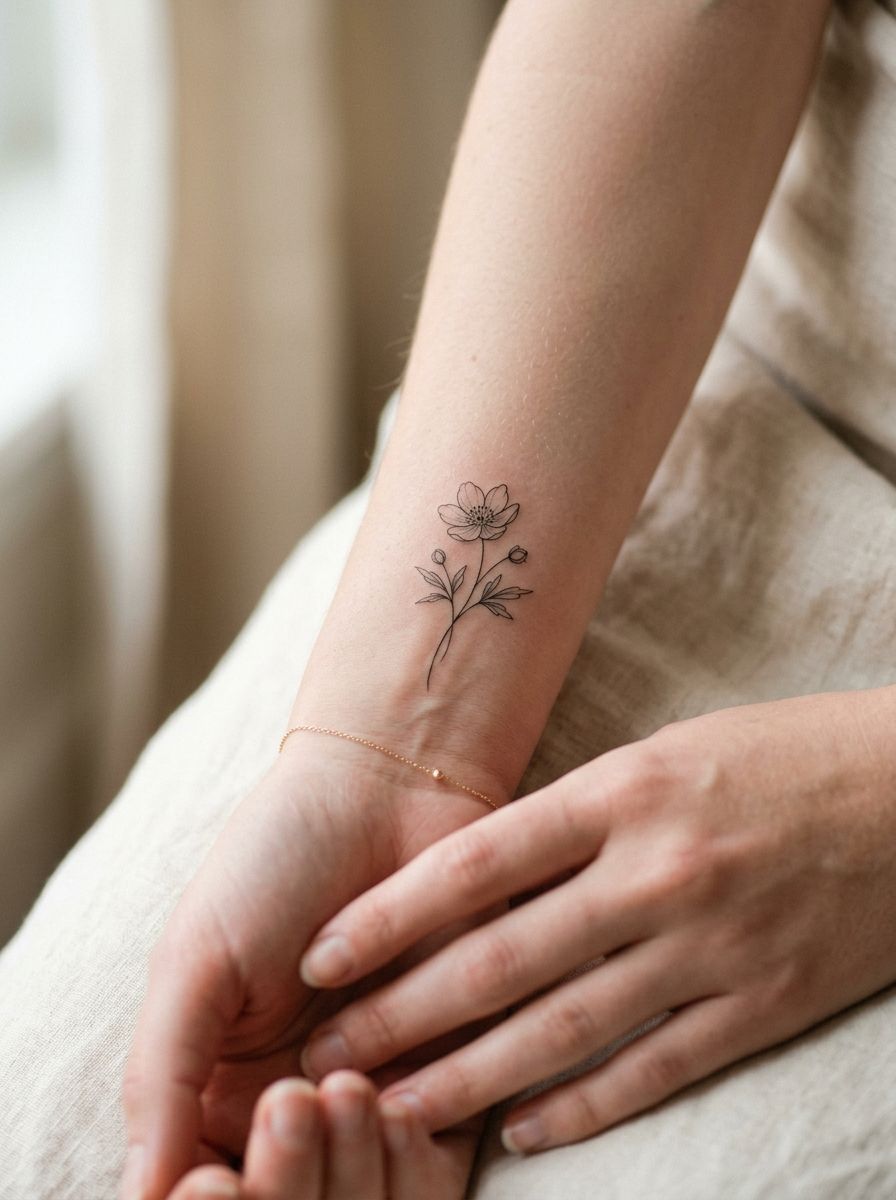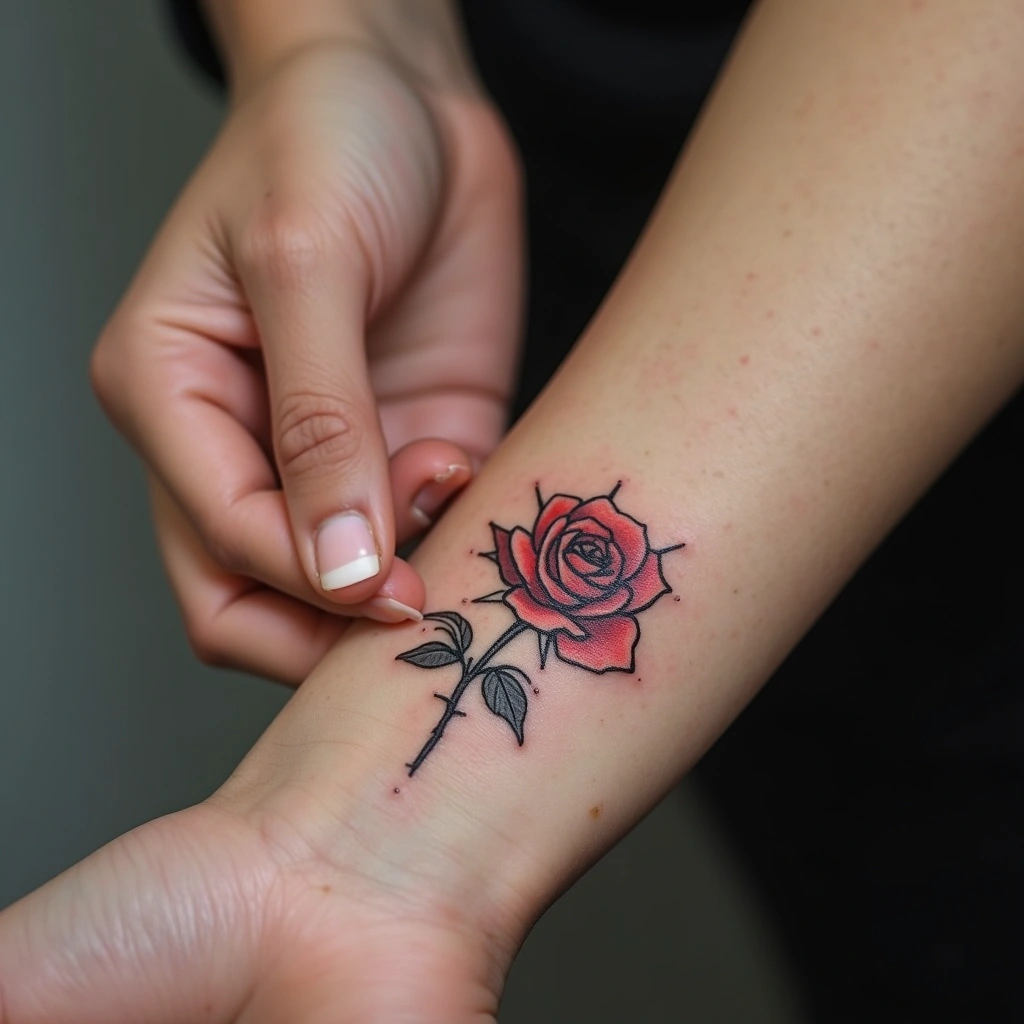
The wrist is the placement I get asked about most by women planning a first tattoo, and it is also the one that quietly goes wrong most often. A wrist tattoo is not simply a small tattoo — it is a small canvas with a hinge running through the middle of it, and designs that ignore that hinge are the ones that look tired three years later.
When I compare healed wrist pieces against their day-one photos, the pattern repeats itself. Open shapes with breathing room hold their form; dense detail crammed into two inches closes up and turns grey.
So this guide is organised the way I would actually talk you through it: 24 designs grouped by style, then the placement and sizing calls that matter more than the design you pick. If you are leaning toward the very smallest end, our guide to tiny wrist tattoo ideas for women goes further in that direction.
One thing before we start — everything here is design guidance, not medical advice. For anything touching healing, reactions, or existing skin conditions, your artist and a doctor are the right people to ask.
Which Wrist Placement Is Right for You?
The same design behaves differently depending on which face of the wrist it sits on. This is the comparison I sketch out for people before they commit.
| Placement | How it tends to feel | How it tends to wear | Best suited to |
|---|---|---|---|
| Inner wrist | Usually the sharpest of the four — thin skin, close to nerves and tendons | Little sun exposure, so colour holds well; fine lines can soften | Private, meaningful pieces you see yourself |
| Outer wrist | Generally the most tolerable spot on the wrist | Most sun-exposed face; fades fastest without sunscreen | Designs meant to be seen by others |
| Side of wrist (thumb side) | Bony and often sharp over the wrist bone | Rubs against sleeves, watches and desks — can blur | Slim vertical designs and small script |
| Wraparound bracelet | Varies section by section; the inner stretch is the hardest part | Alignment matters — a poorly planned join is visible forever | Mandala, vine and chain designs with an experienced artist |
What Actually Affects How a Wrist Tattoo Ages
Line weight does more work than style. Hairline single-needle work looks exquisite fresh, but on a joint that flexes thousands of times a day it is the first thing to soften.
Spacing is the second factor. Any two lines drawn close together will migrate toward each other as ink settles, which is why a design that looked airy on paper can read as a solid smudge at arm’s length after a few years.
Size is the third. In my experience the wrist rewards restraint: a design around two to three inches has room to hold detail, while the same artwork shrunk to an inch loses whatever made it interesting.
Then there is sun. The outer wrist sits face-up whenever your arm is at your side, and it takes more UV than almost anywhere else on the body. Sunscreen on a healed wrist tattoo is the single cheapest thing you can do for it.
Pain is a smaller factor than most people expect, but it is real — the inner wrist is thin-skinned and close to the tendons. Our tattoo pain chart puts it in context against other placements.
24 Women’s Wrist Tattoo Ideas, Grouped by Style
Floral and Botanical Designs
Florals are the default request for a reason: they curve, which means they can follow the wrist rather than fight it.
The mistake I see most is a flower drawn flat across the wrist like a sticker. Ask your artist to wrap the stem slightly around the wrist bone and the whole piece stops looking applied and starts looking like it belongs there.
Watercolor botanicals are the exception I hedge on. Every artist I have asked about watercolor on the wrist says the same thing — the soft washes are the first element to lift, and a touch-up in two or three years is normal rather than a failure. If you love the style, go in knowing that. Lavender designs are a good place to see how the style behaves at small scale.
Eucalyptus and olive branch designs are the most forgiving florals on this list, because they are built from repeated simple leaf shapes with natural gaps between them.
Celestial: Moons, Stars and Constellations
A crescent moon sits beautifully in the hollow of the inner wrist, where the natural curve of the skin echoes the curve of the shape.
Constellations are the design I am most cautious about recommending. They are made almost entirely of tiny dots and hairlines, which is precisely the combination that softens on a joint.
If you want one, the fix is scale rather than style: take the same constellation and draw it twenty percent larger with slightly heavier dots. It still reads as delicate and it will still be legible in ten years. If moons are your direction, moon phase designs work particularly well running lengthwise along the wrist.
Minimalist and Geometric Linework
This is the category I steer most first-timers toward, because there is very little that can go wrong with a clean geometric shape.
Symmetry is the catch. A triangle or diamond makes any placement error obvious — if it sits a few degrees off the centre line of your wrist, you will notice it every day.
I always ask for the stencil to be placed with my arm relaxed at my side rather than flat on the armrest, because that is how the tattoo will actually be seen. It is a thirty-second conversation that fixes a permanent problem.
Bolder geometric work like a Celtic knot ages more predictably than fine linework, simply because there is more ink holding the shape. Our broader minimalist tattoo ideas guide has more in this direction.
Symbolic and Meaningful Designs
Symbols are where wrist tattoos earn their keep. The inner wrist is somewhere you glance dozens of times a day without meaning to, which makes it a genuinely good place for something you want to be reminded of.
Infinity loops, tree of life circles and compasses all share a useful property: they are closed shapes, so they hold their outline even as the interior detail softens.
The heartbeat line is the one I would size up. Drawn too small, the peaks compress into a zigzag blur; given a bit more length, it stays crisp and reads instantly.
For anchors and other designs with rope or chain detail, ask your artist to reduce the number of coils rather than shrink them — fewer, clearer elements beat more, muddier ones every time.
Bracelet and Wraparound Styles
A wraparound is the most committed piece on this list and the one that most depends on your artist’s planning rather than the drawing itself.
The join — where the design meets itself on the inside of the wrist — is the whole game. A good artist plans it into a natural break in the pattern; a rushed one leaves a visible seam.
When I have watched these done well, the artist stencils the wrap in two or three sittings’ worth of sections and checks the alignment with the hand in several positions before any needle touches skin. If a mandala is your direction, our mandala tattoo ideas for women guide shows how the geometry scales.
Butterflies, Birds and Winged Designs
Wings need space, which puts these designs in tension with the wrist’s narrow canvas.
A butterfly with genuine interior detail wants around two and a half inches across to keep its wing patterning readable. Below that, ask for a simplified silhouette instead of a shrunken detailed version — they are different drawings, not the same drawing at two sizes.
Hummingbirds work well on the outer wrist, where the skin is a little thicker and holds fine detail slightly better than the inner face.
Nature and Elemental Motifs
Wave linework is one of the few designs that genuinely suits the wrist’s proportions, because it is naturally horizontal and naturally open.
The trap is drawing the swells too close together. I have seen beautiful wave pieces close into a solid band within a few years for exactly that reason — ask for the gaps to be wider than looks right on the stencil.
Feathers run lengthwise, which is the direction the wrist has the most room in. A feather with slightly separated barbs rather than a dense fringe will stay a feather rather than becoming a grey teardrop.
Personal References and Memorial Pieces
Some of the best wrist tattoos I have seen mean nothing to anyone but their owner: a set of musical notes, a pet’s paw print, a date in small script.
These do not need to be impressive. They need to be legible, which usually means fewer elements than you first sketch out.
For memorial work in particular, my advice is to sit with the design for a few weeks before booking. Grief moves, and a design that felt essential in month one sometimes feels different in month four — and there is nothing lost by waiting.
Variations Worth Considering Before You Book
If the standard wrist tattoo does not quite fit what you want, these three variations solve most of the objections I hear.
Move It Half an Inch Up the Forearm
Placing the design just above the wrist crease rather than on it gives you flatter skin, less flex, and noticeably better long-term line retention.
It still reads as a wrist tattoo to anyone looking at it, and it is the change I suggest most often for designs with fine detail.
Go Vertical Instead of Horizontal
A design running up the forearm from the wrist has far more usable room than one running across it, which lets you keep detail you would otherwise have to cut.
Feathers, branches, script and moon phases all suit this orientation better than a horizontal band does.
Choose the Side of the Wrist for Discretion
The thumb-side edge of the wrist is the easiest wrist placement to cover with a watch or a shirt cuff.
The trade-off is friction — that edge rubs against sleeves and desks constantly, so keep designs there simple and expect them to soften a little sooner.
Aftercare and Practical Advice for a Wrist Tattoo
The wrist is a harder heal than most placements for one boring reason: you cannot stop using your hand. Everything you do bends the skin the tattoo is sitting in.
Plan for that. If your job involves a lot of typing, lifting or handwashing, booking the appointment before two quieter days makes a real difference to the first stage of healing. Our full tattoo aftercare guide covers the routine in detail.
Handwashing is the specific complication here. You will wash your hands far more often than you would wash any other freshly tattooed area, so pat the area dry rather than rubbing it and follow whatever moisturising routine your artist recommends. The American Academy of Dermatology has straightforward general guidance on caring for tattooed skin.
Watch straps and bracelets should stay off until your artist says the area is fully healed — usually a few weeks, though it varies. And once it is healed, sunscreen on the outer wrist is the difference between a tattoo that looks sharp at year ten and one that does not.
If you notice spreading redness, swelling that worsens after the first few days, heat, pus, or a fever, that is a doctor’s call rather than an internet one. The Mayo Clinic outlines the risks worth knowing about before you book, and the FDA covers what is known about tattoo inks. Seek medical advice rather than waiting it out.
Common Mistakes — and What to Do If You Are Still Not Sure
The most common mistake is picking a design at a size the design cannot survive. If your artist suggests going slightly bigger, that is almost always a technical judgement rather than an upsell.
The second is booking a wraparound with an artist who has not done many. Ask to see healed photos of their wrap work specifically, not just their portfolio in general.
The third is treating a reference photo as a spec. A tattoo photographed on someone else’s wrist was sized for their wrist — take the idea, not the dimensions.
If you are still undecided, it usually helps to look sideways rather than harder. Our first tattoo ideas for women guide is a good reset if this would be your first piece, and quote tattoo ideas for women covers the script route, which follows a different set of rules to imagery.
And if you are unsure about size specifically, our tattoo size guide gives you real measurements to hold against your own wrist before the appointment.
Frequently Asked Questions
Do wrist tattoos hurt more than other placements?
For most people the inner wrist is on the sharper end of the scale, because the skin is thin and sits close to bone, tendons and nerves. The outer wrist is generally more comfortable. That said, pain varies enormously between individuals and the sessions are short — most small wrist designs take well under an hour. If you are anxious about it, tell your artist; they can break the work into shorter passes.
How long does a wrist tattoo take to heal?
The surface usually looks settled within two to three weeks, while the deeper layers typically take a couple of months to finish healing. The wrist can run a little slower than static placements because the skin flexes constantly with hand movement. Follow your artist’s specific instructions rather than a generic timeline. If anything looks or feels wrong — spreading redness, worsening swelling, discharge — contact a doctor.
Will a wrist tattoo fade faster than one elsewhere?
The outer wrist does tend to fade sooner than covered placements, mainly because of sun exposure and friction from sleeves, watches and desks. The inner wrist holds up better since it is shaded most of the time. Daily sunscreen once healed makes a genuine difference. Many wrist tattoos need a touch-up at some point, and fine-line and watercolor work more often than bold linework.
Can I cover a wrist tattoo for work?
Usually, yes. A watch, a wide bracelet or a long sleeve covers most wrist designs, and the thumb-side edge is the easiest face to hide. Medical-grade cover-up makeup works for occasional situations like interviews. If coverability is a firm requirement, tell your artist before the stencil goes on so placement can be planned around it.
What size should a wrist tattoo be?
In practice, most wrist designs sit between one and three inches, and I would push toward the upper end of whatever your design needs. Detailed work — butterflies, mandalas, anything with interior patterning — needs the extra room to stay readable as it ages. Simple linework can go smaller safely. The honest test is to draw it at the size you are considering and look at it at arm’s length.
Quick Summary
- The wrist flexes constantly, so open shapes and adequate spacing matter more than the style you choose.
- Inner wrist is more private and better protected from sun; outer wrist is more visible and fades faster.
- Most wrist designs work best somewhere between one and three inches — size up rather than down when in doubt.
- Florals, clean geometric linework and closed symbols like infinity loops and compasses age most reliably.
- Constellations, watercolor and very fine single-needle work look stunning fresh but soften soonest.
- Wraparound bracelets live or die on how the join is planned — check healed photos of your artist’s wrap work.
- Handwashing and hand movement make the wrist a slightly harder heal; plan the appointment around a quieter couple of days.
- Sunscreen on a healed wrist tattoo is the cheapest thing you can do to keep it sharp long term.