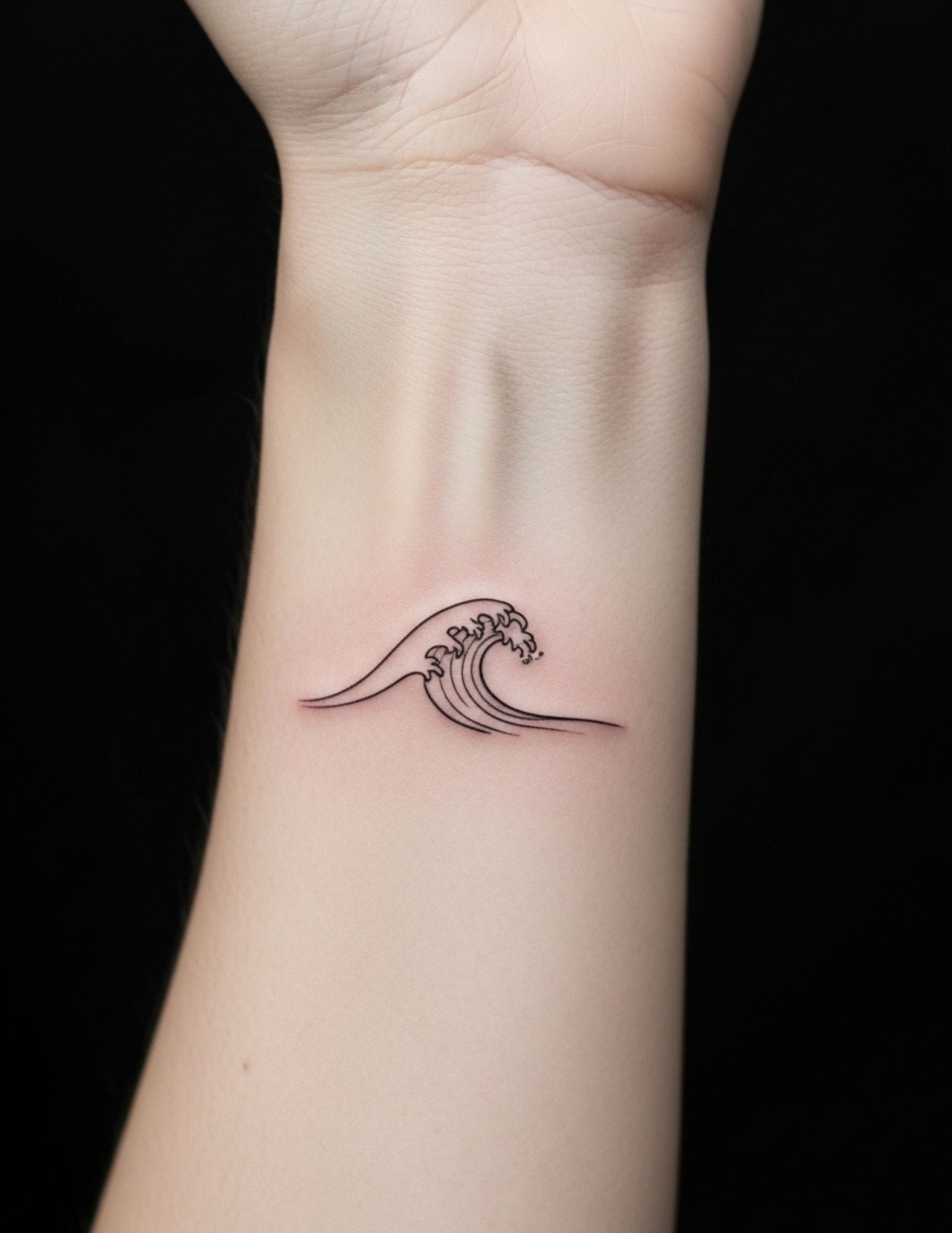
Size is the decision most people spend the least time on, and it is the one that quietly decides whether a tattoo still looks good in ten years. The right tattoo size is set by the design’s detail level first, the placement second, and your budget a distant third.
I have sat in consultations where someone arrived with a gorgeous reference photo and a number in their head — “about two inches” — and the two were simply incompatible.
In my experience the fix is almost never to simplify the dream. It is to move the tattoo somewhere the body gives you more room, or to accept an extra inch and stop negotiating with physics.
This guide walks through the size categories artists actually use, how placement changes the math, and the specific questions to ask before the stencil goes on. If you are leaning small, start with small meaningful tattoo ideas for women to see what genuinely survives at that scale.
Which Tattoo Size Is Right for You?
This is the working framework I use when someone asks where to start. Measurements refer to the tattoo’s longest dimension.
| Size | Works best for | Typical placements | Rough session time |
|---|---|---|---|
| Micro (under 1 in) | Single symbols, initials, tiny outlines | Finger, behind the ear, inner wrist | 15–30 minutes |
| Small (1–2 in) | Simple bold shapes, short script, small florals | Wrist, ankle, collarbone | 30–60 minutes |
| Medium (2–4 in) | Illustrative pieces, animals, moderate shading | Forearm, calf, shoulder blade | 1–3 hours |
| Large (4–6 in) | Portraits, realism, dense ornamental work | Upper arm, thigh, chest panel | 3–6 hours |
| Extra large (6 in+) | Sleeves, back pieces, full panels | Back, full arm, ribs to hip | Multiple sessions |
Treat the session times as a starting point only. Density of shading, colour packing and your own pain tolerance all move them.
What Actually Determines Minimum Tattoo Size
Every design has a minimum viable size: the smallest it can be printed before it stops reading as the thing it is supposed to be.
That minimum is driven by the tightest gap in the artwork, not by the overall shape. If two lines sit close together in the reference, they set the floor for the whole piece.
Tattoo ink spreads slightly in the skin over years, which is why this matters so much. Lines thicken, negative space between elements narrows, and a design that was crisp on day one can read as a solid blob later.
Fine line and micro-realism styles are the most exposed to this, because they lean on gaps that are already narrow. Bold traditional work is the most forgiving — it was designed in an era when artists assumed the tattoo would blur and built in room for it.
In my experience, when an artist says a design needs to be bigger, that is a technical judgement rather than an upsell. They are the one whose portfolio carries the photo five years from now.
Tattoo Size Categories Explained
There is no official standard here. What follows is the practical framework most studios use, with the honest limits of each band.
Micro Tattoos (Under 1 Inch)
Micro work is a specialism, not just a small version of normal tattooing. It needs single-needle or very tight groupings and an artist who does it regularly.
What survives at this scale: a single closed shape, two or three letters, a simple outline with clear internal space.
What does not: anything with facial features, layered petals, or more than a couple of internal lines. When I have seen micro portraits attempted, they read as a smudge within a few years.
Micro pieces also need touch-ups more often than larger work, particularly on high-friction spots. If you are drawn to this scale, finger tattoo ideas is worth reading first for what holds up.
Small Tattoos (1 to 2 Inches)
This is the most popular first-tattoo size, and for good reason — short session, modest cost, easy to place discreetly.
Bold simple imagery works: a crescent moon, a small bird silhouette, a short word in a clean font, a single-stem flower.
The trap is detail creep. People find a reference with delicate shading and assume it will scale down. It will not, and the artist redrawing it to work at two inches is doing you a favour.
Placement matters more at this size than any other, because a small tattoo is easily swallowed by a large flat area. Inner wrist, ankle and collarbone frame it naturally — see wrist tattoo ideas for placements that suit this band.
Medium Tattoos (2 to 4 Inches)
Medium is where a tattoo stops being a symbol and starts being an image. You get room for shading, some depth, and a recognisable subject.
Animals, botanical illustrations, ornamental patterns and most script quotes sit comfortably here.
If you are unsure between small and medium, medium ages better. Every artist I have asked says the same thing, and the extra inch costs far less than a rework.
The forearm is the natural home for this band — it is flat, visible and easy to sit for. Forearm tattoo ideas covers what suits that placement.
Large Tattoos (4 to 6 Inches)
At this size an artist can finally build texture: smooth gradients, believable fabric, real depth in a portrait.
Realism, neo-traditional and heavy black-and-grey work almost all live here or above. Below four inches these styles start losing the tonal range that defines them.
Expect a longer sit and, often, a second session for colour or refinement. Budget for the touch-up appointment rather than being surprised by it.
Large pieces also need to follow the muscle rather than sit on it — a design squared off against a curved bicep will look off from every angle except straight on.
Extra Large and Full Coverage (6 Inches and Up)
Past six inches, measurements stop being the useful unit. The conversation becomes about body zones: half sleeve, full back, ribs to hip.
These pieces are planned as a whole and executed over multiple sessions, often months apart to allow healing between them.
You are choosing an artist far more than a design at this scale. Look for healed photos of finished large work in their portfolio, not just fresh shots.
If this is where you are heading, half sleeve tattoos and back tattoo designs both show how these are composed around the body.
How to Measure Before Your Appointment
Print the design at the size you think you want and cut it out. Tape it to the spot and wear it for a day.
This sounds fussy. It is the single most useful thing I have ever told anyone before a consultation, and it takes ten minutes.
You will notice immediately whether it is lost on the space or crowding it, and you will walk in with a number instead of a vague gesture.
How Placement Changes the Right Size
The same design needs different dimensions depending on where it lands. Body area, curvature and skin movement all change the answer.
Flat, Stable Areas
Outer forearm, calf, shoulder blade and upper back hold detail best. The skin moves less and the surface is close to flat, so lines stay where the artist put them.
If a design is borderline for detail, moving it to one of these areas is often enough to make the size work.
High-Movement and High-Friction Areas
Hands, fingers, feet and the inner wrist see constant movement and rub against everything. Ink there fades and blurs faster than anywhere else.
The practical consequence: go simpler and slightly bolder than you would elsewhere, and plan on touch-ups.
Curved and Wrapping Areas
Ribs, ankles and the upper arm curve away from the eye. A tattoo sized for a flat drawing loses a chunk of itself around the curve.
Artists usually add length to compensate, so the piece reads correctly from the angle you will most often be seen at. Rib tattoo ideas shows how ribcage work is composed around that curve.
Narrow Channels
The spine, the inner arm and the side of the finger are narrow corridors. Width is capped, so the only direction to grow is length.
Vertical designs — script, florals on a stem, linear ornamental work — suit these naturally, which is why fine line spine work is such a common request.
Getting the Size Right: Practical Advice
Ask your artist for the minimum size they would tattoo your specific design, then ask what they would recommend. The gap between those two numbers tells you how much margin you have.
Size up rather than down when you are genuinely torn. Regret about a piece being slightly larger than planned is rare; regret about detail closing up is common.
Budget by session time rather than by inches. A dense small piece can take longer than a simple larger one, so ask for an hourly figure and an honest time estimate — this guide to tattoo pricing breaks down how pricing actually works.
Finally, think about what goes next to it. If you might extend into a sleeve later, size and place the first piece so it can become part of something, not an obstacle in the middle of it.
Common Sizing Mistakes
The most frequent one is sizing to a price rather than to a design. You end up paying full price for something that will need covering up.
The second is copying a reference photo’s dimensions without checking where it sat on that person’s body. A four-inch piece on a slim forearm is not a four-inch piece on a broad one.
The third is ignoring how the tattoo will age. Anything that relies on gaps under about a millimetre is borrowing against its own future.
On the health side, size affects healing too: larger pieces mean a bigger open wound and a longer, more careful aftercare window. The American Academy of Dermatology’s guidance on caring for tattooed skin is a solid baseline, and the FDA’s consumer page on tattoo safety covers ink and reaction risks.
This article is not medical advice. If a healing tattoo of any size becomes hot, swollen, increasingly painful or starts weeping after the first few days, see a doctor rather than waiting it out, and take any question about allergies or existing skin conditions to a professional before you book.
Frequently Asked Questions
What is the smallest a tattoo can realistically be?
Around half an inch is the practical floor for most designs, and only for very simple shapes. Below that, the lines that make the image readable start sitting too close together. Artists who specialise in micro work can go smaller, but they achieve it by stripping detail out, not by tattooing finer. Ask to see healed photos before committing at this scale.
Does a bigger tattoo hurt more?
Not necessarily more intensely, but usually for longer, which is what most people actually find hard. Pain is driven far more by placement than by size — ribs, sternum and the inner arm are reliably rougher than the outer forearm regardless of dimensions. A large piece on a forgiving area can be easier than a small one on a bony spot. Breaking a big tattoo into multiple sessions is normal and helps a lot.
Can a small tattoo be made bigger later?
Yes, and it is done all the time — the original is usually absorbed into a larger composition rather than literally enlarged. It works best when the first piece was clean, bold and not too dark. Very dark or heavily shaded small tattoos limit the options, because there is less the artist can build around. Mention future plans at your first consultation so the piece is placed with room to grow.
How do I know if my design is too detailed for the size I want?
Print it at full size and look at it from arm’s length. If any two lines look like they are touching, they will merge in healed skin. A more reliable test is simply to ask the artist for the minimum size they would tattoo it at — if that number is above what you had in mind, you have your answer. Most artists will happily redraw a reference to work at your preferred scale.
Does tattoo size affect how much it costs?
Size influences cost mainly through time, not area. Most studios charge either an hourly rate or a shop minimum for very small pieces, so a quick micro tattoo often costs the shop minimum regardless of how tiny it is. A dense, heavily shaded medium piece can cost more than a simple large one. Ask for an hourly rate and a time estimate rather than a price per inch.
Quick Summary
- Detail level sets the minimum size — the tightest gap in the design decides it, not the overall shape.
- Ink spreads over years, so leave more space between elements than looks necessary on paper.
- Micro (under 1 in) suits single simple shapes only; small (1–2 in) suits bold symbols and short script.
- Medium (2–4 in) is the sweet spot for illustrative work and ages better than small.
- Large (4–6 in) and above is where realism, portraits and dense shading actually work.
- Placement changes the answer: flat areas hold detail, hands and feet blur, curves need extra length.
- Print the design, tape it on for a day, and bring a real measurement to your consultation.
- When torn between two sizes, go larger — and ask for an hourly rate rather than a price per inch.