The back is the one placement where a tattoo artist gets to stop compromising. No wrist bone to work around, no elbow crease chopping the design in half, no seven-inch limit on the composition.
If you want a tattoo that reads as a single picture rather than a collection of pieces, the back is the only canvas on the body that lets you do it properly.
I have sat in on enough back sessions to notice the same thing every time: the artist spends longer on the stencil placement than on the first hour of linework. Getting the design centred on a spine that moves is the hard part.
This guide walks through the back tattoo designs for men that actually hold up over years of wear, what each one costs you in chair time, and how to choose between them. If you already know you want something with a story behind it, the symbolic back tattoo guide goes deeper on meaning.
Which Back Tattoo Layout Is Right for You?
Before you pick a subject, pick a footprint. The layout decides your budget, your session count and how much of it anyone will ever see.
| Layout | Typical Sessions | Pain Level | Best For |
|---|---|---|---|
| Full back | 6–15+ sessions over 1–3 years | Moderate on the shades, sharp over spine and ribs | Japanese body suits, narrative scenes, large realism |
| Upper back / shoulder blades | 1–4 sessions | Among the more forgiving areas on the body | Wings, waves, crosses, first back tattoos |
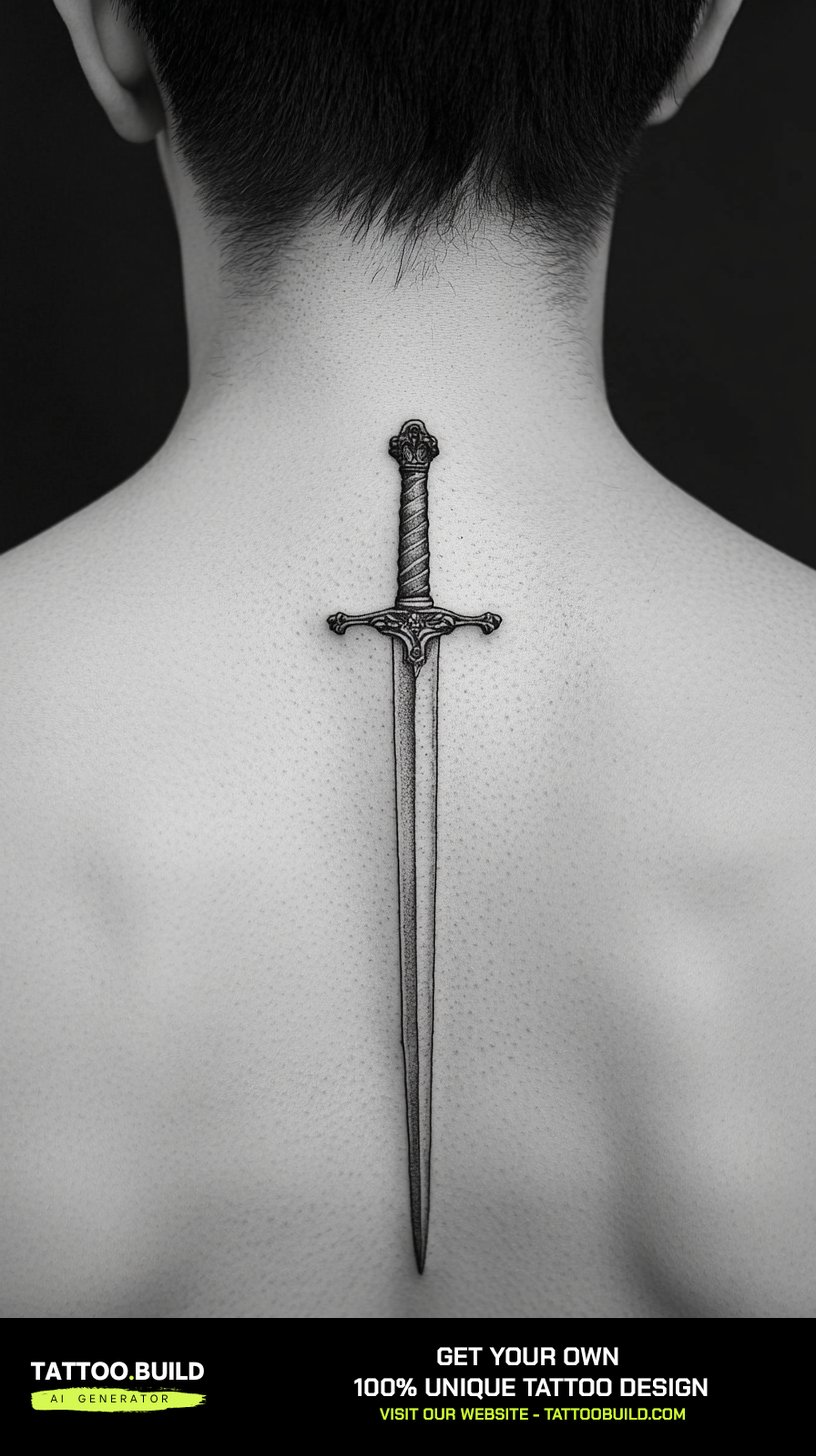
| Spine | 1–3 sessions | High — thin skin directly over bone | Daggers, feathers, script, snakes, ornamental columns |
| Lower back | 1–3 sessions | Moderate, worse near the tailbone | Extending an existing piece downward, base ornamentation |
| Back panel (half back) | 3–6 sessions | Moderate | Testing the water before committing to a full back |
Session counts vary a lot between artists. A shader working at speed on a simple black and grey background covers ground that a fine-line specialist would take three times as long over.
What Makes the Back Different From Every Other Placement
The back has the largest area of flat, low-movement skin on the body. That matters more than most people realise.
Skin that stretches and folds — the inner elbow, the knuckles, the ribs when you breathe — distorts a design and drops ink faster. The back does very little of that.
In practice, back tattoos tend to age better than almost anything below the waist or on the hands. The skin sees less sun, takes less friction, and does not flex through a full range of motion every day.
The trade-off is that you cannot see it. Every artist I have asked about back work says the same thing about clients: the people who love their back pieces long-term are the ones who got them for themselves, not for an audience.
The other trade-off is time. A full back is not a tattoo you get, it is a project you start — usually a year or more of appointments spaced four to eight weeks apart to allow healing between passes.
Back Tattoo Designs for Men That Hold Up
These are the categories that come up again and again in back portfolios, and the honest version of what each one demands from you.
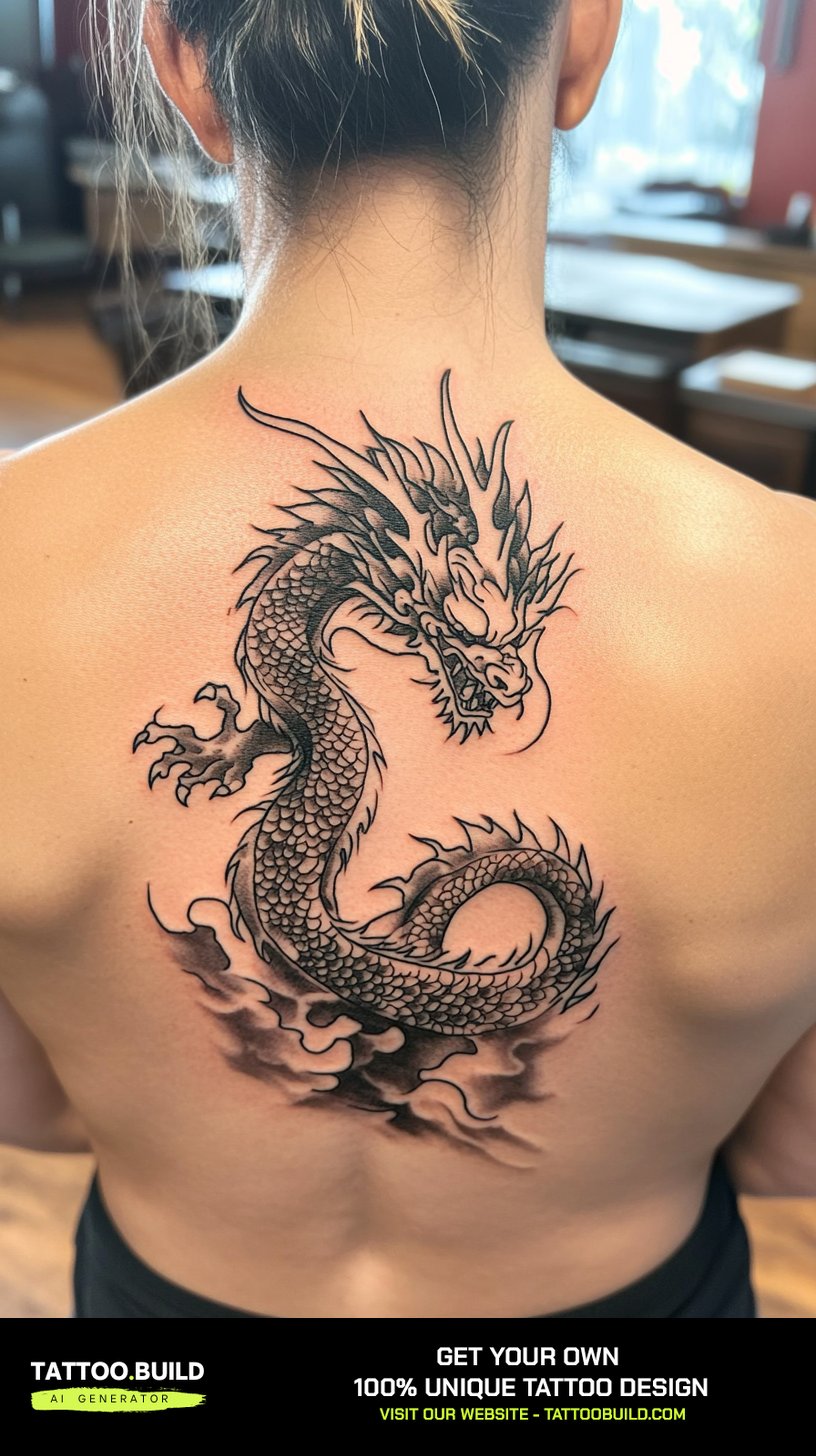
1. Japanese Dragons and Irezumi-Style Full Backs
Japanese back work is the oldest solved problem in large-scale tattooing. The style was built for exactly this canvas, which is why it fits it so well.
Wind bars, cloud work and water form a background that flows around the shoulder blades and down the spine, so the composition never feels like a sticker dropped onto skin.
A dragon is the classic centrepiece, but koi, tigers, and Fu dogs all follow the same structural logic. The Japanese tattoo design guide covers the traditional meanings if you want the subject to be more than decoration.
Expect this to be the longest commitment on the list. A traditionally structured back piece is usually a multi-year build, and it is worth finding a specialist rather than a generalist — the rules of the style are specific enough that dragon tattoo work done outside them tends to look off to anyone who knows it.
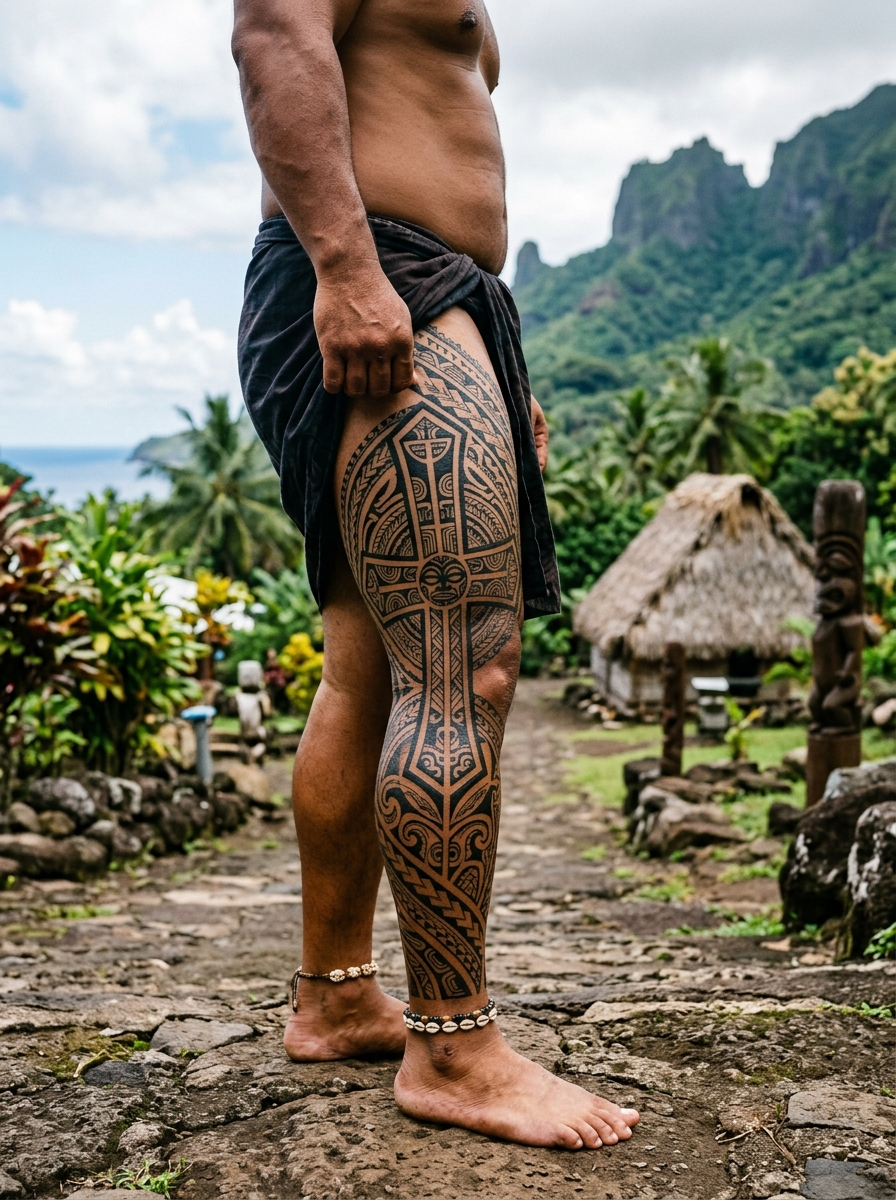
2. Tribal and Polynesian Blackwork
Solid blackwork across the shoulders is one of the few designs that genuinely flatters the shape of a back rather than just sitting on it.
Good Polynesian-influenced work maps the pattern to the muscle structure, so the panels widen across the lats and narrow at the spine.
This style is also the most forgiving over a long life. Heavy black holds its edges when fine detail would have blurred, which is why decades-old tribal work often still reads cleanly.
If you are drawn to the density but not the cultural specifics, contemporary blackwork gets you similar visual weight with an abstract or ornamental vocabulary instead.
3. Trees, Roots and Nature Scenes
A tree is the single most natural fit for the back’s geometry: trunk on the spine, canopy across the shoulders, roots spreading into the lower back.
It scales in both directions. The same idea works as a delicate fine-line piece between the shoulder blades or as a full-back landscape with weather and terrain.
I have seen this one go wrong when the canopy is packed too densely with tiny branches. Fine detail at that scale is the first thing to soften after ten years.
Ask your artist to build in some open skin. A tree with breathing room in the branches stays readable; one solid mass of thin lines slowly becomes a grey cloud.
4. Spine Tattoos: Daggers, Snakes and Ornamental Columns
The spine is a natural line, and vertical subjects — blades, feathers, serpents, script — use it without any design gymnastics.
It is also genuinely one of the more painful places to be tattooed. The skin sits directly over bone with very little between, and the vibration travels.
Most people manage it in stages rather than one long sitting. If pain is a real concern for you, the tattoo pain guide is worth reading before you book.
Centring is everything here. A spine piece that is two millimetres off-axis is obvious to everyone, so expect a long stencil session and be willing to stand up and have it re-marked.
5. Religious and Symbolic Pieces
Crosses, angels and sacred architecture are among the most requested back subjects, and the upper back suits them because it gives the design a natural vertical axis.
The thing that separates a good religious back piece from a flat one is usually depth of shading rather than the subject itself.
A cross rendered as carved stone, with real light direction and cast shadow, reads as an object on the body. The same shape in flat black reads as clip art.
If the piece matters to you personally, bring reference for the specific tradition you are drawing from — the ornamentation on a Celtic cross, an Orthodox cross and a Gothic one are not interchangeable.
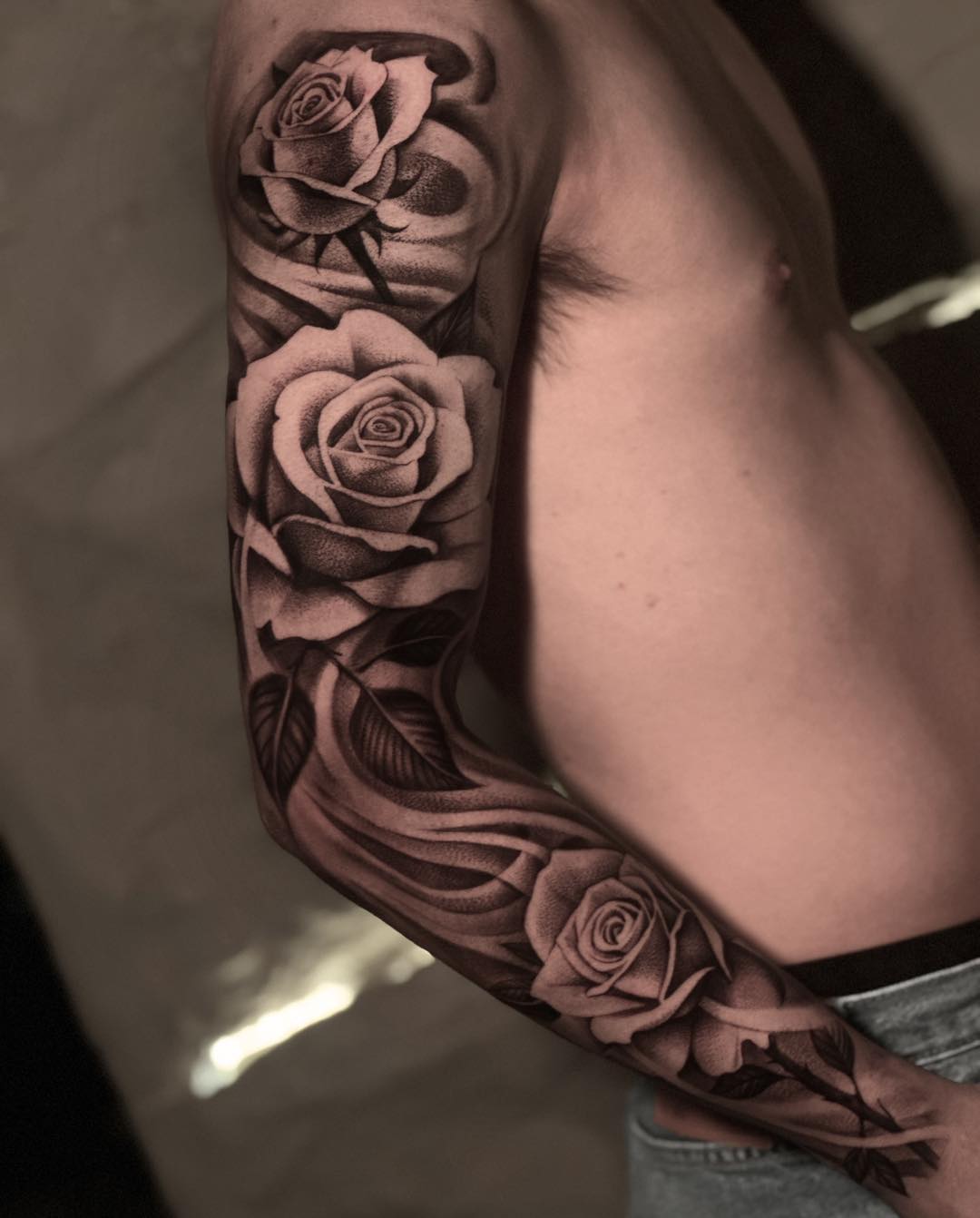
6. Realism: Watches, Compasses and Objects
Black and grey realism on the back gives an artist room to work at a scale where realism actually succeeds.
Small realism is a losing battle — detail that fine has nowhere to go as it settles. At back scale, the same artist can put in the tonal range the style needs.
Objects photograph better than faces at this size. A pocket watch, a compass rose or an anchor gives you hard edges and metal reflections, which are easier to render convincingly than skin tones and eyes.
If you want a portrait on your back, look at the artist’s healed work specifically, not just fresh photos. Realism looks its best on day one and tells you the truth at year three.
7. Minimalist and Geometric Work
Not every back tattoo needs to fill the back. Some of the pieces I have liked most are a few inches wide, sitting high between the shoulder blades.
Mountain ranges, single-line horizons and geometric sun-and-peak compositions all work at that scale because they are simple shapes rather than dense detail.
They also leave the rest of the canvas open. Nothing stops you adding to it later, and geometric designs in particular extend well into larger compositions.
The honest caveat: very fine single-line work is the most likely on this list to need a touch-up. Thin lines with no black weight behind them fade sooner.
8. Wings, Warriors and Narrative Scenes
Wings across the shoulder blades are the most literal use of the back’s shape, and they still work when the execution is strong.
The modern versions lean into texture — individual feather rendering, or mechanical and armoured elements breaking through the plumage.
A narrative scene is the other end of this. One figure in a landscape, using fog and negative space to suggest depth, tells a story a symbol cannot.
These are ambitious pieces. Ask to see a full back the artist has completed, not a composite of sections, because composition at this scale is a separate skill from linework.
If a Full Back Feels Like Too Much
Committing your entire back on a first tattoo is a big ask. There are sensible intermediate steps.
Start With a Panel
A half-back or single-shoulder panel gives you the experience of a large piece and can be extended into a full back later, provided the artist designs it with that in mind from the start.
Move the Design to a Sleeve
Many back subjects translate directly to an arm. A full sleeve gives you comparable scale with the advantage that you can actually see it.
Stay on the Shoulders
The upper back and shoulder area is the most forgiving part of the back to sit through, and shoulder tattoo designs cover a lot of the same subjects at a third of the commitment.
Build It in Chapters
Some of the best back pieces I have seen were not planned as one image. They grew over years around a strong central element, which only works if you stay with one artist who keeps the through-line consistent.
Practical Advice Before and After the Chair
Back sessions are long. Eat properly beforehand, sleep the night before, and skip alcohol the day before — it thins the blood and makes a long session harder on both of you.
Aftercare on a back piece has one complication no other placement does: you cannot reach it. Arrange for someone to help, or accept that you will be doing awkward things with a mirror for two weeks. The American Academy of Dermatology aftercare guidance is a reliable baseline, but follow your artist’s specific instructions over anything you read online.
Sleeping is the part people underestimate. A fresh full back means several nights face-down on clean sheets, and it is worth planning around.
On risk: tattooing breaks the skin, so infection and allergic reaction are real possibilities, and some inks — red pigments especially — are more associated with reactions than others. The Mayo Clinic overview of tattoo risks is worth reading. If a healing tattoo becomes hot, swollen, increasingly painful after the first few days, or starts producing pus, see a doctor rather than asking the internet. Never attempt to tattoo or remove a tattoo yourself.
Still Not Sure? Common Mistakes to Avoid
The most expensive mistake is picking the artist second. Choose the artist whose portfolio already contains what you want, then design around their strengths.
The second is filling the back too early. Leaving planned negative space feels wasteful in year one and looks deliberate in year five.
The third is mixing styles without a plan. A photorealistic portrait next to traditional Norse-influenced work can be done, but it needs an artist who is consciously bridging them.
And the fourth is choosing a subject you cannot explain to yourself. If you are leaning toward text, quote tattoo ideas are worth thinking through carefully — wording is far harder to live with than imagery.
Frequently Asked Questions
How long does a full back tattoo take?
Most full back pieces run somewhere between six and fifteen sessions, spread across a year or more. Sessions are typically three to six hours, with four to eight weeks between them so the skin can heal fully before the next pass. The exact number depends heavily on the style — dense colour packing takes considerably longer than open black and grey. Your artist can give you a realistic estimate once the design is finalised.
How much does a back tattoo cost?
Pricing is usually by the session or the day rather than by the piece, and rates vary enormously by artist reputation and location. A full back from a sought-after specialist is a multi-thousand-dollar commitment in most markets. It is worth asking for a total range up front rather than being surprised session by session. Paying more for the right artist is almost always cheaper than paying twice.
Is the spine really that painful?
For most people, yes — it is among the sharper areas on the body because the skin sits directly over bone. That said, pain tolerance varies a lot between individuals and the sensation is different from, say, ribs or inner arm. Many people find it manageable in shorter sittings. Talk to your artist about breaking spine work into multiple sessions if you are worried.
Can a back tattoo be extended later?
Usually, but it is far easier if the original was designed with expansion in mind. Tell your artist at the first consultation that you may add to it, and they can leave the edges open rather than closing the composition. Retrofitting a background around a finished standalone piece is possible but constrained. Staying with the same artist makes the eventual result much more coherent.
Will a back tattoo affect my job?
A back tattoo is one of the most easily covered placements, which is part of why it stays popular in professions with dress expectations. Anything above the collar line is the exception — work that runs up the neck is visible in a normal shirt. If workplace policy is a factor, keeping the design below the shoulder line is the safe call.
Quick Summary
- Pick the layout — full back, panel, spine or upper back — before you pick a subject, because it sets your budget and timeline.
- Japanese-style work is the most structurally proven approach to a full back, and the longest commitment.
- Heavy blackwork and tribal designs age the best; very fine single-line work ages the fastest.
- Trees and vertical subjects like daggers, feathers and serpents fit the back’s natural geometry with no design gymnastics.
- The spine hurts — plan for multiple shorter sessions and an unhurried stencil.
- Realism needs scale, so the back is where it works; check the artist’s healed photos, not just fresh ones.
- Arrange help with aftercare before the first session, because you cannot reach your own back.
- Choose the artist first and design to their strengths, and leave some skin open for later.