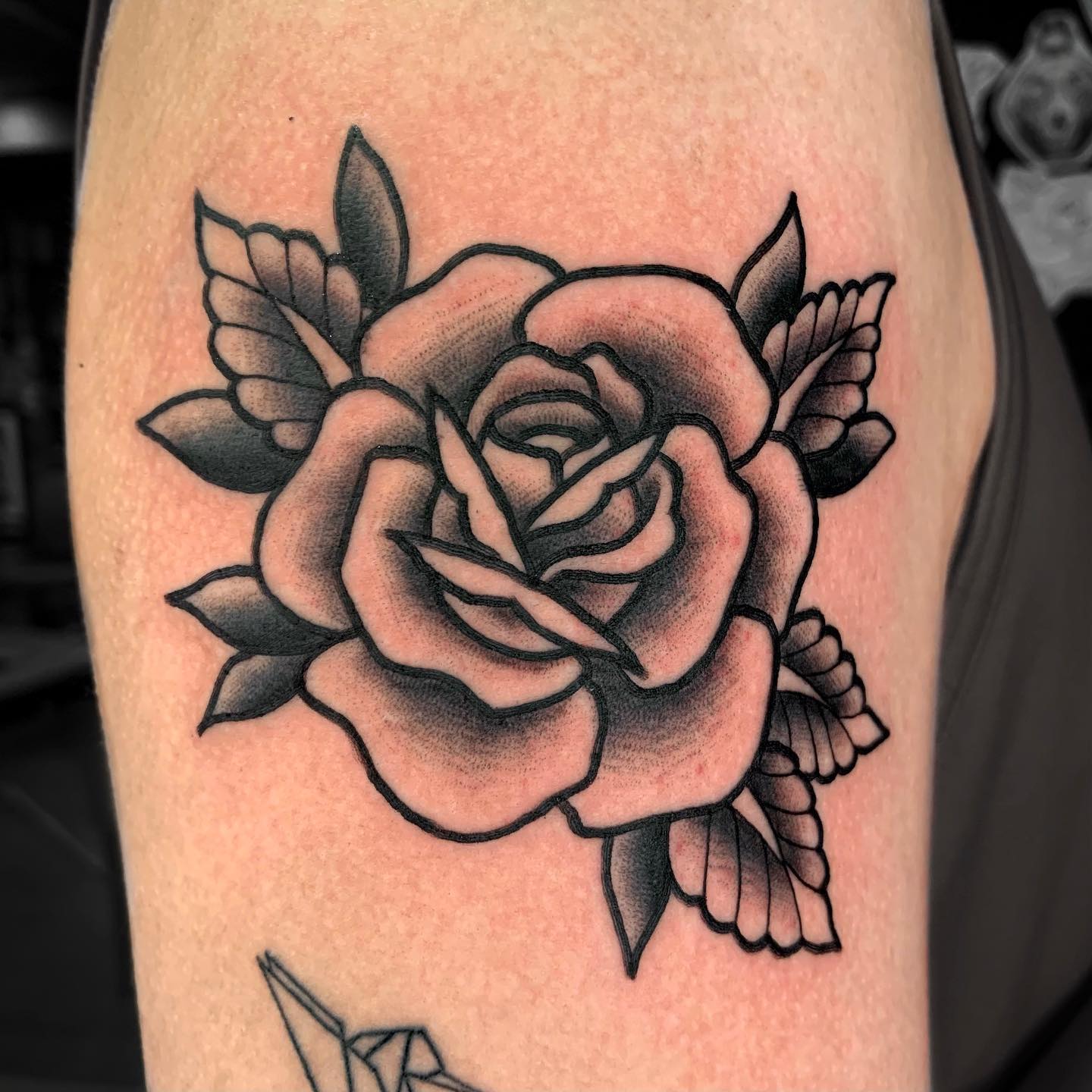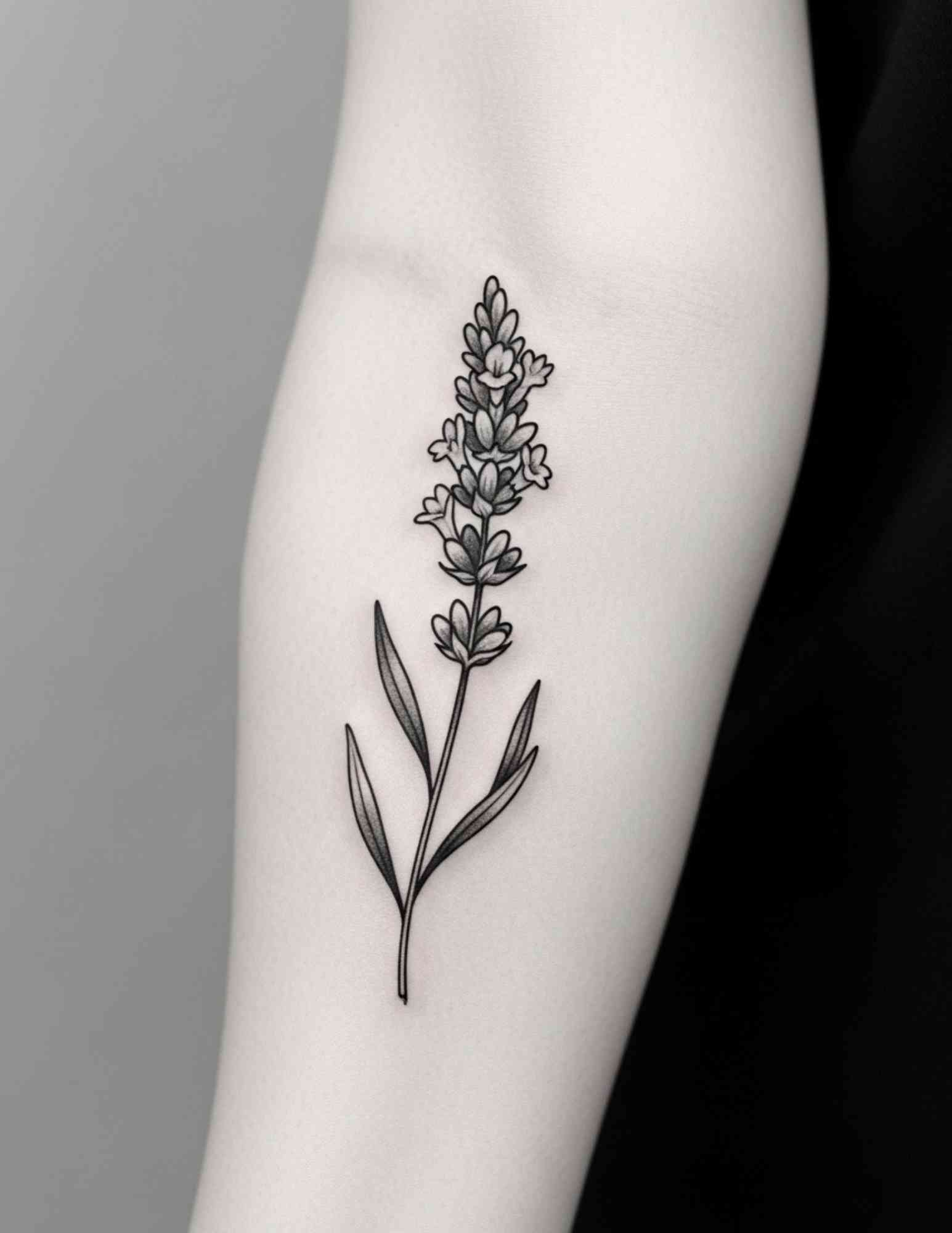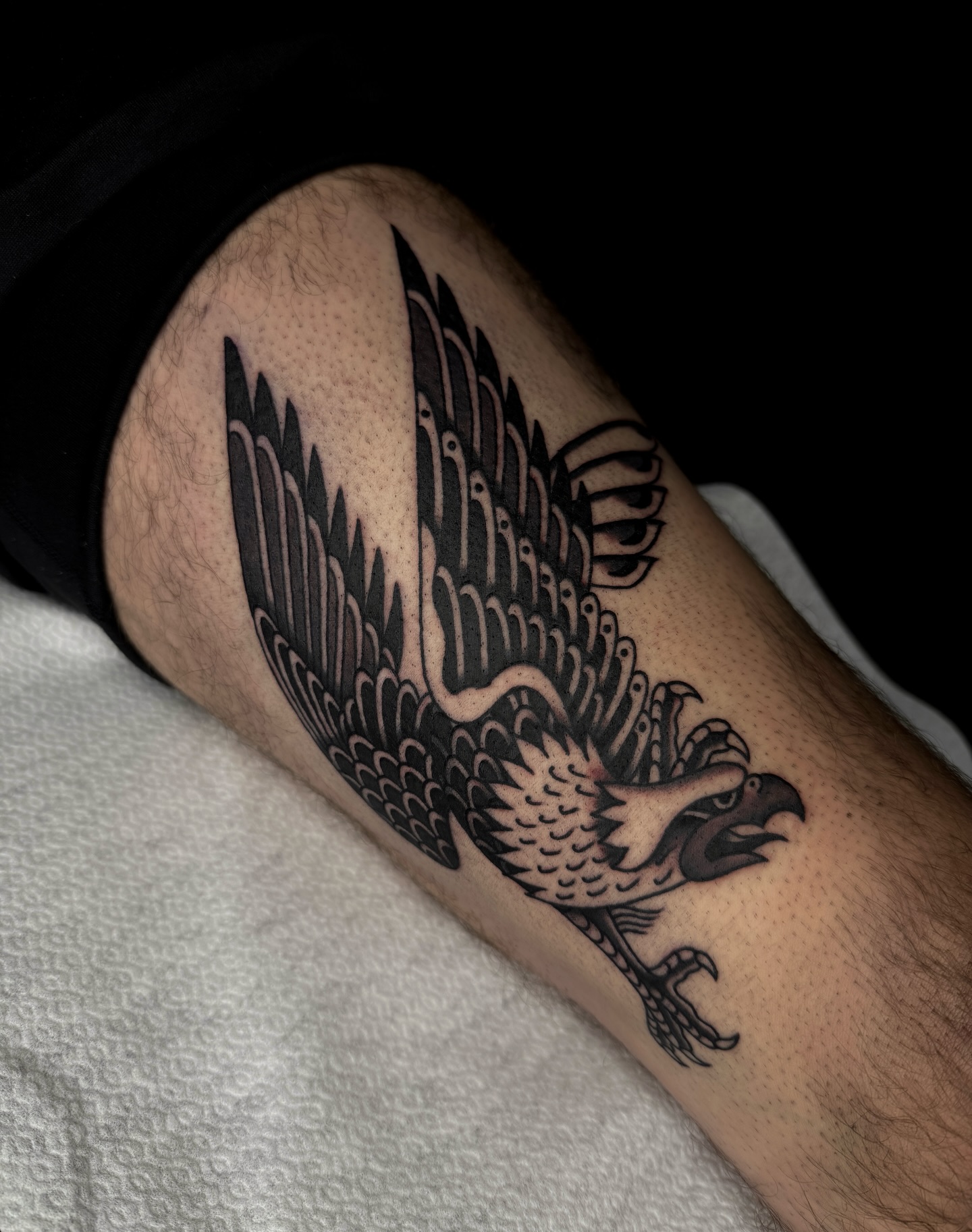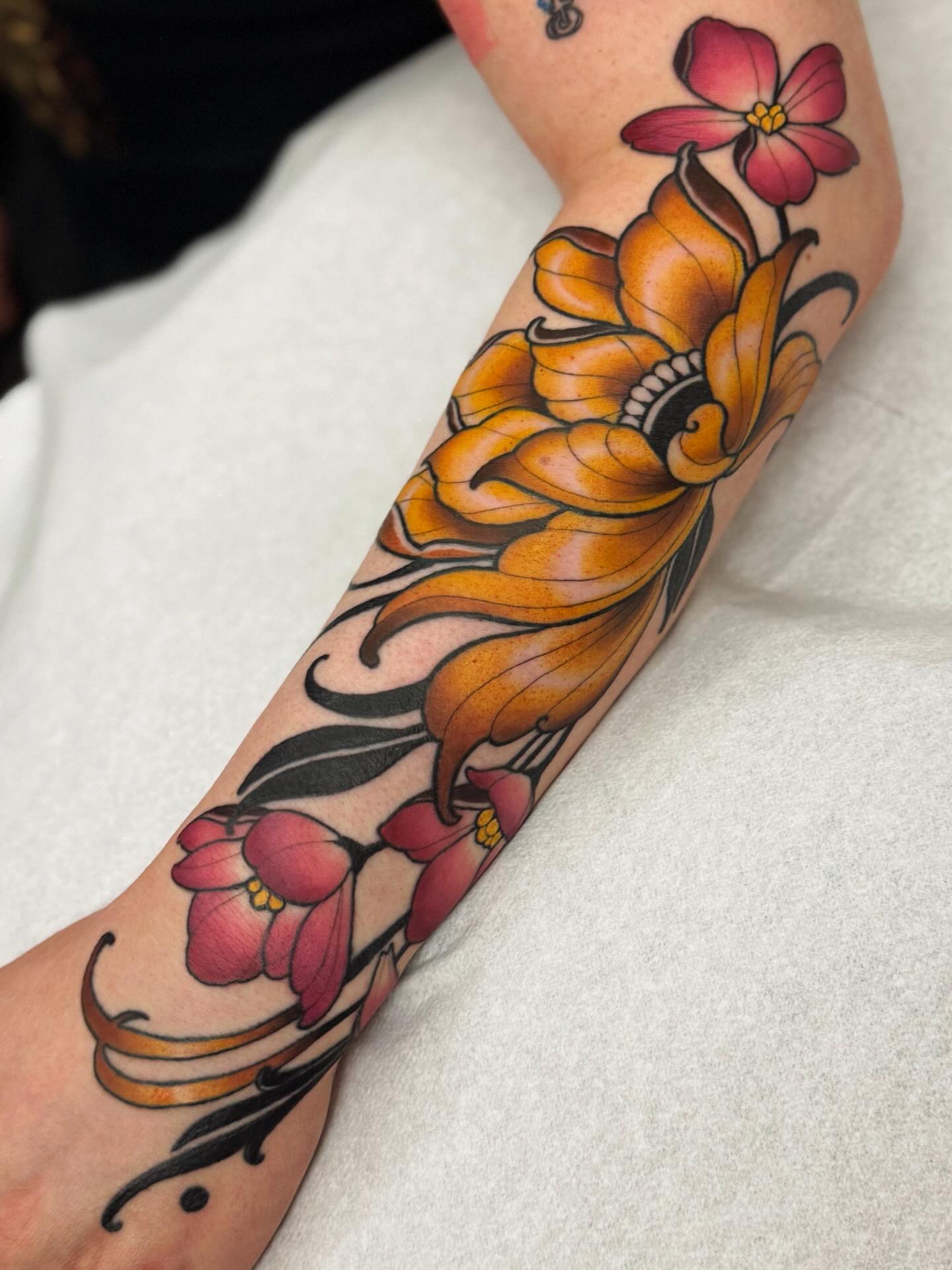
A floral sleeve on a man works or fails on one decision: line weight. The flowers themselves are neutral. What makes a botanical sleeve read as masculine is how heavily it is drawn, how much black sits in it, and how confidently the composition fills the arm.
I have watched a lot of guys hesitate over this, convinced flowers are the wrong call for a full arm. Then they see a dark rose sleeve in person and the hesitation evaporates.
The range here is wider than most people expect. You can go Japanese, blackwork, neo-traditional, fine line, or straight botanical illustration, and each one changes the character of the arm completely. If you are still at the stage of deciding whether flowers suit you at all, our guide to floral tattoo designs for men is a good place to start before committing to a full sleeve.
Below are 18 directions worth considering, starting with the one I see requested more than any other: heavy, dark roses rendered almost entirely in black and grey.
Which Floral Sleeve Style Is Right for You?
Style choice drives everything downstream — session count, cost, how the sleeve ages, and how much your artist can improvise. Here is how the main approaches compare.
| Style | Visual character | Typical sessions | How it ages | Best for |
|---|---|---|---|---|
| Blackwork | Maximum contrast, no grey or colour | 5–8 | Very well; solid black holds longest | Bold, graphic, low-maintenance |
| Black & grey realism | Soft gradients, photographic depth | 6–10 | Light greys soften first; needs touch-ups | Dark roses, skulls, dramatic depth |
| Japanese (Irezumi) | Bold line, flat fills, patterned background | 8–14 | Excellent; built for legibility over decades | Full sleeves with narrative structure |
| Neo-traditional | Heavy outlines plus dimensional colour | 6–10 | Strong, thanks to the outline scaffolding | Colour without losing structure |
| Fine line / botanical | Delicate, illustrative, airy | 4–7 | Thin lines can blur; plan for touch-ups | Subtle sleeves, professional settings |
| Watercolour | Soft washes, bleeding colour edges | 5–8 | Weakest of the group without black anchors | Colour-forward arms with linework underneath |
Session counts above are typical ranges I have seen quoted by artists for full-arm work, not fixed quotes — your artist’s speed, your arm size and your pain tolerance all move the number. For a fuller breakdown of what a full arm actually runs, see our guide on how much a sleeve tattoo costs.
What Actually Makes a Floral Sleeve Read as Masculine
It is not the flower. I have seen peonies on forearms that look like armour and roses that look like wallpaper, and the difference was never the species.
Four things do the work: line weight, black saturation, scale, and negative space. Heavy outlines and deep blacks give a botanical composition graphic authority; thin lines and pastel fills soften it.
Scale matters more than most people realise. Large blooms that command a whole forearm panel read very differently from a scatter of small flowers filling the same space.
Negative space is the one artists fight for and clients resist. Leaving skin bare between elements is what keeps a sleeve legible from across a room rather than turning into grey soup at ten feet.
And flow matters. A sleeve designed around the arm’s natural taper — larger elements at the shoulder, tightening toward the wrist — will always look more intentional than a stack of unrelated flowers.
18 Floral Sleeve Tattoo Ideas for Men
1. Dark Rose Full Sleeve
A full sleeve built around dark roses: deep red to near-black blooms in bold blackwork or heavy black and grey, connected by thorned stems and dark foliage.
This is the most requested masculine floral sleeve I come across, and for good reason. Large roses carry heavy shading better than almost any other flower, which means the sleeve keeps its punch as it ages.
The thorned stems do real compositional work too — they give your artist a natural way to move between blooms and wrap the arm without leaving awkward gaps. If you want the concept on a smaller scale first, the dark rose tattoo for men guide covers single-piece versions.
2. Japanese Botanical Sleeve
A Japanese-style sleeve built on chrysanthemums, peonies and lotus in the Irezumi botanical tradition.
Japanese floral sleeves use bold outlines, flat colour fills and deliberate background patterning — wind bars, waves, clouds — to bind everything into one composition rather than a collection of separate tattoos.
That background patterning is the whole trick. It is what gives botanical content a masculine structure and what makes Japanese sleeves still read clearly decades later. Expect a longer commitment than most styles; traditional sleeves are usually planned as a complete design before the first needle touches skin. Our overview of Japanese tattoo designs explains the conventions in more detail.
3. Blackwork Floral Sleeve
A full sleeve in pure blackwork: bold black outlines and solid black fills, no colour and often no grey at all.
This creates the maximum possible contrast against skin, and in my experience it is the single most reliable style for long-term legibility. Solid black holds its edge when greys and colours have already begun to soften.
The trade-off is that blackwork is unforgiving of a weak design. With no shading to hide behind, composition and negative space carry the entire piece. Choose an artist whose portfolio is genuinely blackwork-heavy rather than someone adapting from another style — the blackwork tattoo ideas for men collection is useful for calibrating what good looks like.
4. Peony and Dragon Sleeve
Peonies combined with a dragon in a Japanese or neo-traditional composition, the flowers surrounding or intertwined with the creature.
Peonies are one of the most masculine flowers in Japanese tattooing, traditionally associated with bravery and good fortune. Pairing them with a dragon gives the sleeve narrative depth that a purely botanical arm does not have.
Practically, the dragon body solves the wrap problem for you: it gives the artist a continuous line to follow around the arm, and the peonies fill the spaces it leaves. See peony tattoo ideas for how the bloom is handled across different styles.
5. Dark Botanical Half Sleeve
A shoulder-to-elbow half sleeve of dark botanical elements — roses, dahlias or chrysanthemums — with heavy foliage packed between the blooms.
I usually suggest this to anyone unsure about a full commitment. You get significant coverage, a complete-looking design, and the option to extend below the elbow later.
Two things make a half sleeve work: a deliberate stopping point rather than a design that simply runs out, and enough foliage density that the piece does not look like it is waiting for the rest. Talk about that edge before you start.
6. Neo-Traditional Floral Sleeve
Bold outlined flowers given dimensional colour and shading — more depth than traditional tattooing, but keeping traditional’s heavy outlines.
Neo-traditional is the style I recommend most often to men who want colour without the sleeve going soft. The outline scaffolding means the piece stays structurally readable even as the colour matures.
Rich, saturated palettes work best here: deep burgundies, forest greens, mustard golds. Pastels fight the heavy linework rather than complementing it.
7. Rose and Skull Sleeve
Roses wrapped around one or more skulls in the classic memento mori pairing, usually in black and grey.
This is the oldest idea in the list and still one of the strongest. The contrast between hard bone structure and soft petals gives the arm a built-in focal point.
A note from watching these go wrong: the skull needs to dominate or clearly submit. When skull and rose compete for the same visual weight, the composition stalls. Ask your artist which one is leading before the stencil goes on.
8. Magnolia Sleeve
Large, open magnolia blooms with heavy branch structure running through the arm.
Magnolias are underrated for men. The blooms are big and simple in shape, the branches are woody and angular, and the combination gives you softness and structure in the same element.
Because the flowers are large, a magnolia sleeve needs fewer elements than a rose sleeve to fill the same arm — which means more breathing room and a cleaner result at a distance.
9. Full Sleeve with Birds and Botanicals
Botanical elements sharing the arm with birds — swallows, ravens, herons — woven through the composition.
Birds break up the vertical flow that pure floral sleeves fall into. Wings create horizontal movement across the arm that flowers alone rarely produce.
The species sets the tone. Ravens and crows push the sleeve dark and graphic; swallows and songbirds pull it toward traditional Americana. Decide that before your artist starts drawing.
10. Chrysanthemum Sleeve
A sleeve built on chrysanthemums, either in the Japanese tradition or in a Western black and grey treatment.
The chrysanthemum is the flower I would pick if I wanted maximum shading interest. Its layered petals give an artist dozens of edges to work with, so the bloom reads as genuinely three-dimensional.
In Japanese tattooing the chrysanthemum carries associations with longevity and, in some readings, nobility. Whatever the meaning, its density means a chrysanthemum sleeve fills an arm fast. More on the flower in our chrysanthemum tattoo ideas guide.
11. Dark Botanical and Geometric Sleeve
Botanical forms cut with geometric linework: mandala structures, sacred-geometry panels, or hard-edged frames around organic shapes.
The tension between organic and geometric is the point. A rose rendered softly inside a rigid hexagonal frame reads as deliberate in a way that neither element manages alone.
This style demands precision. Geometric lines expose any wobble in the application, so look specifically for straight-line and dotwork consistency in an artist’s healed photos, not just their fresh work.
12. Lily Sleeve
Lilies — tiger lilies, stargazers or calla lilies — used as the primary bloom across the arm.
Lilies are a less common masculine choice, which is part of the appeal. The trumpet shape gives a strong silhouette, and tiger lily speckling offers detail that survives scaling down.
Calla lilies in particular suit a minimal, sculptural approach: long clean stems, few blooms, heavy negative space. It is a quieter sleeve than a rose arm, and it stands out for exactly that reason.
13. Watercolour Floral Sleeve
Soft colour washes and bleeding edges behind botanical forms, imitating watercolour painting on skin.
I will be honest about the trade-off here: watercolour is the style most likely to disappoint you in ten years. Without black to anchor it, soft colour loses definition faster than any other approach.
The version that does hold up keeps firm black linework underneath and uses the washes as background rather than as the drawing itself. If you love the look, insist on that structure — and budget for touch-ups.
14. Lotus and Koi Sleeve
Lotus blooms paired with koi in a Japanese-influenced composition, usually with water elements moving between them.
This is a well-worn combination because it works. The koi supplies movement and direction, the lotus supplies the botanical weight, and the water gives the artist a background that unifies the whole arm.
Direction carries meaning in the tradition — a koi swimming upstream is generally read as perseverance. Worth deciding deliberately rather than leaving to the stencil.
15. Orchid Sleeve
Orchids as the primary bloom, usually in fine line or soft black and grey with detailed petal structure.
Orchids are the most unusual pick on this list and among the most striking. The asymmetric petal structure is genuinely interesting to look at up close, which not every flower can claim.
They suit a cleaner, less dense sleeve: fewer elements, more skin, detail concentrated in each bloom. If your work environment leans conservative, an orchid sleeve reads far less aggressive than a blackwork rose arm.
16. Vintage Botanical Illustration Sleeve
Flowers rendered in the style of nineteenth-century scientific plates: precise linework, stippled shading, sometimes with handwritten botanical names.
This approach gives a floral sleeve an intellectual character rather than a decorative one. Full plants — root, stem, leaf, bloom — rather than isolated flowers.
Stippling is the key technique and it is slow, so expect more chair time than the surface simplicity suggests. Bring actual reference plates to your consultation; artists working in this style tend to welcome them.
17. Rose and Serpent Sleeve
A snake moving through roses, its body wrapping the arm and the blooms filling the spaces it creates.
Compositionally this is one of the easiest full sleeves to get right, because the serpent body handles the wrap for you. Everything else fits around it.
It is also one of the more symbolically loaded pairings — temptation, rebirth, duality, depending on who you ask. Our rose and snake tattoo ideas guide covers the variations.
18. Full Dark Floral Sleeve with Negative Space
Heavy dark botanicals arranged so that bare skin becomes an active part of the design rather than leftover gaps.
This is the most sophisticated approach on the list and the hardest to sell to a client. Most people want more tattoo for their money; negative space asks for less.
Done properly it produces the sleeve that reads best from a distance, because the eye has somewhere to rest. Ask to see healed, full-arm photos before committing — this style lives or dies on planning, and planning only shows up in finished work.
Variations Worth Considering Before You Commit
A full sleeve is not the only shape this idea takes. Three alternatives come up often enough to be worth naming.
The Forearm-Only Sleeve
Elbow to wrist, finished as a complete design. It is the most visible section of the arm, the most affordable to complete, and the easiest to extend upward later if you decide you want more.
The Wrap-Around Band
A continuous botanical band circling the upper arm or forearm, rather than a full fill. Far less chair time, and it still gives the arm a finished, deliberate look.
The Patchwork Approach
Individual floral pieces placed with deliberate gaps, gradually accumulating into a sleeve over years. It gives you flexibility, though the result rarely achieves the unity of a single planned design — a trade many people happily accept.
Mixing Botanical With Non-Botanical
Flowers combined with architecture, clock faces, animals or lettering. In my experience this works best when the botanical content stays dominant and the other elements punctuate rather than compete.
Planning, Sessions and Aftercare
Plan the whole sleeve before the first session, even if you will complete it over two years. Retrofitting a unified design onto scattered pieces is the single most common regret I hear about.
Budget realistically for time as well as money. Full sleeves are usually built over multiple sessions spaced several weeks apart, so that each section can heal before the artist works adjacent skin.
Aftercare matters more on a sleeve than on a small piece, simply because there is more healing surface and more chance of one section going wrong. Follow whatever your artist specifies rather than advice from the internet, and keep the arm out of direct sun while it heals. The American Academy of Dermatology publishes straightforward guidance on tattoo care and warning signs.
Know what an infection or allergic reaction looks like, and treat it as a medical question rather than a tattoo question. Spreading redness, increasing pain after the first few days, swelling, discharge or fever all warrant a doctor, not a forum thread — the Mayo Clinic lists the risks worth knowing before you book. Nothing in this article is medical advice; your artist and your physician are the people to ask.
Still Not Sure? Common Mistakes to Avoid
Choosing the artist after choosing the design is backwards. Pick the artist whose existing work already looks like what you want, then let them design within their strength.
Filling every square centimetre is the second mistake. Density feels like value in the chair and looks like mud three years later.
Ignoring how the arm moves is the third. A design that reads well on a flat drawing can fold badly across the inner elbow, so ask to see the stencil on your actual arm, bent.
And picking a style that does not match your tolerance for upkeep is the quiet one. Fine line and watercolour sleeves need touch-ups; blackwork largely does not. If you are still weighing broader directions, our sleeve tattoo ideas for men collection covers non-floral options alongside these.
Frequently Asked Questions
Are floral tattoos masculine?
Yes, and the question is really about execution rather than subject matter. Heavy line weight, deep black saturation, large-scale blooms and generous negative space are what make a botanical sleeve read as masculine. The same flower drawn with thin lines and pastel fills reads very differently. Japanese tattooing has treated peonies and chrysanthemums as masculine imagery for centuries.
How long does a floral sleeve take to complete?
Most full sleeves are built across several sessions rather than in one sitting, with gaps of a few weeks between them so each section can heal. The total depends heavily on style: blackwork and neo-traditional generally move faster than dense Japanese work or stippled botanical illustration. Your artist can give a realistic session estimate once the design is drawn. Treat any single-figure promise on a detailed full sleeve with some scepticism.
Which flowers work best for a men’s sleeve?
Roses, peonies, chrysanthemums and magnolias are the reliable choices, mostly because they are large, structurally complex and hold heavy shading well. Lilies and orchids are less common and stand out for it. Smaller, simpler flowers can work but usually need to be grouped rather than used alone at sleeve scale.
Does a floral sleeve hurt more than other tattoos?
Pain depends on location rather than subject. The inner arm, elbow ditch, armpit area and wrist are consistently reported as the worst parts of a sleeve, while the outer forearm and outer upper arm are far more manageable. Because a sleeve covers all of it, you will experience the full range. Eating properly beforehand and scheduling shorter sessions both help more than people expect.
Can I get a floral sleeve over existing tattoos?
Often yes, though it depends on how dark and how large the existing work is. A skilled artist can incorporate older pieces into a botanical composition, or use dense dark botanicals to cover them. Very dark or heavily saturated old tattoos may need laser lightening first. Bring clear photos to a consultation and let the artist tell you honestly what is possible.
Quick Summary
- Line weight, black saturation, scale and negative space — not flower choice — determine whether a floral sleeve reads as masculine.
- Blackwork and Japanese styles age the most reliably; watercolour and fine line need the most upkeep.
- Dark roses, peonies, chrysanthemums and magnolias are the strongest large-bloom choices for a full arm.
- Pairing botanicals with a snake, dragon or koi solves the wrap-around composition problem for you.
- Plan the complete sleeve before the first session, even if you finish it over years.
- Negative space is worth paying for; a fully packed arm loses legibility at a distance.
- Choose the artist first, then design within their demonstrated strength.
- Follow your artist’s aftercare instructions, and treat signs of infection or allergic reaction as a medical matter for a doctor.