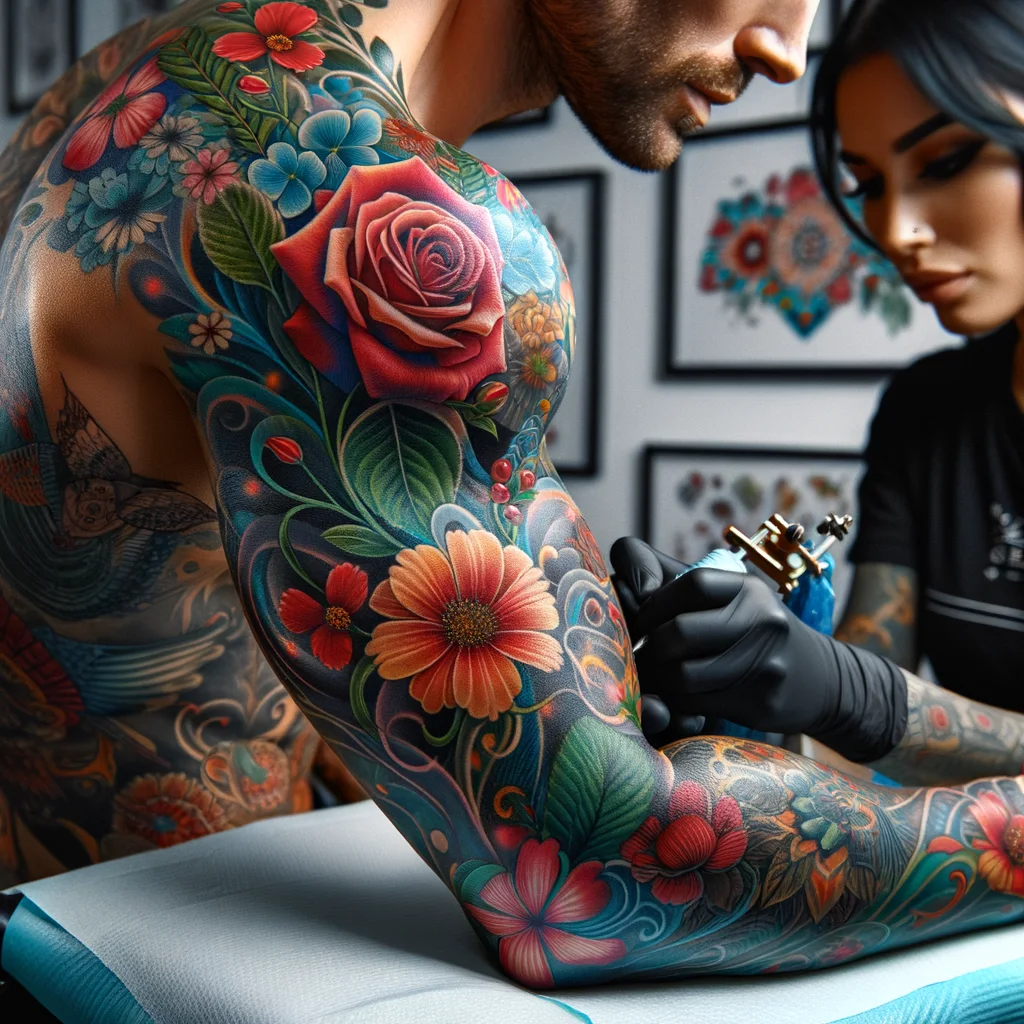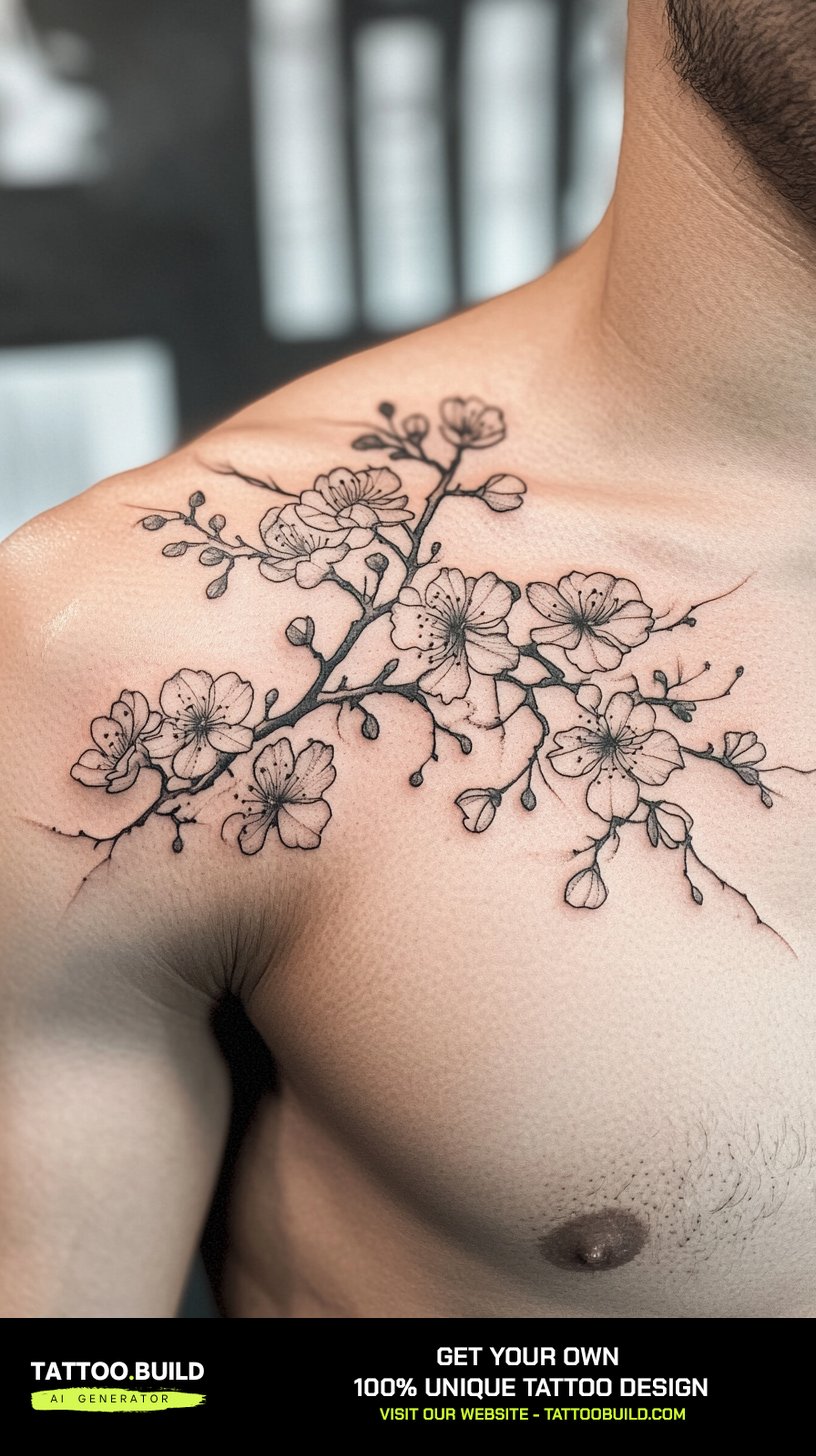
I spent most of my twenties assuming flowers on a man was a hard no, and I was wrong about it in a way that still slightly embarrasses me. Floral tattoos are now one of the most requested categories in men’s tattooing, and the good ones do not look soft — they look deliberate.
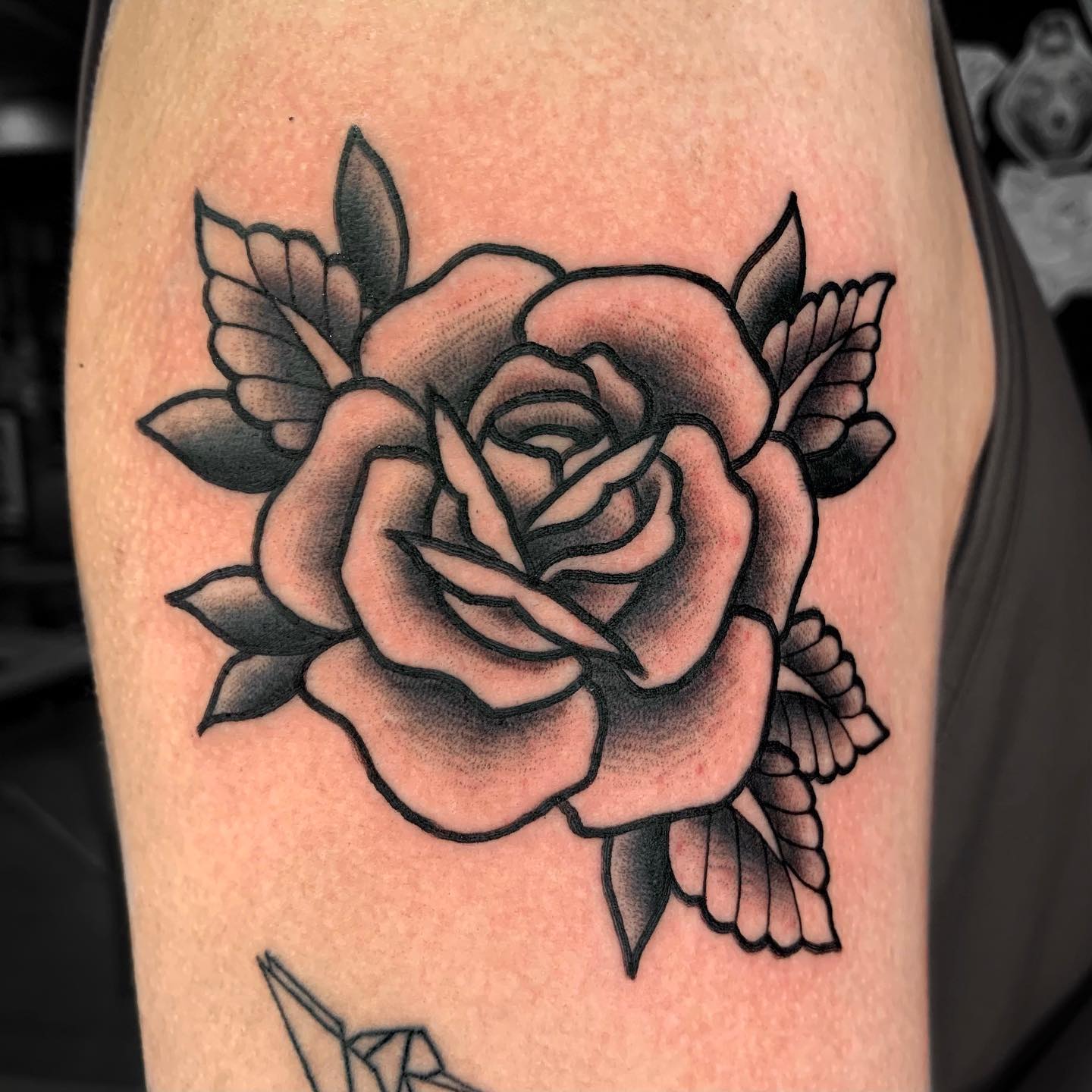
What changed my mind was watching an artist lay a black-and-grey rose over a client’s forearm and realising the flower was doing structural work: it filled the shape of the muscle, it gave the arm a focal point, and it hid a scar the guy had been self-conscious about for years.
Below are 28 designs pulled from the range I keep coming back to, grouped by style rather than dumped in a pile. If you are still deciding whether the whole category is for you, the wider case for masculine flower tattoos is worth reading first.
I have also included the practical parts most idea lists skip — what each style costs you in healing, what ages badly, and where these designs actually sit best on a male frame.
Which Floral Tattoo Style Is Right for You?
Every style below can produce a great floral tattoo. They just fail in different ways, which is the part worth knowing before you book.
| Style | Best For | Ages Like | Watch Out For |
|---|---|---|---|
| American Traditional | First floral piece, bold arms | Excellent — built for it | Limited detail; a rose is a rose |
| Black & Grey Realism | Forearm and chest panels | Good with strong contrast | Soft mid-greys can fade flat |
| Fine Line | Subtle pieces, inner arm | The weakest of the group | Thin lines spread over years |
| Japanese / Irezumi | Full sleeves and back pieces | Excellent by design | Needs scale; poor on small spots |
| Neo-Traditional | Colour work with depth | Very good | Longer sessions, higher cost |
| Blackwork / Dotwork | Geometric floral hybrids | Strong if solidly packed | Patchy fills need touch-ups |
What Actually Makes a Floral Tattoo Read as Masculine
This is the question I get asked most, and the answer has almost nothing to do with the flower itself.
It is line weight, contrast, and scale that set the tone — not the species of bloom. The same peony can read delicate at two inches with hairline stems, or heavy and architectural at eight inches with solid black shadows behind it.
Every artist I have asked about this says roughly the same thing: give the design somewhere dark to sit. A flower floating on bare skin with no shadow and no background reads light. The same flower with packed black behind the petals reads like a statement.
Scale matters just as much. Small florals get lost on a broad forearm, which is why the flower tattoo designs for guys that actually land tend to be sized to the limb rather than dropped on wherever there is room.
And placement carries meaning of its own. A flower on the inner wrist reads as personal. The same flower across the outer forearm reads as public. Neither is more masculine, but they say different things, and it is worth being honest with yourself about which one you want.
28 Men’s Floral Tattoo Designs Worth Stealing
I have grouped these by style so you can bring a coherent reference set to your consultation instead of eight screenshots that contradict each other.
1. Black-and-Grey Rose Forearm Pieces
The default entry point, and there is a reason it stays the default.
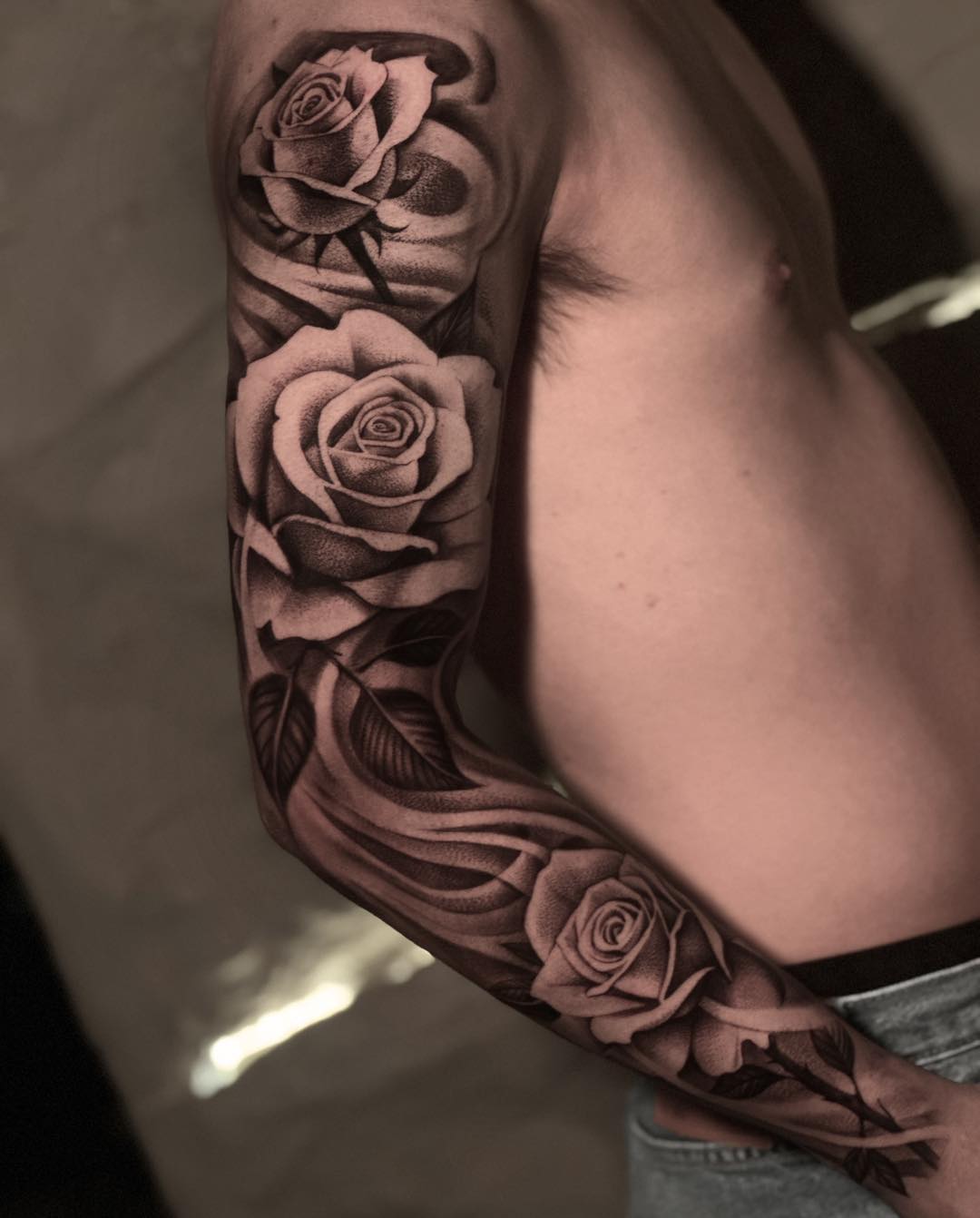
A single rose sized to the forearm gives an artist a full range of values to work with — near-black in the petal shadows, clean untouched skin in the highlights, and smooth grey wash between. When I tested this shape against smaller versions on the same arm, the larger one held its detail noticeably better after healing.
The mistake I see most often is asking for it too grey. Mid-tones fade toward each other over ten or fifteen years, so a rose built entirely from soft greys goes muddy. Ask your artist to keep at least one genuinely black area. If you want the darker end of this look, the black rose tattoo variations push contrast much further.
Expect three to five hours for a well-shaded forearm rose in most shops, though that varies with the artist’s pace.
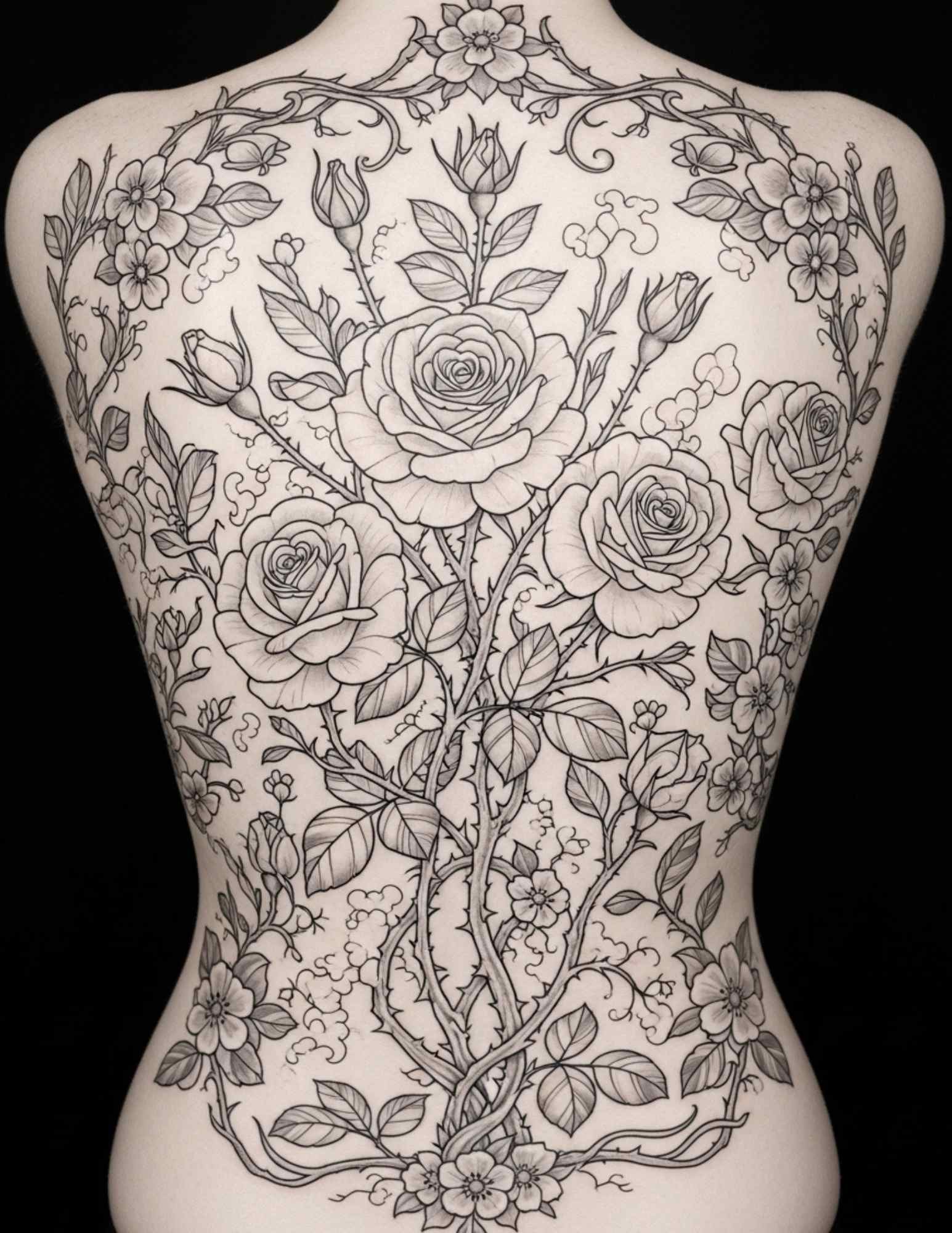
2. Fine Line Botanical Sleeves
Fine line florals are the most requested modern look and the one I am most cautious about recommending.
Done well, a scattered arrangement of thin stems up the inner arm is genuinely striking — quiet, architectural, nothing like the heavy work most men default to. I have seen pieces like this that still looked crisp after five or six years.
I have also seen pieces that did not. Thin lines spread slightly as ink settles under the skin, and a design that relies on hairline gaps between stems can close up into a smudge. The fix is spacing, not thinner needles.
If you want this look at scale, fine line sleeve arrangements handle the spacing problem better than a dense forearm cluster does.
Floral designs and the prompts behind them
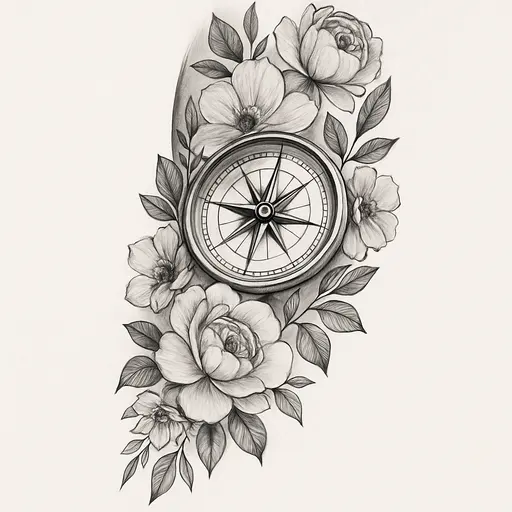
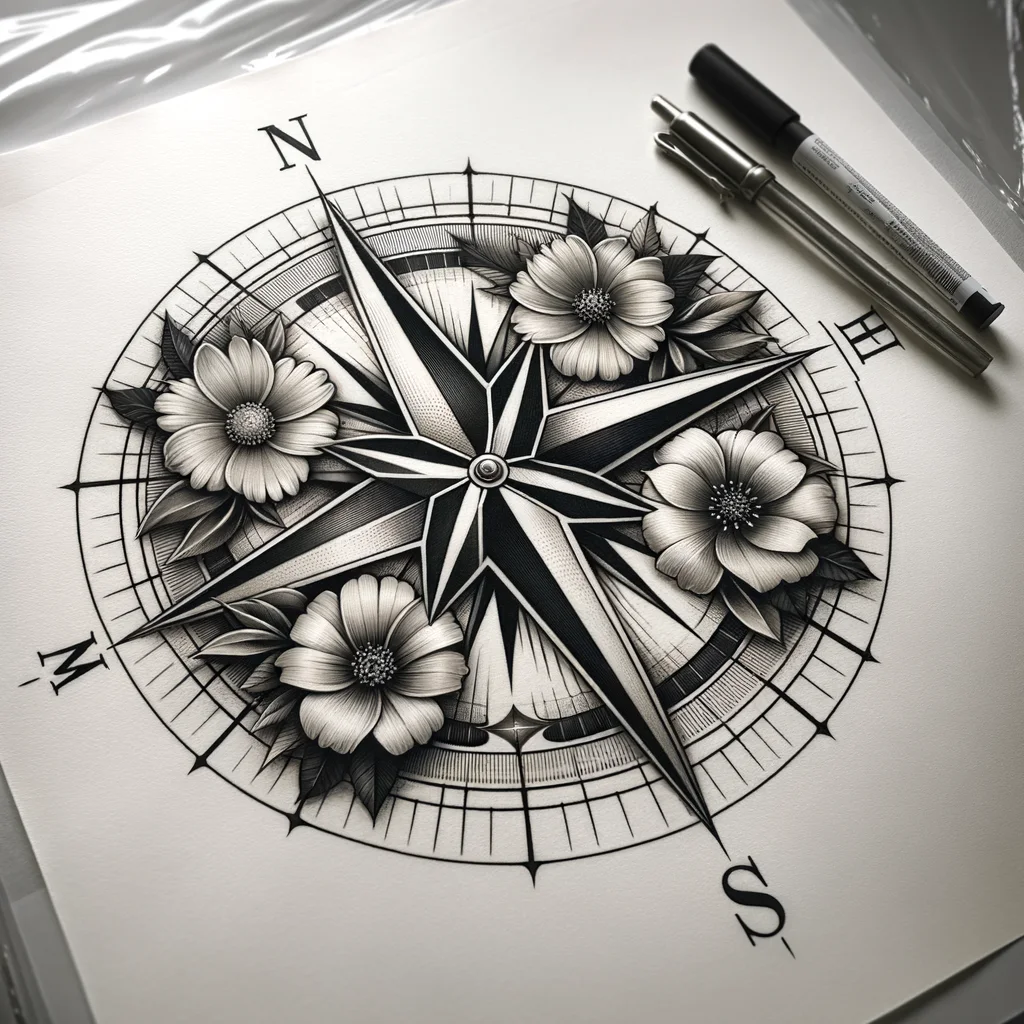
Floral arm sleeve with a compass tattoo design on a bright-white paper background, modern, realistic
Use this idea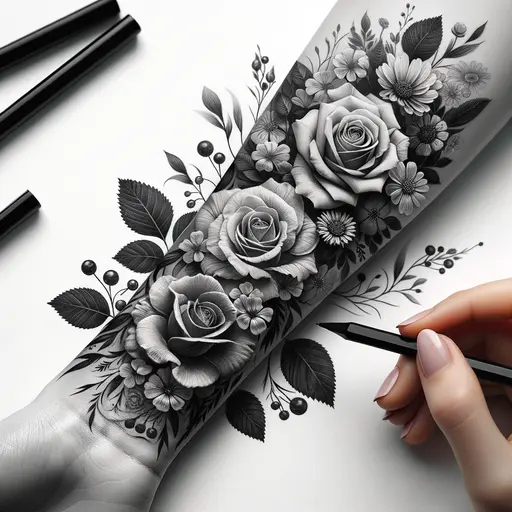
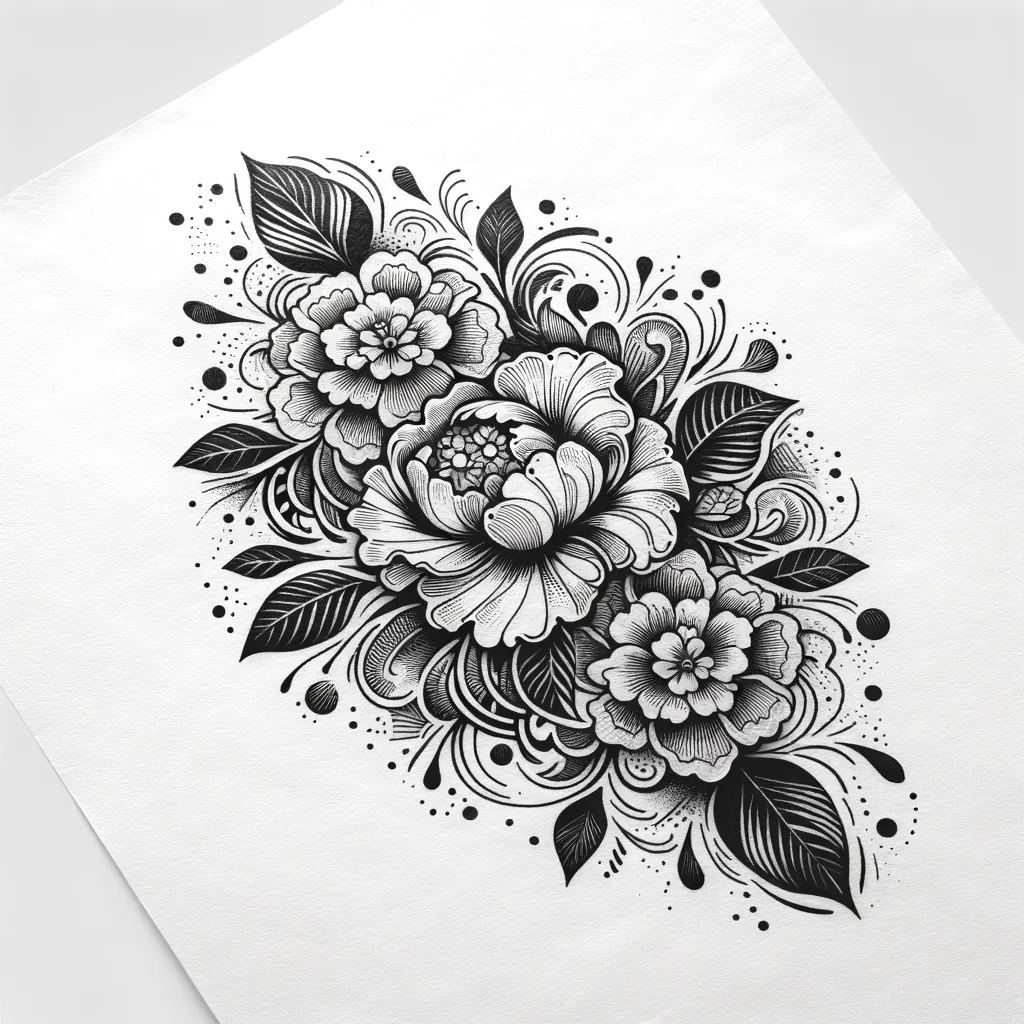
floral arm tattoo lightly shaded
Use this idea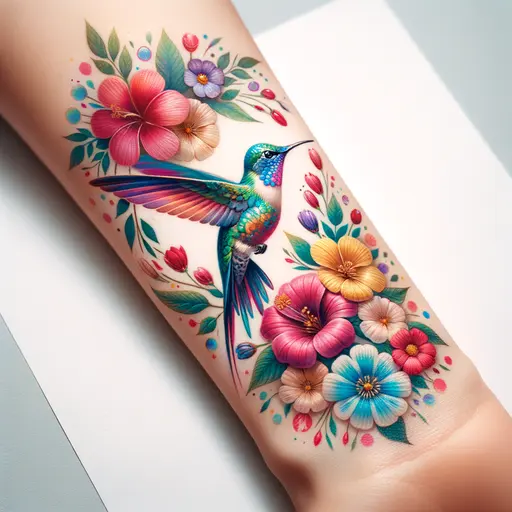
Wrist tattoo humming bird floral
Use this idea
3. Japanese Peony and Chrysanthemum Work
If you want a floral tattoo that no one will read as tentative, this is the tradition to look at.
Japanese floral work is built on bold outlines, layered petals, and background elements — wind bars, water, cloud — that give the flower somewhere to live. The peony in particular carries associations with wealth and bravery in the tradition, which is part of why it appears so often on men.
The catch is scale. This style was designed for large canvases and it suffers badly when squeezed. A Japanese peony smaller than a fist tends to lose the internal petal structure that makes it work.
In my experience the honest advice here is to commit to at least a half sleeve or skip the style entirely. The wider peony tattoo range shows how differently the same flower behaves at different sizes.
4. American Traditional Flowers
The most reliable floral tattoo you can get, and the least fashionable, which is exactly why it survives.
Bold outlines, a limited palette, flat solid fill. There is no shading subtlety to lose, so a traditional rose from decades ago still reads as a rose. Every artist I have asked which style ages best names this one without hesitating.
The trade-off is detail. You are not getting photorealistic petals or delicate stamen work. You are getting a graphic symbol, and it will look like a tattoo rather than a drawing on skin.
For a first floral piece on a visible spot, I still think this is the safest choice available.
5. Skull and Flower Combinations
The oldest idea in the category and still one of the strongest.
Pairing a skull with blooming flowers works because the two shapes contrast so completely — hard against soft, dead against living. It also solves a composition problem: the skull gives the design a dense dark anchor, so the flowers can stay light without the whole thing floating.
The version I like best keeps the skull small and lets the florals dominate rather than the other way round. There are far more skull and flower tattoo compositions than the standard rose-in-the-eye-socket everyone starts with.
Worth saying plainly: this design reads as memorial to a lot of people. If that is not your intent, be prepared to be asked about it.
6. Geometric and Mandala Florals
The most modern-feeling group here, and the one that suits men who find pure florals too organic.
Framing a flower inside geometry — a mandala ring, a hexagon, a set of hard parallel lines — gives the soft shape something rigid to push against. The contrast is the whole point, and it tends to satisfy people who like the idea of a floral but not the softness.
Dotwork shading pairs naturally with this. Stippled gradients are slower to tattoo than whip shading but produce a softer falloff, and they hold up reasonably well as long as the dots are packed densely enough.
Precision is non-negotiable here. A slightly off-centre mandala is far more obvious than a slightly off-centre rose, so look hard at an artist’s healed geometric work before booking.
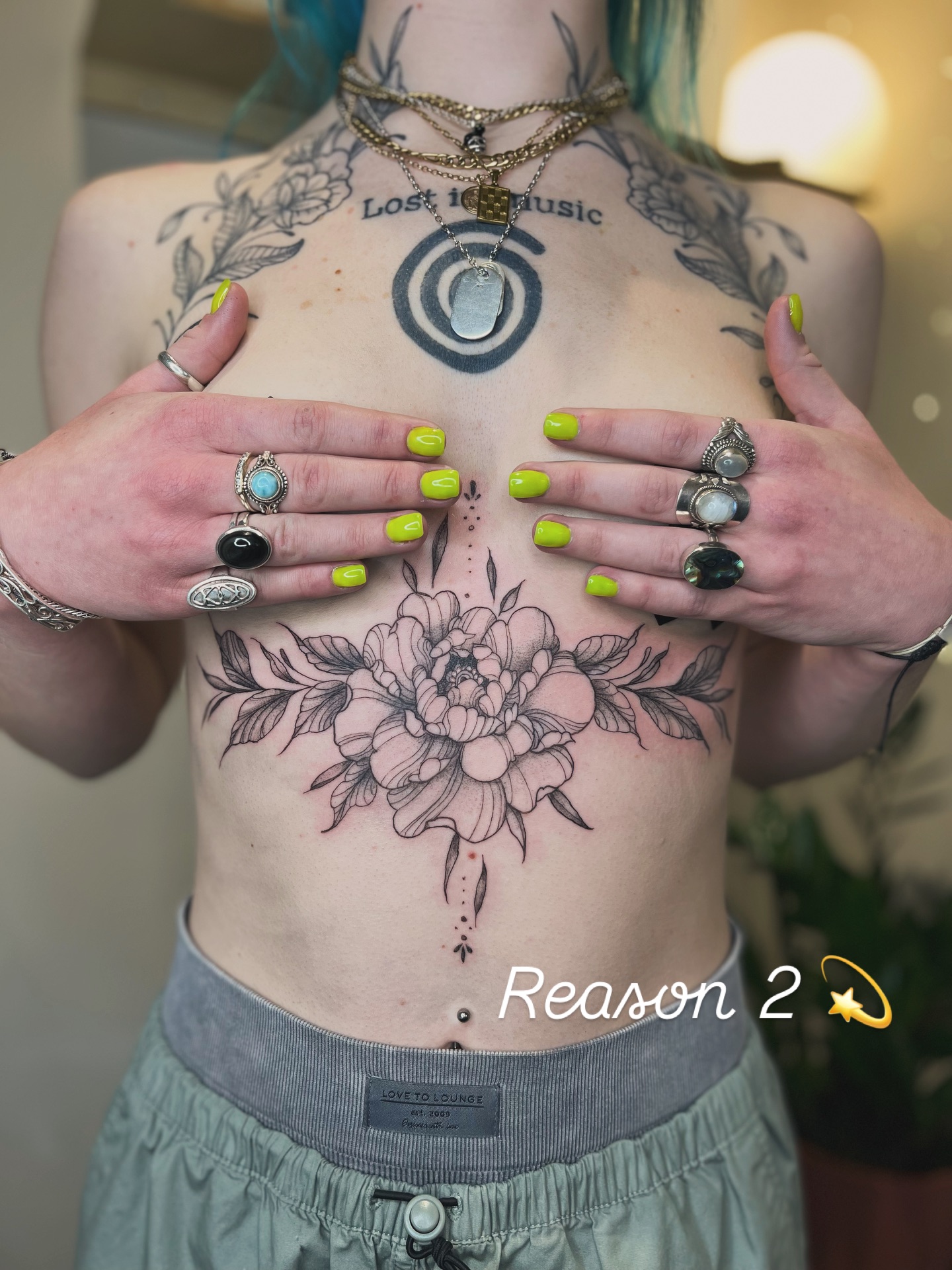
7. Chest and Sternum Floral Pieces
The most underrated placement for floral work on men.
The chest gives you a naturally symmetrical canvas, and florals mirror across a sternum better than almost any other subject. Running the design outward onto the shoulders stops it looking boxed into a rectangle on the pectorals.
Be honest with yourself about the pain. The sternum and the area over the collarbone are among the sharper spots on the body because the skin sits directly over bone. Most people I have spoken to rank it well above the forearm. The wider chest piece category covers layout in more depth.
Chest work also changes with body composition. If you are planning significant weight or muscle change, that is worth mentioning at the consultation.
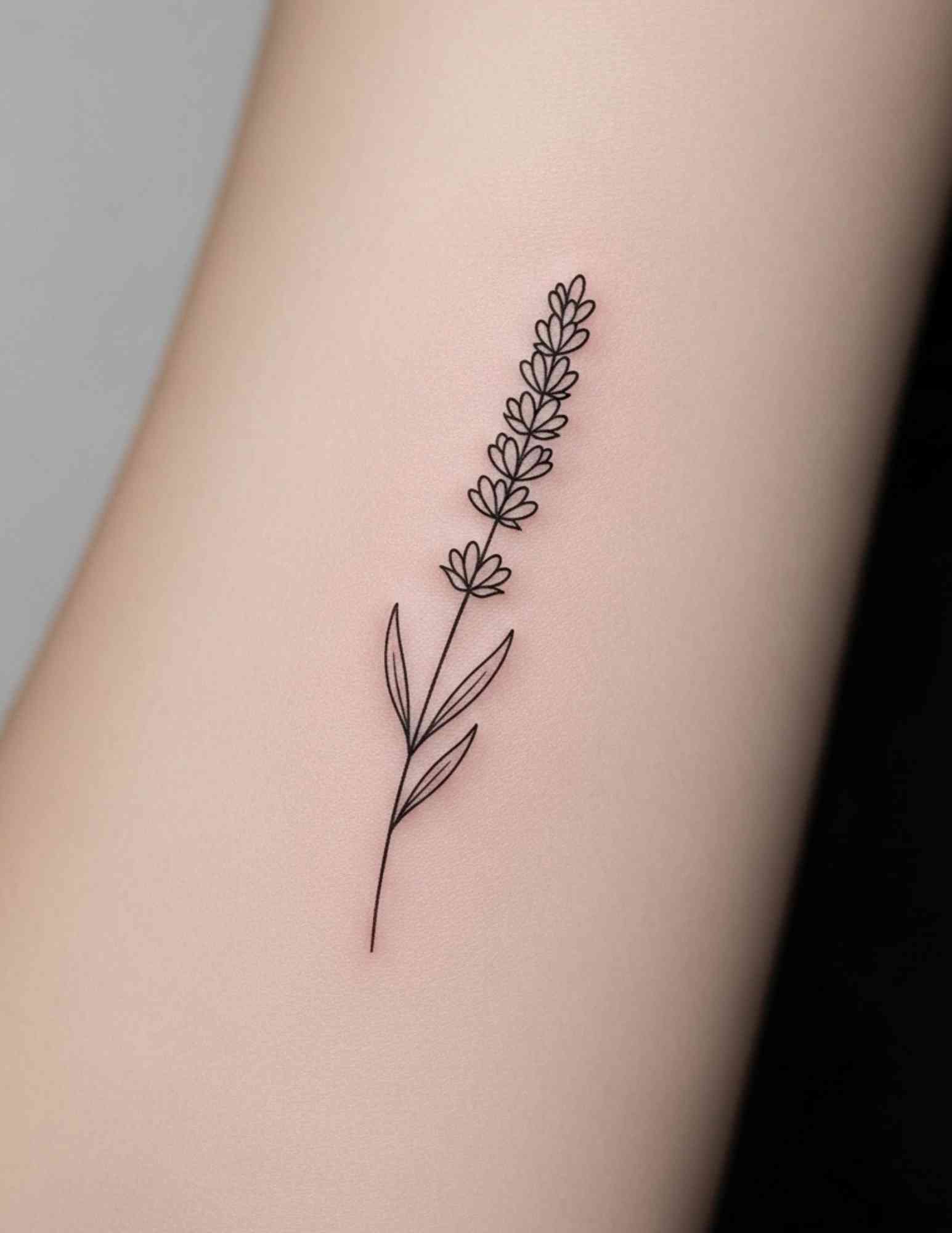
8. Small Floral Tattoos for a First Piece
Not everyone wants to start with a sleeve, and starting small is a genuinely sensible way in.
A single stem on the inner forearm, a compact blossom above the wrist, one flower on the outside of the bicep — all of these give you a real tattoo to live with before you commit to a panel that takes six sessions.
Keep the shape simple. Small florals fail when they carry detail the size cannot support; a compact blossom with four clear petals holds up far better than a miniature rose with fifteen. Most small forearm tattoo designs follow that same rule.
One practical note: leave room around it. Small pieces that get crowded later are the most common regret I hear about, and planning the negative space now costs nothing.
Alternatives and Variations Worth Considering
If none of the eight groups above is quite right, these variations solve most of the remaining cases.
Florals as Part of a Nature Sleeve
Flowers rarely have to carry a piece alone. Worked in alongside mountains, trees, or animals, they become texture and filler rather than the subject, which is often a more comfortable entry point. The nature tattoos for men approach uses florals this way constantly.
Birth Flowers Instead of Roses
A birth-month flower gives the tattoo a reason to exist beyond aesthetics, and it moves you out of the rose default. Larkspur, marigold, and holly all tattoo well at scale; lily of the valley and forget-me-not are much harder to render small.
Negative Space and Blackout Florals
Instead of tattooing the flower, some artists tattoo everything around it, leaving the bloom as bare skin. It is bold, it is heavy, and it is close to permanent — but the graphic effect is unlike anything else in the category.
Colour Packed Neo-Traditional
If you want colour without the flatness of old school, neo-traditional keeps the bold outline and adds real depth through layered petals. Expect longer sessions and a higher price, and expect the colour to need a touch-up sooner than black work does.
Getting It Right: Practical Advice Before and After
Bring reference for the style, not the exact design. Artists produce their best work when you show them the feel you want and let them draw it for your body, rather than handing over a screenshot to copy.
Ask to see healed photographs, not fresh ones. A fresh tattoo looks good almost regardless of technique. Healed work three or more years old tells you whether the artist’s lines hold, and it is the single most useful thing you can ask to see. The Mayo Clinic overview of tattoo risks is a fair summary of what else to weigh up beforehand.
On aftercare, follow the instructions your artist gives you rather than advice from the internet, including mine. The surface usually settles within two to three weeks while the deeper skin keeps healing for longer, and the American Academy of Dermatology guidance on caring for tattooed skin is a reliable general reference. Keep it clean, keep it out of the sun, and do not pick.
If something looks wrong — spreading redness, heat, swelling that increases after the first few days, discharge, or a fever — see a doctor rather than waiting it out. Allergic reactions to pigment are uncommon but real, and the FDA information on tattoo inks explains what is and is not regulated. Nothing in this article is medical advice, and no floral design is worth an untreated infection.
Finally: never let anyone tattoo you outside a licensed studio, and do not attempt removal at home. Home removal methods scar, and they scar in ways a cover-up cannot always fix.
Still Not Sure? Common Mistakes to Avoid
Sizing the flower to the space instead of the limb. A design that fits the gap on your arm is not the same as a design that suits your arm, and this is the error I see most.
Choosing the style from a fresh photo. Almost everything looks good on day one, which is why healed work is the only fair comparison.
Picking an artist by price. A cheaper floral tattoo that needs covering in five years is the most expensive option available.
Committing to a sleeve before living with one piece. If you are undecided, start with a single element and see how you feel about it in six months — the half sleeve route is far easier to build toward than to undo.
Frequently Asked Questions
Are floral tattoos considered feminine on men?
Less and less, and in my experience the perception depends far more on execution than subject. A heavy blackwork peony and a hairline fine line stem are both floral tattoos, and almost nobody reads them the same way. Line weight, contrast, and scale set the tone. If the concern is real for you, bold traditional or Japanese work is the safest ground.
Which flower is the best choice for a man’s first tattoo?
A rose in American traditional style, if you want the most reliable answer. It ages exceptionally well, almost every artist can execute it, and the symbolism is broad enough that you are unlikely to grow out of it. If you want something less common, a peony or a chrysanthemum in Japanese style is a strong alternative at larger sizes.
How much does a men’s floral tattoo cost?
It varies enormously by region, artist, and size, so treat any single figure with suspicion. Most shops price either by the hour or by the piece, and a shaded forearm rose commonly runs several hours of work. The honest approach is to ask two or three local artists for quotes on the same brief and compare. Do not choose on price alone.
Do fine line floral tattoos really fade faster?
They tend to lose definition rather than colour. Thin lines spread slightly as ink settles, so designs that depend on very narrow gaps can close up over the years. That does not mean avoiding fine line work — it means giving the design more spacing than looks necessary on paper, and accepting that a touch-up may be needed sooner than with bolder styles.
Where do floral tattoos hurt least on men?
The outer forearm and the outer upper arm are usually reported as the more manageable areas, because there is muscle and fat between the needle and the bone. Ribs, sternum, and the area over the collarbone are generally sharper. Pain is individual, though, and a long session anywhere becomes uncomfortable eventually. If you are worried, book a shorter first session.
Quick Summary
- Line weight, contrast, and scale determine how a floral tattoo reads — not the flower you choose.
- American traditional ages best; fine line ages worst. Both can look excellent when done properly.
- Japanese peony and chrysanthemum work needs real size — half sleeve or larger, not a small forearm patch.
- Give any floral design a genuinely black area to anchor it, or it will fade toward flat grey.
- Chest and sternum florals mirror beautifully but sit over bone and are noticeably sharper to sit through.
- Starting with one small, simple piece is a sensible way to test the category before committing to a sleeve.
- Ask every artist for healed photos from three or more years ago — it is the most useful question you can ask.
- Follow your artist’s aftercare instructions, and see a doctor for any sign of infection rather than waiting.