Peonies are the showiest flower in tattooing, and they know it. No other floral subject gives an artist as much layered surface to build depth into, which is exactly why a well-drawn peony holds up on skin for decades.
I have sat for floral work and I have spent an unreasonable number of hours going through artists’ portfolios, and the peony is the one flower where the gap between a competent tattoo and an exceptional one is immediately obvious. The petals either stack convincingly or they collapse into a blur.
The twenty ideas below cover the full range, from a single minimalist bud behind the ear to a full back composition built around the flower’s natural drama. If you are weighing this against other blooms, the peony tattoo ideas for women guide covers placement in more detail.
Every photograph here is credited to the artist who made it. Use them as conversation starters with your own artist, not as copy work.
Which Peony Style Is Right for You?
Style choice affects cost, session length and how the piece ages far more than size does. This is the comparison I wish someone had put in front of me before my first floral consultation.
| Style | Best size | Typical sittings | How it ages | Choose it if |
|---|---|---|---|---|
| Japanese / irezumi | Large, 8 in and up | 3–10+ | Excellent — built for it | You want a piece that still reads from across a room in twenty years |
| Fine line | Small to medium | 1–2 | Softens; may need a touch-up | You want something quiet that sits close to the skin tone |
| Black and grey | Any | 1–4 | Very predictable | Longevity matters more to you than colour |
| Neo-traditional | Medium to large | 2–5 | Strong — bold outlines hold shape | You want colour without giving up structure |
| Watercolour | Medium | 1–3 | Least predictable of the group | You love the look and accept it will need maintenance |
| Dotwork | Small to medium | 2–4 | Good, if the dots are spaced well | You want texture rather than contrast |
Treat the sitting counts as rough guidance from what artists have quoted me and friends, not as a price list. Rates and pace vary enormously between studios and cities.
What Makes the Peony Such a Strong Tattoo Subject
The peony’s structure does half the artist’s job. Each ring of petals sits slightly behind the one in front of it, which creates natural shadow lines before anyone has decided where the light source is.
That built-in depth is the reason the flower survives scaling down better than most. Even a small peony keeps a sense of volume, where a small rose often flattens into a spiral.
Symbolically it carries weight in more than one tradition. In Japanese tattooing the peony reads as nobility, wealth and a certain fearlessness, and it is one of the standard companions to lions and dragons in classic compositions. In Western floral language it leans toward romance, prosperity and good fortune.
Both readings sit comfortably on skin, and neither is so specific that you have to explain it. If the Japanese reading interests you, the Japanese tattoo designs guide covers how peonies function inside larger traditional compositions.
One honest limitation: the peony is a busy subject. In my experience it does not combine well with three other equally busy elements. Give it room or give it a quiet partner.
20 Peony Tattoo Ideas, Grouped by Style and Placement
I have grouped these by approach rather than numbering them arbitrarily, because the useful decision is which family of designs you are in, not which picture you liked third best.
1. Japanese and Traditional Peony Tattoos
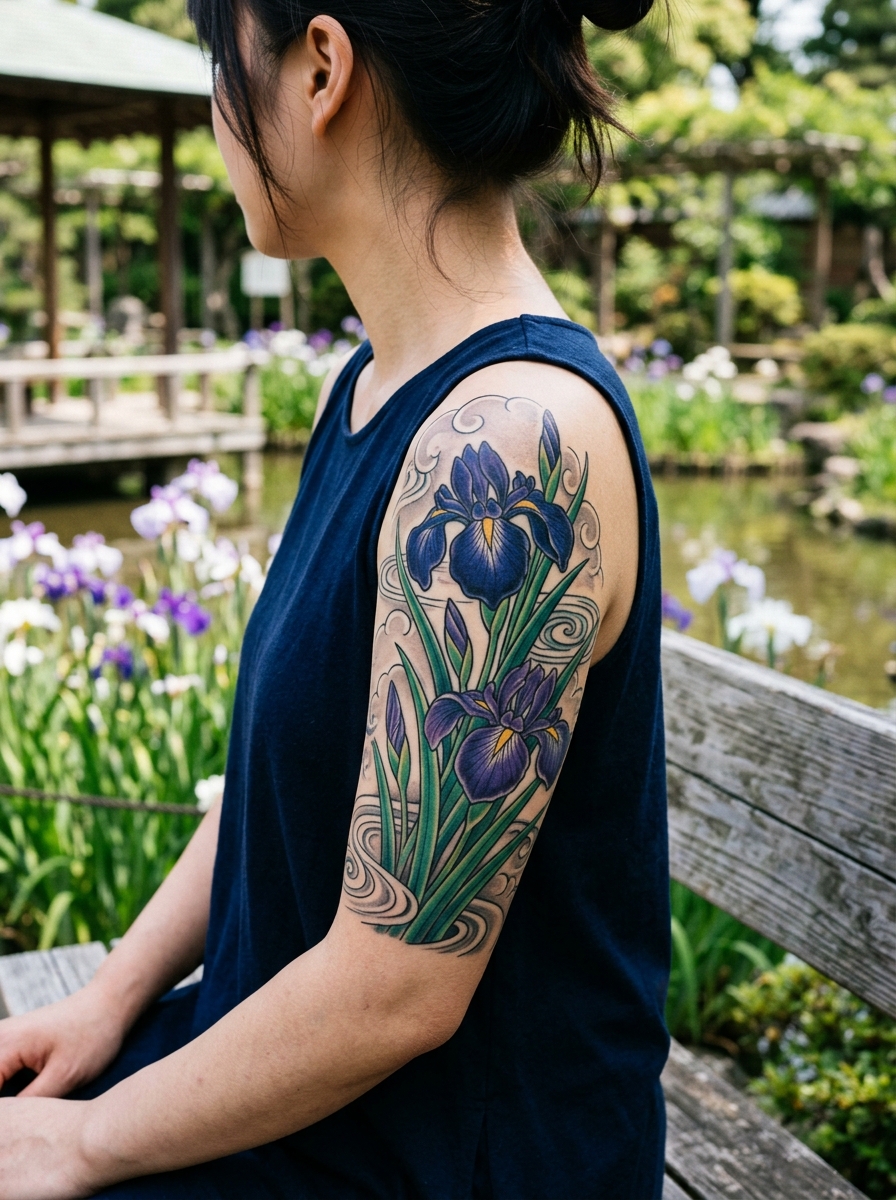
The Japanese peony is the version with the deepest history behind it, and it shows in how well the compositions hold together. Wind bars, those thin curved lines suggesting air moving through the piece, wrap around an open bloom and give the whole thing motion.
This is large-format work by nature. A thigh, an upper arm or a back panel gives the flower and its background enough room to breathe. Ask to see healed photos, not just fresh ones, because saturated colour is where the difference between artists becomes visible.
Pairing a peony with a crane is a classic move. The crane reads as longevity and grace, and its spare, extended form contrasts with the density of the bloom. The two subjects occupy space so differently that they stop competing.
Neo-traditional sits adjacent to this family: American traditional’s heavy outlines with modern colour gradients and illustrative detail layered inside them. It is more technically demanding than straight traditional and more immediately striking than realism.
2. Fine Line and Minimal Peony Tattoos
At the other end of the spectrum, a fine line peony bouquet, several blooms overlapping with stems crossing, reads more like a botanical plate than a tattoo. Subtle without being faint.
It suits a forearm or an upper arm, and the bouquet format lets the artist vary the scale between blooms so the eye has somewhere to travel.
There is also a strong argument for editing. One fully open peony, drawn precisely, says as much as three fighting for the same space. The single bloom forces every petal to earn its place.
Pure line art strips the internal detail out entirely. Clean, contemporary and surprisingly bold when the linework is confident. This one is unforgiving: hesitant lines read as hesitant forever.
And not every peony has to announce itself. A bud caught just before opening, drawn in a handful of lines, carries a sense of potential the open flower has already spent. Behind the ear, inner wrist and ankle all work.
3. Black and Grey Peony Tattoos
Colour is optional. A peony worked entirely in black and grey, with shading carried carefully through the petal layers, achieves something colour sometimes hides: genuine depth.
Every artist I have asked about longevity has said some version of the same thing, which is that black and grey ages more predictably than colour. It is the safer long-term bet, especially on skin that sees a lot of sun.
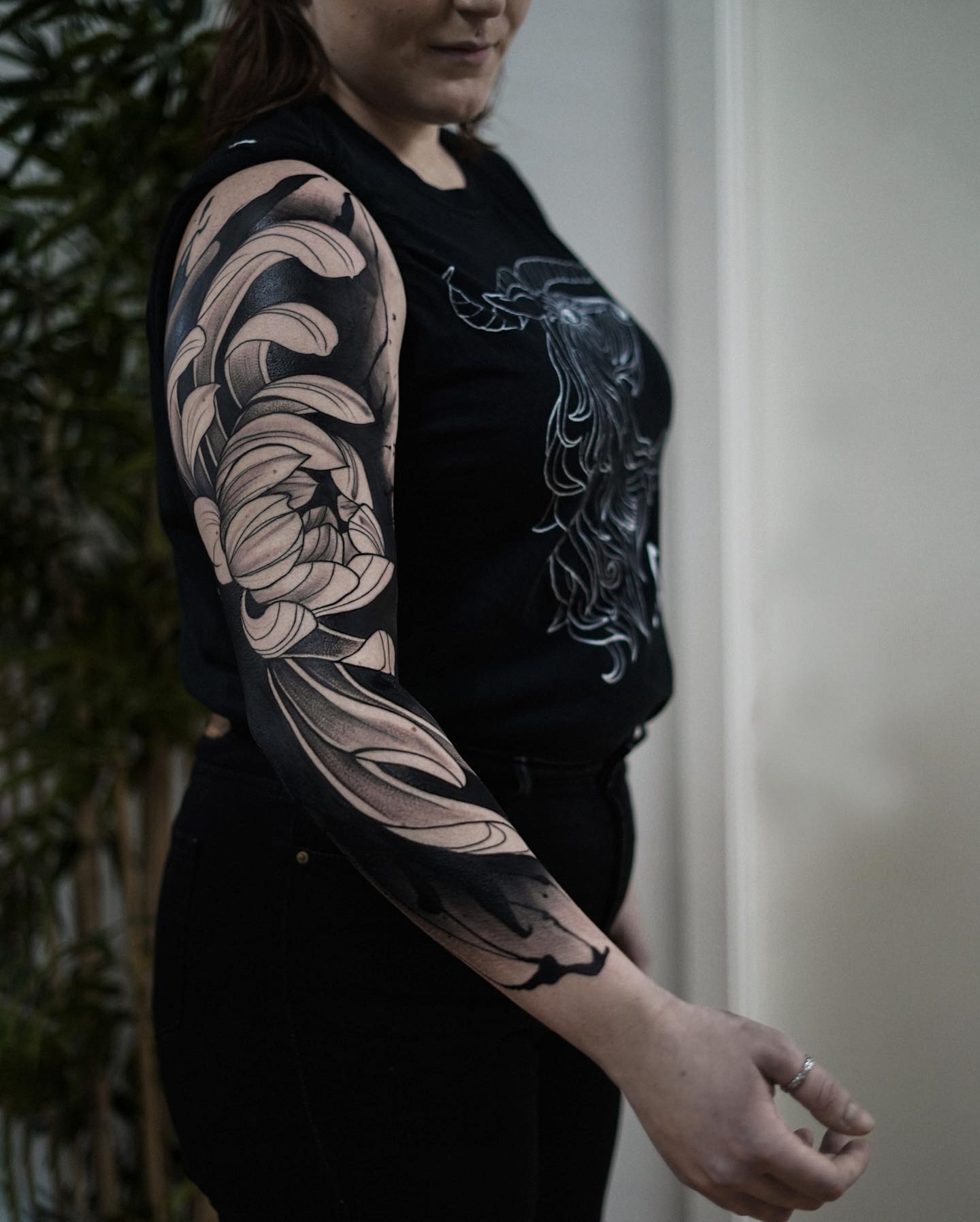
Negative space reverses the logic entirely. Rather than building the flower from ink, the ink fills the background and the petals emerge from bare skin. The result looks cut out of the body rather than drawn onto it.
It is technically demanding and it depends completely on your skin tone staying consistent, so ask specifically for healed negative space work in the portfolio before booking.
A full or crescent moon sitting behind an open bloom adds a nocturnal, atmospheric quality that black and grey handles better than colour does. Upper arm, shoulder and back all give it room.
4. Colour-Led and Framed Peony Tattoos
Peonies and watercolour technique are a natural match. The layered petals give the artist ideal places to transition colour, pinks bleeding into creams, edges dissolving into nothing.
The caveat matters: strong linework underneath is what keeps a watercolour piece legible in ten years. Without it, the colours drift into each other and the form goes. I have seen both outcomes and the difference was always the foundation, not the pigment.
Enclosing a realistic peony inside a geometric border, a triangle, hexagon or diamond, creates a tension between organic and architectural that gives the design a designed quality rather than a purely decorative one.
5. Texture-Led Peony Tattoos
Dotwork applied to a peony looks almost embroidered. The stippled texture across the petals gives the bloom a dimensionality that neither linework nor solid shading produces. Up close it is extraordinary; from across a room it reads as rich texture. The wider dotwork tattoo ideas guide is worth a look if this is the direction you are leaning.
It is slow work and it is usually priced accordingly. When I have asked artists about dotwork timelines, the answer has consistently been that it takes roughly twice as long as equivalent shading.
Ask specifically about their dotwork experience rather than their portfolio generally. Even spacing across a curved surface is a distinct skill.
6. Peonies Paired With a Second Subject
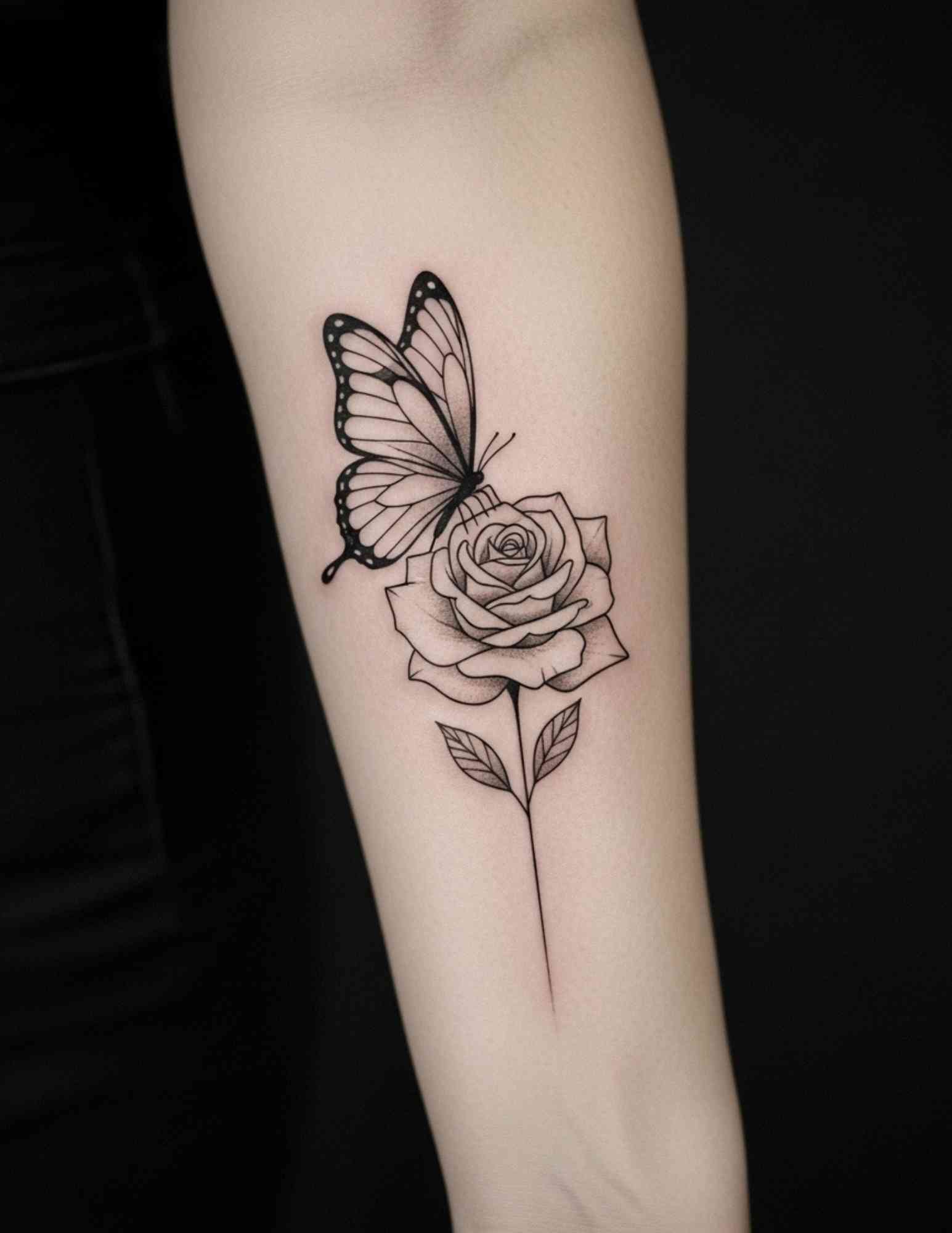
A butterfly resting on or lifting from an open peony is the most common pairing, and it works for a structural reason as much as a symbolic one: the wing patterns echo the fan arrangement of the petals. There is more on the symbolism in the butterfly tattoo ideas guide.
A bee mid-feed introduces narrative into what would otherwise be a static floral. Suddenly there is a relationship in the image rather than a single isolated object, and a well-drawn bee always pulls the eye first. Bee tattoo designs covers that subject on its own terms.
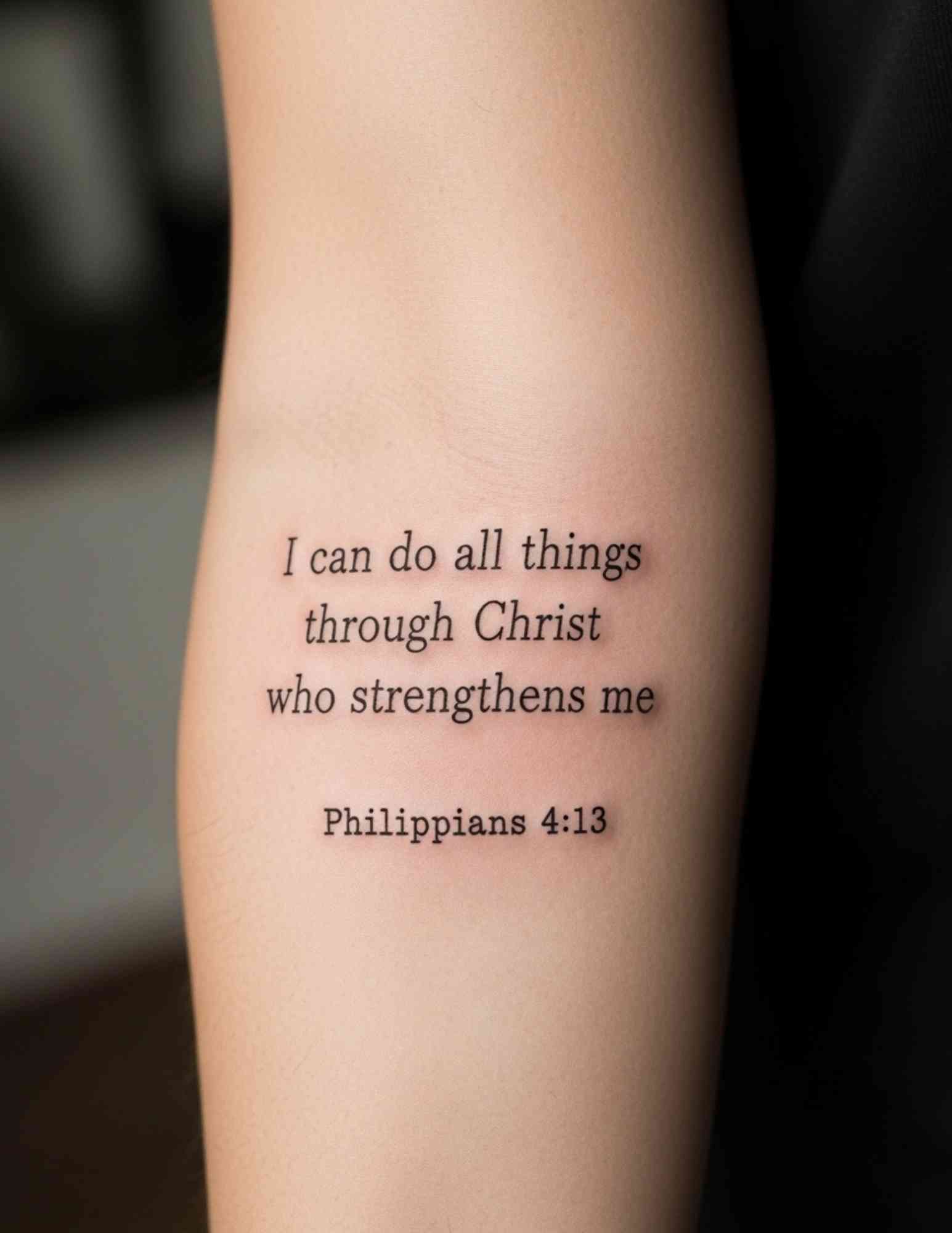
Script is the pairing that goes wrong most often. A name, date or short phrase woven through the stems grounds the design in personal meaning, but only if it is integrated rather than parked nearby.
Ask your artist how they plan to incorporate the text before you agree to the composition. The answer tells you a great deal about how they think about layout.
7. Peony Tattoos Built Around Placement
Some peony designs are placement-first. A vertical arrangement running down the spine, stems connecting the blooms and flower heads facing outward, belongs entirely to that location. Spacing is everything here: the eye wants rhythm, not uniformity. See spine tattoo ideas for women for how the placement behaves generally.
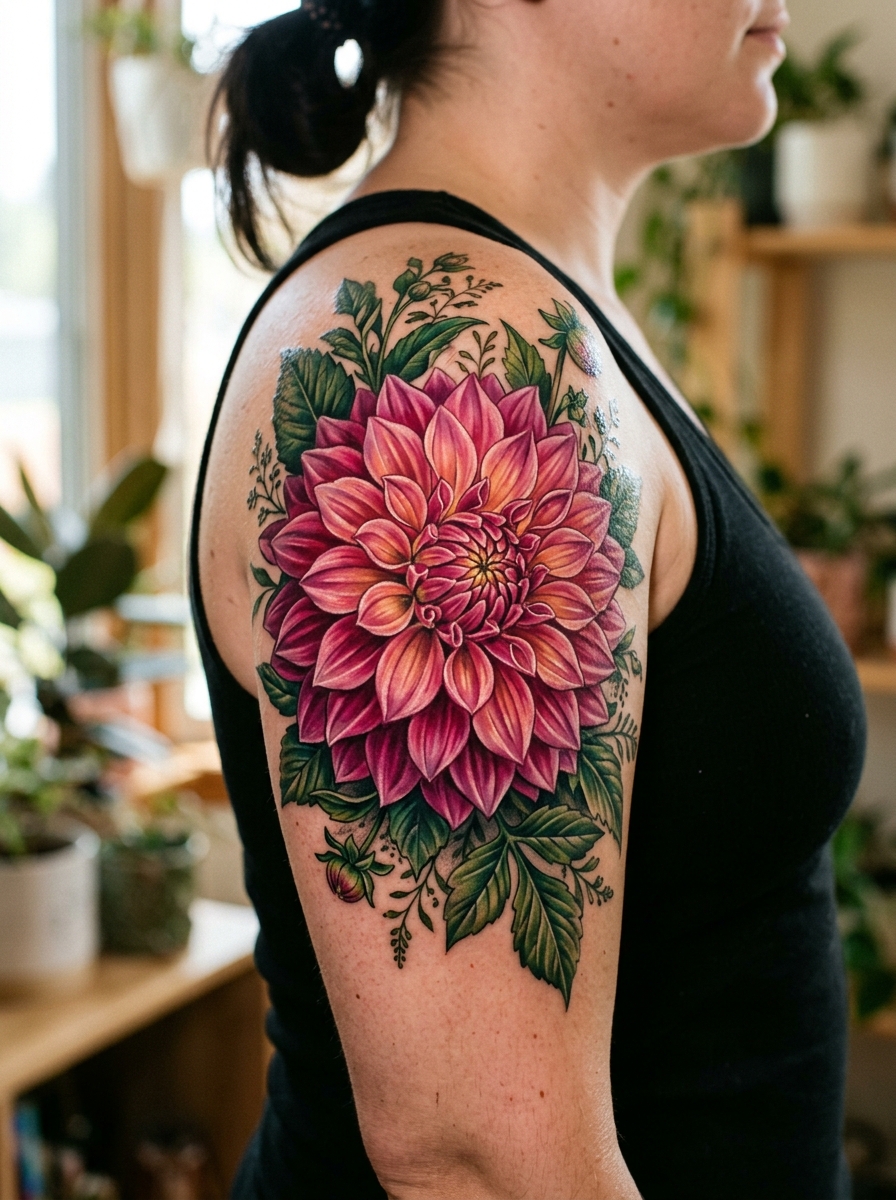
A shoulder cap places a large bloom over the joint with leaves and secondary flowers running down the upper arm and toward the collarbone. It is one of the few compositions that genuinely changes as you move.
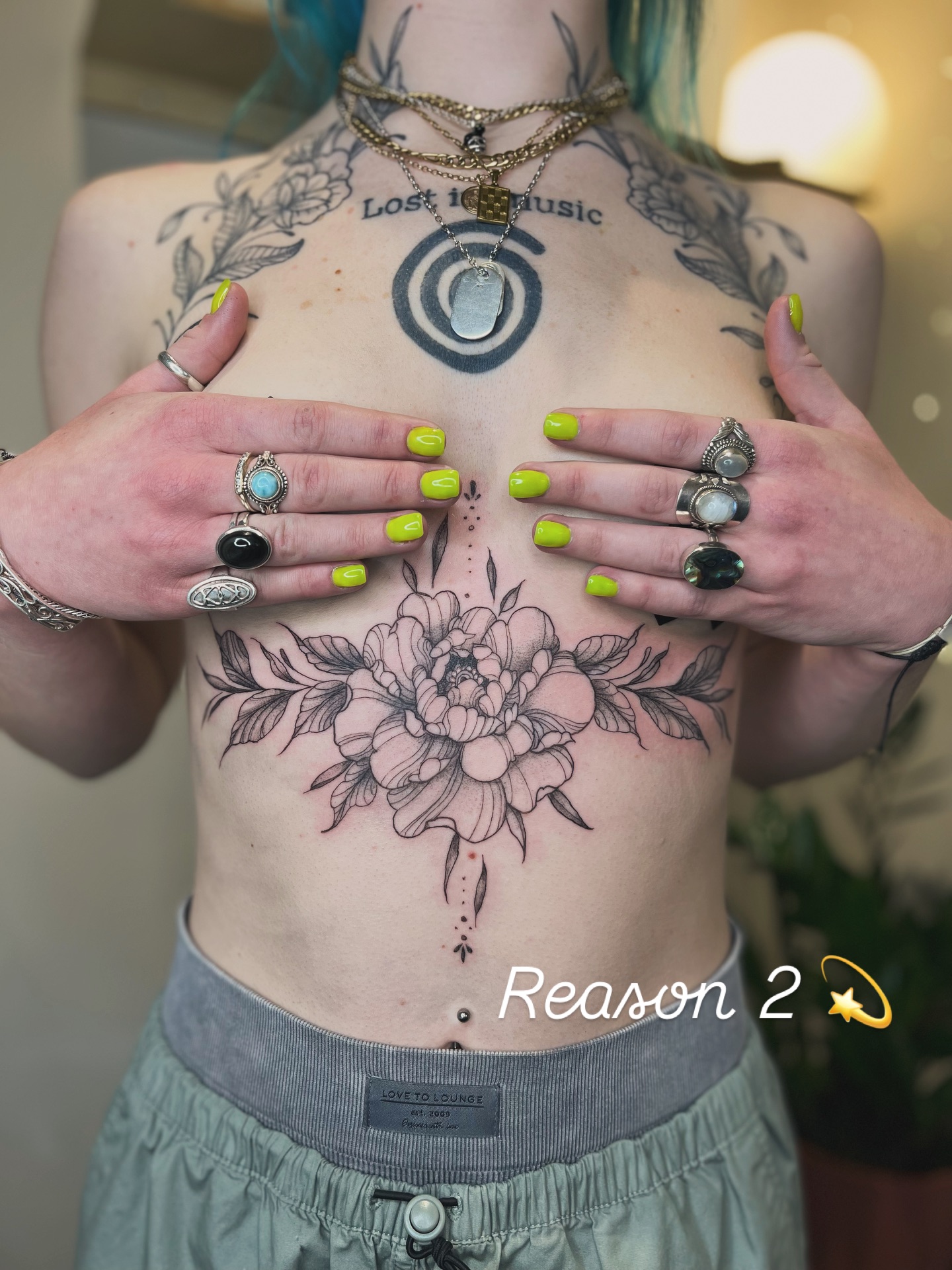
The sternum suits a single, large, symmetrical bloom facing forward, which takes on an almost totem-like presence. Watch the stem direction, because a stem falling at an odd angle undermines the symmetry the placement gives you for free.
And the thigh is simply the largest single canvas on the body, which makes it unfairly well suited to a subject this expansive. Multiple blooms at different stages of opening, full leaves, curving stems. Floral thigh tattoos covers the placement in depth.
If the Peony Is Not Quite Right
Sometimes the peony is close but not the answer. These are the substitutions artists suggest most often when a client likes the density but wants something different.
Chrysanthemum
Structurally similar, with even more petals and a tighter centre. In Japanese work it reads as longevity and is a common alternative in the same compositional slots the peony fills.
Rose
More familiar, more spiral than layered, and easier to scale down to a very small piece. The trade is that it is far more common, so it takes more work to make it feel personal. Rose tattoo ideas for women has the range.
Lotus
Cleaner and more symmetrical, with a strong spiritual association across several traditions. It suits symmetrical placements like the sternum or the centre of the back better than the peony does, and it scales down without losing its shape.
Birth flower compositions
If the meaning matters more than the shape, a birth flower carries built-in personal significance. Peony appears on some birth flower lists and not others, so check which list your artist is working from before you build a design around it.
Practical Advice Before You Book
Look for floral work specifically in your artist’s portfolio, not just their best pieces overall. Someone who produces remarkable portraits but rarely draws flowers will approach a peony differently from an artist who has spent years on botanical rendering.
Ask for healed photos. Fresh tattoos always look sharp; the honest test of a floral artist is what their work looks like a year later, particularly the petal edges and any fine internal shading.
Budget for scale honestly. A peony crammed into a space too small for it loses the layering that made you want the flower in the first place. If placement pain is part of your calculation, tattoo pain management tips covers what to expect from the ribs, sternum and spine, which are the placements people underestimate most.
On aftercare, follow the specific instructions your artist gives you rather than a generic routine from the internet, and take signs of infection seriously. The American Academy of Dermatology and Mayo Clinic both publish plain-language guidance on tattoo risks and healing. If a healing tattoo becomes hot, swollen, increasingly painful after the first few days, or starts leaking pus, that is a doctor’s call, not a forum’s.
Colour inks are worth one extra conversation. Reactions are uncommon but red and yellow pigments are the ones most often implicated, and the US Food and Drug Administration publishes consumer guidance on tattoo ink safety. Tell your artist about any history of pigment or metal allergies before the stencil goes on.
Common Mistakes and What to Do Instead
The mistake I see most often is going too small. A peony at two inches has nowhere to put its shadows, and the layers merge into a grey mass within a few years.
The second is over-filling the composition. A peony plus a butterfly plus script plus a moon plus a mandala is four subjects too many for one panel.
The third is choosing the style before the artist. Pick the person whose existing work already looks like what you want, then let them steer the style. If you are still deciding on placement, floral back tattoo ideas shows how large florals sit on the body.
The fourth is skipping the consultation because the artist has a long waitlist. In most cases the wait is the point. Booking a rushed appointment with whoever is free that month is how people end up with a peony they eventually cover.
Frequently Asked Questions
What does a peony tattoo mean?
It depends on the tradition you are drawing from. In Japanese tattooing the peony is associated with nobility, wealth and bravery, and it frequently appears alongside lions and dragons in classical compositions. In Western floral language it leans toward romance, prosperity and good fortune. Most people who get one choose it for the shape first and the meaning second, which is a perfectly reasonable order.
How big does a peony tattoo need to be?
For a detailed, shaded bloom, most artists I have spoken to want at least three to four inches across so the petal layers have room to separate. Fine line and single-bud designs can go considerably smaller. If you want a Japanese-style piece with background elements, you are realistically looking at a thigh, upper arm or back panel rather than a wrist.
Do peony tattoos age well?
Generally yes, better than many florals, because the layered structure means the design still reads even as fine detail softens. Black and grey and neo-traditional versions hold up most predictably. Watercolour and very fine line work are the versions most likely to need a touch-up, and sun exposure is the single biggest factor in how any of them look at the ten-year mark.
How much does a peony tattoo cost?
There is no useful universal number, because rates vary enormously by city, artist demand and style. What I can say is that the variables are session time and complexity, not the flower itself. A single fine line bloom is usually one short sitting; a Japanese thigh piece with background is a multi-session project. Ask for a quote after the consultation rather than before.
Where does a peony tattoo hurt least?
Outer thigh, outer upper arm and the forearm are consistently reported as more manageable, because there is more muscle and fat between the needle and bone. Sternum, ribs, spine and ankle are at the harder end. Pain is genuinely individual, though, and how you slept and ate beforehand affects it more than most people expect.
Quick Summary
- The peony’s layered petals create natural depth, which is why it holds up better than most florals as it ages.
- Style matters more than size for longevity: black and grey and neo-traditional are the most predictable.
- Japanese-style peonies need large-format placements — thigh, upper arm or back.
- Fine line, line art and single-bud designs suit smaller placements and quieter results.
- Pairings work best when the second subject is structurally quiet: a butterfly, a bee, a moon.
- Spine, shoulder cap, sternum and thigh are the placements that shape the composition most.
- Choose the artist by their healed floral work, then let them steer the style.
- Follow your artist’s aftercare instructions, and see a doctor for anything that looks like infection.