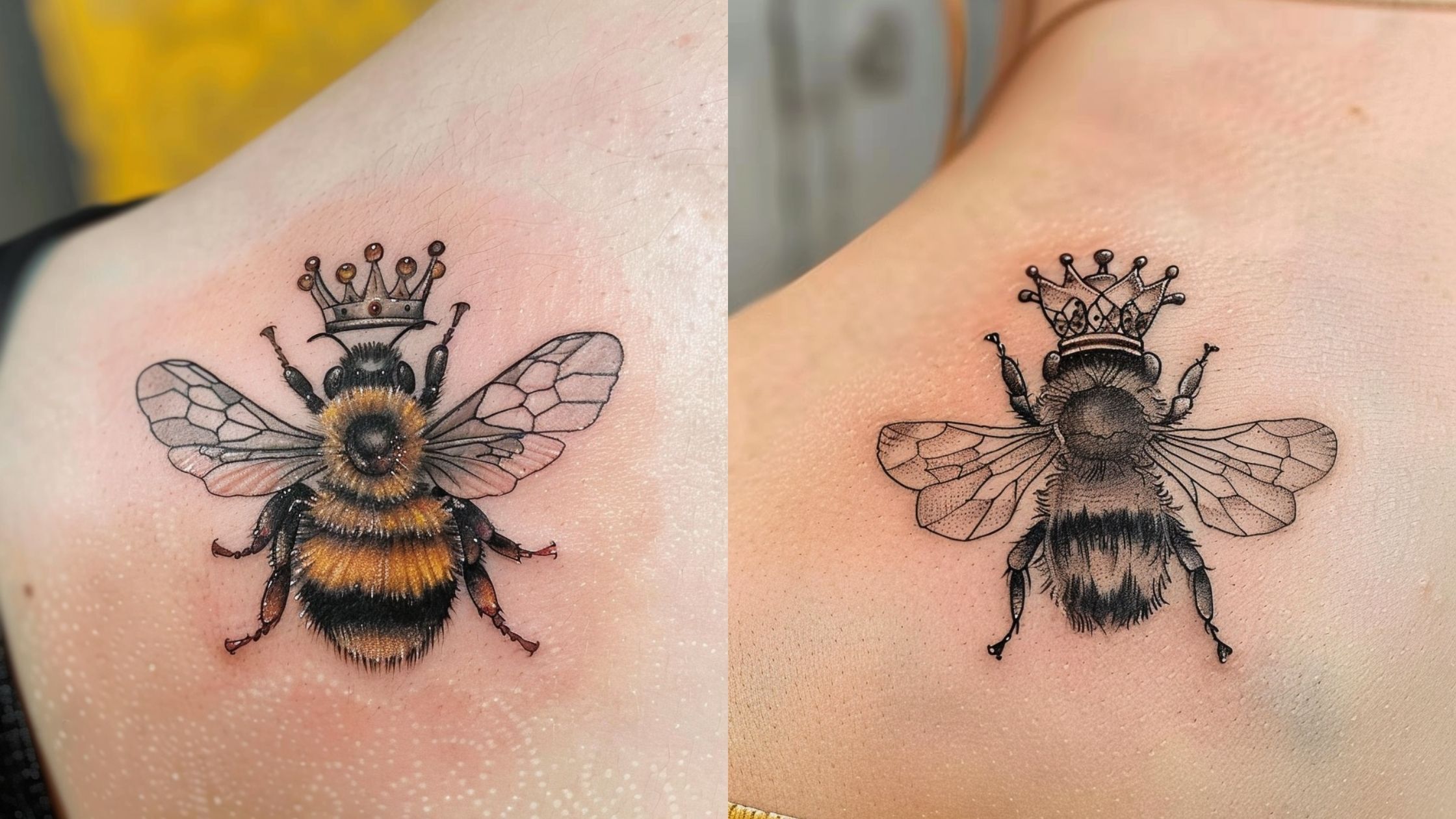
I have been collecting and photographing tattoo references for years, and bee tattoo designs are one of the few motifs that work at almost any size, on almost any body part, in almost any style.
That is not something I can say about a lot of subjects. A realistic wolf needs space. A bee does not.
The insect is compact, symmetrical, and instantly readable, which is exactly what makes it survive years of healing and sun exposure without turning into a smudge.
Below I have broken down the meanings, the styles that actually hold up, the placements I keep seeing done well, and the mistakes I have watched people make. If insects in general appeal to you, it is worth browsing wider bug tattoo ideas before you commit to the bee specifically.
Which Bee Tattoo Style Is Right for You?
Style matters more than subject here, because it decides how the piece will look in a decade rather than how it looks the week it heals.
The table below is the honest version of the conversation I have with people who cannot decide.
| Style | Best For | Smallest Size That Works | How It Ages |
|---|---|---|---|
| Fine line | Wrist, ankle, behind the ear, ribs | About one inch | Softens noticeably; expect a touch-up eventually |
| Traditional / American traditional | Forearm, calf, upper arm | Two to three inches | The most forgiving option by a wide margin |
| Black and grey realism | Upper arm, thigh, shoulder blade | Three inches and up | Fine detail flattens; mid-tones can go patchy |
| Neo-traditional | Forearm, thigh, chest panels | Three inches and up | Holds well thanks to heavy outlines |
| Blackwork / dotwork | Spine, sternum, back of arm | Two inches | Solid black lasts; loose stippling can blur together |
| Watercolour | Shoulder, outer thigh | Three inches and up | Fades fastest, especially without an outline |
| Micro / single needle | Finger, inner wrist, collarbone | Half an inch | Highest risk of the stripes merging into a dark blob |
If you are torn between two rows, pick the one with the heavier line. I have never met anyone who regretted a bolder outline, but I have met plenty who regretted a delicate one.
What a Bee Tattoo Actually Means
Bees have carried symbolic weight across a lot of cultures, and the meanings are less interchangeable than most listicles suggest.
Hard work is the obvious reading, and it is the one most people arrive with. A colony functions because every individual keeps doing an unglamorous job.
Community is the second reading, and in my experience it is the more common real motivation. Several people I have talked to about their bee pieces got them for a family, a crew, or a group of friends rather than for a work ethic.
Loyalty and protection come from the hive structure itself. A single bee is fragile; a colony defends itself.
There is also a straightforward ecological meaning. Bees are pollinators, and for a lot of people the tattoo is a quiet environmental statement more than a personal one — you can read more about their biology and role at Britannica.
Finally, the manchester bee and various civic bee emblems carry regional meaning that has nothing to do with any of the above. Worth knowing before you accidentally get a city crest.
Bee Tattoo Design Ideas Worth Considering
These are the pairings I keep coming back to, roughly in order of how often they work rather than how often they are requested.
1. Bee and Flower Tattoos
This is the default pairing, and there is a practical reason for that beyond the obvious symbolism.
A bee on its own is a small dark shape with no reference point. Put it next to a bloom and the viewer instantly understands the scale.
The flower also gives the artist somewhere to put contrast. Bees read best when there is something light directly behind or beside them, which is why an open petal works better than a dense cluster of leaves.
Lavender and hibiscus are common choices. If you want something with its own layer of meaning, poppy flower tattoo ideas pair unusually well because the poppy’s dark centre echoes the bee’s body.
One caution from watching these heal: avoid packing the flower with heavy black shading right up against the bee. The two shapes merge and you lose the insect entirely.
2. Bee and Honeycomb Tattoos
Honeycomb is the design that lets a small subject fill a large space without inventing extra detail.
The hexagon grid is geometric, so it can be extended up a forearm or across a shoulder as far as you want. That flexibility is why it shows up in so many half sleeves.
The trick is to break the grid rather than complete it. Fully drawn honeycomb reads as wallpaper; a few broken or fading cells at the edges reads as a tattoo.
Dripping honey is a common addition. In my experience it works far better in colour than in black and grey, where it tends to look like an unexplained smear.
Ask your artist how thick the hexagon lines will be. Thin lines packed close together are one of the most reliable ways to end up with a grey haze after a few years.
3. Queen Bee Tattoos
The queen bee design usually means adding a crown, lengthening the body, or both.
It is the most explicitly personal version of this tattoo, and the meaning is not subtle: authority, self-possession, being the centre of something.
A crown is harder to draw well than it looks. At small sizes the points blur into a single mass, so most artists I have watched either simplify it to three clean points or drop it in favour of an elongated abdomen.
Ornamental framing suits this one. Pearls, a small arch, or a simple laurel around the bee gives the “queen” idea somewhere to live without shouting.
Placement tends toward the sternum, the back of the neck, or the centre of the upper back, where the symmetry of the design has room to sit straight.
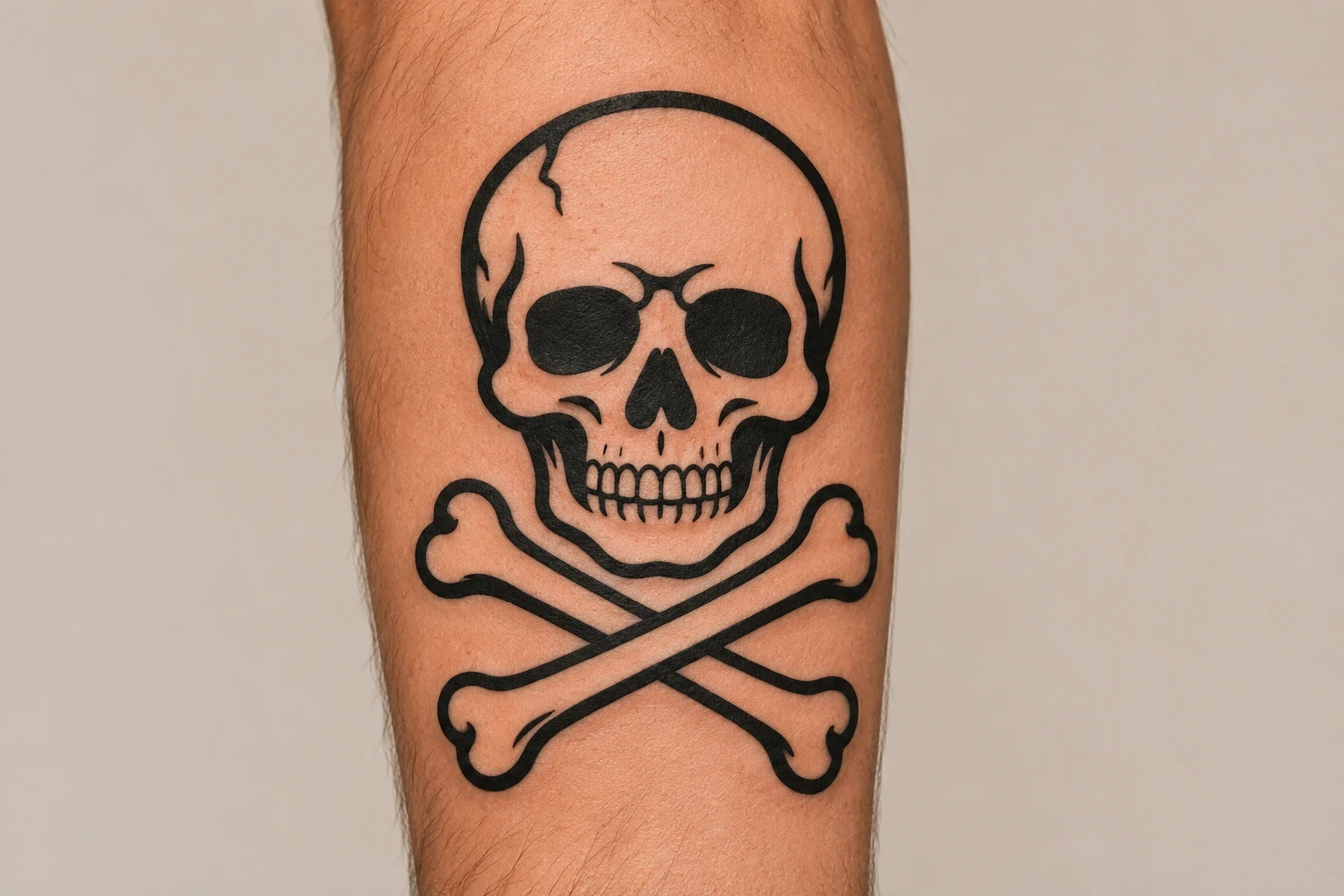
4. Bee and Skull Tattoos
This is the pairing that surprises people, and it is one of the strongest compositions in the whole category.
The logic is life and decay in one image. A pollinator, which exists to keep things growing, sitting on a skull.
Scale is what makes or breaks it. The bee has to be small enough relative to the skull that it reads as a real insect landing on bone, not as a second focal point.
Placing the bee on the temple, the brow ridge, or in an eye socket tends to work better than centering it on the forehead.
If the memento mori angle is what draws you, the broader symbolism is covered well in this guide to flower and skull tattoo meaning, since the reasoning carries over almost directly.
5. Bee and Sunflower Tattoos
The sunflower deserves its own entry rather than being lumped in with general florals.
Its shape is radial, so it draws the eye inward to wherever the bee sits. No other flower does that as reliably.
It is also the one pairing where colour genuinely earns its keep. Yellow petals against a dark bee body give you contrast that black and grey has to work much harder to achieve.
The downside is that yellow is among the least stable pigments over time, particularly on skin that gets regular sun. Plan for it to soften.
A minimalist version — outline only, no fill — sidesteps the fading problem entirely and still reads clearly from across a room.
6. Bee and Compass Tattoos
This one is less common and, when it is done properly, one of the more interesting designs on the list.
The meaning is direction and purpose: a creature that navigates by the sun set against an instrument that navigates by magnetism.
The composition problem is that both elements want to be the centre. The usual fix is to place the bee off-axis, overlapping one edge of the compass rose rather than sitting in the middle of it.
Blackwork suits this pairing more than realism, because the compass reads as a graphic object rather than a photographed one.
If the navigational side is the part that appeals to you, there is a much broader range of layouts in these compass tattoo designs worth borrowing from.
7. Bee and Botanical Branch Tattoos
A branch or sprig is the quietest option here and the one I would suggest to anyone who wants the tattoo to look like an illustration rather than a statement.
The reference point is the botanical plate: thin consistent lines, plenty of white space, no shading to speak of.
Negative space is the whole design. When artists crowd the branch with extra leaves, it stops looking delicate and starts looking busy.
These suit the inner forearm, the spine, and the back of the upper arm, where a long vertical line has room to run.
Be realistic about upkeep. Every fine line piece I have followed over several years has softened, and the thinnest ones softened the most.
8. Small and Micro Bee Tattoos
The small bee is the most requested version of this design and the one that goes wrong most often.
The problem is structural. A bee is defined by alternating light and dark stripes, and stripes need physical space between them to stay separate.
Below roughly half an inch, most bees eventually become a dark oval with wings. That is not a bad artist; it is ink spreading slightly in the skin over years, which is normal.
The reliable workaround is to reduce the number of stripes rather than shrink them. Two thick bands hold up far better than five thin ones.
Fingers and the sides of fingers are the highest risk placements of all, because of constant friction and washing. If you want something tiny and durable, these small tattoo ideas cover placements that hold ink better.
Variations and Alternatives Worth a Look
If the bee is not quite landing for you, a few adjacent options carry similar meaning with a different look.
Bumblebee Instead of Honeybee
A bumblebee is rounder, fuzzier, and considerably more forgiving at small sizes because its silhouette does not depend on crisp stripes.
It also reads warmer and less corporate, which matters if you associate the honeybee with logos.
Butterfly or Moth
If transformation is the meaning you actually want, a butterfly says it more directly than a bee does.
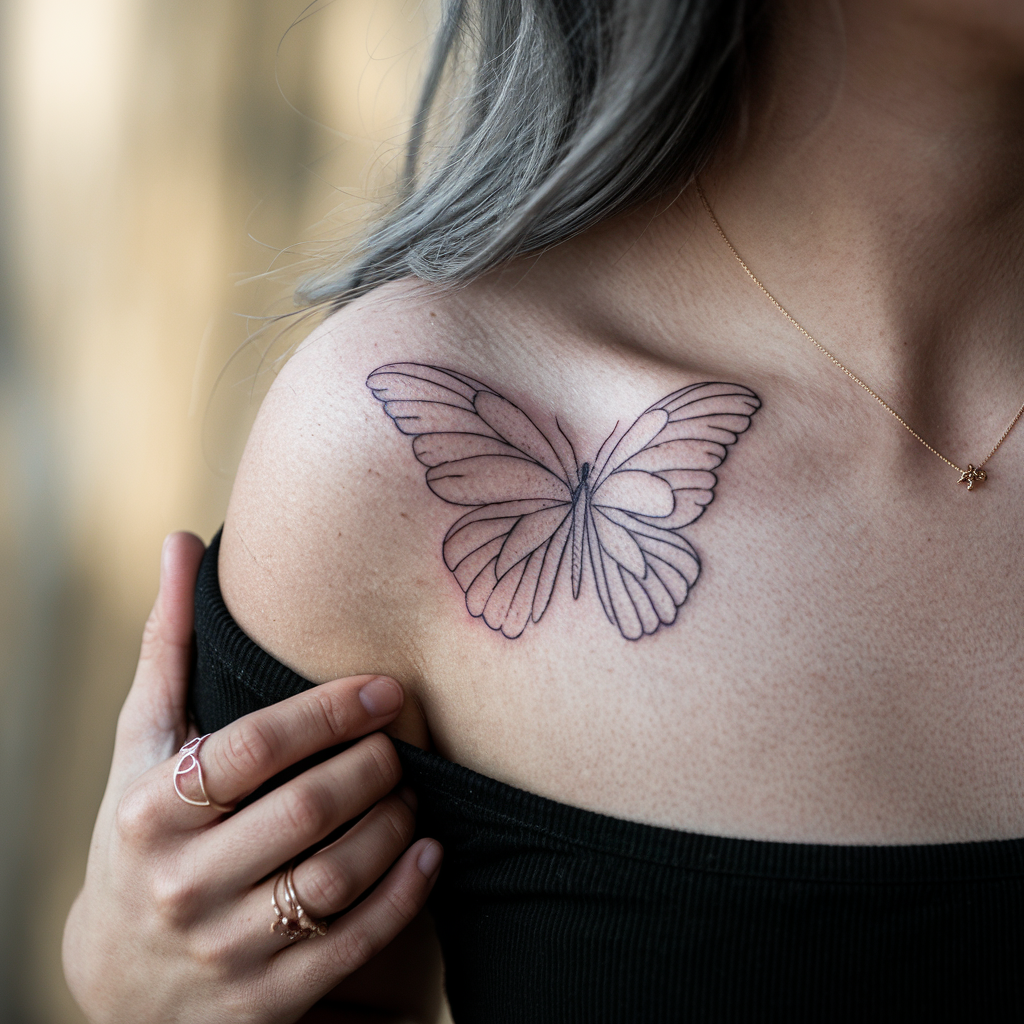
There is a far wider design vocabulary there too — worth scanning butterfly tattoo ideas before you decide.
Other Insects Entirely
Dragonflies carry adaptability and change, and their long bodies suit forearms and spines in a way bees do not — see these dragonfly tattoo ideas.
Ladybugs are the closest match for luck and small-scale charm, and they hold up better at tiny sizes than bees do; these ladybug tattoo ideas show the range.
The Hive Without the Bee
A skep or a honeycomb panel on its own is an underused option, and it keeps every bit of the community symbolism.
It is also easier to expand later, which matters if you think this might become a sleeve.
Placement, Healing, and Practical Advice
Placement decides longevity more than style does. Areas with constant friction or heavy sun exposure — hands, fingers, feet, outer forearms — will always fade faster than the inner arm, ribs, or thigh.
Ask to see the stencil on your skin before the needle starts, and ask to see it in a mirror. A bee that looks balanced flat on paper can sit crooked once it wraps around a curved limb.
On healing, the surface usually settles within about two to three weeks, while the deeper layers typically take a couple of months to fully recover. Follow the specific instructions your artist gives you, because they know what they used on your skin.
Keep it clean, keep it moisturised without smothering it, and keep it out of pools and direct sun until it has healed. The American Academy of Dermatology has straightforward aftercare guidance if you want a second source.
If you see spreading redness, swelling that gets worse rather than better after the first few days, pus, or a fever, that is a doctor’s question and not an internet question. Allergic reactions to pigment are also possible, and the FDA’s tattoo fact sheet covers what to watch for. Nothing in this article is medical advice, and DIY tattooing or at-home removal is not something I would ever recommend.
Finally, budget for a touch-up. Most reputable shops I have dealt with include one free touch-up within a set window, and fine line work is the category most likely to need it.
Common Mistakes, and What to Do Instead
The most common mistake is going too small for the amount of detail requested. If you want visible stripes, visible wing veins, and a crown, you need more than an inch.
The second is bringing a reference photo of a fresh tattoo. Fresh work always looks crisper than the same piece will at year five, so ask your artist for healed photos instead.
The third is choosing an artist by price rather than by portfolio. Look specifically for healed insect or fine line work in their gallery, not just their cleanest fresh shots.
The fourth is ignoring how the design will sit alongside future tattoos. A bee floating alone in the middle of a forearm makes that forearm harder to build on later.
Still not sure? Browsing wider is usually more useful than staring at the same three saved images — try more bee tattoo design ideas to see the range before you book.
Frequently Asked Questions
What does a bee tattoo symbolise?
Most commonly hard work, community, and loyalty, drawn from how a colony functions. It can also carry an environmental meaning, since bees are pollinators. A queen bee variation shifts the meaning toward authority and self-possession. Regional emblems, like civic bee symbols, add a local meaning that is worth checking before you commit.
How small can a bee tattoo be?
About half an inch is the practical floor, and even that depends on the artist and the placement. Below that, the alternating stripes tend to merge over time into a dark oval. If you want something very small, ask for fewer and thicker stripes rather than a shrunken version of a detailed design. Wrists and inner forearms hold micro work better than fingers do.
Where is the best place for a bee tattoo?
The inner forearm, upper arm, shoulder blade, ribs, and thigh are all reliable, because they see less friction and less direct sun. Ankles and behind the ear work well for small pieces. Hands, fingers, and feet are the highest maintenance placements by a clear margin. If longevity matters more than visibility, choose a covered area.
Do bee tattoos hurt?
Pain depends almost entirely on placement rather than on the subject. Ribs, sternum, spine, ankles, and the inside of the elbow are generally reported as the more uncomfortable spots. Outer arm, thigh, and calf are usually easier. A small bee is also a short session, which makes the whole thing far more manageable than a large panel.
Are bee tattoos better in colour or black and grey?
Both work, but they age differently. Yellow is one of the less stable pigments and tends to soften sooner, especially on sun-exposed skin. Black and grey with strong outlines is the more durable choice in most cases. If you want colour, ask your artist to keep a clear outline underneath so the shape survives even as the fill fades.
Quick Summary
- Bee tattoos most often symbolise hard work, community, loyalty, and increasingly, environmental awareness.
- Style choice affects longevity more than subject choice does — heavier lines age better than delicate ones.
- Pairing the bee with a flower, honeycomb, or skull gives it scale and stops it reading as a floating blob.
- Half an inch is roughly the smallest size that stays readable long term, and fewer thick stripes beat many thin ones.
- Yellow pigment fades faster than black, so keep a clear outline if you go with colour.
- Low-friction, low-sun placements like the inner forearm, ribs, and thigh hold ink best.
- Ask to see healed portfolio photos, not just fresh ones, before booking.
- Follow your artist’s aftercare instructions, and take any sign of infection or allergic reaction to a doctor.