I have been collecting compass tattoo references for years, and the pattern is always the same: the compass designs that still look good after ten years are the ones with a simple, readable centre and room to breathe around the edges.
Everything else — the map fragments, the roses, the wolves, the sailing ships — is decoration built around that centre.
A compass reads as guidance, direction and finding your way back, which is why it shows up on so many people marking a move, a recovery or a career change. It is also one of the few symbols that works equally well as a two-inch forearm piece or a full back panel.
Below are the designs I keep coming back to, grouped by style and placement, along with what I would actually ask an artist before booking any of them. If you are leaning toward a large canvas, it is worth reading through other symbolic back tattoo layouts first.
Which Compass Tattoo Style Is Right for You?
Style matters more than subject here. The same compass drawn in fine line and in neo-traditional will age in completely different ways.
| Style | Smallest size that works | How it ages | Best for |
|---|---|---|---|
| Fine line / minimalist | 2–3 inches | Softens fastest; expect a touch-up in a few years | Inner forearm, wrist, behind the ear |
| Black & grey realism | 4–5 inches | Holds well if the shading has real contrast | Outer arm, calf, chest |
| Neo-traditional | 4 inches | Ages the best of the four, thanks to bold outlines | Thigh, upper arm, shoulder |
| Geometric / dotwork | 3–4 inches | Dot fields can blur; line-heavy versions hold up better | Forearm, sternum, upper back |
| American traditional | 3 inches | Excellent — the style was designed for it | Anywhere; especially chest and upper arm |
What a Compass Tattoo Actually Means
The honest answer is that it means whatever you bring to it, but there are a few readings that come up again and again.
The most common is direction — a reminder that you have a heading, even when the route is not obvious. People getting one after a divorce, a move or a long recovery tend to describe it this way.
The second is homecoming. A compass needle always returns to north, and plenty of people use that as a stand-in for family, a hometown or a person they navigate by.
The third reading is nautical and historical. Compass roses came off old sea charts, and a traditional compass tattoo carries that maritime lineage whether or not you have ever been on a boat.
Where the meaning gets personal is in the details — a set of coordinates on the bezel, a date on the needle, or a direction that points toward a specific place rather than true north.
Compass Tattoo Designs Worth Copying
These are grouped by the way the compass is combined with other elements, because that is the decision that changes the price and the sitting time more than anything else.
1. Neo-Traditional Compass Tattoos
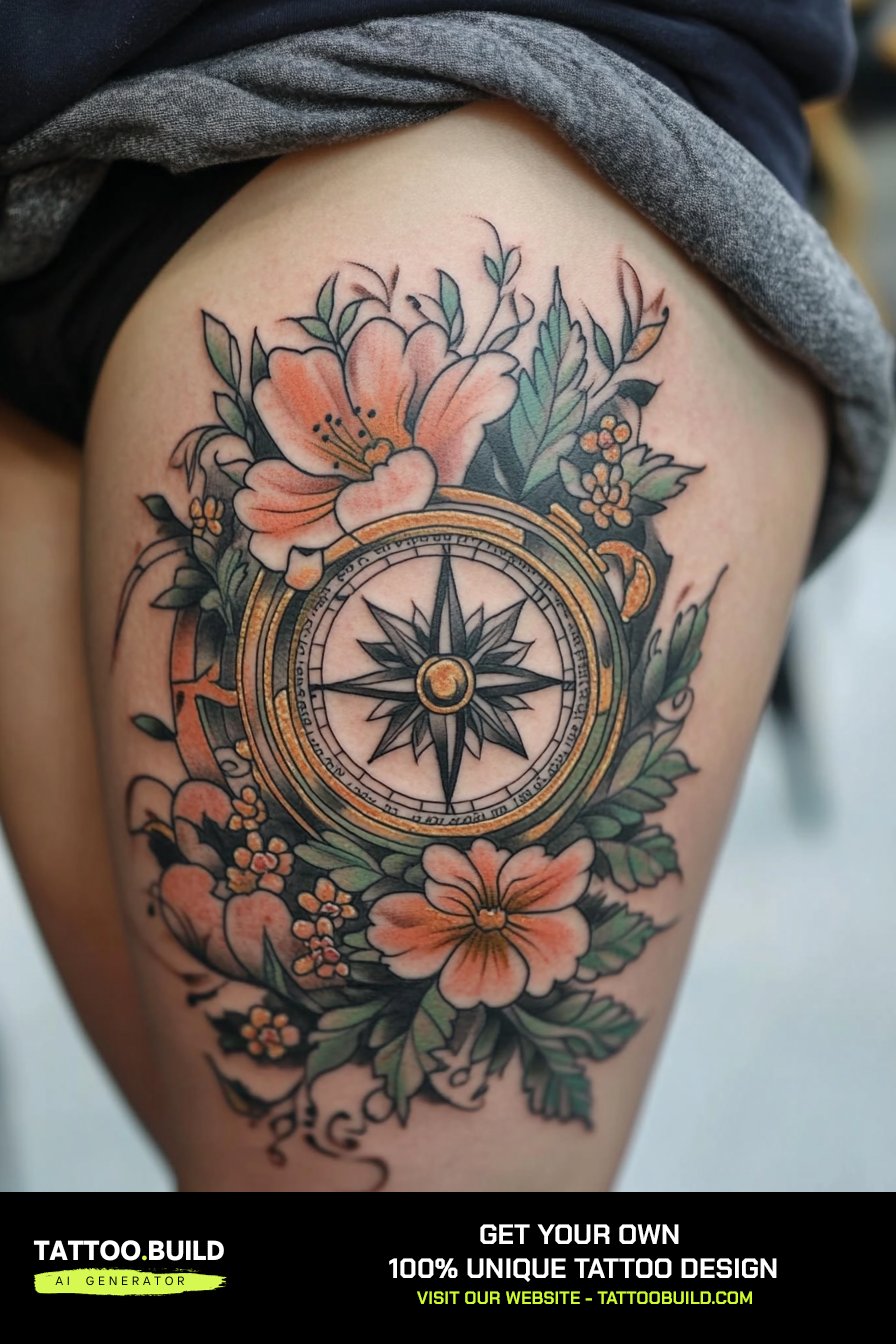
Neo-traditional is my default recommendation for anyone who wants colour and does not want to be back for a touch-up in three years.
The style uses a confident black outline, a limited palette and solid colour packing, which is exactly what keeps a design readable as the skin ages and the ink spreads a little.
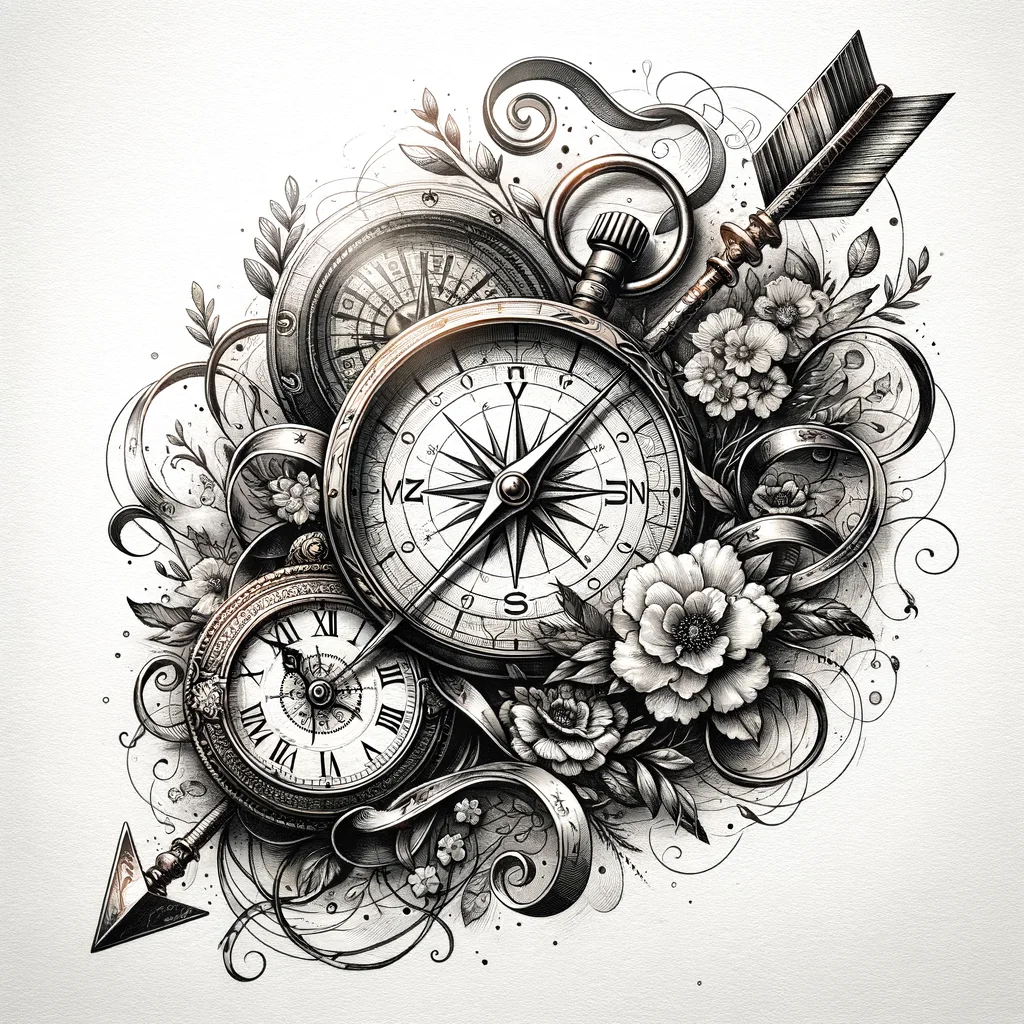
On a compass, that translates to a heavy bezel, clear cardinal points, and ornament — roses, ribbons, filigree — filling the space around it rather than crowding the face.
The thigh and upper arm suit this best because the style needs room. I would not try to squeeze a neo-traditional compass under four inches; the outlines that make it durable will eat the interior detail.
There is a fuller gallery of neo-traditional compass tattoo work if this is the direction you are leaning.
2. Compass Arm and Sleeve Tattoos
The arm is the most common placement, and for good reason: it is flat enough for a circular design to sit without distorting.
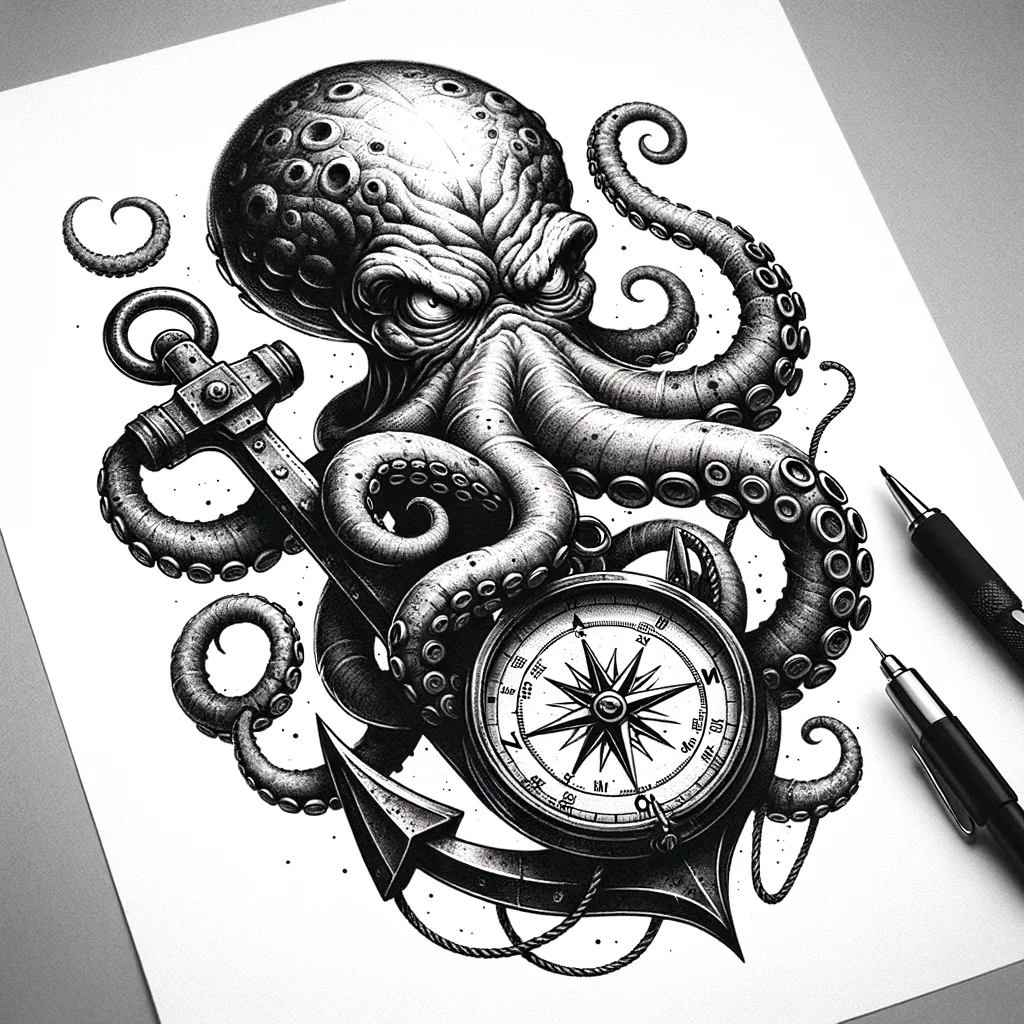
A compass makes an unusually good sleeve anchor. It gives the artist a strong circular focal point and an obvious excuse to fill around it with waves, maps, skylines or ink-splash texture.
When I have asked artists about compass sleeves, the advice is consistent: settle the compass first, then design outward. Sleeves built the other way round tend to end up with the compass squeezed into a gap.
Watch the wrap. A compass that curves around the arm will read as an oval from most angles, so ask to see the stencil on your actual arm before the needle comes out.
Compass designs and the prompts behind them
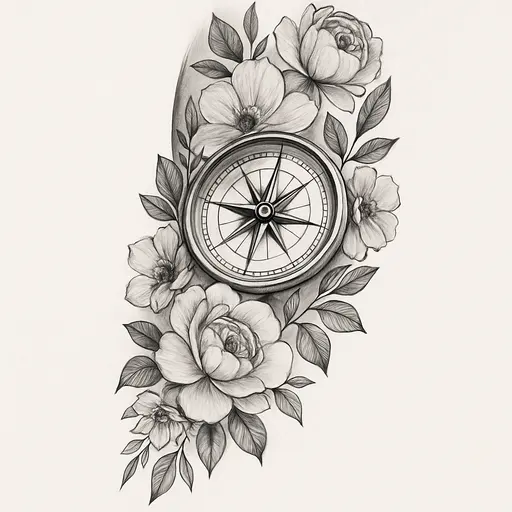
Floral arm sleeve with a compass tattoo design on a bright-white paper background, modern, realistic
Use this idea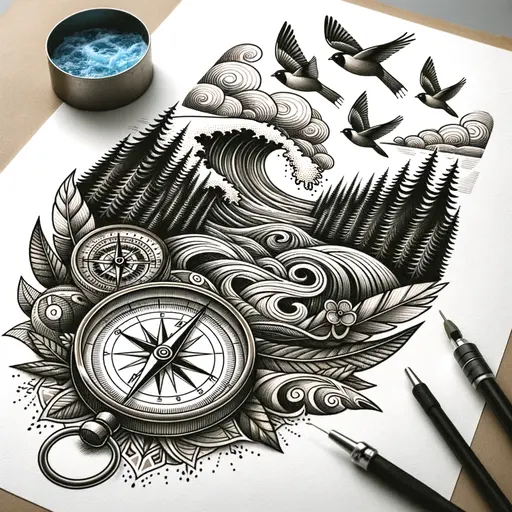
Compass, forest, waves, sparrows
Use this idea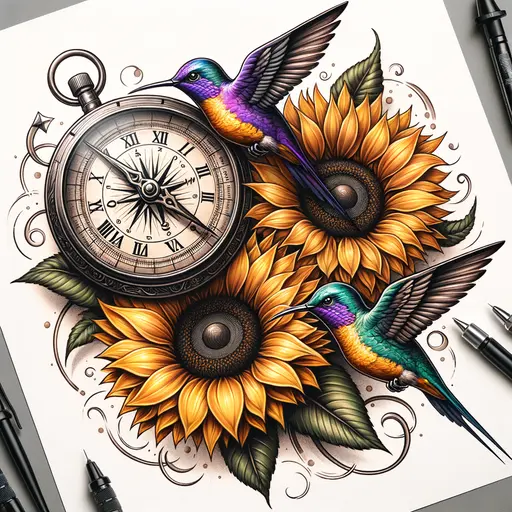
Compass, timepiece, hummingbirds, sunflowers
Use this idea
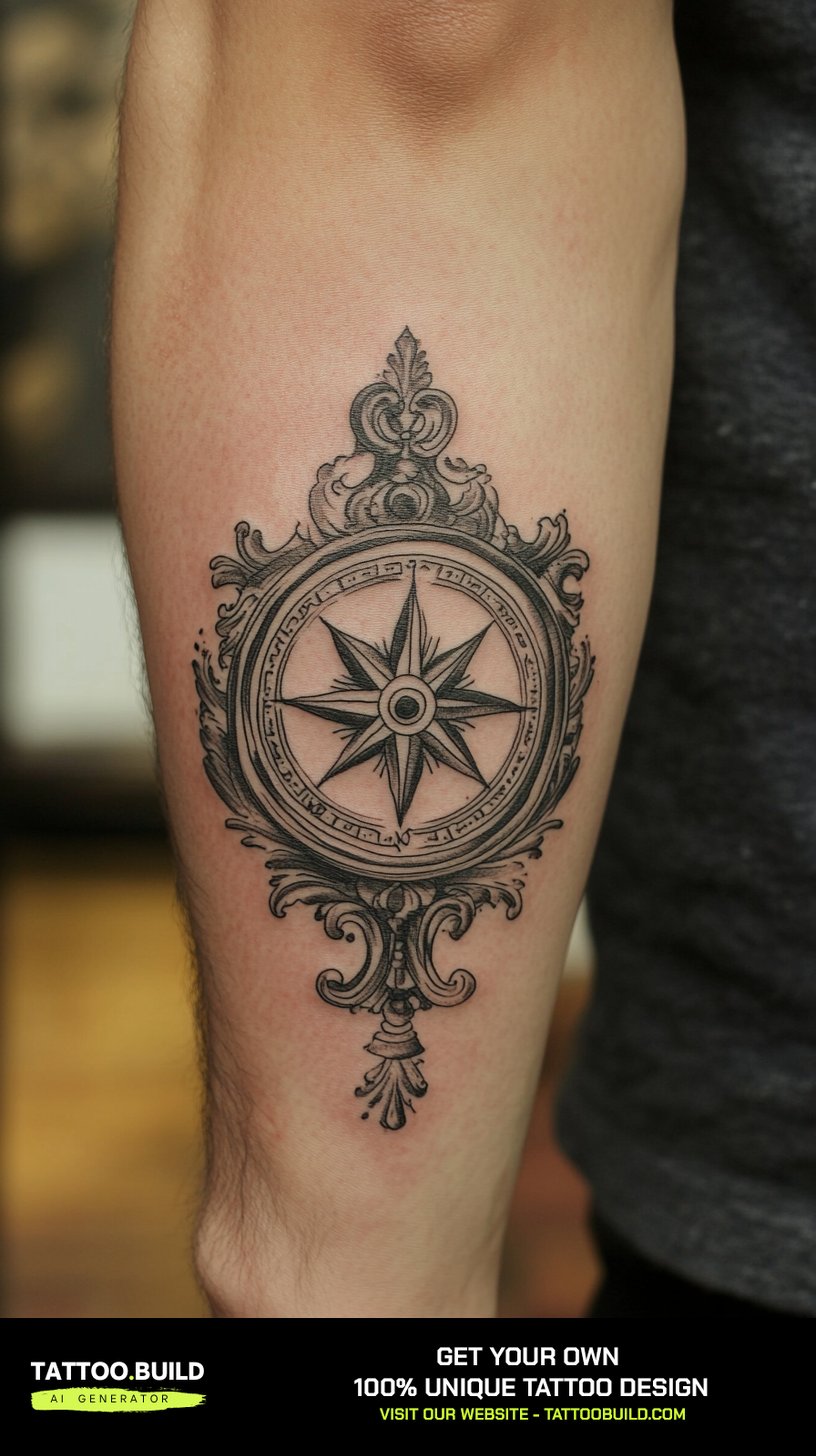
3. Compass Forearm Tattoos
The inner and outer forearm is where most first compass tattoos land, and it is a sensible choice.
The area is relatively flat, moderately easy to sit through, and easy to cover with a sleeve when you need to.
Sizing is the thing people get wrong. A compass that looks bold on a screen often turns out to be four inches on skin, and four inches of engraved bezel detail is a lot of information for a small area.
If you want something delicate, commit to that properly and go fine line rather than shrinking a detailed design. Shrunken detail is the most common reason a piece needs reworking. There are more compass forearm tattoo ideas worth browsing before you decide.
4. Feminine Compass Tattoos
There is no such thing as a men’s or women’s compass design, but there is a recognisable set of choices people mean when they say feminine.
Usually it comes down to lighter linework, more open skin inside the design, softer grey wash instead of solid black, and floral elements woven into the bezel.
Placement plays into it too — inner forearm, shoulder blade, ribs and the back of the upper arm all suit a lighter treatment.
In my experience the biggest practical difference is contrast. Lighter designs need a bit more care with sun exposure to keep from fading into the skin tone.
5. Wolf and Compass Tattoos
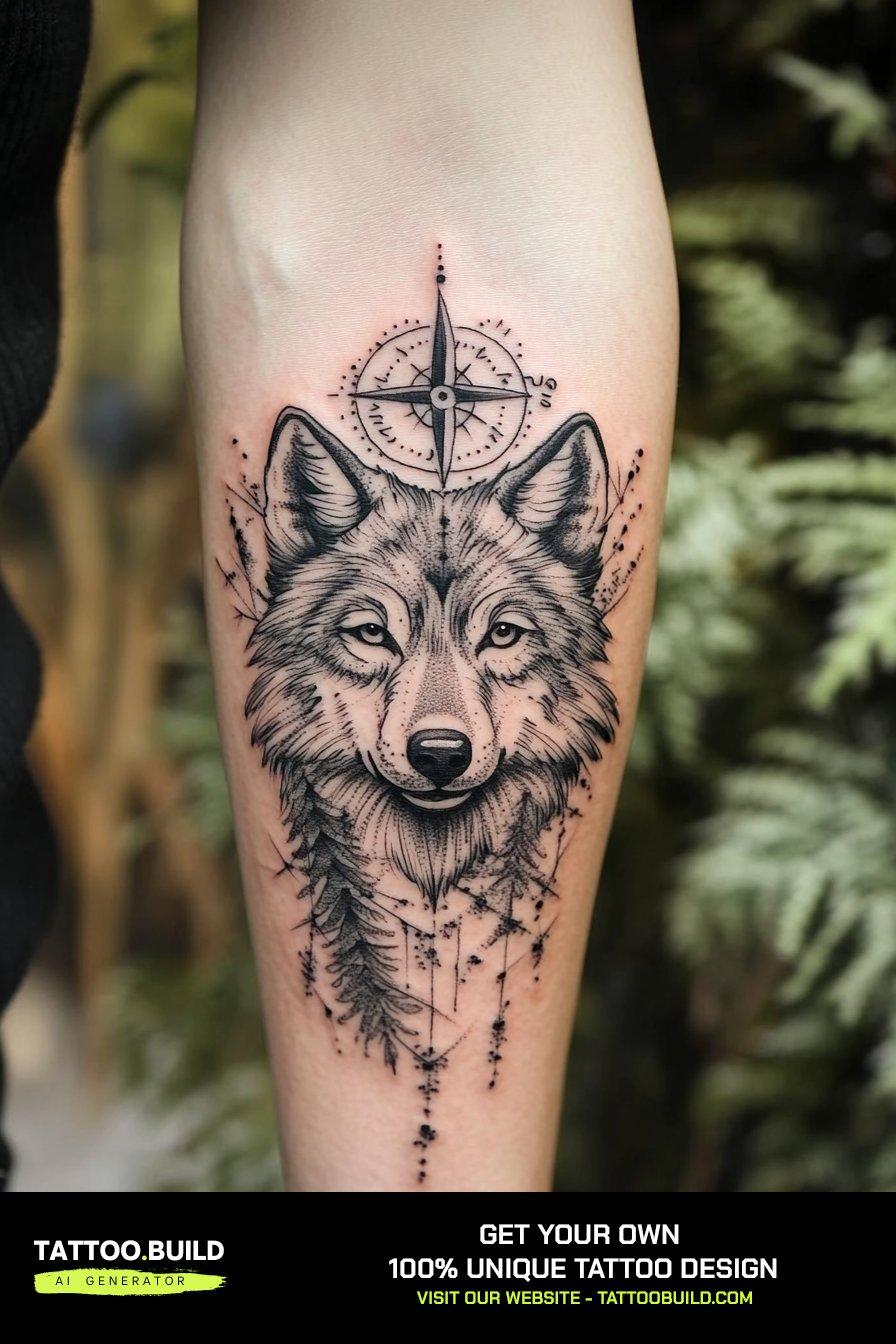
The wolf and compass pairing has become one of the most requested combinations in the whole category, and it is a genuinely good match.
A wolf brings instinct and loyalty; a compass brings direction. Put together, they read as trusting your own sense of where to go.
Composition is the hard part. Two strong focal points fight each other, so the usual solution is to make the wolf the subject and the compass the background — or place the wolf’s head inside the compass ring.
This combination needs size. On an upper arm you are cropping the wolf to a head study; on a back or a full sleeve you can run the whole landscape. The wolf compass tattoo designs I have seen work best are the ones that pick one of those two scales and commit.
6. Snake and Compass Tattoos
A snake wrapping a compass is a newer combination and it solves a real design problem.
The snake’s body gives the artist a flowing line to move around the body’s contours, while the compass supplies the fixed circular anchor.
That makes it well suited to the chest, ribs and the wrap of a forearm, where a rigid circle alone would look pasted on.
Symbolically it reads as transformation held to a direction — shedding a skin without losing your bearings. More examples live in this snake and compass tattoo collection.
7. Compass and Rose Tattoos
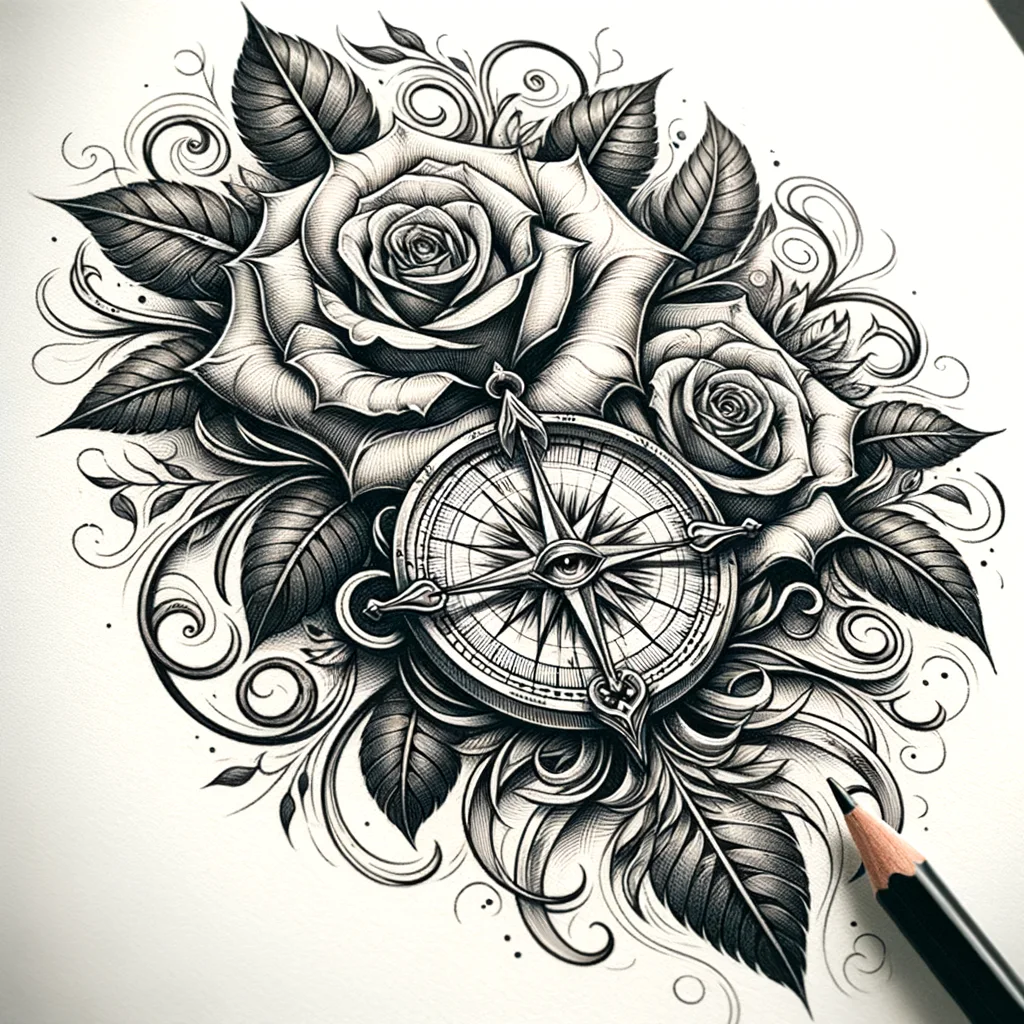
This is the oldest pairing on the list, and the pun is deliberate — the compass rose was already called a rose long before anyone tattooed a flower into one.
The flower softens what is otherwise a very geometric shape, which is why it is such a common choice for people who want a compass that does not look purely technical.
Traditional and neo-traditional treatments both handle it well. If you want to see how the flower itself is usually drawn, the rose tattoo ideas guide covers the shading approaches.
8. Compass Back Tattoos
The back is the only placement that gives you a genuinely symmetrical canvas, and a compass is one of the few subjects that actually needs one.
Centred between the shoulder blades, the cardinal points can line up with the spine, and dotwork or star fields can radiate outward without hitting an edge.
It is a longer sitting and a harder area to see healing on, so plan for someone to help you with aftercare for the first week.
Variations Worth Considering
If none of the designs above are quite right, these are the variations I see most often.
Coordinates instead of cardinal points
Replacing N, S, E and W with the latitude and longitude of a meaningful place is the single most common personalisation, and it works because it adds meaning without adding visual clutter.
Check the numbers twice with your artist. Digits are the most frequently misspelled part of any tattoo.
Compass and map
Layering the compass over a faded map or nautical chart adds texture and fills space cheaply, which is useful when you want a piece to look substantial without a lot of intricate linework.
Compass and mountains
A landscape inside the compass face — mountains, pines, a horizon line — is a modern take that suits black and grey work particularly well.
Keep the horizon simple. Fine landscape detail inside a small circle is the first thing to blur.
Broken or unfinished compass
A cracked bezel or a missing needle is a deliberate choice some people make to represent a period of being lost, and artists generally handle it as intentional damage rather than sloppy linework.
Minimalist single-needle compass
Stripped back to a needle, a circle and four points, this is the cheapest and fastest option — often a single short session.
It is also the one most likely to need a touch-up down the line, so ask your artist upfront what their touch-up policy is.
Practical Advice Before You Book
Bring references, not a finished design. Artists produce better work when they are drawing rather than copying, and most will decline to replicate another artist’s piece exactly.
Ask to see healed photographs, not just fresh ones. Fresh work always looks sharp; healed work is where you can judge whether the artist’s linework and shading hold.
Think about pain and placement together. Ribs, sternum, elbow ditch and the inside of the upper arm are consistently reported as harder sittings than the outer forearm or thigh — the most painful tattoo spots guide breaks it down by area.
Aftercare is where most avoidable problems come from. Keep it clean, keep it moisturised, keep it out of direct sun, and do not soak it. Our tattoo aftercare guide covers the routine, and the American Academy of Dermatology and Mayo Clinic both publish general guidance on caring for tattooed skin and on what to watch for.
If you see spreading redness, swelling that gets worse rather than better after the first few days, discharge or a fever, contact your artist and see a doctor. This article is not medical advice, and an infection or an ink reaction is something to have looked at in person rather than diagnosed from a web page.
Never attempt to tattoo or remove a tattoo yourself. The US Food and Drug Administration notes that tattoo inks and the risks around them are an area of ongoing concern, and both application and removal belong with licensed professionals.
Common Mistakes and Still Not Sure?
The mistake I see most is going too small for the amount of detail. An engraved compass at two inches becomes a grey circle within a few years.
The second is ignoring body curvature, which turns circles into ovals. The third is choosing a style that does not match the placement — delicate fine line on a high-friction area like the hand or the side of a finger rarely holds up well.
If you are still deciding, it usually helps to work backwards from placement rather than from the design.
Frequently Asked Questions
What does a compass tattoo symbolise?
Most commonly it stands for direction, guidance and finding your way — either literally, in the sense of travel, or figuratively, in the sense of having a heading in life. A second common reading is homecoming, since a needle always returns to north. Nautical and maritime heritage is a third. The meaning is personal, and adding coordinates or a date is the usual way people make it specific.
How much does a compass tattoo cost?
It depends almost entirely on size, detail and your artist’s hourly rate, which varies enormously by city and by reputation. A small, simple forearm compass is often a single short session; a detailed black and grey piece with a wolf or a landscape can run to several sessions. The honest advice is to send your reference to two or three studios and compare quotes rather than relying on any published average.
Where is the best place for a compass tattoo?
The forearm is the most popular because it is flat, relatively comfortable to sit through and easy to cover. The upper arm, shoulder blade, thigh and calf all work well for larger designs. The back is the only placement that gives a truly symmetrical canvas. Avoid high-friction spots like hands, fingers and feet for anything detailed, since they typically need more frequent touch-ups.
Do compass tattoos age well?
Bold-outline styles such as traditional and neo-traditional generally hold up best, because thick lines and solid colour tolerate the natural spreading of ink over time. Fine line and dense dotwork tend to soften sooner, especially at small sizes. Sun exposure is the biggest single factor you control — sunscreen on a healed tattoo makes a real difference. Ask your artist what they have seen from their own healed work.
How long does a compass tattoo take?
A small, simple compass is often under two hours. A detailed forearm piece with shading usually runs three to five hours. Wolf, ship or landscape combinations at sleeve or back scale are typically multiple sessions spread over weeks, with healing time in between. Your artist will give you a realistic estimate once they have drawn the design at actual size.
Quick Summary
- Pick a style before you pick a design — style determines how the piece ages more than subject does.
- Neo-traditional and American traditional hold up best over decades; fine line and dense dotwork soften soonest.
- Do not shrink a detailed compass. Four inches is a sensible floor for anything with an engraved bezel.
- The forearm is the easiest first placement; the back is the only truly symmetrical canvas.
- Combinations — wolf, snake, rose, map, mountains — need more room than a compass alone.
- Coordinates instead of cardinal points is the cleanest way to personalise the design.
- Check the stencil on your actual body for curvature before the needle starts.
- Follow your artist’s aftercare instructions, keep it out of the sun, and see a doctor if anything looks infected.