The back is the only place on the body where a tattoo can be one single, uninterrupted picture instead of a collection of separate ones — and that changes what kind of symbolism actually works there.
I have sat through three long back sessions of my own and watched a lot more from the other side of the room, and the pattern is always the same. The men who love their backpiece a year later chose a symbol that could survive being scaled up.
The ones with regrets picked something that looked incredible as a phone screenshot and then got stretched across 18 inches of skin, where every empty gap became obvious.
This guide walks through the symbolic back tattoo styles I keep seeing hold up over time, what each one actually means, and how to judge whether your idea has enough structure to fill the space. If you are still weighing placement, our wider guide to back tattoo designs for men is a useful companion.
Which Symbolic Back Style Is Right for You?
This is the comparison I sketch out for friends who ask. Session estimates assume a competent artist working at a normal pace, not a record attempt.
| Style | Core meaning | Typical commitment | Best suited to |
|---|---|---|---|
| Japanese Irezumi | Struggle, protection, transformation | Multiple full days, often over a year or more | Anyone committing to the whole back at once |
| Polynesian / tribal | Lineage, status, personal history | Several long sessions, mostly solid black | Broad backs and high pain tolerance |
| Norse / mythological | Fate, endurance, ancestry | Moderate to heavy, depends on detail | Story-driven designs with linked elements |
| Celestial | Cycles, guidance, perspective | Lighter; often upper back only | A first large piece you can extend later |
| Phoenix | Recovery, rebirth after loss | Heavy, wing detail eats time | People who want the full width used |
| Mandala / geometric | Balance, focus, wholeness | Moderate, but demands a precise artist | Symmetrical builds and centred spines |
| Wilderness / landscape | Freedom, solitude, home ground | Moderate; shading heavy | Softer, less confrontational imagery |
Why the Back Changes What a Symbol Means
A symbol on the forearm is something you look at. A symbol on your back is something other people look at, and that difference is bigger than most people expect before they get one.
Because you cannot casually check it in a mirror, a backpiece stops being decoration and becomes something closer to a statement you carry around. Every man I have asked about his back tattoo describes it as a marker of a period in his life rather than a design he liked.
The back also gives you roughly the largest continuous canvas on the body, which means a symbol can be built out with supporting elements — wind bars, waves, clouds, geometry — instead of floating alone.
That supporting background is usually what separates a backpiece that ages well from one that looks unfinished. Skin stretches, ink spreads slightly over decades, and a design with structure holds its shape far better than one built from isolated fine lines.
It is also, honestly, one of the longer commitments in tattooing. Large back projects are commonly split across several sessions with weeks of healing between them, so treat the timeline as months rather than an afternoon.
Symbolic Back Tattoo Ideas for Men and What They Mean
These are the directions I see chosen most often, roughly in order of how demanding they are.
1. Norse and Mythological Legends
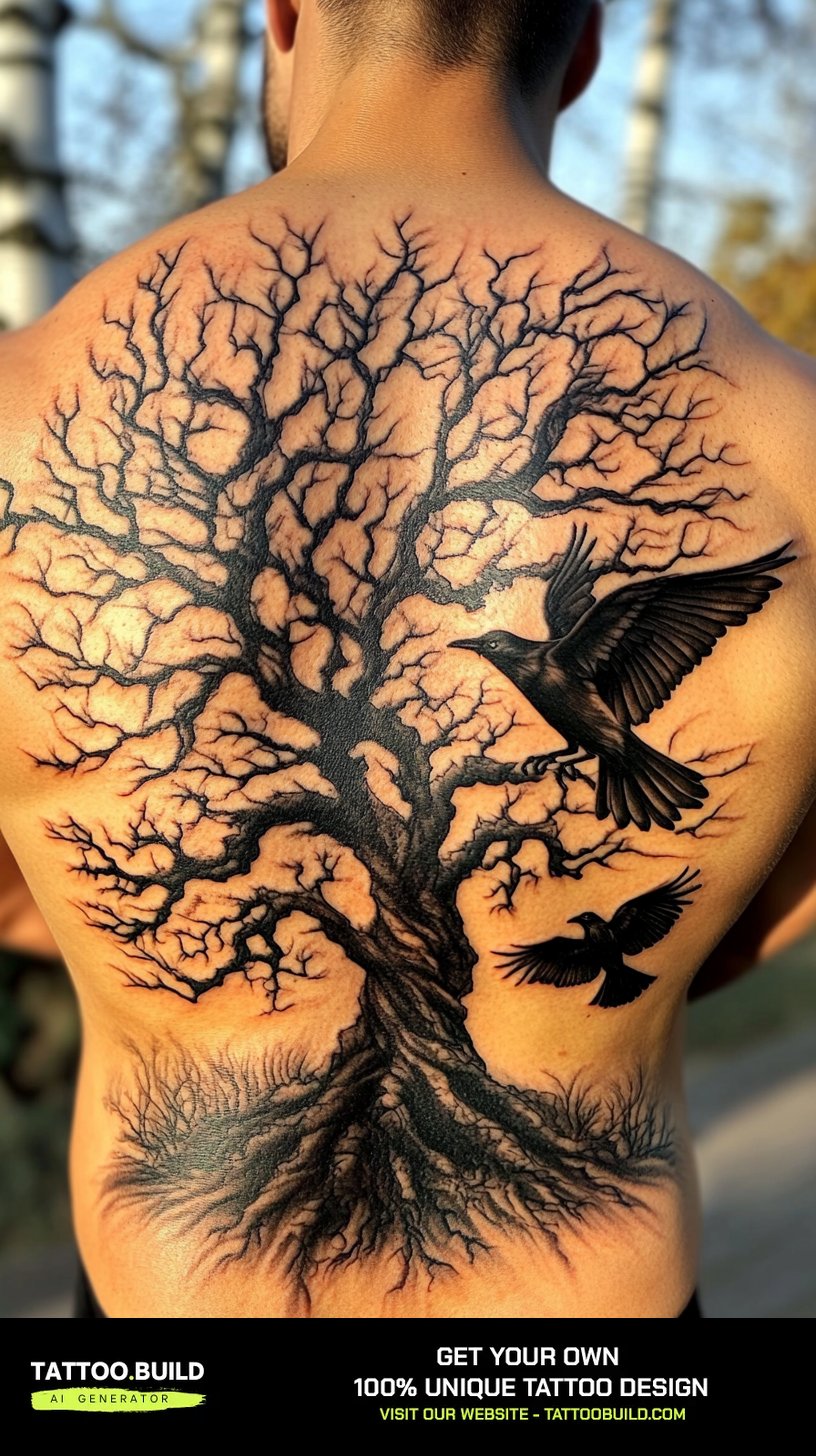
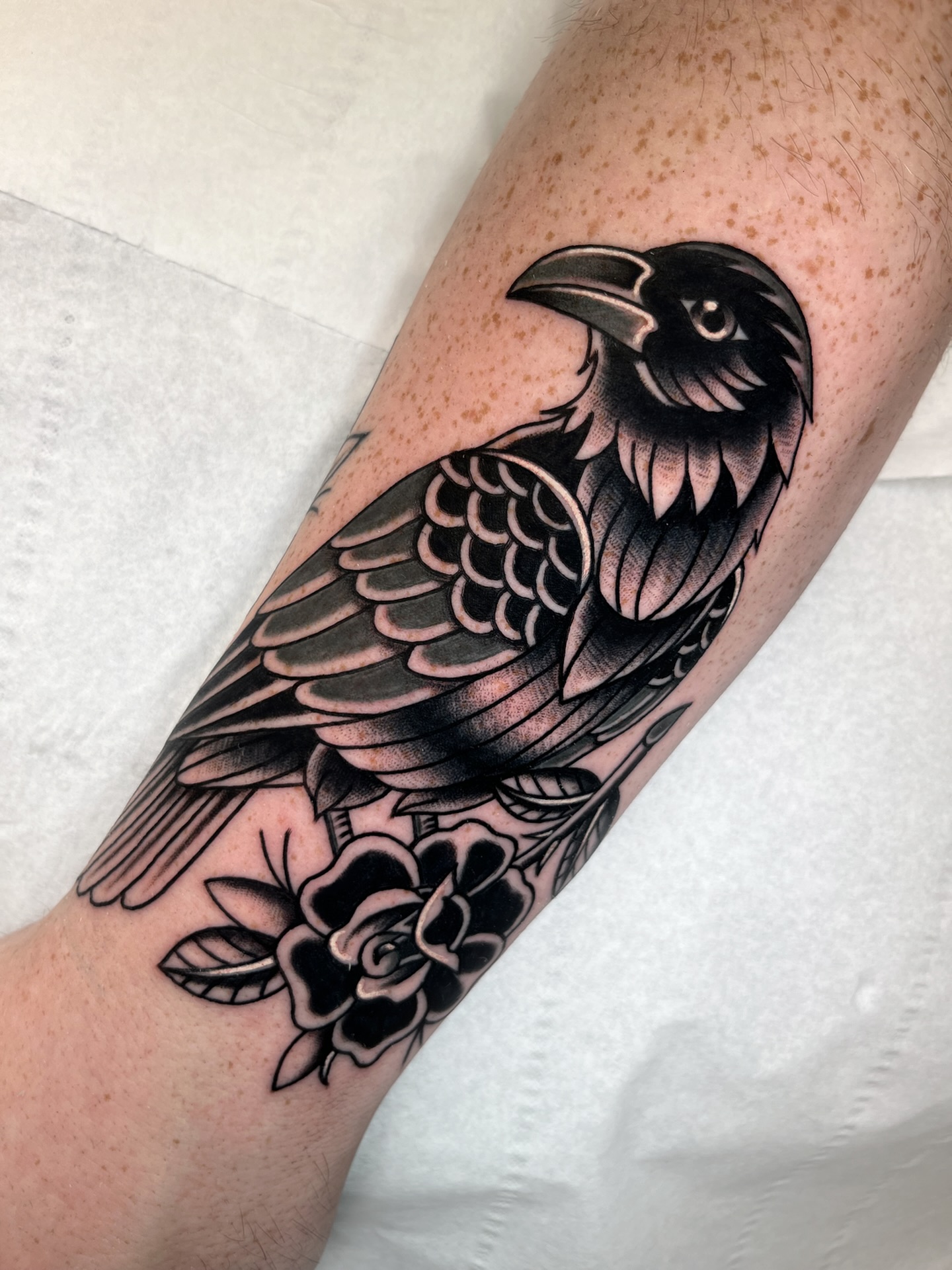
Norse imagery works on the back because the source material is already built for scale — world trees, wolves, ravens, runic borders and knotwork all connect naturally.
The usual reading is fate and endurance: Yggdrasil for the connection between worlds, ravens for knowledge, the wolf for the thing that cannot be outrun.
In my experience this is the style people most often over-plan. I have seen chest-to-waist designs that tried to include six separate myths, and the result read as clutter rather than saga.
Pick one story and let the border elements carry the rest. If you want more direction on the imagery itself, our Norse mythology tattoo ideas guide goes deeper on individual symbols.
2. Japanese Irezumi
Irezumi is the most structurally complete option on this list, because the tradition already dictates how a back should be composed — a central subject, with wind, water or clouds filling the space around it.
Dragons are usually read as protection and wisdom rather than menace, and the background is never filler; it is what makes the subject move.
When I tested how different large designs held up in photos taken a few years after healing, the Japanese pieces were consistently the most legible from across a room. That is the background doing its job.
It is also the biggest commitment here. Traditional Japanese Irezumi is a long-form style, and a rushed backpiece in this tradition tends to look worse than a smaller design done properly.
3. Polynesian and Tribal Patterning
Polynesian-inspired work is pattern-first rather than picture-first, which means it follows the body instead of sitting on top of it.
Traditionally the motifs carry specific meaning about lineage, role and personal history, so this is one of the few styles where the cultural context genuinely matters. Tatau is a living practice, not a pattern library.
If you have no connection to those cultures, the respectful route is a geometric or blackwork design in a similar spirit rather than borrowed motifs. Every artist I have asked who works in this style says the same thing, usually more bluntly.
Practically, it is a lot of solid black. Expect long sessions, and expect the fill to be duller work than the outlining. Our tribal tattoo ideas guide covers non-specific alternatives.
4. Celestial: Sun, Moon and Stars
Celestial designs are the gentlest entry point into a symbolic backpiece, and the easiest to start small and extend later.
The standard reading is cycles and perspective — the sun and moon together as opposing forces held in balance, stars as direction or as people you have lost.
What makes them work on the back specifically is symmetry. A sun centred between the shoulder blades has two natural anchor points, so it sits square without much effort from the artist.
This is the style I most often recommend for a first large piece, because you can commit to the upper back now and decide about the lower back in a few years.
5. The Phoenix
The phoenix is the most literal symbol on this list: destruction followed by return. People usually choose it after something specific, and they usually say so unprompted.
It also happens to be one of the few subjects that genuinely justifies a full back. Wings need width, and cramming them onto one shoulder blade wastes the whole idea.
The trade-off is time. Feather detail is slow, and colour work in the tail adds sessions on top of the linework and shading.
If you want the meaning without the hours, a stylised phoenix in blackwork reads just as clearly and costs less chair time.
6. Wilderness and Landscape
Mountains, pines, a river, a night sky — landscape backpieces are quieter than the mythological styles, and that is usually the point.
The symbolism is personal rather than inherited: a specific range, a place you grew up, a stretch of country you go back to. In my experience these are the pieces owners explain the most willingly.
Compositionally they suit the back well because depth stacks vertically. Foreground trees at the waist, mid-ground ridge across the middle, sky at the shoulders.
The honest limitation is that heavy grey-wash shading can soften over the years more than solid black does, so ask your artist to keep real contrast in the foreground.
7. Mandala and Geometric
A mandala centred on the spine is about balance and focus, and it is the most unforgiving design on this list to execute.
Symmetry is the whole effect. If the centre drifts even slightly off the spine, or the rings are not evenly spaced, the eye catches it immediately — and no amount of shading hides it.
Because of that, this is the one style where I would choose the artist before choosing the design. Ask specifically for healed photos of large geometric work, not fresh ones.
Done properly it ages very well, since the strength of the piece is in structure rather than fine detail. See our mandala tattoo ideas for men for more layout options.
8. Gothic and Ornamental
Gothic backpieces lean on architecture and heavy black: arches, filigree, skulls, ornamental framing around a central subject.
The symbolism is mortality handled directly rather than mournfully — the memento mori idea, that the reminder is the point.
These pieces live or die on contrast. When I have seen them go wrong it is almost always because the black areas were packed unevenly and healed patchy, not because the drawing was weak.
Ask to see healed solid black from your artist before booking. It is a fair question and any good artist expects it.
Other Symbolic Directions Worth Considering
Not every meaningful back tattoo has to fill the whole back. These are the variations I see most often as alternatives.
The Samurai Figure
A samurai backpiece is built around a single central figure, usually with a simple background so the armour detail carries the weight.
The reading is discipline and code rather than aggression, and it sits comfortably alongside Japanese-influenced background work if you extend it later.
Koi and Waterfall
Koi swimming upstream is the perseverance symbol; the direction genuinely matters, and swimming downward is traditionally read as a goal already achieved.
It is a good middle option — smaller than a full Irezumi backpiece, but with the same compositional logic.
Single-Symbol Spine Work
A vertical column down the spine — script, runes, a linear geometric pattern — is the lowest-commitment symbolic option for the back.
Be warned that the spine itself is one of the sharper spots to tattoo. Our guide to the most painful tattoo spots is worth reading before you book.
Animal Totems
Wolves, bears, eagles and stags all scale well and carry meanings most people read the same way without explanation.
They also crop well: an animal design can stop at the shoulder blades without looking cut off, which not every backpiece can do. Our wolf tattoo ideas collection shows how far the subject stretches.
Planning, Sessions and Aftercare
Plan the whole back before the first needle, even if you only tattoo a third of it this year. Retrofitting a backpiece around existing work is far harder than designing the full map upfront.
Book longer sessions rather than more of them where you can tolerate it. Fewer sessions means fewer heal cycles, and consistent shading is easier when the artist works a large area in one sitting.
Aftercare on the back is harder than anywhere else purely because you cannot reach it. Line up someone who can help with washing and moisturising, and expect a few awkward nights — sleeping face-down on a fresh backpiece is not comfortable.
Follow the aftercare instructions your artist gives you over anything you read online, including this. If you see spreading redness, heat, swelling that worsens after a few days, or any discharge, that is a doctor’s call rather than a forum’s — the FDA’s tattoo and permanent makeup fact sheet covers the general risks worth knowing. Our tattoo healing stages guide walks through what normal looks like week by week.
Still Not Sure? Common Mistakes to Avoid
The most common one is scale. A design that looks dense on a screen is often mostly empty space once it is a foot and a half tall.
The second is collecting instead of composing — five symbols that each mean something, arranged with no relationship to each other.
The third is choosing the design before the artist. For a piece this size the artist’s portfolio should drive the style, not the other way round.
And the fourth is underestimating the timeline. If you need it finished before a specific date, say so at the consultation and let the artist tell you honestly whether it is realistic.
If you are still deciding on style rather than subject, our geometric tattoo ideas for men and dragon tattoo ideas for men guides are the two most useful next stops.
Frequently Asked Questions
How long does a full symbolic back tattoo take?
Most large backpieces are split across several multi-hour sessions rather than done in one sitting. The exact number depends on detail, colour and how long you can sit, but planning for a project that runs across months rather than weeks is realistic. Your artist can give a much better estimate once the design is drawn. Heavily detailed traditional styles usually sit at the longer end.
How painful is a back tattoo compared to other spots?
The fleshier areas across the upper back and shoulder blades are usually described as manageable, while the spine, ribs and the area over the shoulder bones are noticeably sharper. Pain varies a lot between people, so treat any chart as a rough guide rather than a promise. Eating properly beforehand and taking scheduled breaks makes a bigger difference than most people expect. Long sessions are as much about endurance as pain.
Should I do the whole back at once or build it up over time?
Either works, but the design should be mapped for the whole back either way. Building up in stages is easier on your budget and your schedule, and it lets you space out the healing. The one thing to avoid is adding unplanned pieces and hoping they will connect later.
Do symbolic back tattoos age well?
Designs with strong structure and real contrast generally hold up better than ones built on fine, isolated detail. Ink spreads slightly over decades and skin changes, so bold linework and solid black tend to stay legible longest. Sun protection makes a genuine difference too. Ask your artist to show healed work several years old, not just fresh photos.
Is it acceptable to get a Polynesian or tribal design without that heritage?
Traditional Polynesian motifs carry specific meanings tied to family and status, so borrowing them directly is something many practitioners of those traditions object to. A geometric or blackwork design inspired by the visual language, without the culturally specific motifs, is the usual respectful compromise. If it matters to you, talk to an artist who works within that tradition and ask directly.
Quick Summary
- Map the whole back before your first session, even if you only tattoo part of it now.
- Choose a symbol with enough structure to fill large space — background elements are not filler.
- Japanese, Polynesian and phoenix designs use the full back best; celestial and spine work suit smaller commitments.
- Pick the artist before the design when you want mandala or geometric symmetry.
- Ask to see healed photos of large work, not fresh ones, especially for solid black.
- Expect several long sessions spread over months, not a single appointment.
- Arrange help with aftercare in advance — you cannot reach your own back.
- Anything that looks like infection is a doctor’s call, not a forum’s.